
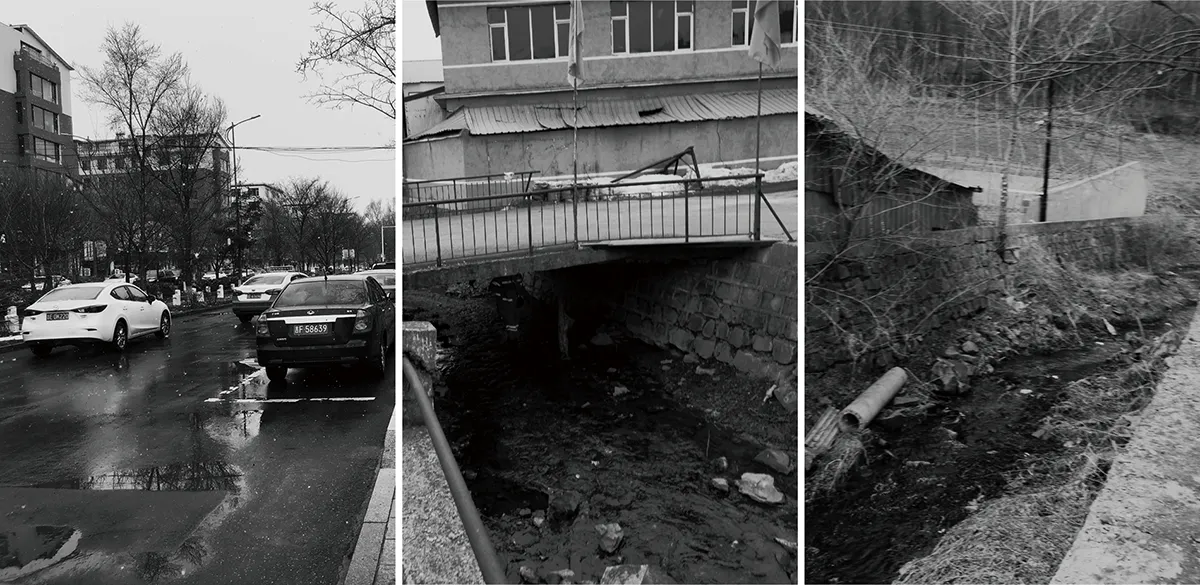
The Wulacaogou River runs through the old town, impacting multiple residential buildings, schools, and neighborhoods. The hardened river course was used as an urban floodway, and for the discharge of municipal rainwater and domestic sewage. The environmental pollution caused by years of disrepair, water pollution and ecosystem destruction became a threat to human health. The river course was interrupted by the urban traffic. The municipal roads featuring pedestrian-vehicle mixed use reduced the accessibility of the river, and blocked public interaction with the water, cutting the river off from the urban areas and people, and becoming a depressed space.
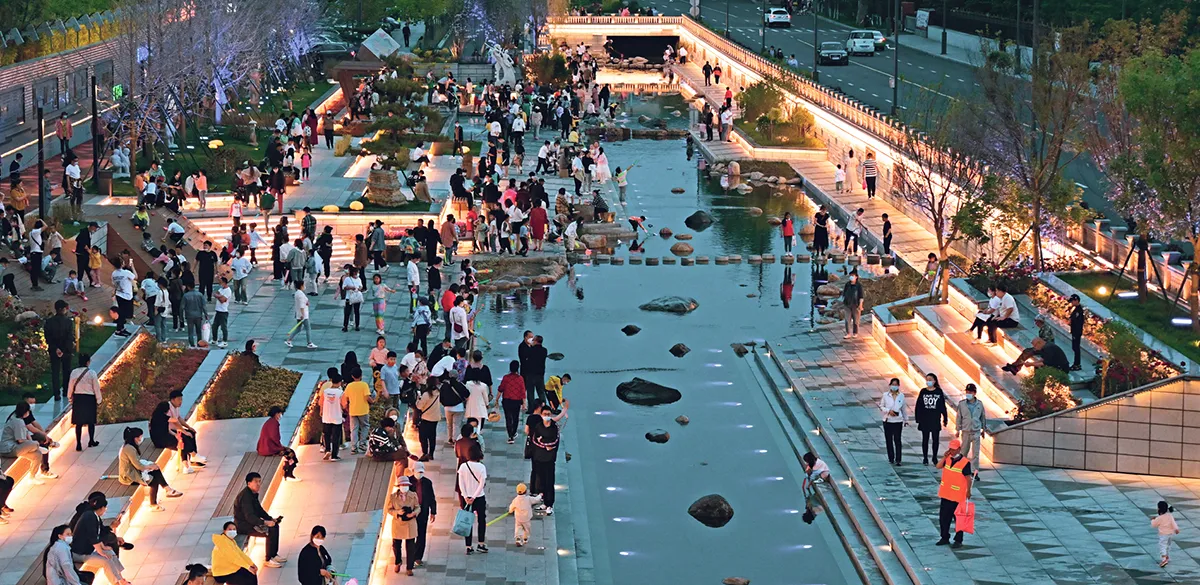
With the continuous development of the urban areas and the increasing public demand for a healthy environment, the government launched the Wulacaogou River Renovation to inject new vitality into the urban life. In this area, 1.3 km long, covering about 4.8 hectares in three blocks, the relationship between municipal transportation and urban pipelines is rearranged, and multiple types of public open space are constructed.
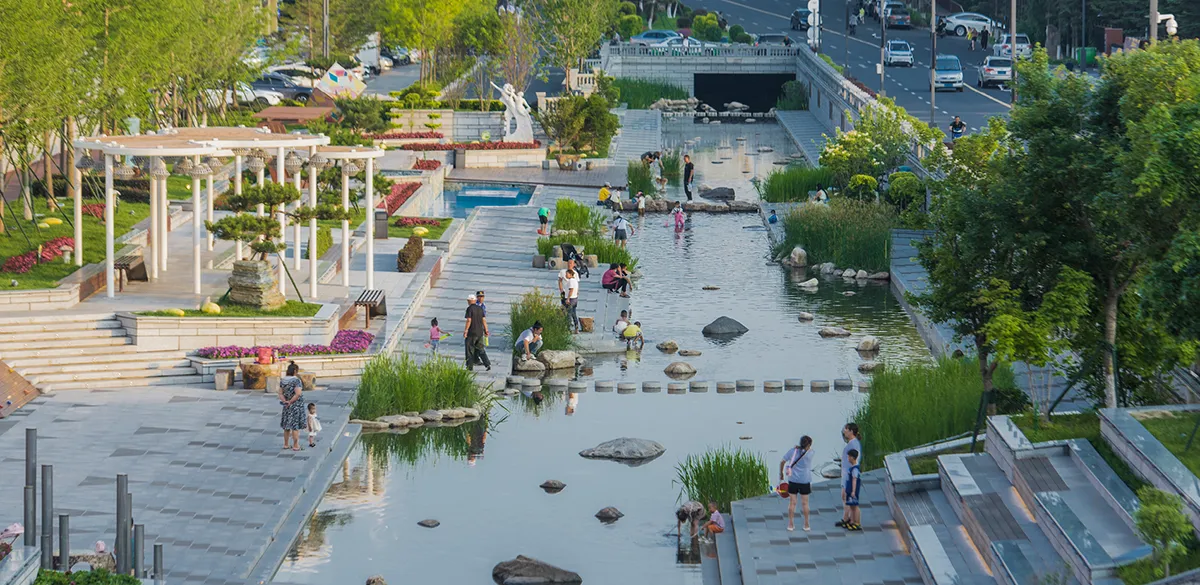
Design Intent: Urban Revitalization: After the renovation, the river has not only improved the resilience of ecological self-purification ability, but also realized symbiosis with the county and people. It has stimulated regional vitality after the whole area is rearranged and upgraded. It has improved public happiness and rejuvenated urban vitality.
Design Method:
1. Reshaping the Relationship between River and People:
1.1 Urban weaving to reconnect the relationship between people, county and river course: By renovating the river section and adopting urban weaving strategies such as the pedestrian system and dynamic space, the project connects the site with the surrounding communities, businesses and schools. A two-layer slow lane system is designed along the river course to meet the needs of rainwater storage and to incorporate leisure activities for residents, resulting in a 2.4-km-long greenway walking system through the old town.
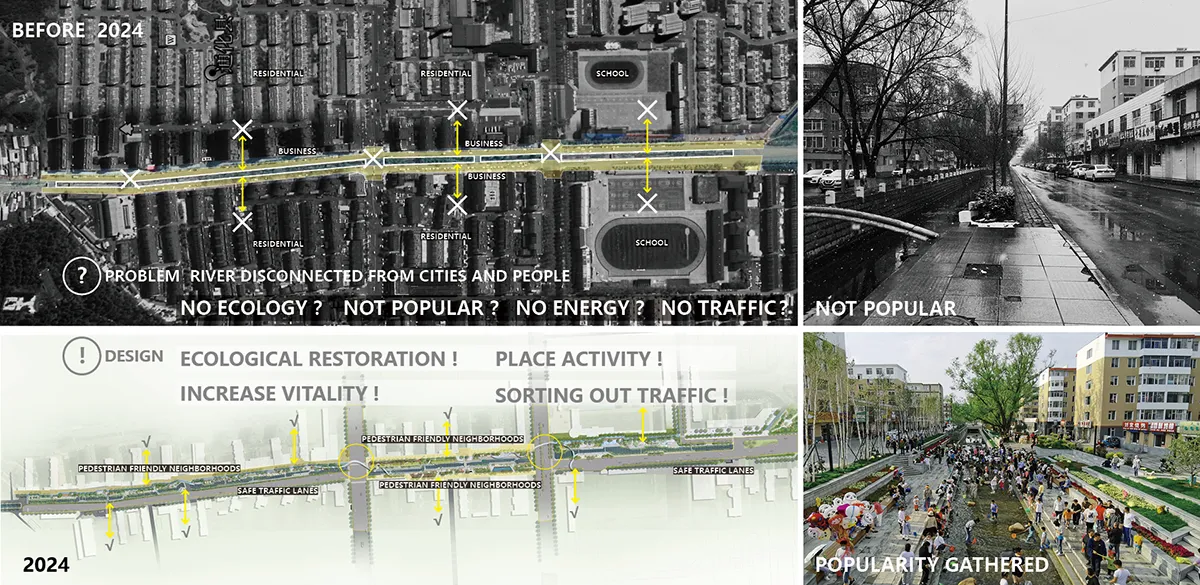

1.2 Organizing the traffic to build pedestrian-friendly neighborhoods: The design works with the municipal transportation department to scientifically evaluate the traffic routes, traffic flow and people flow. It places vehicular roads on one side and a pedestrian space on the other side, to create a safe environmental interface, give more space back to the public, enhance the connection between the river and the urban areas and people.
2. Stimulating Urban Vitality
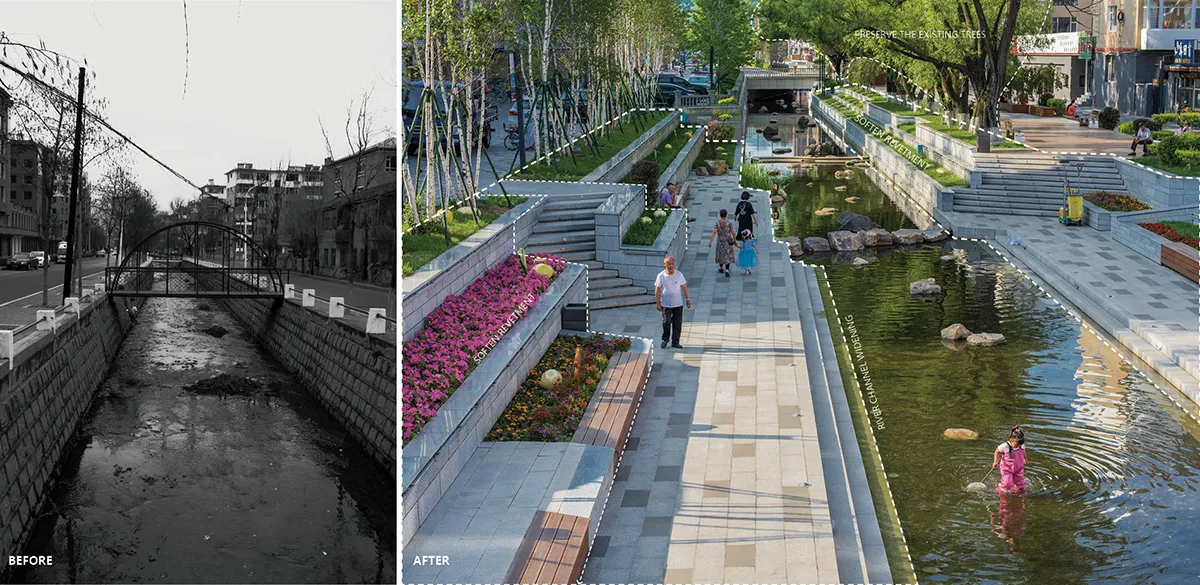
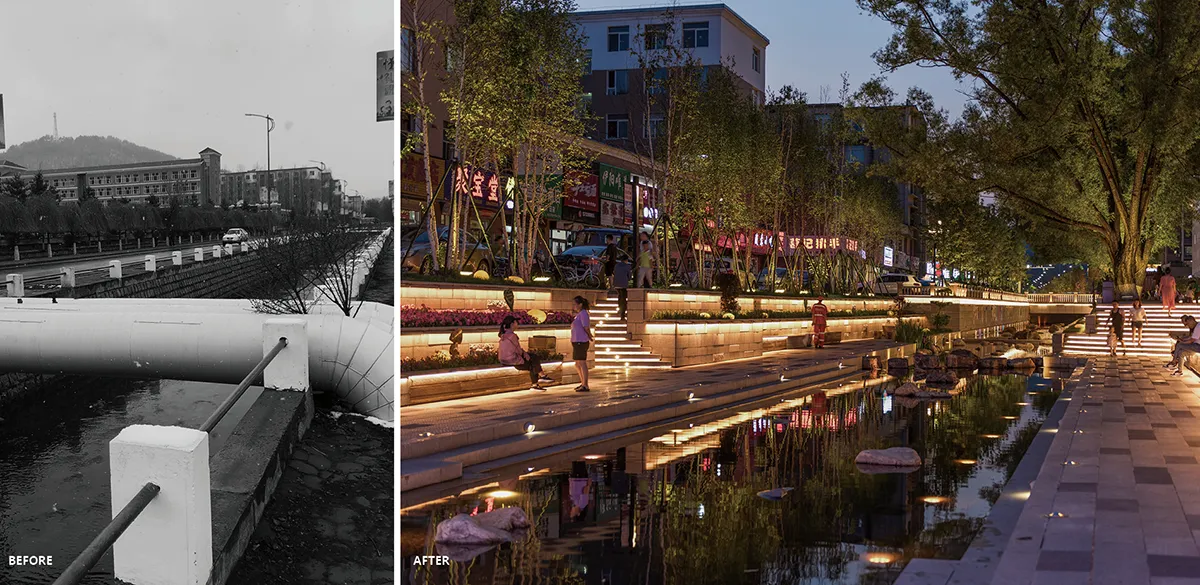
As an urban renewal project, it injects new vitality into Tonghua County. First of all, the design rearranges and plans the vehicle traffic and urban integrated pipe network along the river to ensure the safe and accessible riverbank space. Secondly, the design plans a variety of spaces along the river, open to people of all ages, allowing them to find an active way of life in various forms of space, to awaken the connection between the river and the urban areas.

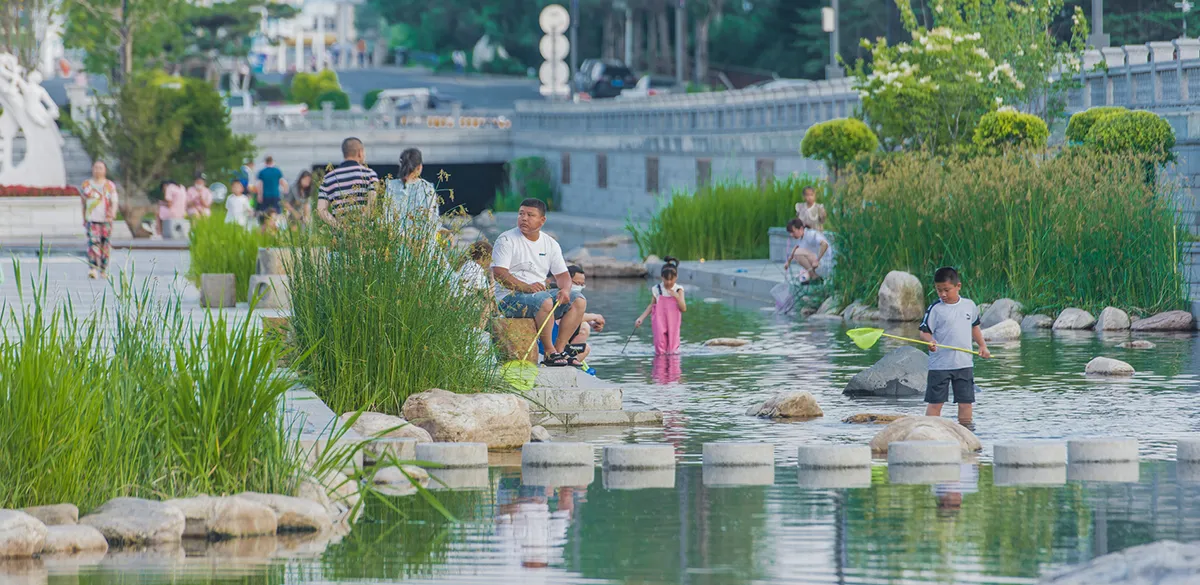
2.1 Focusing on community health to build multi-type functional spaces:The design avails to the trapezoid height difference of the river to create a paddling space and a children’s playground, provides a relaxing beach experience in some widened areas along with naturally water-covered pebble revetments and stepping stones, and forms the best venues for skating in winter adapting to the local climate. The existing old trees in the site are preserved to create a flexible multi-functional activity space, improving the people’s life quality.
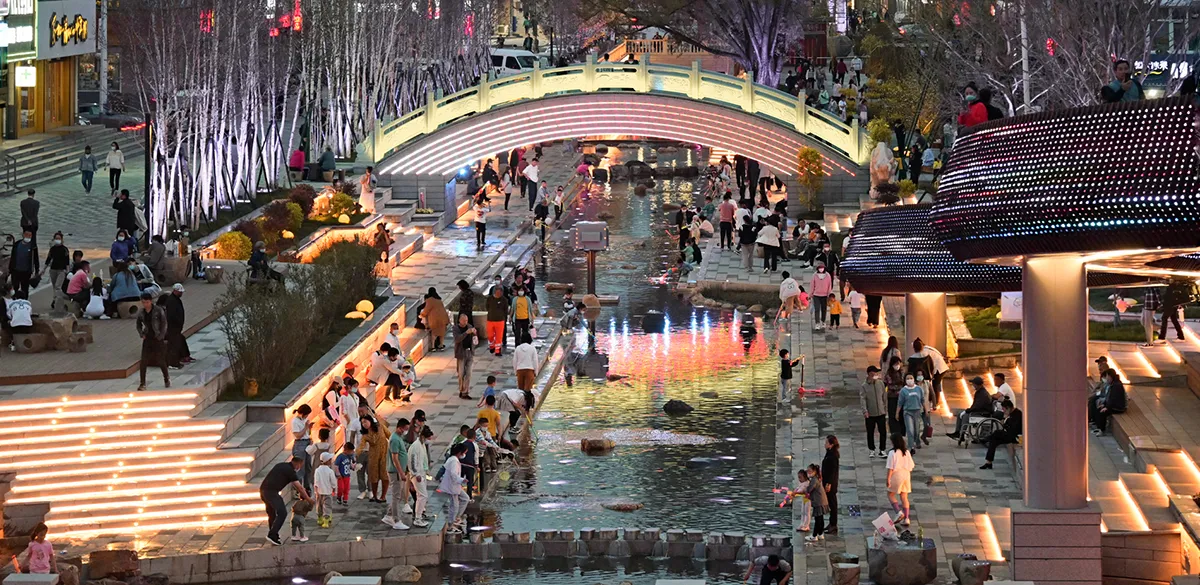
2.2 Linking businesses to activate business forms: Taking into account the existing shops along both sides of the river, the design changes the road form to introduce a vehicle-free walking system for the whole section making the river seamlessly connect with shops along the lineto drive up the value of shops. In the areas near the passenger stations with a large flow of people, large waterfront stands are set up to disperse the flow of people, and at the same time, as urban stages for festival activities, to promote the development of surrounding businesses.
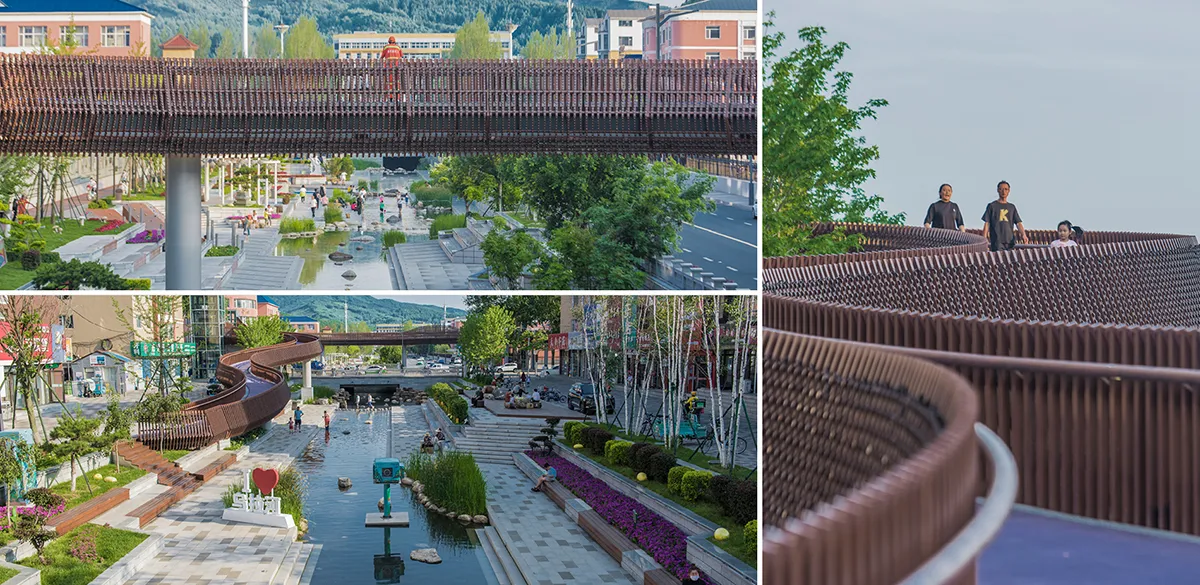
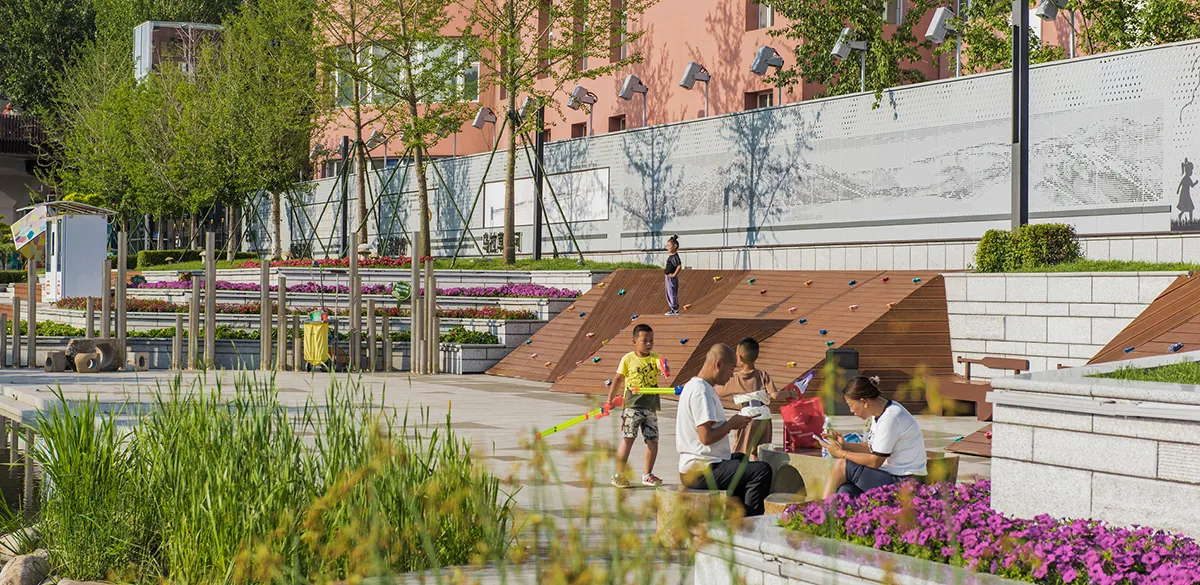
2.3 Integrating design with education to create an inclusive, fair and dynamic urban environment: Incorporating the needs of the nearby school for waterfront space functions, the design adds Ula theater and fun music spring in the main entrance area of the school to facilitate outdoor school education. On the other side of the river, viewing steps are designed for daily and performance use.
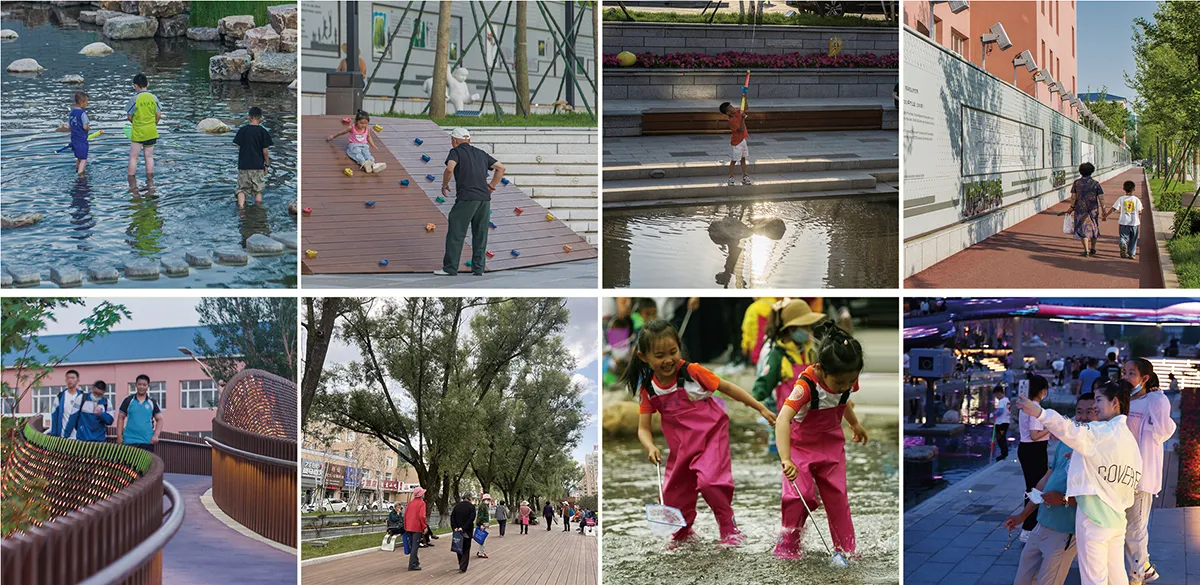
2.4 Implanting local culture: Thanks to a series of efforts to boost cultural inheritance, spatial distribution of diverse landscapes, and safe and accessible transportation system, the Wulacaogou River has promoted the vitality of the county and generated great social values for human health and well-being.
3. Nature-based Solutions:
Ecological restoration, enhancing the resilience of river channels: The design, based on natural solutions, weighs the site’s water, soil and vegetation. It introduces two systems for the site rainwater works to solve the rainwater collection and discharge on the northern and southern sections of the municipal roads. The rainwater is eventually drained into the downstream of the Wulacaogou River.
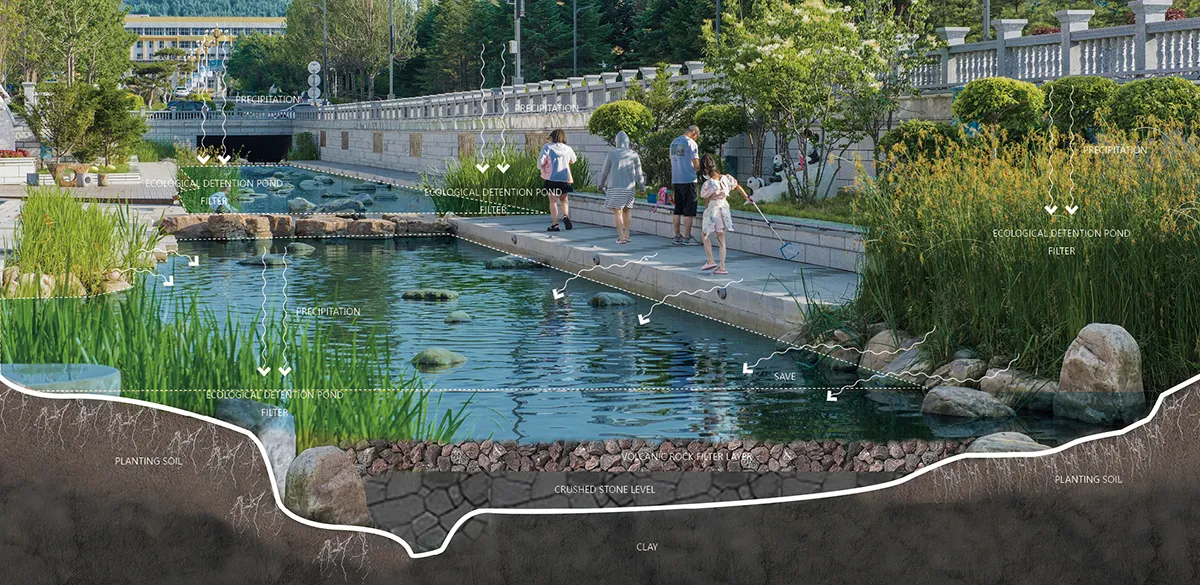
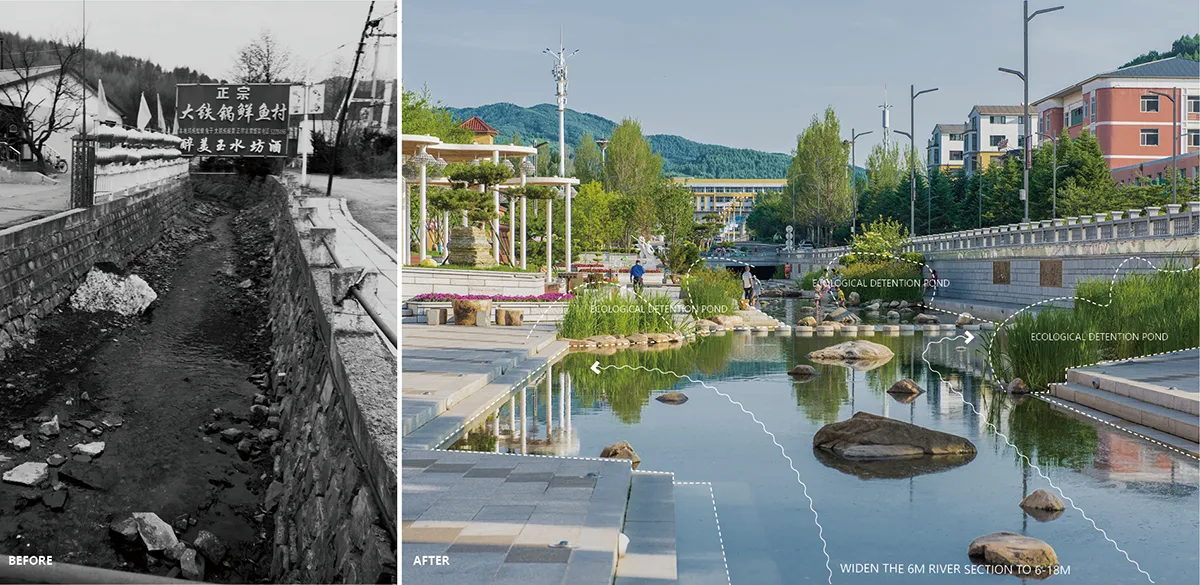
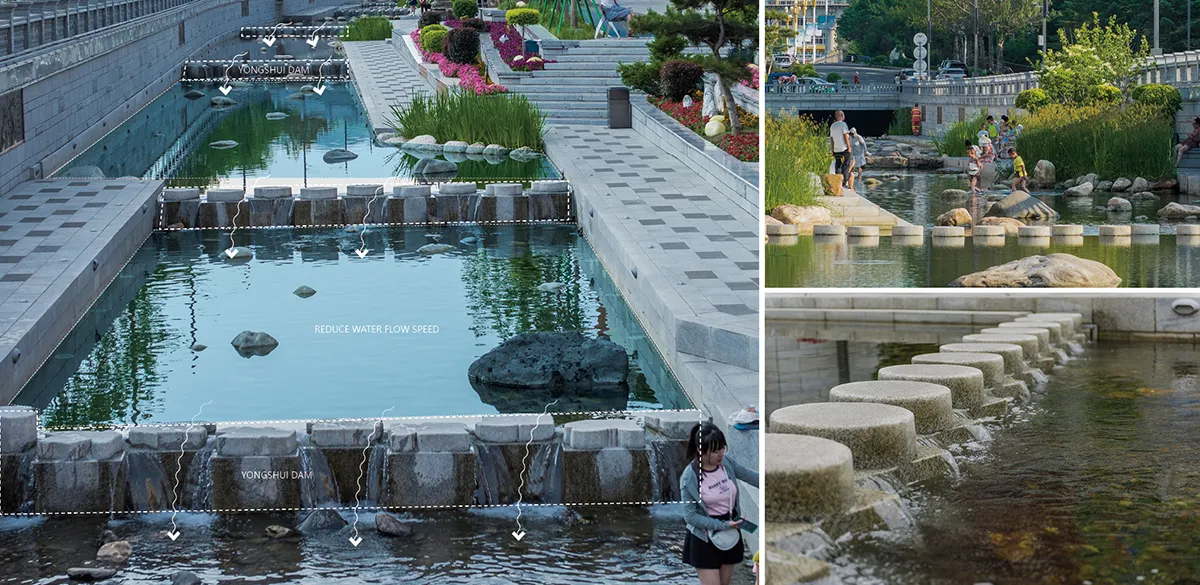
In the design, the 6m river section is widened to 6-18m. The ecological retention ponds and rainwater gardens are added. Swell dams are also laid out, keeping to height difference of every 300cm at the bottom of the pool. Some swell dams are designed to integrate with the stepping stones to reduce the water flow rate and purify the water quality.
Conclusion:
The Tonghua Wulacaogou River renovation project has brought a positive and extensive impact on the site and the county. It has established a natural space for the local residents, improved the happiness of the people, and realized the urban revitalization. In the two years since the launch of the Wulacaogou River, the surrounding businesses have been economically upgraded, and social group activities have been held in an endless stream. It has become a gathering place frequented by local Internet celebrities and residents. With the improvement of the environment and the implantation of more functions, it will drive the upgrading of urban areas and stimulate the vitality of urban regeneration, and this area will surely become the most influential place in the county.
Comprehensive Renovation of Wulacaogou River in Tonghua County
Location: Kuaidamao Town, Tonghua County, Tonghua City, Jilin Province, China
Client: Tonghua County Housing and Urban Rural Development Bureau
Design Firm: SHUISHI
Design Team: SHUISHI Landscape Department Ⅱ (Scheme), SHUISHI Landscape Department IV (Construction Drawing)
Photography: Kuan Li, Hongbo AD