
Winner of the Outstanding Award in the 2025 WLA Awards – Concept – Public Space category
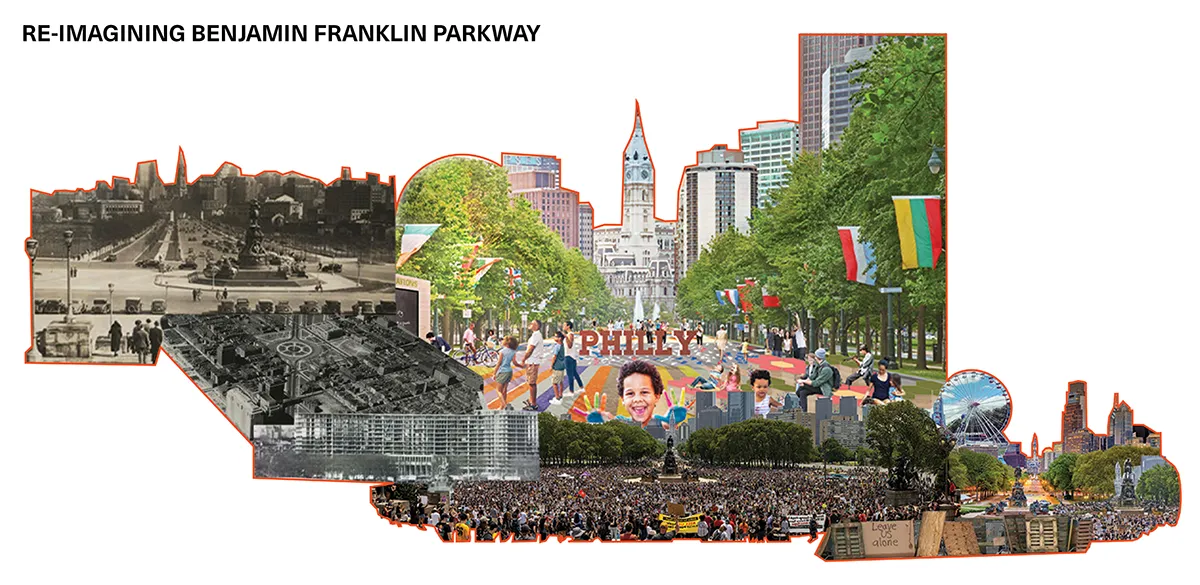
As Philadelphia approaches its 250th birthday, the Benjamin Franklin Parkway – once envisioned as a scenic drive through civic institutions and garden – has become fragmented green spaces separated by high-speed traffic routes. Grassroots efforts and community planning have built momentum for transformation. This proposal reimagines the area not as a parkway bordered by green spaces, but as Philadelphia’s next great park: connected experiences, expanded activities, unified green spaces, climate-resilient design, and offering multimodal transportation – creating a cohesive public space worthy of the city’s legacy.
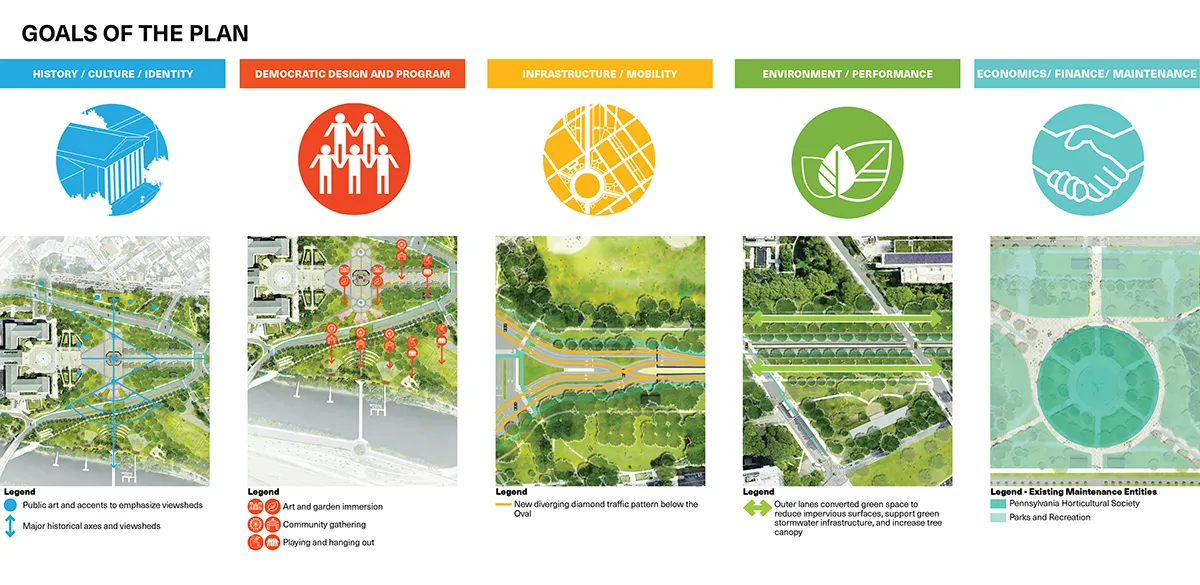
Parkway to Park: Reimagining Philadelphia’s Benjamin Franklin Parkway
Parkway to Park reimagines Benjamin Franklin Parkway, transforming it from a Eurocentric vehicular-focused corridor into a people-focused park addressing social equity needs and community connections through green spaces. This reimagining responds to COVID-19’s increased demand for outdoor gathering spaces and Black Lives Matter protests following George Floyd’s murder, which called for more inclusive public spaces.
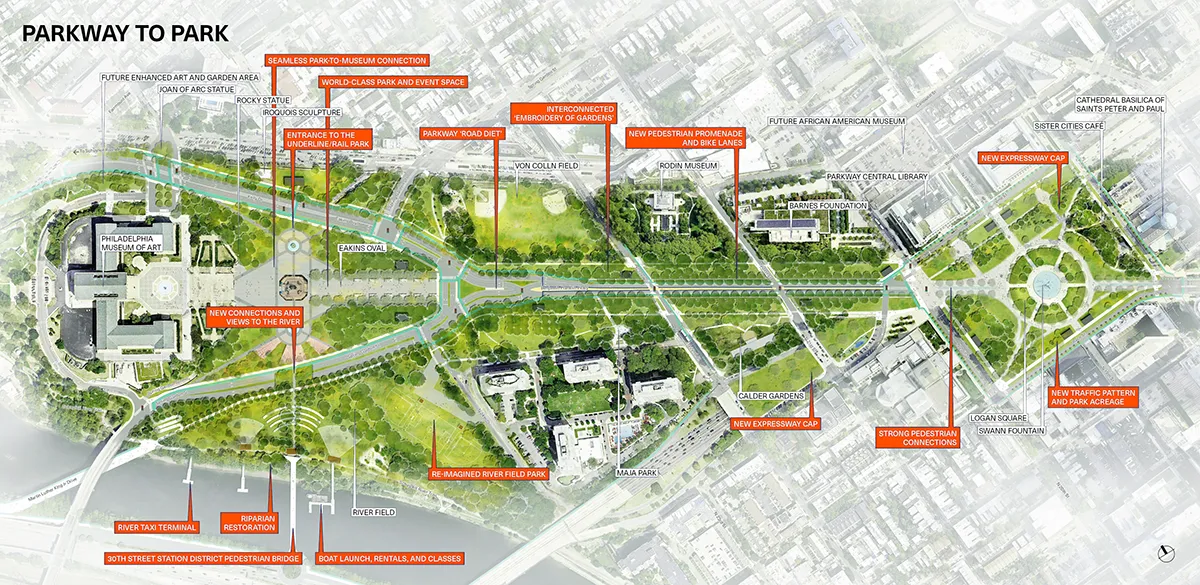
Historical Context: From Paris to Philadelphia
Originally conceived in the Beaux Arts tradition like Paris’s Champs-Élysées, the Parkway featured a multiway boulevard surrounded by cultural institutions. Over time, it evolved into a major thoroughfare connecting Center City with greater Philadelphia while serving as a space for commemoration, celebration, and protest.
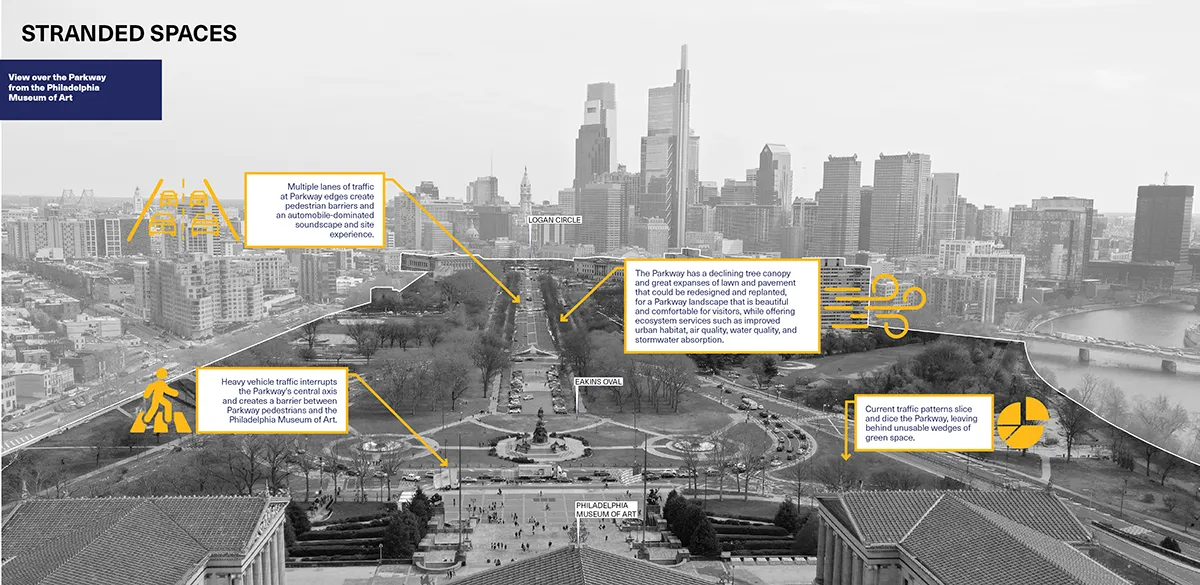
Catalyst for Change: Fundamental Needs
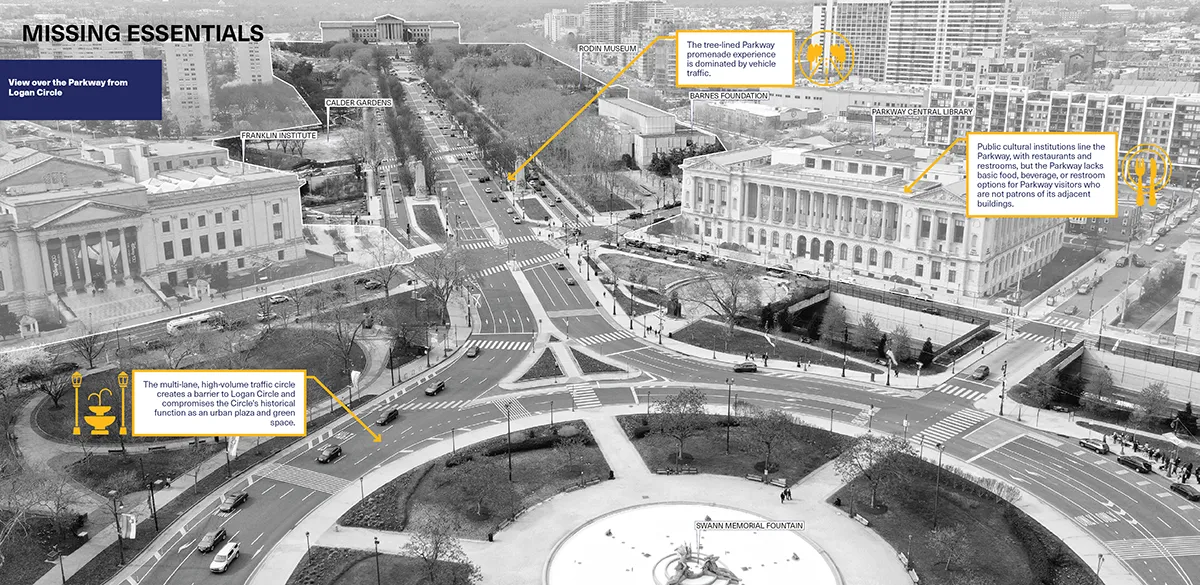
Recent events highlighted the need for transformation beyond the Parkway’s Eurocentric origins: the pandemic increased demand for outdoor public spaces, George Floyd’s murder sparked protests along the Parkway, and debates over unhoused encampments demonstrated the necessity for reimagining this public space. These events emphasized returning to a pedestrian-focused experience prioritizing walkability, green space, public art, and safe access to cultural institutions.
Community-Driven Process
The design team conducted comprehensive public engagement including launch events, surveys, a public symposium, focus groups, pop-up events, and a design charrette with city staff and stakeholders. An Ambassador Program helped gather feedback from diverse users who pass through, visit, live on, or work along the Parkway, shaping strategies for improving the Parkway experience, identity, safety, amenities, and event capacity.
Modern Demands for Today’s Pedestrians
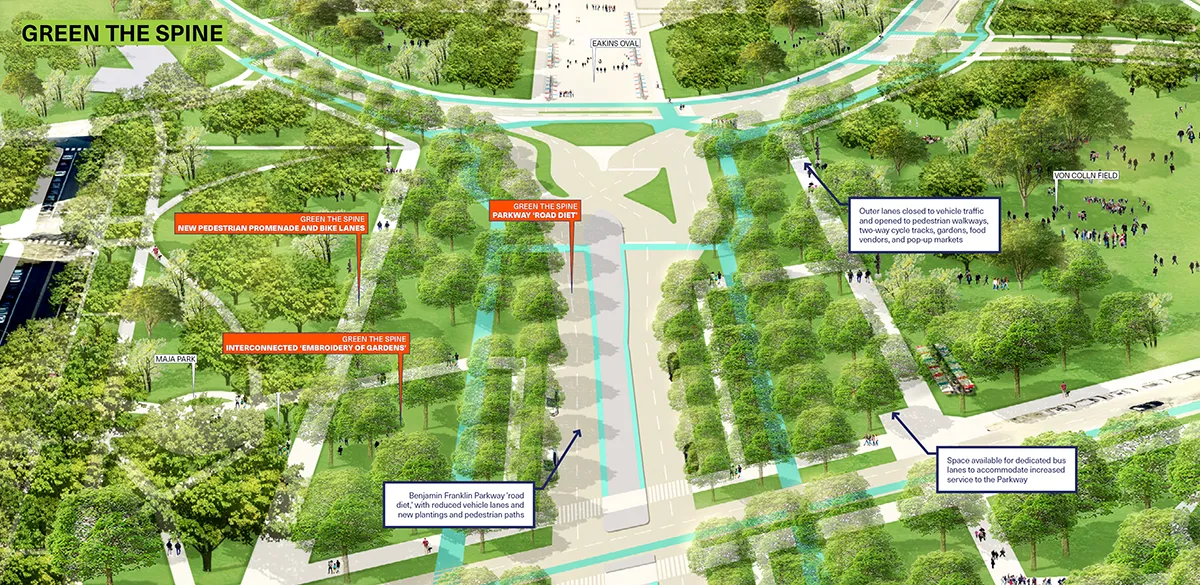
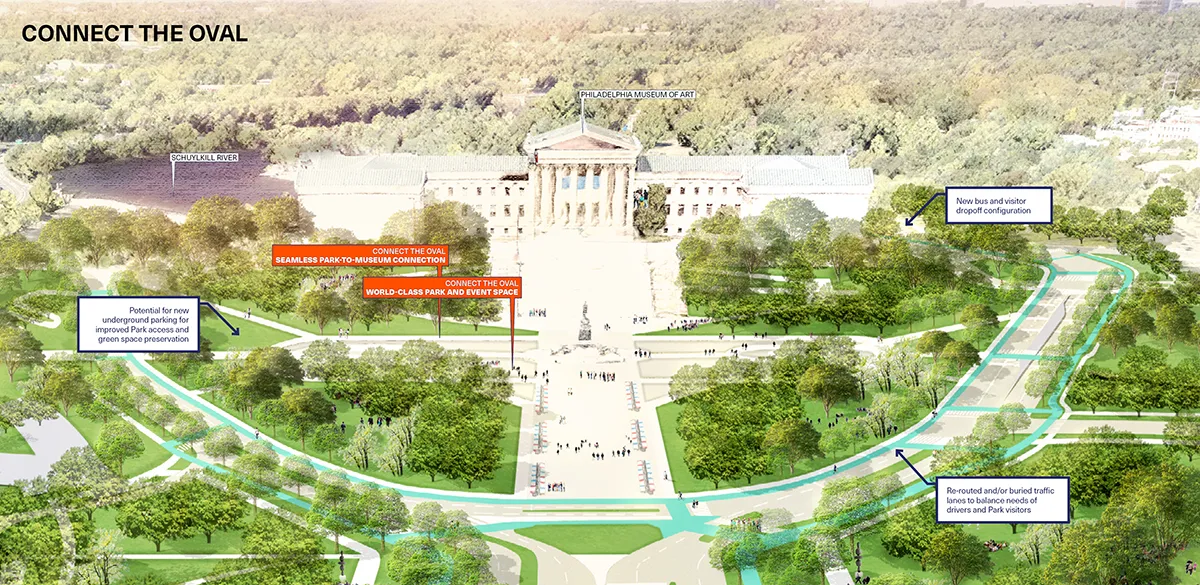
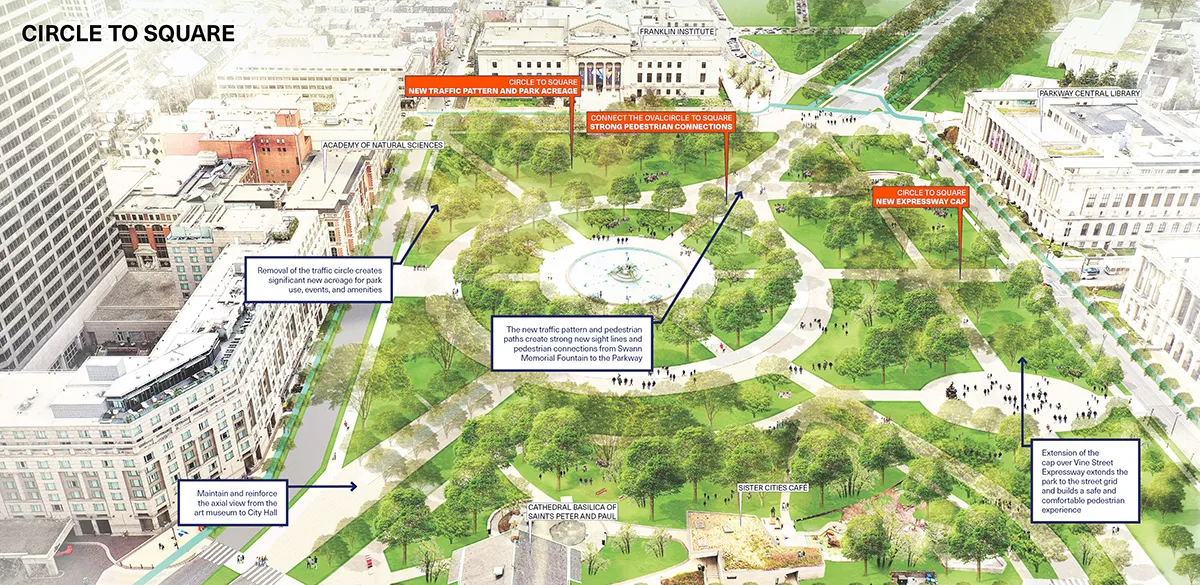
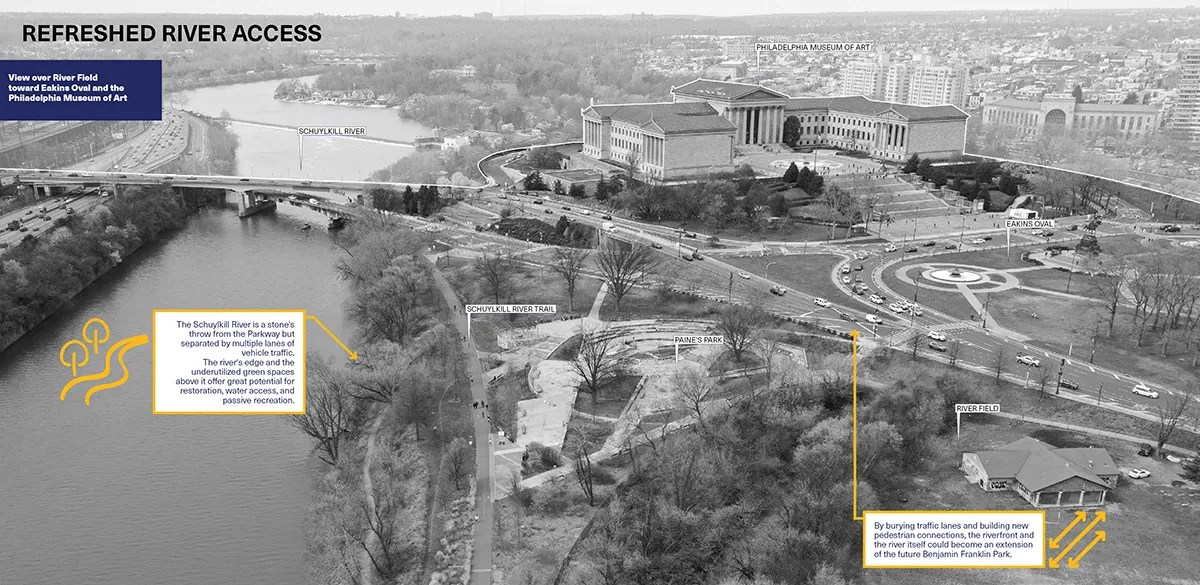
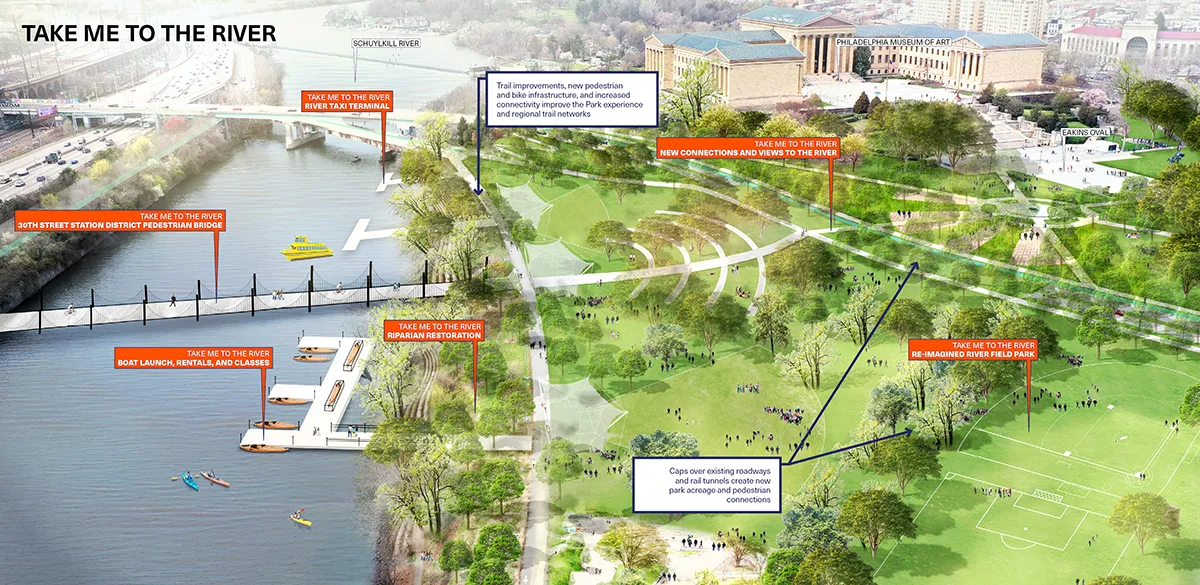
The phased transformation significantly reduces vehicular presence, with outer lanes becoming protected bike paths and pedestrian zones with soft surface trails for walking, jogging, and leisure activities. The central spine will maintain space for iconic events while reducing traffic lanes, and a new cross axis will extend to the river from Eakins Oval, featuring a pedestrian bridge connecting to revitalized railroad yards, the Schuylkill River trail, a river taxi terminal, and kayak launch. The plan also calls for removing the Kelly Drive segment that divides the Oval from the Philadelphia Museum of Art and restoring Logan Circle as a pedestrian-focused public square.
Transformational Impact
This transformation represents a vital reconnection with fundamental human needs in an urban context. As cities become increasingly dominated by hard infrastructure, this project exemplifies how thoughtful urban planning can restore essential connections to nature and community. The reimagining of this historic corridor demonstrates how public spaces can evolve to meet contemporary social needs while honoring cultural heritage. Through carefully phased implementation, this vision will create an inclusive, sustainable urban park that serves as a model for transforming car-centric infrastructure into people-centered spaces that foster social interaction, environmental stewardship, and cultural celebration, acknowledging that truly successful urban spaces must adapt to serve their communities’ changing needs while providing opportunities for both structured programming and spontaneous gatherings that enrich city life.
Benjamin Franklin Parkway
Location: Philadelphia, Pennsylvania, USA
Landscape Architect: Design Workshop
Design Workshop Team Members:
Partner in Charge: Kurt Culbertson
Project Manager: Emily McCoy, FASLA
Project Landscape Architects: PLA Brenna Laffey, ASLA; Carolyn Levine, Corey Dodd, Corinne Odom, Feras Abdallah, ASLA; Lindsey Naylor, ASLA; Morgan Clutter, ASLA; Ryan Williams, Shaoyu, Tarana Hafiz, Urey Zhuang, Zhiliang Wang;
Intern: Lizandro Marcial-Armas
Marketing Coordinator: Laura Bachinsky
Local Landscape Architecture | Julie Bush, Ground Reconsidered, Philadelphia, Pennsylvania;
Parkway Historian: Charles Birnbaum, Washington, DC
Public Engagement: Charnelle Hicks, CHPlanning, Ltd., Philadelphia, Pennsylvania
Transportation/Mobility Planning: Mike King, Traffic Calmer, New York, New York
Transportation Engineer: Kimley Horn
Photographer/Image Credits: Design Workshop, Inc., Association for Public Art, Rodin Museum, City of Philadelphia – Oval XP, Esri