
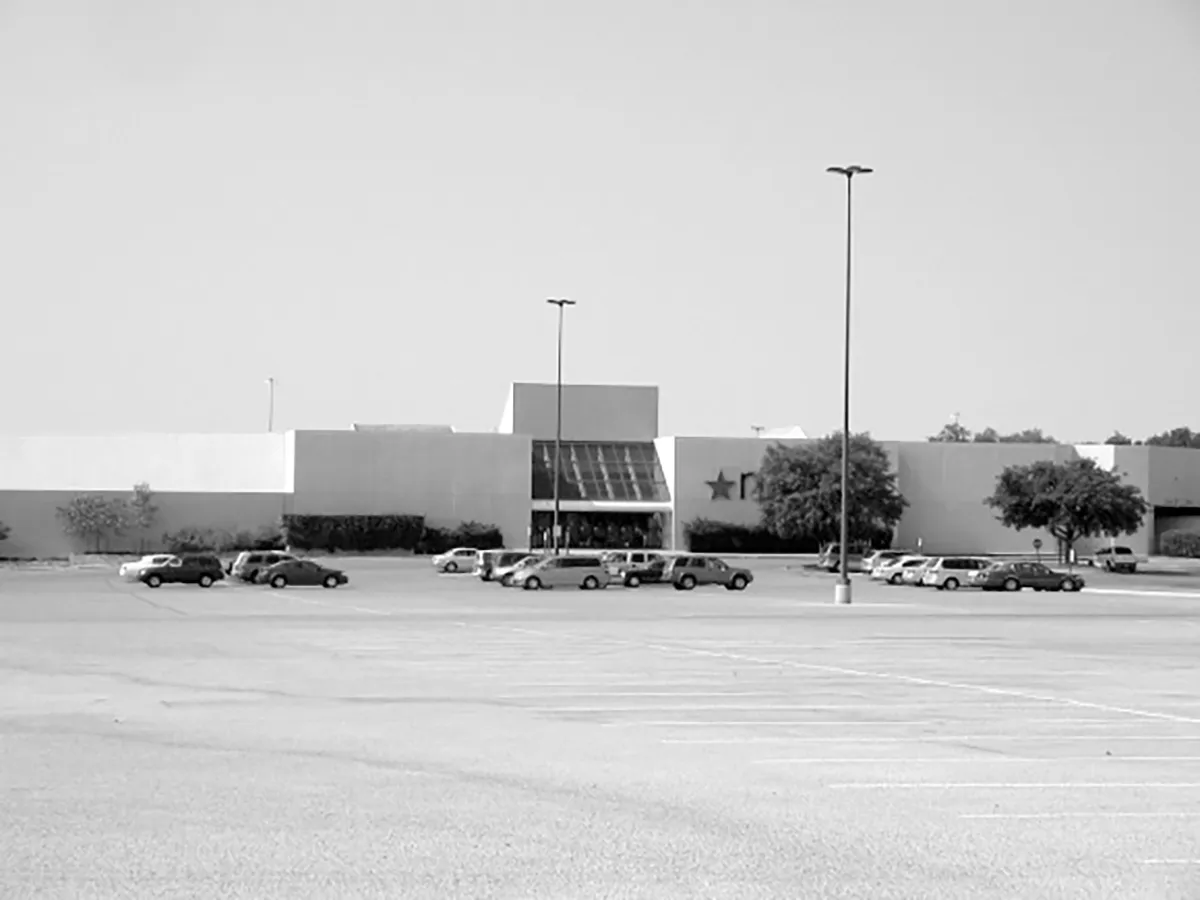
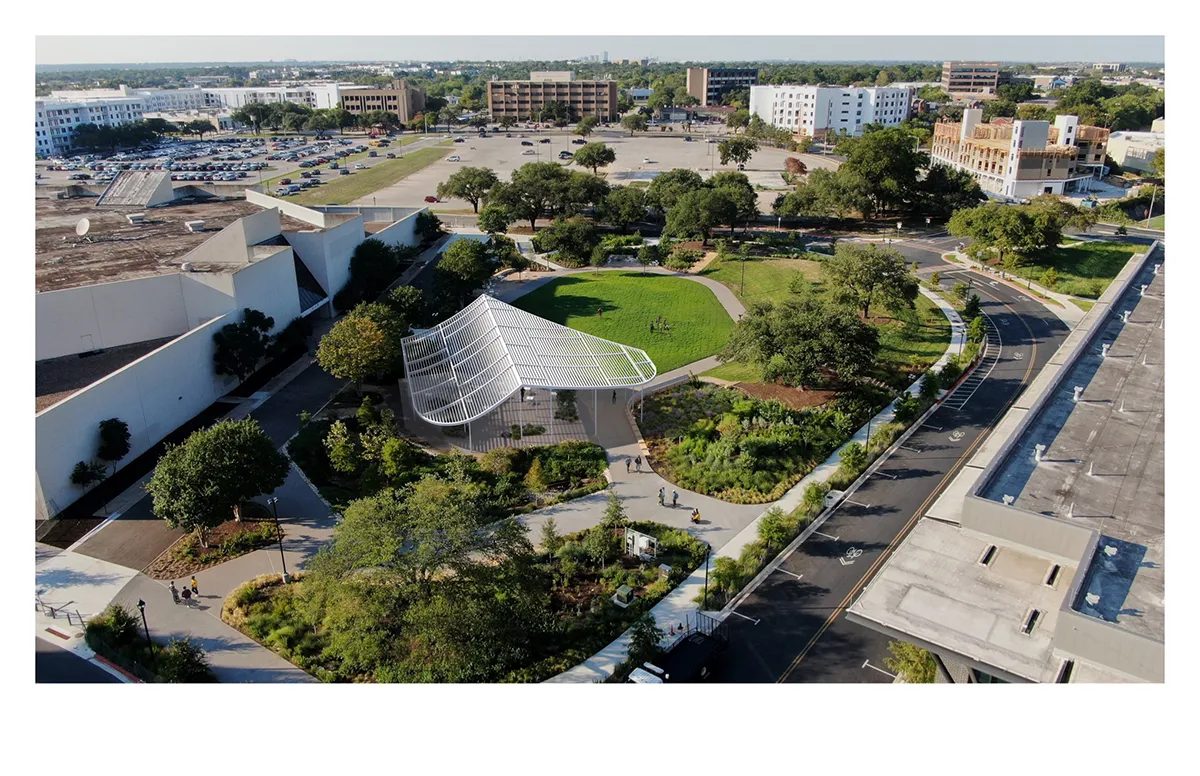
Once part of an 80-acre surface parking lot that once served the now-defunct Highland Mall, St. John Encampment Commons has been transformed into a thriving civic landscape. Completed in 2023 as part of Austin Community College’s Highland Campus redevelopment, this 2.4-acre park is shaped by memory, designed for learning, and built to perform. It serves as a compelling example of regenerative landscape architecture in a dense urban setting.
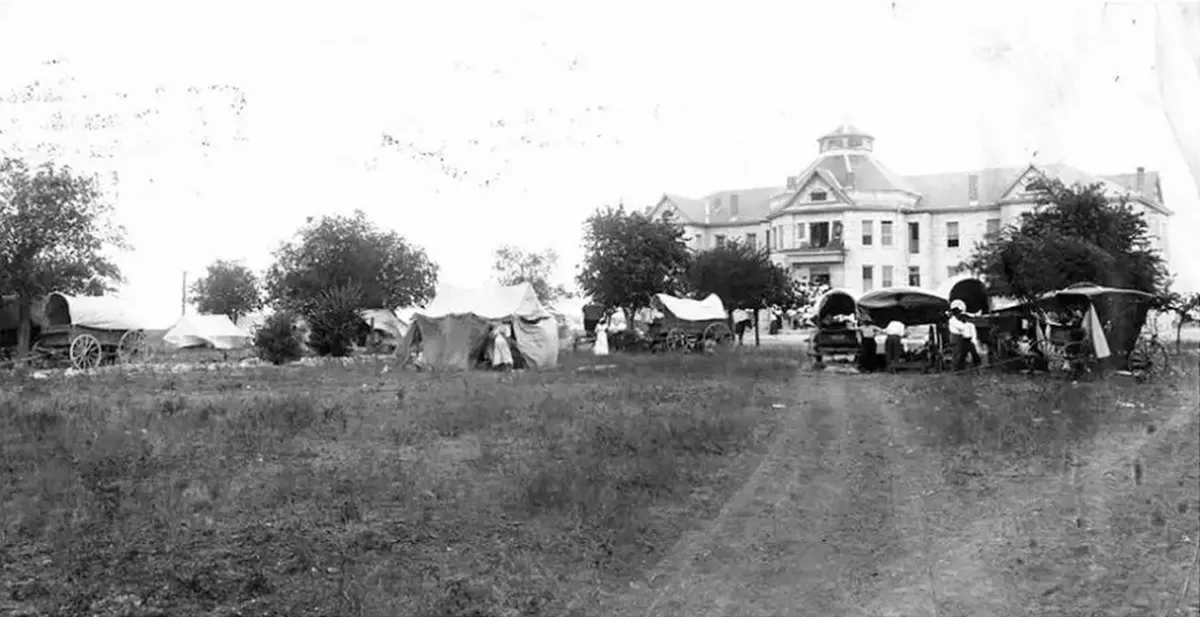
Beneath this landscape lies a history that has long gone unrecognized. In the late 1800s, the site was home to the St. John Orphan Home, the first African American orphanage in Texas. In the decades that followed, it became the location of annual encampments organized by St. John Baptist Church, drawing thousands from across Central Texas to gather, worship, and learn.
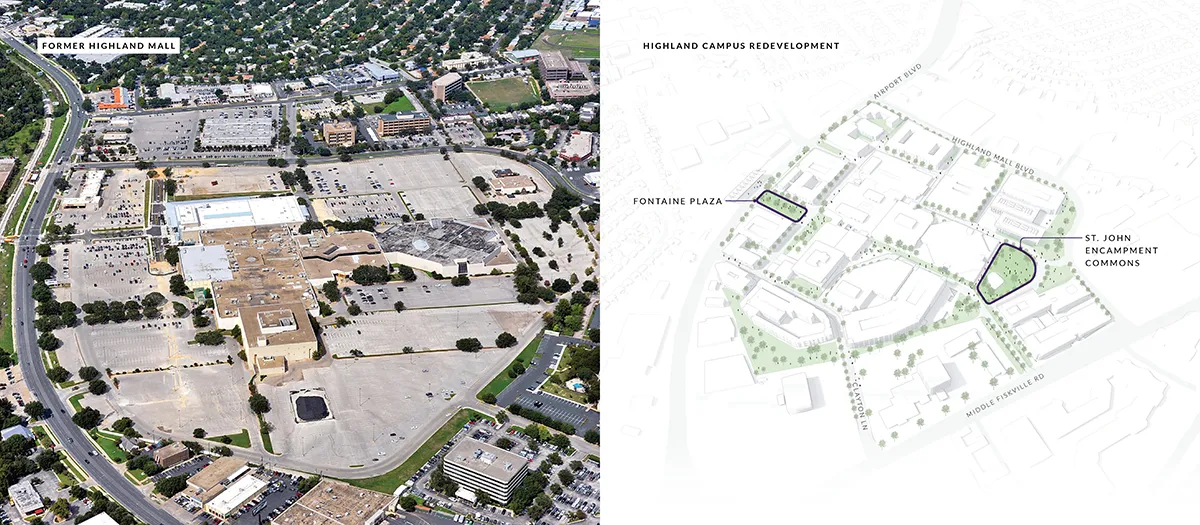
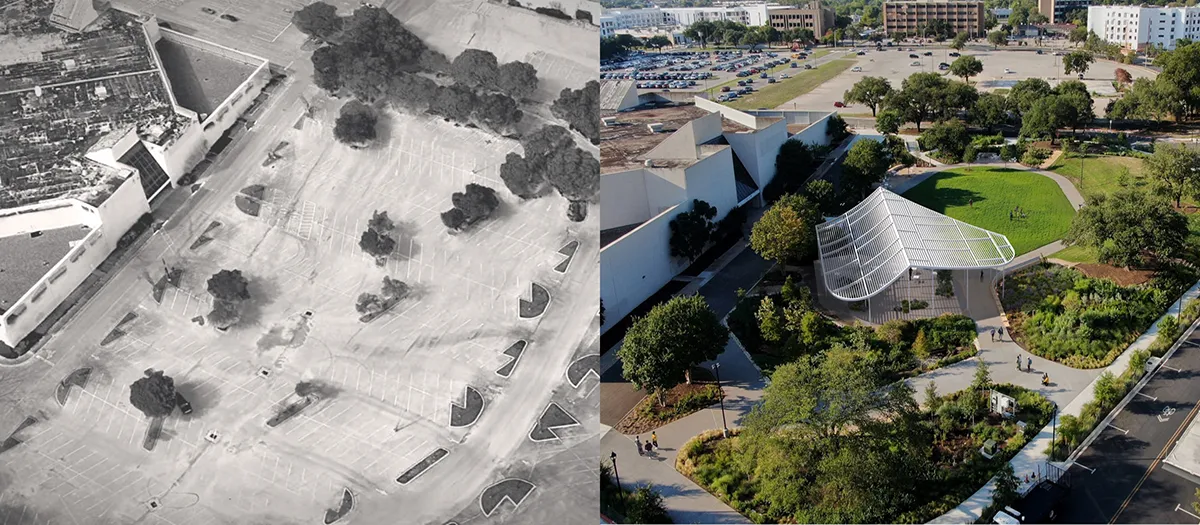
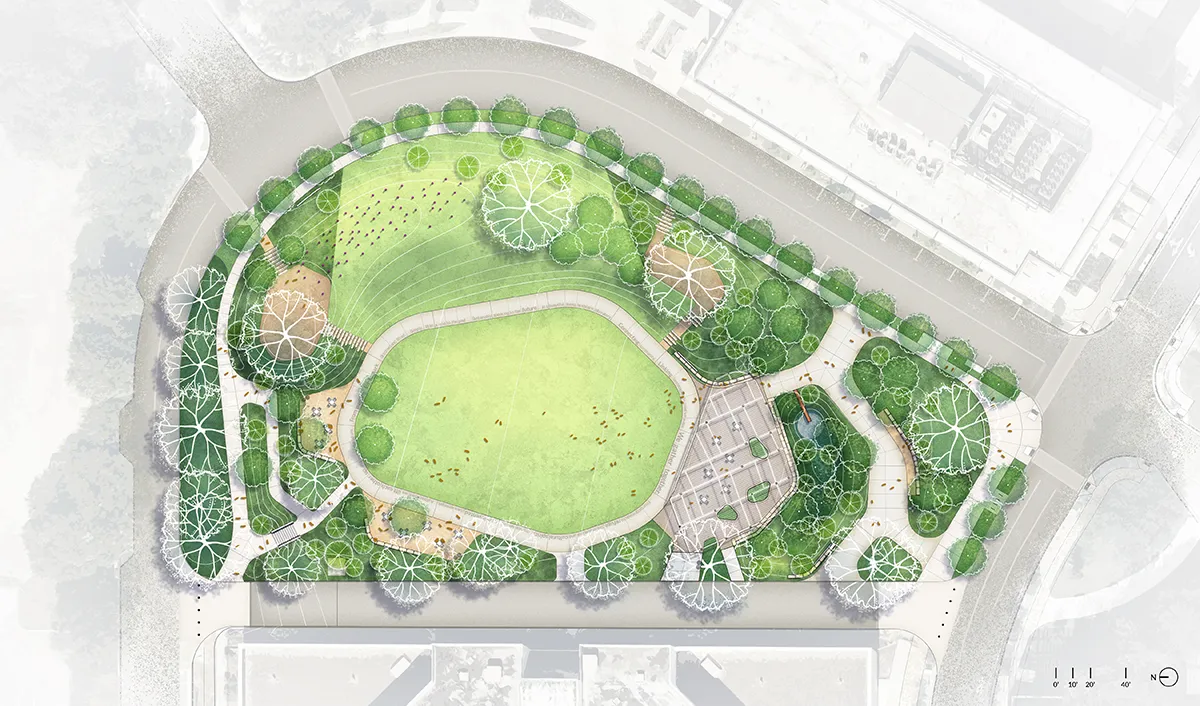
Through a community-driven design process, dwg. translated these stories, shared by oral historians including Pastor Clark, into a physical landscape. The pavilion’s draped form recalls the tent structures of past encampments, while custom lighting poles in ACC’s signature purple rise like a flock of bats. These elements connect both to the college’s Riverbat mascot and the park’s role as a welcoming threshold to campus life.
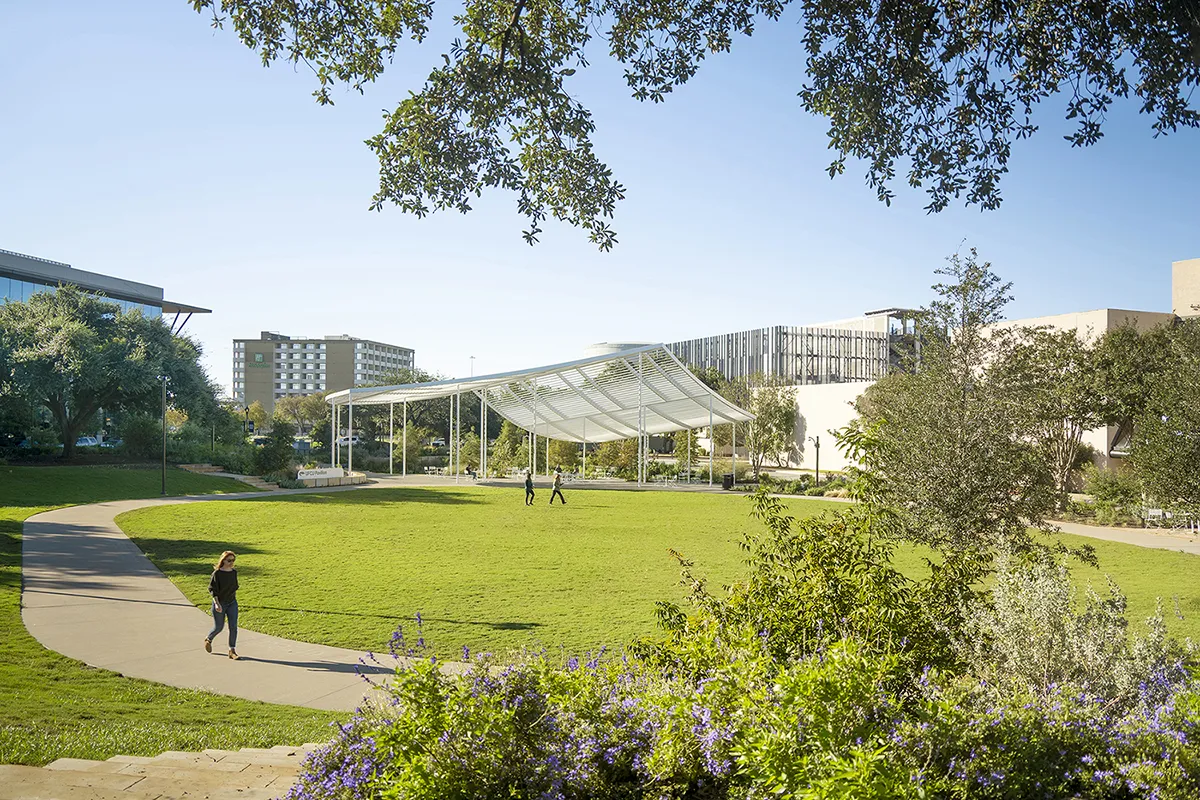
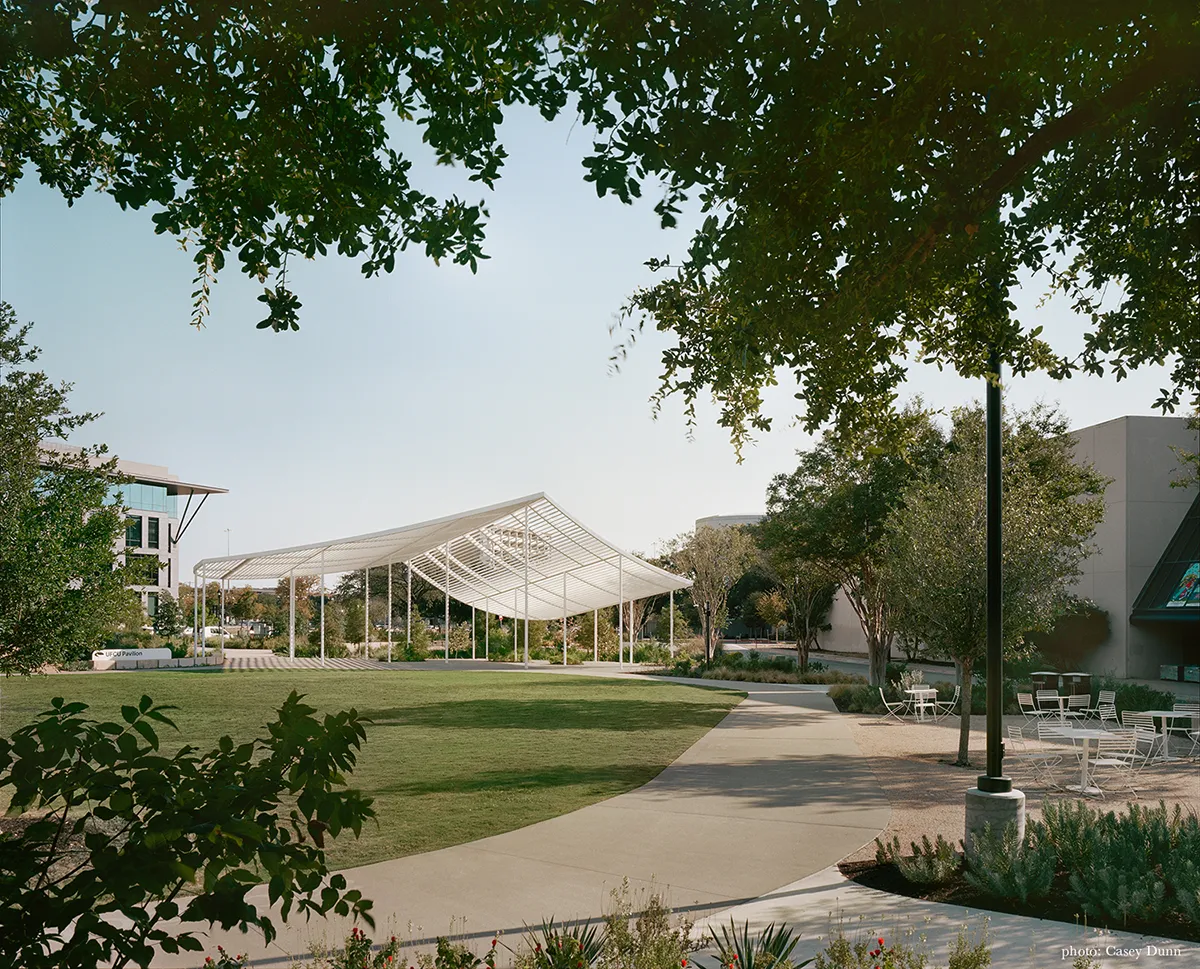
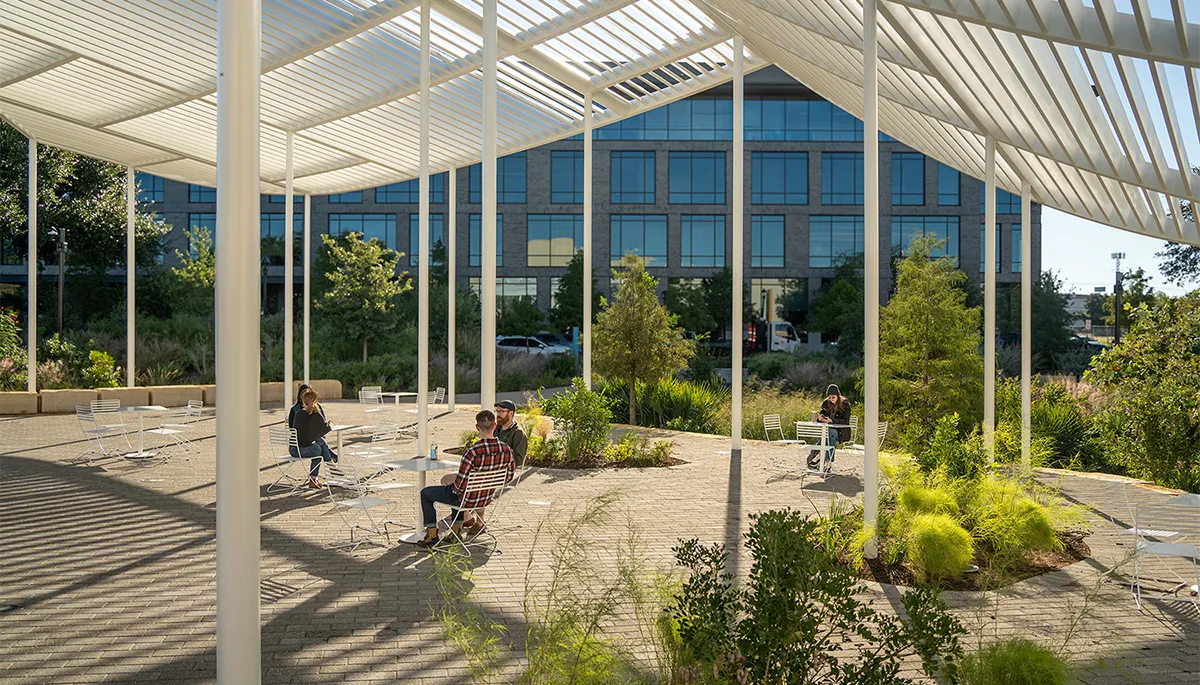
St. John Encampment Commons performs as strongly environmentally as it does culturally:
- 89% reduction in impervious surface
- More than 1.2 million gallons of stormwater captured and absorbed each year
- Irrigation provided entirely by reclaimed condensate and rainwater stored in a 1-million-gallon cistern
- Plant palette composed entirely of native or adapted species, cutting water use by up to 80%
- Preservation and relocation of 17 mature trees, including heritage live oaks
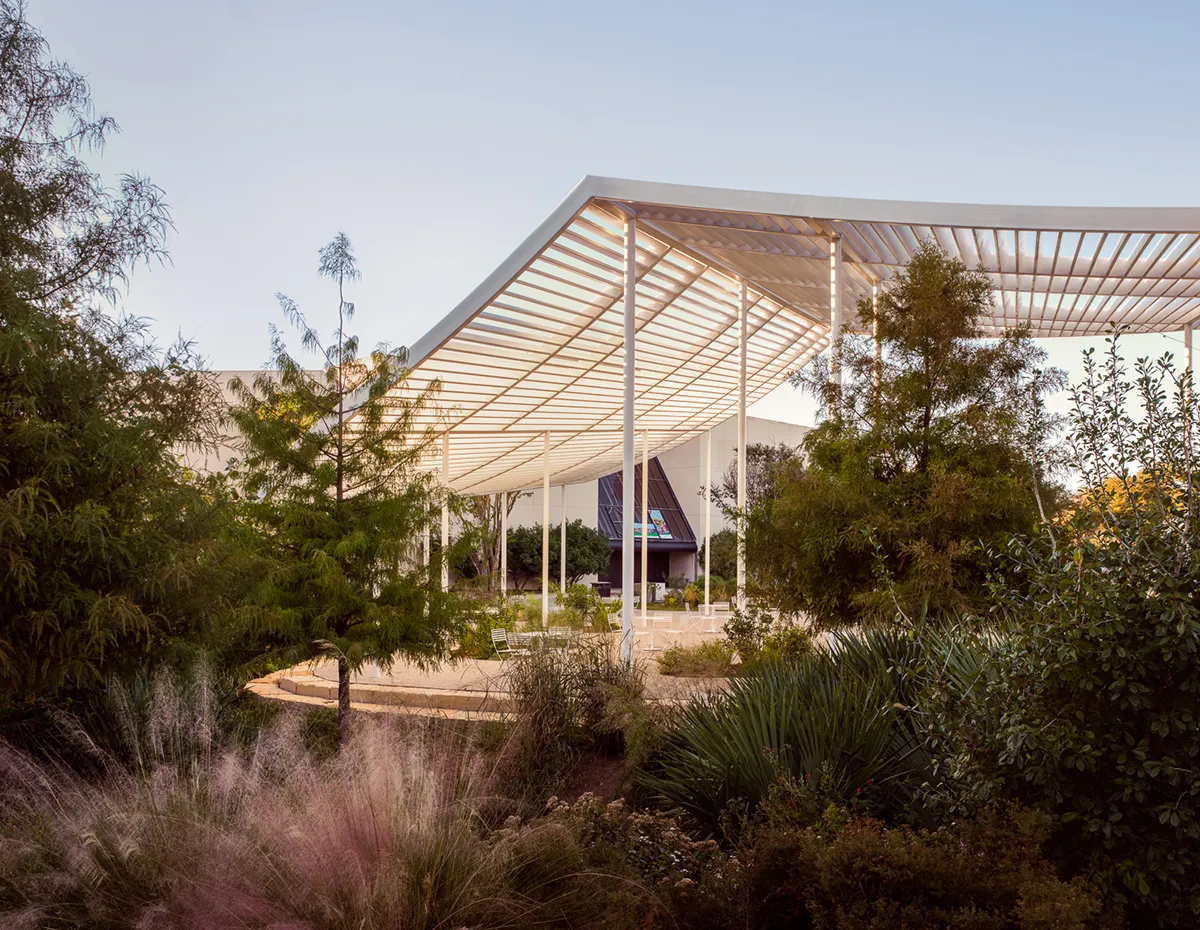
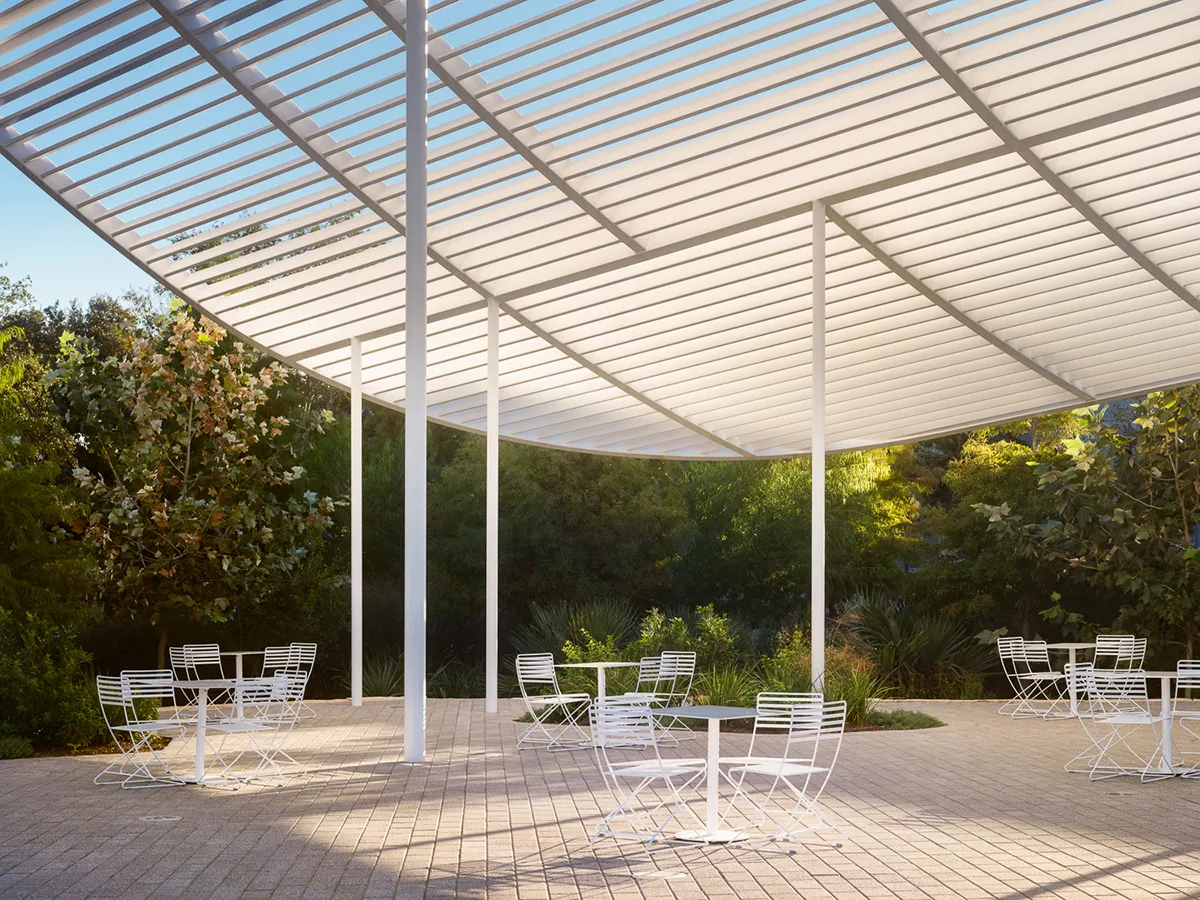
The park is more than a stormwater solution. It functions as a vital gathering space, with a layout of “outdoor rooms” that support a range of uses including recreation, reflection, and performance. From student convocations and theater productions to everyday shade-seekers and birdwatchers, the space adapts to serve ACC’s 8,500 students and the surrounding neighborhood.
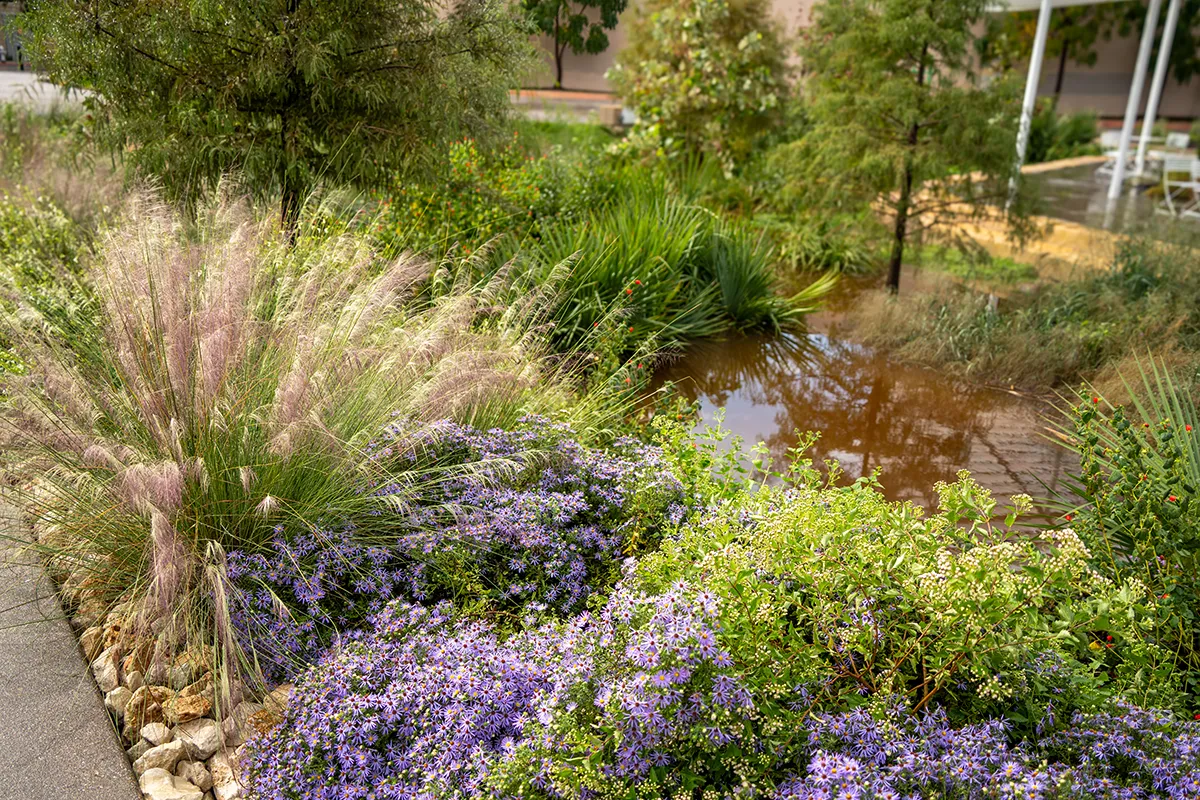
A sculpted landform built from reclaimed demolition debris buffers the site from nearby roadways while forming a natural amphitheater. Pathways are inscribed with poetry that reflects the site’s layered past. Interpretive signage and integrated storytelling make the landscape a living classroom, aligning with ACC’s mission to educate and inspire.
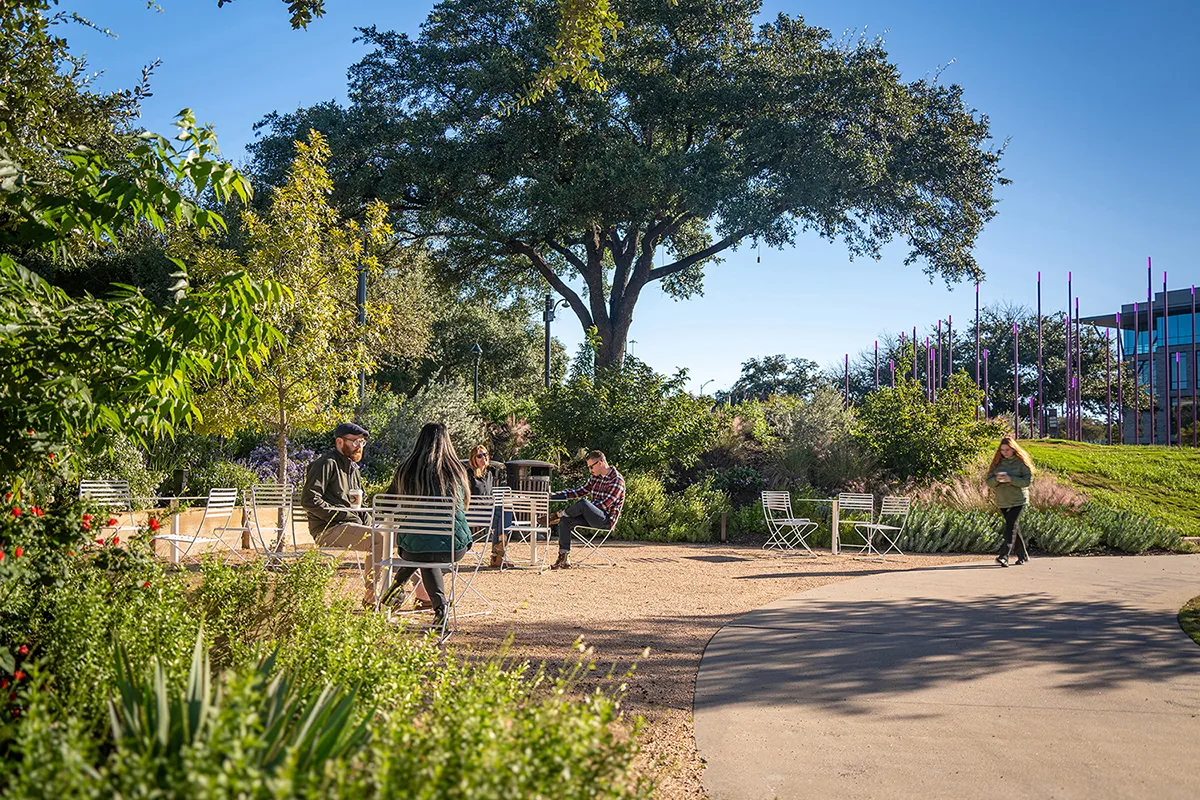
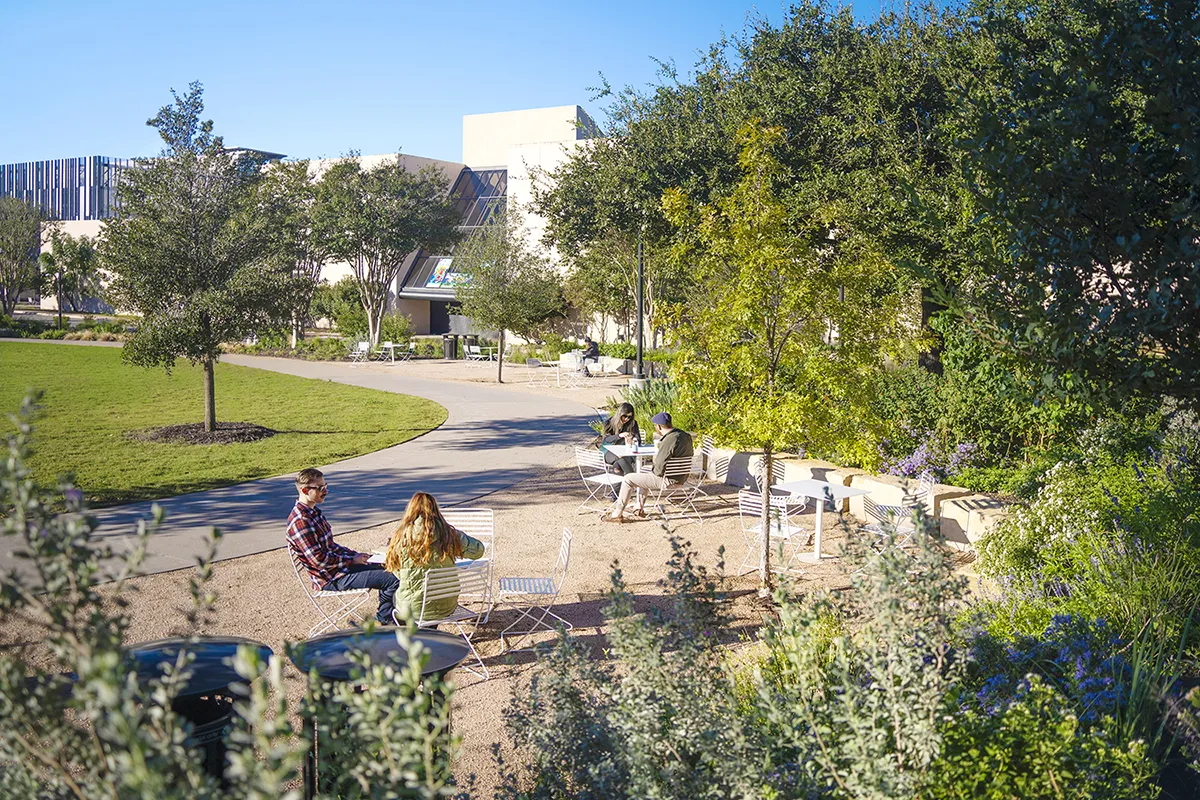
Developed in partnership with Redleaf Properties and Austin Community College, the project shows how landscape-led design can lead urban transformation. The park fosters social equity, supports economic activity, and builds climate resilience, all within the footprint of a former shopping mall.
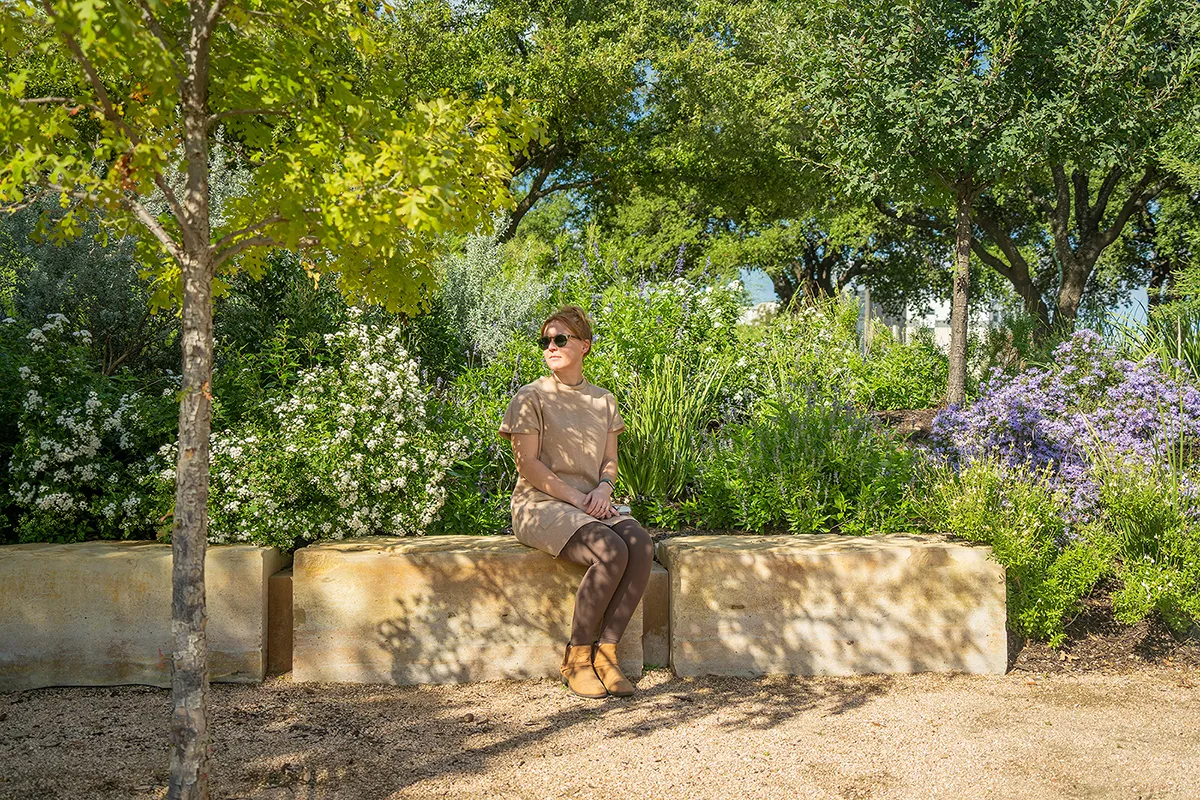
St. John Encampment Commons illustrates the power of landscape architecture to honor memory, prioritize ecology, and invite community life. It is not just a park, but a living legacy. A place for learning. A place for gathering. A place for healing.
St. John Encampment Commons
Location: Austin, Texas, USA
Client: Austin Community College
Master Developer: Redleaf Properties
Landscape Architect: dwg.
Architect: Agenda Architecture
Pavilion Sponsor: UFCU
Civil Engineer: Stantec & WGI
MEP/Structural: Bay & Associates, Leap!
Contractors: Harvey Cleary, Strata
Steel Fabrication: Renfro + Co.
Custom Lighting: AAG
Images Credit: dwg. unless otherwise captioned/noted.