
RAINFOREST WILD ASIA
conserve . explore . connect
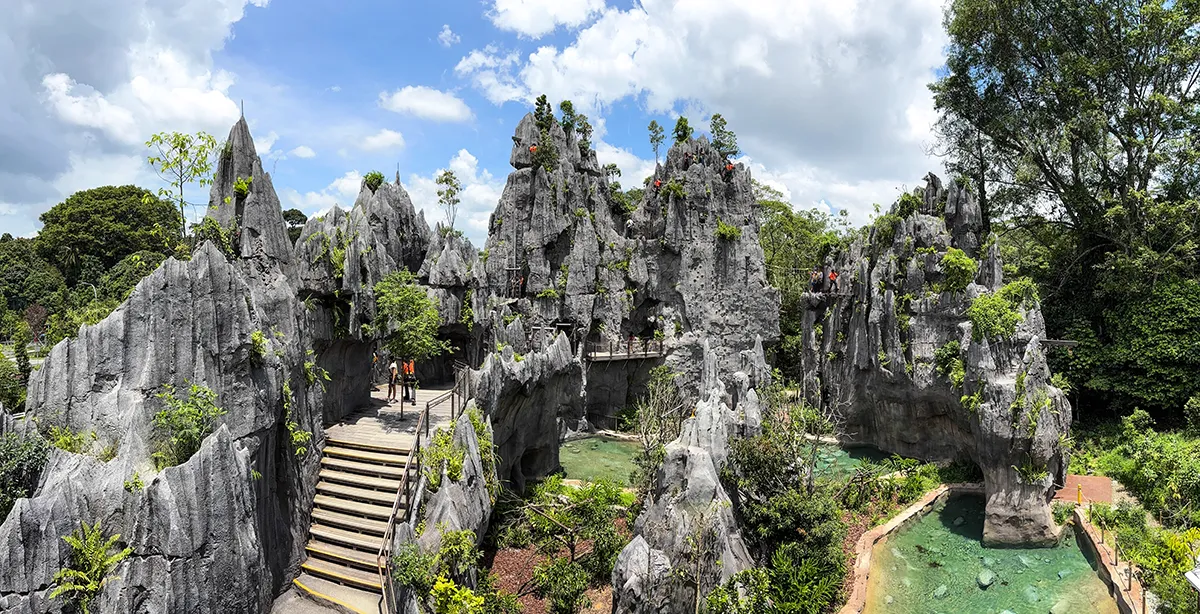
Rainforest Wild ASIA is Singapore’s fifth zoological park, and a pioneering 13-hectare destination that reimagines the wildlife experience. Situated in the biodiversity-rich Mandai precinct and adjacent to Singapore’s largest nature reserve – Central Catchment Nature Reserve, this is Asia’s first adventure-based rainforest zoo. It offers an immersive journey into the rich biodiversity and layered complexity of Asia’s tropical rainforests, presented not through exhibition, but through experience.
Eco-Connectivity
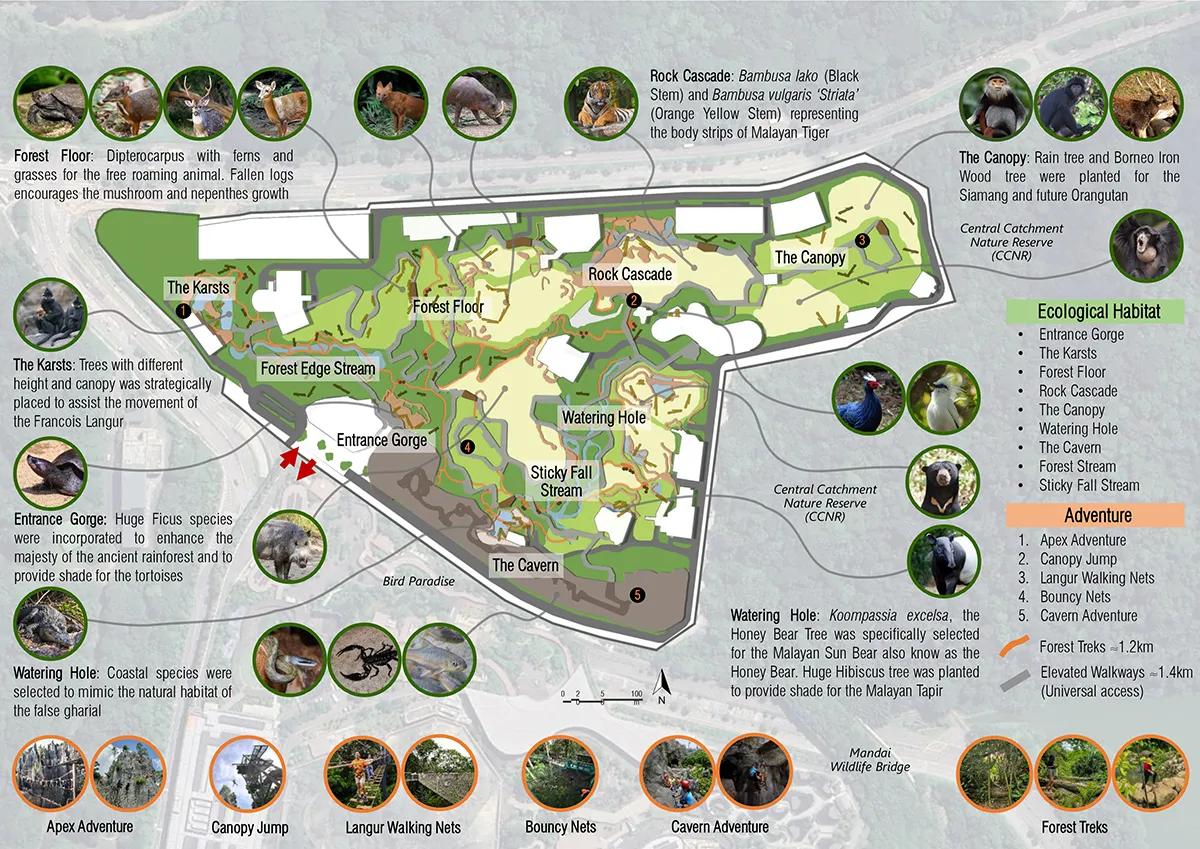
The Park sits in one of Singapore’s most biodiverse regions, adjacent to the Central Catchment Nature Reserve, Singapore’s largest continuous patch of primary and secondary rainforest. It offers a rare chance to strengthen ecological linkages between the constructed park and native wild forest systems. Central to the design is a network of wildlife corridors planted with arboreal and fauna-attracting species, enabling multi-layered movement across habitats.
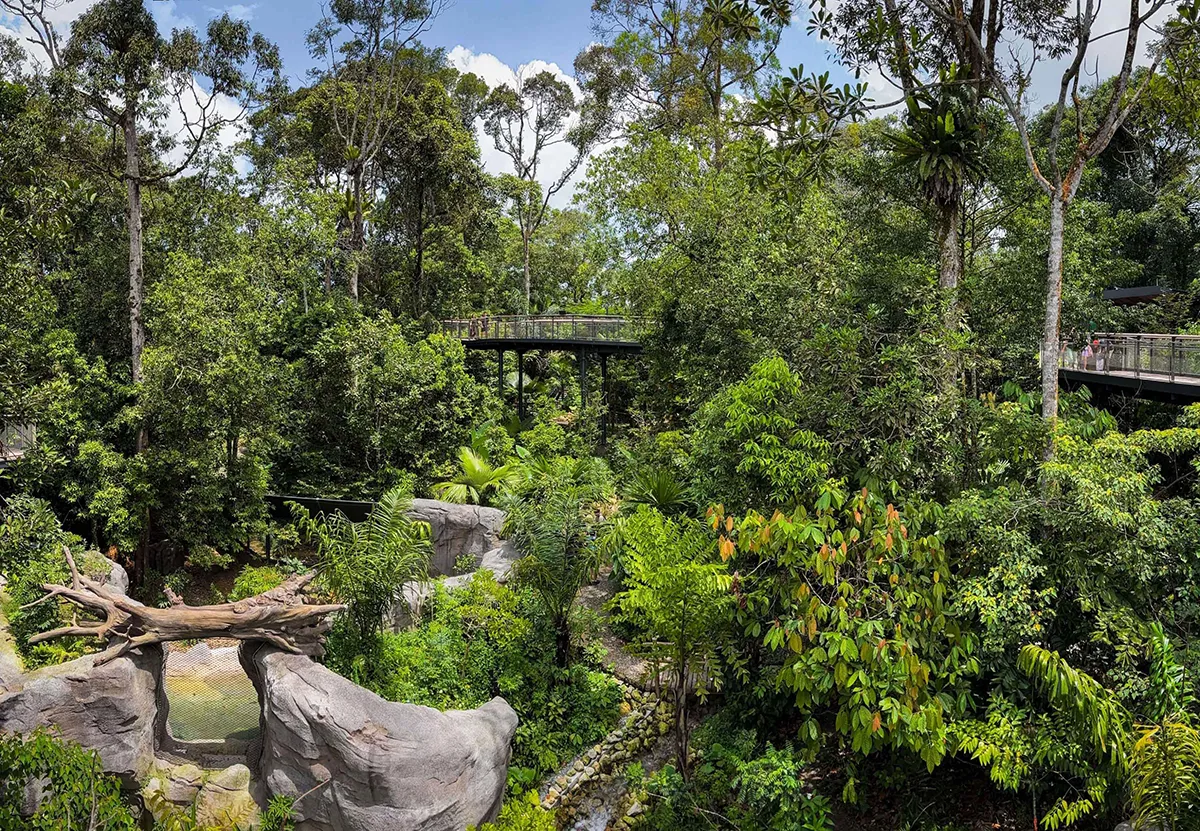
These ecological bridges connect the park to the Central Catchment Nature Reserve and other Mandai parks, forming a larger ecological network. This enhances species resilience, genetic diversity, and reduces habitat fragmentation. Sensitive development to minimise edge effects and ecological disruption in urban rainforest landscape.
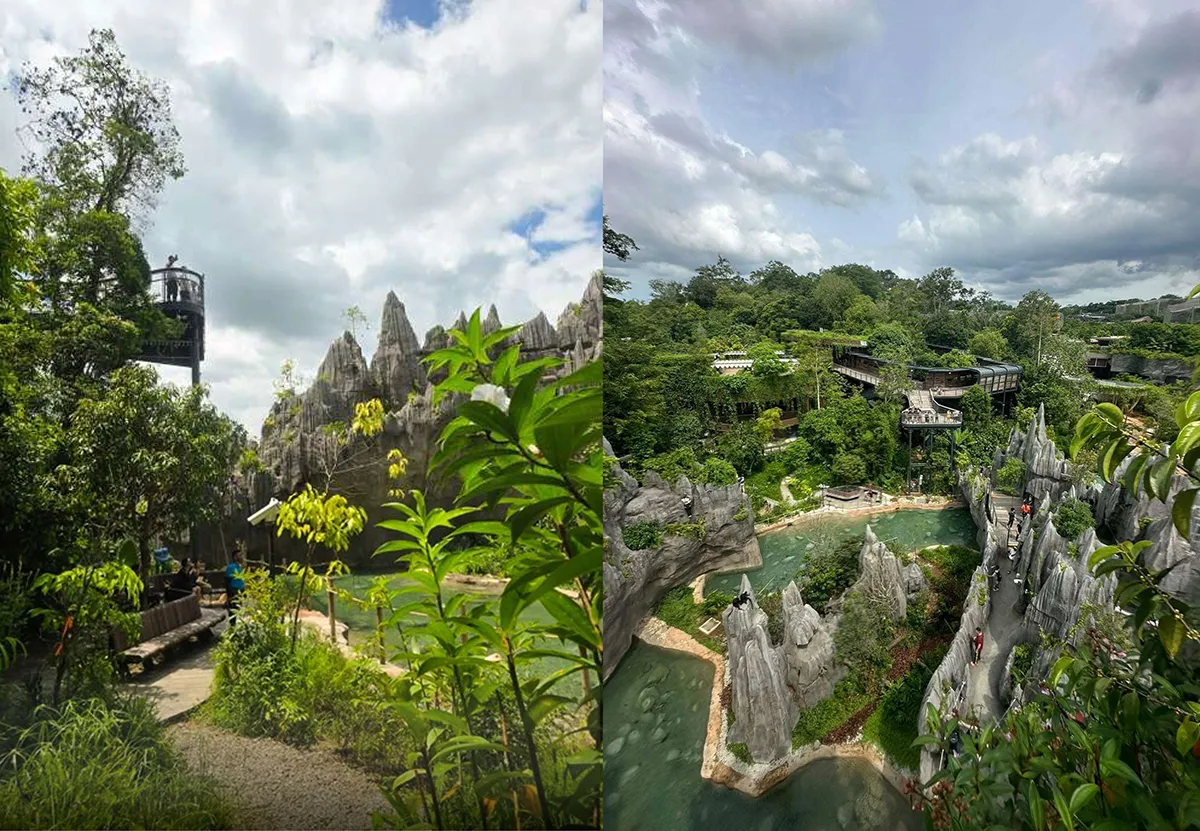
Aligned with Singapore’s “City in Nature” vision, the Park promotes biophilic urbanism, biodiversity, and sustainable tourism. It also serves an educational role in raising awareness about the urgent need to protect Asia’s tropical forests amid deforestation and climate change.
Environmental Sensitivity & Sustainability
The design emphasises on ecological conservation and climate resilience, working in harmony with the site’s natural landforms and ecological processes. Over 40% of the existing forest has been preserved as an ecological backbone that supports habitat continuity and biodiversity, including over 200 mature trees up to 20m in height. In tandem, over 45% of the site has been ecological rehabilitation through Forest Restoration and Selective Forest Repair, strategies aimed at enriching forest structure, enhancing ecosystem functions, and accelerating the regeneration of native species, thereby restoring and increasing the site’s overall ecological value.
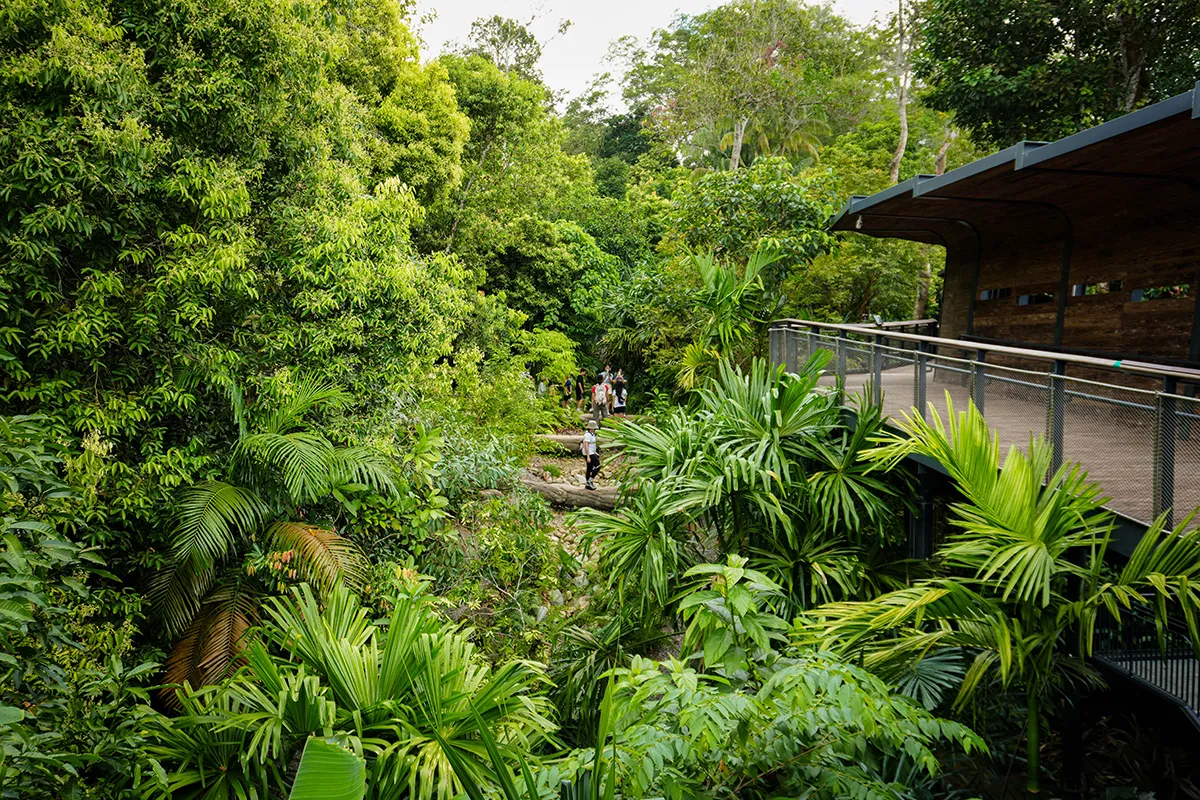
Forest Restoration & Rehabilitation
A key component of this ecological effort is the reintegration of over 2,500 harvested saplings, nurtured during early site interventions and thoughtfully reintroduced into the landscape to restore biodiversity, strengthen ecosystem integrity, and safeguard genetic heritage – essential elements of long-term ecological value.
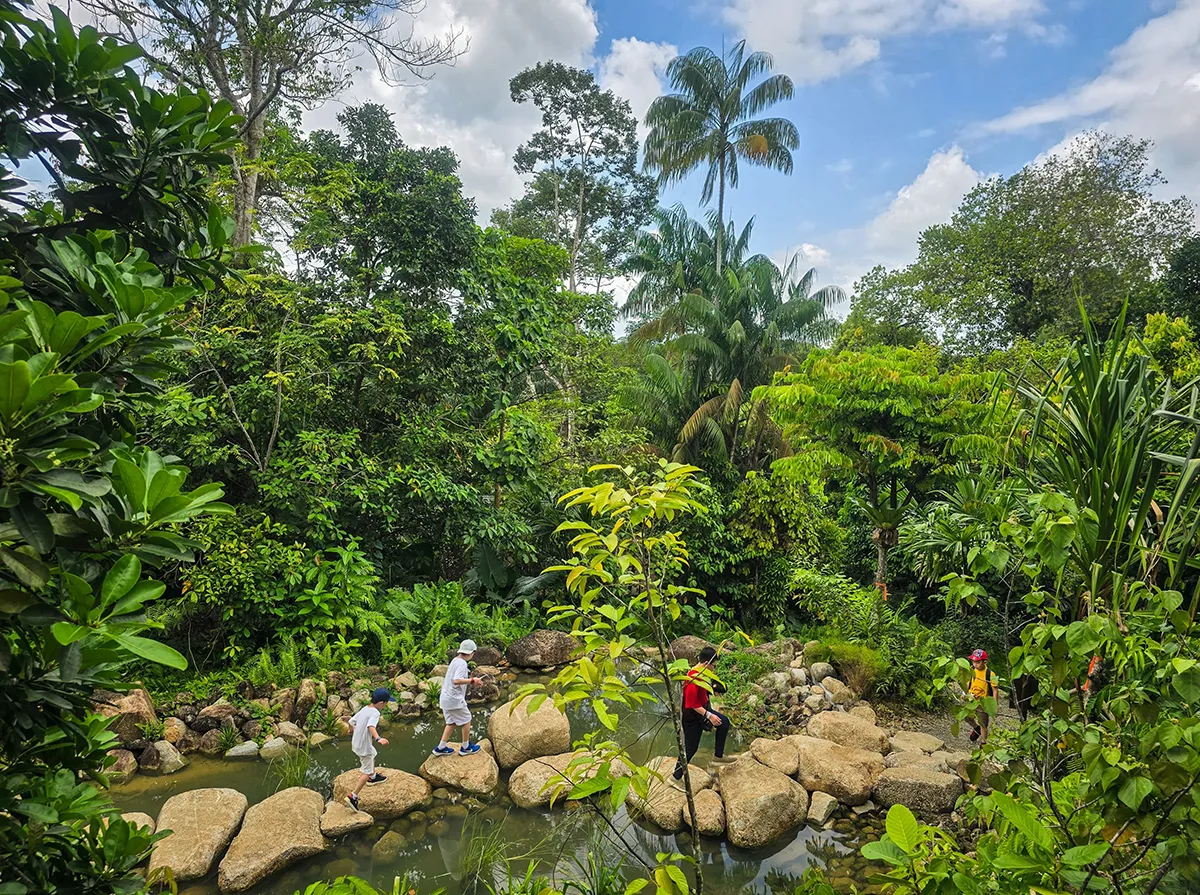
This circular ecology approach ensures what is taken from nature is returned with care. In total, approximately 7,000 Southeast Asian trees and palms have been planted, reinforcing the forest canopy and supporting long-term ecological resilience.
More Than a Forest – An International Destination
Beyond its ecological mission, the Park is a landmark placemaking initiative, envisioned as a national icon and an international destination with over 900,000 visitors projected in its first year.
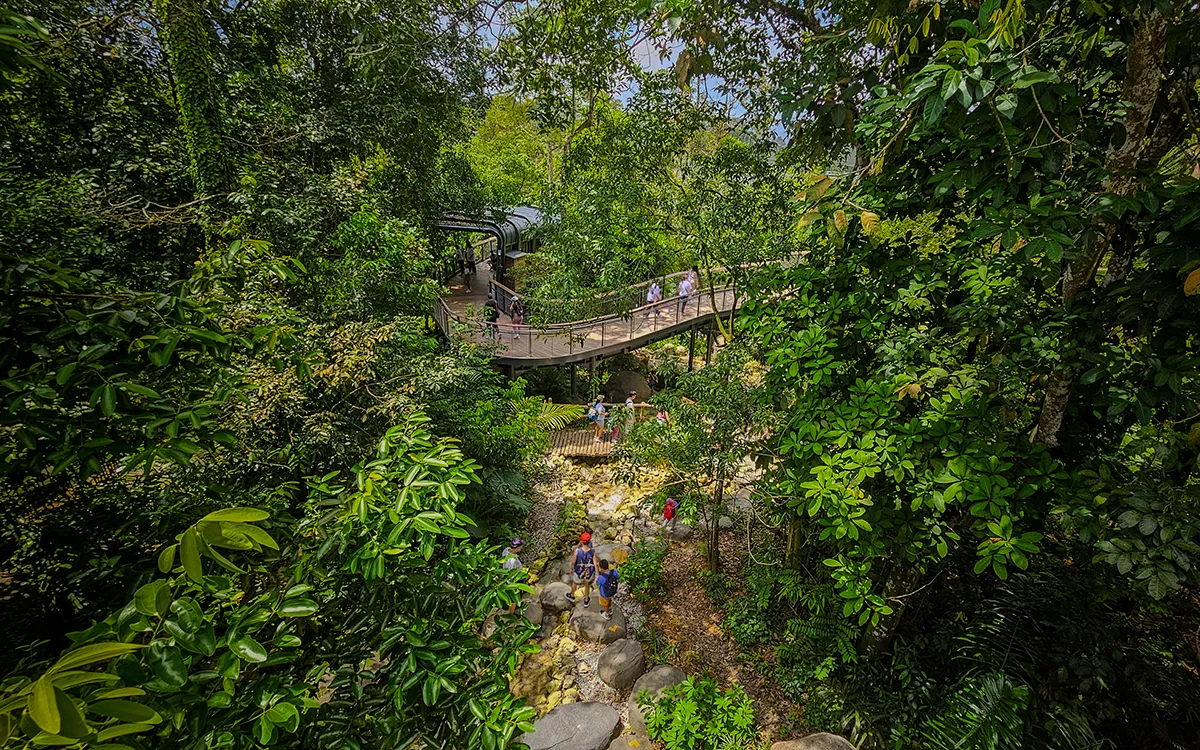
Designed for nature lovers, families, and adventure seekers, the park offers immersive trails, elevated walkways, and habitat-based experiences that connect people to nature. Blending education, exploration, and conservation, making it a place where all generations can engage with the rainforest meaningfully. More than a forest, it is a global symbol of ecological stewardship and sustainable tourism.
Adventure for All
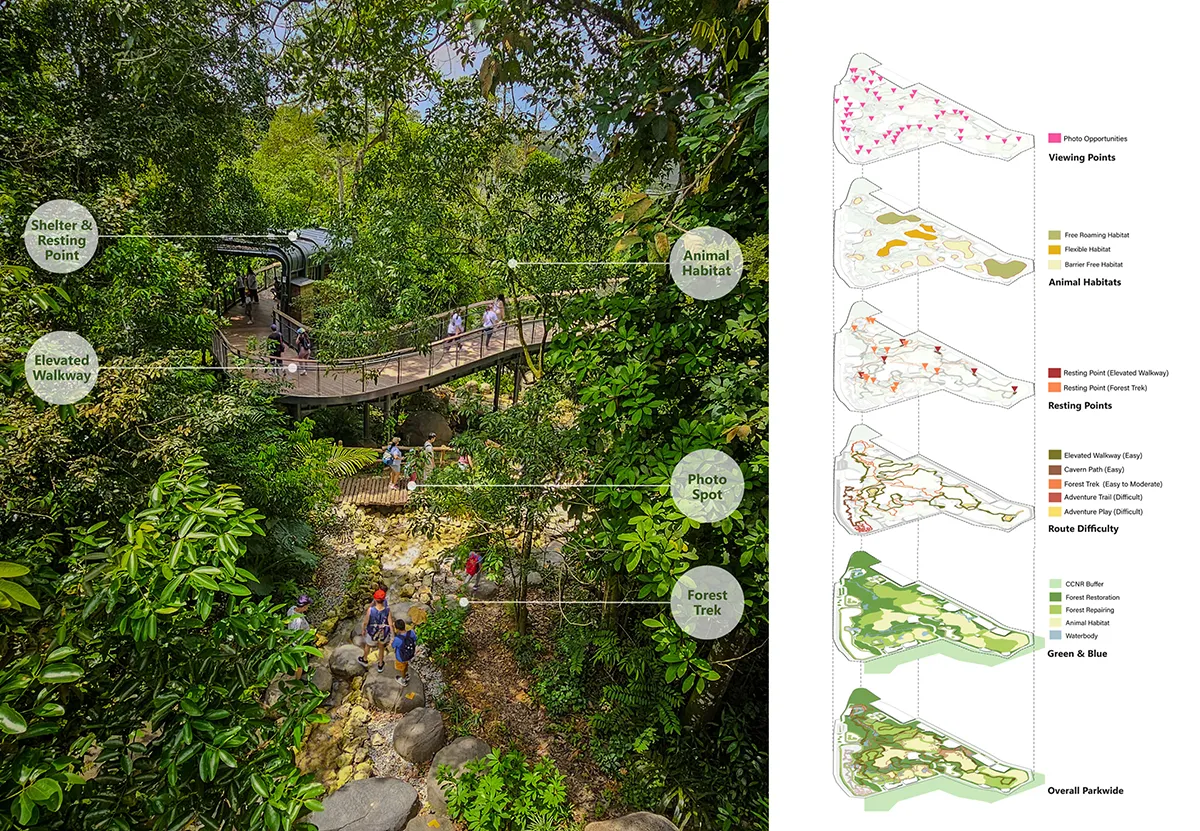
The park offers a diverse range of trail experiences designed for all levels of mobility – from gentle nature walks to adrenaline-fueled routes that wind through elevated walkways, immersive forest treks, flowing streams, and dramatic karst formations. These varied paths make the rainforest accessible to everyone, affirming that adventure knows no limits.
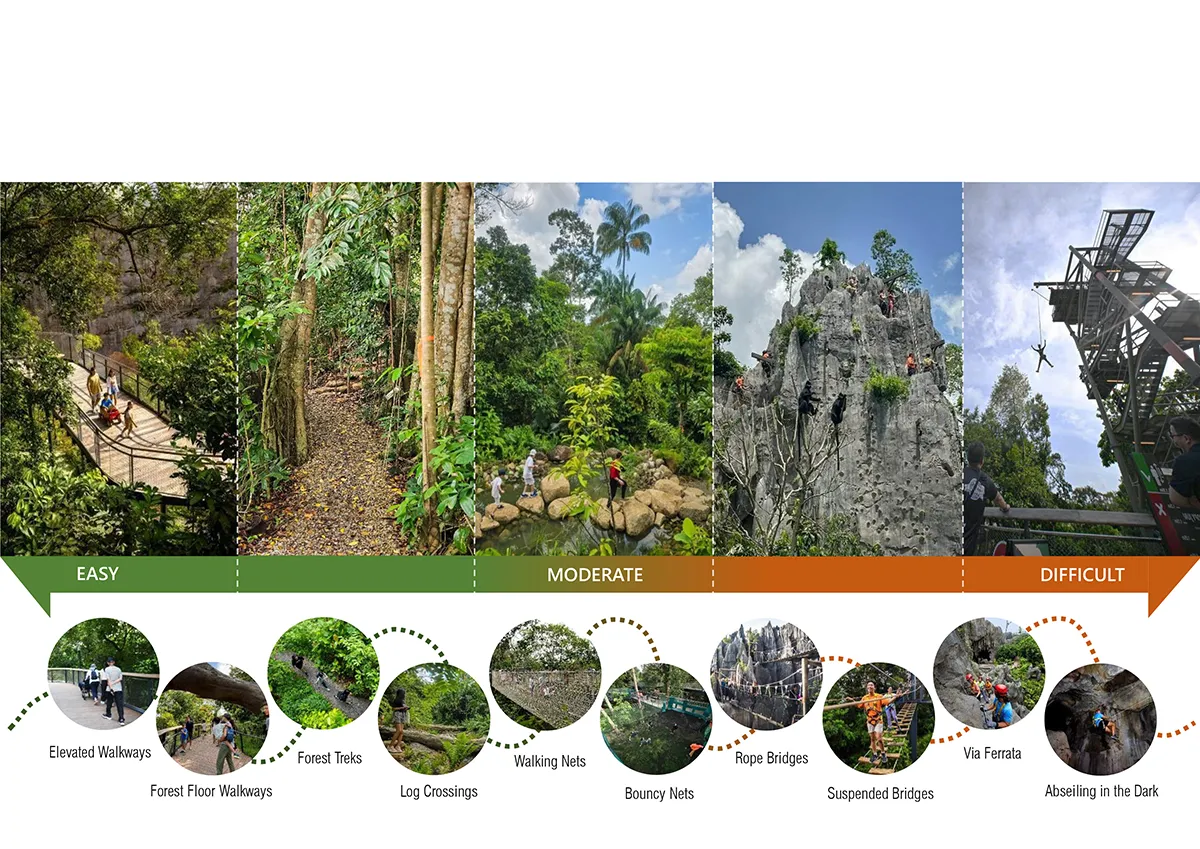
Designed for People & Wildlife
At Rainforest Wild ASIA, nature leads and design follows. With thoughtfully placed shaded rest points and shelters, guests can explore comfortably while immersed in nature. Dense canopies and flowing streams create a naturally cooled microclimate, enhancing thermal comfort and promoting wellbeing for guests, zoo exhibits, and wildlife.
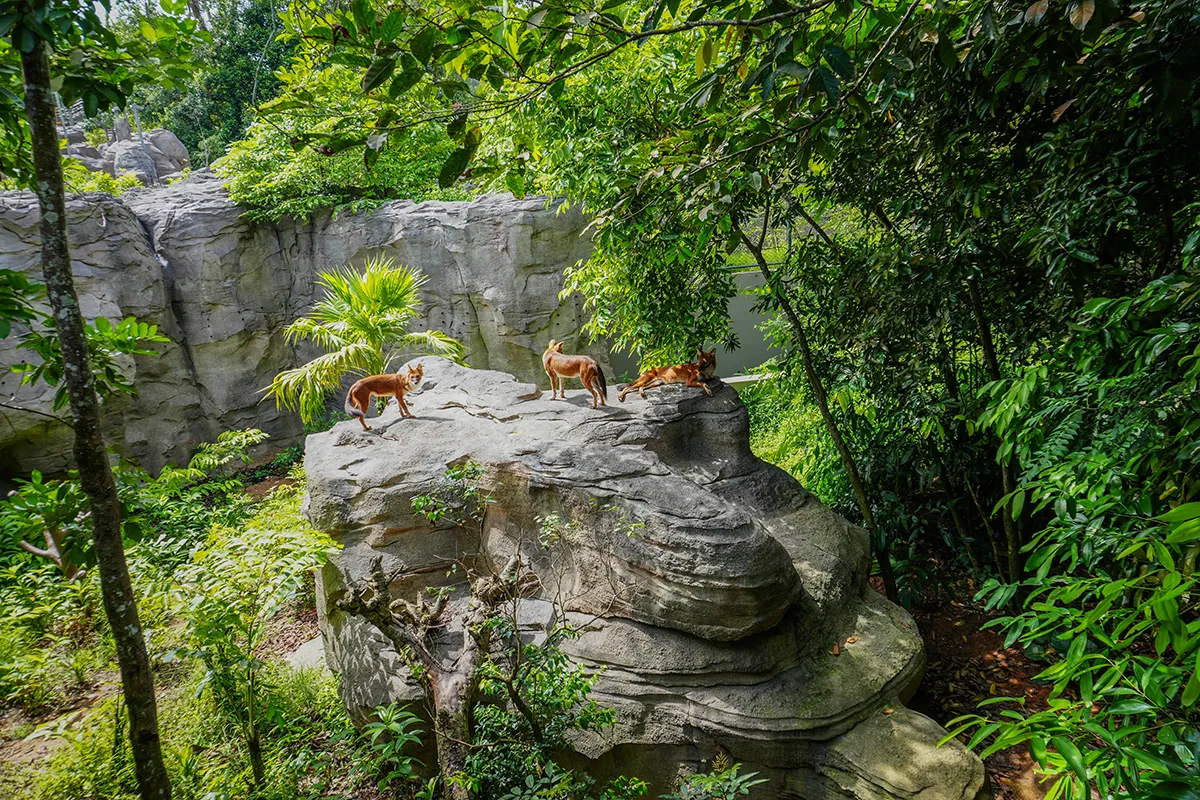
Guided by an animal care specialist, Plant Toxicity Research and Habitat-specific Selection Framework, animal habitats are designed to respect and reflect natural behaviours. These ensure ecological authenticity and safeguard animal health and wellbeing.
Collaborative Stewardship for Long-Term Vision
Collaborative stewardship is critical. Close partnerships with key stakeholders, conservation groups, and ecological experts shape robust, adaptive, and inclusive strategies. These collaborations guide the development of long-term conservation plans, biodiversity monitoring, and sustainable land management practices, safeguarding the rainforest’s integrity for future generations.
A Model for the Future
Rainforest Wild ASIA is more than a destination, it is a forward-thinking vision for the future of zoological parks. It exemplifies how conservation, education, immersive design, ecological integrity, and a strong sense of place can come together to cultivate a culture of care for the environment, for community, and for generations to come.
It is a place that doesn’t merely sit within nature – it moves with it.
Rainforest Wild Asia
Landscape Architect
DP Green: Concept to Construction Completion, 2020 to 2025
Grant Associates: Concept to Design and Build Tender Calling, 2018 to 2019
Image Credits: DP Green