
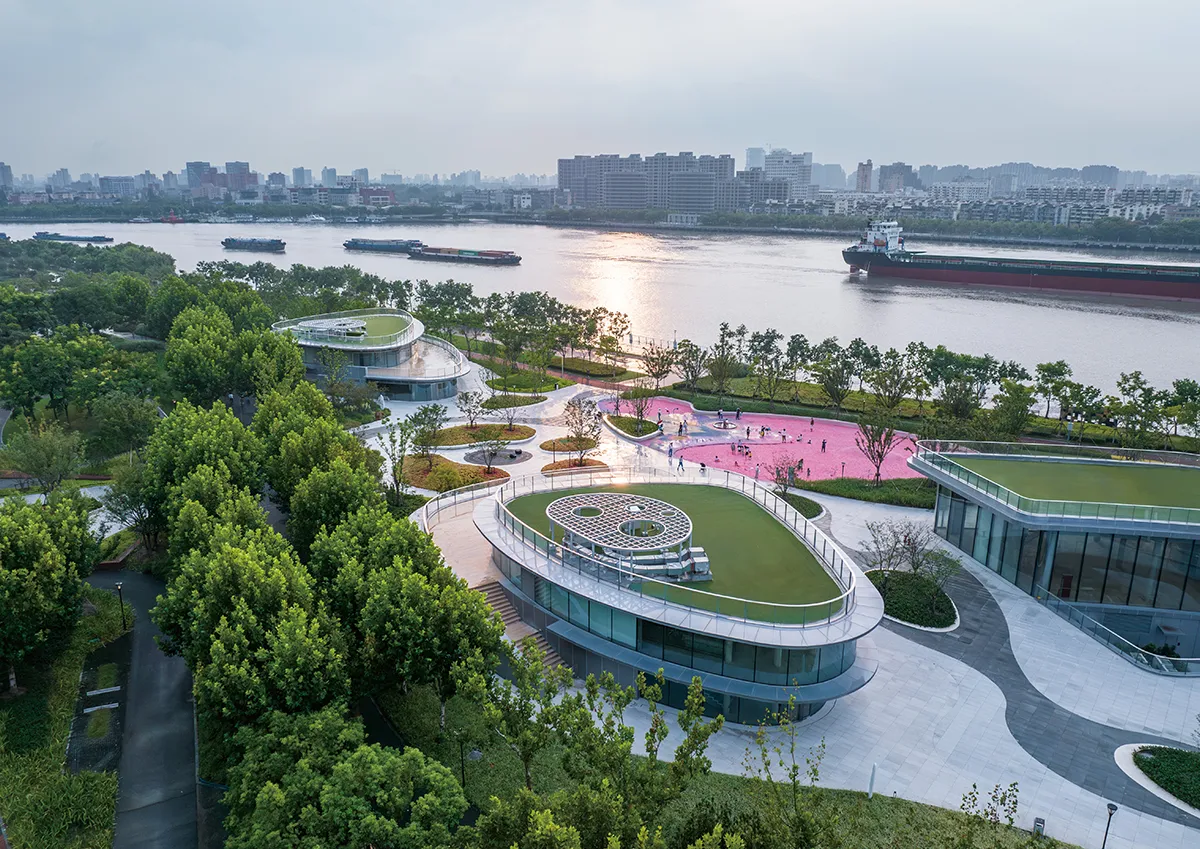
Nestled along the iconic Huangpu River in Shanghai, Qiantan Leisure Park serves as a key gateway to the 45-kilometre stretch of open riverside space and waterfront greenery. Over the past twenty years, rapid urban growth has transformed the Qiantan area into a lively, round-the-clock urban scene, featuring a global business hub and a green urban community. This development highlights the need for the Qiantan riverside to develop a vibrant public space, rich in ecological vitality, diverse uses, and comprehensive amenities.
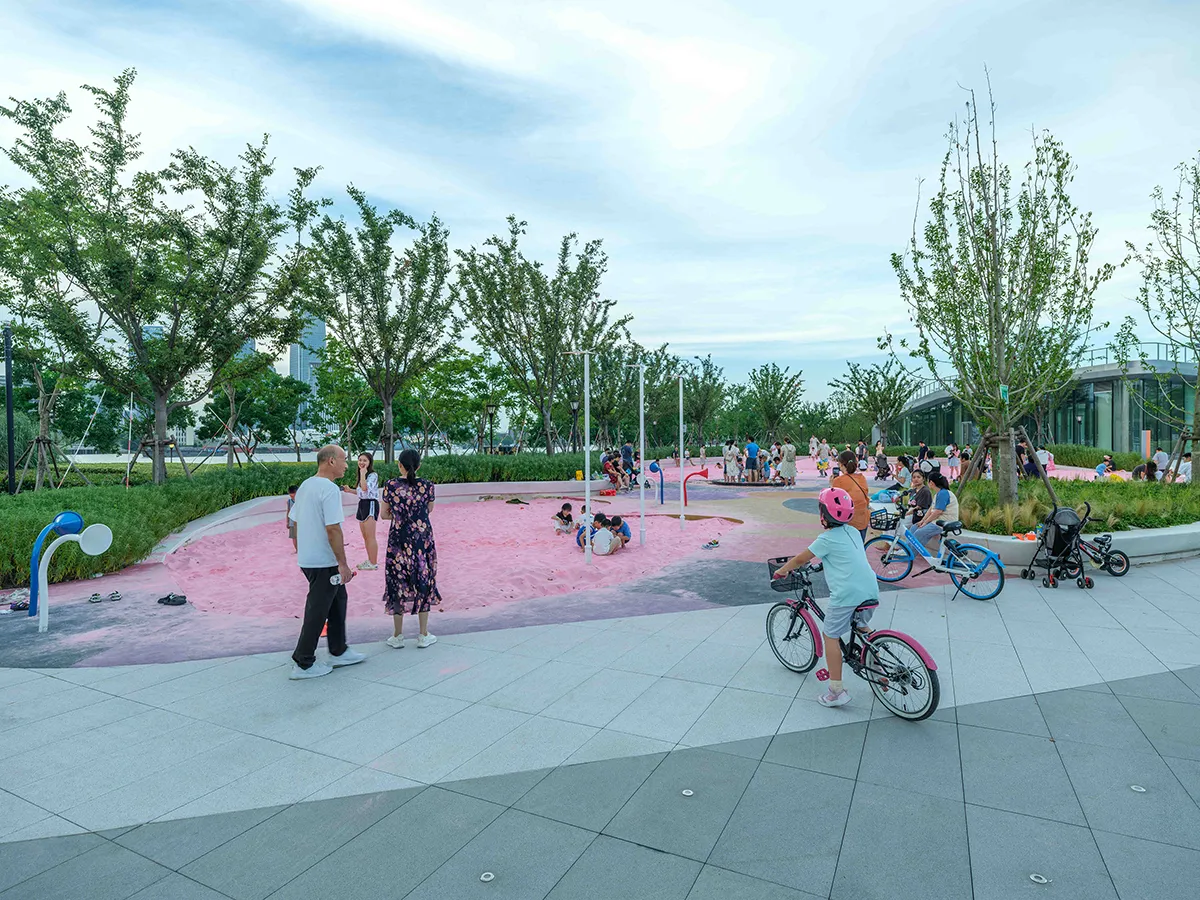
Designed as a sanctuary for family-friendly recreation and entertainment, the park’s concept embraces a harmonious relationship between nature and urban life. This blend of lush landscapes with city infrastructure tells an ongoing environmental story. Crafted through a combination of architectural and landscape features, the park reveals a space filled with engaging experiences and striking vistas, creating a habitat rich in natural beauty and recreational appeal.
Qiantan Leisure Park, inspired by the “Flowing Tidal Flats” motif, has transformed from a once barren area into a vibrant urban ecological sanctuary, serving as a versatile space for family bonding and exploration. The design team not only respects the site’s ecological and historical heritage but also revitalises it, creating a recreational area that meets the daily needs of nearby residents and brings new energy to the Qiantan riverside promenade.
Site Condition: Isolated and Single-Used
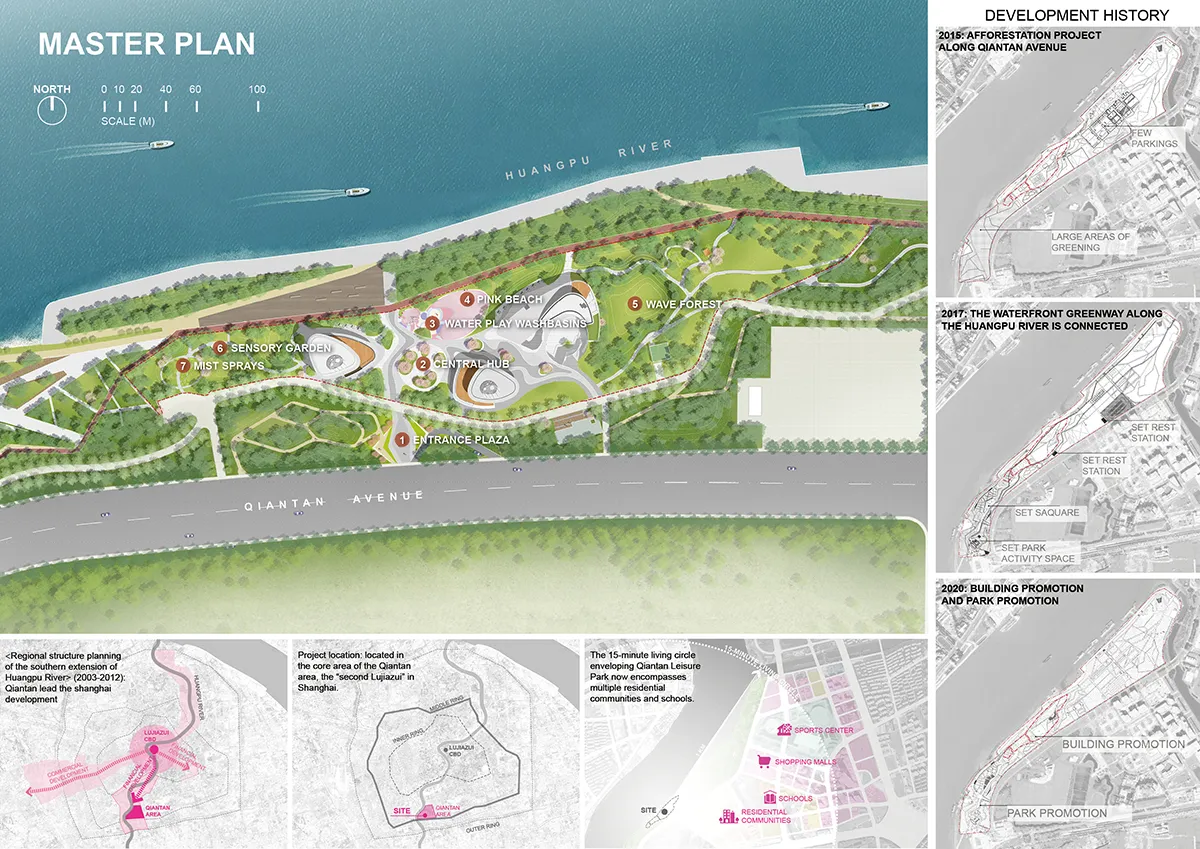
As the Qiantan district continues to grow, the 15-minute living zone around Qiantan Leisure Park now includes several residential areas and schools. The population increase has created a strong demand for better family and parent-child leisure spaces. However, the park’s uniform vegetation, large areas of undeveloped greenery, and basic facilities like seating and pavilions do not meet the community’s expectations for a high-quality living environment. There is a clear contradiction: many visitors come in the evenings and on weekends, yet there are few public activity spaces and supporting amenities.
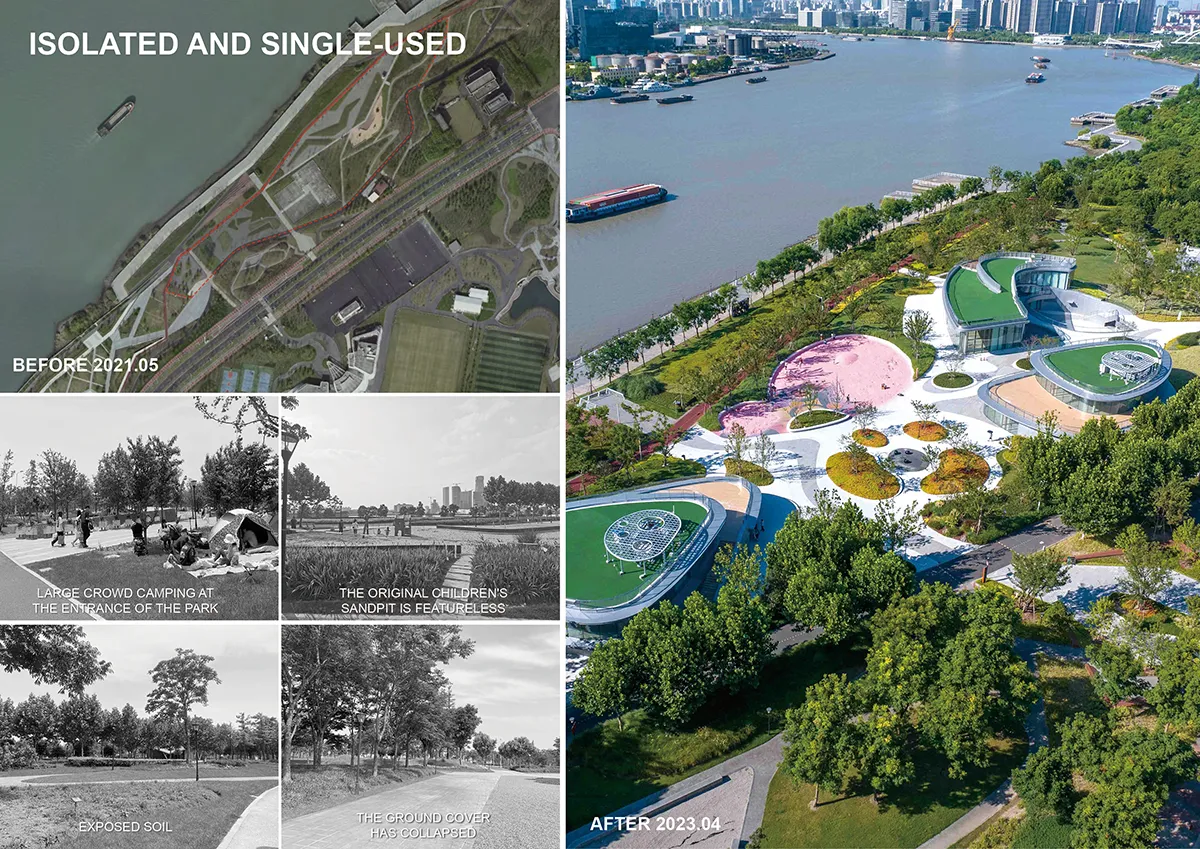
In this context, the mission to preserve Qiantan Leisure Park’s ecological legacy while innovating sustainable and captivating spaces within its compact urban landscape and cultivating a park that promotes family-oriented recreation presents a formidable design challenge.
Design Strategy:Flowing Tidal Flats
As the Qiantan district continues to grow, the 15-minute living zone around Qiantan Leisure Park now includes several residential areas and schools. The population increase has created a strong demand for better family and parent-child leisure spaces. However, the park’s uniform vegetation, large areas of undeveloped greenery, and basic facilities like seating and pavilions do not meet the community’s expectations for a high-quality living environment. There is a clear contradiction: many visitors come in the evenings and on weekends, yet there are few public activity spaces and supporting amenities.
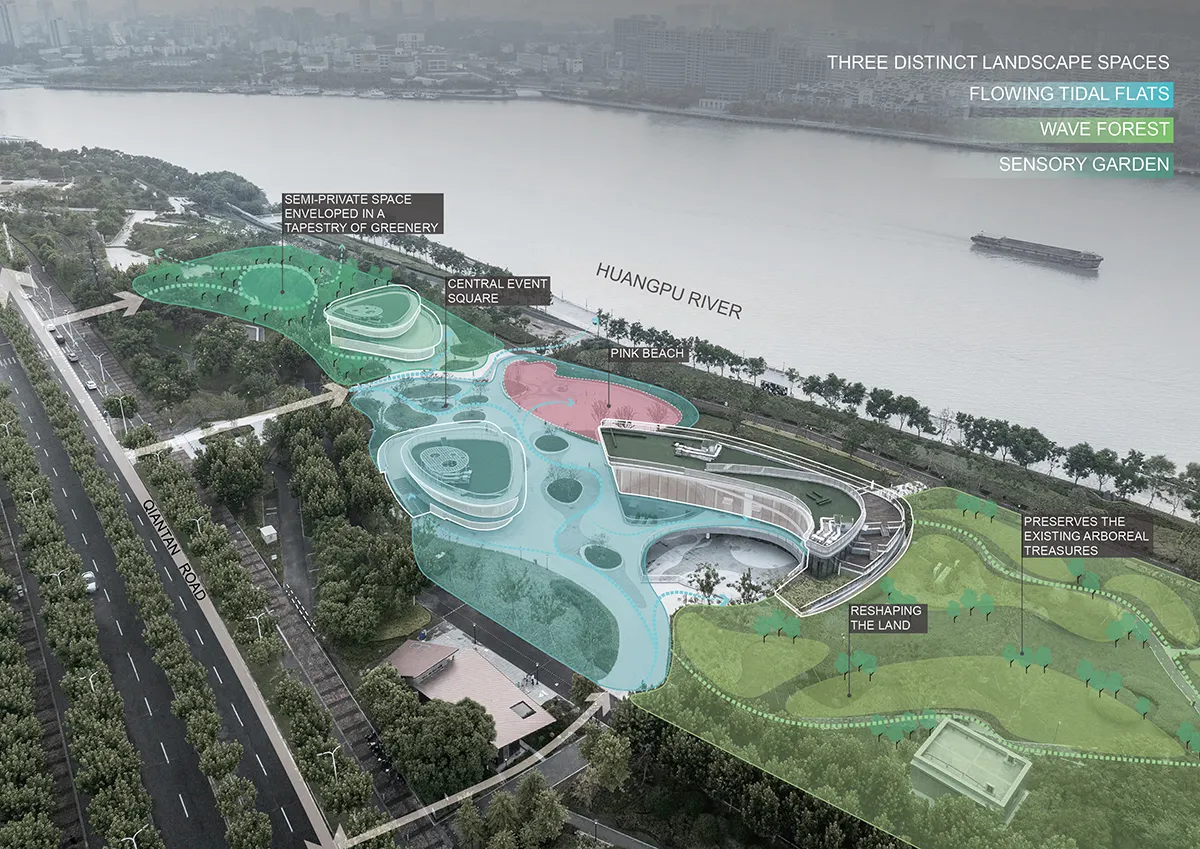
This project aims to preserve Qiantan Leisure Park’s ecological heritage while creating innovative, sustainable, and engaging spaces within its limited urban setting. The goal is to develop a park that encourages family-friendly activities, which poses a significant design challenge.
Integration of Landscape and Architecture
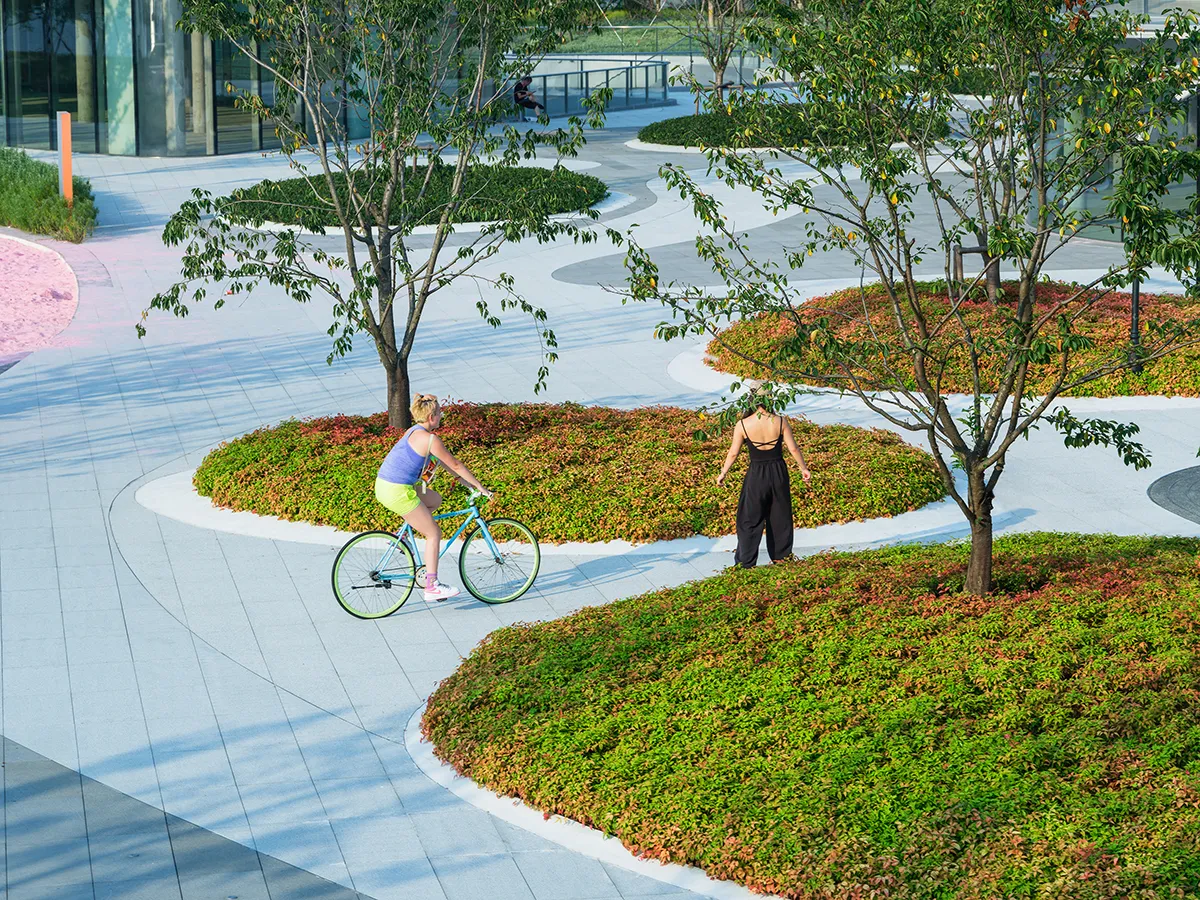
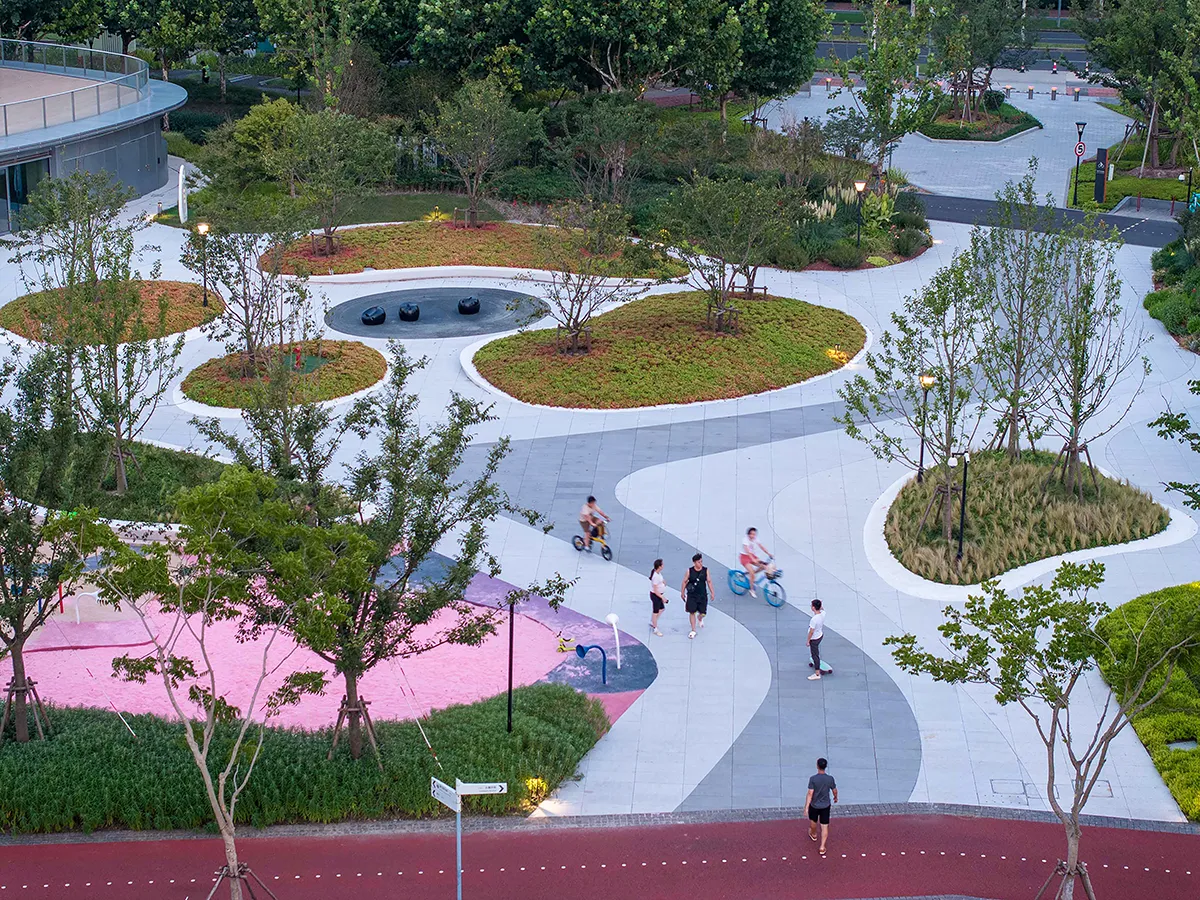
Treating both architecture and landscape as essential parts of the activity area, the design team uses intensive land use to encourage richer spatial activities. Three buildings, arranged in a village-like pattern, blend seamlessly with the landscape to create a central hub of activity. The sleek pavement design weaves together with the architecture and greenery, continuing the site’s story. Gentle slopes help fix height differences between buildings and the site, ensuring landscape continuity. Courtyards, terraces, green roofs, and under-eave spaces enable indoor and outdoor areas to connect, fostering a unified indoor-outdoor vibe. This design not only improves site accessibility but also provides a diverse visitor experience through thoughtful spatial integration.
From Parent-Child Entertainment to Collective Experiences
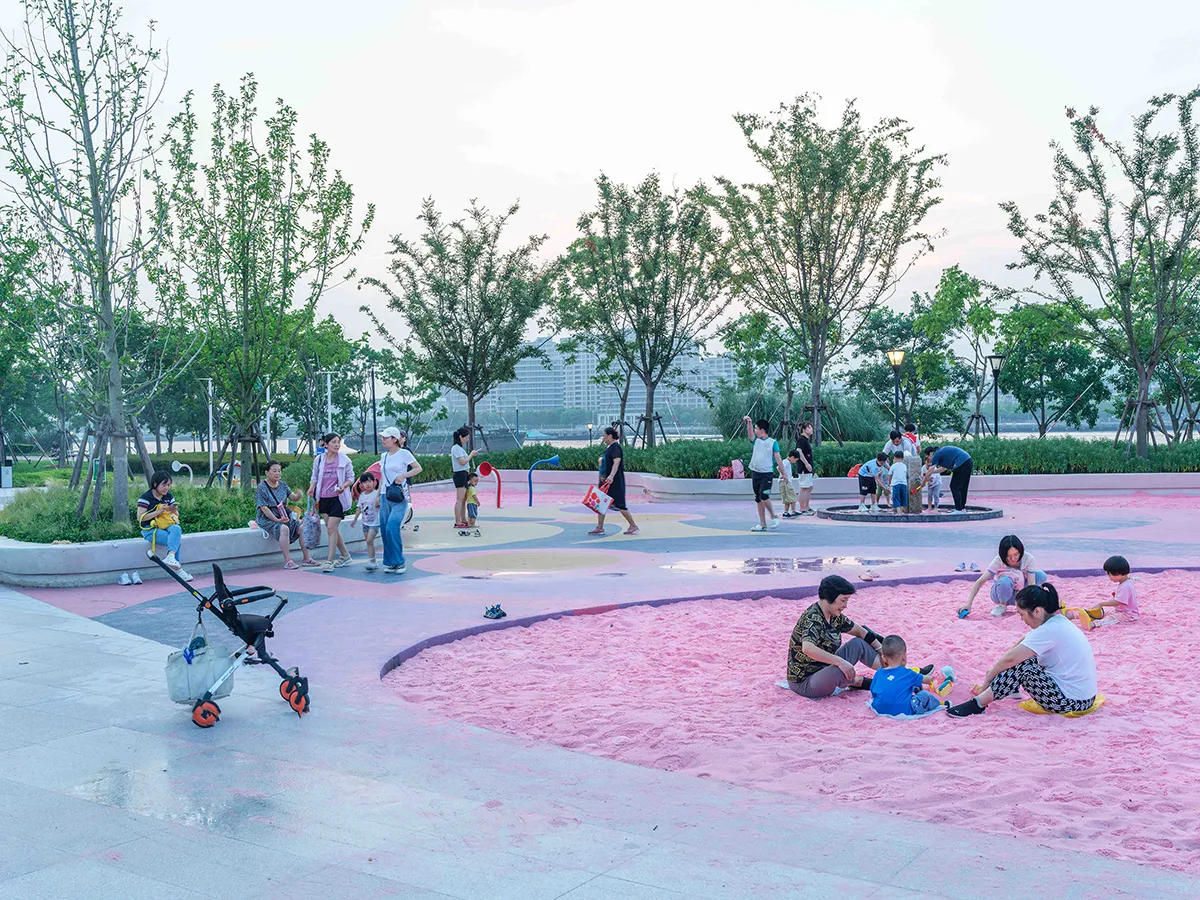
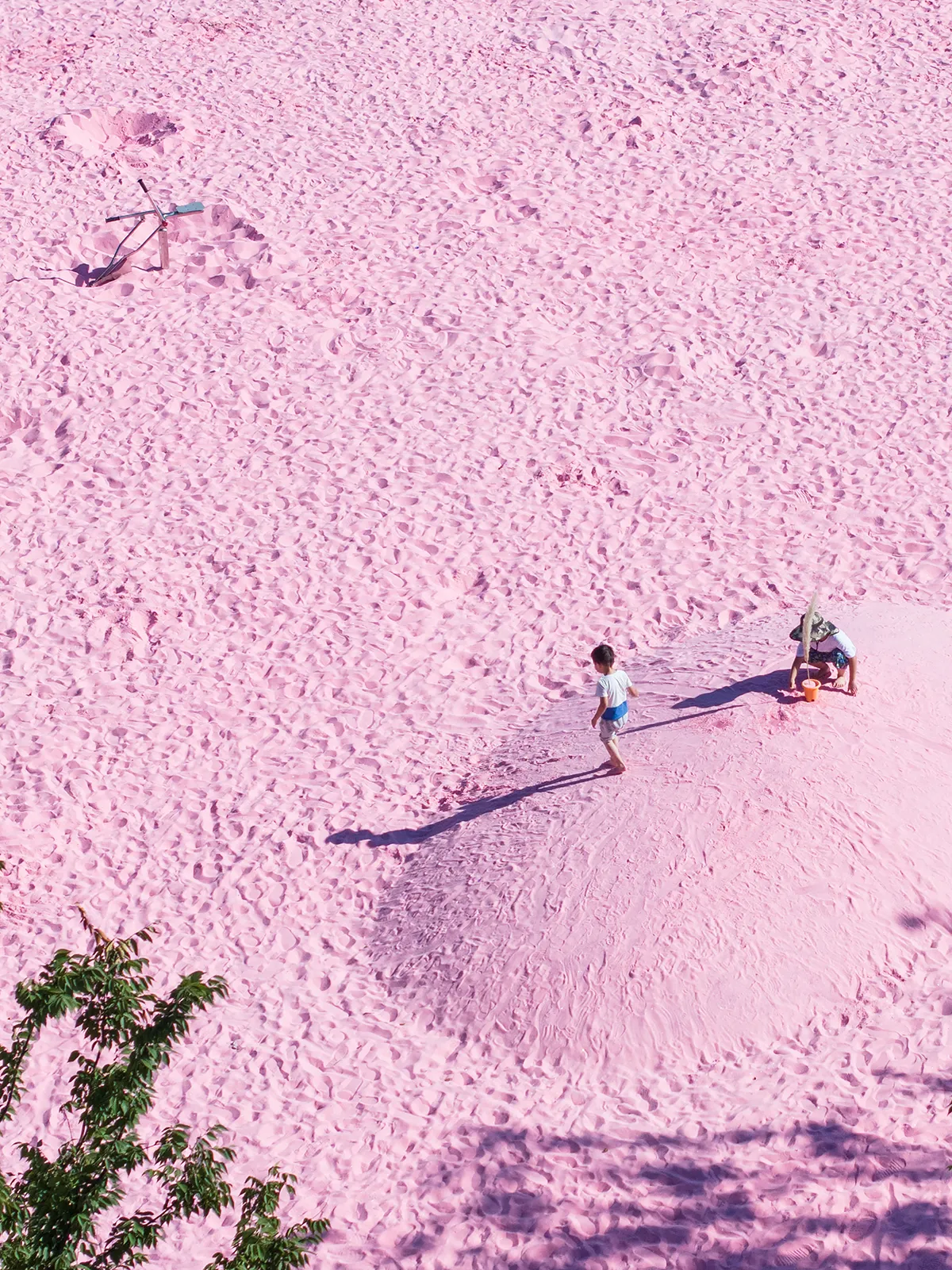
Moving beyond traditional children’s play areas focused on fixed equipment, the design team created a landscape that engages and ignites imaginations: the pink beach. To accommodate the diverse needs and behaviours of children, the design thoughtfully uses 40-60 mesh fine sand and divides the beach into dedicated zones for younger and older children. Located at the intersection of these areas, water play washbasins improve the space’s functionality, providing comfort and hygiene while encouraging playful interactions.
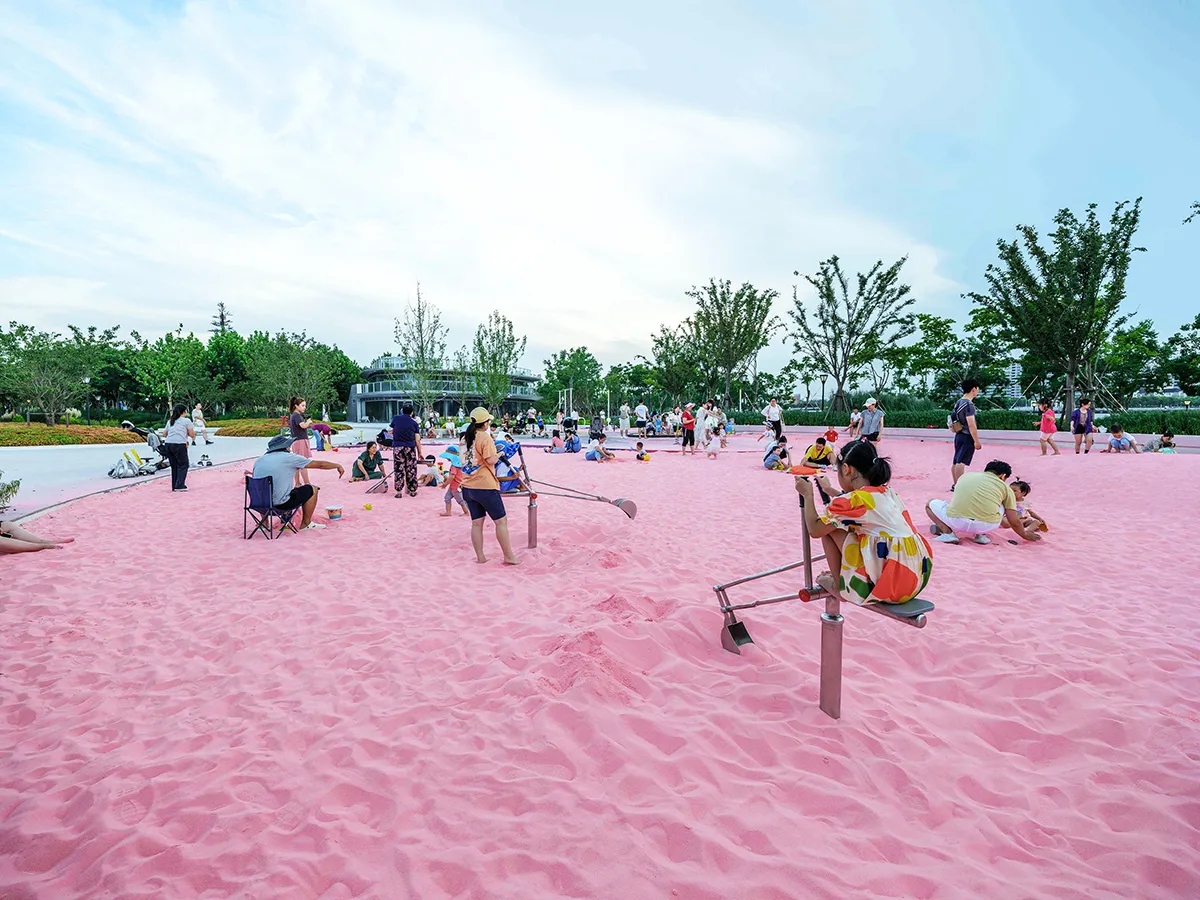
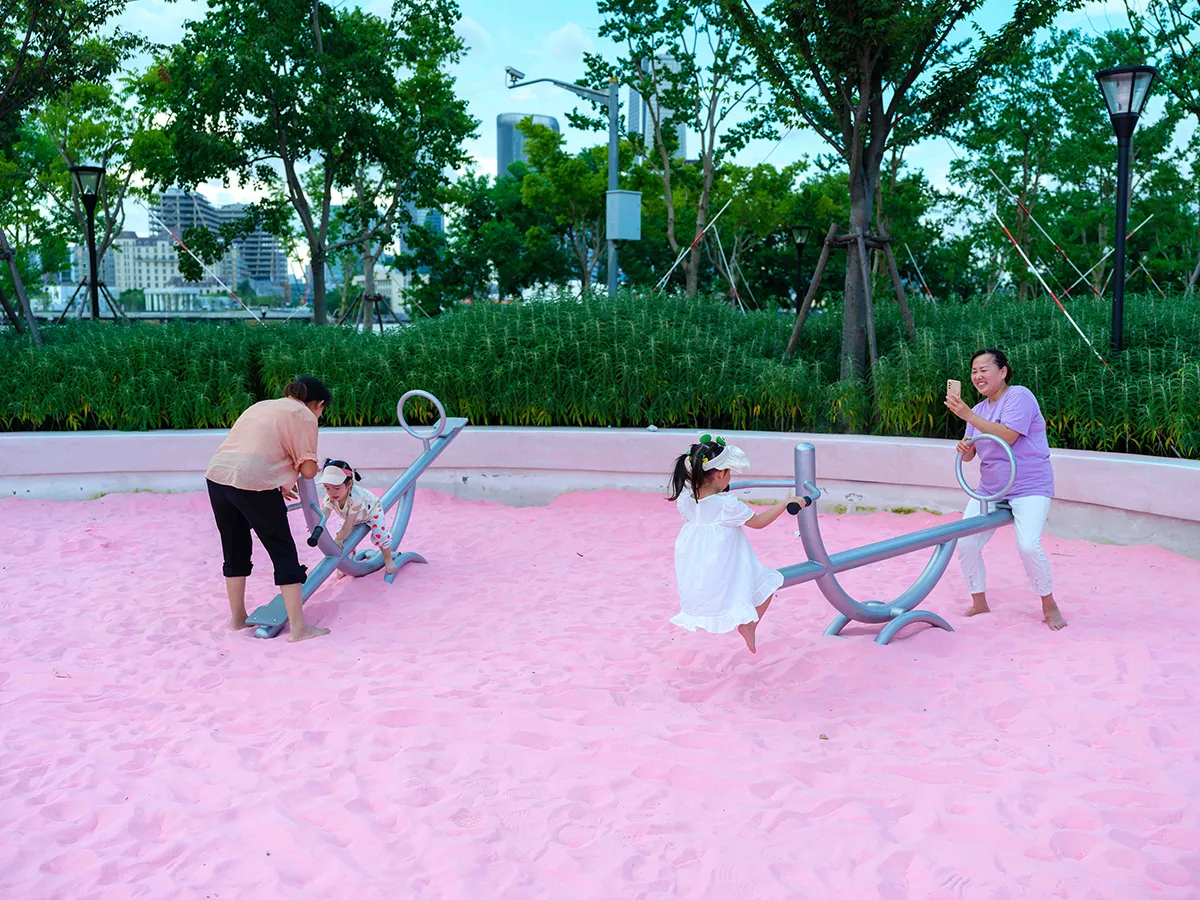
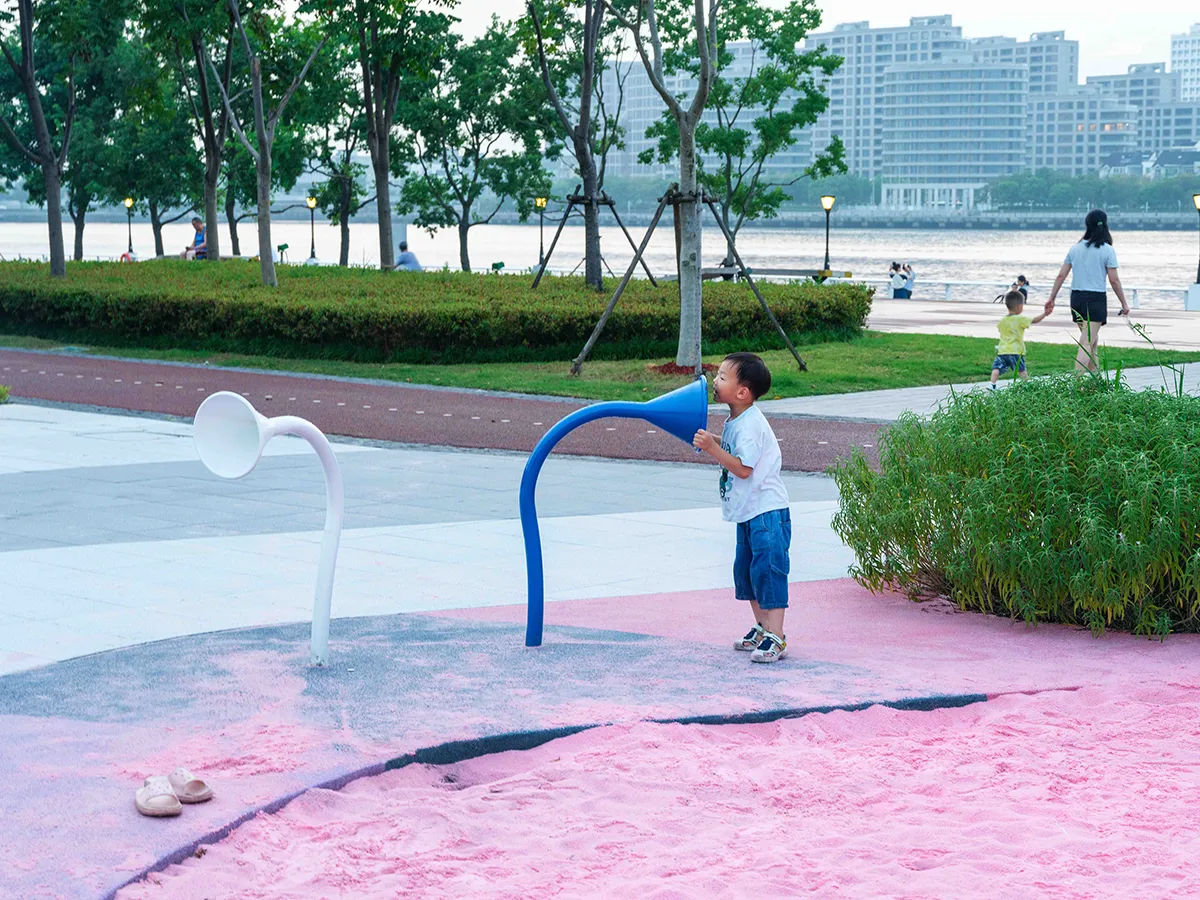
The children’s activity area is interspersed with tree pits, creating an adaptable outdoor space that fluidly opens and closes, offering a comfortable niche for parents and grandparents to relax and supervise. This interactive space seamlessly integrates with the surrounding public areas, fostering a sense of community and encouraging varied interactions among all user groups.
A Touch of Wilderness
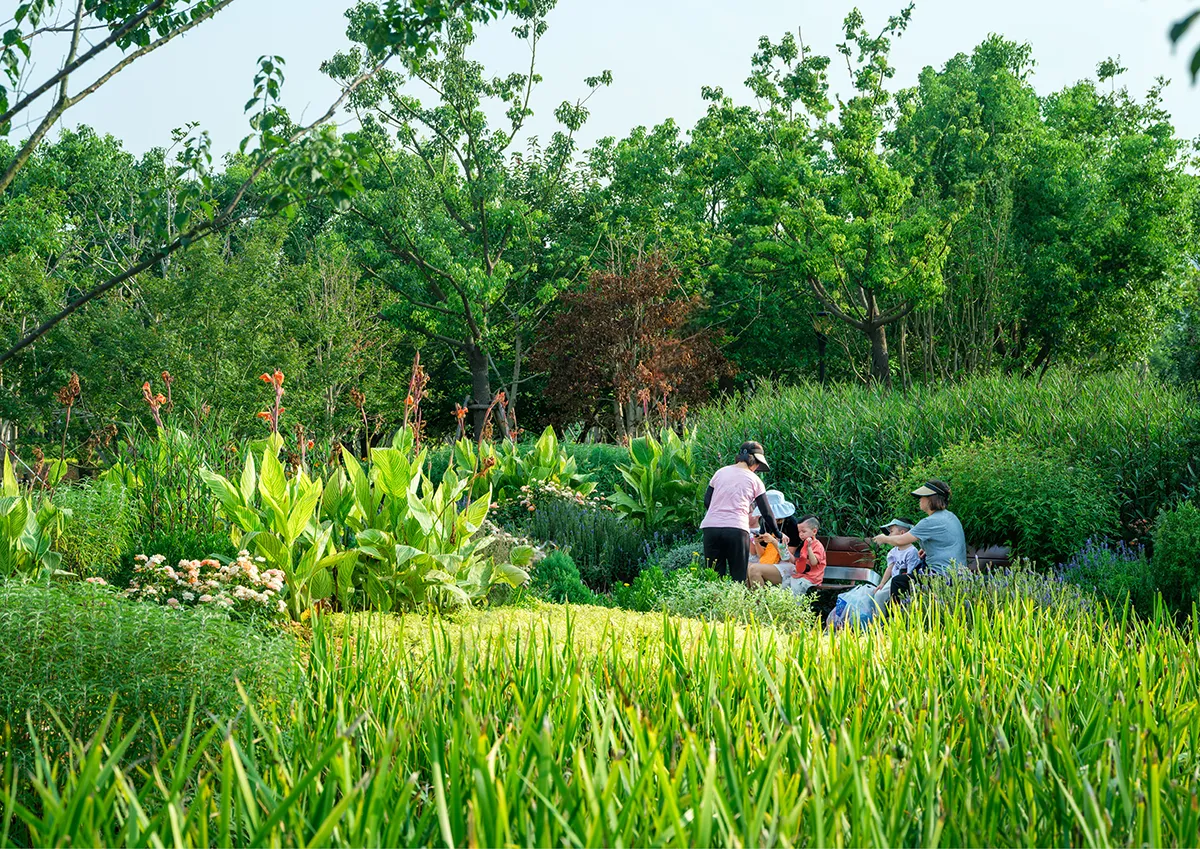
The park embodies its ecological spirit by creating two ecological landscapes: the ‘Sensory Garden’ on the west with large trees and seasonal flowering, and the ‘Wave Forest’ on the east that preserves mature trees while reshaping land for shade-tolerant plants. Rolling grassy hills and gardens mimic natural undulations, with mist sprays improving air quality and microclimate.
Urban Catalyst
Qiantan Leisure Park, near a prime CBD and overlooking the Huangpu River, is a standout riverside gem. Guided by ‘architecture in harmony with nature,’ its design merges human-made and natural elements, creating an ecological haven amid urban concrete. The architectural and landscape fusion forms a versatile, inclusive space for various ages, encouraging participation, creativity, and social activities, shaping a lively, shared park.
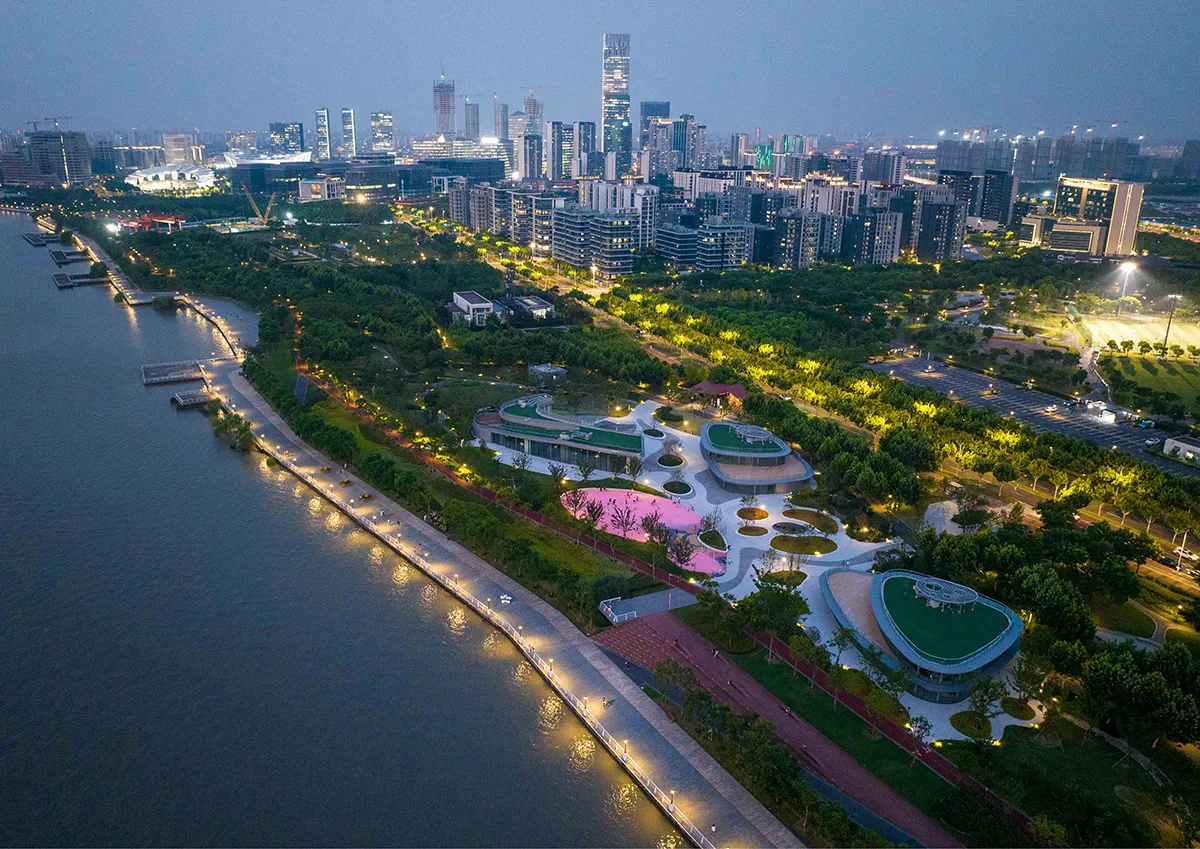
Since opening, it has become a vibrant family hub, attracting over 100,000 visitors in eight months and gaining media attention. The park acts as an urban catalyst, energising the riverside and reflecting the continuous renewal of urban landscapes.
Qiantan Leisure Park
Location: Qiantan area, Pudong District, Shanghai, China.
Designer: MYP Inc.
Lead Designers: Chang Yu, Hui Zhang, Dandan Li, Lin Chen, Sheng Yu
Design Team: Chang Yu, Hui Zhang, Dandan Li, Lin Chen, Sheng Yu, Yuyang Deng, Siqi Lu, Yanna Kang, Chenhao Ye, Xurun Yu, Juan Li, Zhiping Wu, Fengbei Hu
Client: LUJIAZUI GROUP
Construction Company: Shanghai Lujiazui Municipal Greening Management Service Co., LTD
Photography copyright: ©Xiaohui Jin