Ponnapa Prakkamakul พรนภา ปรักกมกุล 陳可意 (she/her) is a Senior Landscape Architect at Sasaki. Trained in landscape architecture and with artistic skills inherited from her family in Thailand. Ponnapa’s work spans multiple disciplines, from landscape master planning to small civic spaces and community-engaged public art. She works on both international and local community projects with expertise in community engagement and participatory design. WLA recently had the chance to hear her thoughts on working in multidisciplinary projects and the influence of art on the public landscapes and landscape practice.
WLA | Having trained in Thailand and worked in the US, how has your multinational background influenced your design approach?
Having lived in multiple places, I have become highly observant of how people use public open spaces and how they interact within everyday landscapes.
I still remember a respected Thai professor who used to work at Sasaki encouraging me to keep a diary when I relocated to Hong Kong. She explained that being in a new place sharpens one’s awareness of details that might otherwise go unnoticed, and that documenting these observations helps build a deeper understanding of the place. That advice stayed with me. We are ultimately shaping environments for the human experience, so understanding people is essential to design.
This habit has helped me quickly read new landscapes and understand the communities that inhabit them—especially in a large and diverse country like the United States, where each state differs significantly in geography, culture, and patterns of public life.
WLA | How does public art contribute to cities and communities?
My public artwork aims to activate underutilized spaces in neighborhoods with marginalized communities. A central aspect of my practice is creating opportunities for community engagement, whether through co-creation during the development process or through interaction with the work after installation. Through this process, I hope to empower community members to recognize their right to public space and their agency in shaping and improving the neighborhoods they live in.
In 2023, I created an installation called Joyful Stitch to celebrate the history of and honor the contributions made by garment workers in Boston’s Chinatown and the Leather District. The piece resembles two sewing machines that passersby can interact with by pedaling or turning a hand crank, which activates LED lights embedded in the installation.
The installation encouraged social interaction—people spent more time in the space, engaged with one another, and began to feel more connected to the site through the artwork. My ultimate goal is to foster a sense of ownership and a willingness to advocate for and care for their neighborhoods.
What fascinates me most is how public art, even without a direct function or formal program, can successfully activate a space, communicate its history, and cultivate a strong sense of place and belonging.
WLA | How has your passion for art changed the way you practice landscape architecture?
It is difficult to say which discipline leads, as both practices constantly inform and influence one another. Working across both fields has strengthened my understanding of scale, allowing me to move fluidly between master planning and fabrication. When I work on landscape architecture projects, a narrative is an essential part of my design process. Beyond site analysis, codes, and environmental considerations, I need to have a concept—just for myself—a story that guides the form, materiality, color palette, and connection to the history and identity of a place. On the other hand, when I work on a public art installation project, I also think about the site and how the installation fits or transforms the space, rather than being a floating sculpture.
WLA | How does art influence your visual representations in landscape architecture projects?
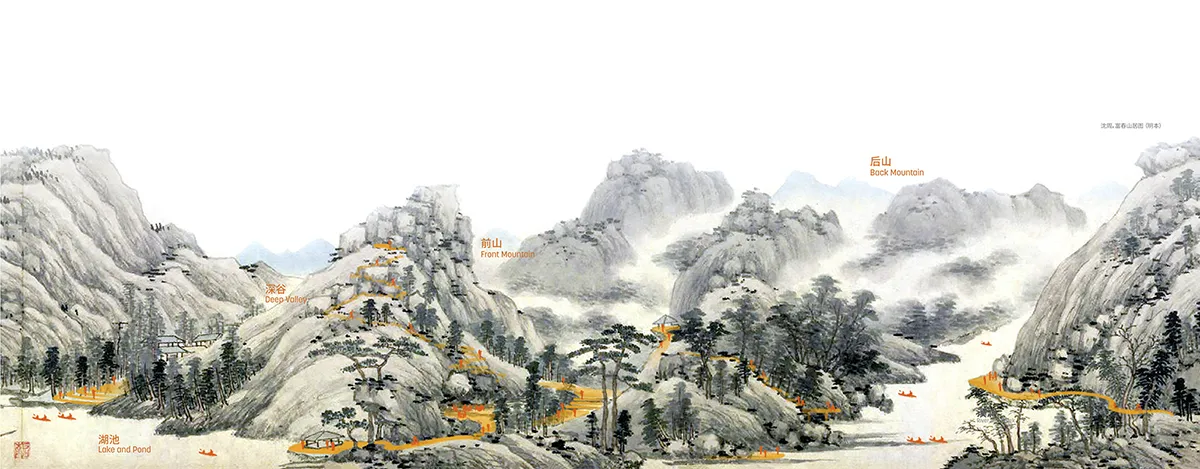
In my studio art practice, I use unconventional materials foraged from landscapes with unique environmental conditions as painting media. I use this process to understand new landscapes, in addition to site observation. The resulting drawings are looser, less refined, and more expressive. Rather than depicting a place literally, the work reflects the true color, texture, and atmosphere of the landscape, creating an ambience of place rather than a direct representation of it.
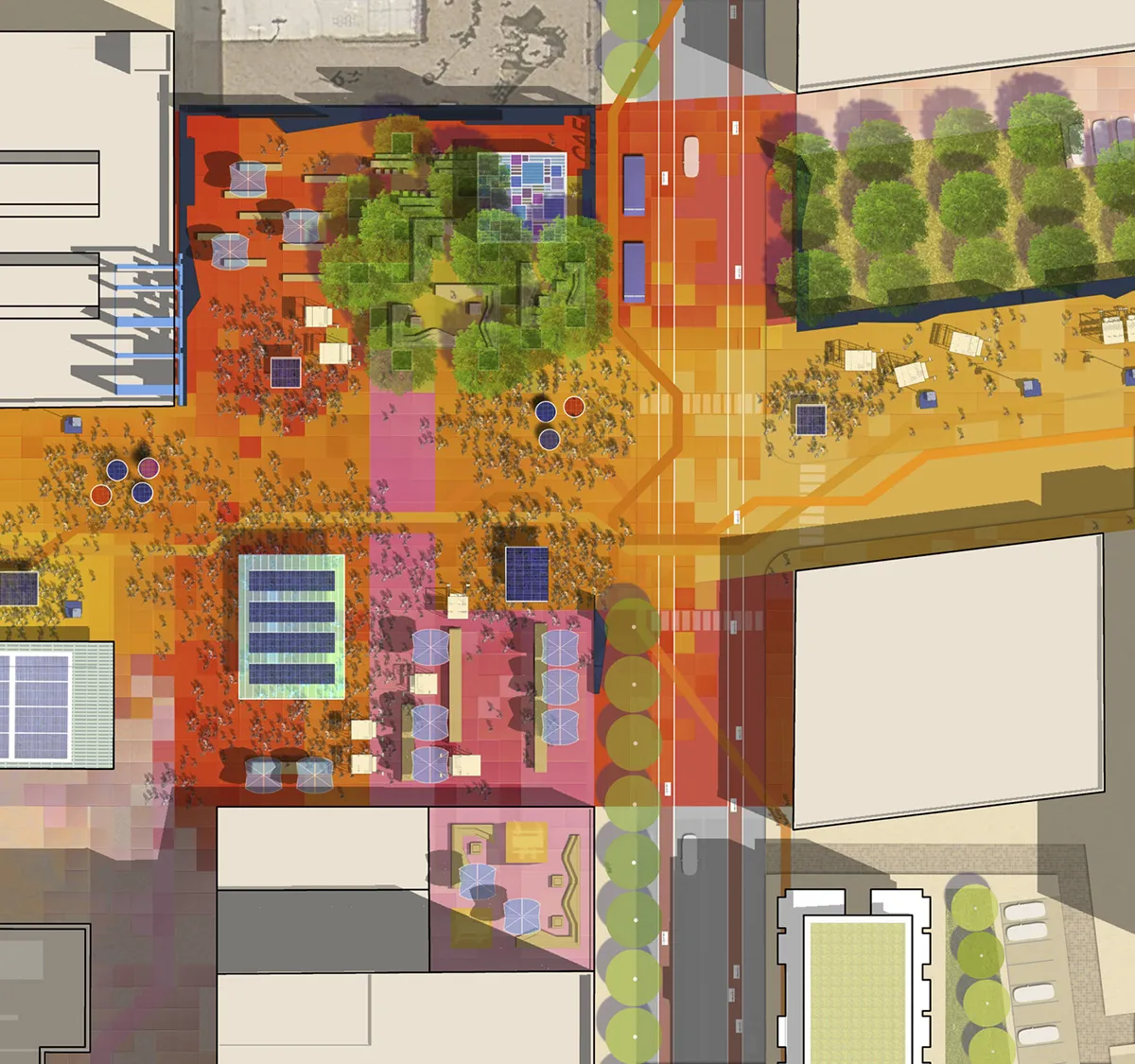
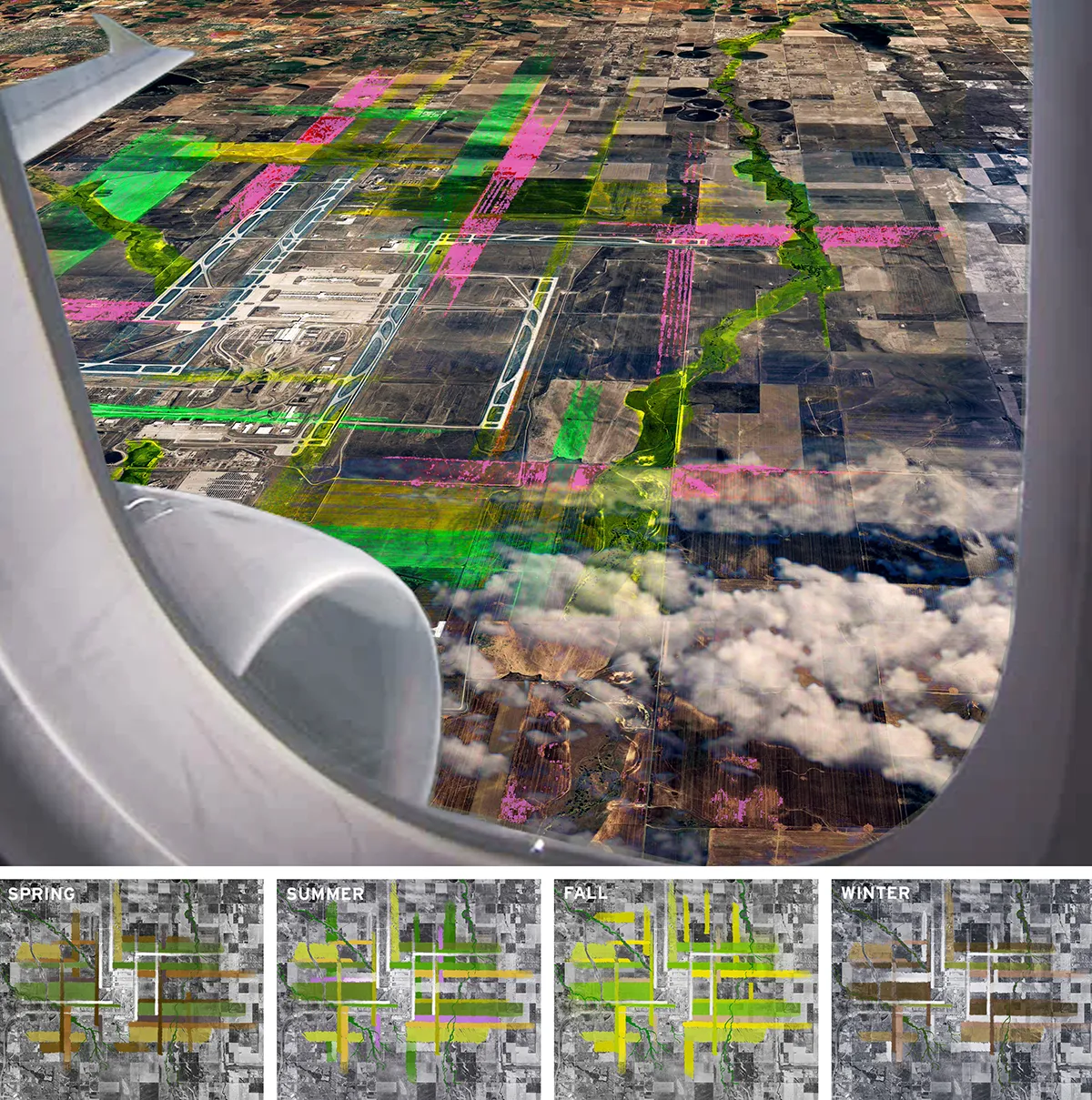
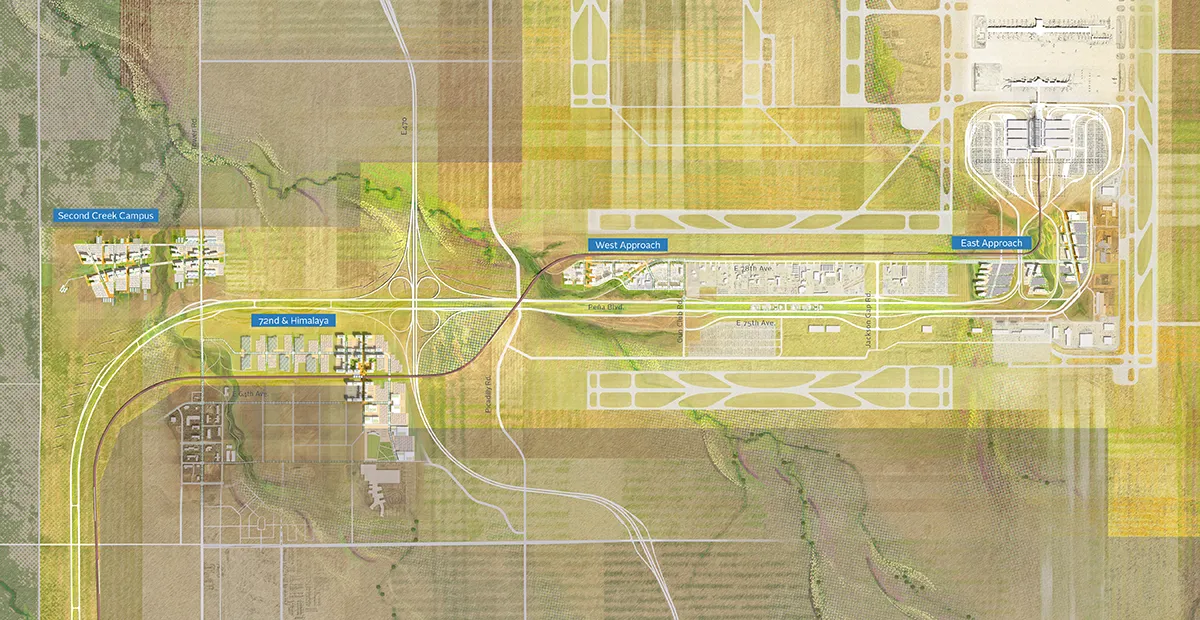
I combine these techniques with architectural drawings composed of constructive lines and massing derived from computer-generated models. I refer to these works as “hybrid drawings,” a synthesis of digital and hand-drawn processes. The goal is to represent not only the physical space, but also the spirit and emotional qualities of a place.
I first realized the communicative potential of this approach while working on a large-scale master planning project. Although our team presented numerous analytical diagrams, the client repeatedly asked how the space would actually feel and look. About thirty minutes before the presentation, I quickly produced a hybrid drawing as a test. The drawing immediately shifted the conversation, the client was able to relate to the urban design concepts in a more intuitive and emotional way.
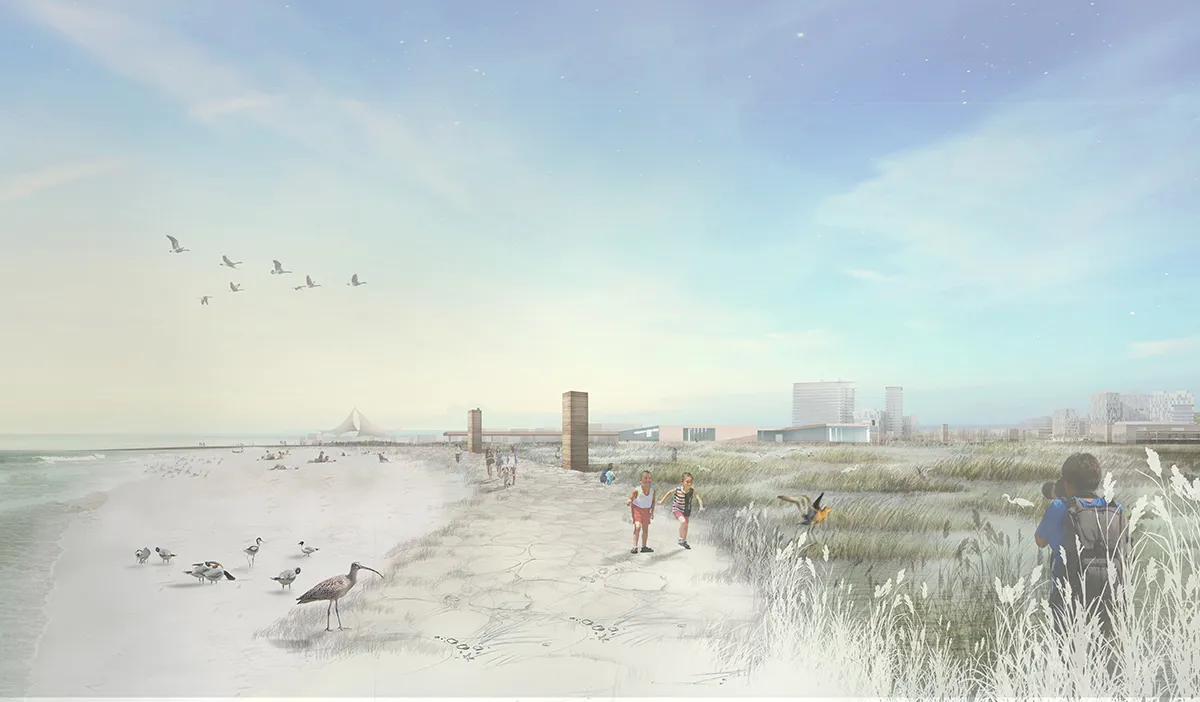
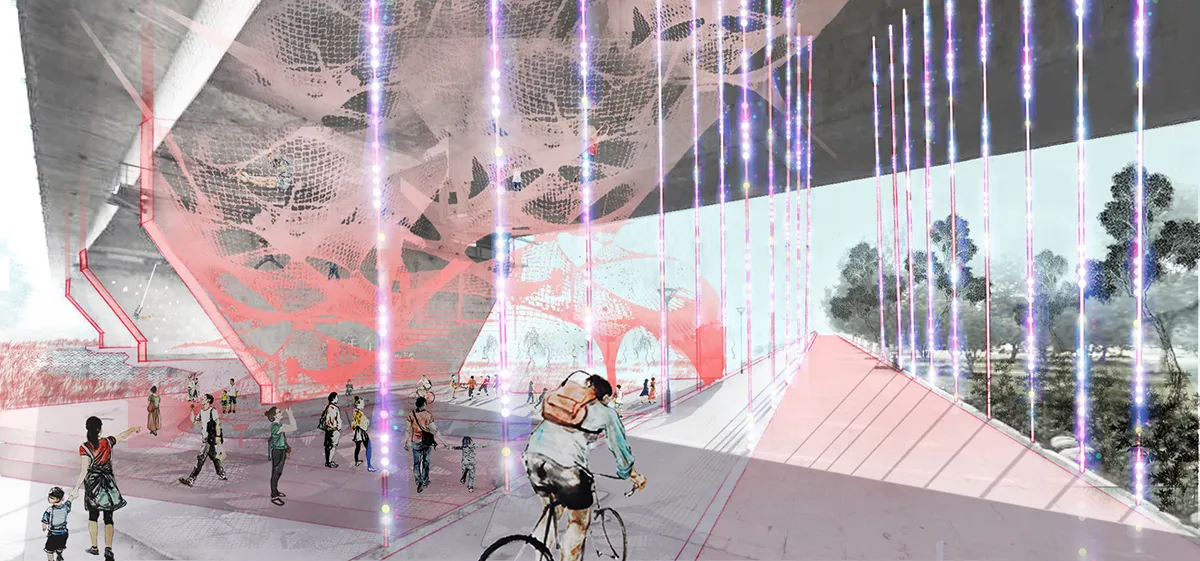
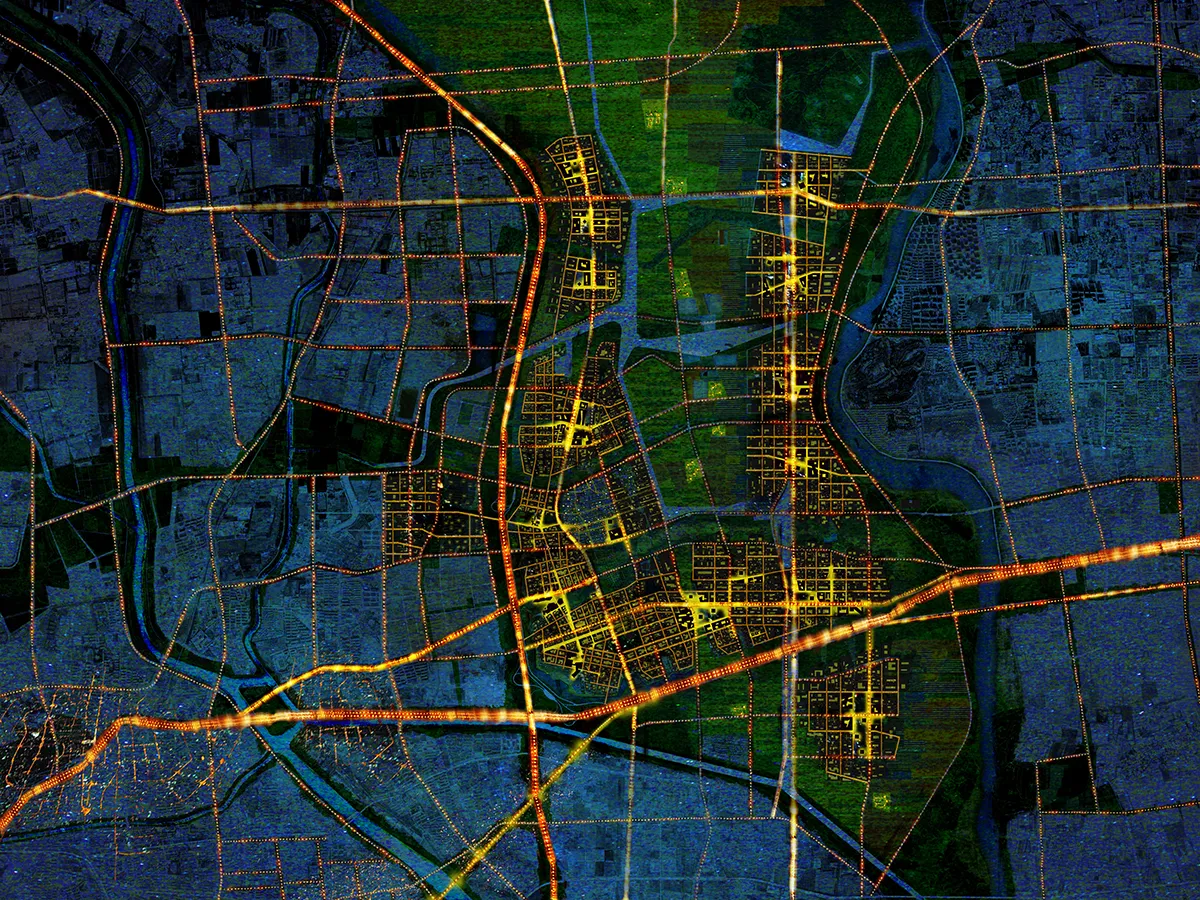
Apart from that, my background and interest in the arts strongly inform my aesthetic approach to architectural representation, particularly in my understanding of scale, proportion, and color palettes. This is especially valuable when working on large-scale master planning projects, as it enables me to translate big, bold design ideas from hand sketches into clear, comprehensive digital visuals.
WLA | How do you navigate the tension between art and the regulations of design and city codes?
In my opinion, public art has a looser and blurrier boundary than landscape architecture. However, identifying something as art does not mean it is exempt from codes or safety regulations. Installations still go through review processes involving property owners, structural engineers, accessibility committees, and art commissions from the city.
For me, the intentions and goals of the installation are especially important. My goals are to activate space, connect people to place, and foster connections between people. If a design needs to be adjusted to meet code requirements, I am comfortable adapting it as long as the core goals and experience remain intact. In that sense, I approach art installations similarly to landscape architectural projects.
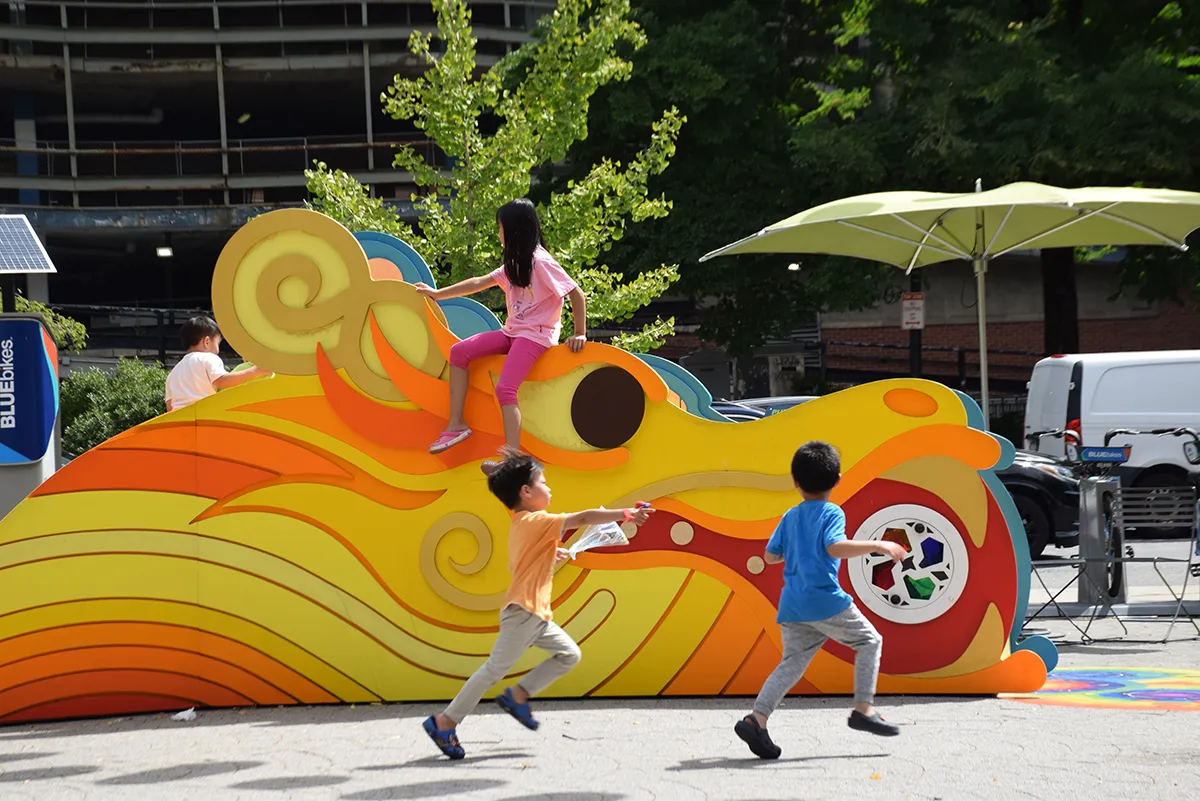
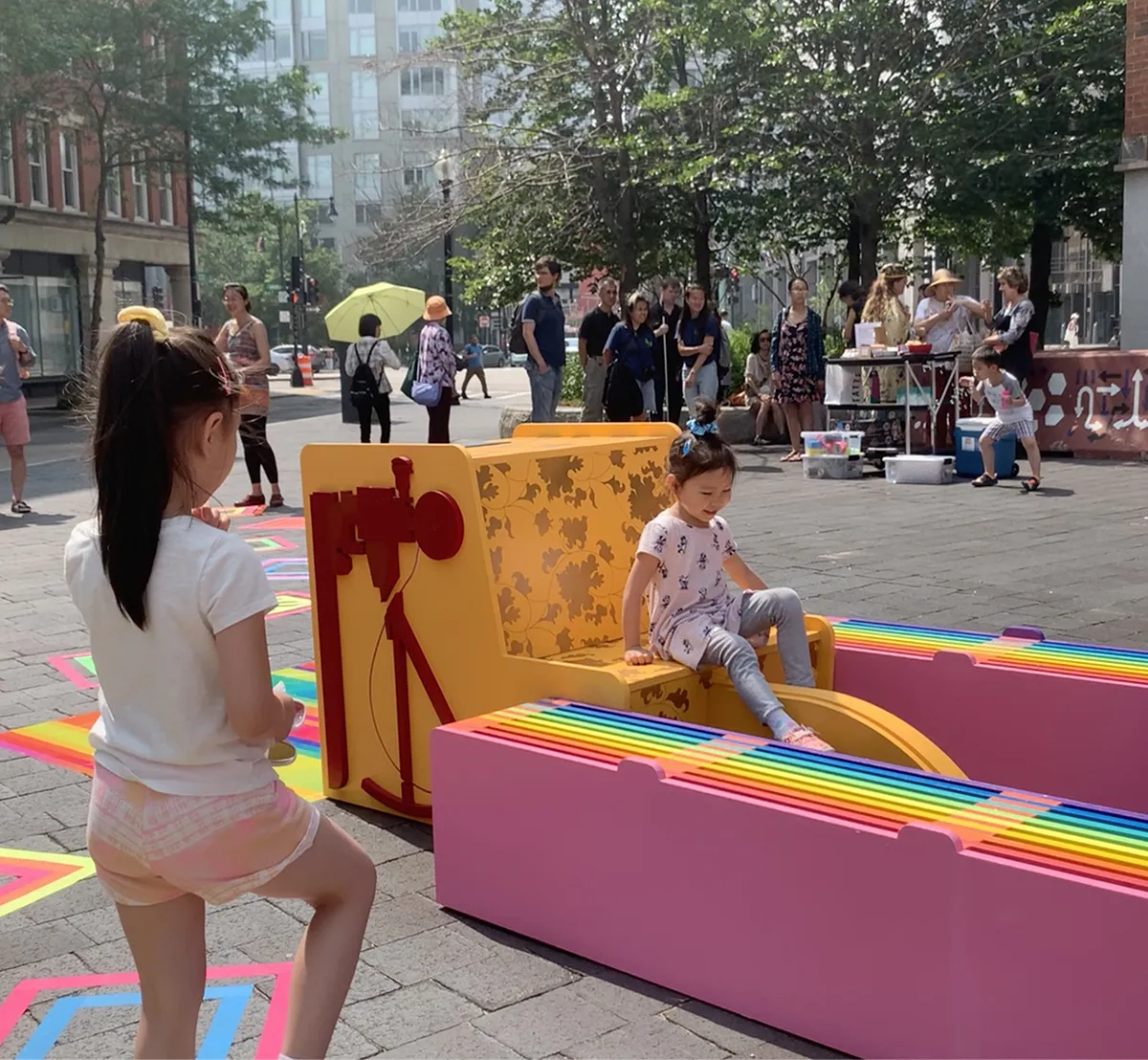
Year of the Dragon (2024), an installation part of the Greenway public art program. The design was revised from a small slide to a set of steps, as installing the required play-safety surfacing around the piece would have significantly increased the project’s complexity, timeline, and cost.
WLA | How does this “place-keeping” shift the way you approach the design process at Sasaki?
Creative placekeeping is a multifaceted approach to the planning, design, and management of public spaces that emphasizes collaboration among residents, artists, planners, designers, and cultural workers. This process aligns closely with how we work at Sasaki as a multidisciplinary practice. What most shifted my perspective was the evolution of community engagement in the creative placekeeping process—from co-design to a truly community-led approach. It sounds like a small change, but the process changes from top-down to bottom-up decision-making. In this model, designers take on a supporting role, helping guide the project while ensuring it remains on track rather than directing outcomes. Creative placekeeping also advocates for the active care and long-term stewardship of a place and its social fabric by the people who live and work there. This really helps designers when planning maintenance.
This process requires more time, preparation, trust-building, and close relationships with the community. However, many of the strategies used in creative placekeeping have made my own engagement process much more effective. One example is that when conducting on-site intercept surveys, people often shy away from approaching someone holding a clipboard or an iPad. In contrast, while I was painting a mural, many people naturally stopped to ask questions, share stories, and talk about their experiences in the neighborhood. These conversations did not necessarily respond to my prepared questions; instead, they emerged organically from the community’s own interests and lived experiences. That experience showed me how art can become a more approachable and inviting tool for community engagement. As a result, I now bring some of these methods into my landscape architecture projects to break the ice and foster more genuine conversations and participation.
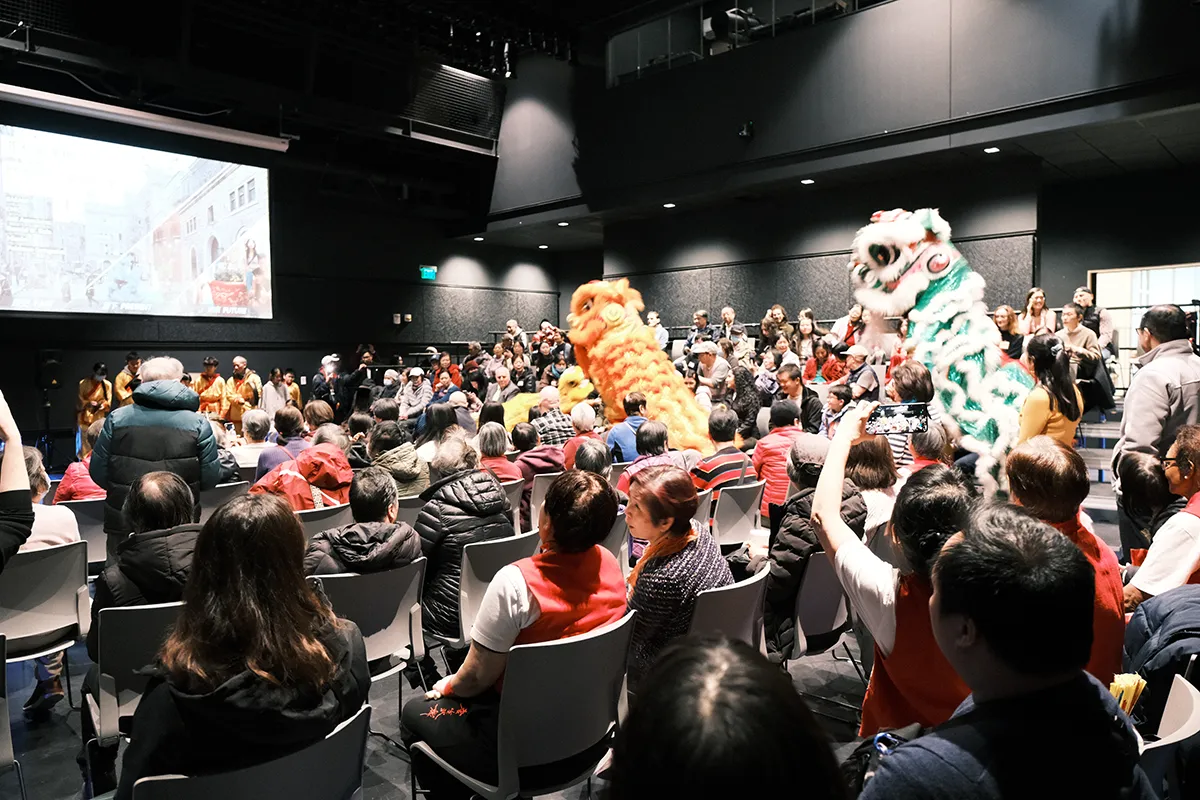
For the Phillips Square Redesign project, we organized a community engagement event as a neighborhood celebration, featuring performances by a local lion dance troupe and a senior drumming group, alongside Sasaki’s principal-in-charge, who sang two songs for the community. Later in the design process, we invited more than 80 community members to participate in a collaborative design charrette at Sasaki.