
Winner of the Outstanding Award in the 2025 WLA Awards – Built Masterplan & Urban Design category
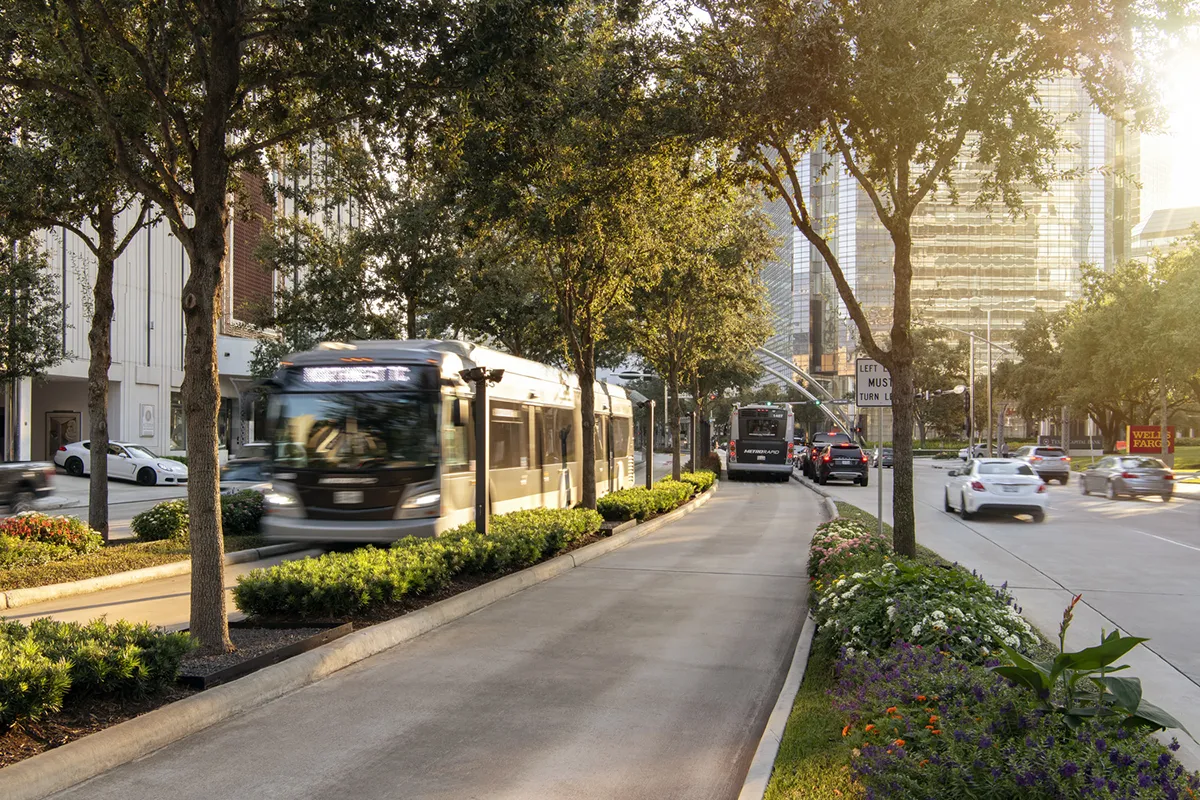
Post Oak Boulevard, located in the heart of Uptown Houston, has undergone a profound transformation that repositions what was once a vehicle-dominated thoroughfare into a dynamic, pedestrian-friendly boulevard. Spanning approximately two miles through one of Houston’s most vibrant and economically significant districts, this project represents a paradigm shift in urban design, integrating sustainable infrastructure, efficient transit, and inviting public space. The revitalization thoughtfully balances the realities of rapid urban growth with the principles of resilient, human-centered design, establishing a forward-looking model for the future of dense urban corridors.
CONTEXT AND CHALLENGES
Uptown Houston is recognized as one of the largest retail and employment districts in the United States, with tens of thousands of daily visitors and workers contributing to its dynamic economy. However, this rapid expansion brought significant challenges to the area – congestion, limited connectivity, and an absence of accessible public space. The corridor, originally designed to prioritize automobile traffic, featured narrow sidewalks, minimal vegetation, and lacked amenities that would encourage pedestrian or multimodal transportation.
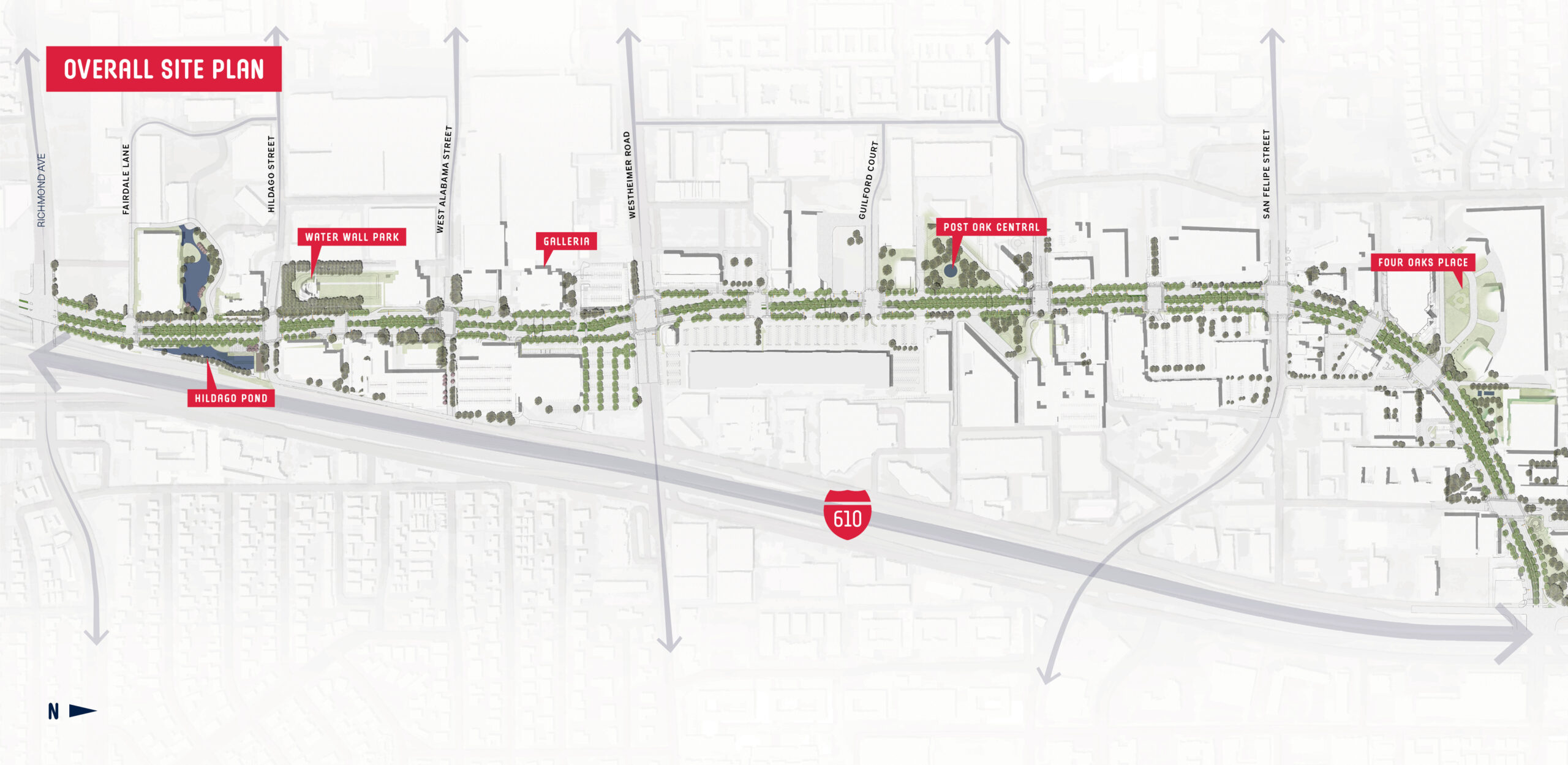
The project’s primary dilemma was to transform this existing environment into a welcoming, accessible, and vibrant urban corridor that could meet the evolving needs of the community, improve regional connectivity, and enhance environmental resilience amid Houston’s challenging climate and flood-prone conditions.
VISION AND URBAN DESIGN
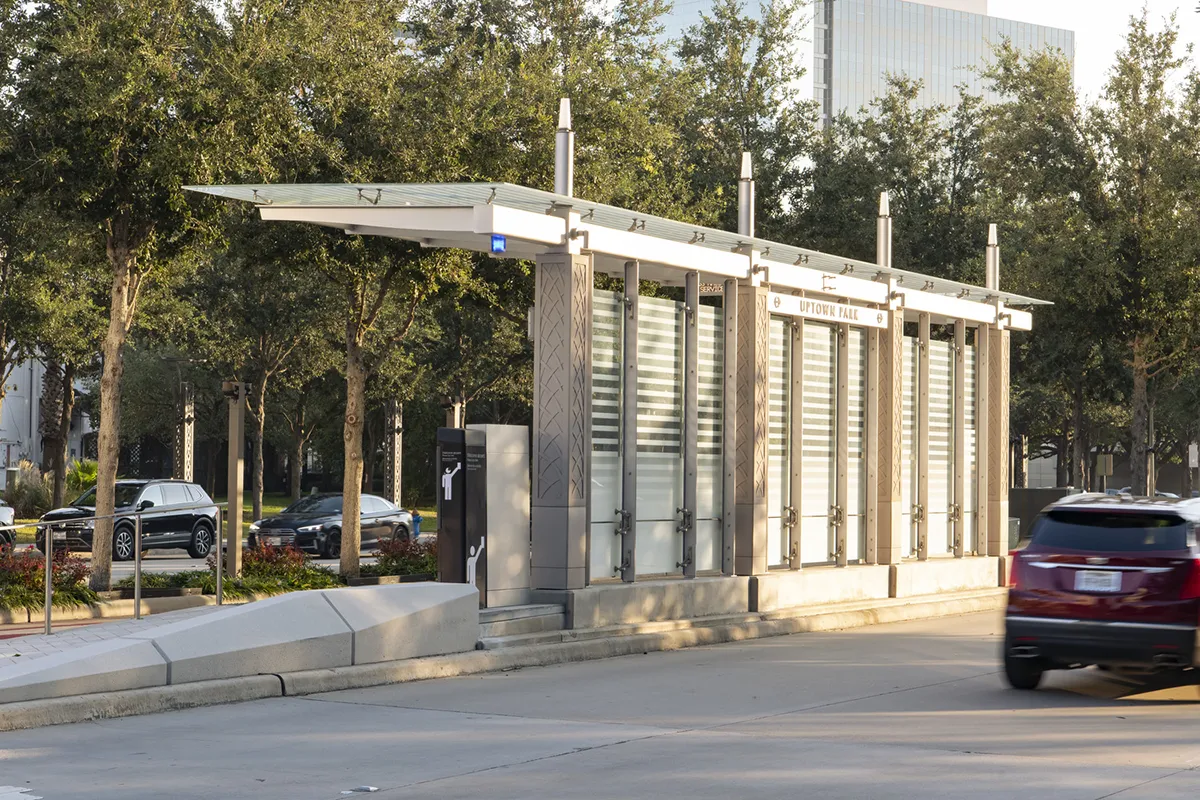
Originally envisioned to accommodate a light rail system, the project pivoted to implement a more flexible and cost-effective Bus Rapid Transit (BRT) system. This strategic shift allowed for a design that could seamlessly integrate dedicated BRT lanes alongside widened sidewalks, improved pedestrian crossings, and comprehensive bike facilities. The resulting multimodal boulevard fosters a balanced urban mobility ecosystem, reducing automobile dependency and enhancing access to regional transit hubs.
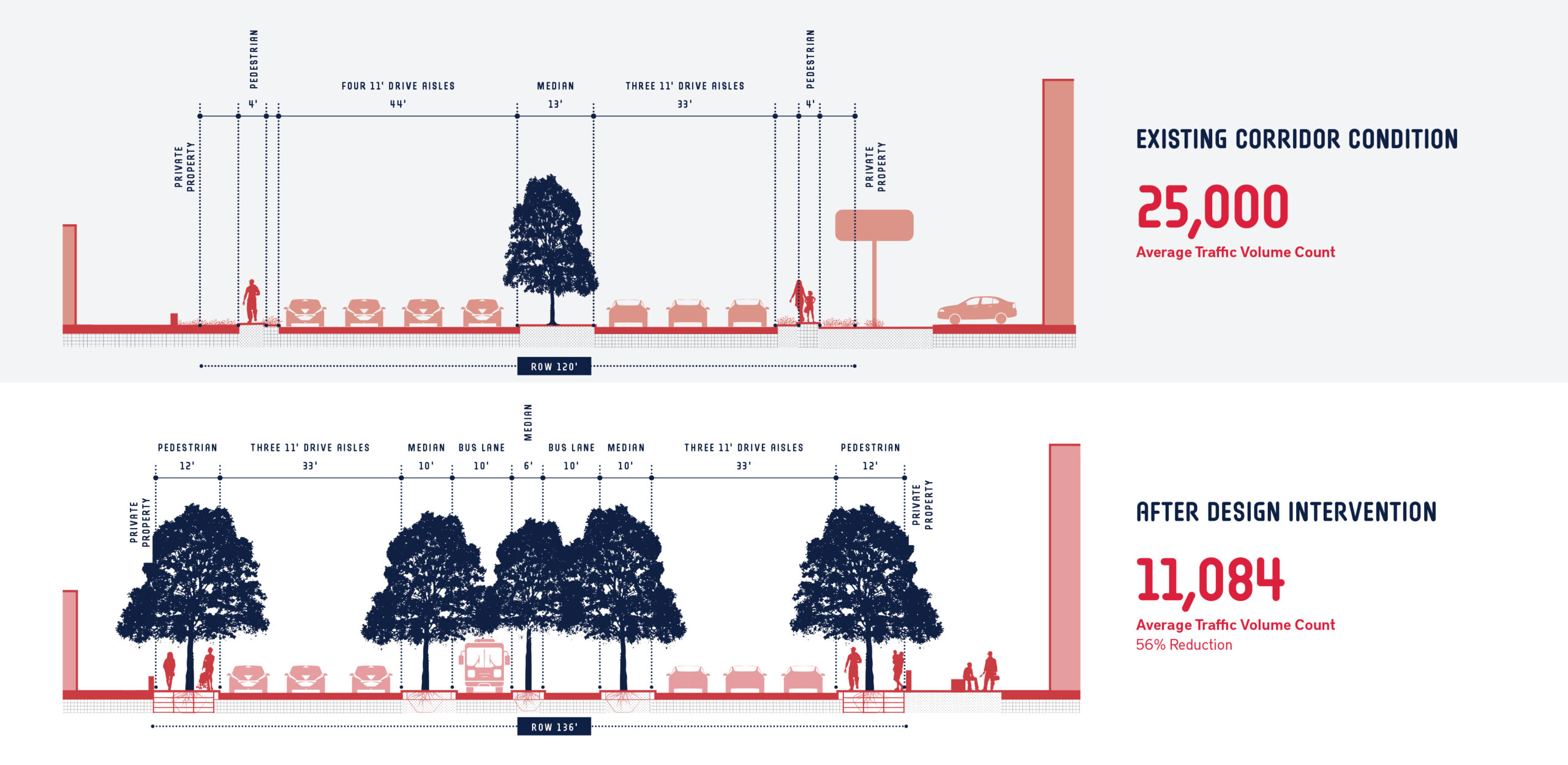
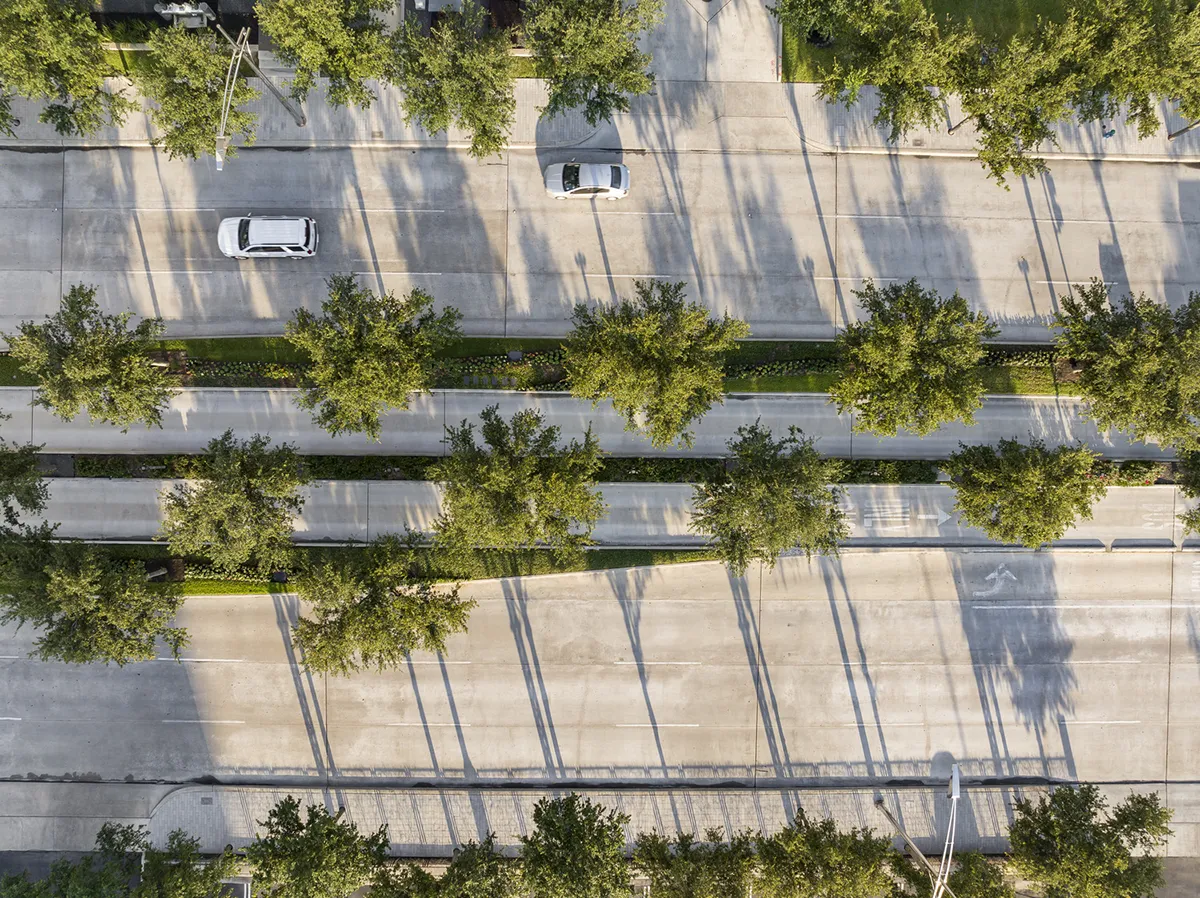
This design establishes Post Oak Boulevard as a vital connective spine through Uptown Houston, supporting economic vitality and increased mobility through the corridor. It reimagines the corridor as a “complete street” — one that balances all modes of transportation, prioritizes the pedestrian experience, and strengthens civic identity.
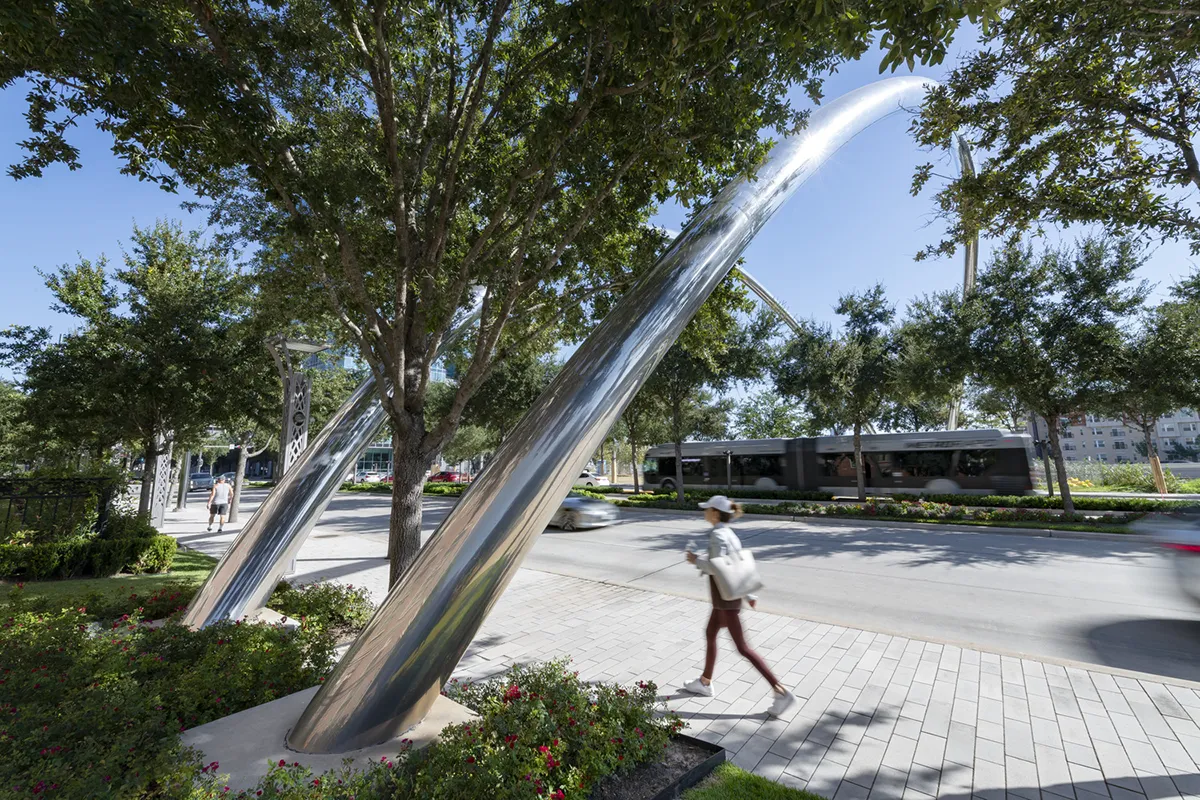
A GREEN TRANSFORMATION
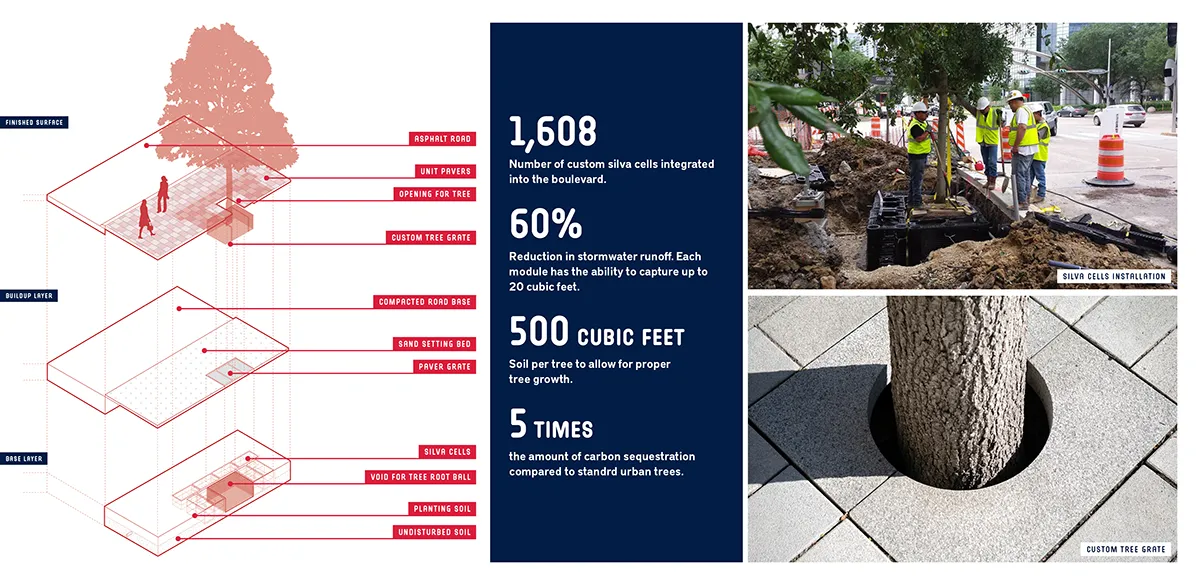
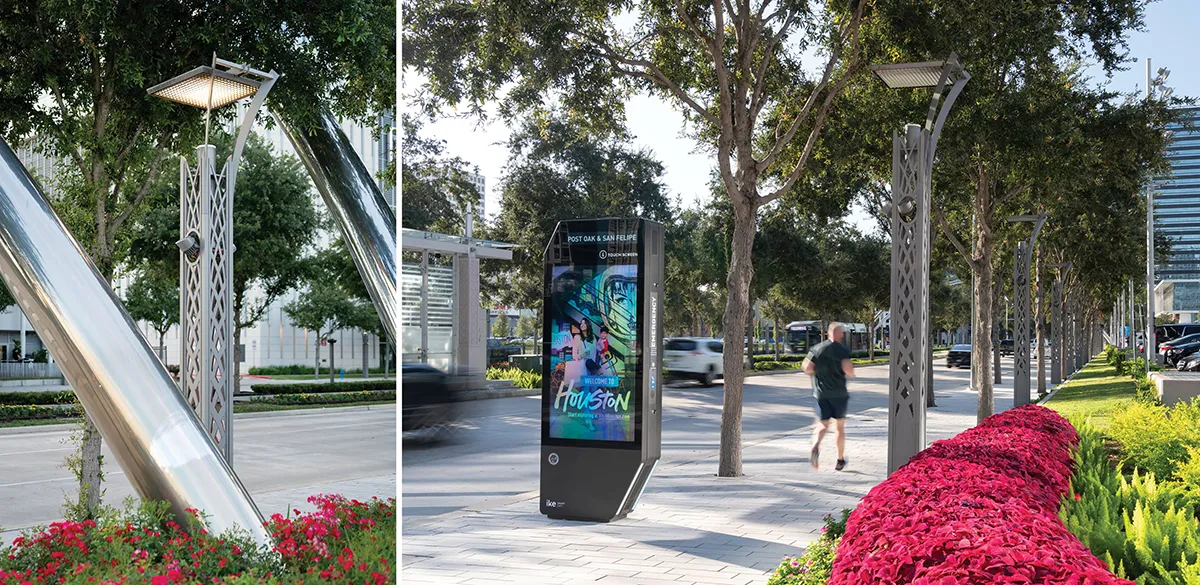
A defining feature of the transformation is the extensive tree canopy. Over eight hundred Cathedral Live Oaks now line the boulevard, offering much needed shade, improving air quality, and softening the urban environment. Structural soil systems and suspended pavements support healthy tree growth while managing stormwater, a critical concern in flood-prone Houston. Permeable surfaces enhance water absorption and filtration, boosting the district’s long-term environmental resilience.
WALKABILITY AND CIVIC ENGAGEMENT
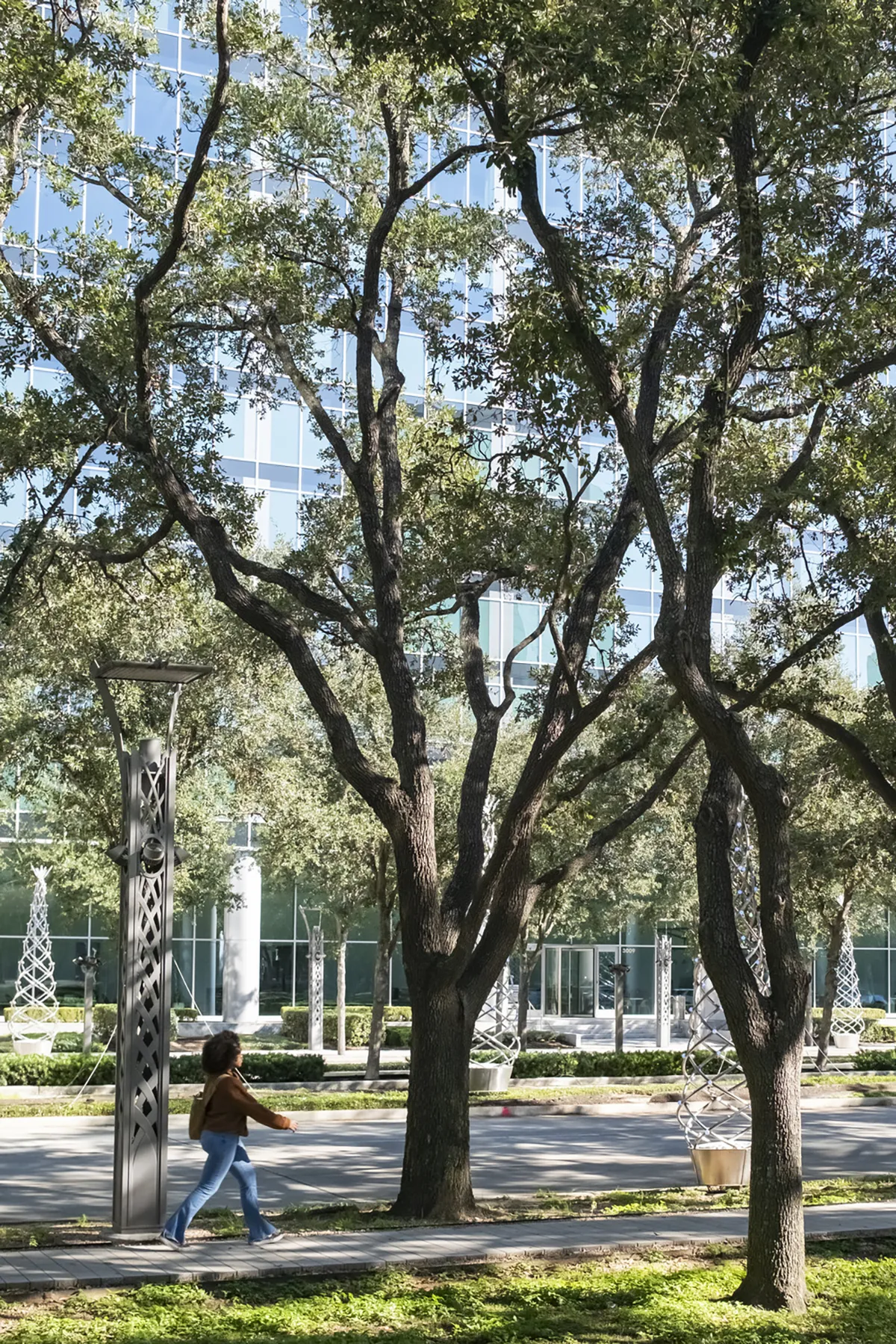
Post Oak Boulevard has transformed from a transportation corridor into a vibrant civic destination. Generous sidewalks, shaded seating, and public art create an inviting atmosphere that encourages walking, gathering, and social interaction. The space fosters inclusivity, ensuring everyone can connect and seamlessly navigate the extents of this lengthy urban corridor. Beyond daily use, it serves as a hub for community events, like the annual holiday lighting ceremony, attracting over 150,000 visitors each year. By fostering social engagement, the boulevard strengthens the identity and cohesion of the Uptown district.
CONCLUSION
Post Oak Boulevard exemplifies how forward thinking design can transform urban corridors into thriving public spaces. Through an integrated approach to infrastructure, transit, and landscape, the project enhances mobility, mitigates environmental challenges, and enriches the urban experience.
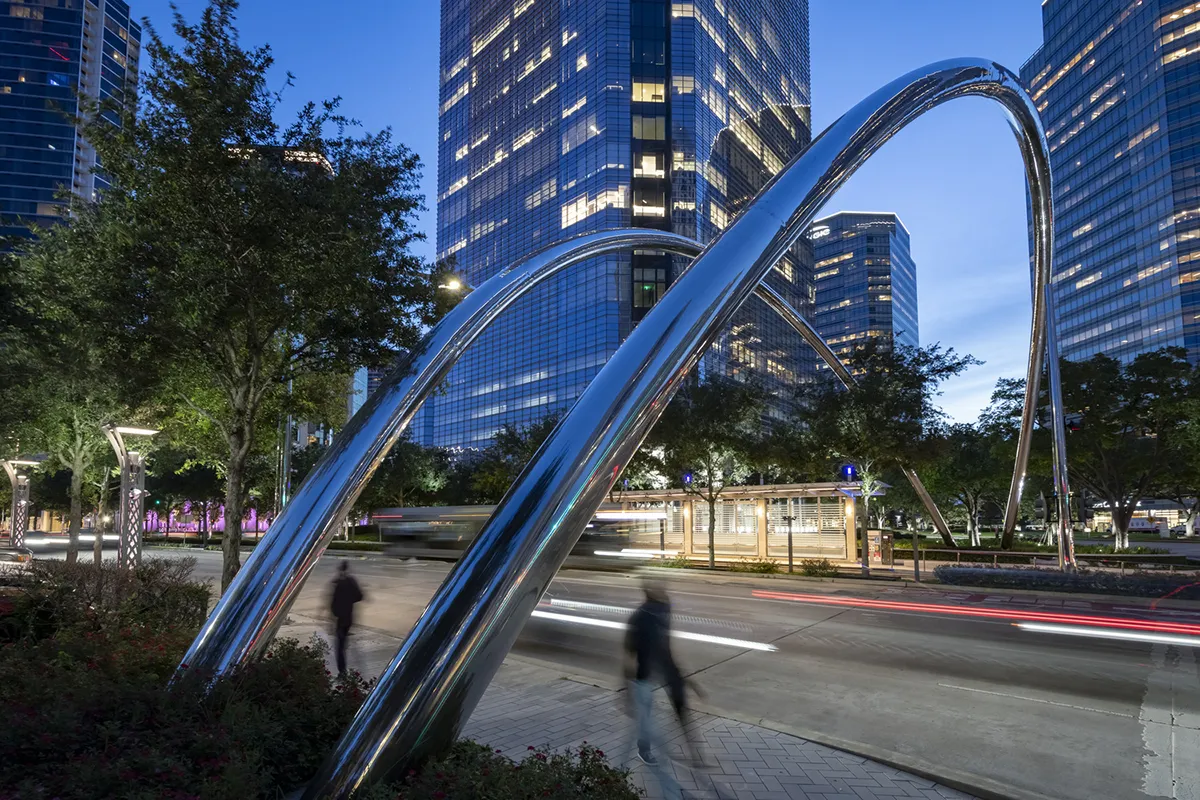
This revitalization demonstrates that cities can evolve in ways that are both functional and beautiful. By prioritizing human centered design, Post Oak Boulevard not only supports the needs of a growing population but also sets a precedent for creating more resilient, connected, and livable urban environments.
Post Oak Boulevard
Location: Houston, Texas, USA
Project Landscape Architect:
Conceptual Design through Permit Drawings: Design Workshop
Tree Procurement Specification: SWA
Construction Observation: Terrain Studio
Design Workshop Team
Principal Name: Kurt Culbertson
Project Manager: Robb Berg
Project Landscape Architects: Kathleen King, Jamie Fogle, Paul Sqaudrito
Awards: Taylor Broom, Jack Alderman
Project Team
Project Management: ARUP
Civil Engineering: Gunda Corp.
Structural Engineering: ARUP
Branding/Experiential Design: Stantec/Mike Doyle
Electrical Engineering: Hunt & Hunt
Wet Utilities: LAN
Traffic Engineering: TEDSI
Tree Procurement and Relocation: Environmental Design Inc.
Image and Photography Credits: Brandon Huttenlocher, Design Workshop, Inc., Environmental Design, Inc.,