
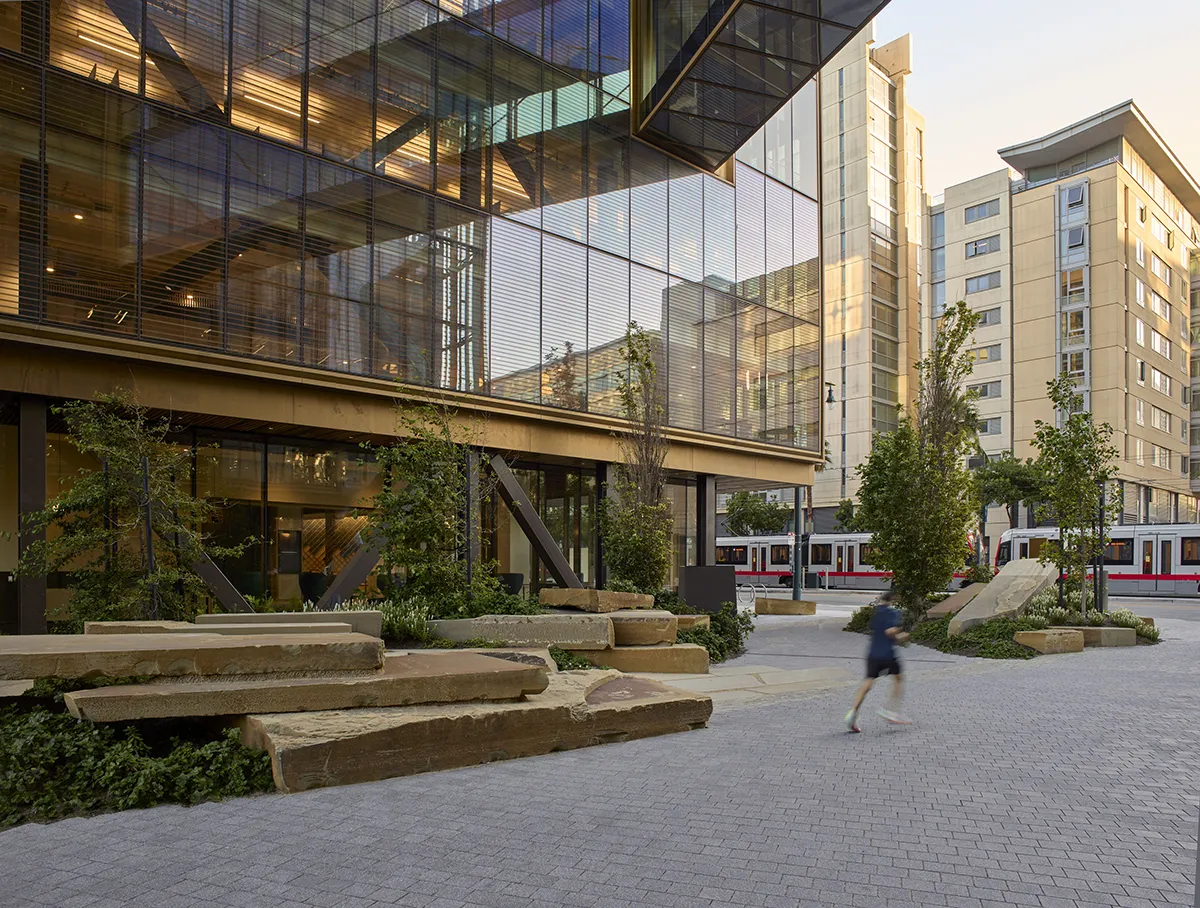
Set on the backdrop of neighborhood expansion and rigid grid planning lies Pierpoint Lane, a new urban greenway that cuts through a transit heavy intersection in San Francisco’s Mission Bay neighborhood. In an area that has undergone significant urban development in the past 20 years, Pierpoint Lane mixes play and mental reprieve with environmental stewardship.
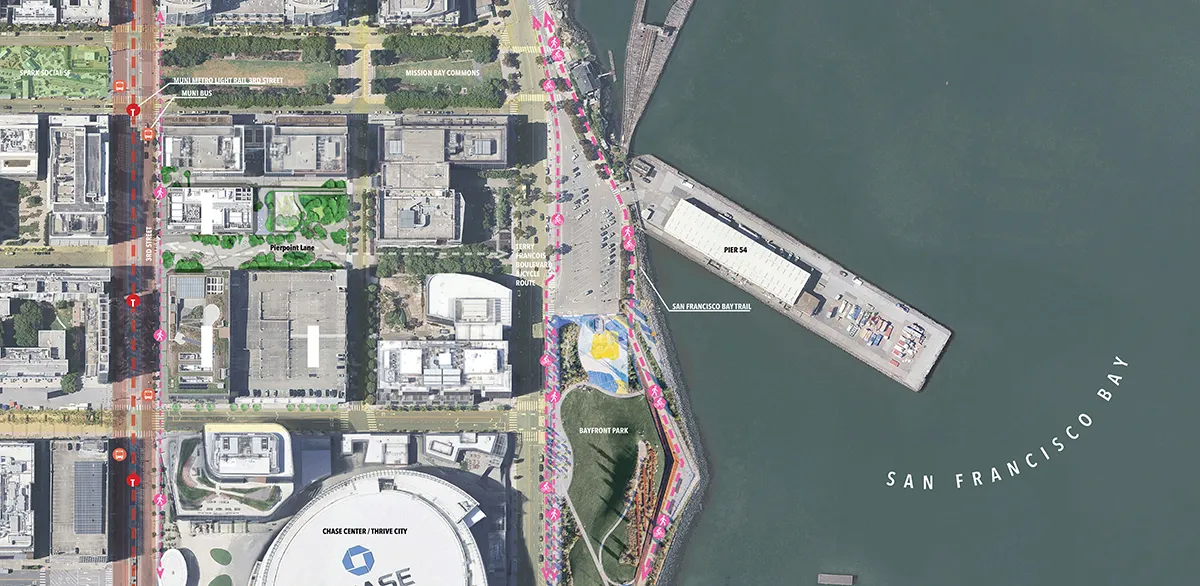
While the site was originally intended to be an Emergency Vehicle Access (EVA) route, the project team maximized the alley-like road for its local users, reimagining its potential with a design intervention that offers the community an immersive space to gather, wander or discover “off the beaten path”.
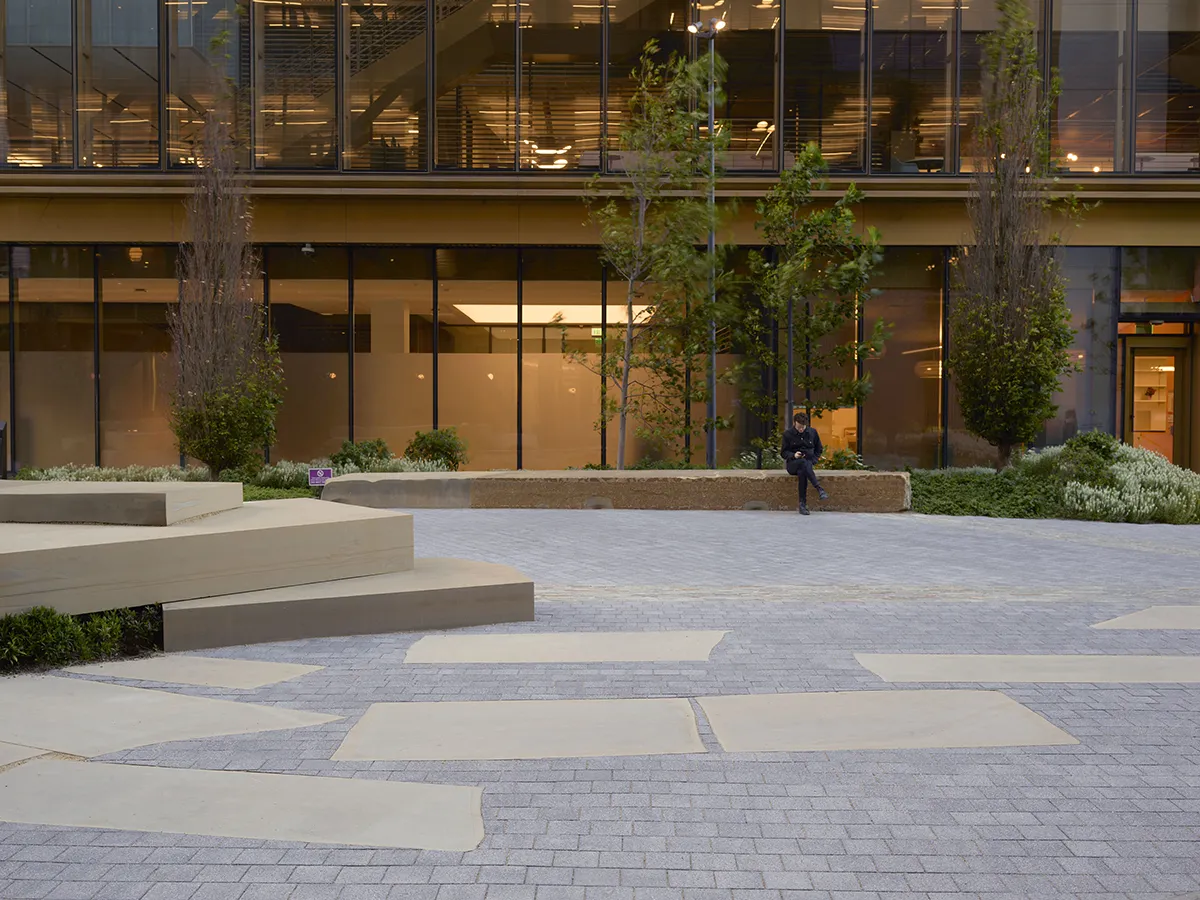
Pierpoint Lane’s spatial informality and spirit of spontaneity was influenced by avant-garde musical composition, abstract expressionist painting, and modern choreography. Combining public amenities including a public park and major streetscape within the context of a largely private business setting, Pierpoint Lane has been uniquely designed to facilitate informal and serendipitous encounters as a catalyst to revitalize the community’s public life and well-being through intuitive wayfinding, varied seasonal planting, as well as public art.
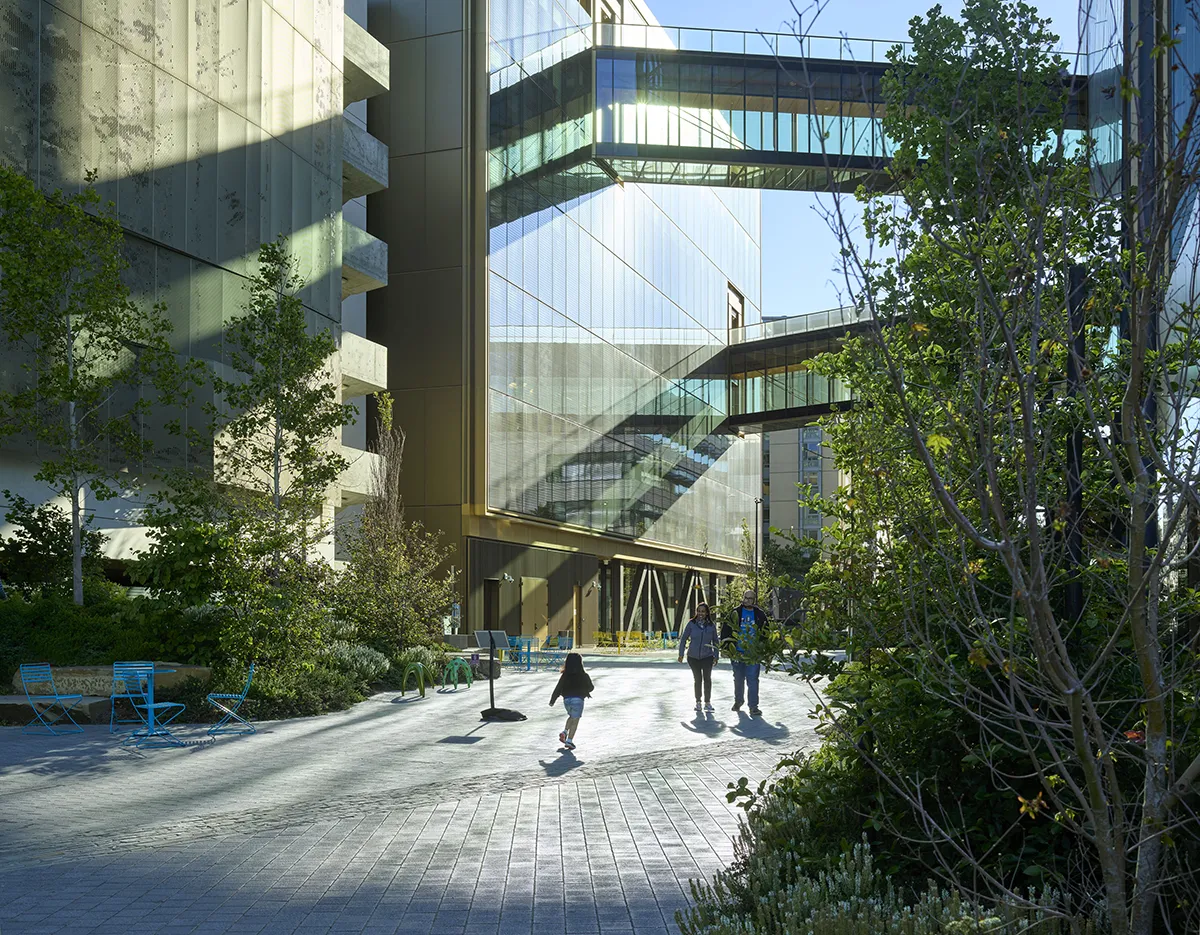
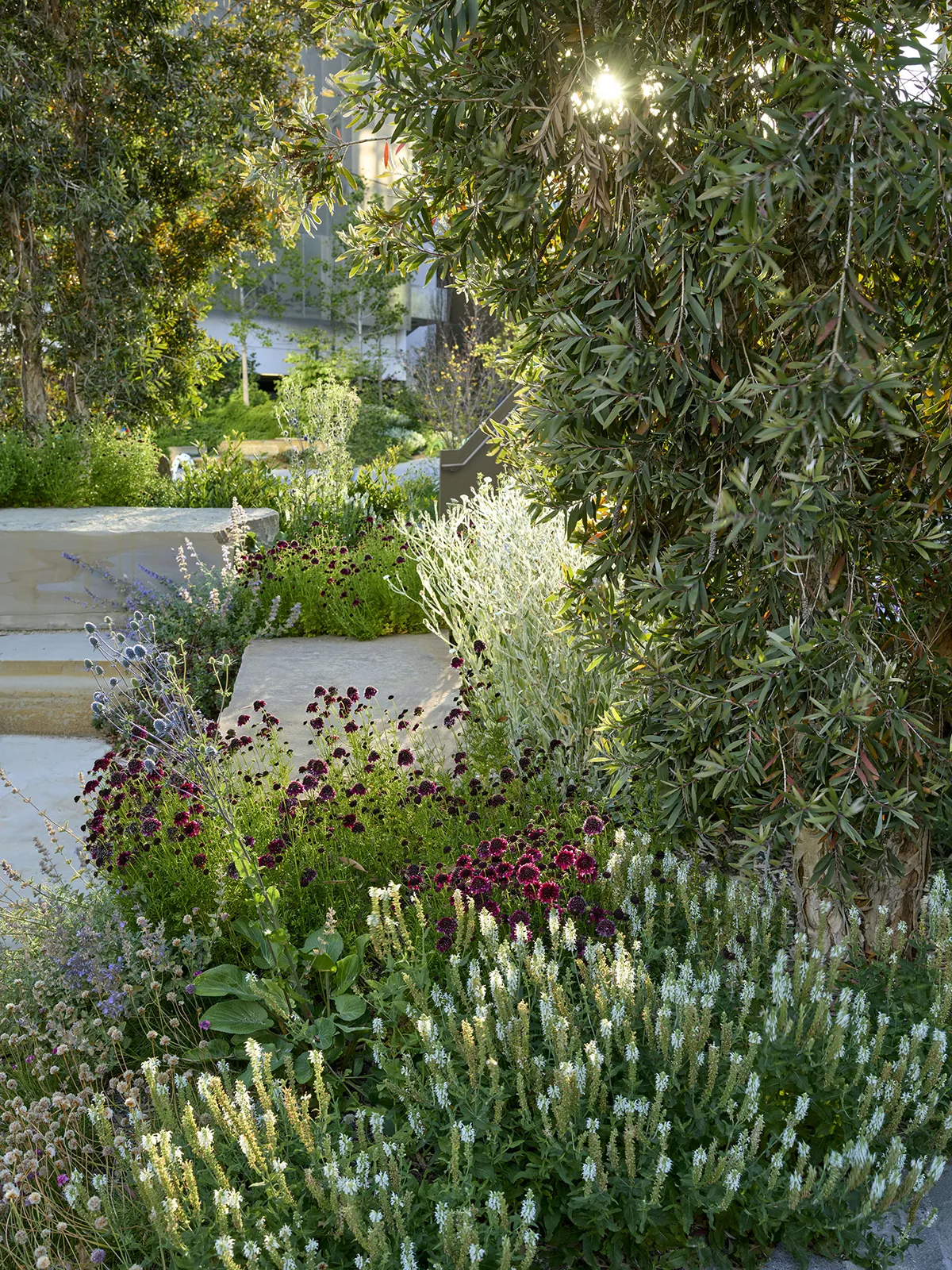
Pierpoint Lane’s boundaries are deliberately ambiguous while communicating inclusivity, accessibility, and openness to passersby by refining the plant palette down to green plantings of varied texture and scale. Defined formations of flowering shrubs and creeping groundcovers create cohesion through the lane – a design move that gestures a connection to what remains of Mission Bay’s formerly robust natural habitat at Mission Creek Channel. Canopy trees offer shade, while understory plantings add color, form, and density. Columnar trees define key intersections at architectural bridges and the 3rd Street frontage.
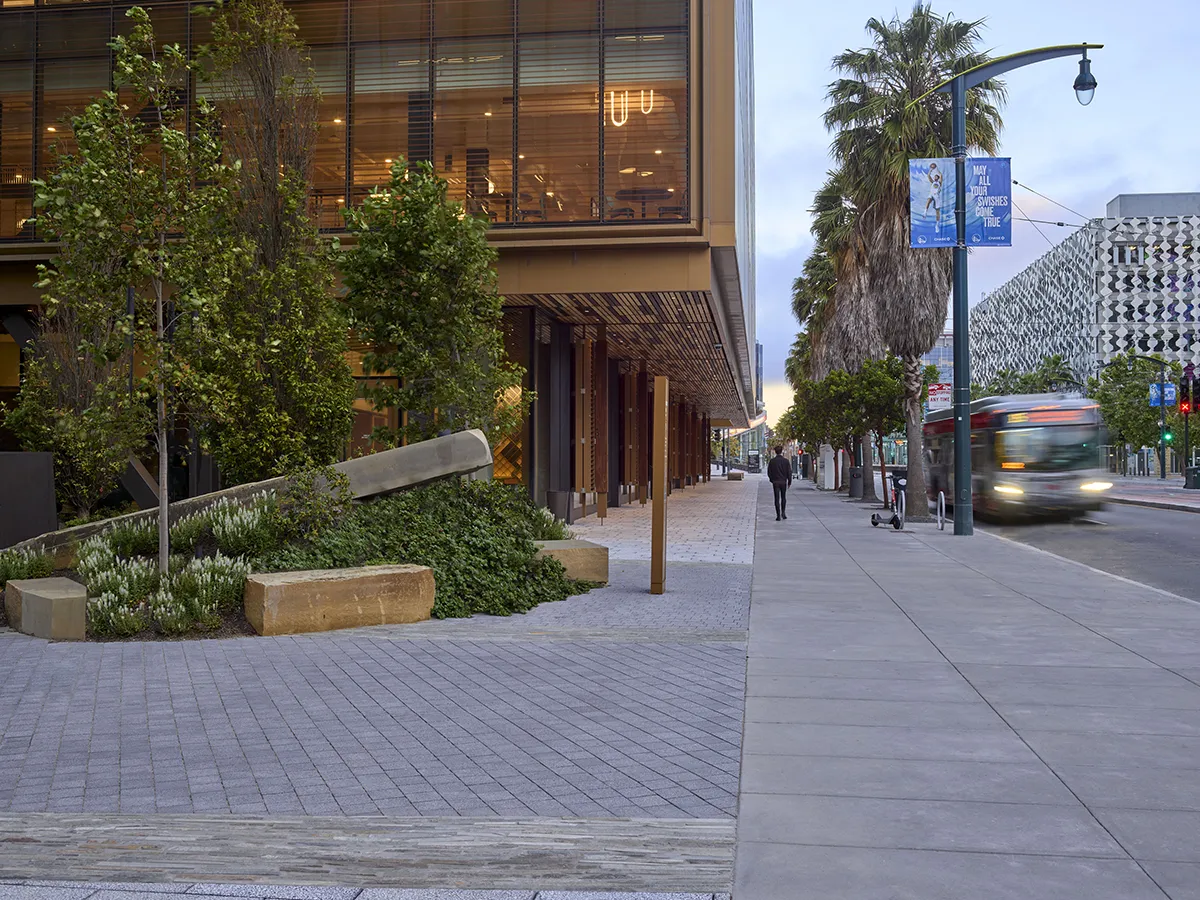
Through a sequential procession through the landscape, colorful groundcover plants harmonize with the spatial arrangement of trees and shrubs. The open space is a place of leisure and pause from the urban surroundings and bustle of an urban workforce. With the seasonal display of the upland slopes and the lawn bowl framing the sky through the ring of Cajeput Paperbark trees, this portion of the site showcases a diverse palette of trees, shrubs, groundcovers, grasses, and perennials.
Acknowledging the site’s susceptibility to differential settlement, Pierpoint Lane is designed for resilience—adapting to natural tectonic shifts and increasing neighborhood flooding. A variety of paving types and textures meander through the landscape, each carefully considered to complement the space’s function. A strategic selection of materials and layout promotes intuitive circulation while planting provides a varied, immersive experience. Interspersed throughout the site, gathering spaces—including seating nooks, stone outcroppings, and a lawn amphitheater—offer the Mission Bay workforce, community, and visitors moments of respite amid the urban energy.
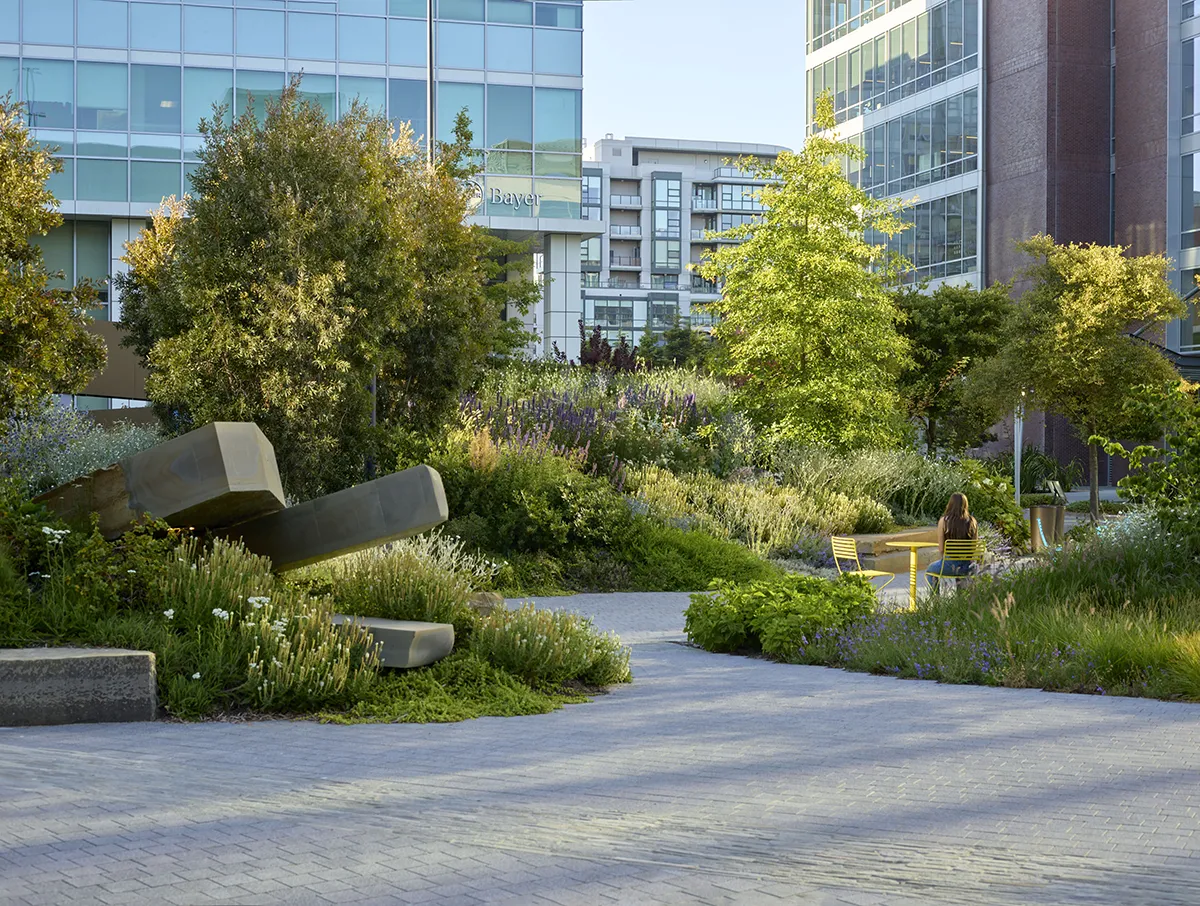
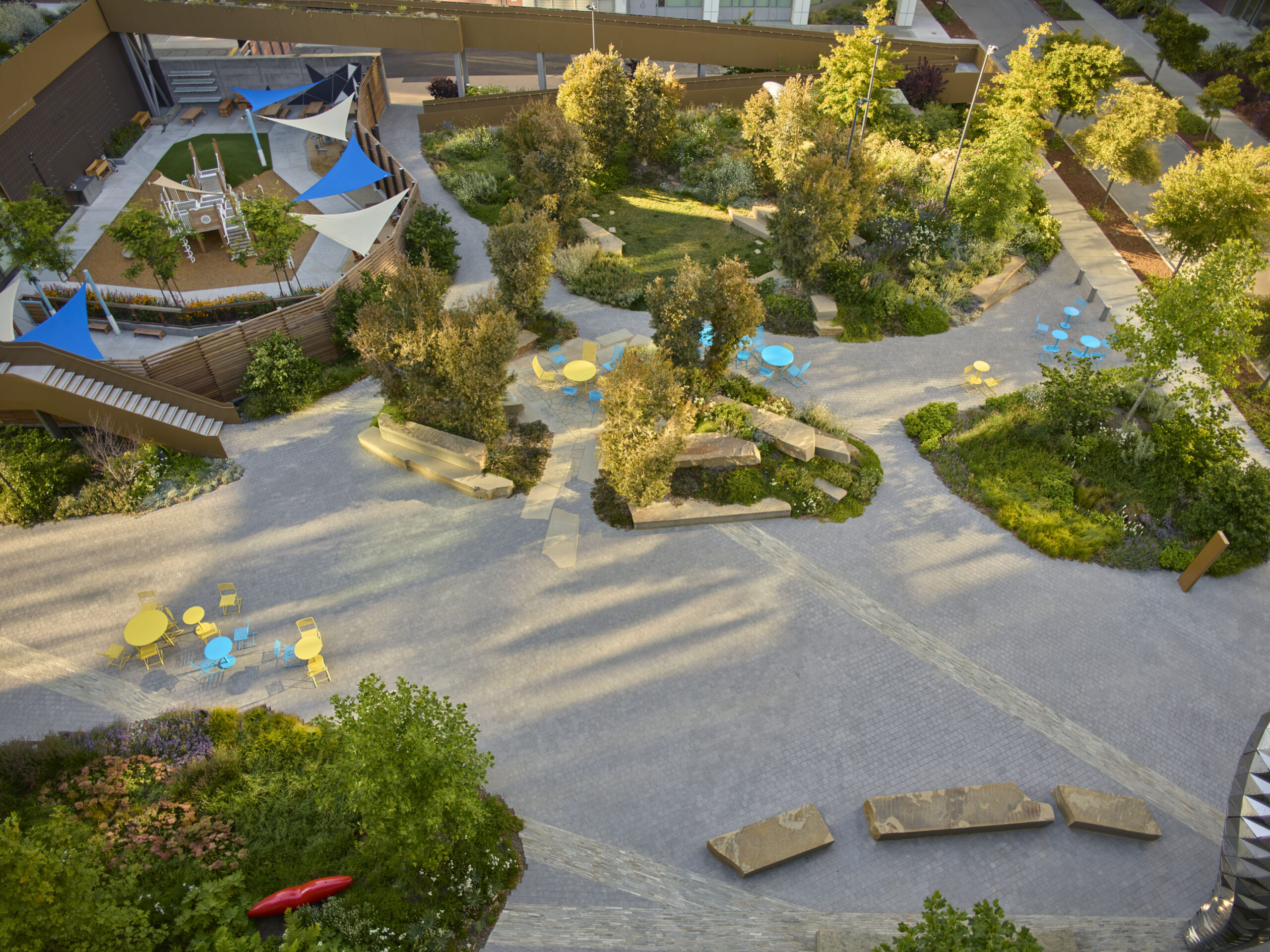
Playful sculptures by Masako Miki emerge from the landscape, seamlessly integrating with both planting areas and the plaza. A spiraled, reflective structure by Future Forms anchors the eastern entrance of Pierpoint Lane. Streetscapes and road frontages seamlessly connect the active adjacent streets to the park, drawing pedestrians from 3rd Street. Pierpoint Lane invites passersby to encounter a new typology of greenspace in Mission Bay.
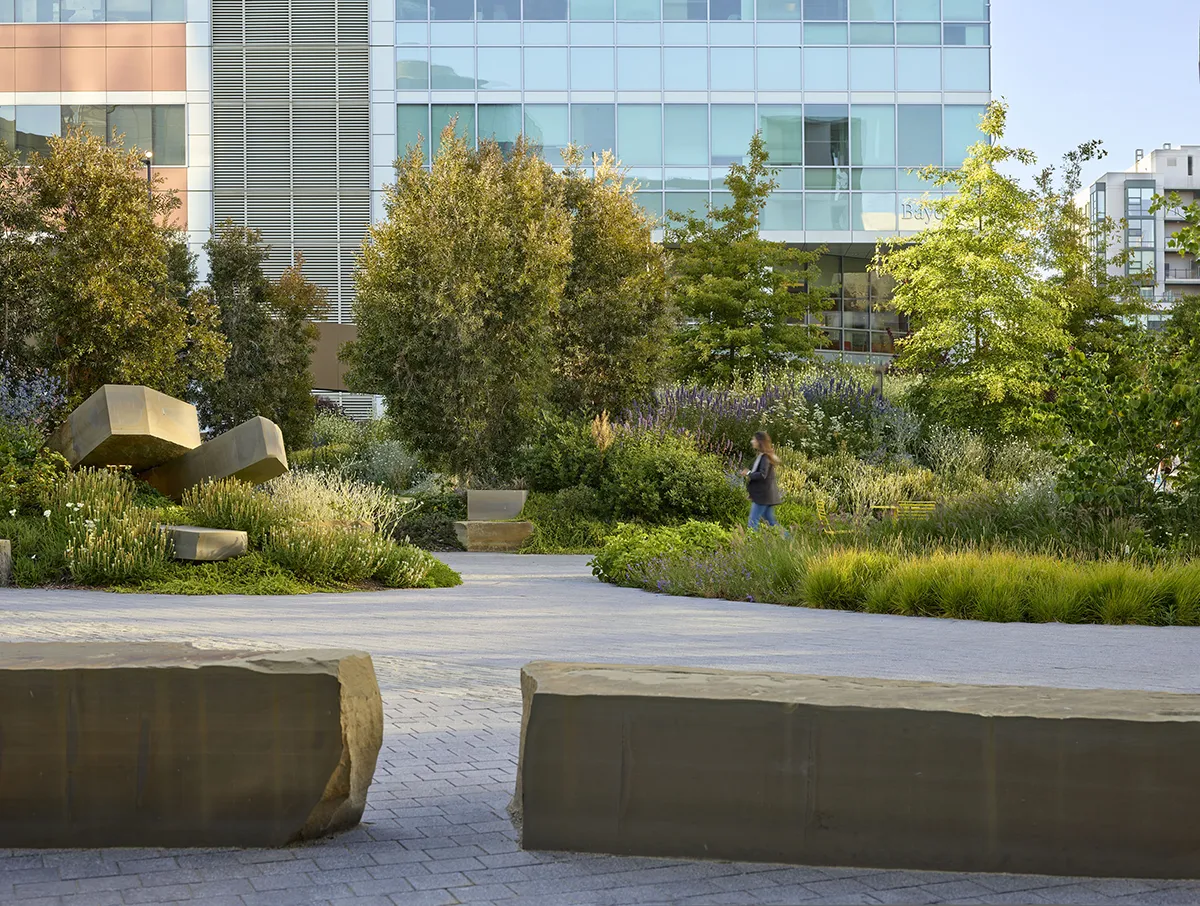
Pierpoint Lane (Uber HQ)
Location: San Francisco, CA (USA)
Landscape Architect: Surfacedesign, Inc
Photography: ©Marion Brenner
Shortlisted in the 2025 WLA Awards – Built Masterplan & Urban Design