
Winner of the 2025 WLA Student Awards – Award of Excellence – University Studio category
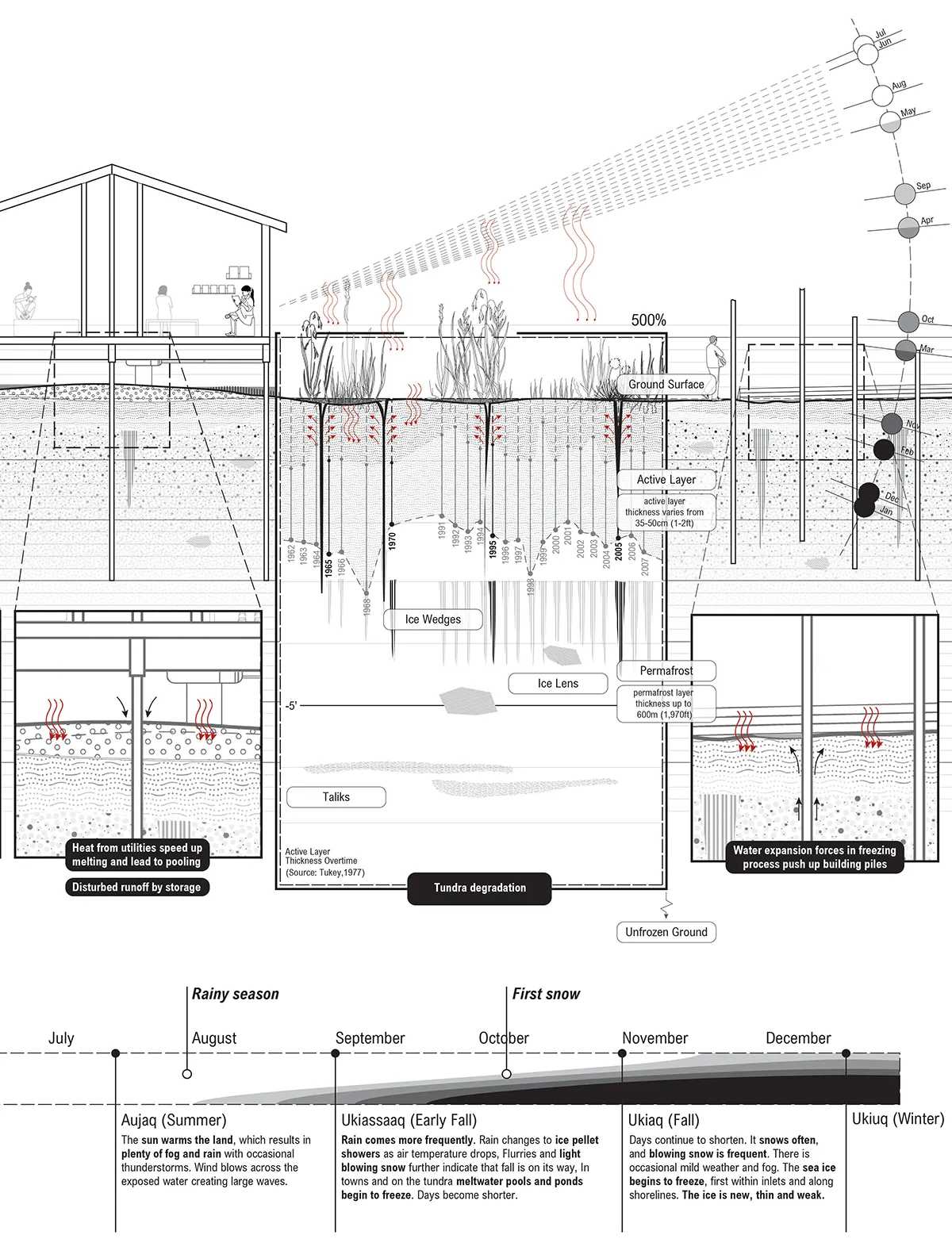
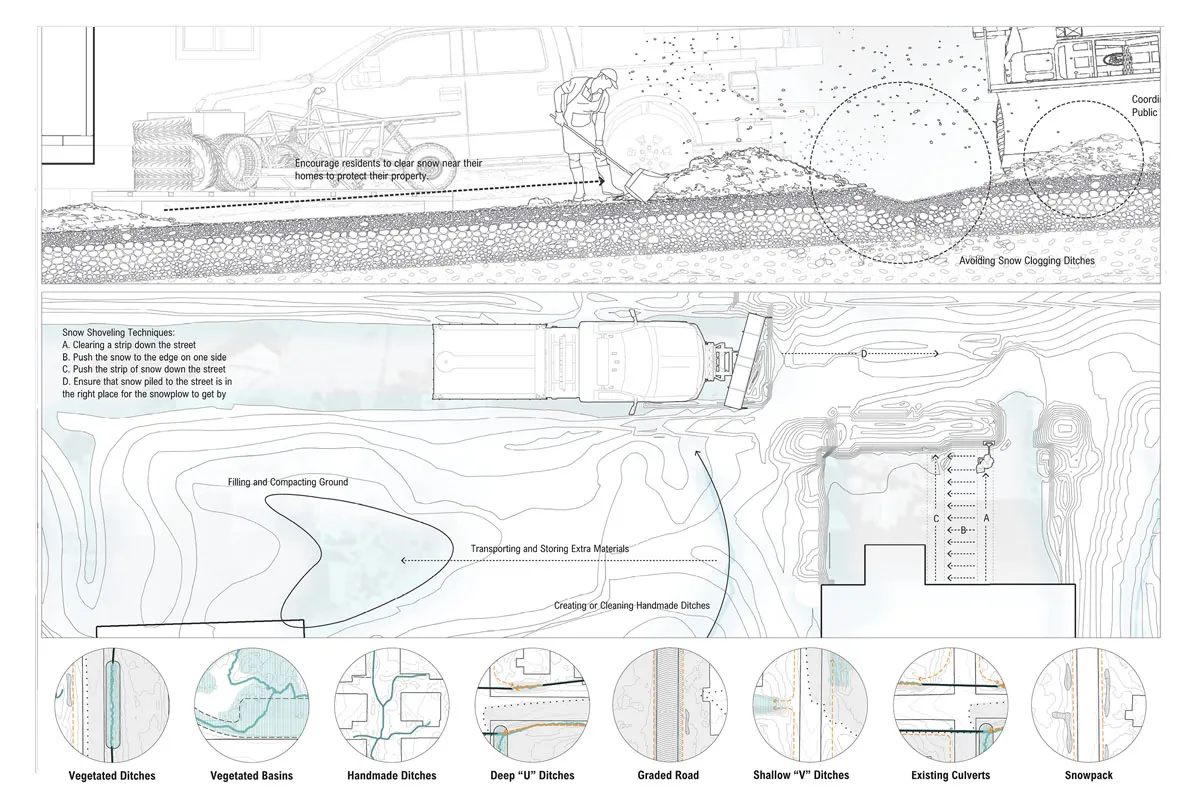
The Arctic is warming up to four times faster than the global average, accelerating permafrost thaw and destabilizing infrastructure, ecosystems, and Indigenous livelihoods. Utqiagvik, Alaska-the northernmost U.S. community and largest lriupiat settlement-stands at the forefront of these changes. Permafrost degradation disrupts foundations, utilities, and transportation systems; accelerates coastal erosion; alters ecosystems; heightens food insecurity; releases contaminants; and increases health risks. Smaller Alaskan communities such as Utqiagvik have limited capacity to monitor and mitigate these impacts. This graduate and undergraduate design research studio investigates how landscape and urban design can respond to these challenges. Working in close collaboration with local partners, students engage in fieldwork and science- and data-based spatial analysis to develop design and landscape management strategies directly addressing community needs.
RESEARCH AS PRACTICE:
The studio is part of a five-year (2021-26) federally funded, interdisciplinary research effort supported by the U.S. National Science Foundation. Led by faculty with more than a decade of sustained engagement in Utqiagvik, the broader project brings together faculty, students (undergraduate, graduate, and Ph.D.), and postdoctoral researchers across environmental sciences, engineering, social science, data science, landscape architecture, and architecture. The research examines the interaction between community infrastructure and the surrounding landscape, and the effects of climate change on future infrastructure
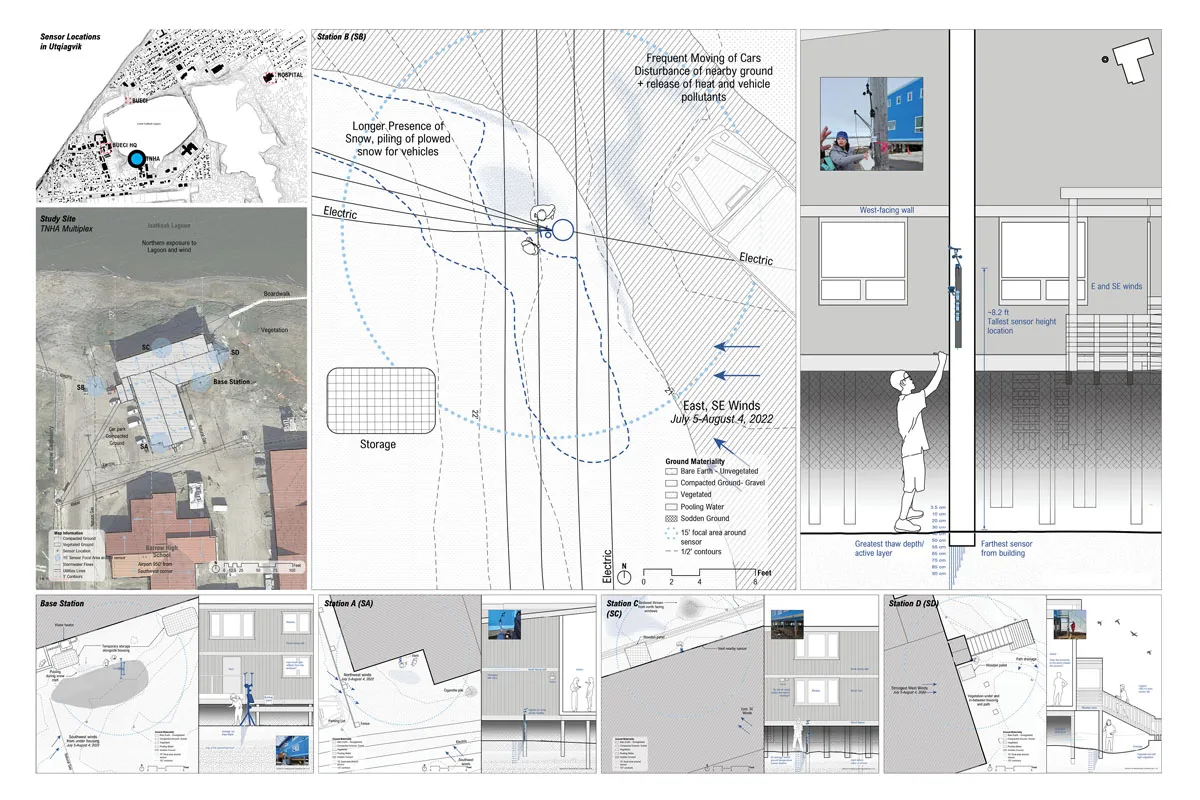
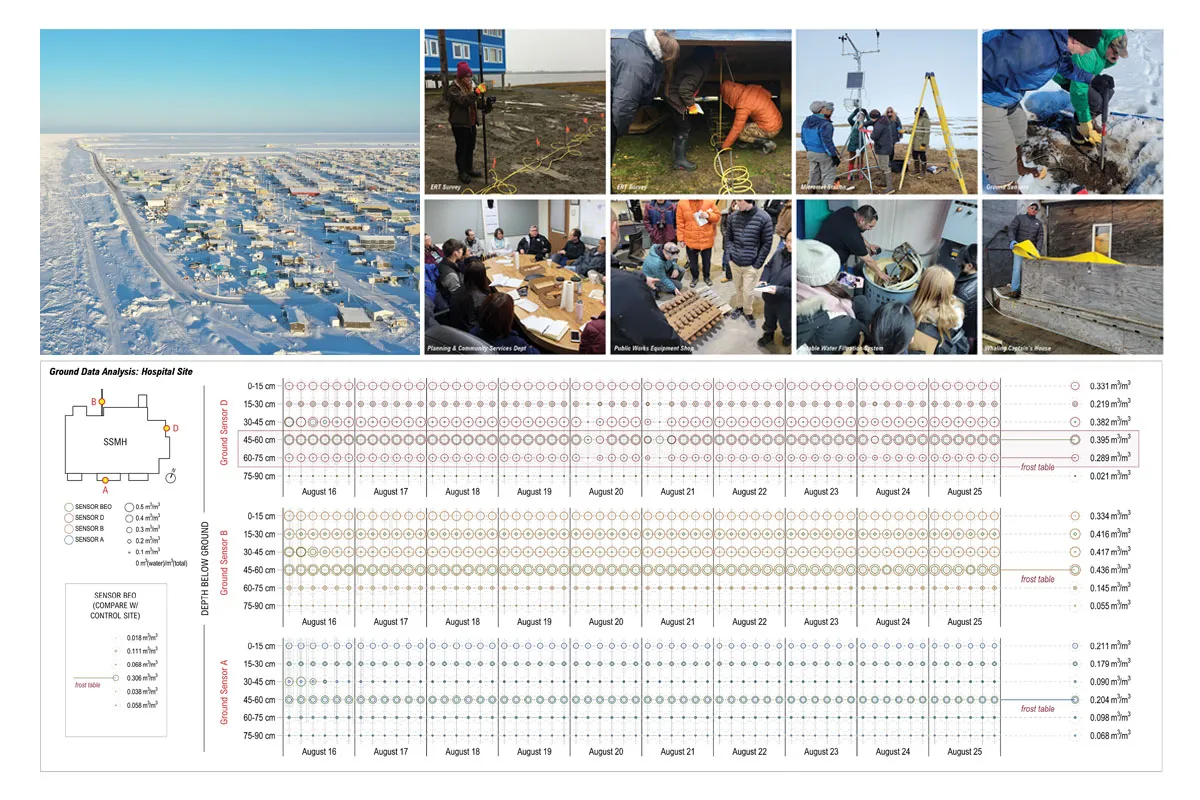
and building design. Using high-density terrestrial and aquatic sensor networks and geophysical surveys, the team collects fine-scale environmental data to characterize local conditions. This information supports site-specific design decisions while also informing broader planning strategies. Parallel research focuses on the process of collaboration among researchers, designers, and community members to ensure equitable knowledge sharing and application.
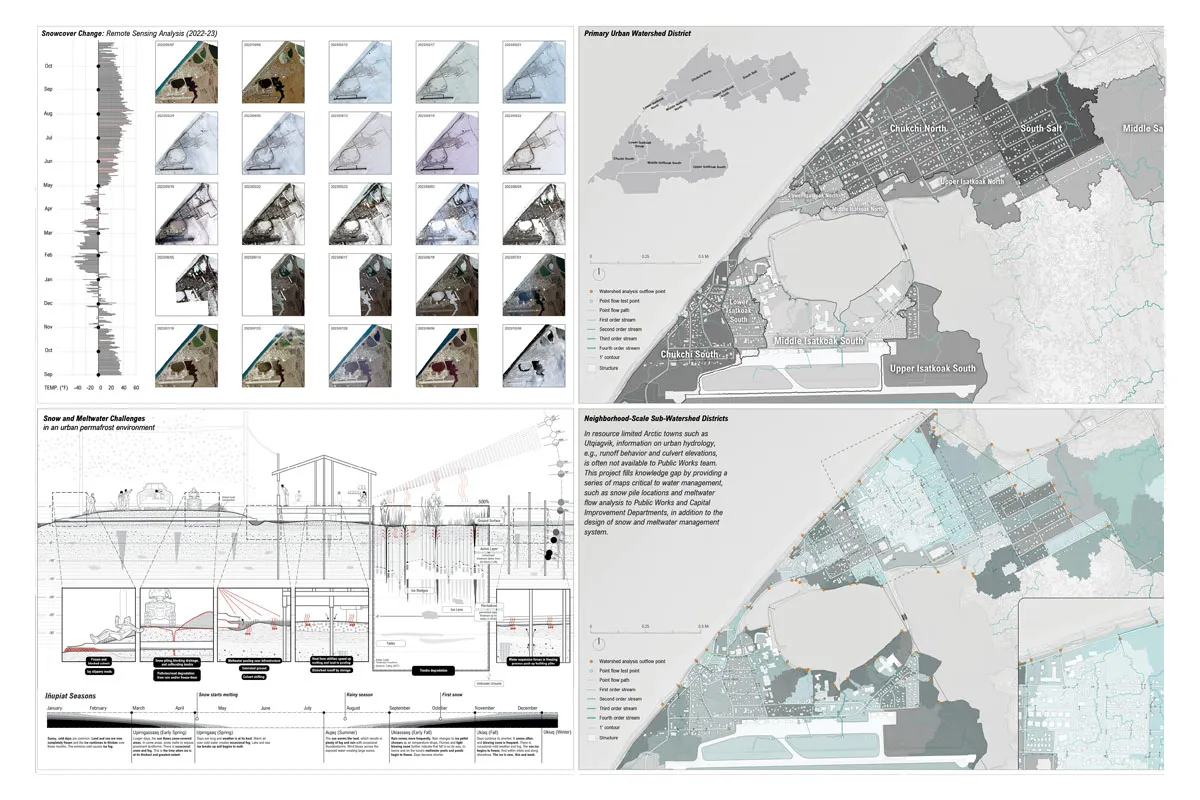
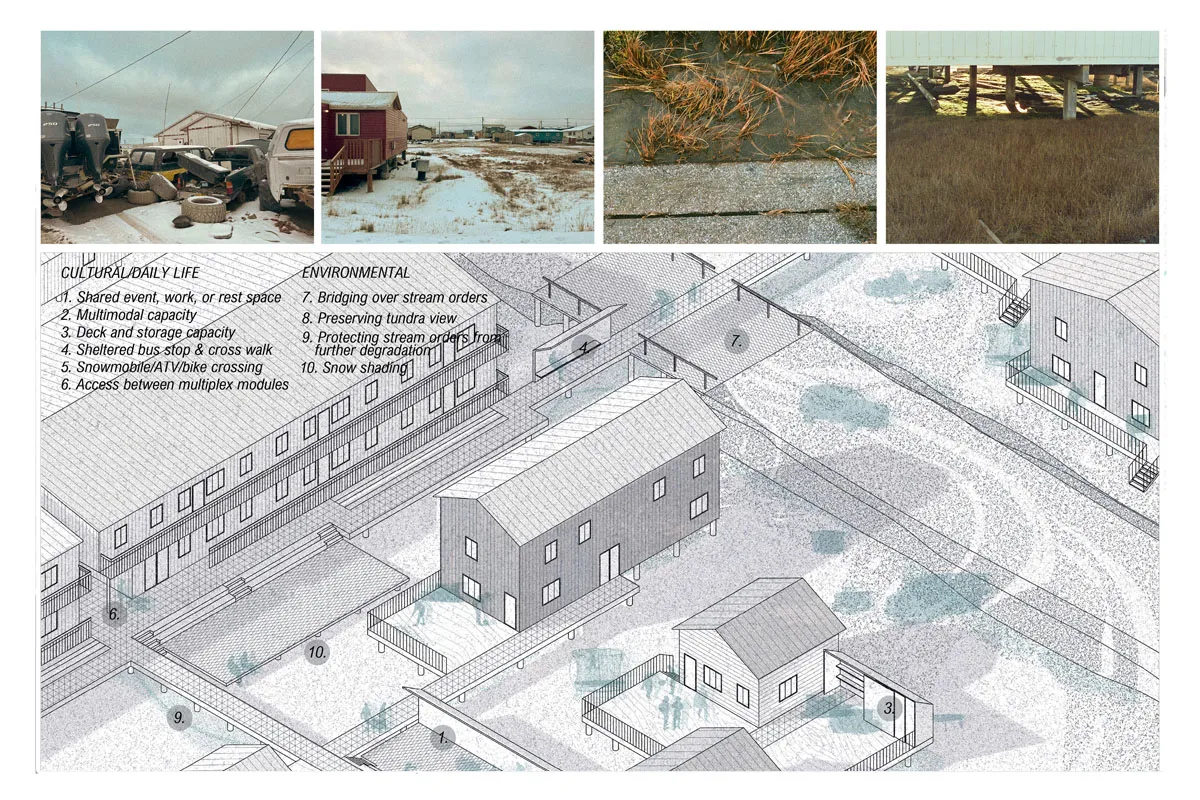
The design studio plugs into this framework, giving students direct exposure to data-driven analysis, interdisciplinary collaboration, and culturally and climatically informed design. Students learn to integrate environmental data with lriupiat spatial practices and history and the realities of design and construction in Arctic permafrost and tundra systems. Here, design is positioned not only as a means of inquiry but also as a tool to synthesize various knowledge types and augment community’s agency.
LEARNING OBJECTIVES & OUTCOMES:
The studio is structured in two phases with following learning objectives and outcomes:
1) Context & Sites (weeks 1 ~9): To ground the studio within the context of data-driven, community-engaged Arctic research; To build references on research methods and data utilization related to design; To understand Arctic environments and their implications for construction, maintenance, and design; To conduct on-site fieldwork to assess site-specific conditions; To Synthesize multi-method research (scientific, ethnographic, archival, fieldbased) to generate a design framework.
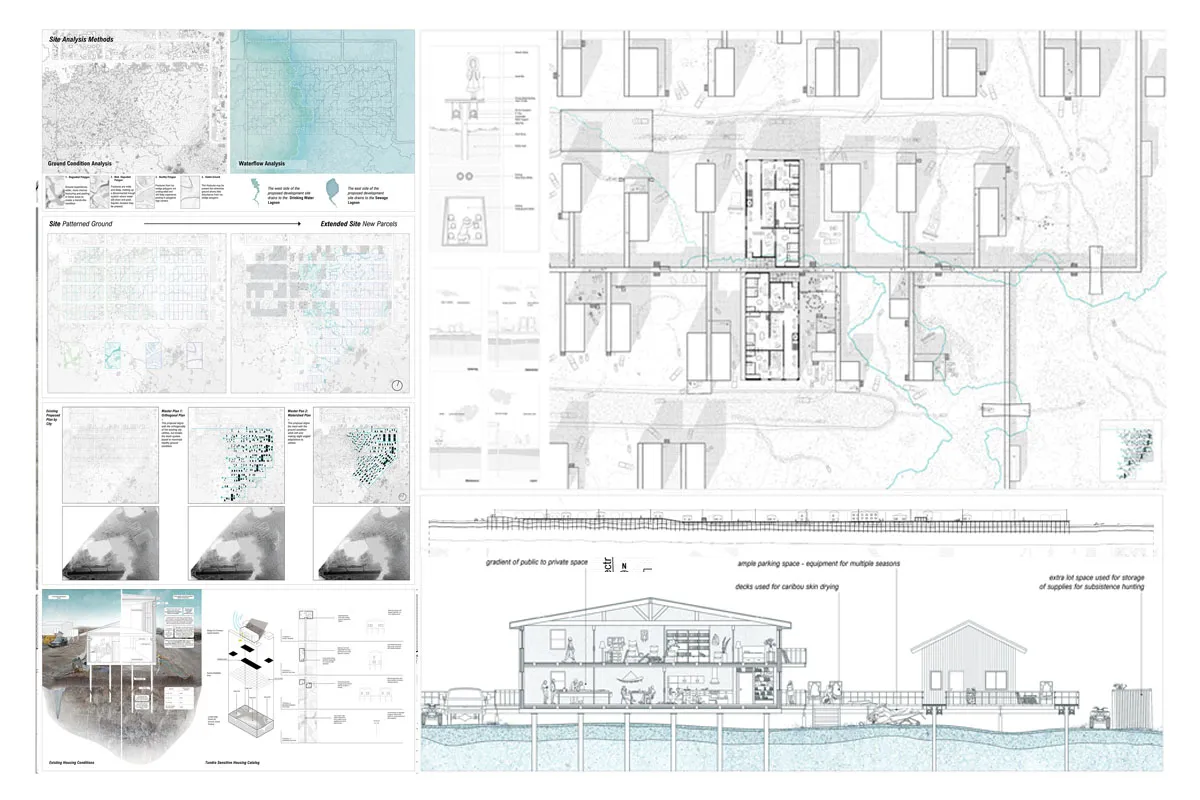
2) Propositions & Actions (weeks 9~16): To develop culturally, environmentally, and technically well-situated design propositions; To test strategies for communicating research and spatial ideas to diverse audiences to refine design objectives and material expressions; To create toolkits, landscape or building design proposals at multiple urban, site and material scales while addressing community needs; To speculate implications of the proposed design including the social, logistical, financial, environmental and political.
FIELDWORK:
A central element is the field trip to Utqiagvik, typically ten days. Faculty have led Arctic studios since 2014, funded through external research grants and traveling in both fall semester (when the landscape transitions to winter) and mid-winter in spring semester (when extreme cold shapes all aspects of life). With invitation, students visit community partners, municipal facilities, infrastructure sites, cultural landmarks, and the homes of Elders. And they experience firsthand the rich cryosphere where climate experience is heightened, worldviews are distinct, and design norms of the temperate zones are often questioned. Students learn the nuances of living in an Arctic town and bring these experiences to their
design projects.
COLLABORATIONS:
In addition to the university research team spanning six discipl ines, the studio works with a wide network of local partners ranging from the local government and tribal housing authority to lriupiat-owned businesses and Alaska Native corporations. They include: the North Slope Borough (Departments of Planning and Community Services, Public Works, Capital Improvement Program Management), Tag iugmiullu Nunamiullu Housing Authority, Arctic Slope Native Association, TRIBN Consulting, Barrow Utilities and Electric Cooperative Inc, and Ukpeagvik lriupiat Corporation. In addition, the project collaborates with two federal research labs-U.S. Army Corps of Engineers’ Cold Regions Research and Engineering Laboratory, and National Renewable Energy Laboratory’s Cold Climate Housing Research Center. Partners provide lectures and workshops on topics such as Arctic ecology, environmental monitoring, ethical research, data analysis and visualization. Community partners are invited to studio final reviews, in person and online, and provide feedback on students’ projects. Studio faculty return to Utqiagvik in following summer during their research fieldwork season to further share the studio work with community partners and to incorporate their feedback for future studio iterations.
Permafrost Futures: City Built on Thawing Ground
University of Virginia – Department of Landscape Architecture and Department of Architecture
Studio Leaders: Leena Cho and Matthew Jull / Arctic Design Group