
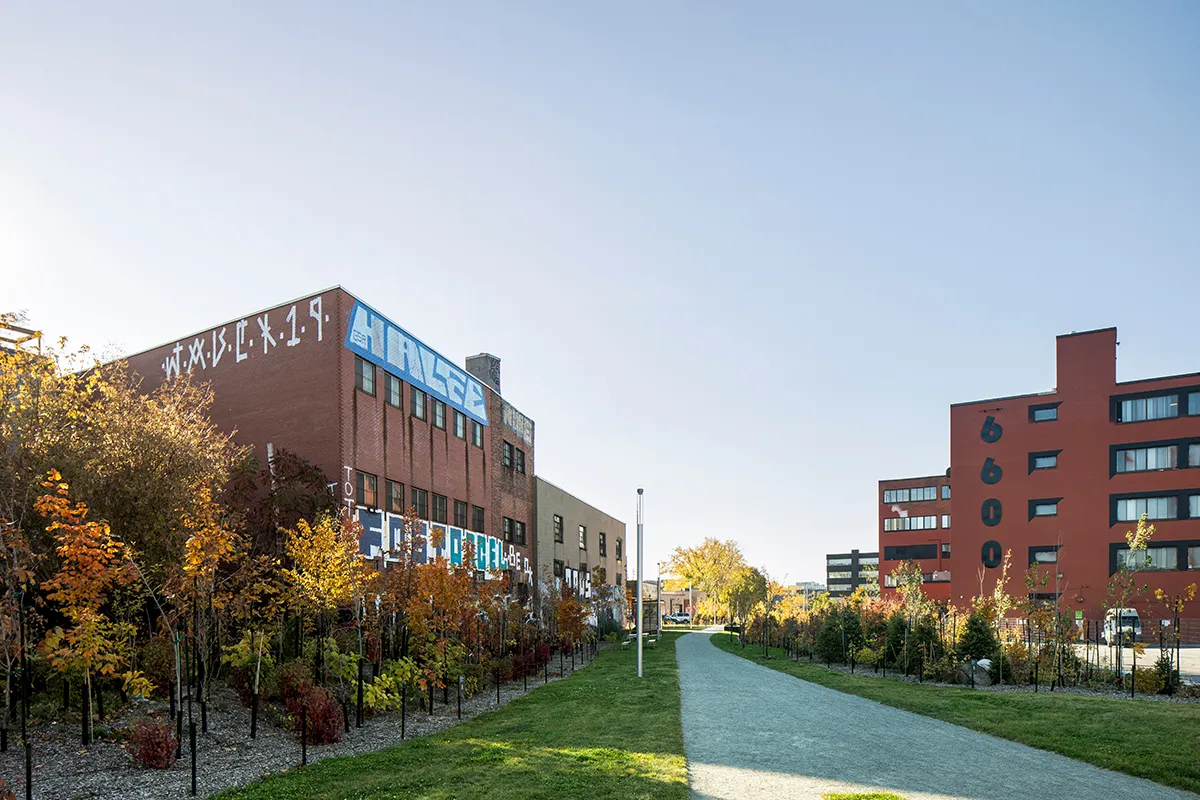
In the decades between the 1940s and 1980s, numerous railway lines were built across Montreal by the Canadian Pacific Railway to serve the needs of various industrial buildings, among them a munitions factory, still standing today.
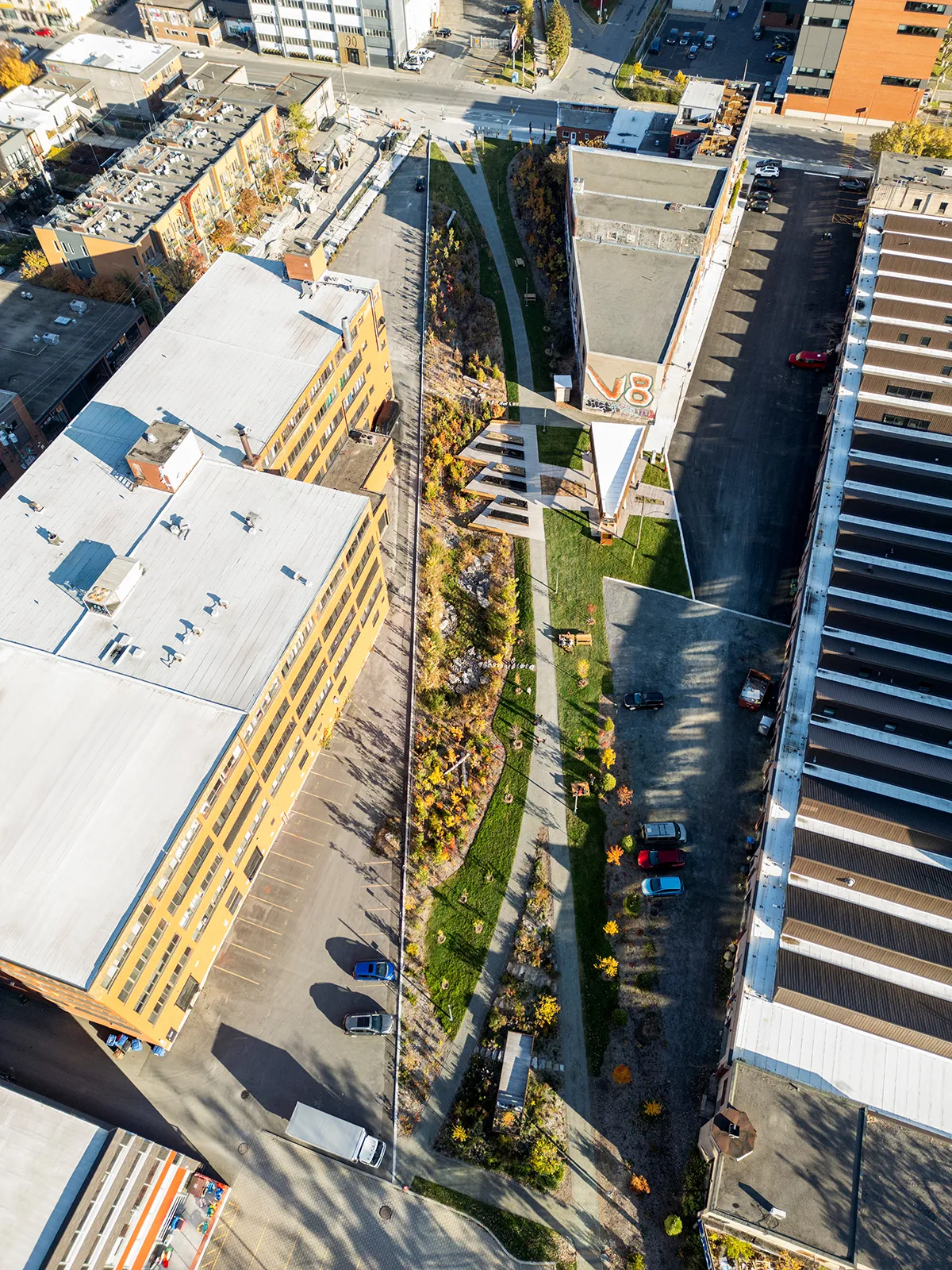
The rails were eventually removed, but their imprint on the ground remained, cutting diagonally across the backyards of adjacent buildings. Over the years, a spontaneous landscape appeared along the abandoned right-of-way.
The site, dense and jungle-like during the summer months, was affectionately referred to as the parc des Gorilles. And the name stuck.
Citizen movement
In 2013, a new owner literally razed the dense vegetation, and locals grew more and more concerned with the fate of this brownfield. Three years later, the AmiEs du parc des Gorilles were officially incorporated as a non-profit organization. They kept the pressure on until 2017, when the site was expropriated and designated as a future park.
The group continued its actions until the AmiEs du parc des Gorilles were recognized by the City of Montreal as the community representatives on a Monitoring Committee. This enabled them to take part in the co-design process and ensure their concerns were being addressed.
By 2019, civiliti was brought in to co-design the park, in collaboration with Artelia, Nadeau Urban Forestry, Biodiversité Conseil, and, of course, the AmiEs du parc des Gorilles.
Designing the park
The overall objectives included restoring the site’s ecosystems, keeping the mineralized zones to a minimum, and creating a vibrant social environment for residents.
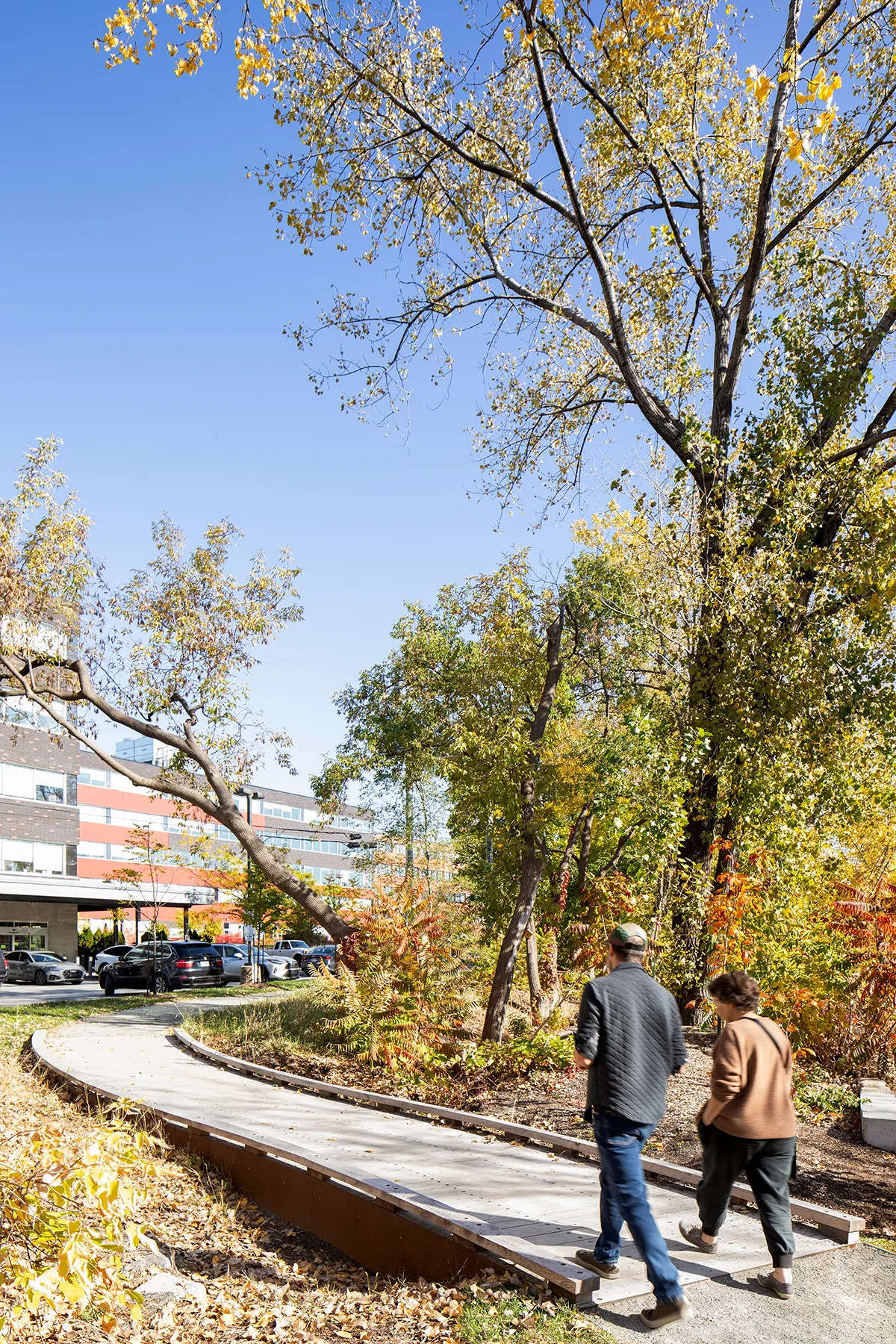
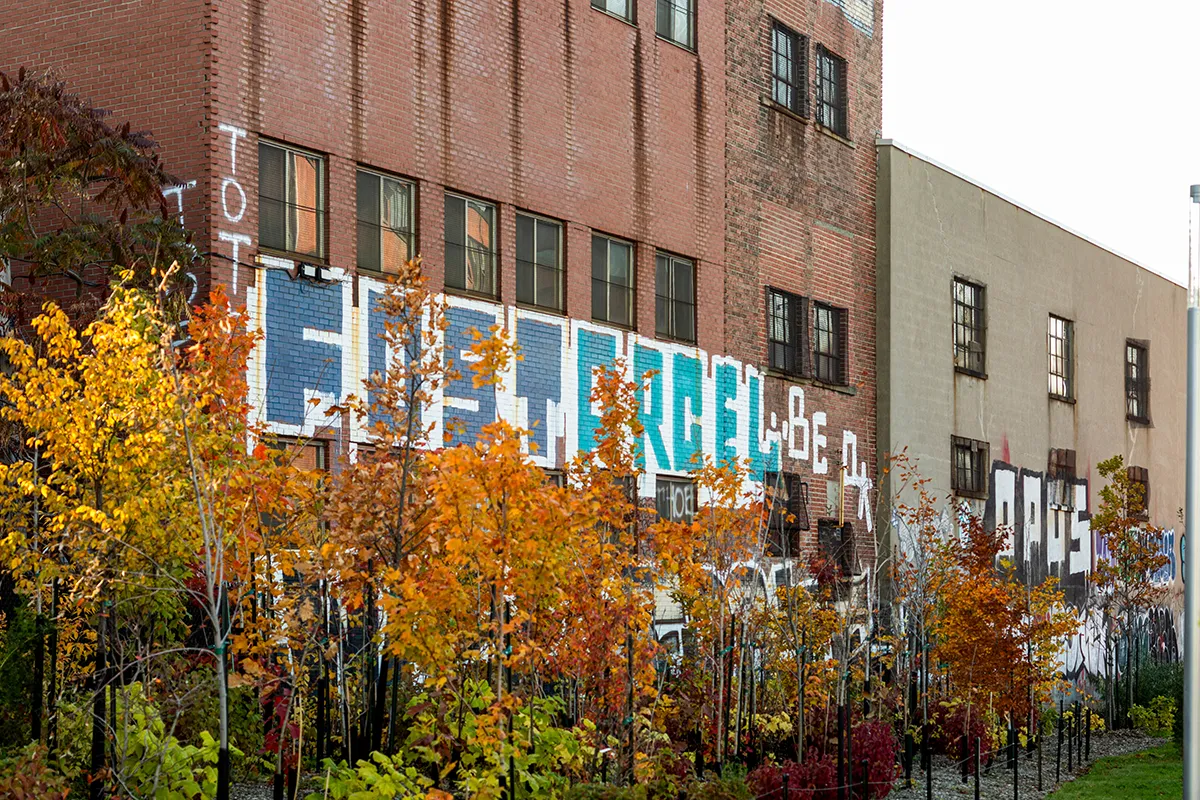
Parc des Gorilles includes the introduction of micro-forests with over 3000 plants, including 1500 new trees. The vegetation selection reflected the site’s recent history while highlighting the park’s future use. A bioretention area, well integrated within the overall concept, manages runoff from the entire park and from a nearby street.
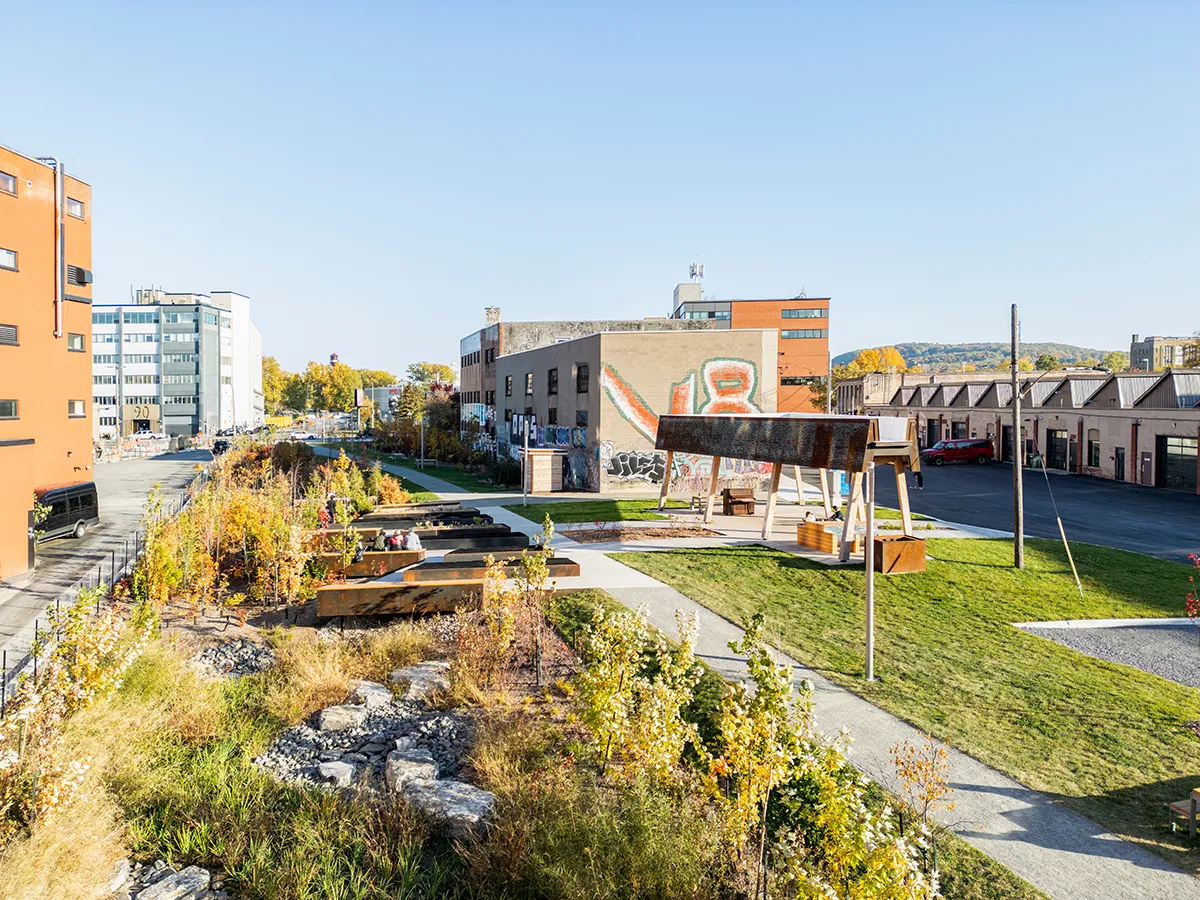
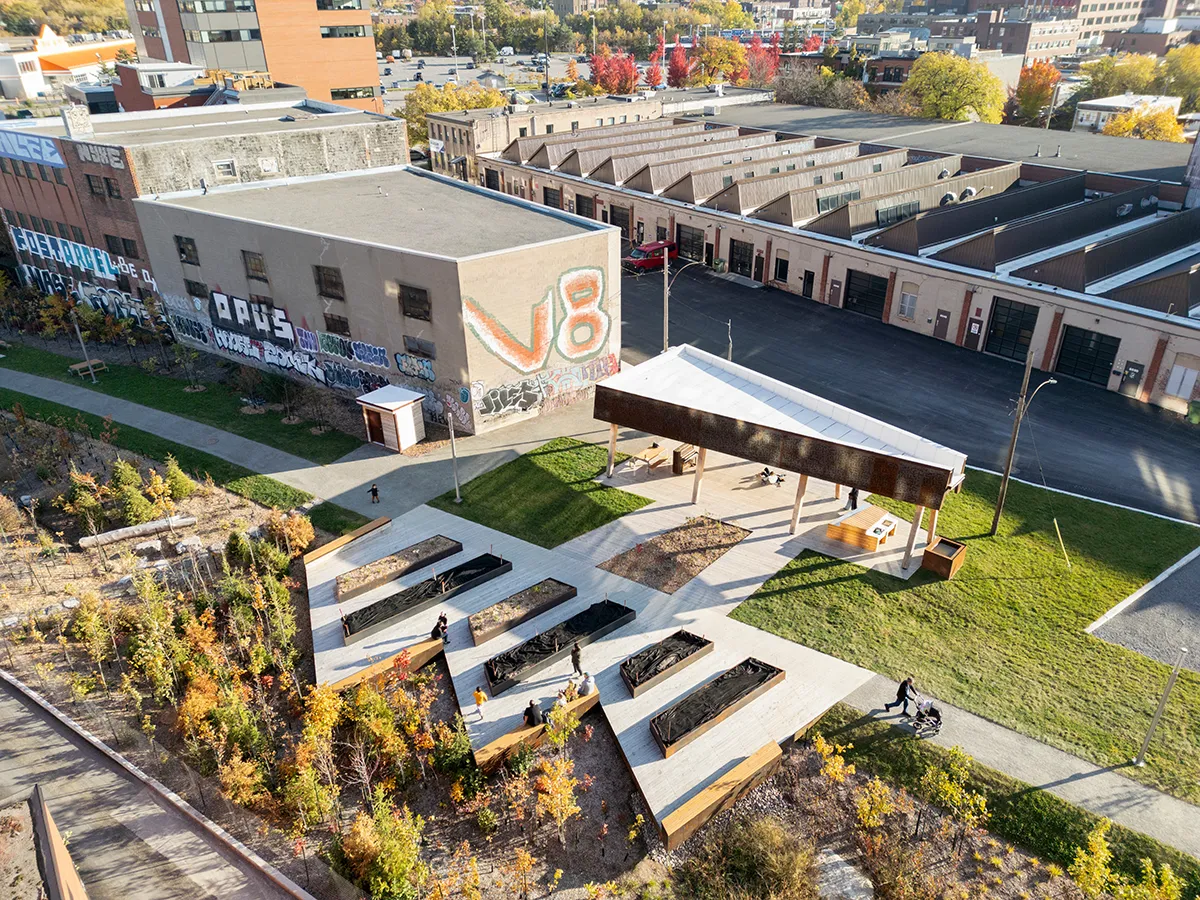
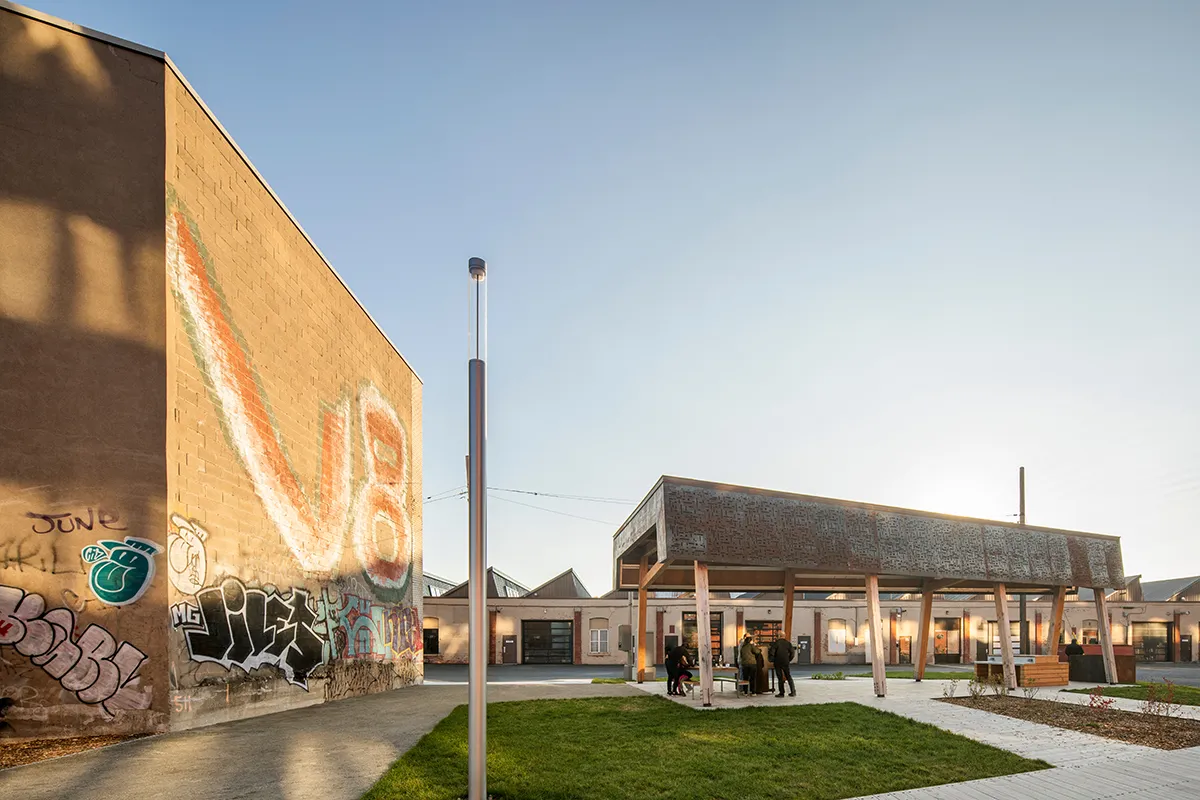
The Parc des Gorilles’ central area features a partially covered pavilion, or agora, equipped with technical equipment and facilities for outdoor events. This four-season pavilion is ideal for small concerts and celebrations of all kinds. The materials—primarily wood and Corten steel—evoke the industrial past while requiring minimal maintenance.
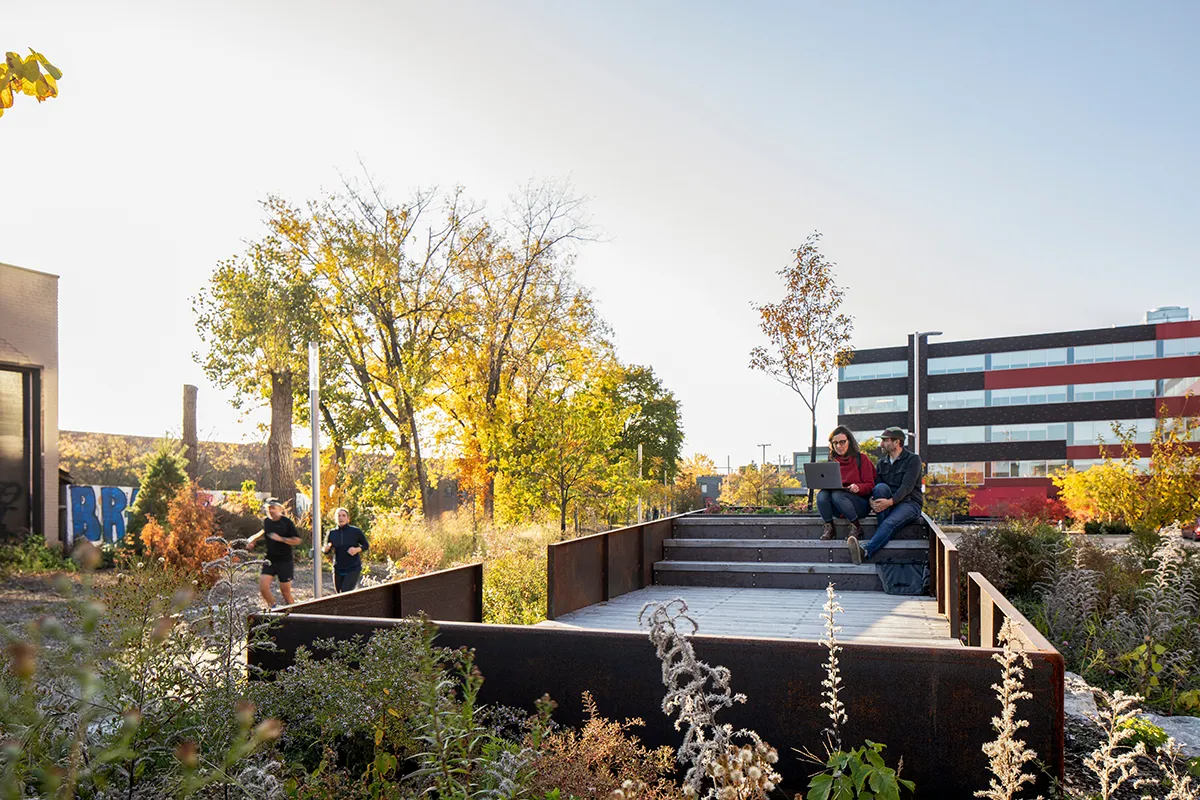
Opposite the covered area, a terrace extends over the main bioretention area or “rain garden”. Its plan mirrors the sawtooth roofline of the former munitions factory.
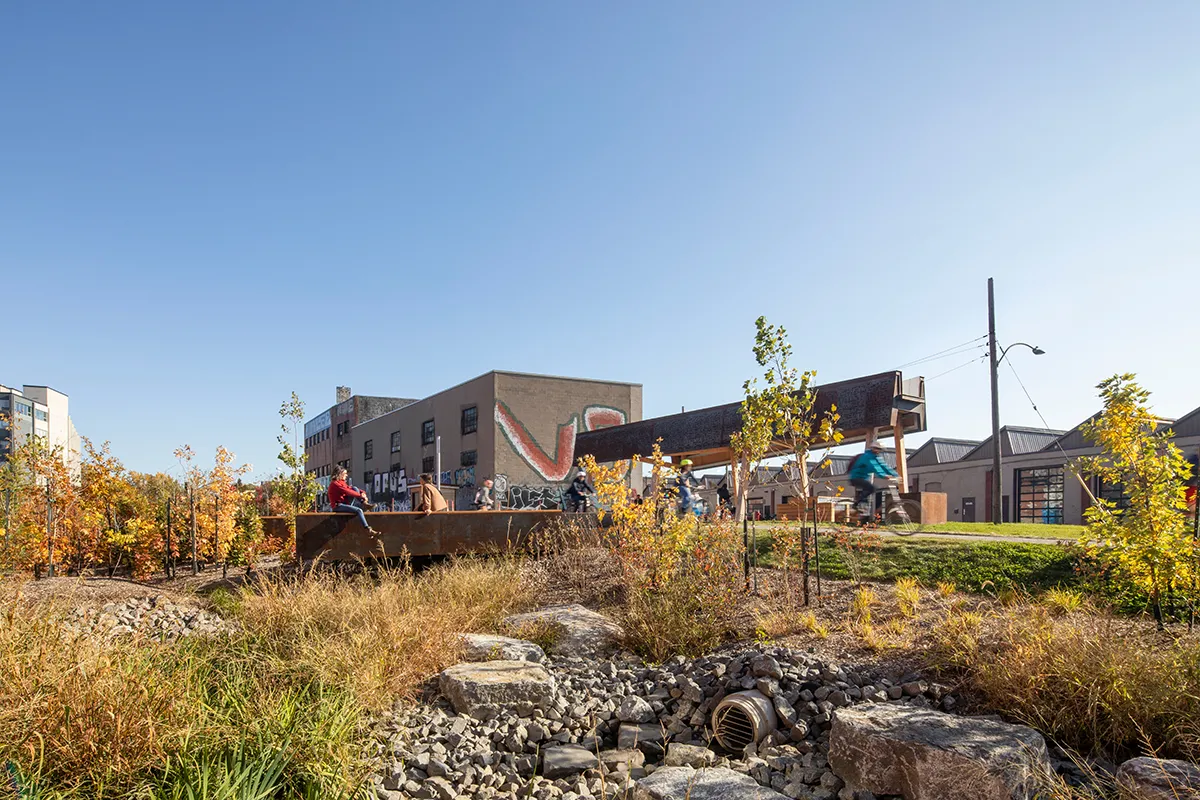
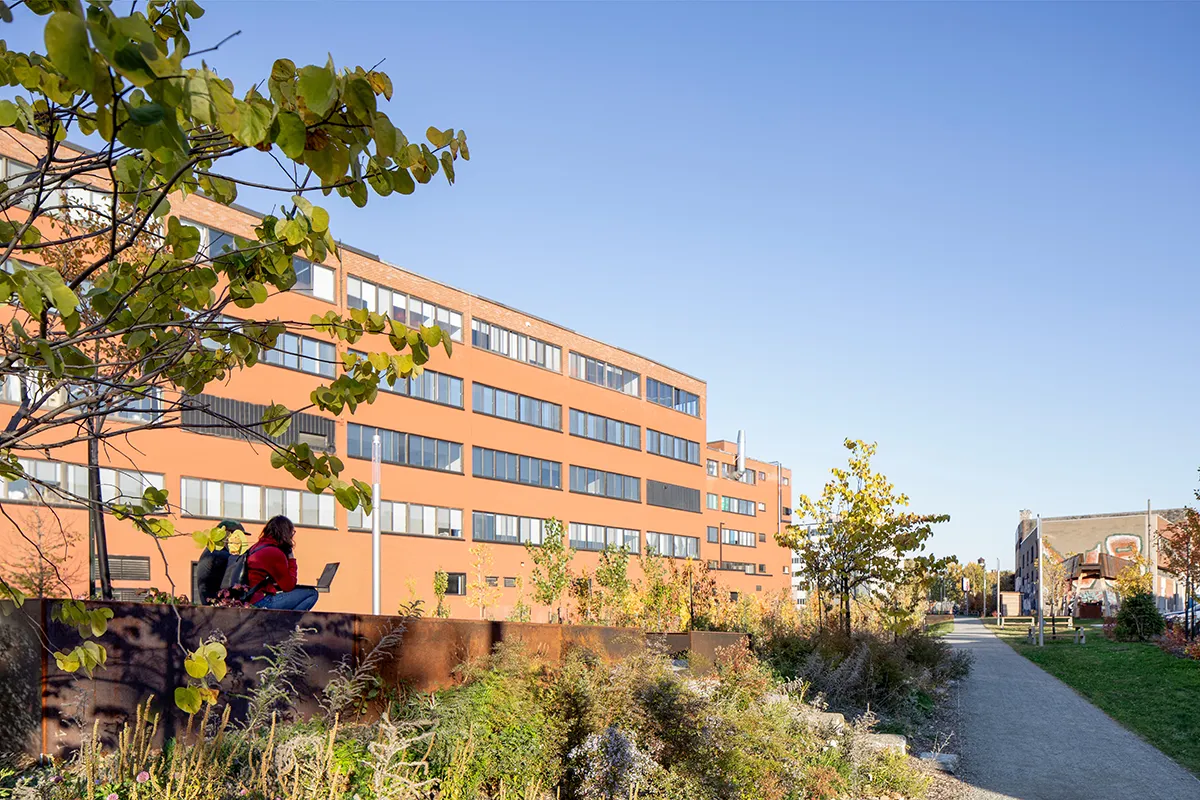
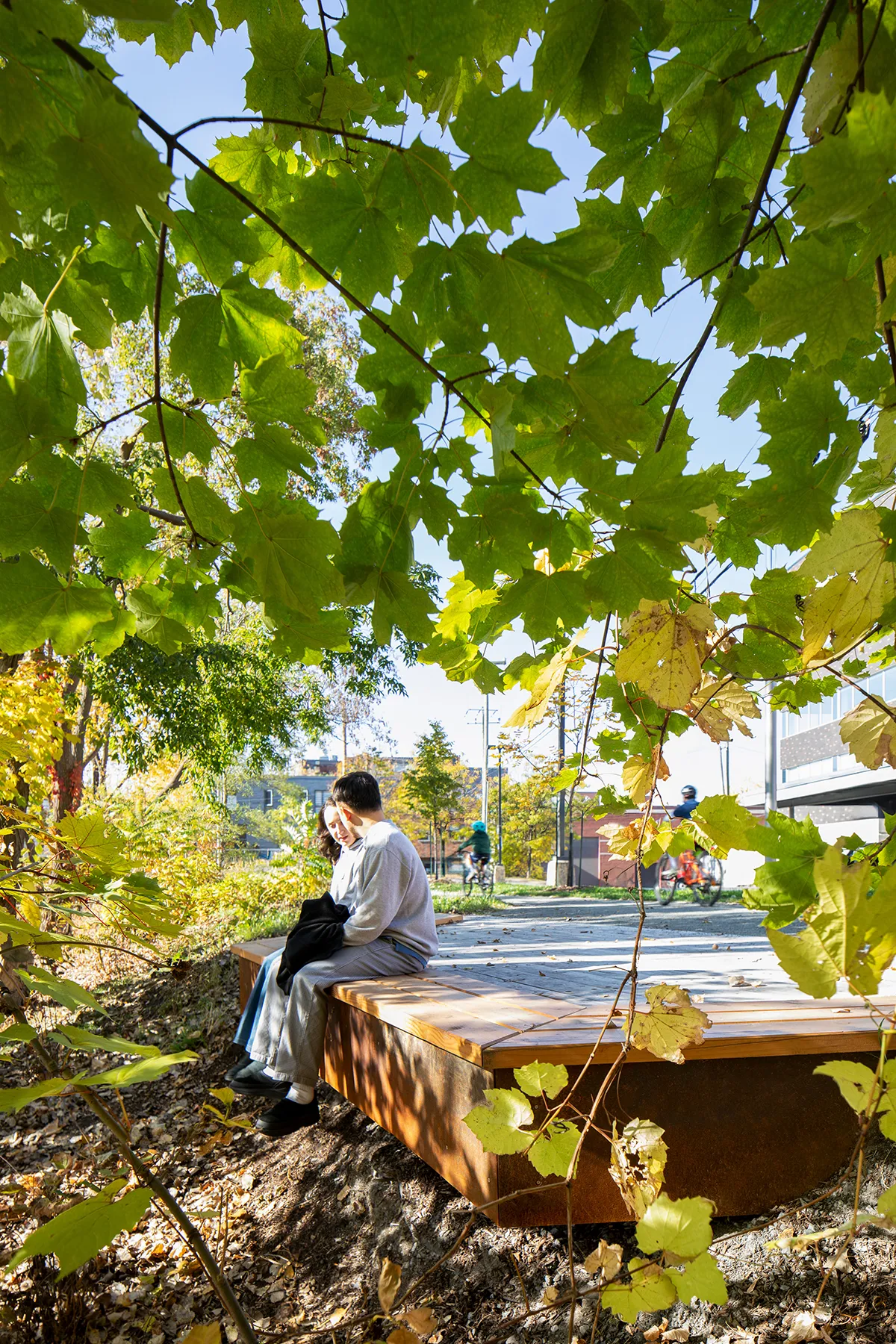
Further along the path running diagonally across the park, distinct markers, such as a “lost railway car”, are used for socializing. Along the park’s northern edge, a small “meditation platform” was built among existing trees for those preferring quieter activities.
Parc des Gorilles
Clients:
Service de l’urbanisme et de la mobilité, Ville de Montréal
Service des infrastructures du réseau routier, Ville de Montréal
Landscape Architect: civiliti
Collaborators
Arrondissement Rosemont – La Petite-Patrie
Engineering: Artelia
Forest Engineering: Nadeau Foresterie Urbaine
Biology and Ecology; Biodiversité Conseil
Site Supervision: EXP
Public Consultations: Convercité
L’Arpent: Co-design process
Community Representatives:
AmiEs du parc des Gorilles
Photography: Adrien Williams