
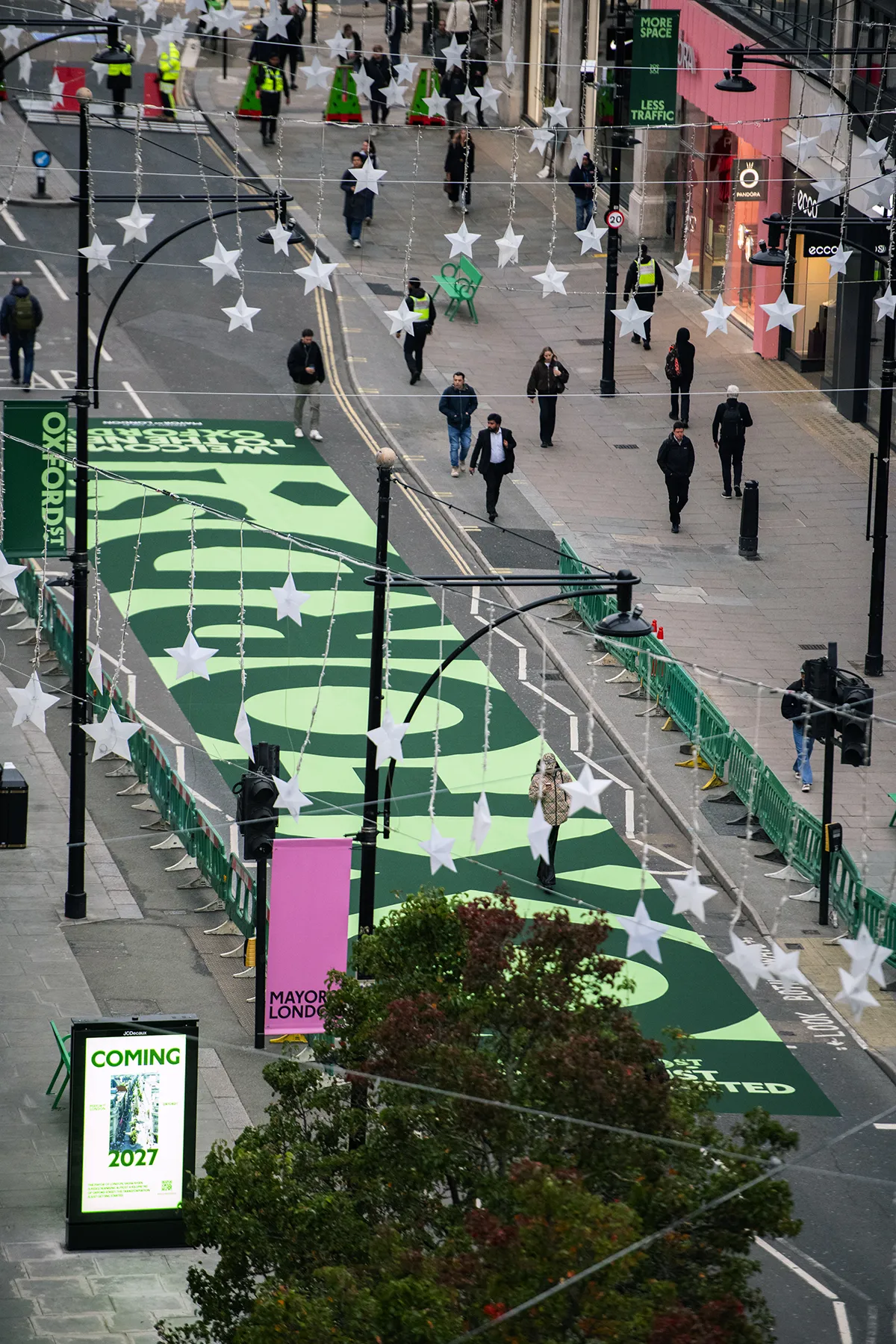
Recently, a section of Oxford Street in London between Orchard Street and Great Portland Street was pedestrianised and closed to private motorised vehicles, buses, taxis, private hire vehicles, cycles, scooters and pedicabs – transforming it into a people-focused space at the start of the year’s busiest retail period.
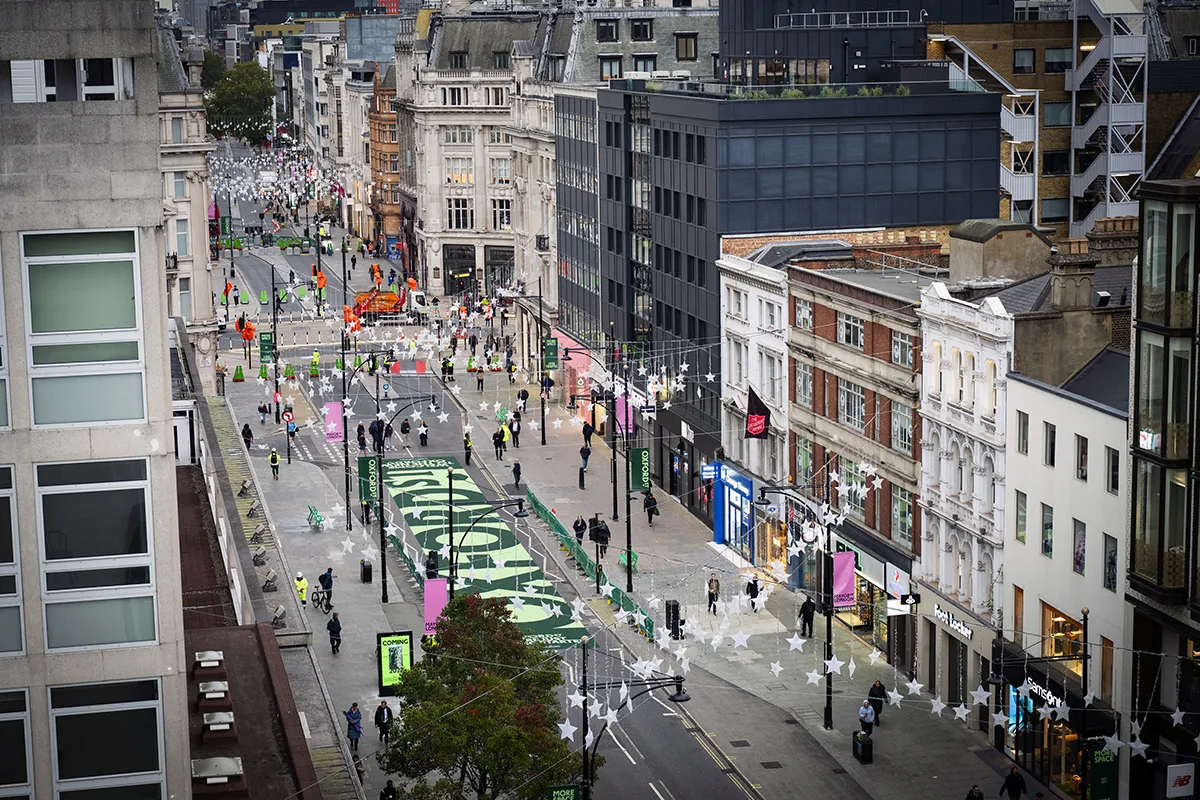
Plans to transform Oxford Street have been discussed for decades, but previous efforts to pedestrianise it did not proceed. The Mayor and Government are now working together on the plans, with the first phase released by Oxford Street Development Corporation (OSDC) and East. East, a local design firm, is leading the team, including J&L Gibbons, Gehl, Publica, Etude and NRP, to design the pedestrianisation scheme through its transition phases and the permanent scheme.
The East and wider team was appointed by the Greater London Authority in 2025, alongside the Hawkins\Brown-led team, which includes ASPECT Studios, Urban Movement, Michael Grubb Studio, and Authentic Futures, who have been developing a long-term design vision for the whole street, from Marble Arch to Tottenham Court Road.
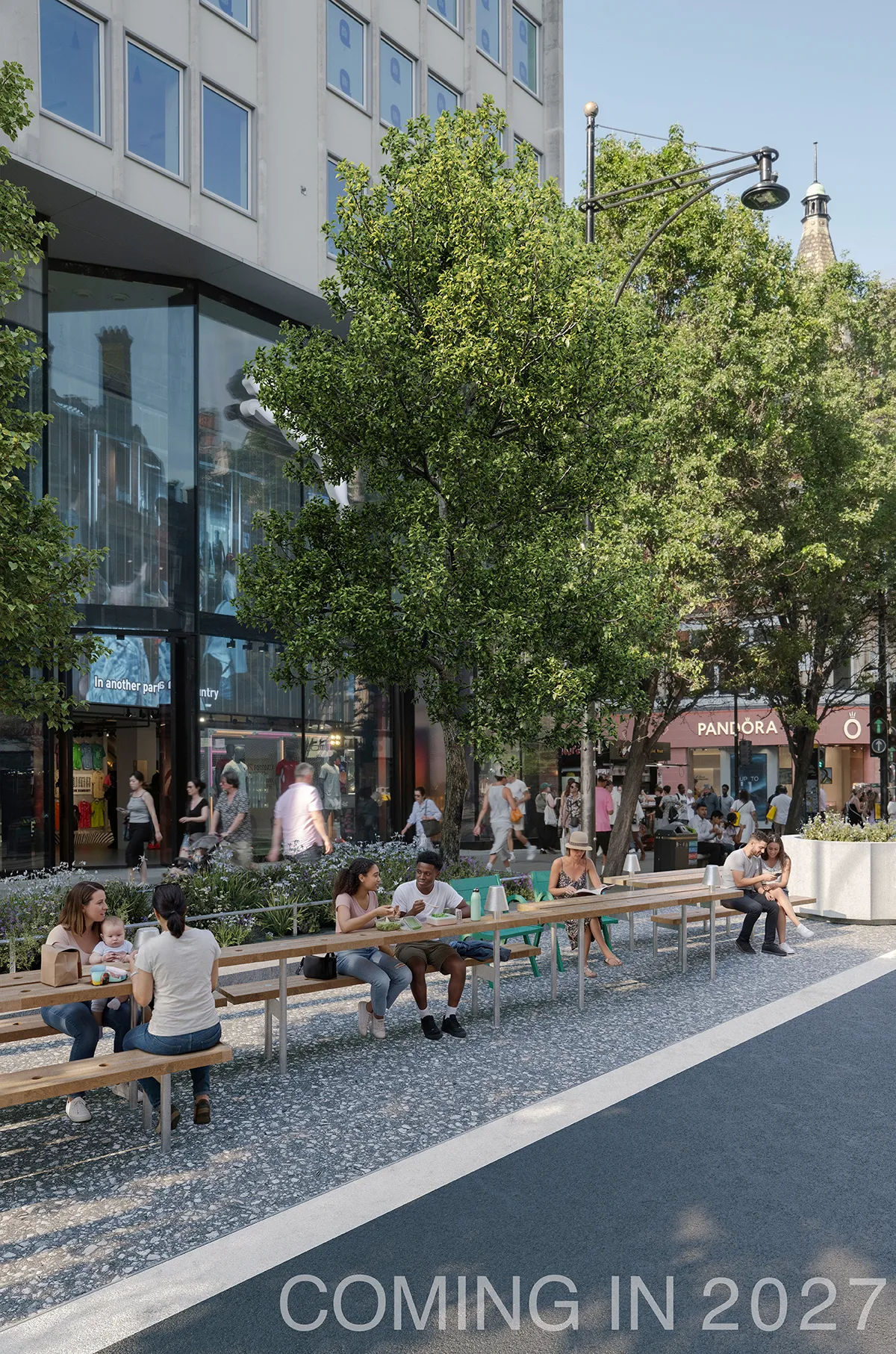
During the transition phase, road markings will be removed and new seating, planting and signage will be introduced. Later phases will be informed through feedback collected from residents, accessibility groups, businesses, workers, transport partners and other Londoners, allowing OSDC with East to assess real-time insights on how the pedestrianised space is being used.
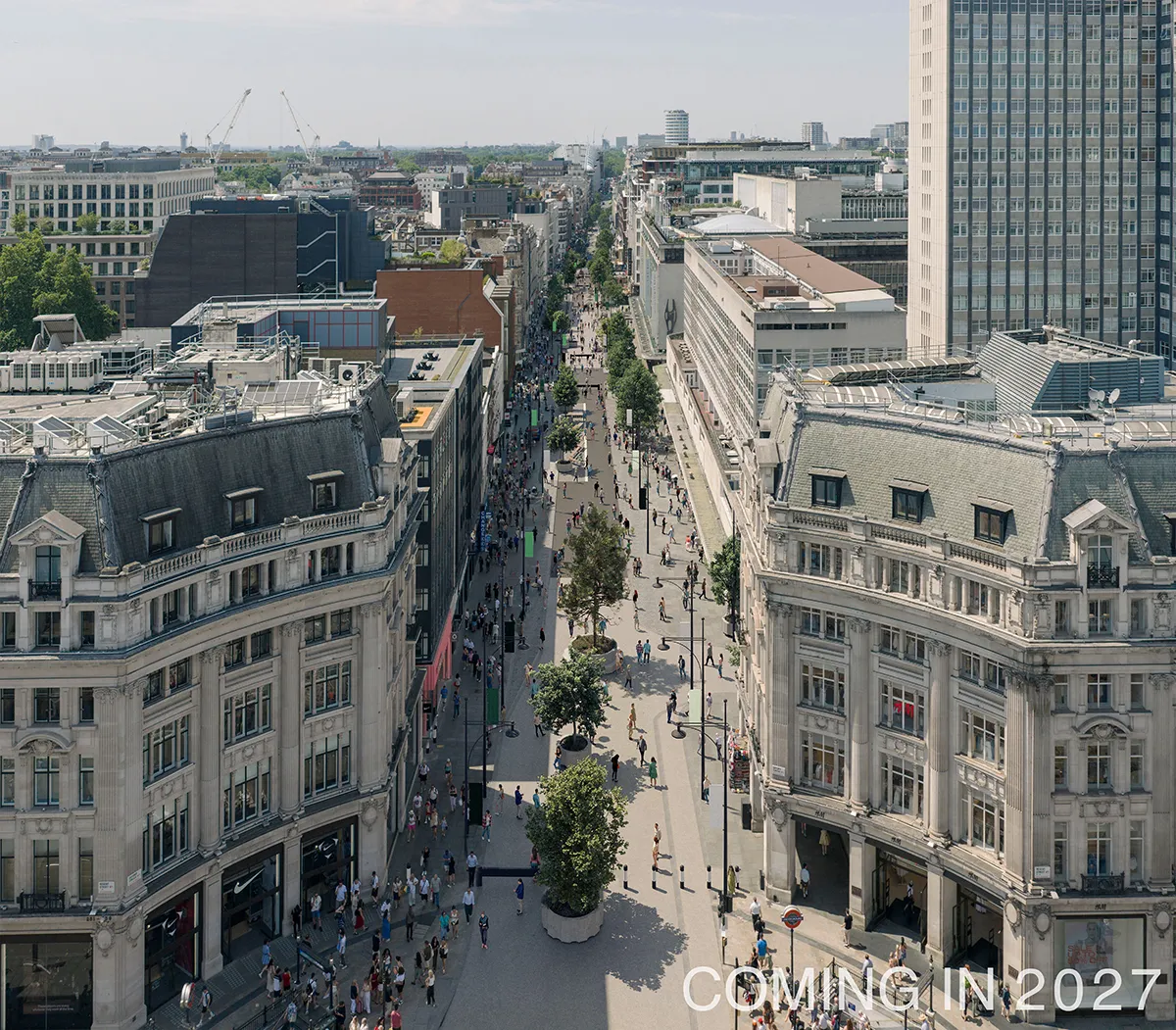
Seating areas are carefully positioned according to pedestrian movement, with rest spaces placed where they won’t obstruct the flow. Green metal seats offer plenty of options for sitting, meeting, eating or resting. Set at regular intervals along the street, they are accessible and convenient. Timber seats and tables are placed in areas East calls ‘barges’—spaces with distinctive surface textures for people who want to stop and take in their surroundings.
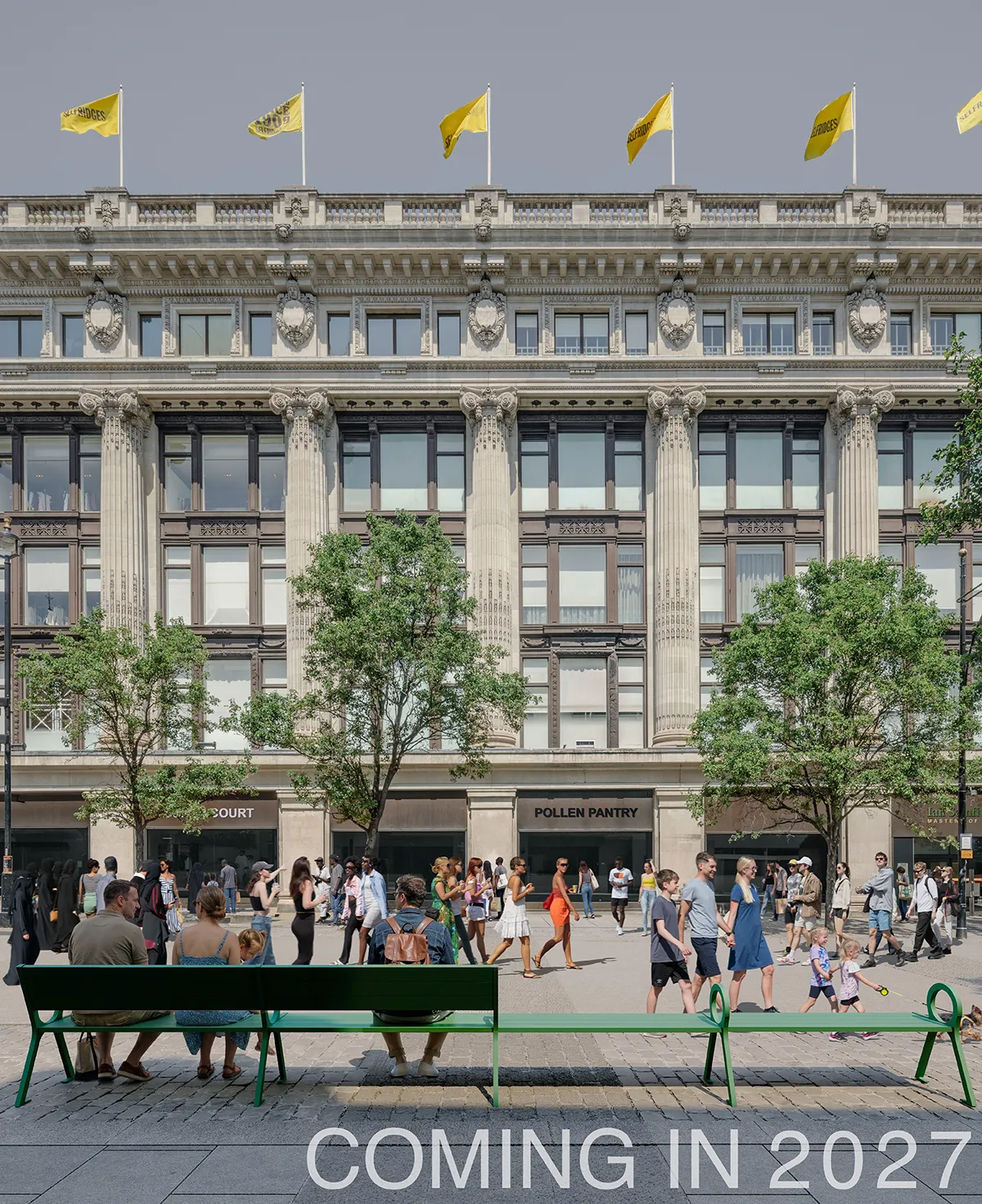
During the transition period, East will test different furniture layouts to ensure they are usable, welcoming, and suitable. Data from sensors built into the furniture will help shape the permanent design by tracking pedestrian flows and how long people use the seating.
Buses, taxis, bikes and other motor vehicles are being redirected onto nearby roads, with Transport for London (TfL) monitoring traffic to keep it moving effectively as Oxford Street becomes greener, safer and more accessible. New bus stops on Wigmore Street, Henrietta Place and Cavendish Place are about 200 metres from the traffic-free area, so visitors can still reach it easily and conveniently by bus. Emergency services will have access to the street at all times, and deliveries to the traffic-free area can be made between midnight and 7am to support local businesses and retailers.
Be the first to comment