
Nature Rocks! rock-like tourist facilities and infrastructure to scenic Taiwanese coastline
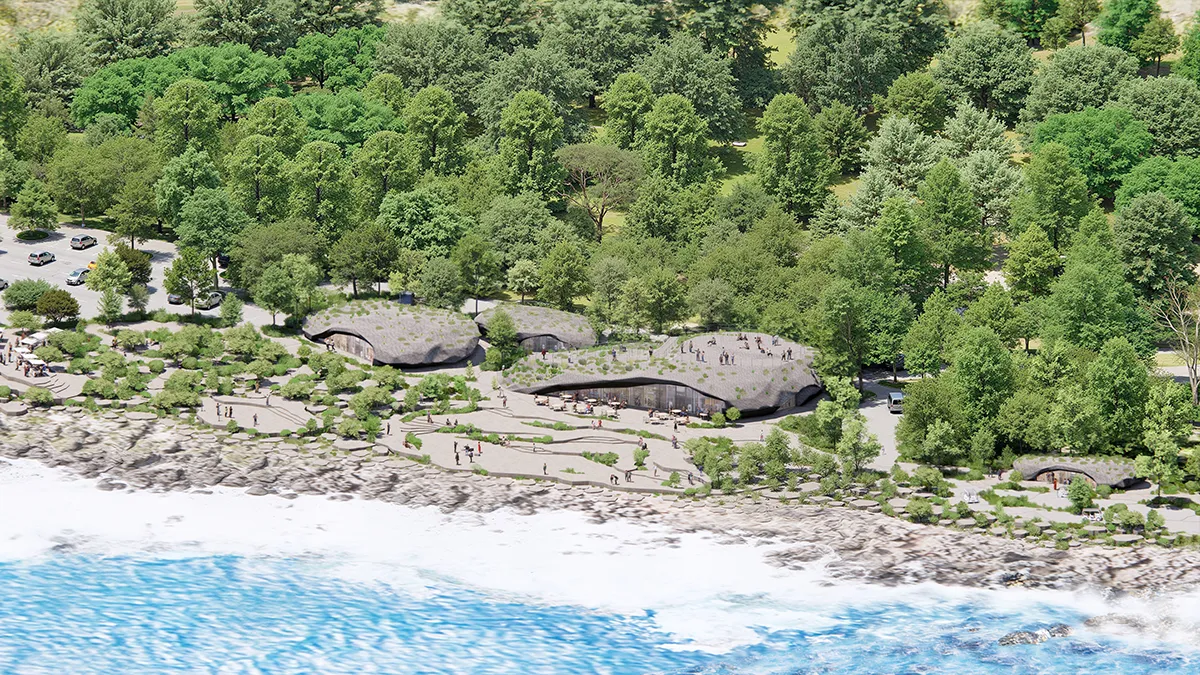
The Pingtung County Government recently selected a design proposal by MVRDV and HWC Architects for transforming Jialeshui, a popular scenic spot in Taiwan’s southern tip known for its distinctive rock formations shaped by wind and water. Inspired by the rocks themselves, the Nature Rocks masterplan aims to enhance tourism infrastructure while preserving the site’s natural landscape. The plan features a network of new pathways and public spaces, better access, and small structures like a central visitor centre and three lookout points within the current built area.
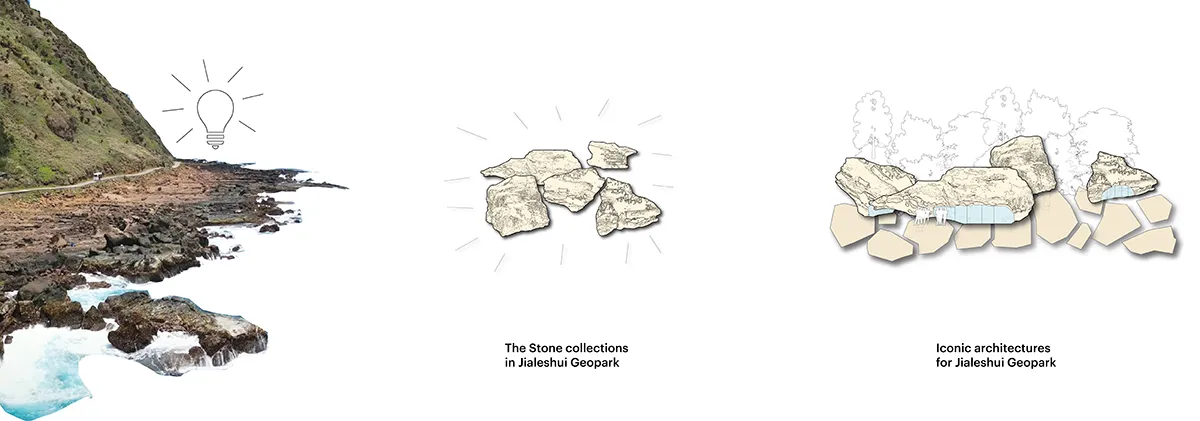
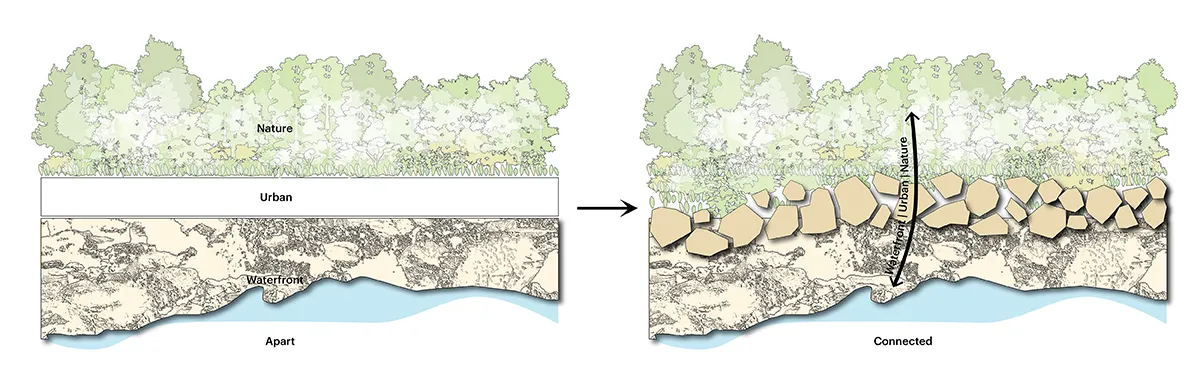
Jialeshui, located in southern Taiwan within Kenting National Park, remains a largely pristine natural area. Over millennia, persistent winds and ocean waves have eroded the soft sandstone coastline into various sculptural formations, many resembling animals and titled accordingly—such as Rabbit Rock, Toad Rock, and Seal Rock. These unique formations have established Jialeshui as one of Taiwan’s prominent geological parks. Despite its acclaim, the site offers limited tourist facilities. A single road separates the forest from the rocky coast, serving as a narrow passage for shuttle buses, pedestrians, and cyclists. Additionally, the pavilions and kiosks along this route have suffered damage from typhoons and saltwater.
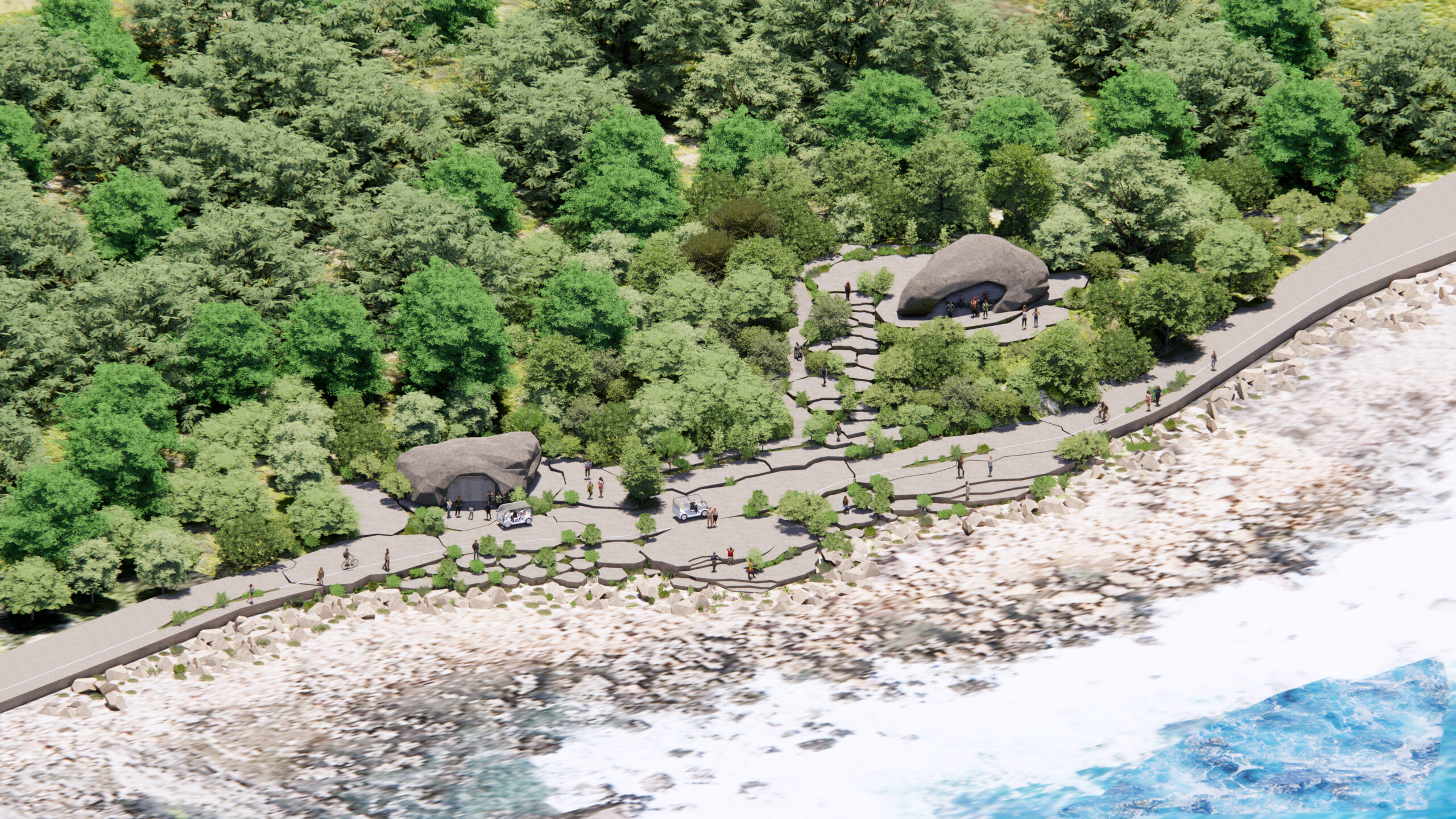
MVRDV’s masterplan replaces and enhances the old infrastructure while strengthening the park’s natural character. All new development will be limited to already built areas to prevent disturbing the original natural landscape. Inspired by the layered shapes of the coastline, the design disrupts the straight road and reimagines recreational paths as a cracked, rocky, naturalistic terrain that reconnects the forest and coastline. The rock-like fragments create different zones for circulation and public use, with some protruding into buildings that reflect the natural features of local rock formations, seamlessly blending into the environment.
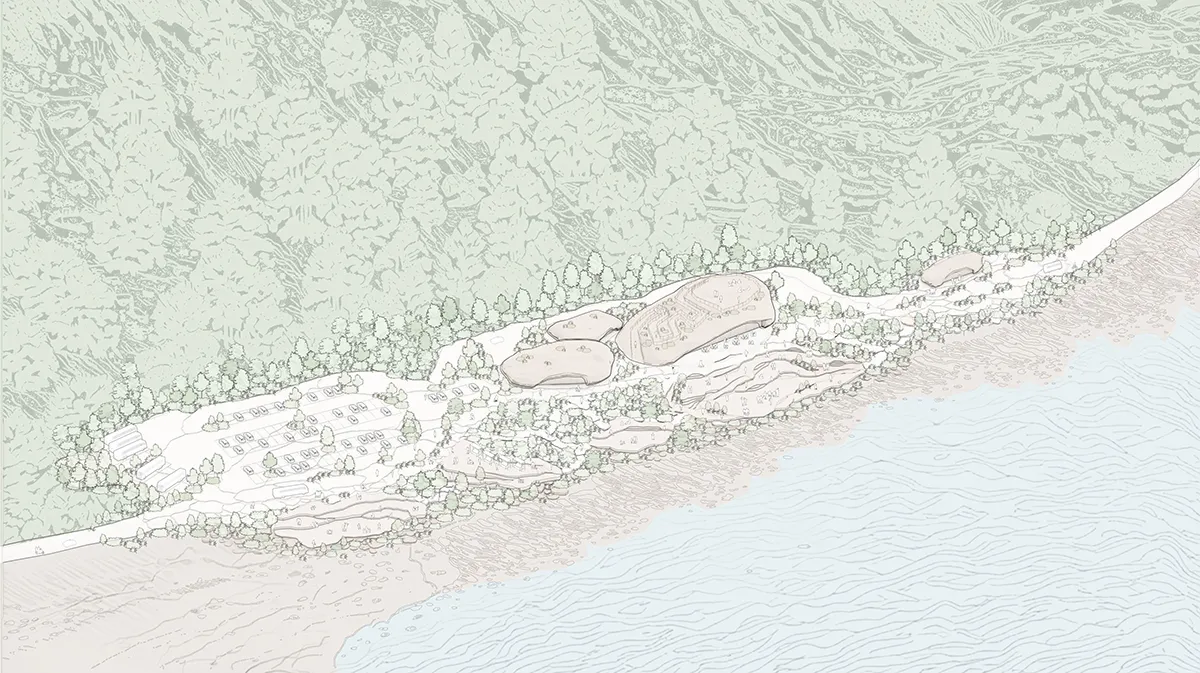
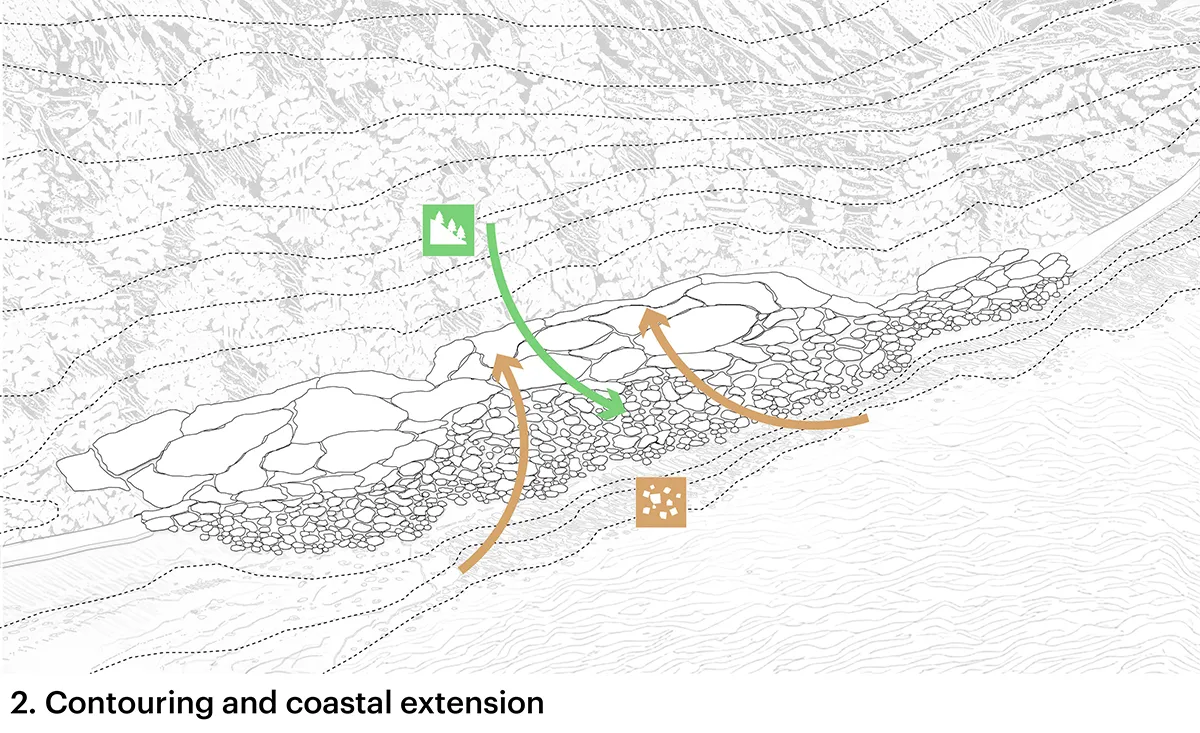
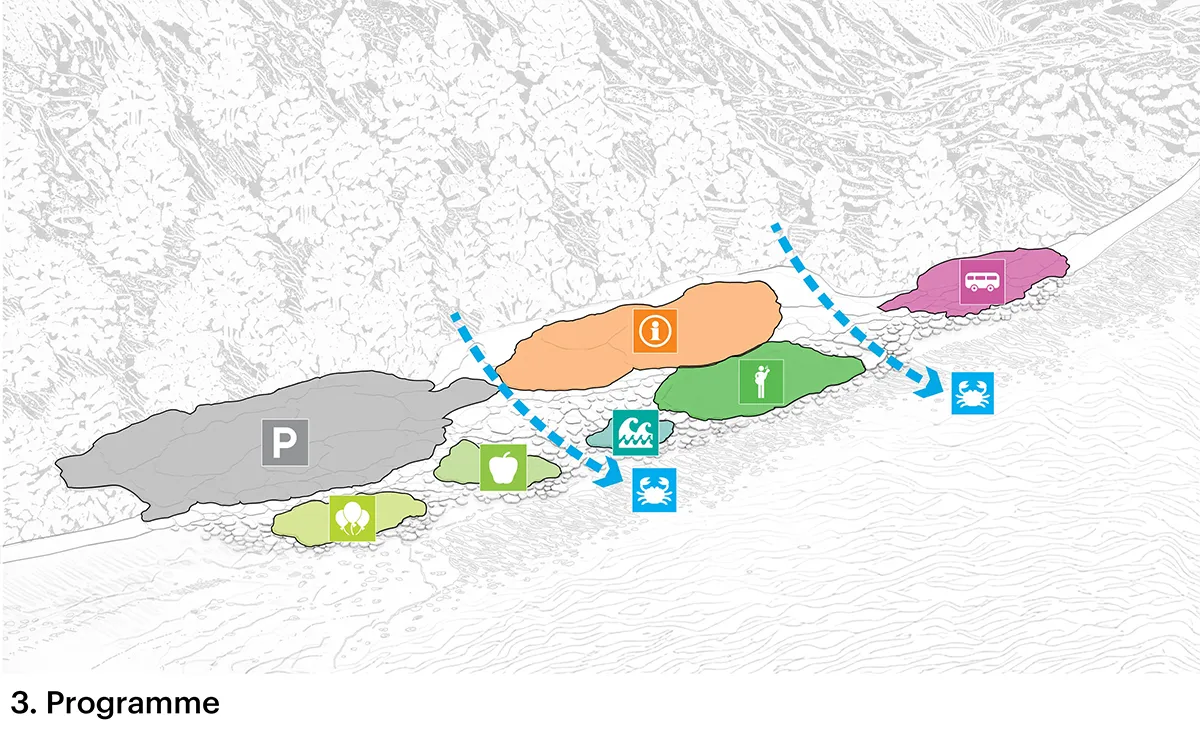
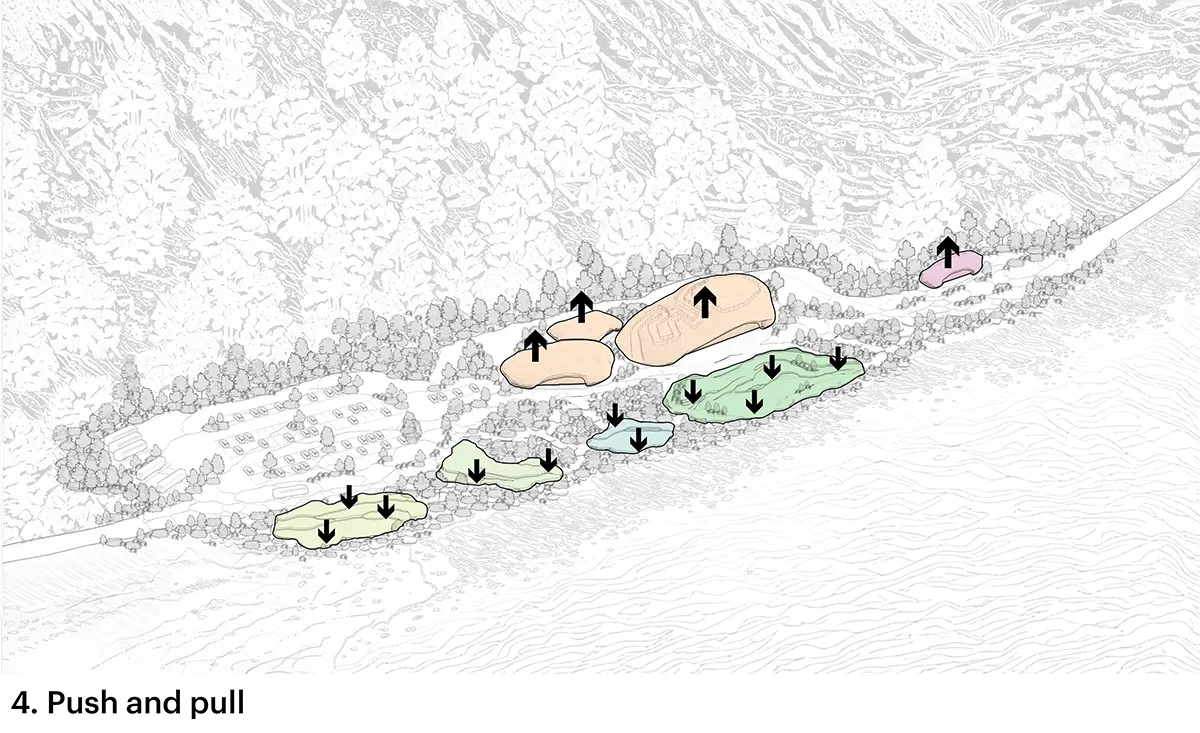
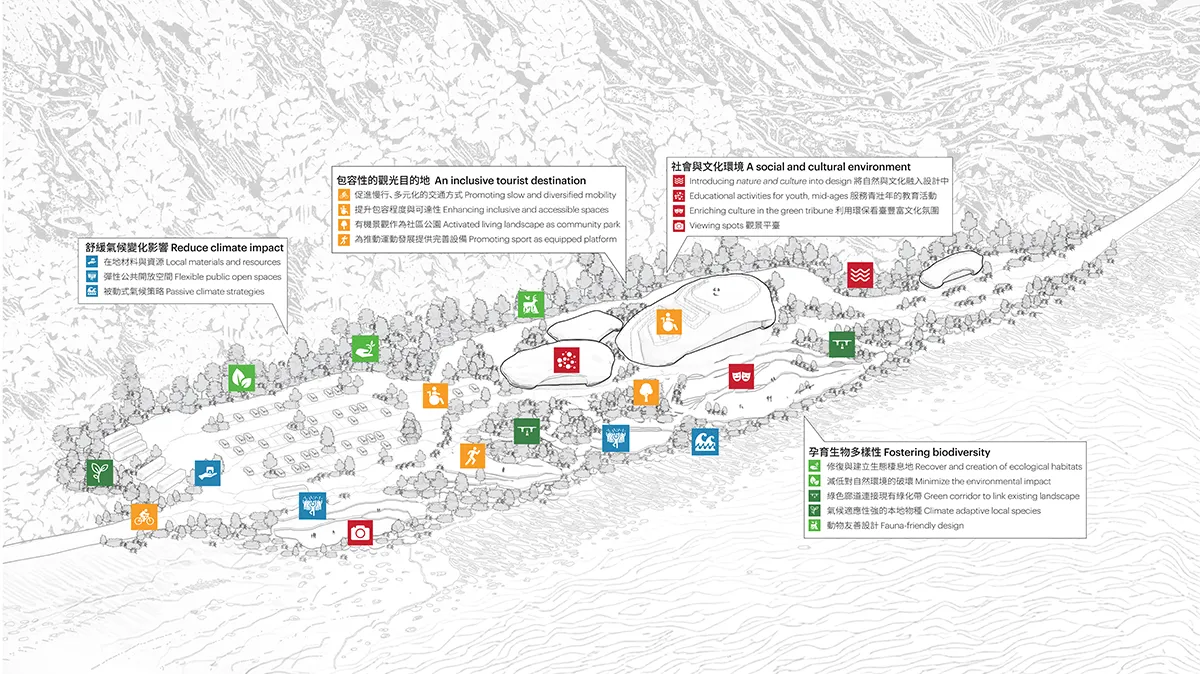
Resilience and regeneration are central to the Jialeshui Rocks transformation. To help manage stormwater and reduce damage from typhoons and flooding, cracks in the pavement are introduced as passive drainage and protective buffers. These cracks also support biodiversity, allowing greenery to take root and creating passages for small animals to cross between forest and shoreline. A gradient planting strategy is adopted, using natural forest formations as a framework. Tall and dense native vegetation is clustered near the forest, gradually shifting to salt-tolerant, low-growing species closer to the sea. Even the building surfaces themselves will, over time, be colonised by moss and small plants that take root in the concrete – the only material suited to the site’s harsh conditions, which will recycle a percentage of its aggregate from demolished buildings.
At the entrance to the park, three sculptural buildings form a welcoming cluster. The largest of these “rocks” houses the welcome centre, a café, and a souvenir shop. A second building provides spaces for exhibitions and environmental education, while the third contains restrooms. The main building’s roof doubles as a terrace for stargazing and panoramic views. This entrance cluster is set within a sloping landscape of small plateaus and plazas designed for events, markets, or simply to enjoy the view.
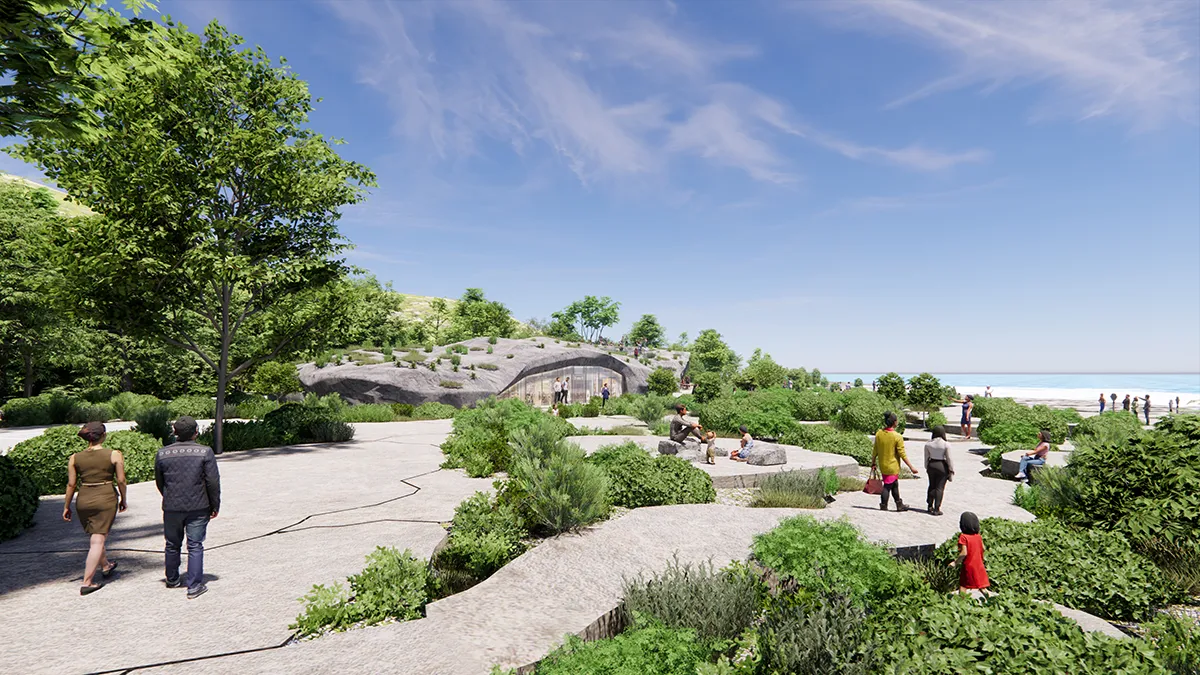
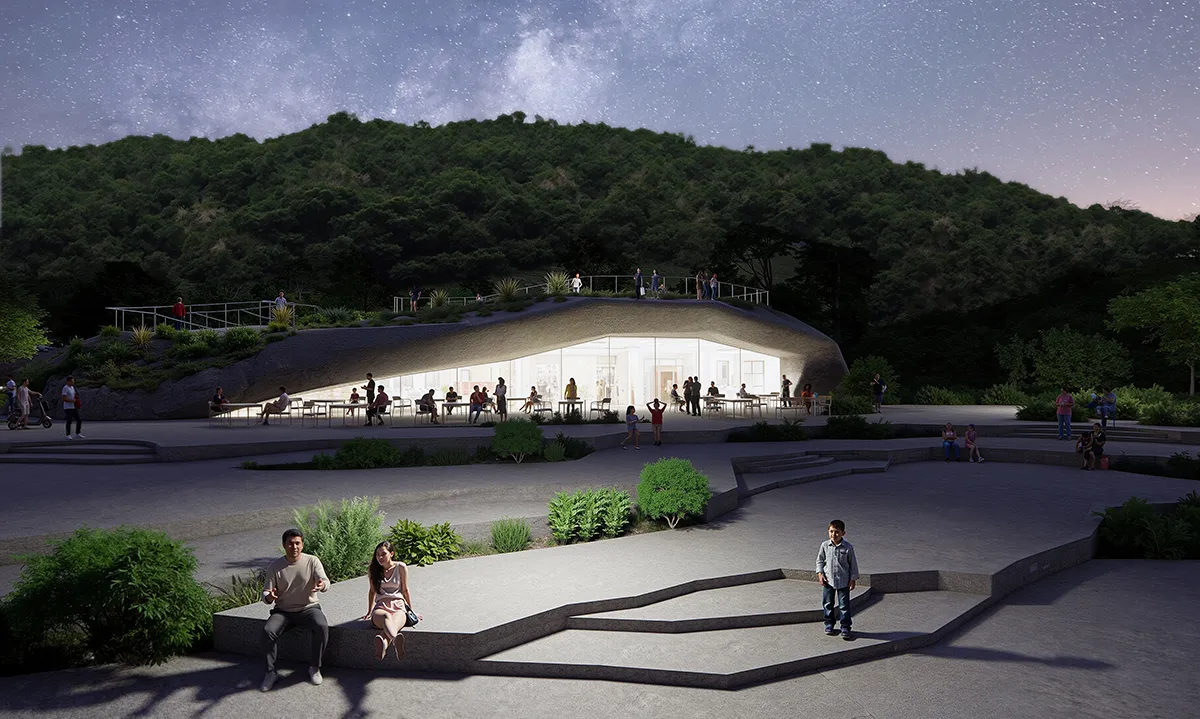
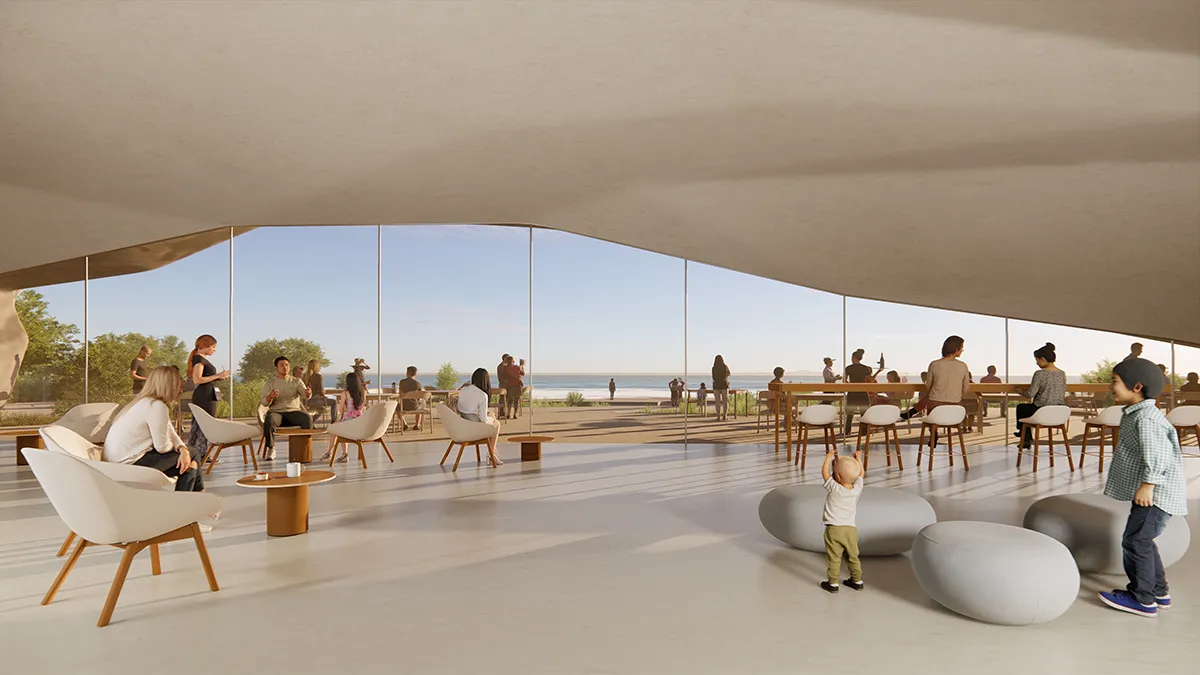
For the rest of the route, the existing road will be transformed into a more accessible route for pedestrians, cyclists, and shuttle buses, as well as clear zones for movement and relaxation. Several smaller “stops” are positioned at existing points of interest: the stone viewing deck, a sea lookout point, and the waterfall. At each stop, the site’s existing outdated structures are replaced with viewpoints, kiosks, and other facilities.
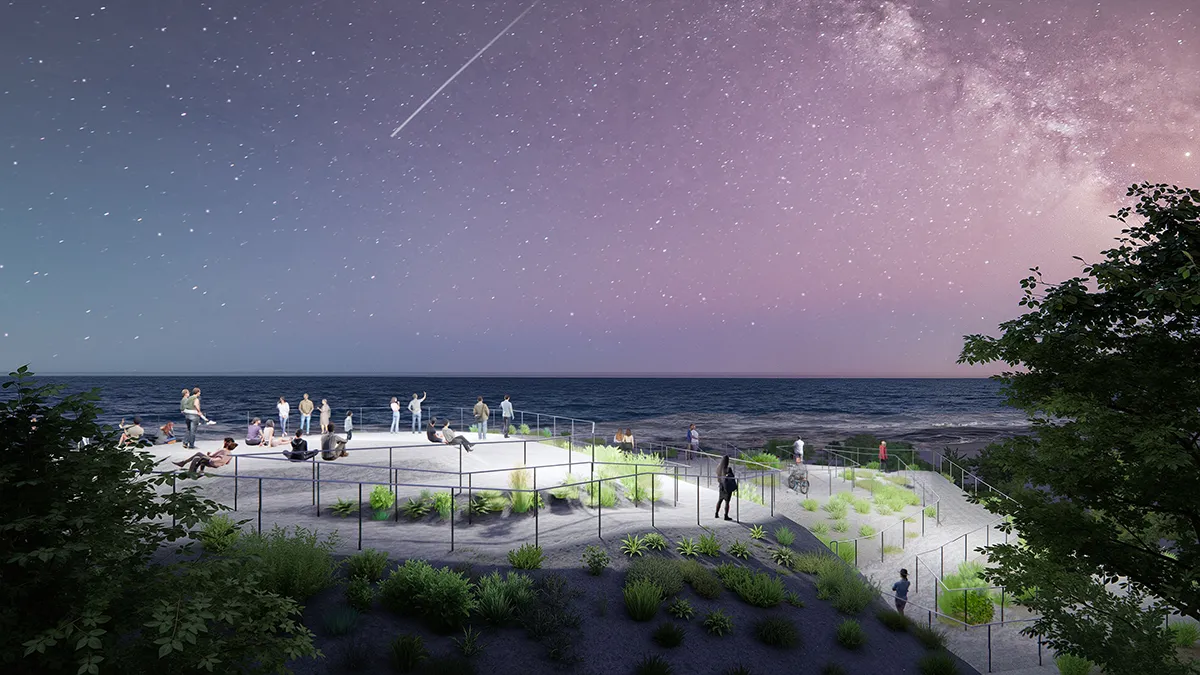
With this project, MVRDV aims to demonstrate how coastal areas can be upgraded in a respectful and sustainable way. The design for Jialeshui improves accessibility and creates a visitor-friendly environment without overbuilding or disrupting the environment, instead letting natural scenery take the lead in shaping the site’s future. At the same time, it supports the county’s ambition to position Jialeshui among Taiwan’s leading geological parks, enhancing its identity as a destination while preserving the qualities that make it unique.
Nature Rocks
Architect: MVRDV Founding Partner in charge: Winy Maas Director: Gideon Maasland Head of Taiwan: Hui Hsin Liao Design Team: Valentina Fantini, Samuel Tam, Vivian Yang
Copyright: MVRDV Winy Maas, Jacob van Rijs, Nathalie de Vries
Collaborators
Co-architect: HWC Architects Structural engineer: Cross Structural Engineer & Associates MEP: LiPeng Professional Electrical Engineer Firm Surveyor: JengShing Surveying and Mapping Engineering Co., Ltd. Environmental advisor: D.H. Engineering Consultants Ltd.