
Melbourne’s Metro is often discussed in terms of its underground impact and architecture. However, the project is more than inspiring architecture; it creates a new public realm at each point where the stations rise into Melbourne streets. There are five new stations – Anzac, Town Hall, State Library, Parkville and Arden. Each station has a different context, and various approaches were taken to respond to their surroundings and connection to the city.
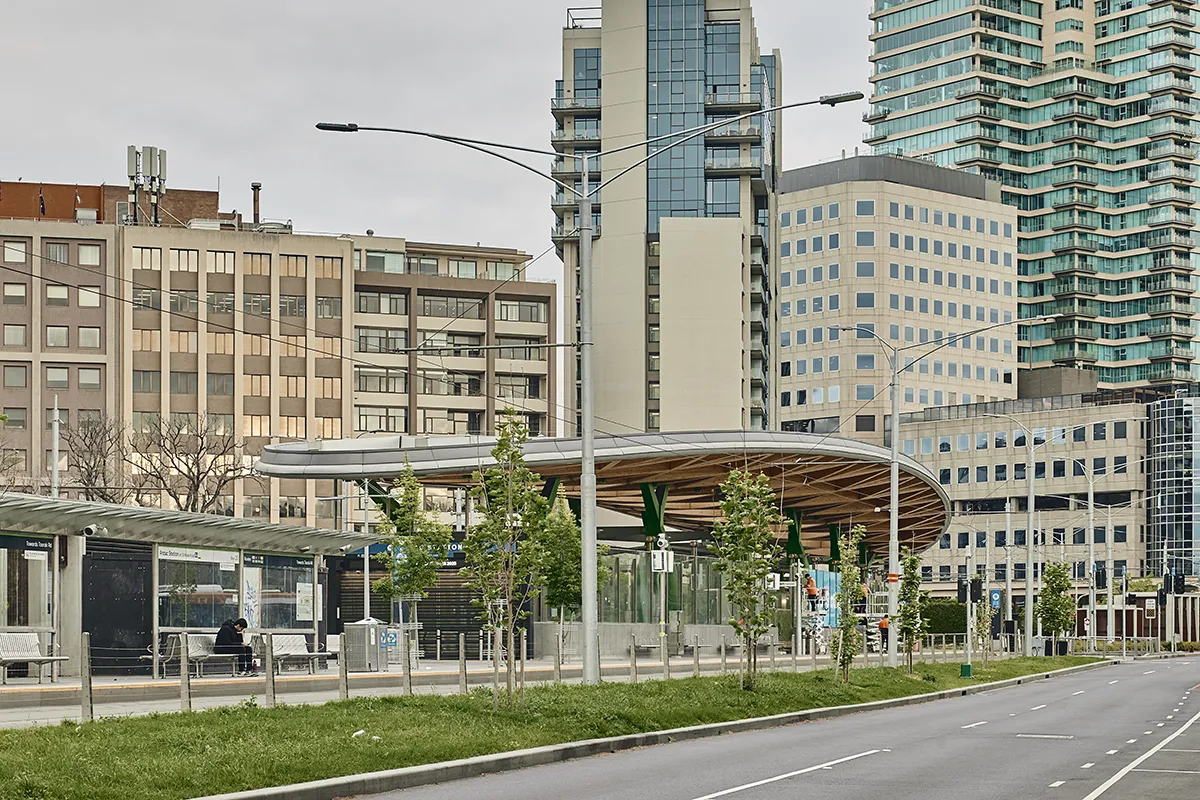
A New Look for Stations and Streets
The five new metro stations act as anchors, using materials such as brick, glass, timber, and bluestone that nod to their specific contexts and histories. The Metro stations and surrounding public realm were designed to be destinations in themselves, featuring cafes, shops, art, whilst also providing places to gather.
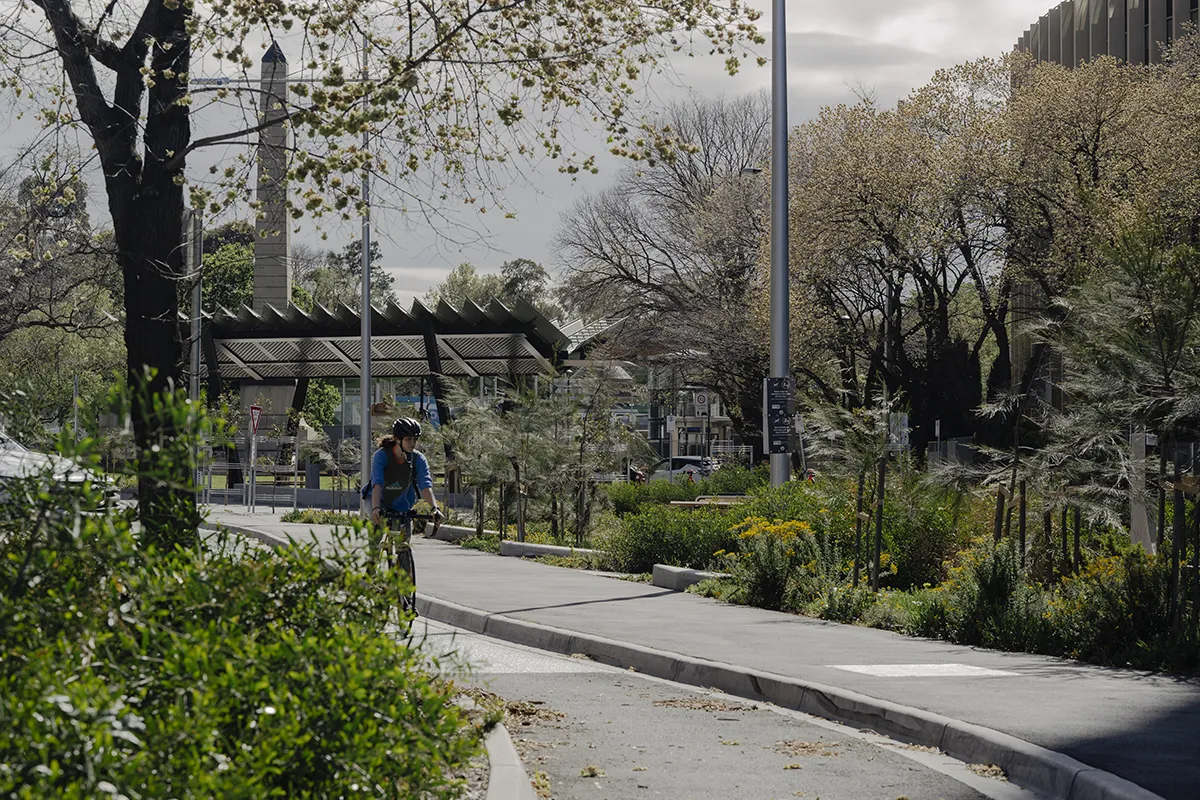
Critically, the landscape around the stations has been overhauled. The designers Hassell established a strong focus on biodiversity, incorporating native shrubs, grasses, medicinal plants, and urban trees to create new, healthy public areas.
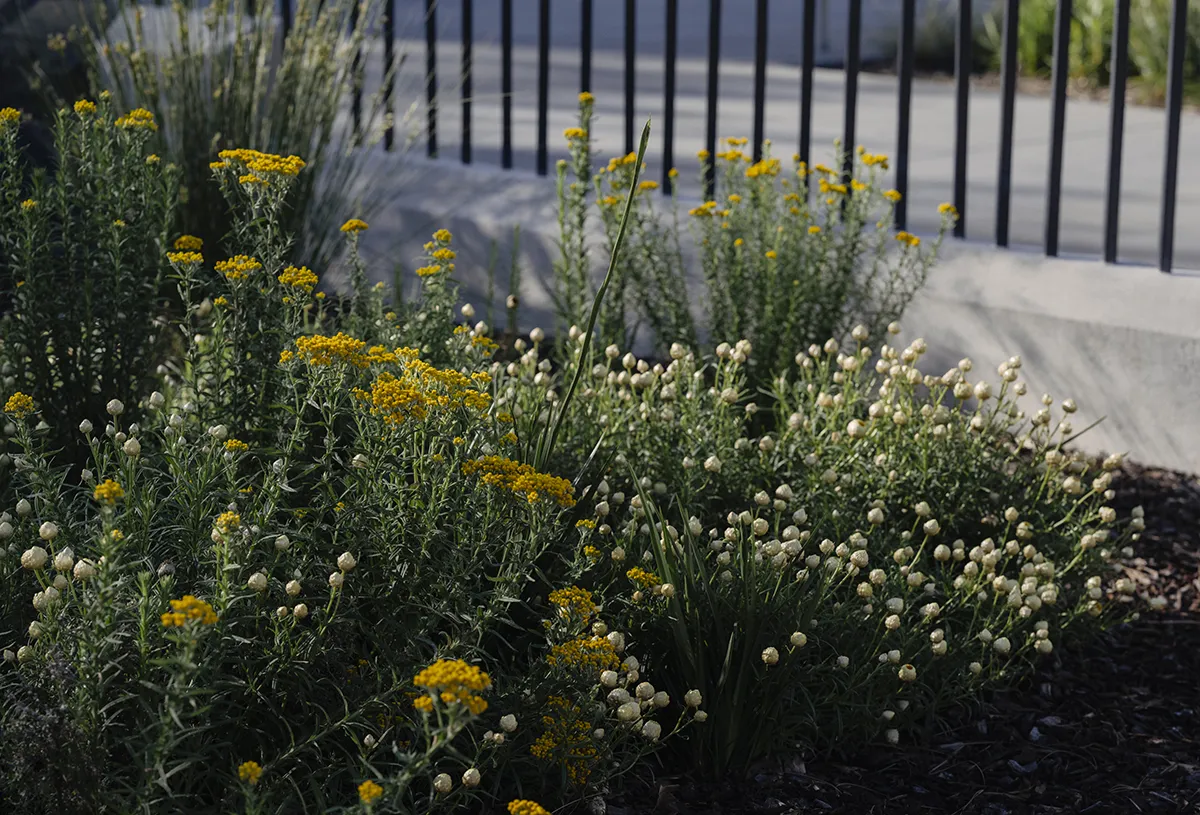
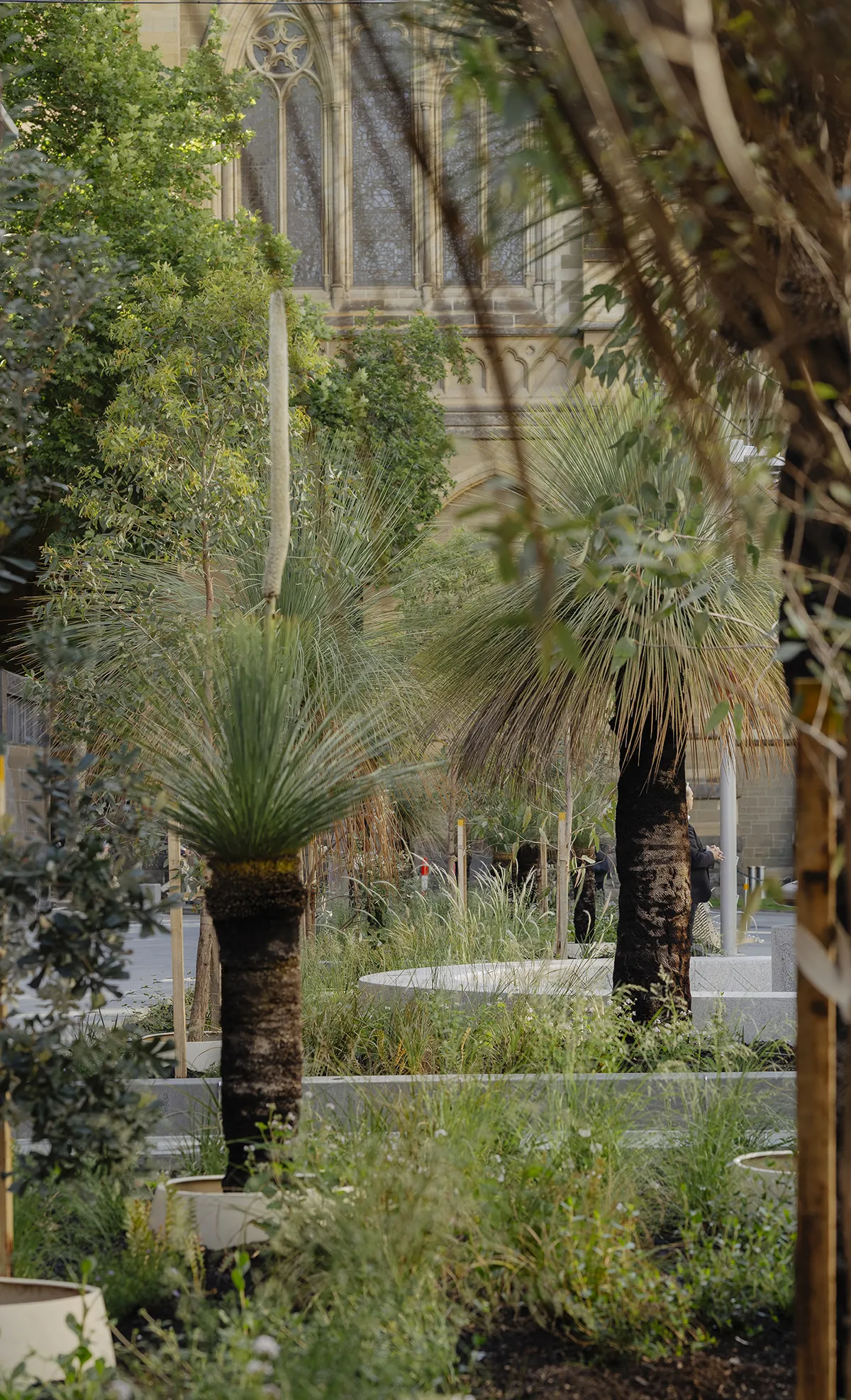
Anzac Station is situated in the south of Melbourne, in the middle of St. Kilda Road, the city’s iconic tree–lined boulevard. The designers saw the architecture as a “pavilion in the park,” connecting with the historic Domain precinct, including the Shrine of Remembrance, and the Royal Botanic Gardens. The station’s distinctive feature above ground is a light, floating timber canopy, its structure reflecting the geometries of the nearby Shrine. Key to the design was maintaining sight lines and visual connections to the surrounding heritage buildings.
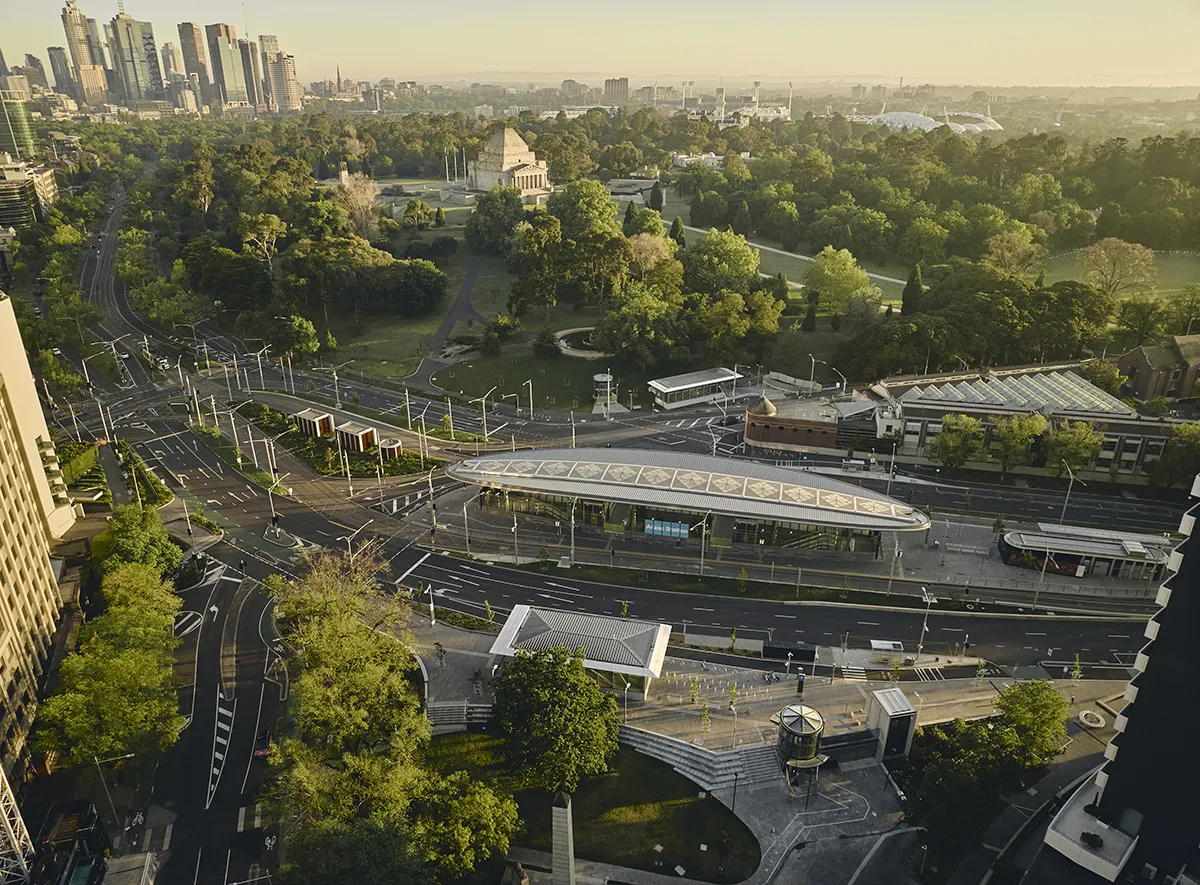
Overall, the main objective of the Anzac Station public realm was to increase parkland on St. Kilda Road and Albert Road Reserve, creating a green spine that links the Domain and Shrine to Albert Park and beyond. This objective was met through the consolidation of roads and car parking to increase parkland, and through the provision of large trees and biodiverse underplanting to improve the urban ecology of the precinct. The integration of water-sensitive urban design (WSUD) assists with water management and habitat creation.
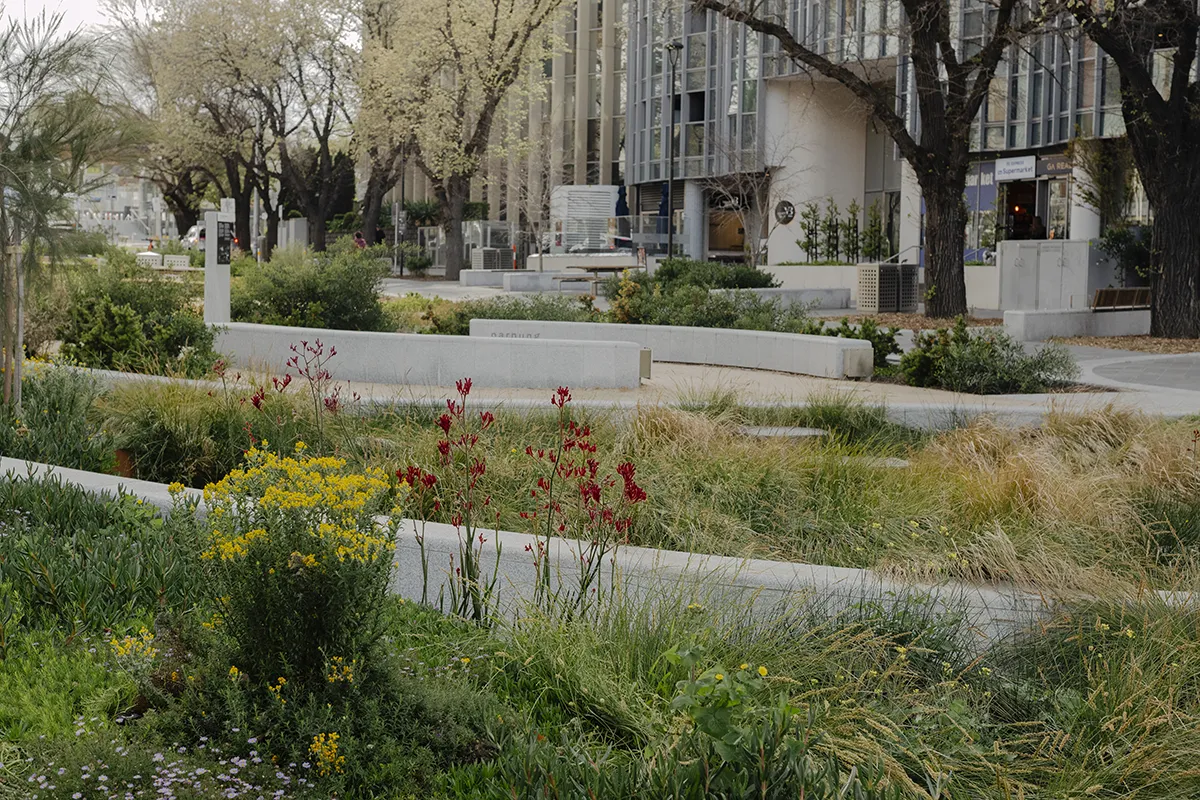
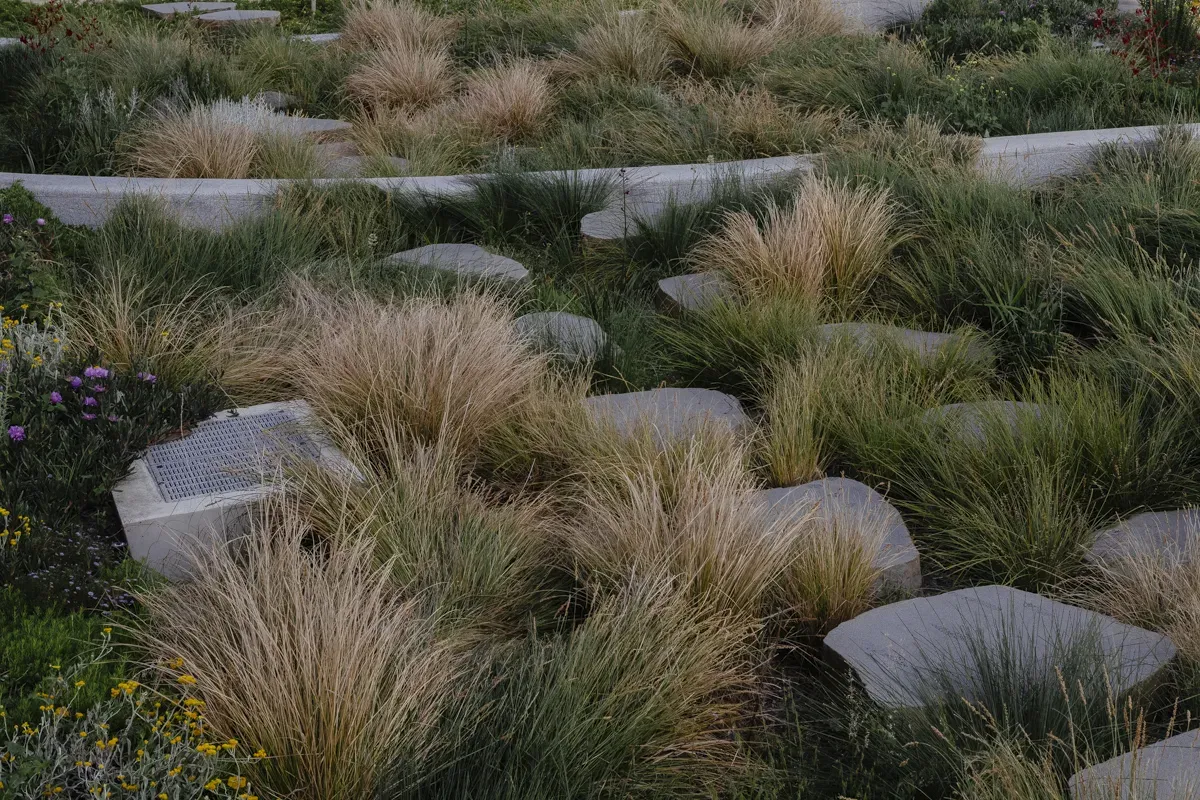
The public realm adjacent to the station utilises the city’s bluestone palette and provides pedestrian connections above and underground to and from the station, tram concourse and surrounding roads.
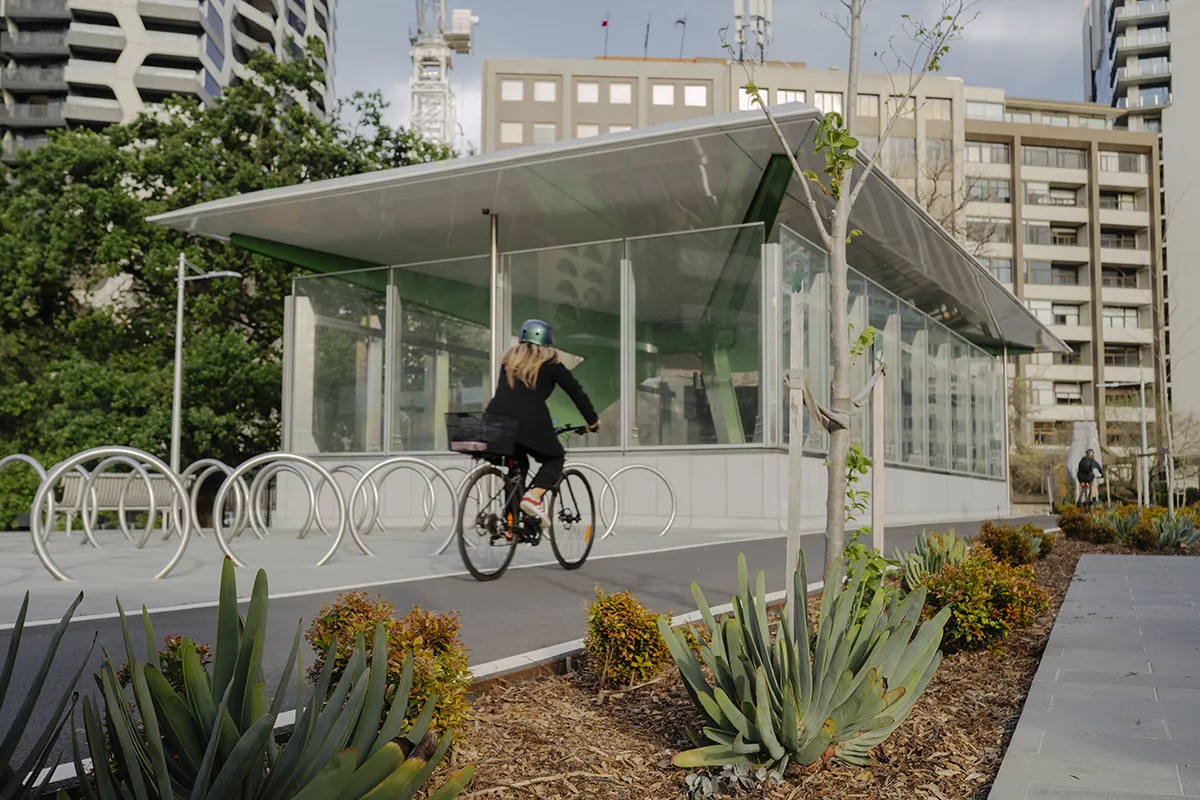
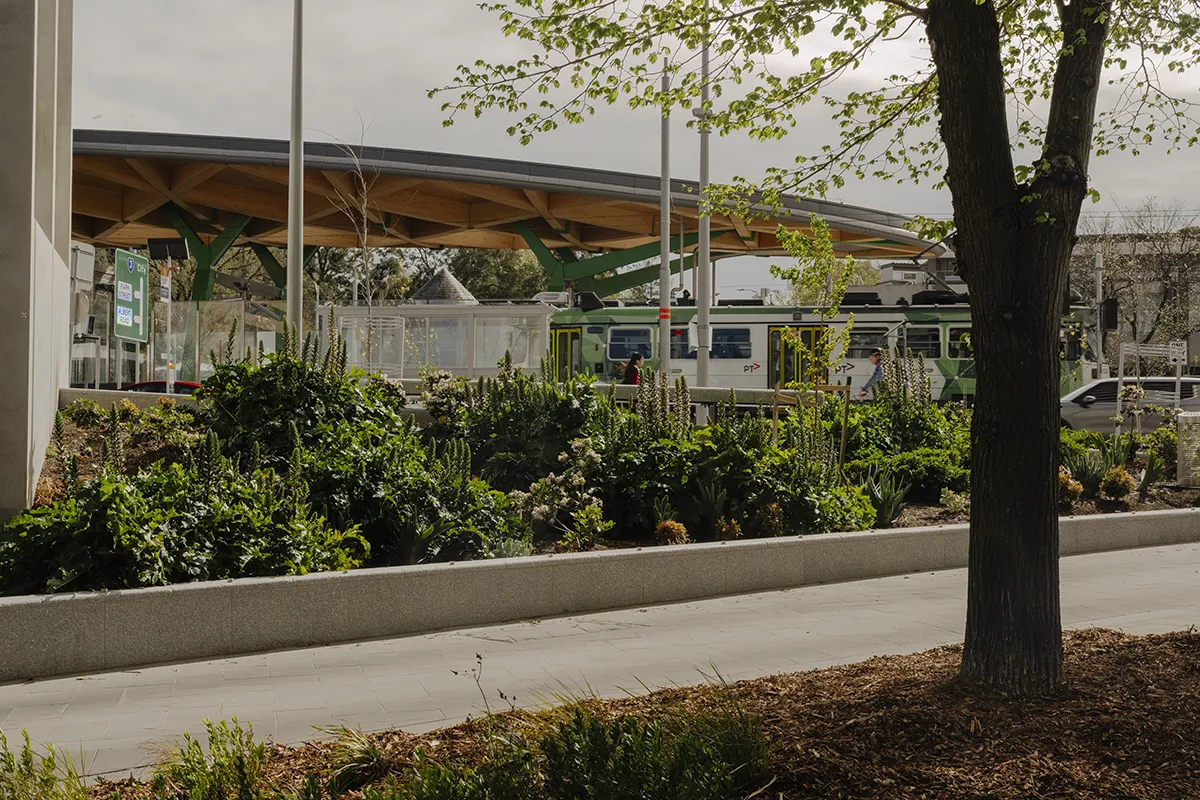
The new Town Hall Station connects with the Flinders Street Station with entrances at City Square, near Young & Jackson, and at Federation Square.
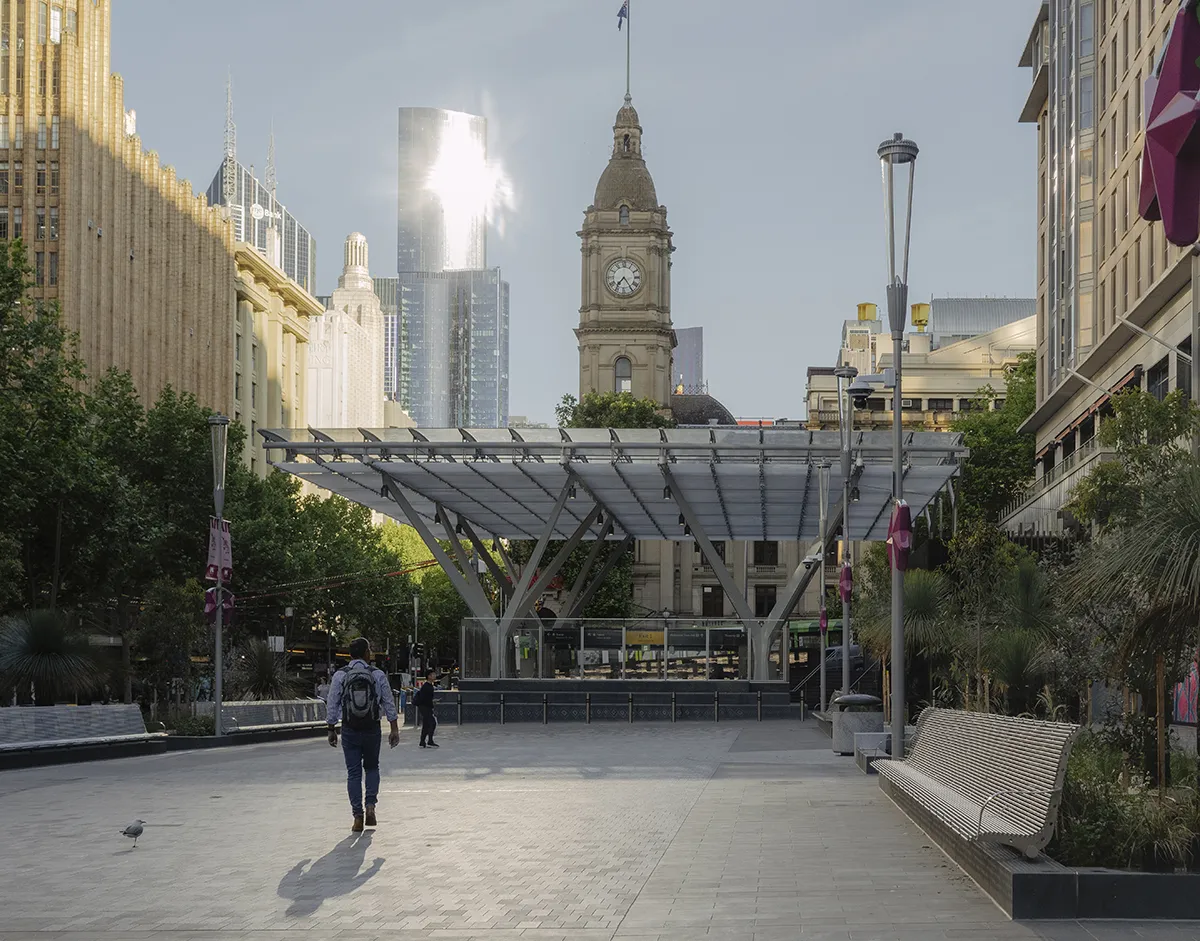
The revamped City Square is the third reiteration of the public space that sits within the Melbourne city grid, surrounded by St Paul’s Cathedral, Melbourne Town Hall and The Westin Hotel. The City Square station has a lightweight portal that sits at the north end of the square with the remainder of the square dedicated to public gathering and events.
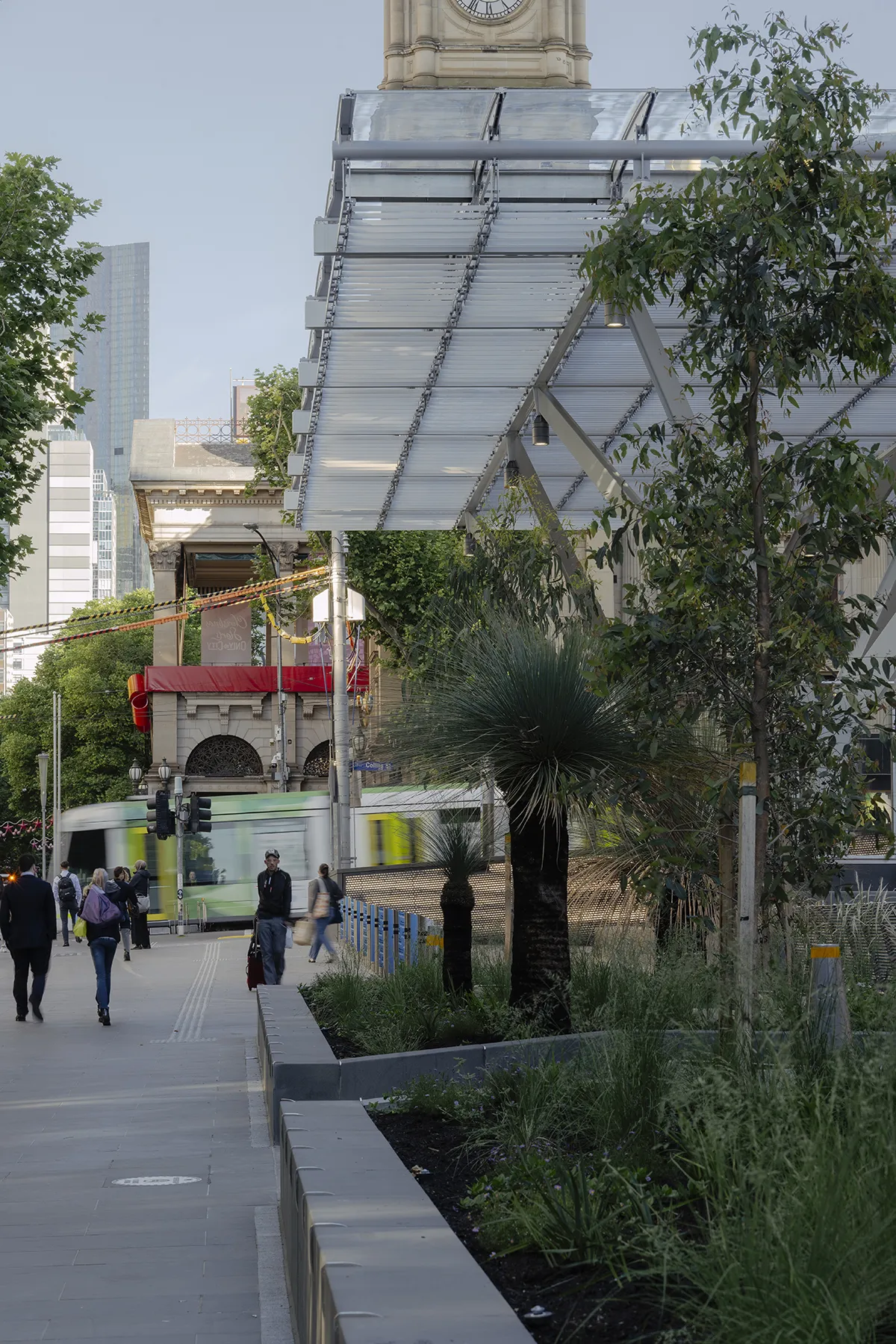
The square planting includes native flora, including eucalyptus trees, correas and grasses. There is a nod to the past city square with an interactive, digital version of the Mockridge fountain – titled Mnemonic Flow – featured on the Collins Street side of the square, while the bronze sculpture Beyond the Ocean of Existence has also returned to the area.
In recognition of the importance of the indigenous people of the land, the city square there is a permanent Smoking Ceremony dish developed with Wurundjeri Elder Aunty Joy Wandin Murphy OAM. There is also the Woi-wurrung language, and artwork is etched into the surrounding paving.
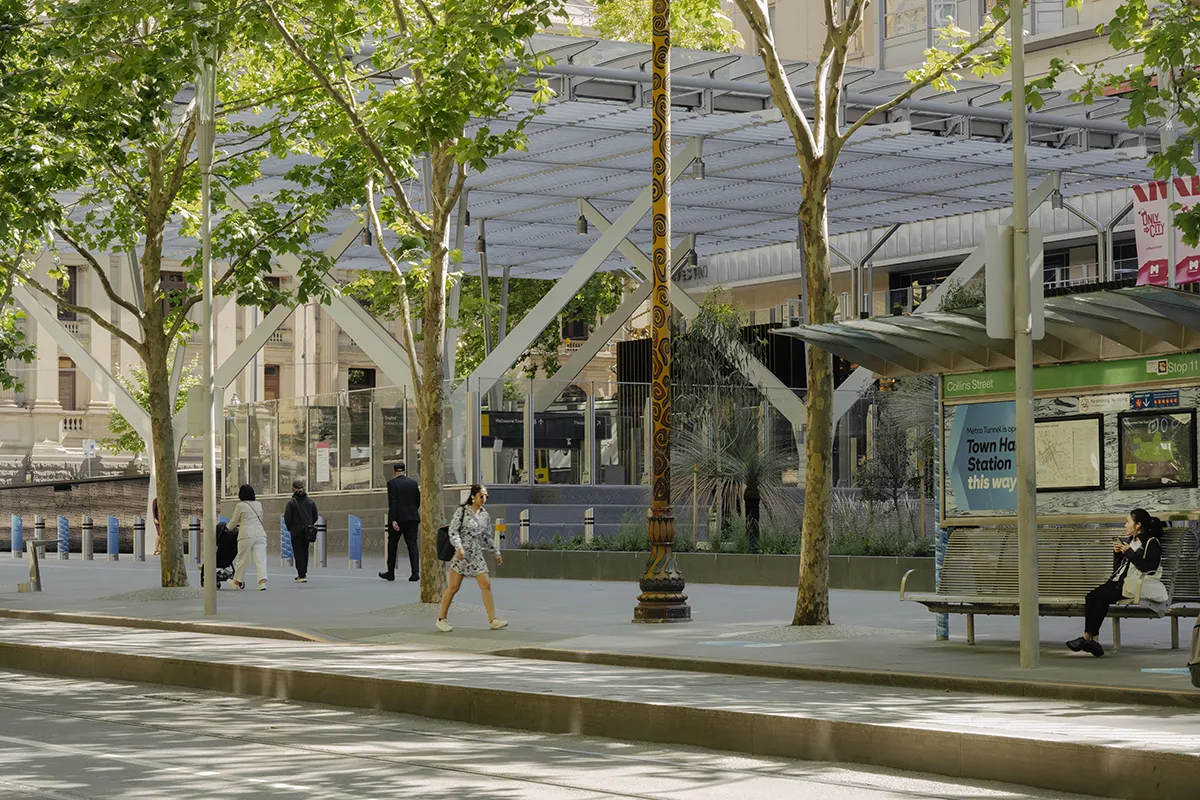
At Federation Square, the public realm is similar to before the Metro works, with the paving integrating with the new entrance, which stands where the visitors centre once stood.
State Library Station sits on the northern end of the city grid with entrances on Swanston, La Trobe and Franklin Streets.
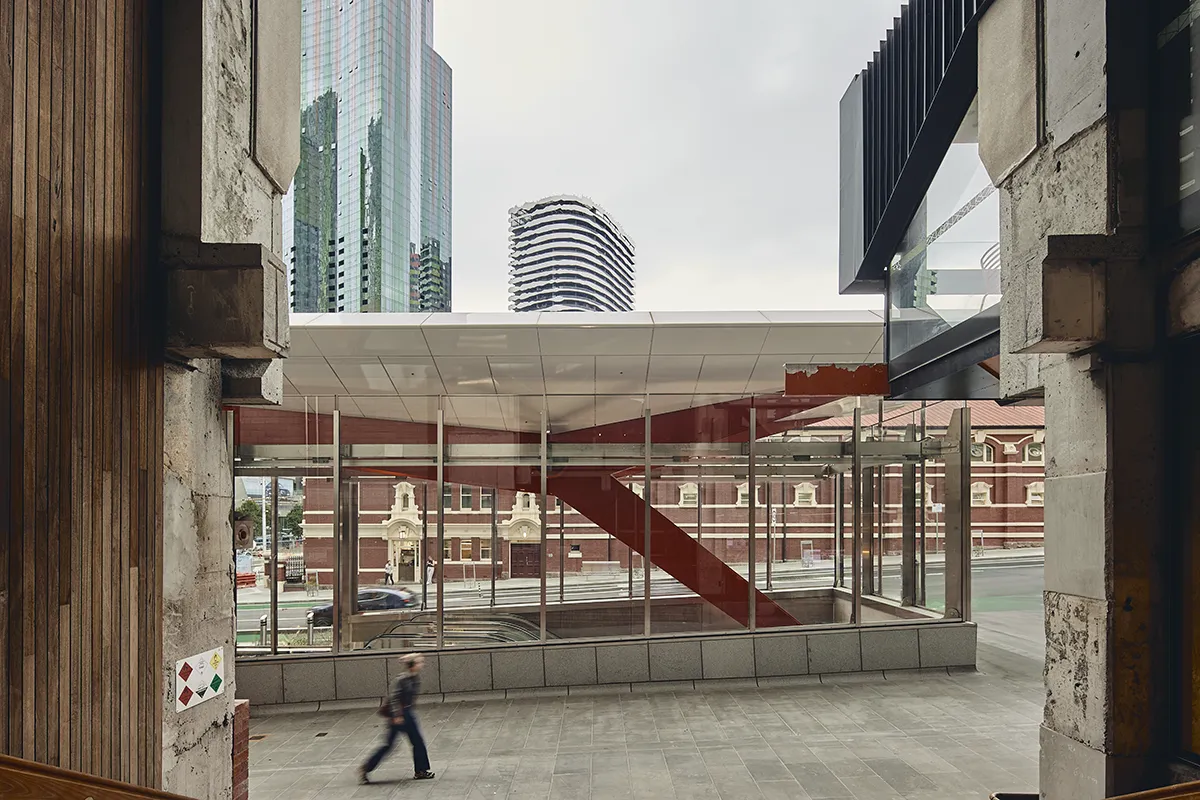
The former road space was transformed into 3,500 square metres of new public space, now featuring 50% more mature trees. This includes the extension of Literature Lane, which is expected to flourish with new cafes and shops. Along Franklin Street, a new boulevard-style promenade with native, biodiverse planting encourages walking toward Queen Victoria Market.
The State Library Station precinct incorporates water-sensitive urban design (WSUD) principles to manage stormwater runoff, reduce flood risk, and passively irrigate plants, thereby reducing the need for potable water.
The Parkville Station is surrounded by health, research, and education institutions —including the University of Melbourne, Royal Melbourne Hospital, and the Victorian Comprehensive Cancer Centre.
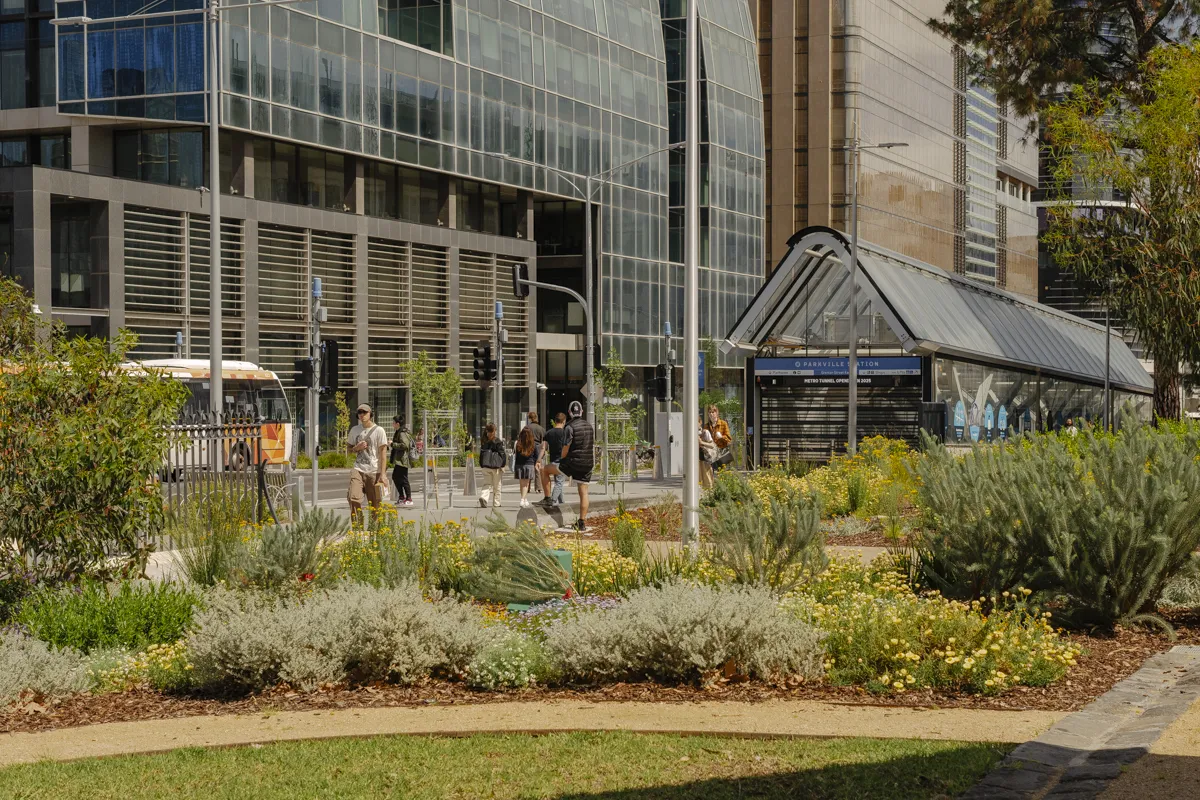
The station sits on Grattan Street, which now serves as a major promenade and biodiversity corridor for the health and education quarter. The streetscape design enhances pedestrian permeability and connects the Metro to the many tram, bus, and cycling routes, serving as a gateway to the University of Melbourne and hospitals.
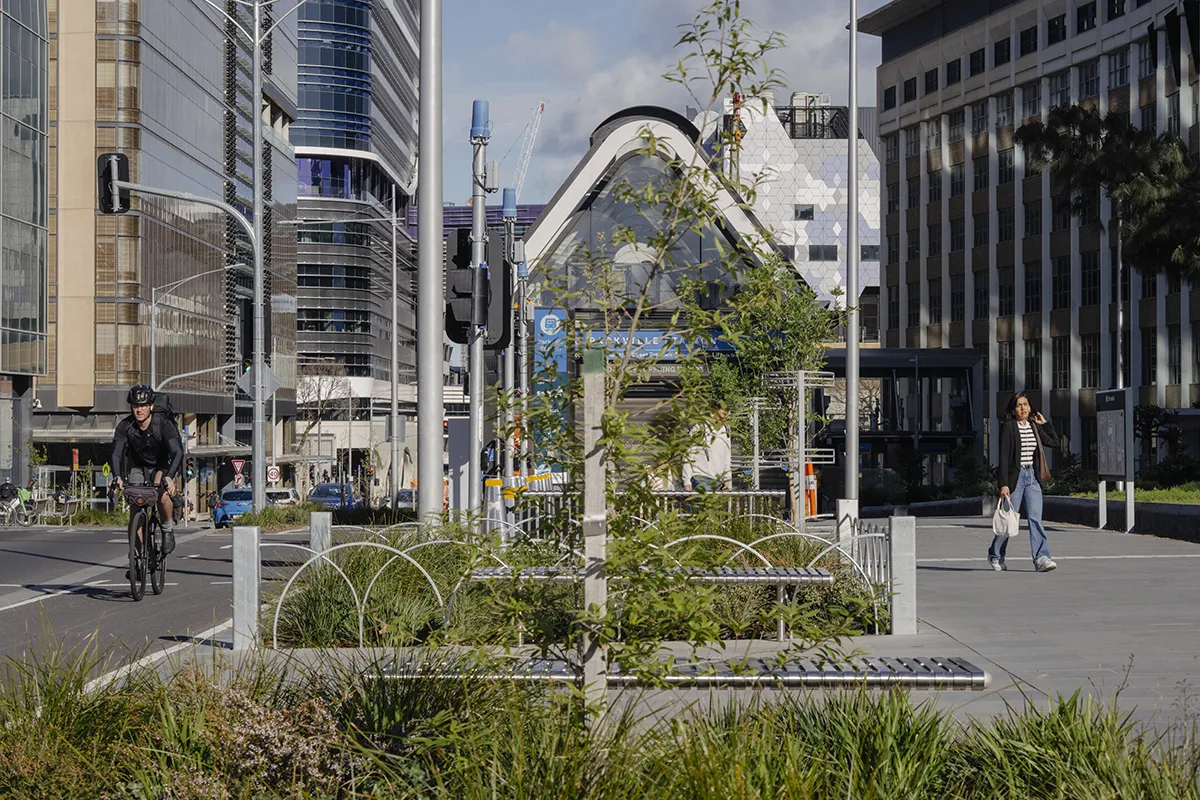
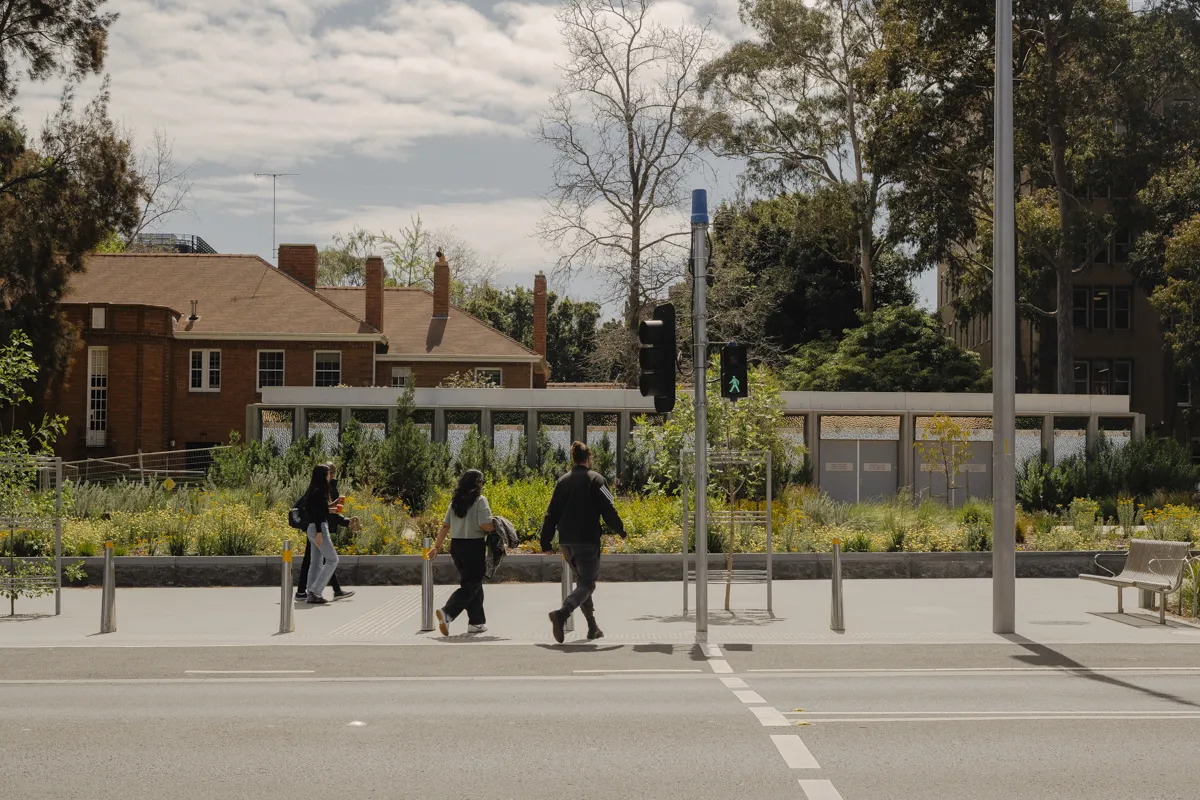
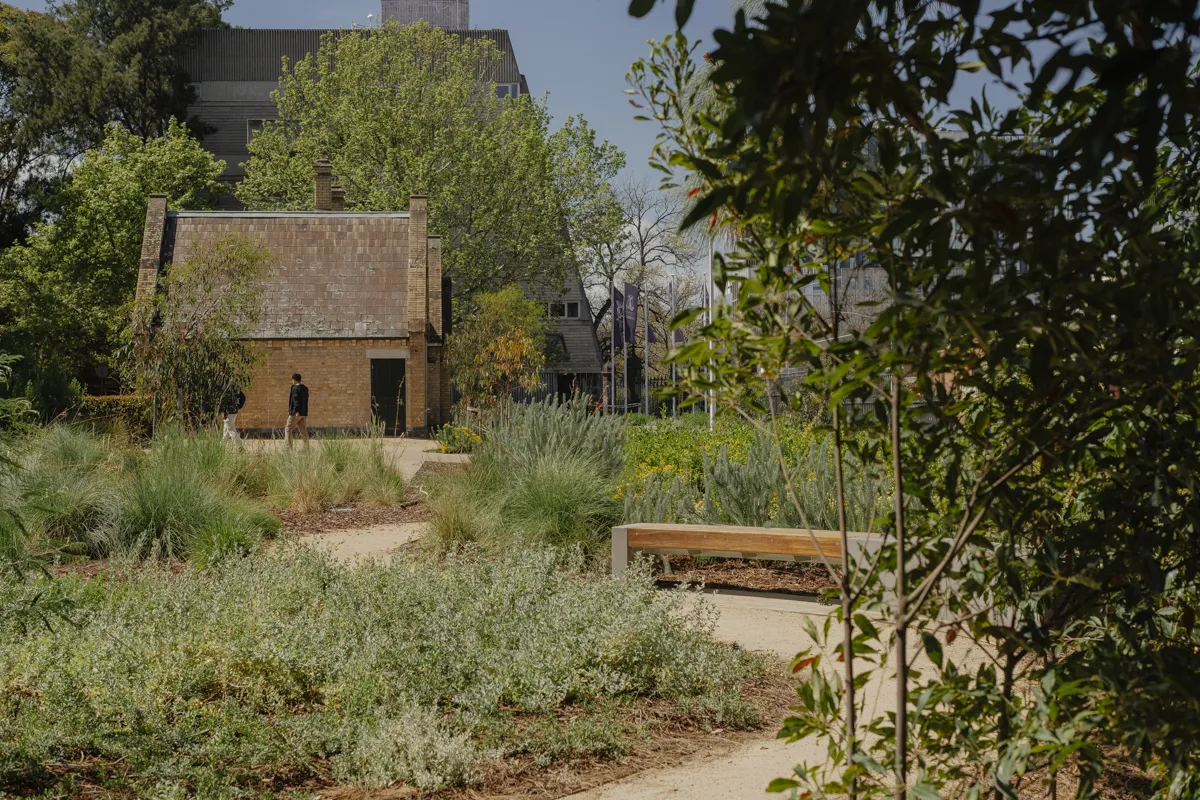
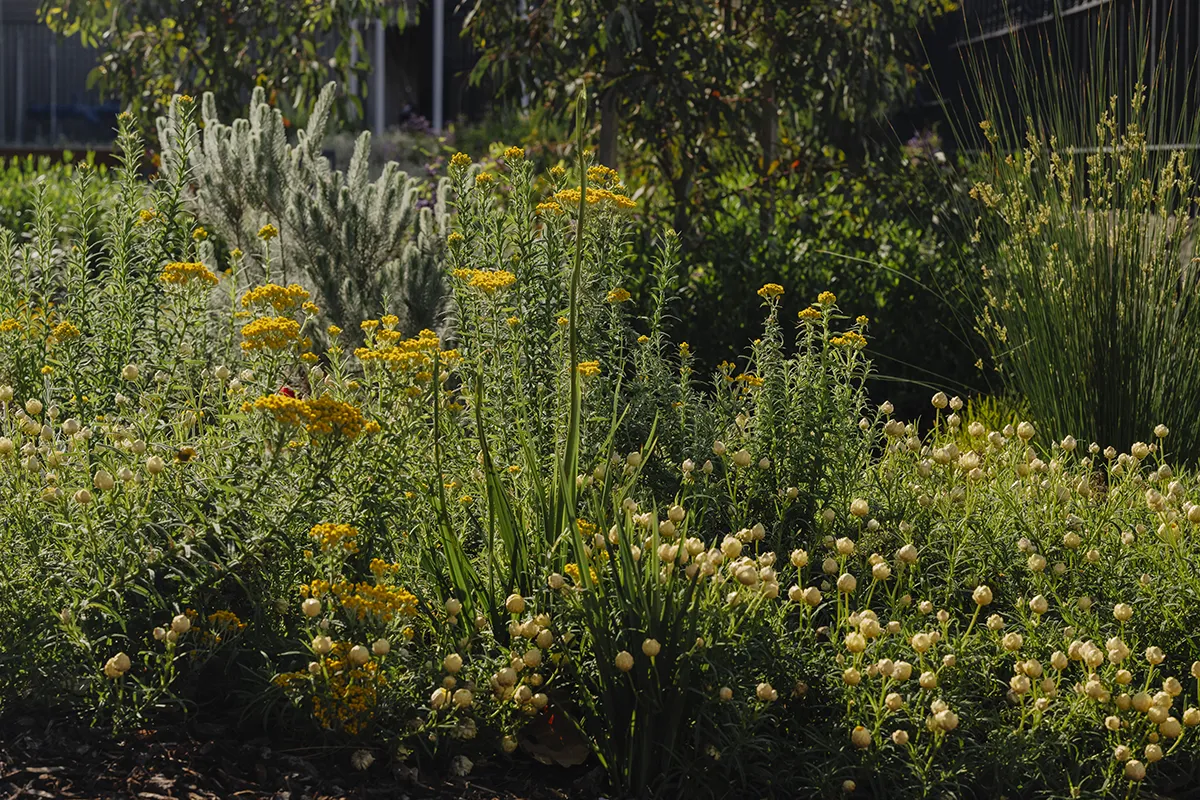
Situated in the suburb of North Melbourne, The Arden Station is the transport anchor in the Arden urban renewal precinct, a vibrant residential, commercial, and retail precinct set to develop over the next 30 years. The public realm includes a sequence of welcoming plazas and landscaped terraces that reference the local industrial character. In response to the swampy, industrial nature of the site, the landscape serves as an “urban sponge,” using sunken gardens and native, water-tolerant plants to work with the site’s natural flood systems.
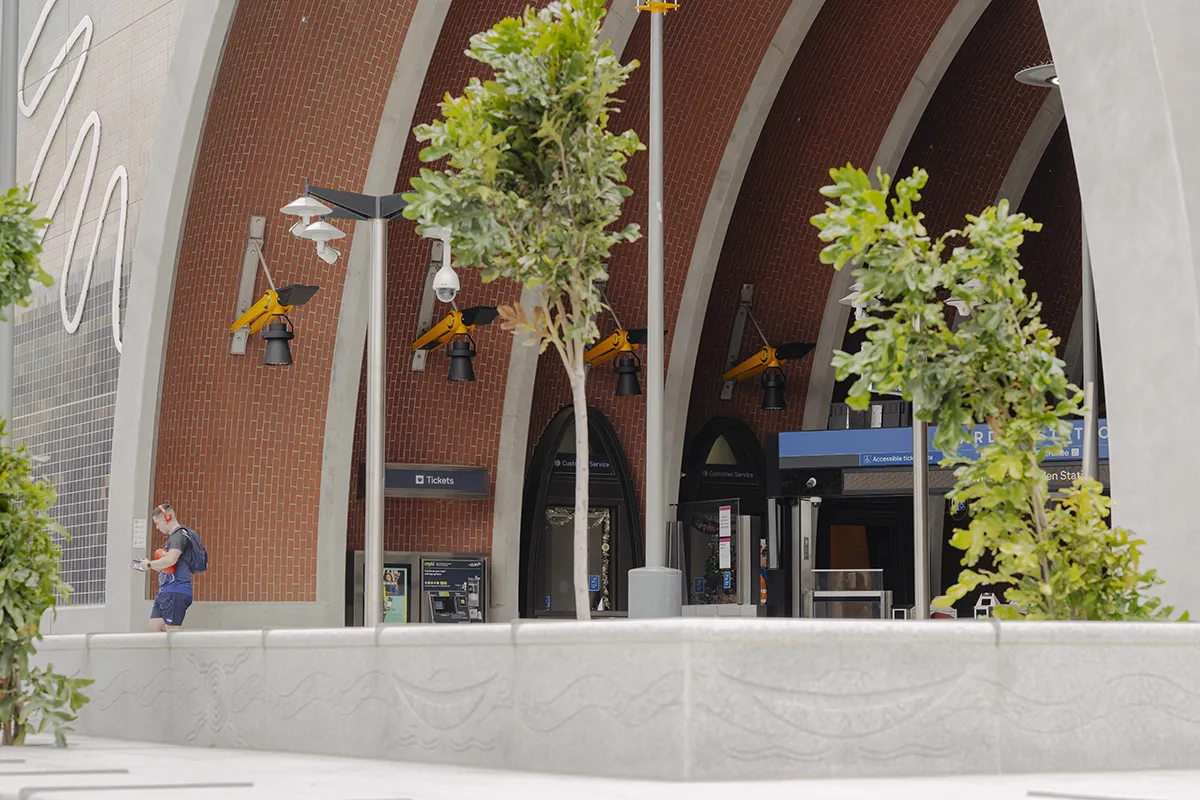
When envisioning the public realm for each station, the designers at Hassell sought to address each station’s distinct context through materials and native planting. Each space was designed to accommodate the increase in population and workers who will use the stations, while allowing for spaces to dwell and gather without compromising the liveability that Melbourne is known for.
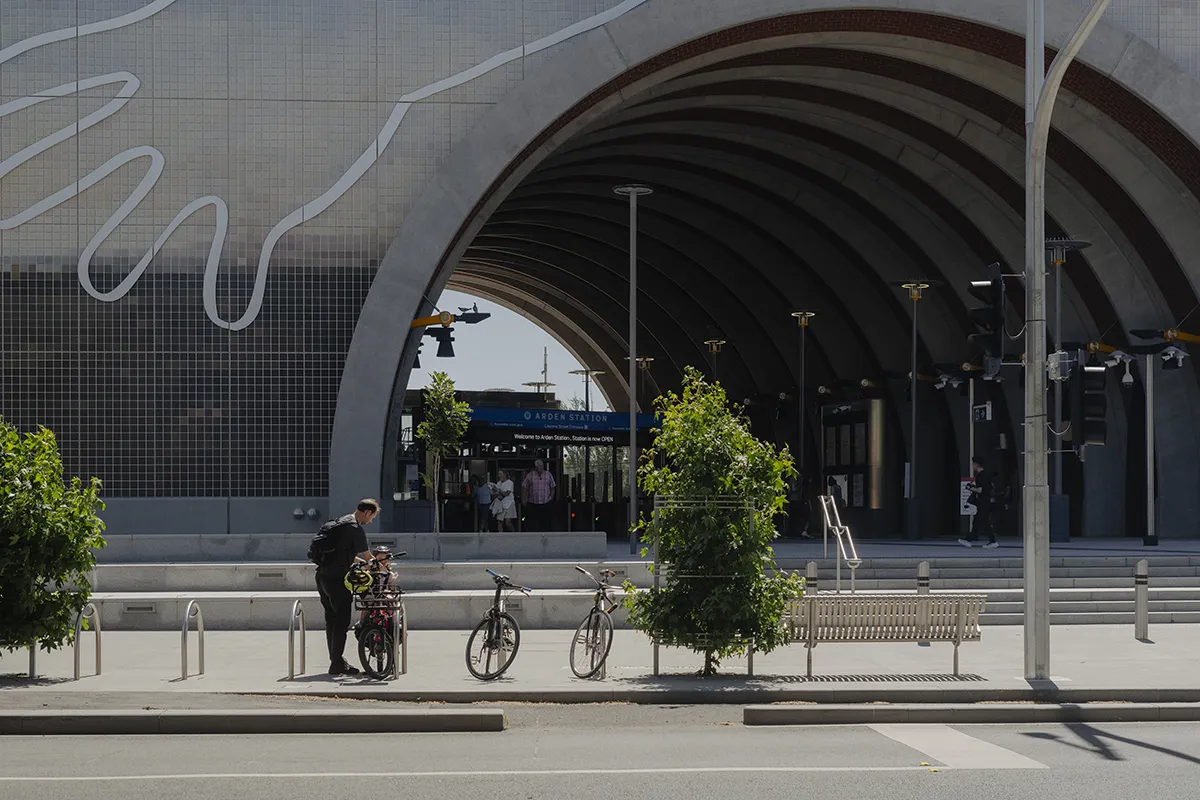
The project’s design objectives include expanding green space, enhancing canopy coverage, boosting biodiversity, and ensuring resilience. The technical design incorporates best practices for soil volumes (Leake & Haege), water quality, and biodiversity. The design features multi-storey planting where feasible and also responds to each precinct and context through plant selection and layout.
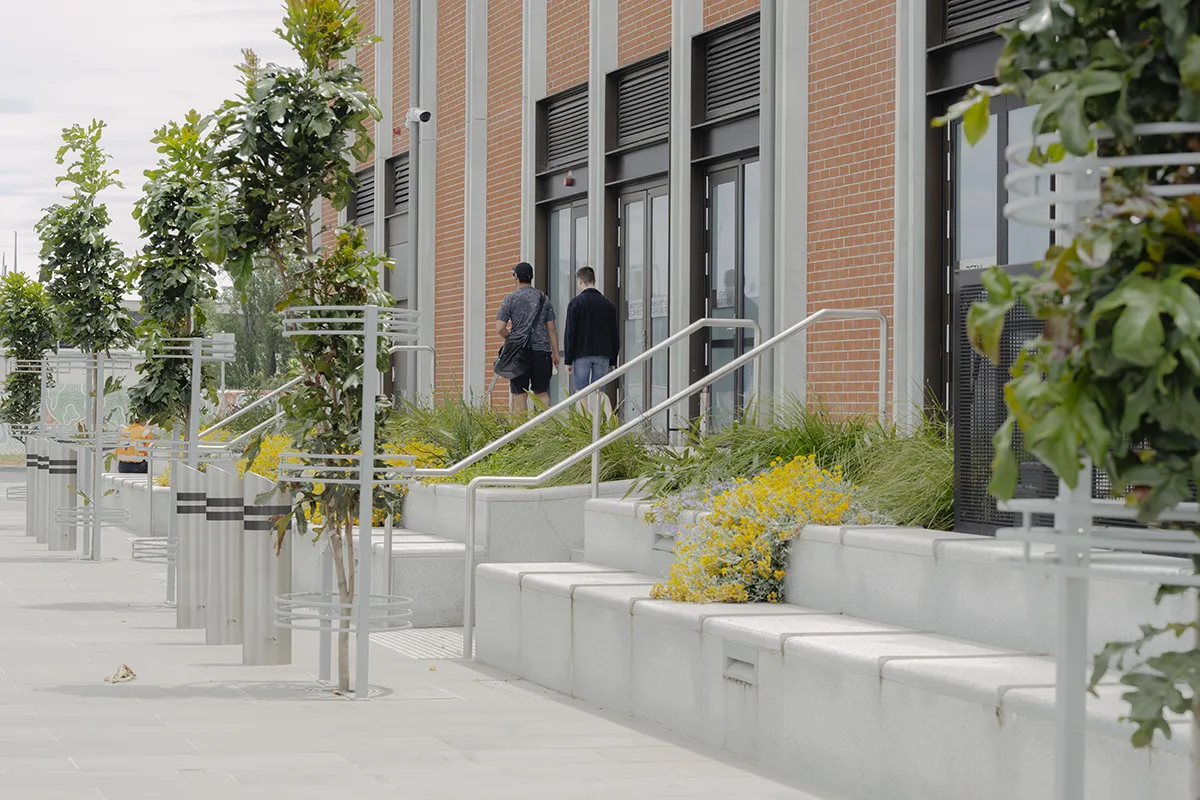
Melbourne Metro
The Metro Tunnel was a collaboration between practices Hassell, WW+P Architects, and RSHP. Landscape architecture by Hassell, linewide and wayfinding by Maynard Design, engineering by Arup, Arcadis, and WSP as part of the CYP Design and Construction (CYP D&C) Joint Venture on behalf of the Victorian State Government.
Image Credits: Sarah Pannell (unless otherwise captioned as Peter Bennetts)
Be the first to comment