
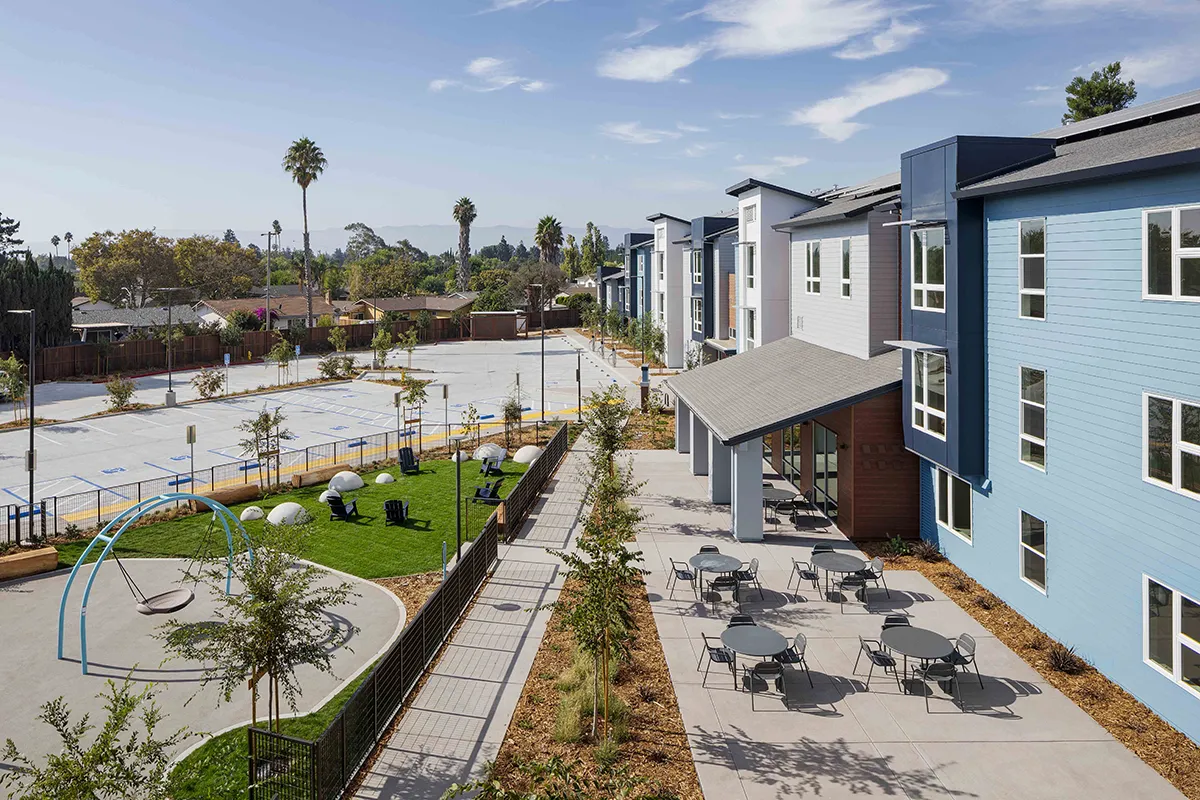
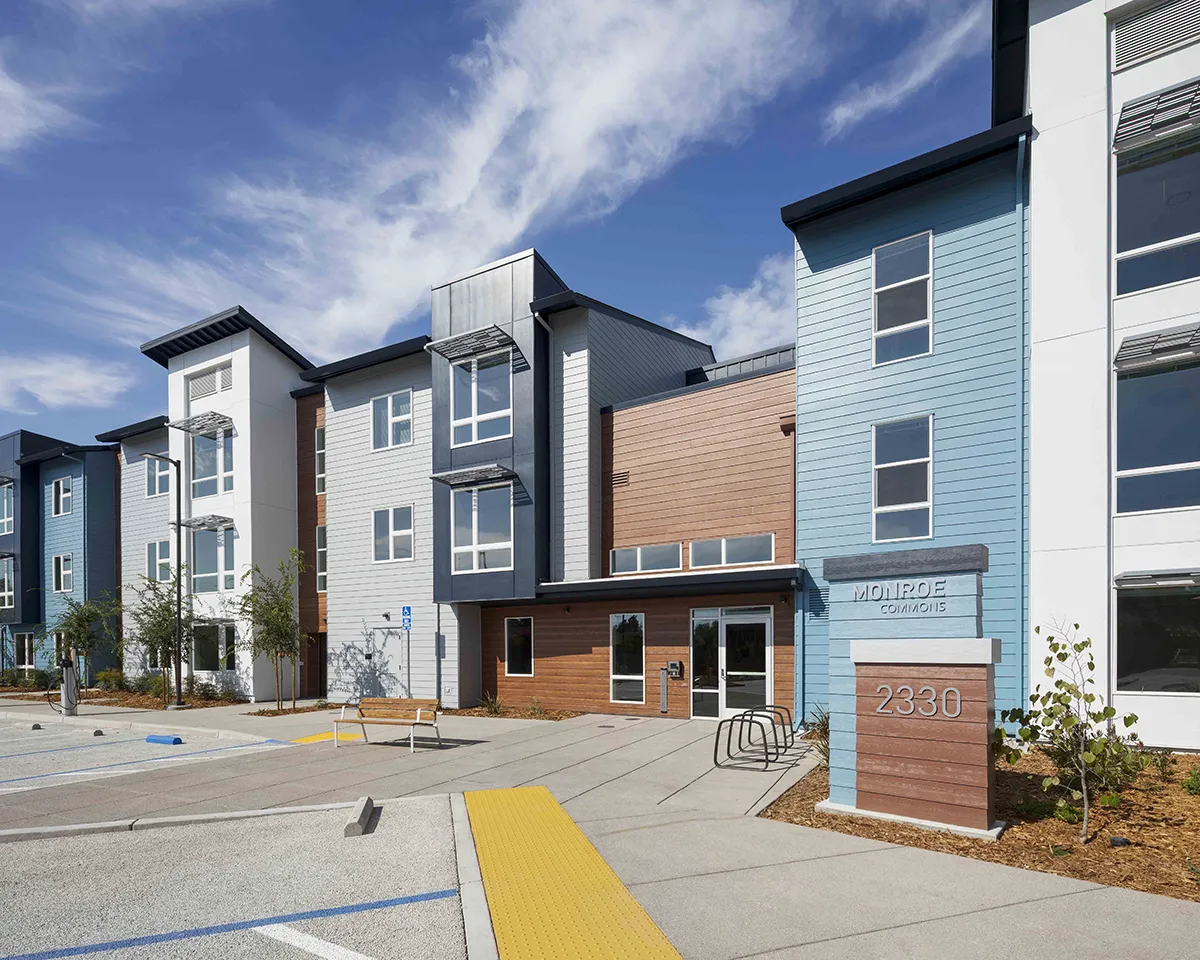
At Monroe Commons in Santa Clara, California, inclusive design shapes a residential landscape grounded in access, dignity and everyday connection to the outdoors. The 2.5-acre affordable housing development provides 65 units for households earning between 30 and 80 percent of area median income, with 25 percent of residences reserved for adults with intellectual or developmental disabilities.
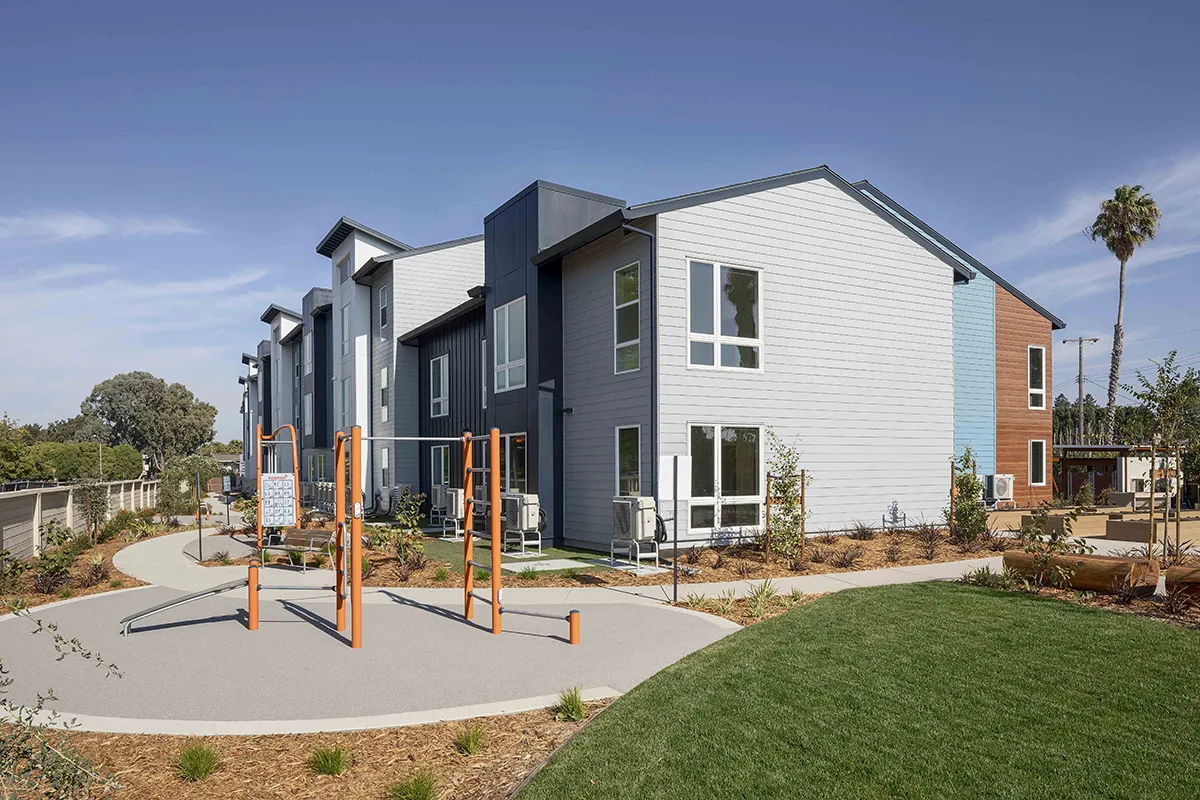
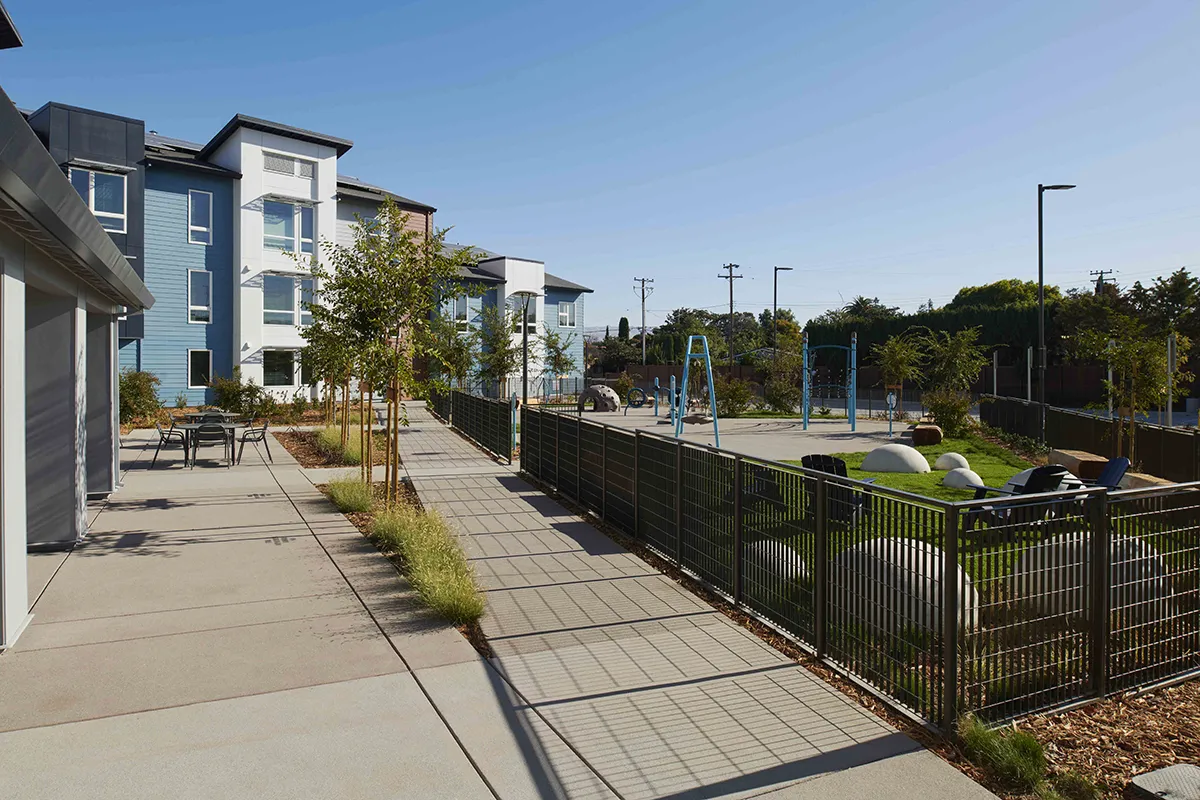
Designed by HKIT Architects with landscape architecture by PGAdesign, the project transforms an underutilized parcel adjacent to a busy parkway into a cohesive environment organized around outdoor life. More than 32,000 square feet of open space supports a wide range of daily activities, including play, exercise, gardening and social gathering, all connected through a network of courtyards and accessible pathways.
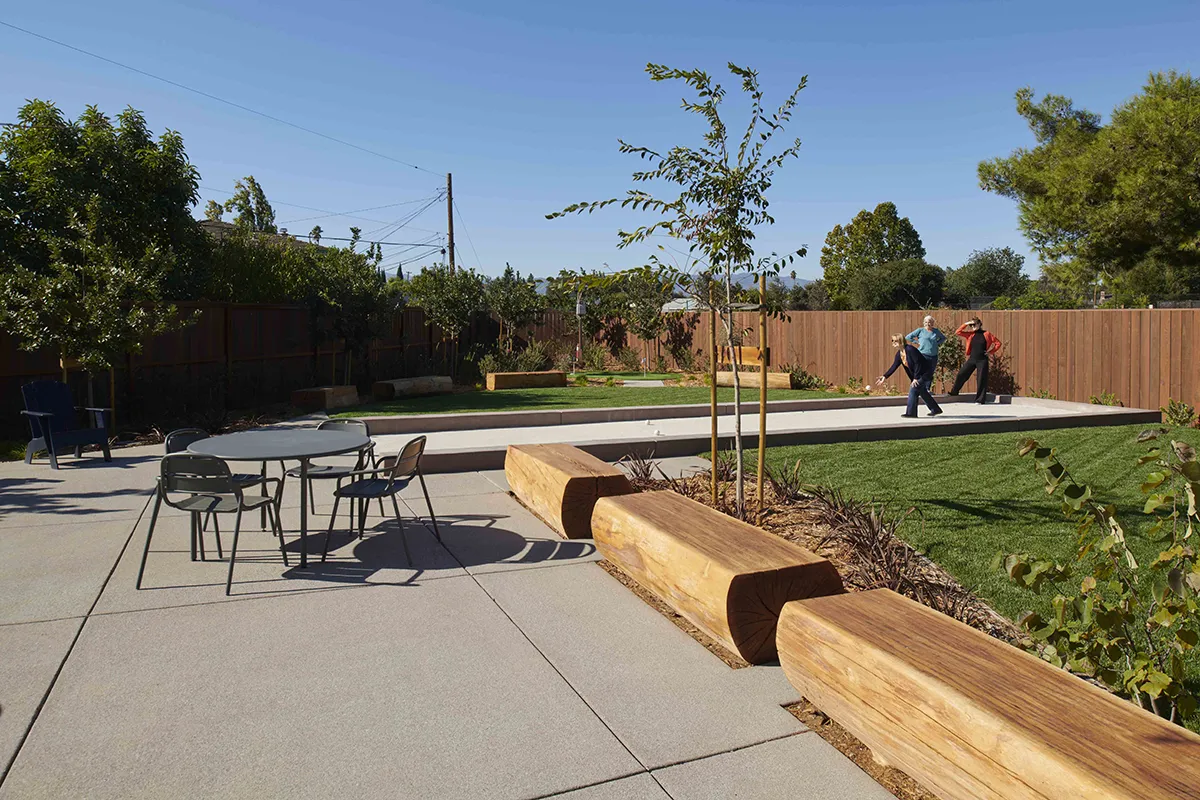
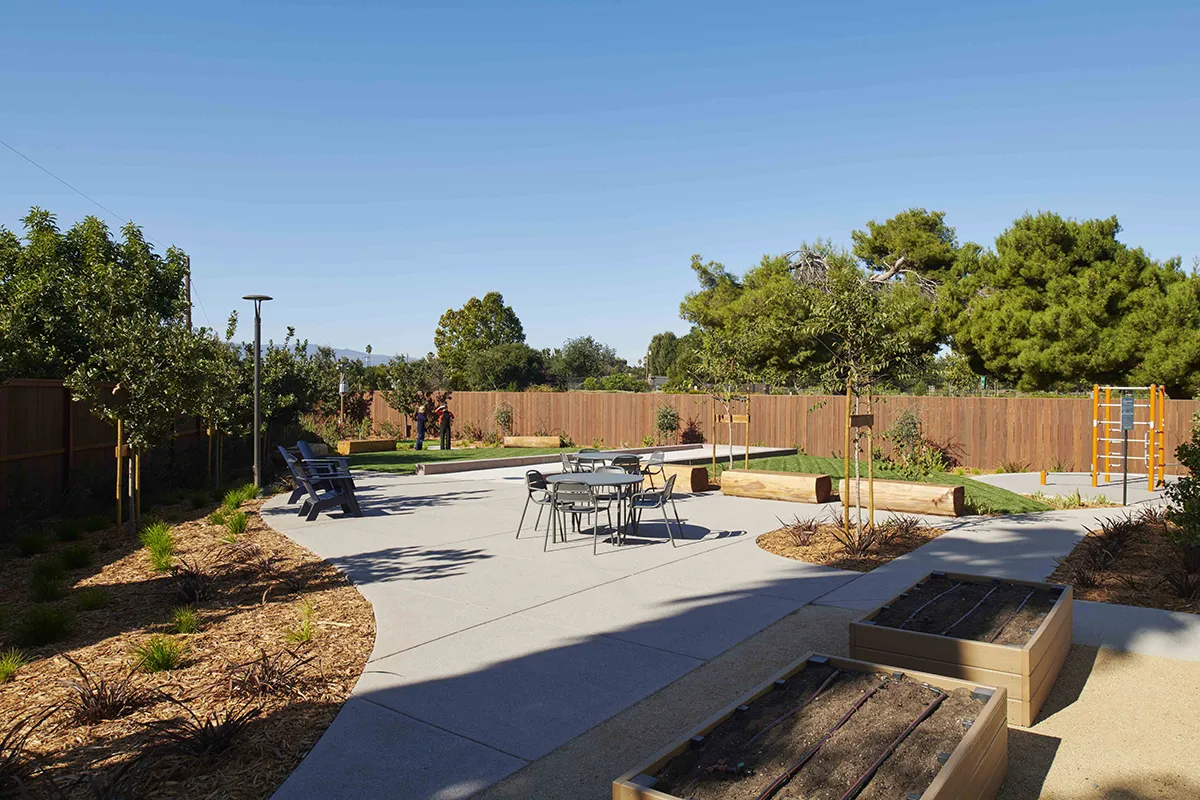
Accessibility is embedded in the landscape design. The relatively flat property allowed the design team to establish continuous, barrier-free circulation throughout the landscape. By elevating the site and parking areas—also to accommodate permeable paving and stormwater management—the team created a gracious entryway without ramps and ensured that the building and outdoor amenities share the same accessible grade.
For Karen Krolewski, principal landscape architect at PGAdesign, the project builds on a long-standing approach to creating inclusive environments. “Designing for support needs is really about designing for everyone,” she says. “It’s about recognizing that people participate in spaces in different ways and making sure the environment supports those choices.”
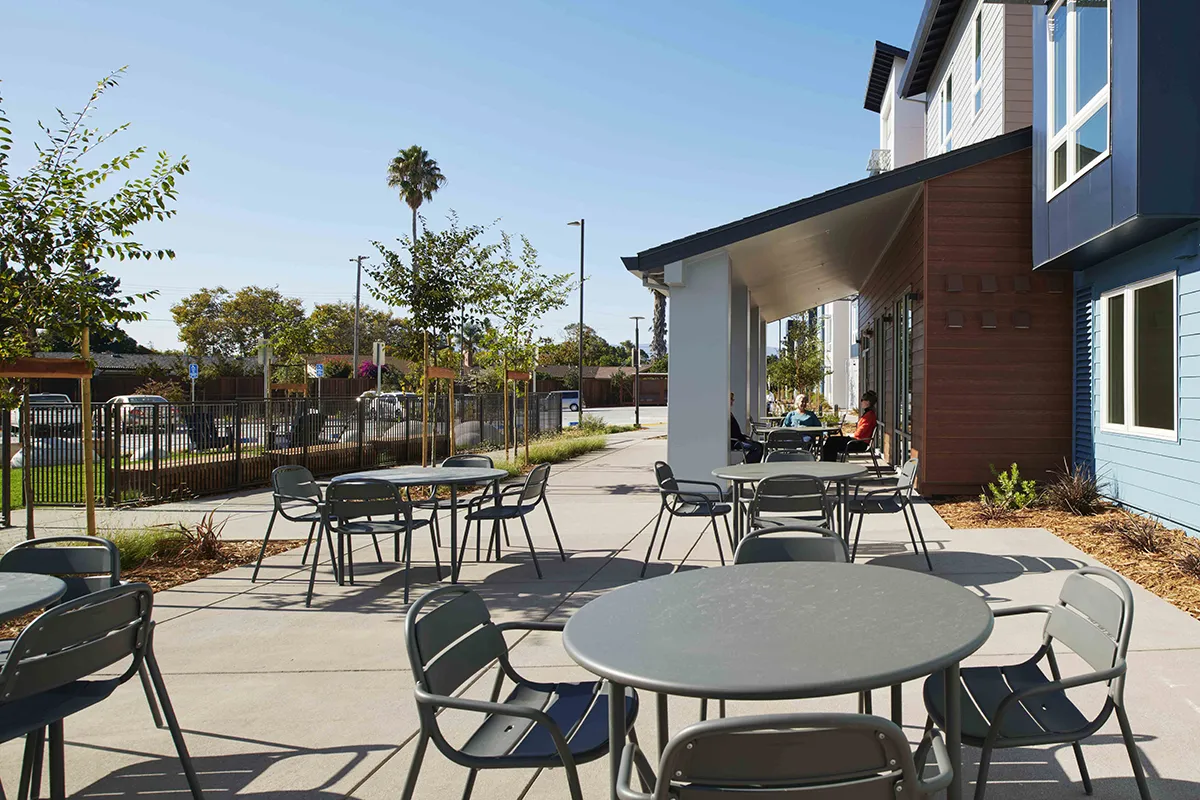
That philosophy extends to the selection and configuration of site furnishings, which play a central role in how the landscape is experienced day to day. A coordinated palette from Landscape Forms—including 21 Chairs, Catena tables, NeoLiviano benches and Ride bike racks—supports a balance of durability, comfort and adaptability across the site.
Catena tables were specified in ADA-compliant configurations to ensure full wheelchair access without introducing visual distinction between accessible and standard seating. Their clean, minimal geometry allows them to integrate seamlessly across dining and social areas, reinforcing a cohesive design language. Complementing them, 21 Chairs—defined by their wider-than-standard 21” seat—offer a more generous and accommodating seating experience, supporting a range of body types and postures while maintaining a refined, architectural expression.
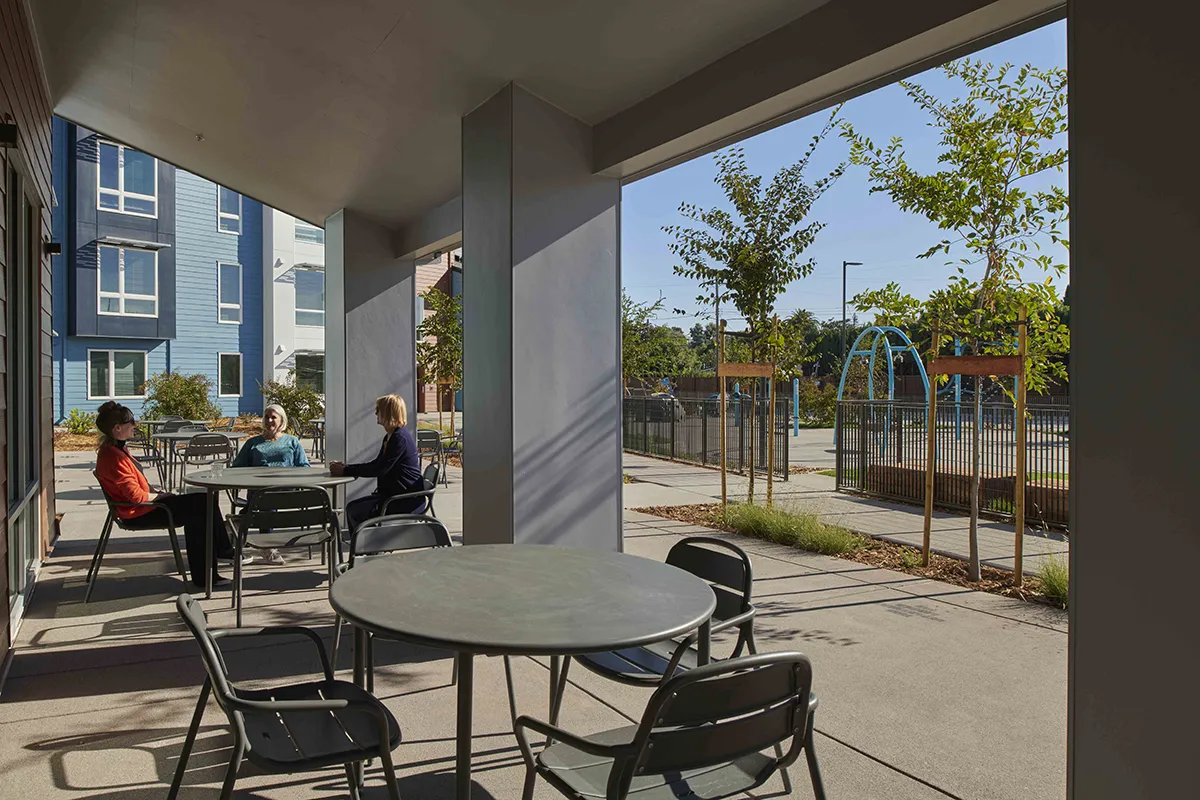
NeoLiviano benches introduce moments of rest throughout circulation paths and gathering spaces. Meanwhile, the inclusion of movable 21 Chairs enables residents to shape their own social environments over time, shifting between sun and shade or forming group gathering settings as desired. Ride bike racks further support everyday use, encouraging active transportation while integrating neatly into the site.
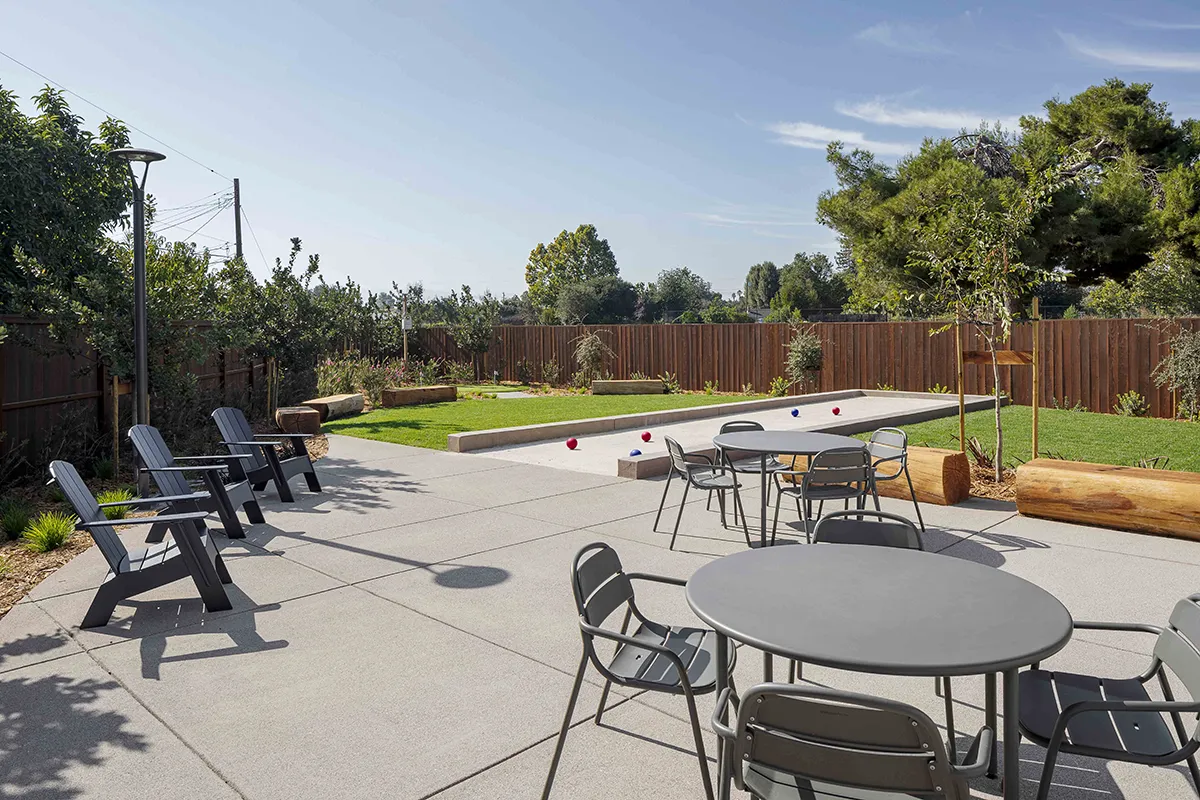
For Paul McElwee, principal at HKIT Architects, the landscape is integral to the quality of daily life. “The open space becomes part of the program, shaped by the diversity of the community,” he notes.
At Monroe Commons, architecture, landscape and site furnishings all work together to create an environment that is both resilient and responsive. The result is a community where outdoor space is not just an amenity, but a shared and adaptable foundation for everyday life.
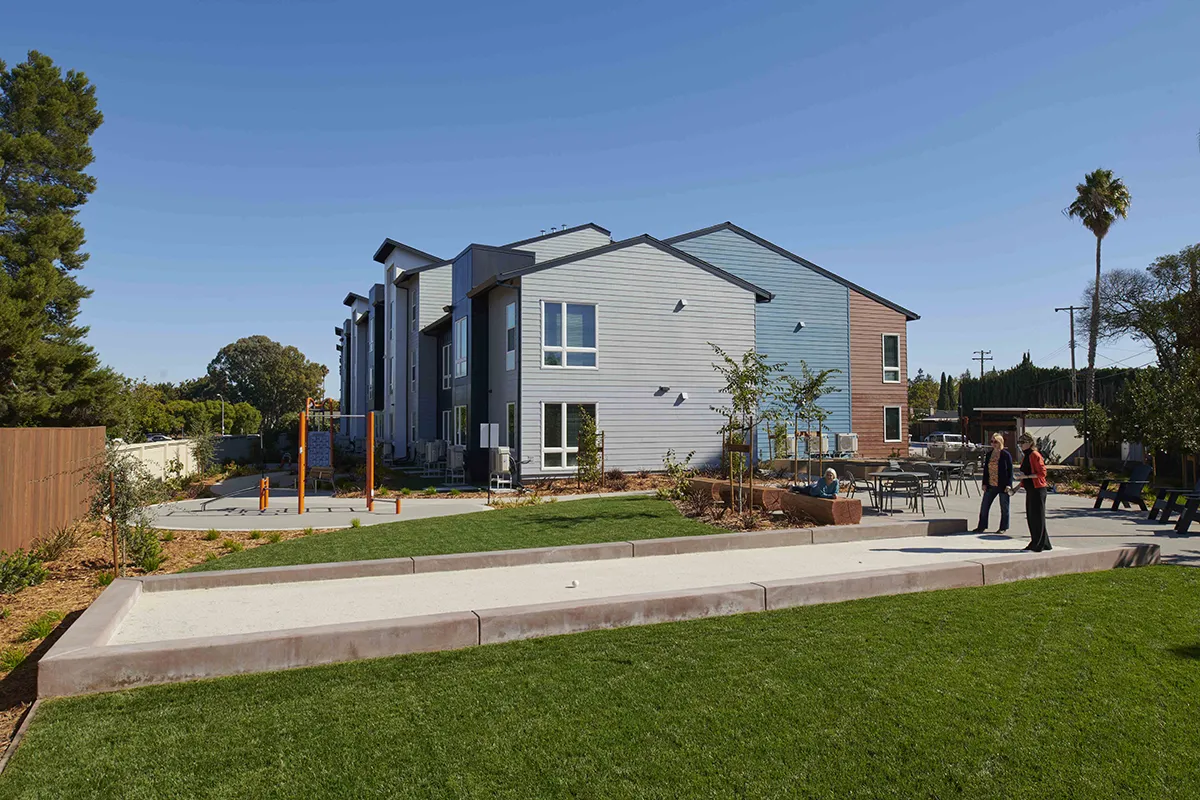
Monroe Commons
Location: Santa Clara, California, USA
Landscape Architect: PGAdesign
Architect: HKIT Architects
Photography: Courtesy of Landscape Forms
Landscape Forms is a proud WLA Sponsor