
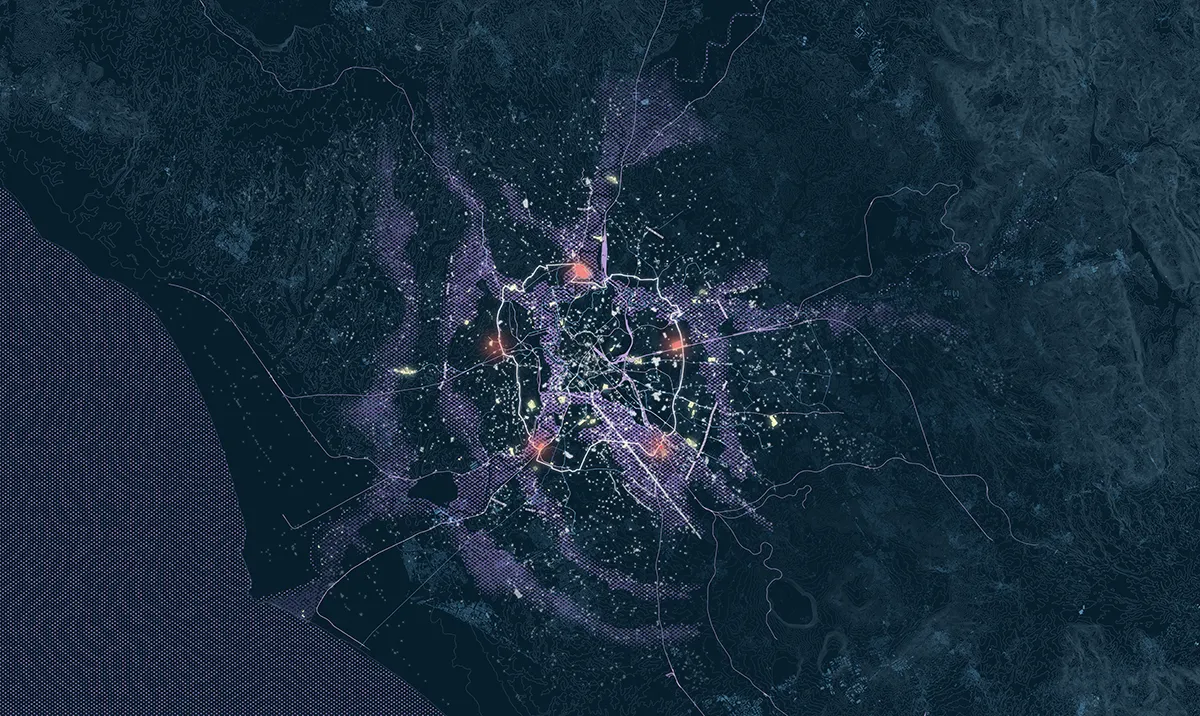
Roma Continua is a metropolitan vision for Rome, developed for the Vision for Rome competition organised by the Roma REgeneration Foundation. The proposal was selected as the winning entry from six international finalists. Developed by IT’S, OMA, OKRA landscape architects, NET Engineering, and a broad interdisciplinary team, it offers a long-term framework for Rome’s evolution — one rooted in the city’s existing landscape, infrastructure, and identity rather than expansion or erasure.
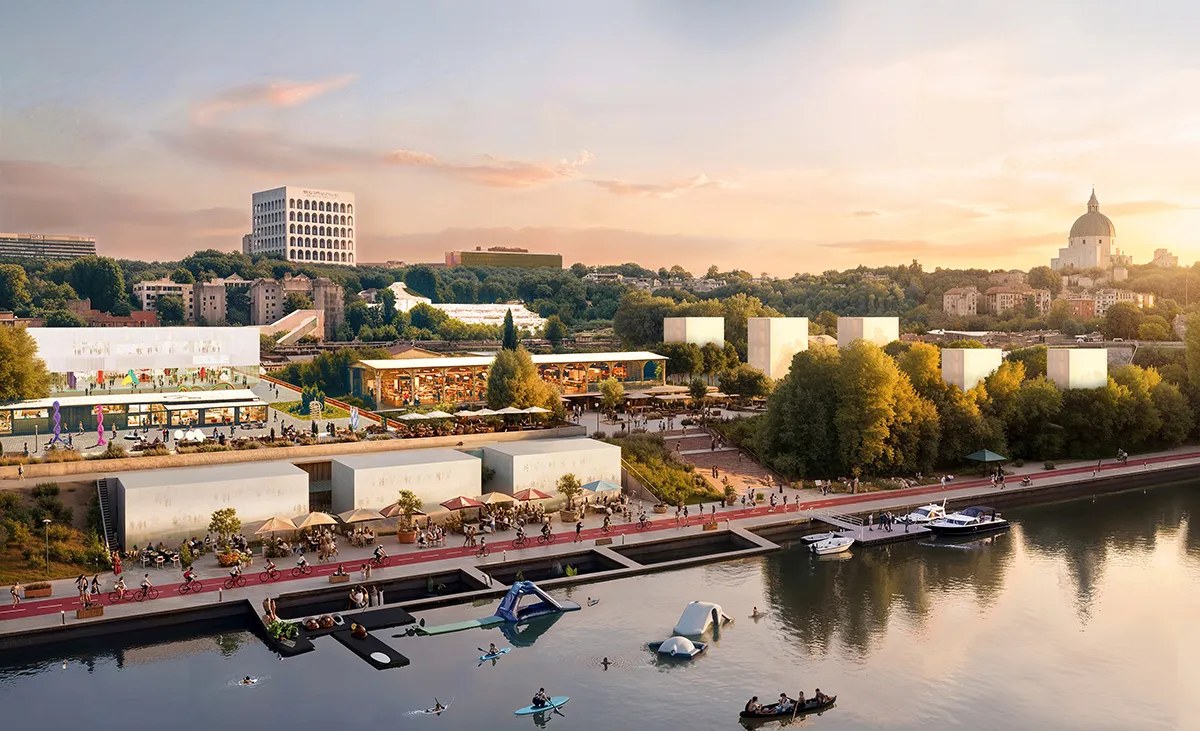
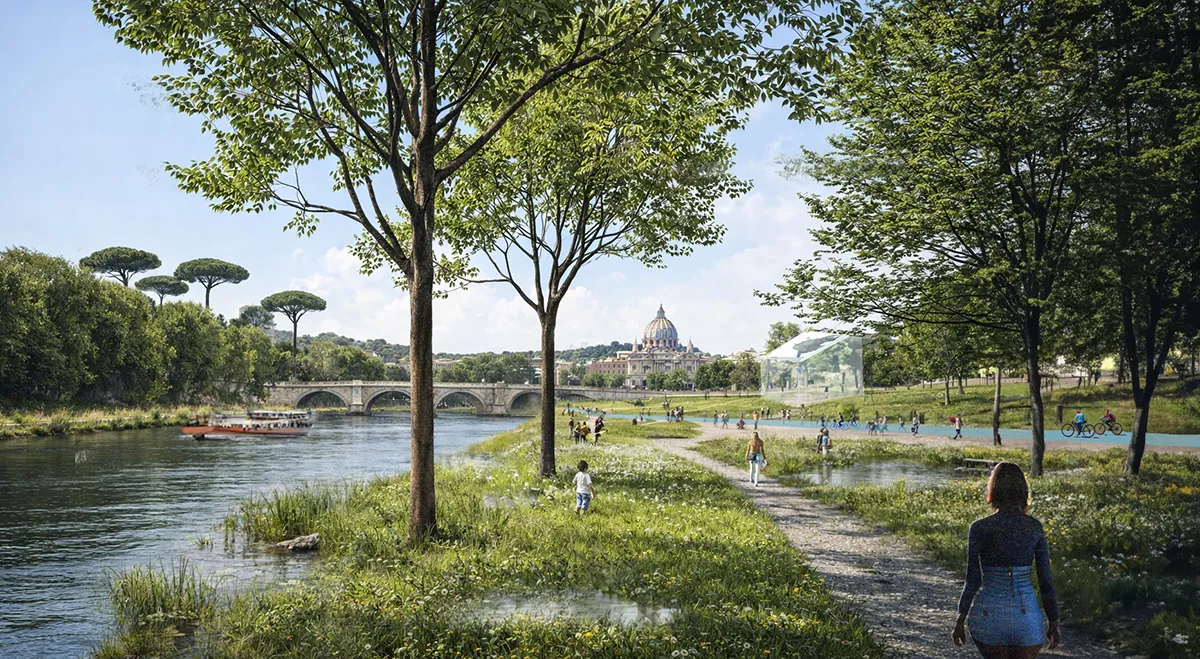
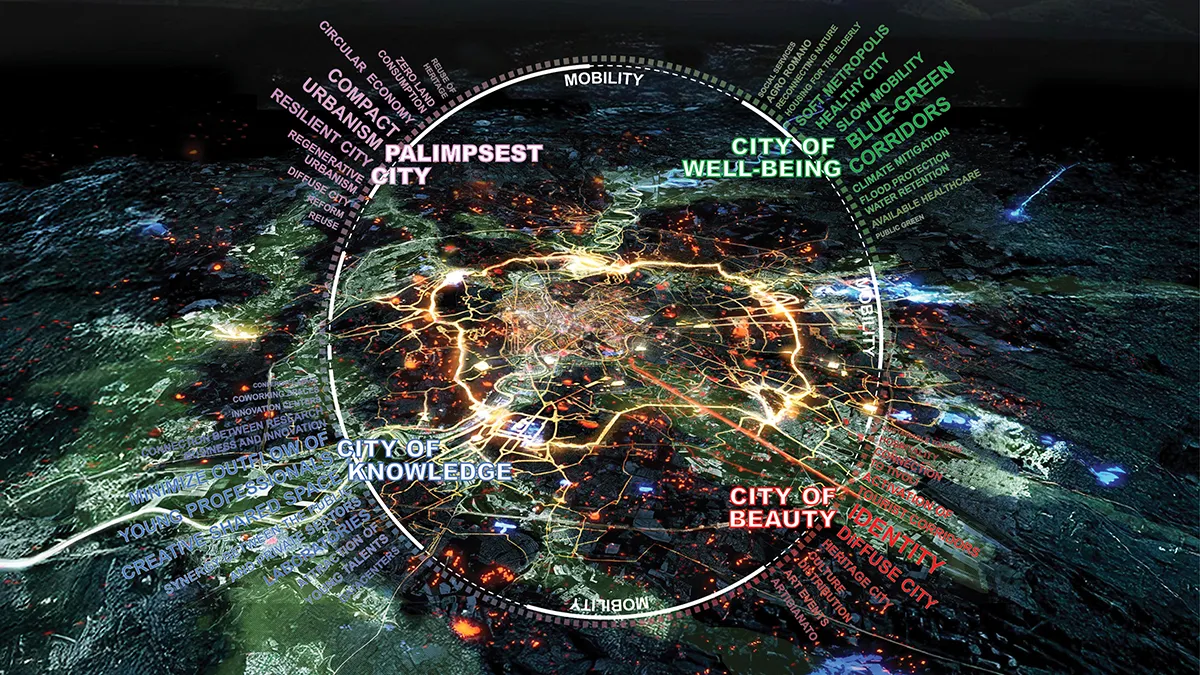
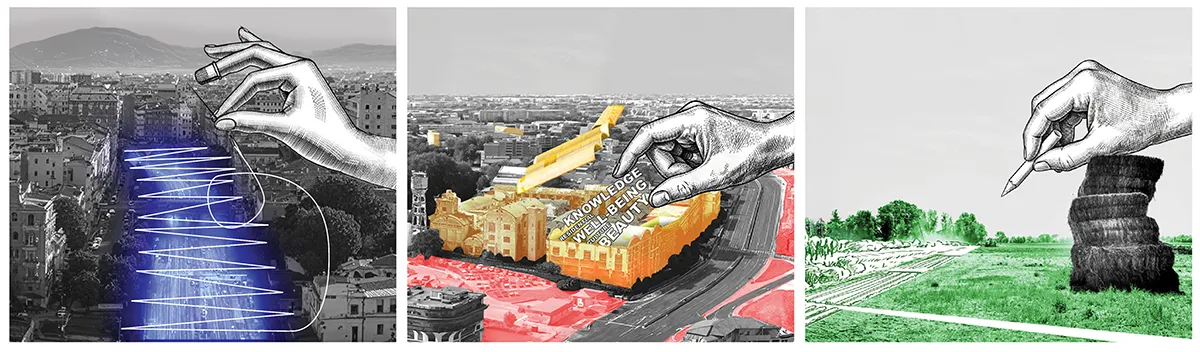
Roma Continua views Rome as a living ecosystem and establishes conditions for adaptation and reinvention over time. It builds on the city’s essence and existing strengths, guided by four core ideas: well-being, beauty, knowledge, and reform and extension. These ideas are translated into targeted interventions across scales, including green corridors, mobility hubs, and new programmes integrating housing and adaptive reuse.
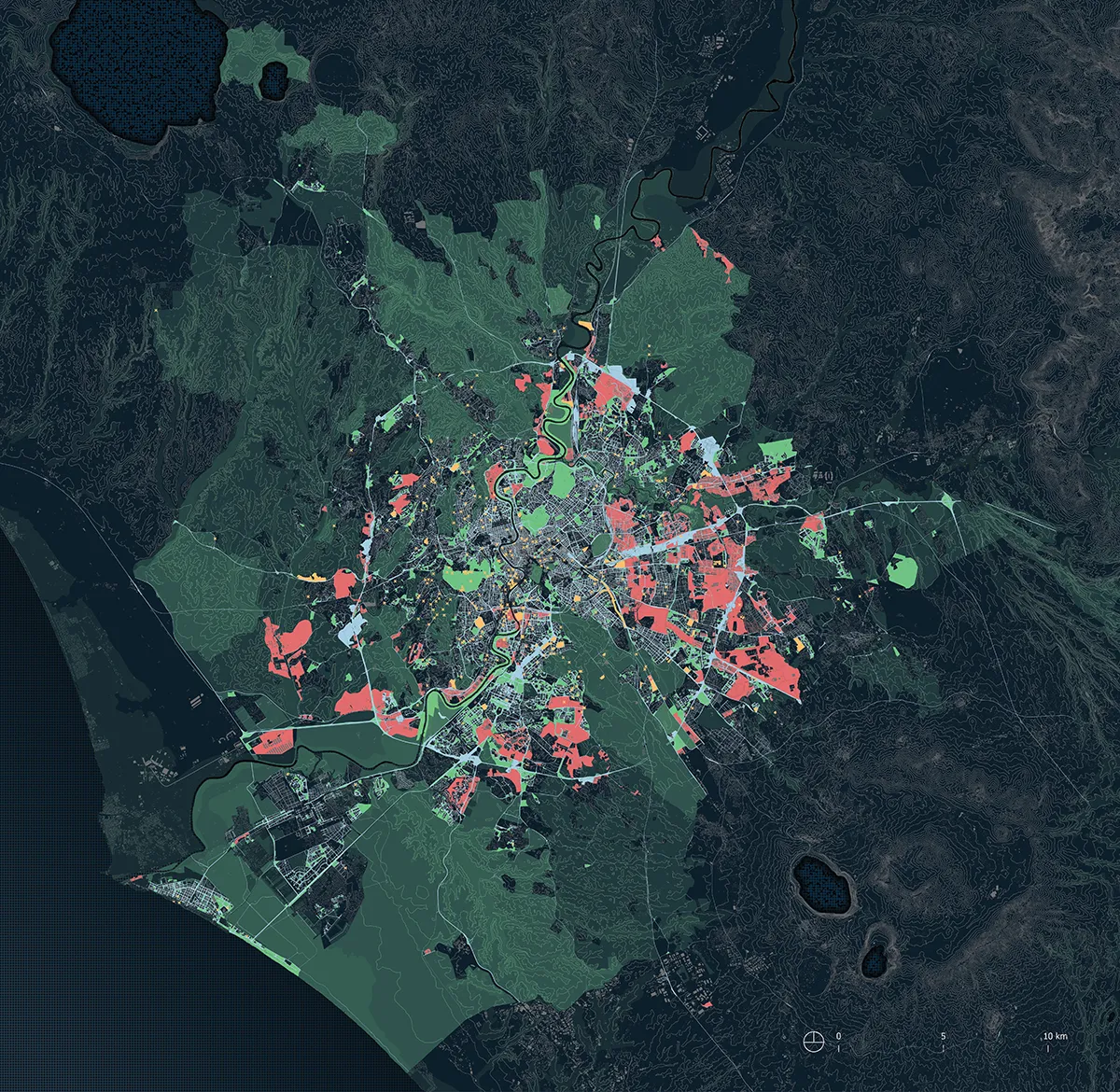
Rome as a landscape metropolis
Our starting point was a fundamental reframing: Rome’s landscape is not a backdrop to the city but its oldest and most resilient structure. Long before the built city took shape, rivers, valleys, fertile plains, and ecological systems defined Rome’s geography, and they continue to sustain it today. In Roma Continua, we treat this inheritance as living infrastructure: a network that coordinates water, soil, vegetation, mobility, and everyday life.
Five corridors, one metropolitan system
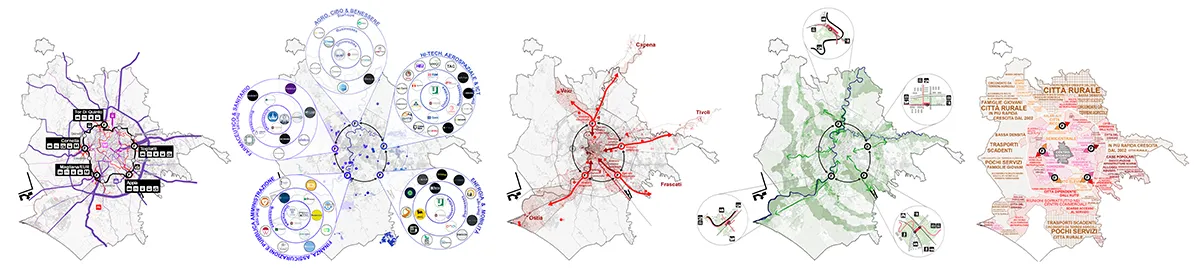
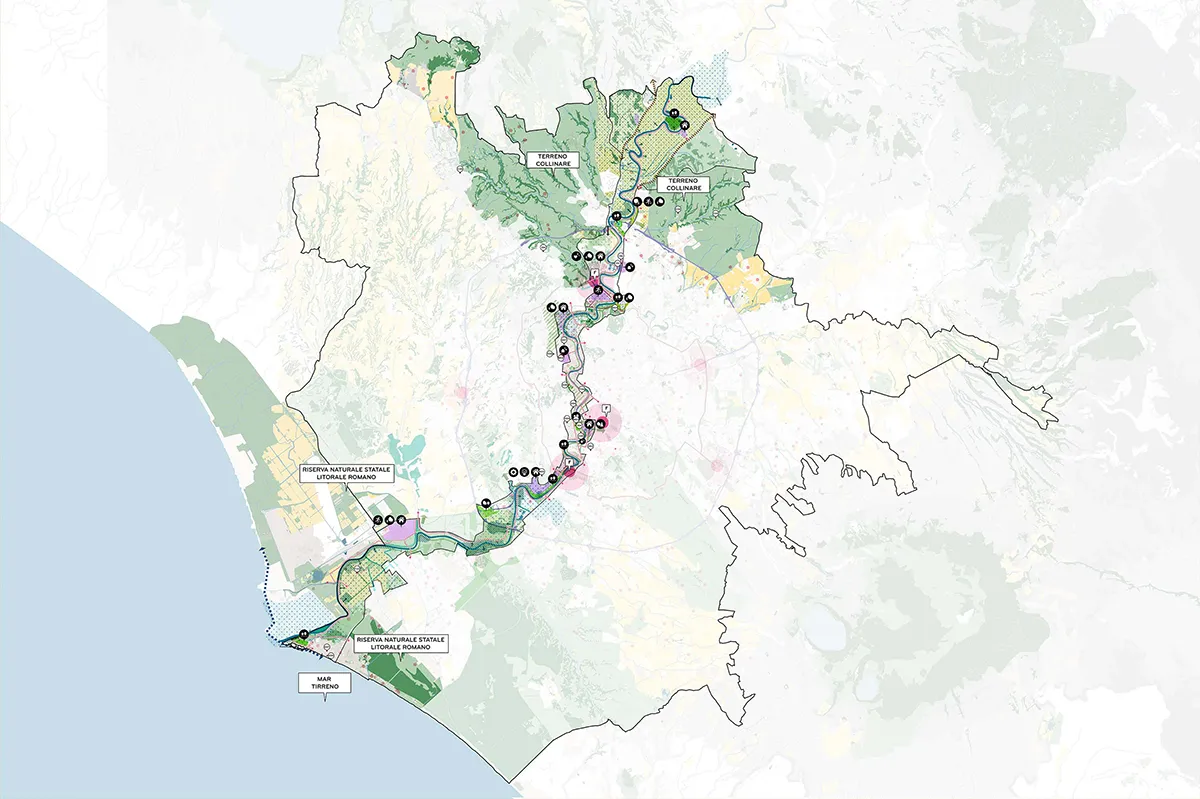
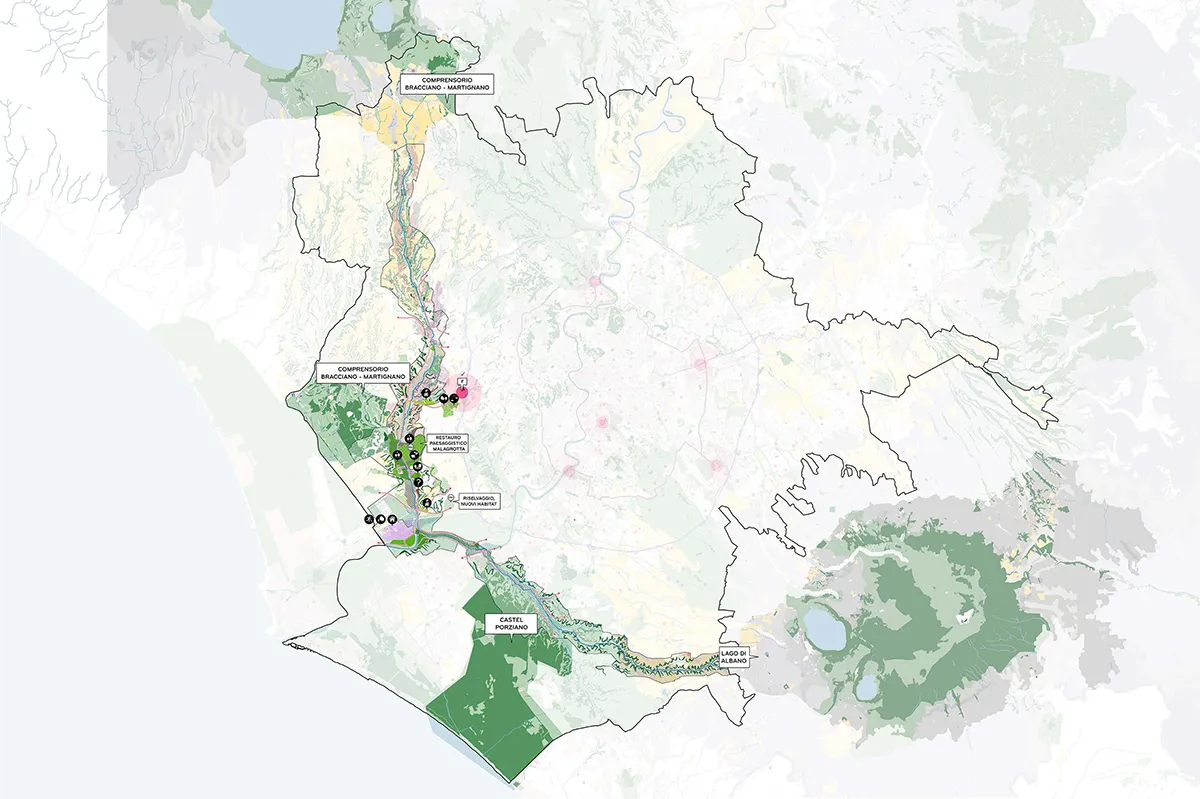
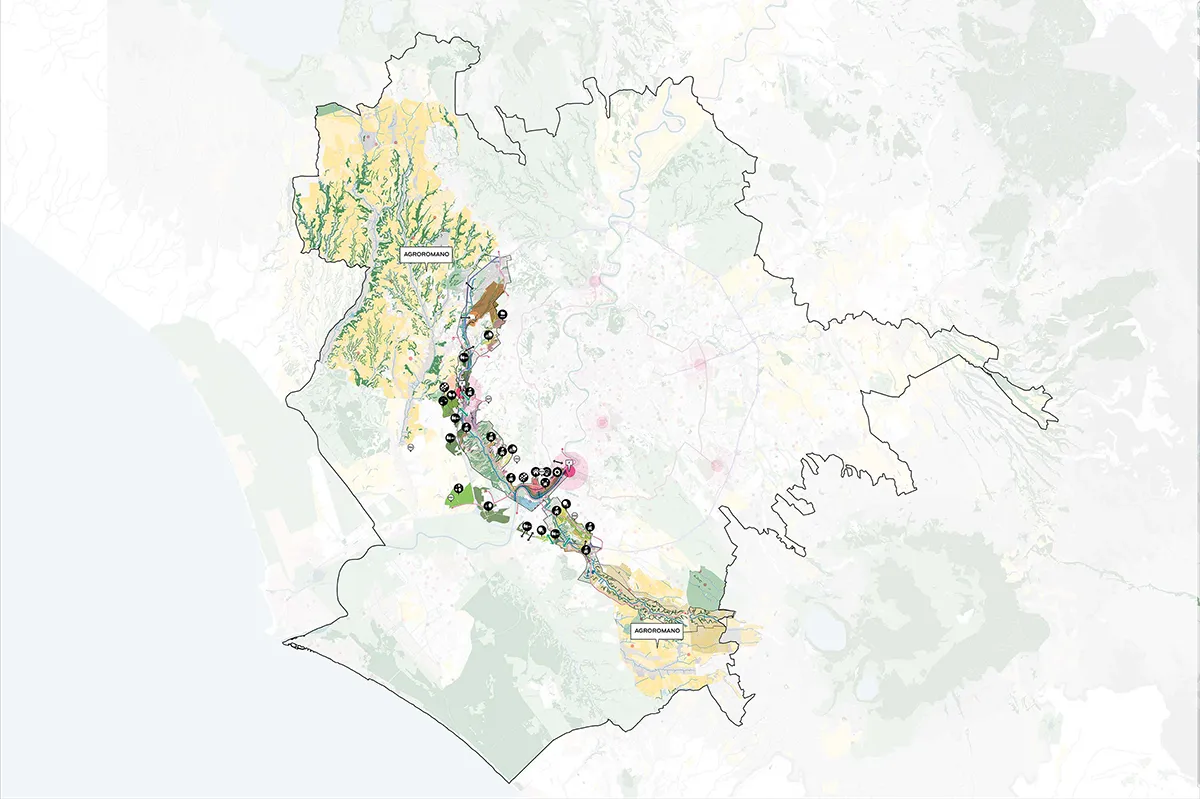
We structured this vision around five landscape corridors, each with a distinct ecological character and role in the metropolitan system. Together they span the full range of Rome’s geography: from a lake-to-lake environmental trace that strengthens ecological continuity at a regional scale, to productive fertile valleys that reinterpret Rome’s agricultural heritage, a renaturalised wild river corridor along the Aniene, and landscape wedges that carry nature, shade, and biodiversity deep into the city’s densest neighbourhoods. These are not lists of interventions but strategic frameworks, devices that orient priorities and investment over time.
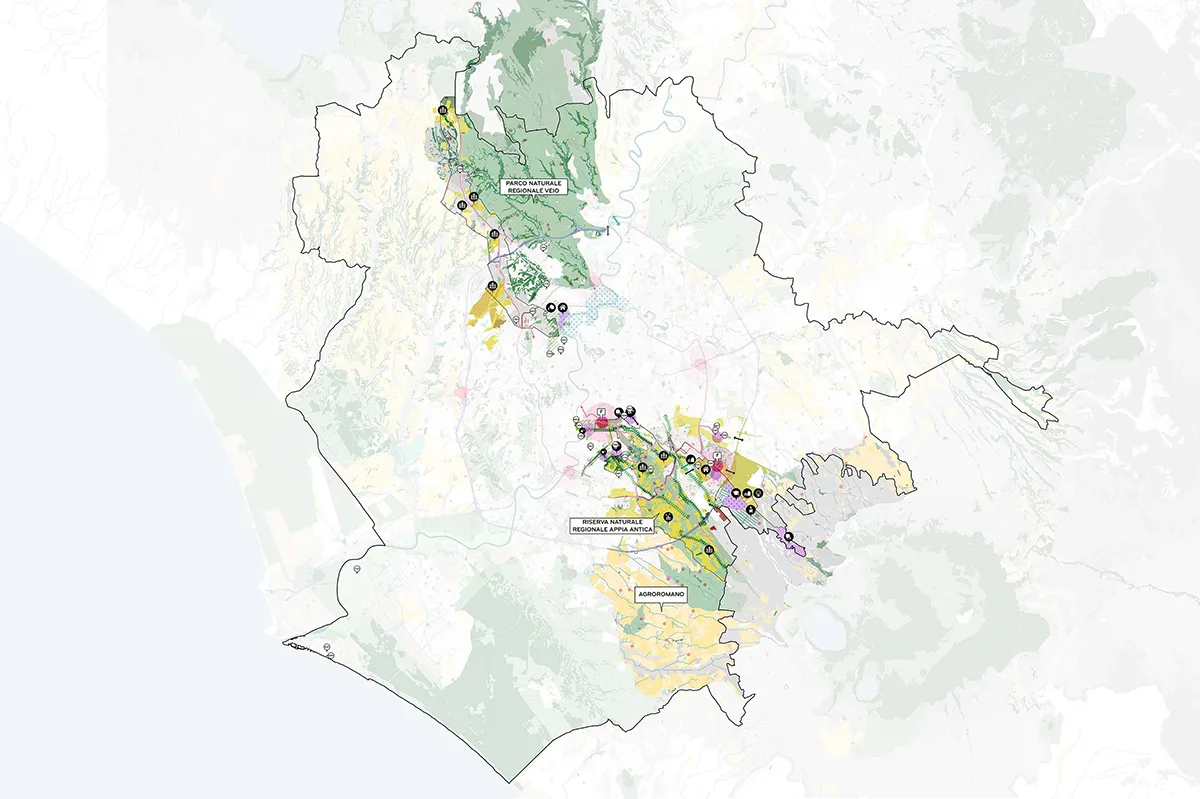
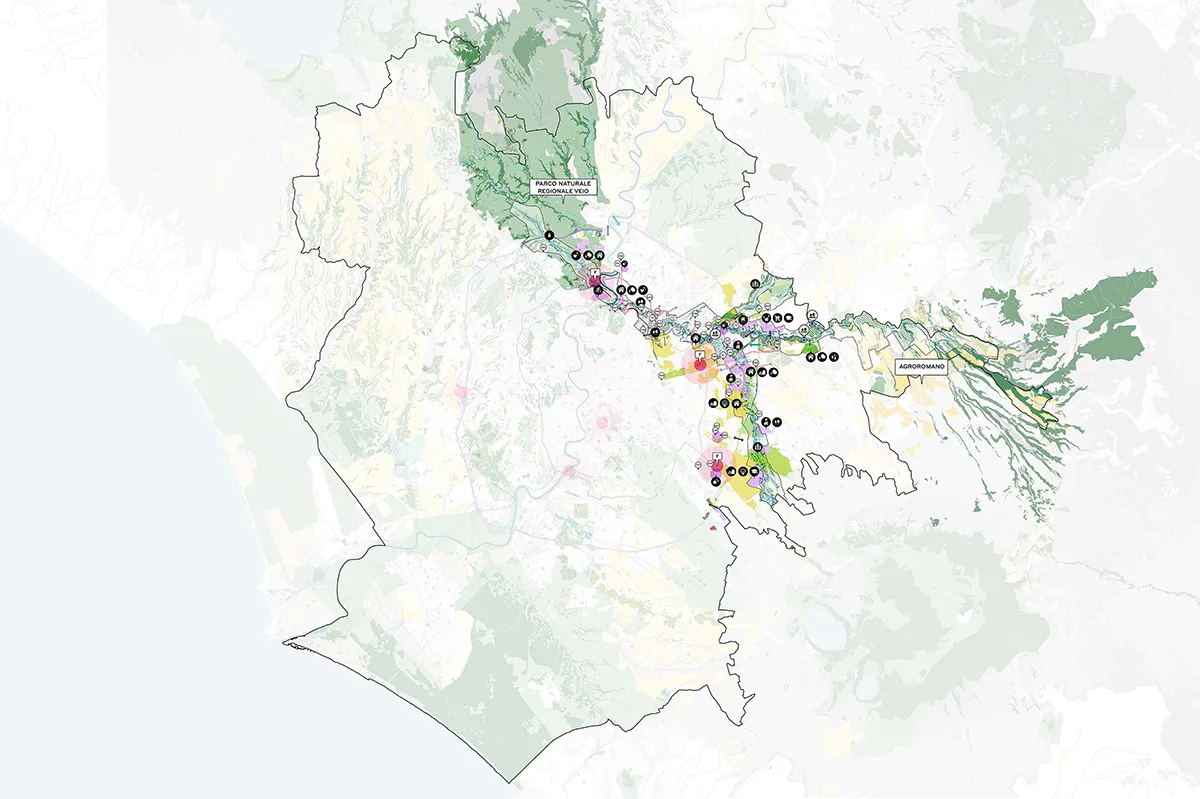
Building on what is there
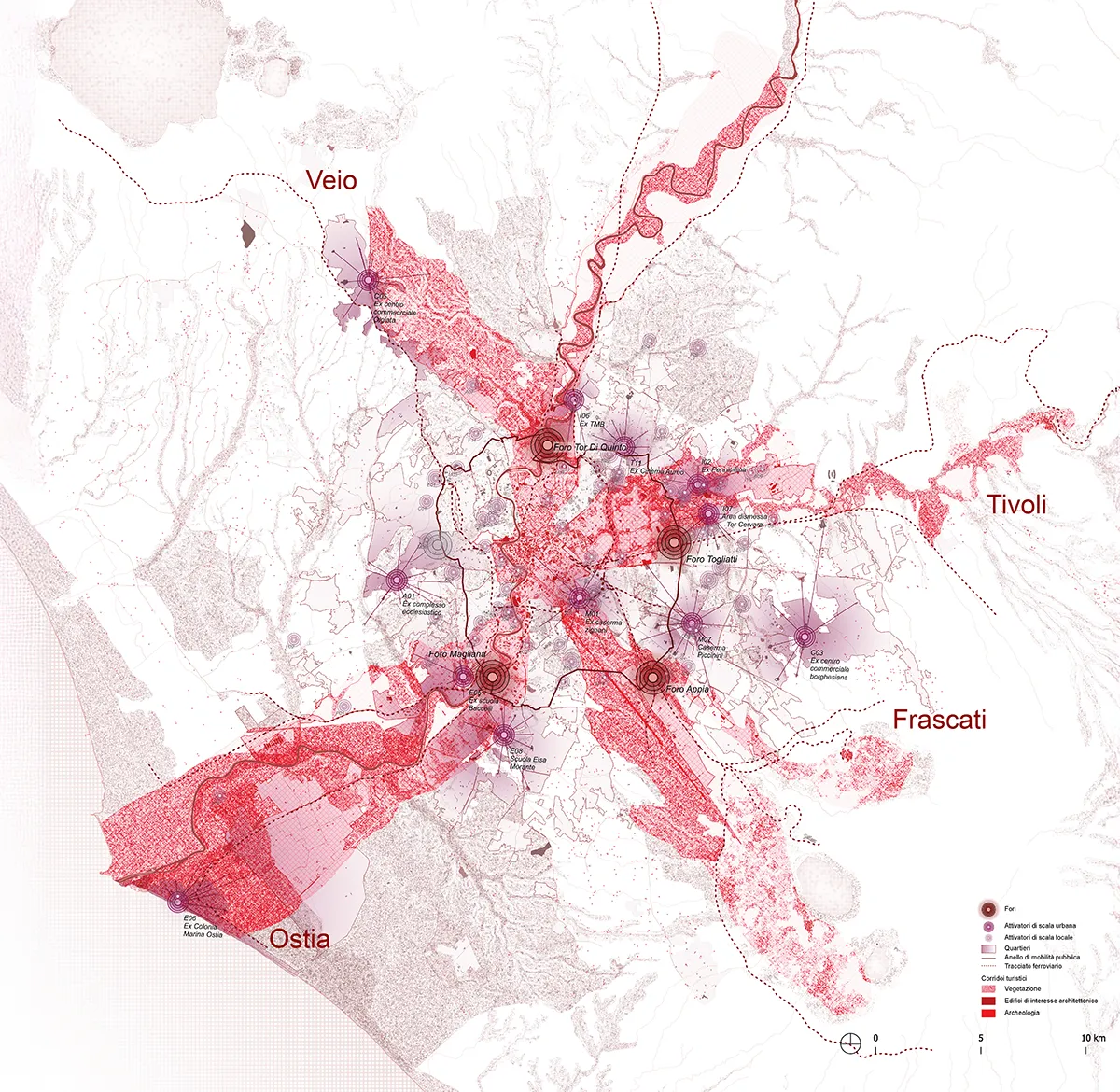
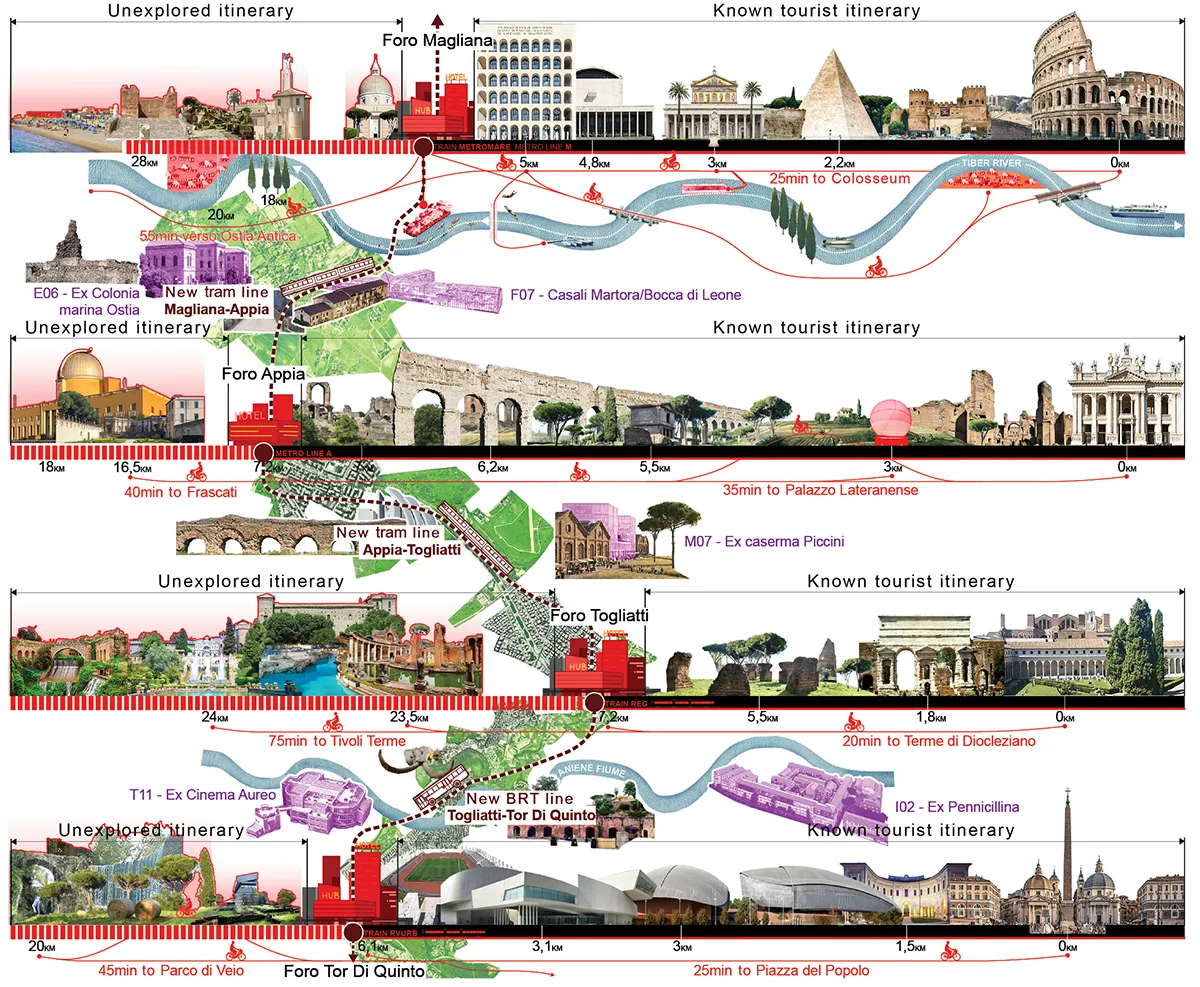
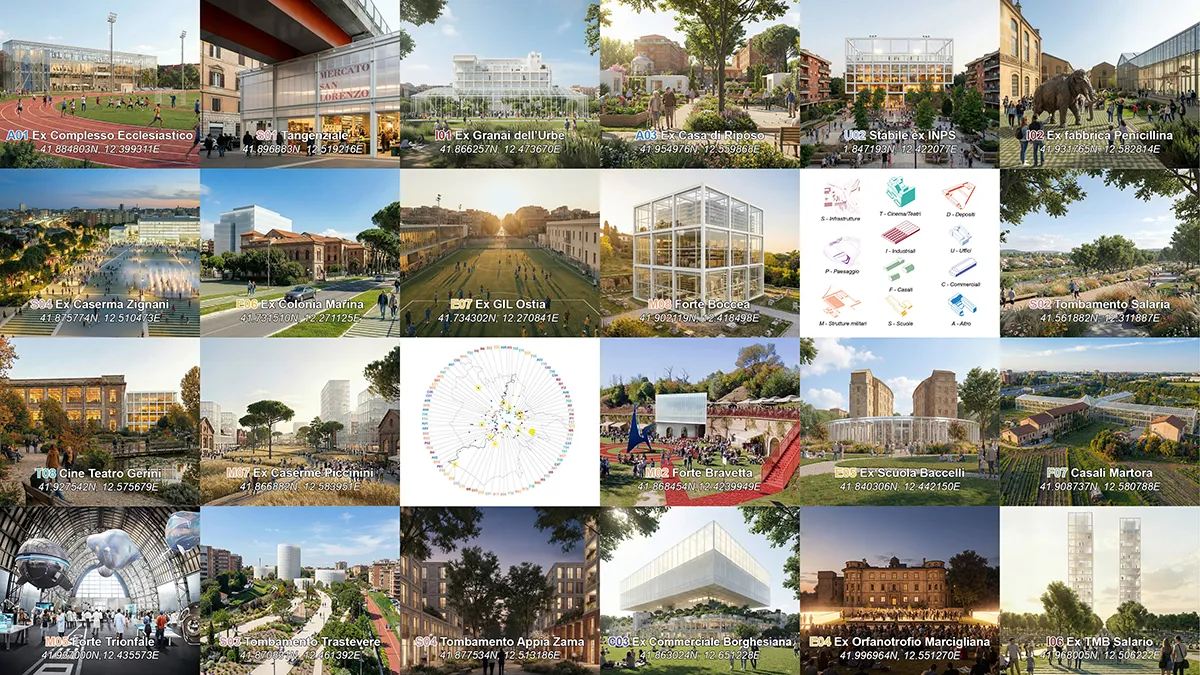
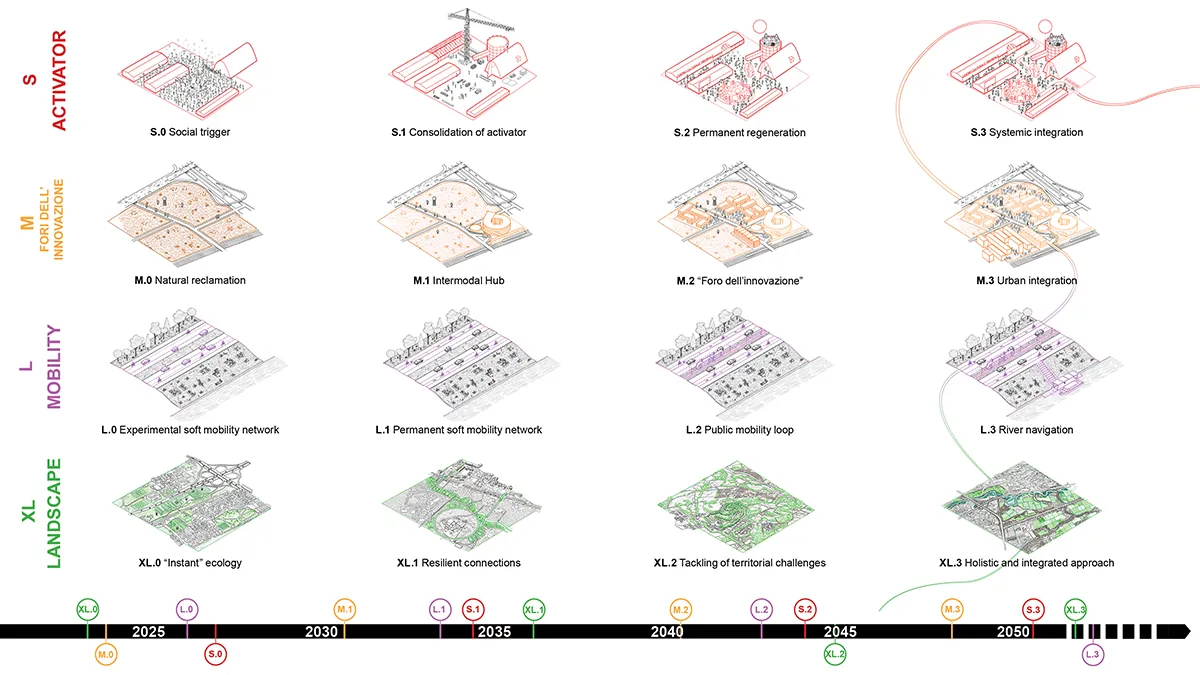
This is not growth through land consumption. We work with what already exists: interstitial areas, periurban farmland, and underused margins reread as reserves of value rather than leftovers. Landscape becomes civic space, a common good that distributes quality, nature, and opportunity more equitably across the whole metropolitan region. Along these corridors, phased and progressive actions including renaturalisation, shading, slow mobility routes, and collective spaces build a healthier and more legible urban metabolism, maintaining the connection between centre, periphery, and territory.
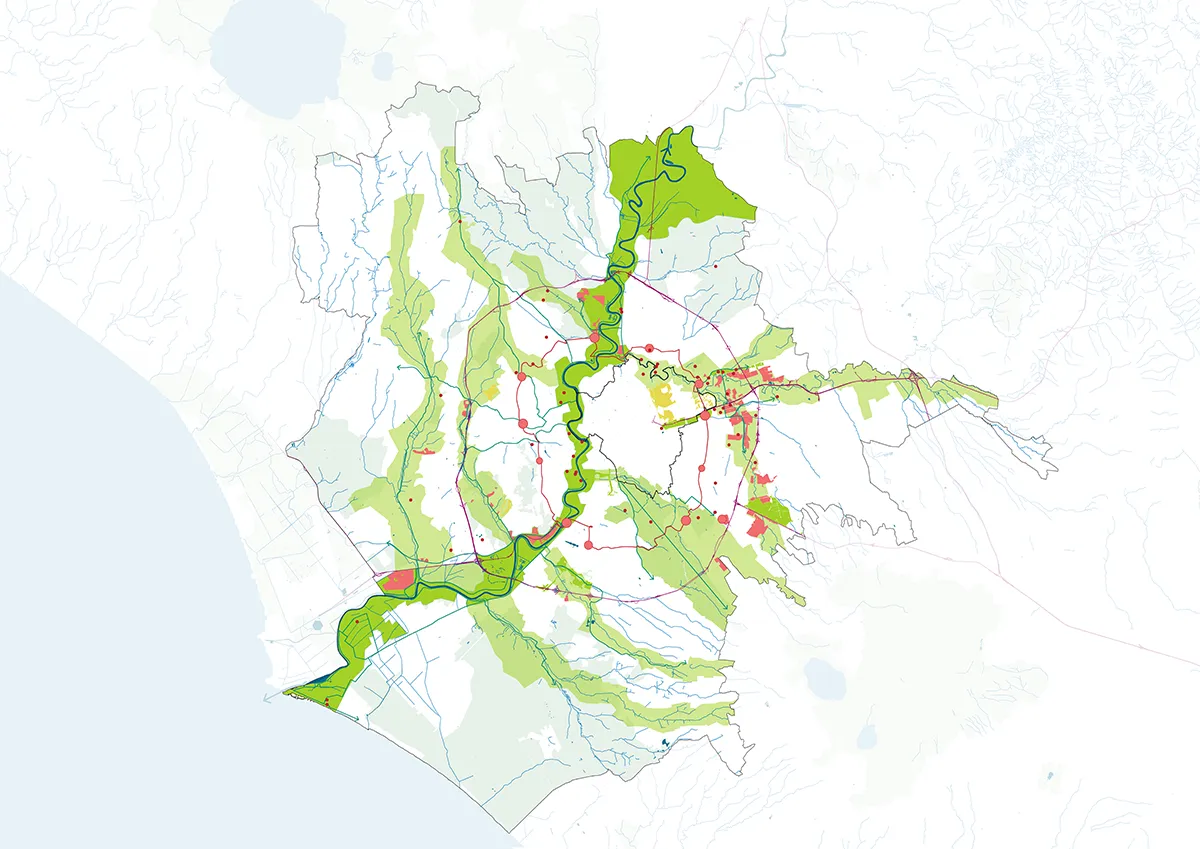
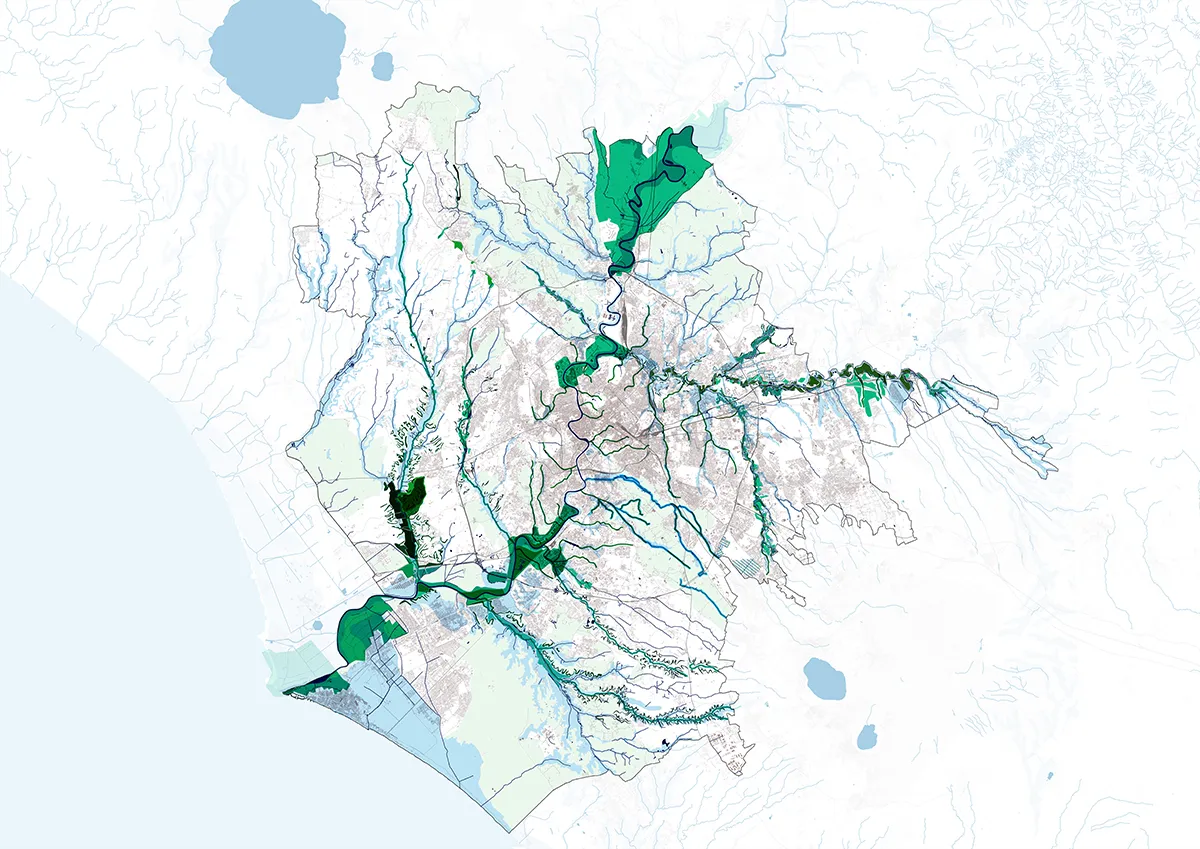
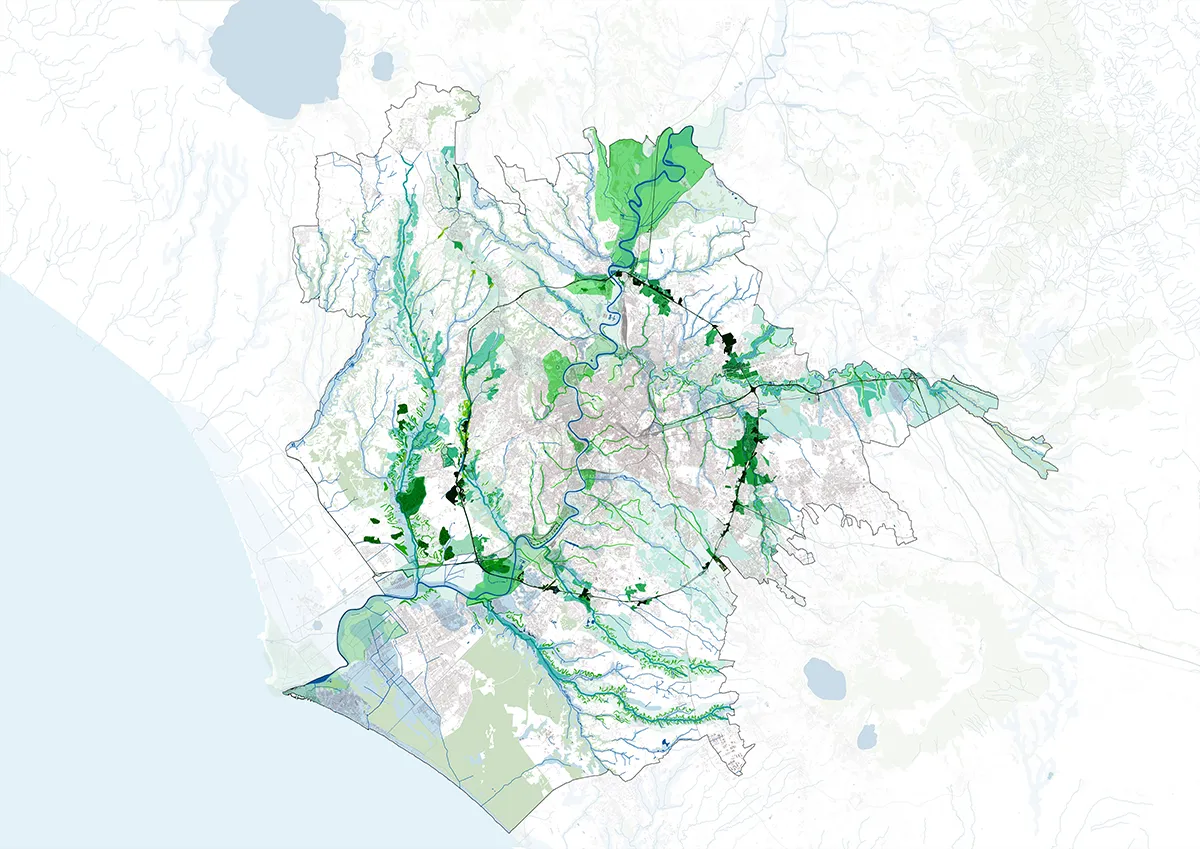
“Roma Continua frames Rome as a continuous landscape in transformation—an approach shaped through international collaboration and driven by our commitment to climate adaptation across diverse contexts.”
Lourdes Barrios Ayala, senior landscape architect at OKRA
Smart mobility hubs as catalysts for change
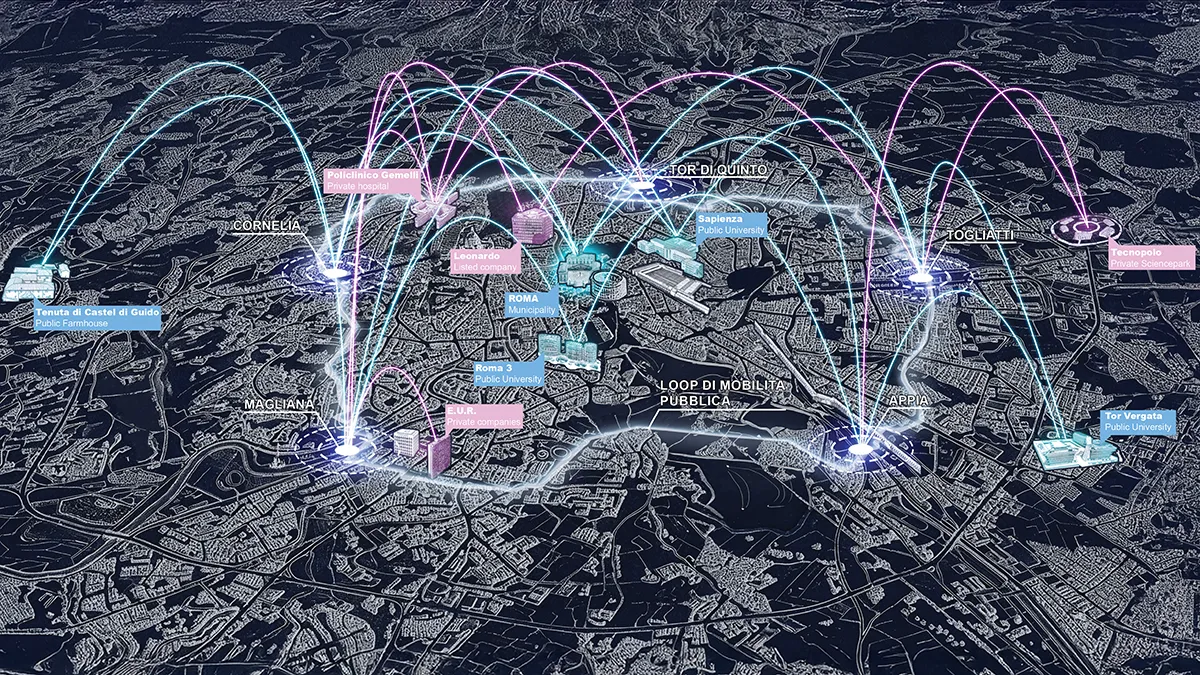
Anchored within the five landscape corridors, a system of five smart mobility hubs forms the connective tissue between Rome’s renewed landscape infrastructure and its urban programmes. Each hub is conceived as a forum of innovation: a place where transport, housing, knowledge, and public amenity converge. By introducing new programme at these strategic locations, the hubs act as catalysts, allowing change to radiate outward into the surrounding city fabric. Together, landscape and programme form the engine of Roma Continua’s long-term urban strategy.
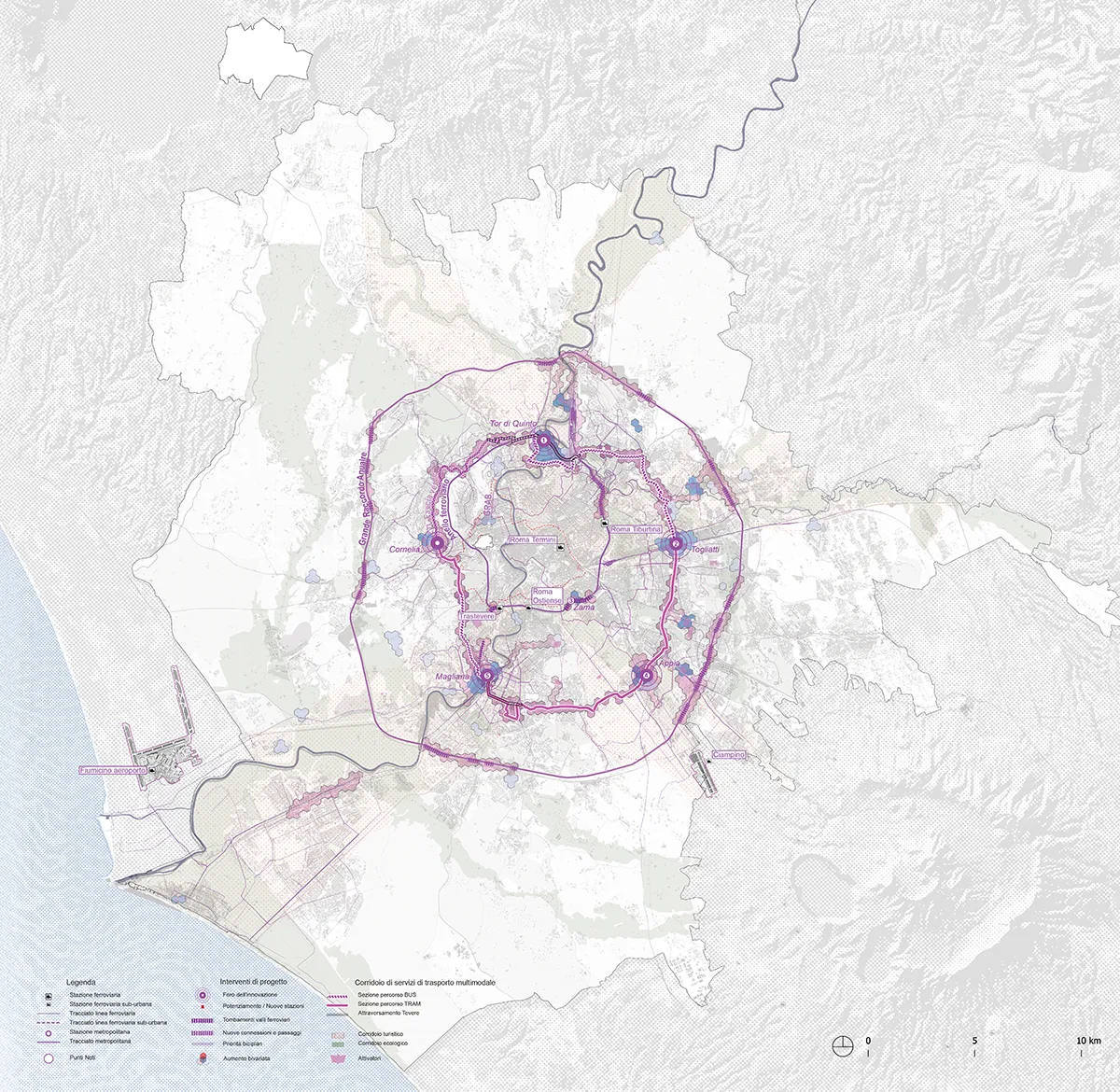
Conceived for phased implementation
From precise urban acupuncture to city-wide mobility and landscape transformation – Roma Continua shifts growth away from expansion toward recalibration. By realigning infrastructure, nature, and reuse, it establishes the conditions through which Rome can continue to evolve on its own terms in the coming 25 years. An early start is both possible and imperative.
Roma Continua – A Vision for Rome
Location: Rome, Italy
Client: ROMA REgeneration
COLLABORATORS
Collaborating Architects: IT’S, LGSMA
Landscape Architect: OKRA landscape architects
Mobility: NET Engineering
Impact Analysis: Open Impact
Environmental Sustainability: Artelia
Communication and Public Participation: Artibune
Cultural Management: Costanza Profumo
Anthropology: Fiamma Montezemolo
Agri-food Economics: Davide Marino
Urban Plan Consultant: Elena Granata
Image Credit: © IT’S, OMA, OKRA, NET Engineering, and LGSMA