
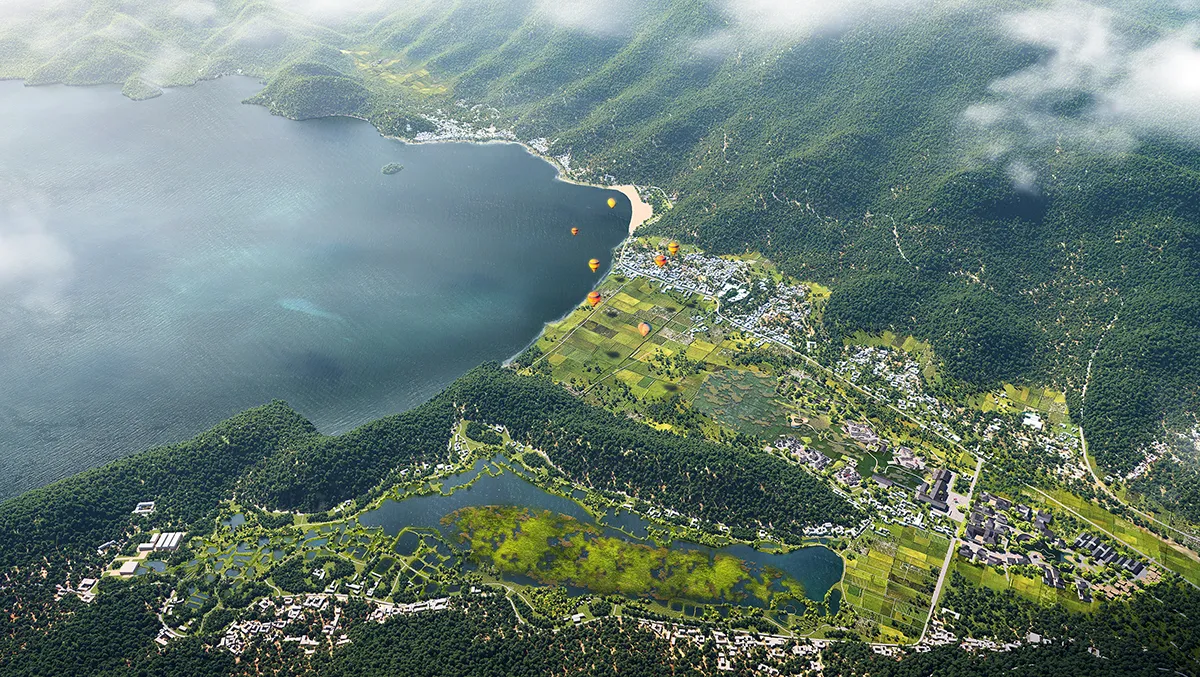
The Lugu Lake Initiative is a prospective cultural landscape rehabilitation program that integrates ecological protection, cultural inheritance and community development. Built around the millennia-old Moso matrilineal civilization, it aims to transform Lugu Lake into a sustainable settlement where ecology and culture coexist harmoniously, allowing the Moso people to live and develop in a way that honors their traditions and protects their ancestral homeland.
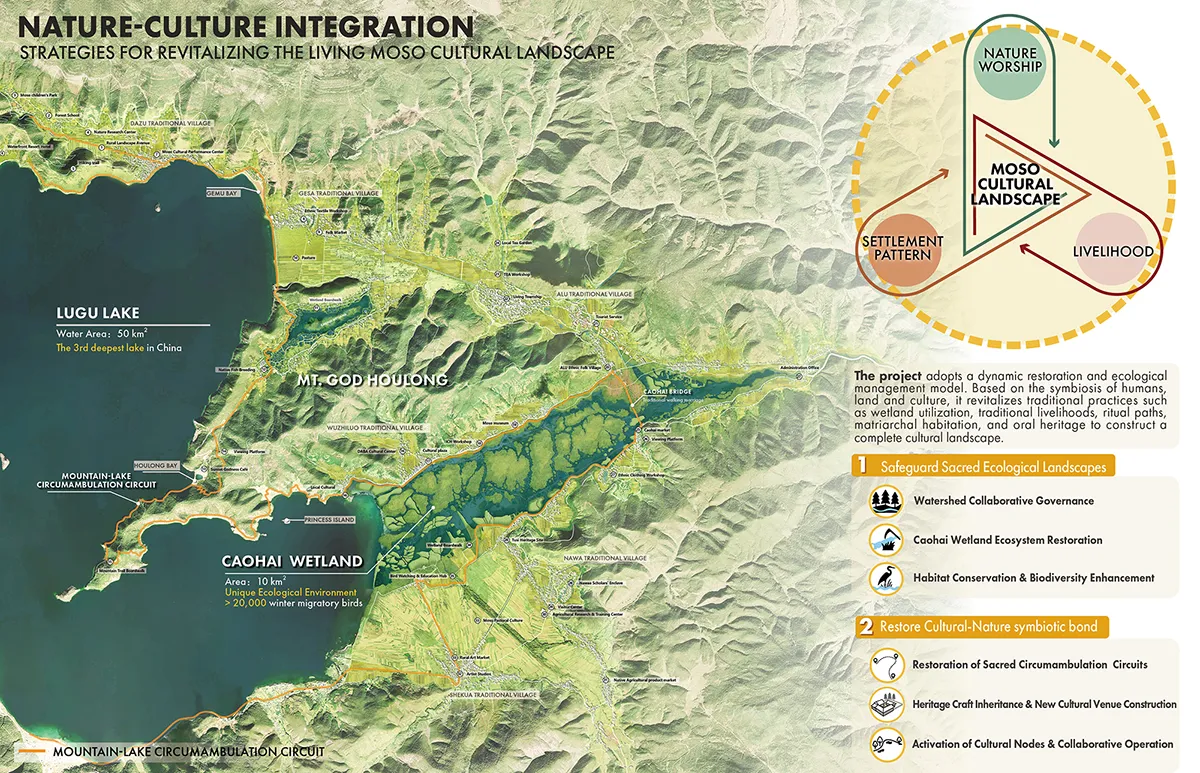
Rejecting the traditional top-down, interventionist development model that overlooks local needs, the initiative adopts a community-led, living heritage framework instead of a rigid relic-based approach. It fully draws on the Moso’s time-honored ecological wisdom of revering nature — a concept deeply rooted in their daily lives — to systematically remediate the damaged environment, restore eco-friendly traditional livelihoods, and revitalize the living cultural heritage that defines the Moso identity.
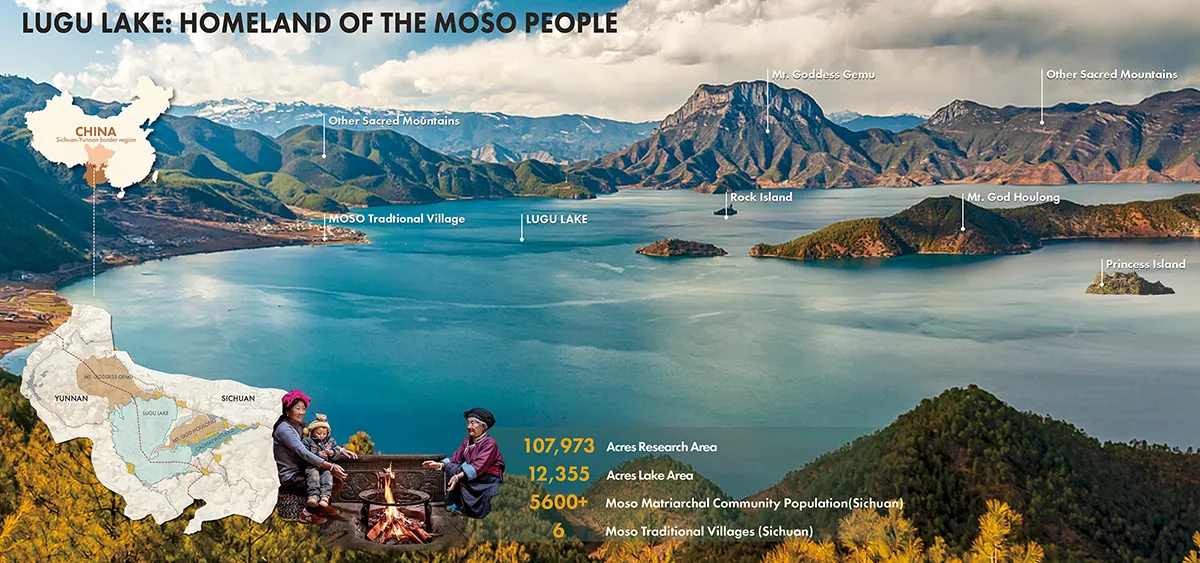
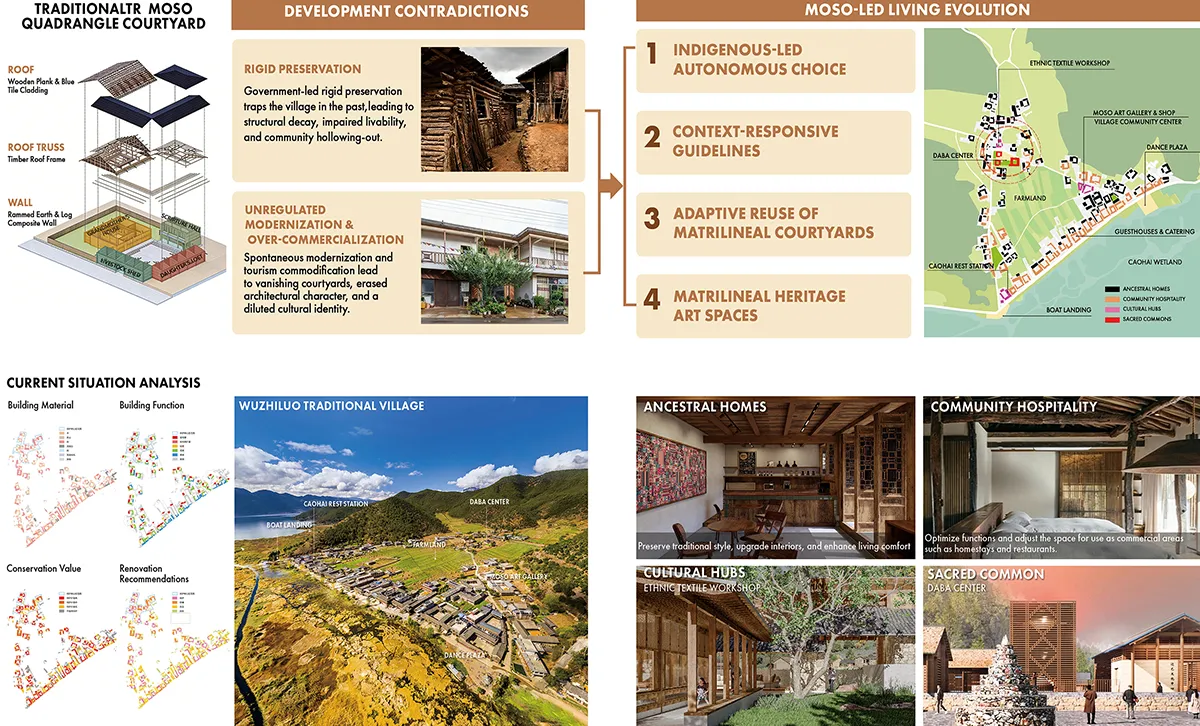
In southwest China, Lugu Lake has been the Moso’s ancestral home for millennia. They worship Mt. Goddess Gemu as their patron saint, organize family life centered on grandmother houses (the core of matrilineal families), and sustain their unique kinship system through walking marriages. Yet mass tourism and growing external influences have triggered severe crises: ecological degradation, shrinkage of the Caohai Wetland, the destruction of traditional grandmother houses, and widespread cultural misunderstanding. Previous rigid conservation policies, though well-intentioned, also severed the inherent bond between local residents and their living cultural spaces.
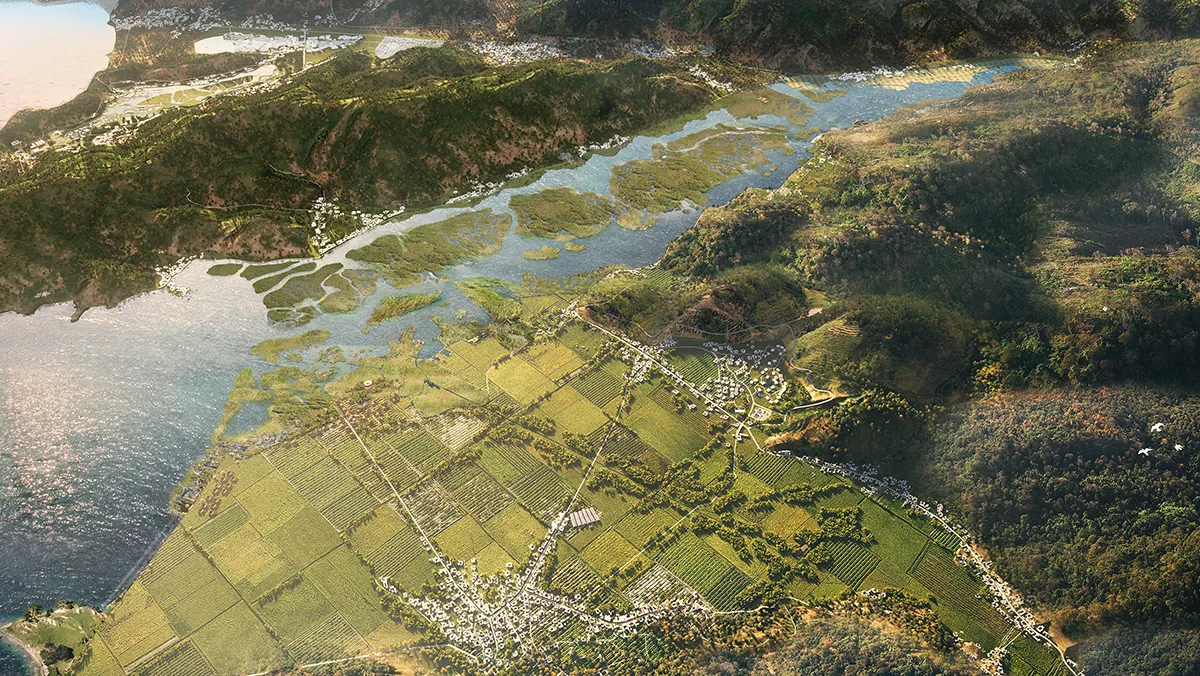
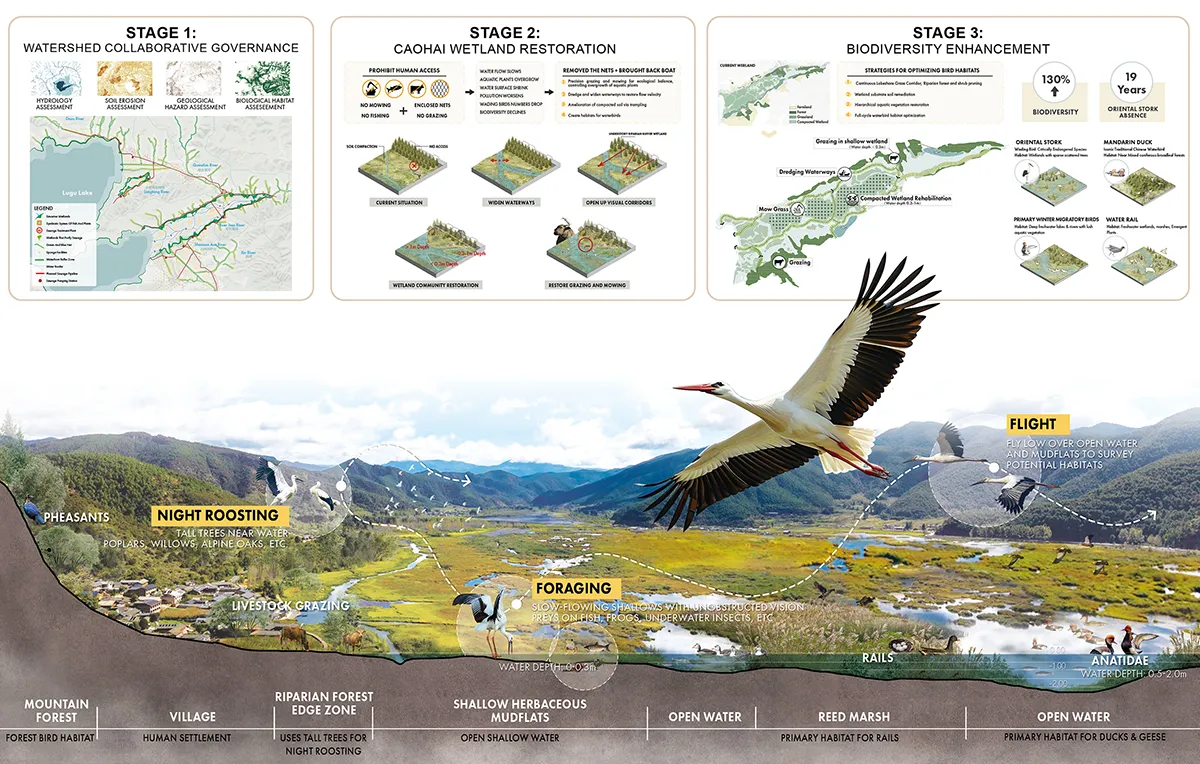
Ecological remediation adopts a scientific, site-specific strategy. Watershed buffer zones intercept non-point source pollution generated by rural domestic activities and farming, while a closed-loop stormwater system recycles rainwater for daily domestic use and agricultural irrigation. The age-old Moso practice of “grass-cutting and cattle-grazing” has been revived within Caohai Wetland, striking a balanced relationship between livestock breeding and wetland conservation. Restored waterways function as corridors linking production, daily living and ecological sightseeing, where visitors can navigate the waters aboard traditional Moso dugout canoes.
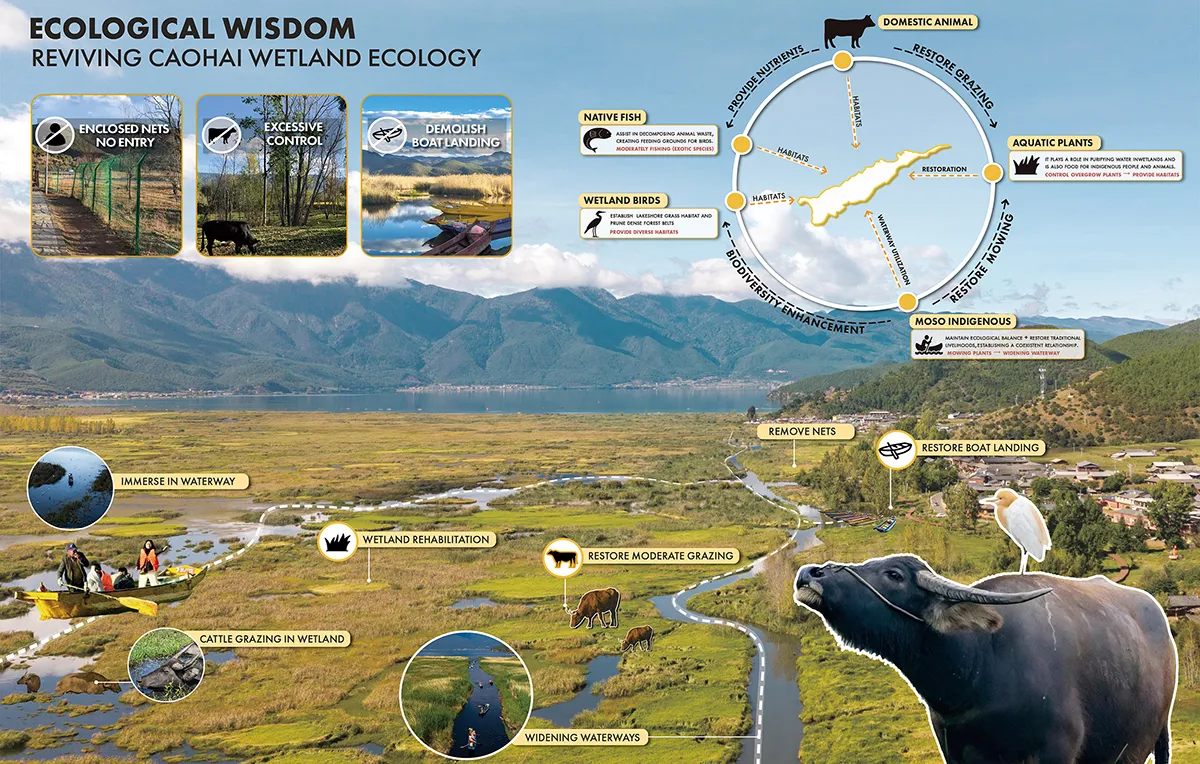
Combining villagers’ indigenous insights with professional ecological governance experience, the project created a 1.3-kilometer-wide zonal wetland stretching from the lakeshore inward to the wetland core. The zone supplies diversified habitats for avian species and prioritizes habitat restoration for key protected wildlife. In 2025, the rare and endangered Oriental stork returned to Caohai Wetland to nest and forage, serving as iconic proof of the remediation’s tangible achievements. This suite of interventions organically unifies ecological conservation, resident livelihood security and nature-based tourism experience.
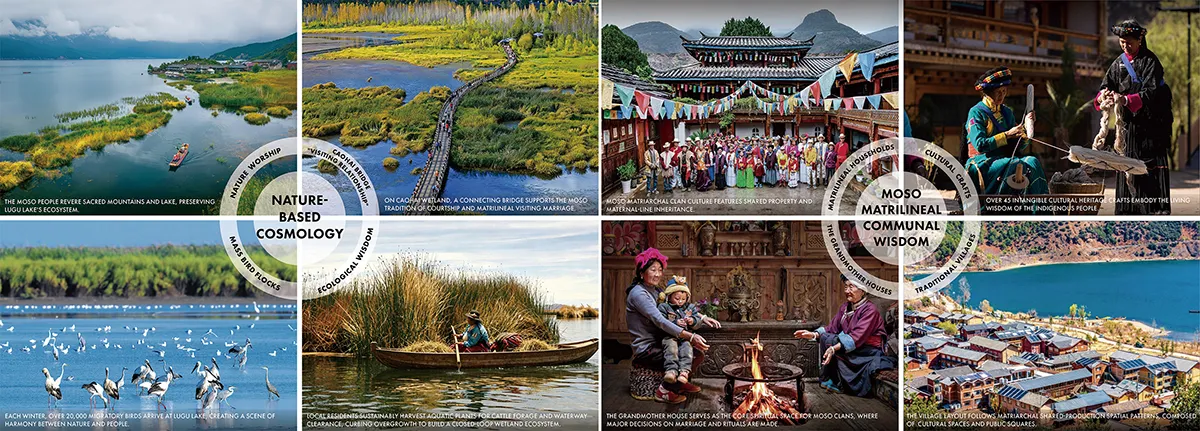
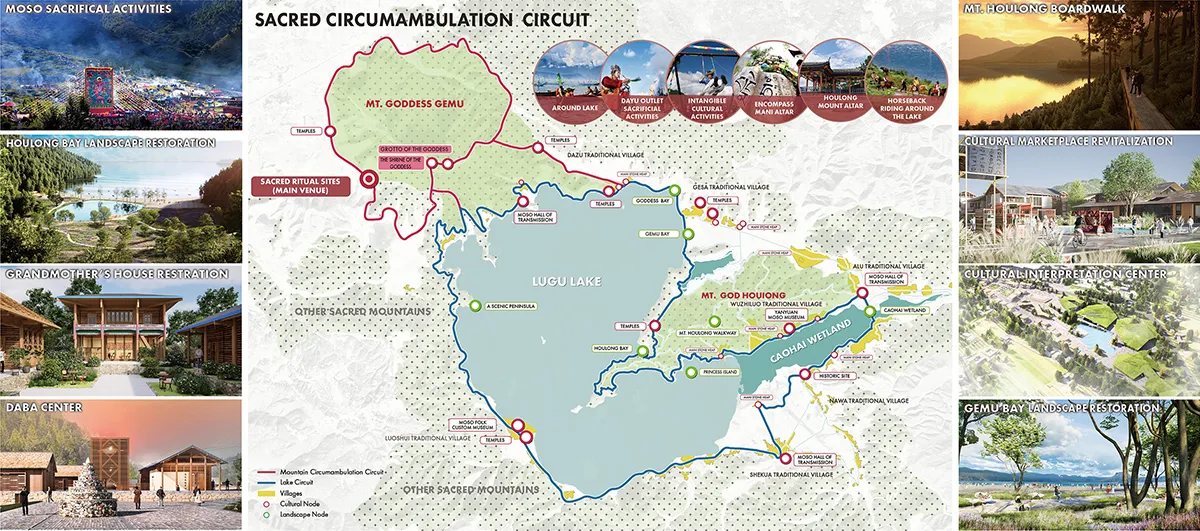
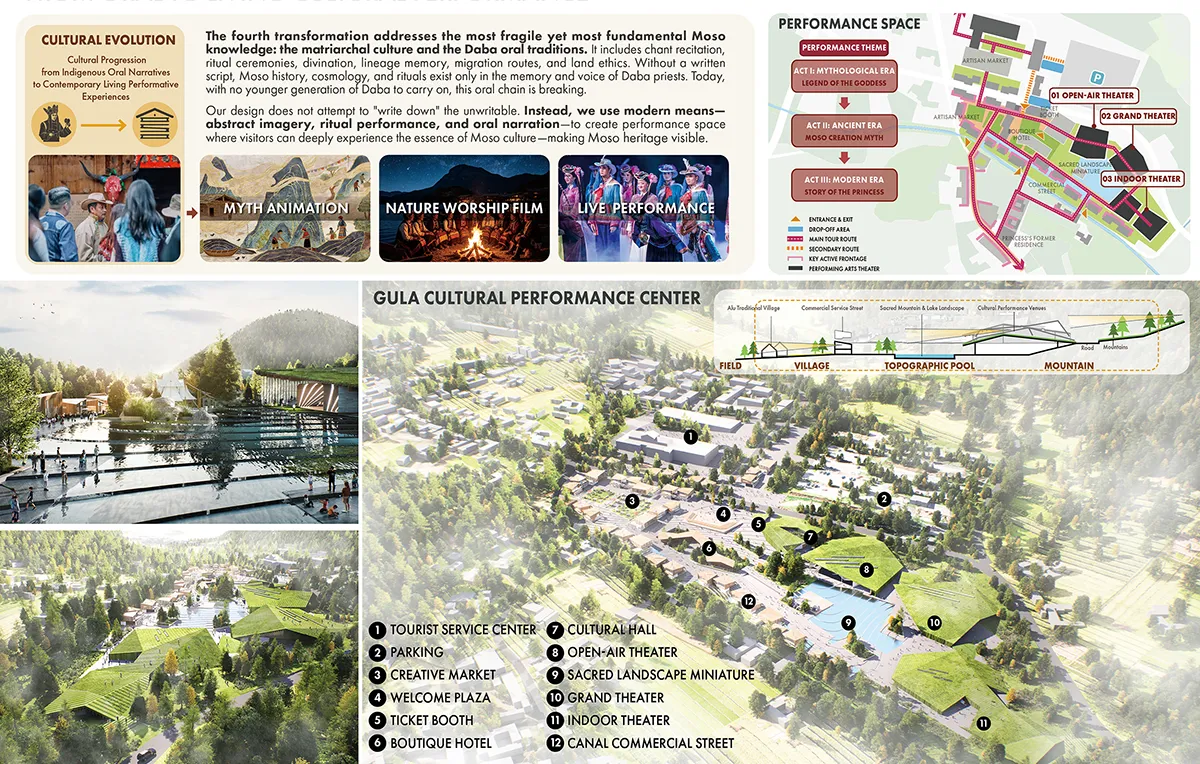
On the cultural dimension, a newly constructed trail on Mt. Houlong completes a 30-kilometer sacred circumambulation loop, reviving Moso mythological narratives and ancestral nature worship. Historic grandmother houses are restored using authentic traditional materials, while newly built cultural facilities adhere to indigenous architectural aesthetics with all construction materials sourced locally.
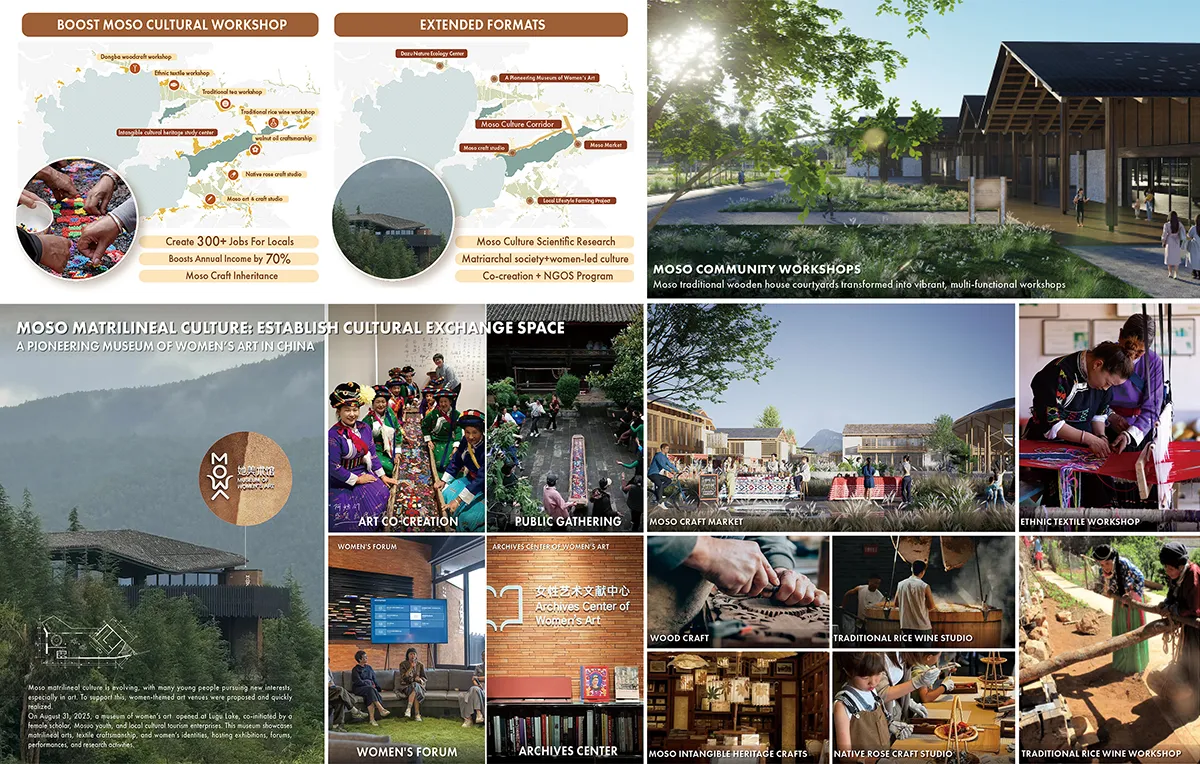
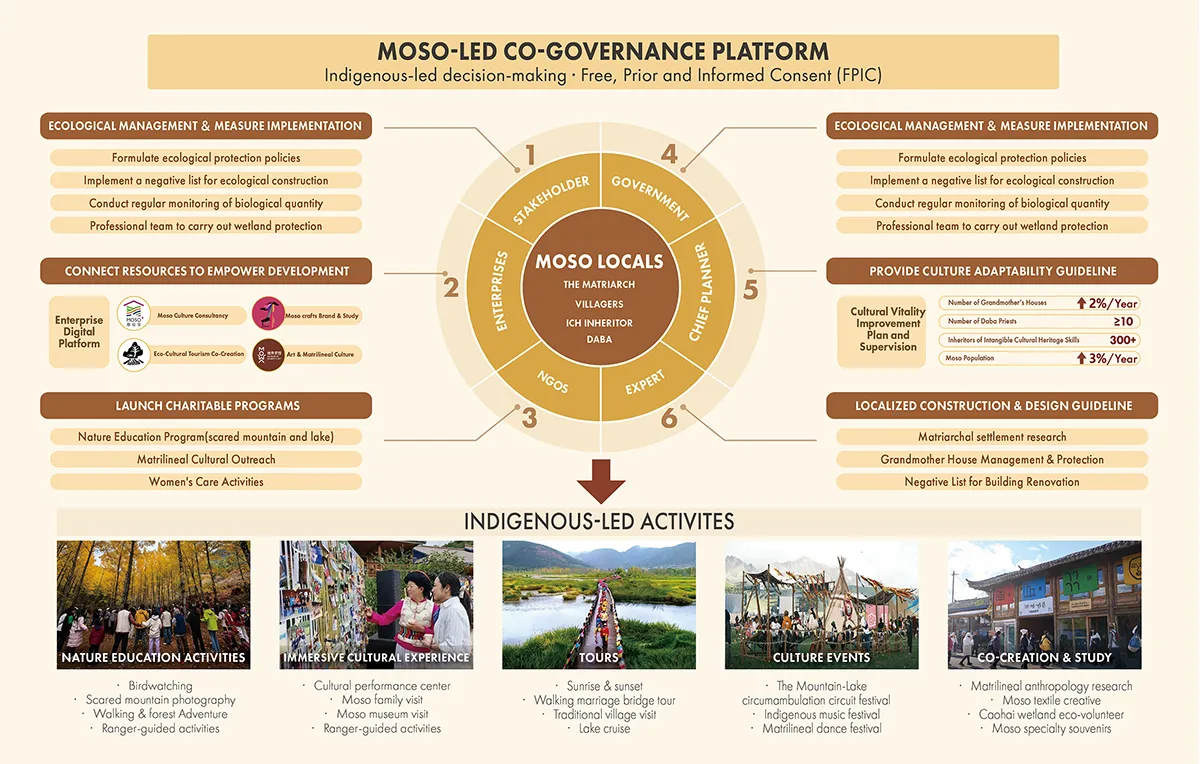
An indigenous-led multi-stakeholder governance mechanism empowers holistic community progress, covering the inheritance of Moso ecological wisdom, craft workshop operation, public supporting services, and cultural research tourism. The project establishes a replicable benchmark for harmonious coexistence of ecology and culture in ethnic minority regions.
True cultural resilience does not rely on “rescuing endangered culture” or excessive museum-style fossilization of heritage. Instead, it empowers Indigenous communities to evolve hand in hand with their ancestral wisdom and build self-determined, long-term sustainable futures.
Technical Information
Project Size: 43,700 hectare (including 5,000 hectare lake area)
Plant List:
Alpine Meadow & Montane Shrubland: Parnassia yanyuanensis, Adenophora brevidiscifera, Saussurea pteridophylla, Rhododendron yunnanense, Rhododendron argyrophyllum
Wetland Aquatic Vegetation: Marsilea crenata, Ottelia acuminata var. crispa, Alisma orientale, Hydrilla verticillata, Phragmites australis
Forest Landscape: Taxus wallichiana var. wallichiana, Picea likiangensis, Pinus armandii, Quercus aquifolioides, Salix matsudana, Betula platyphylla
Materials:
Adopting local low-intervention ecological materials including natural lake sand, mountain gravel, alpine meadow turf and wood, the design constructs a natural and flexible ecological interface, maximally preserves the original site texture, and realizes the integration of artificial landscape and natural ecology.
Living Moso Cultural Landscape
Core Planning Team: LAY-OUT Planning Consultants Co., Ltd.
Wei Wei, Chief Designer
Qingjing Liu, Project Manager
Yueyan Jin, Landscape Architect Professional Leader
Zhen Wang, Senior Designer
Yuxin Wang, Senior Designer
Yadi Yuan, Senior Designer
Yuanyuan Li, Senior Designer
Zhongqi Zhang, Senior Designer
Urban Design Team: LAY-OUT Planning Consultants Co., Ltd.
Liang Wei, Professional Leader
Xiaowen Pan, Senior Designer
Tao Huang, Senior Designer
Transportation and Municipal Engineering Team: LAY-OUT
Jun Deng, Professional Leader
Han Bao, Senior Designer
Operation Team: LAY-OUT
Luyao Zhang, Professional Leader
Yuxiang Liu, Operation Consultant
KCAP B.V.
Ya-Hsin Chen, Lead Designer
Fangfei Liu, Planning Professional Leader
Danli Sheng, Senior Designer
Shengjie Zhan, Senior Designer
Jiao Zhang , Tourism Professional Leader
EPOS ARCHITECTURE
Kefei Cai, Architecture Professional Leader
Xi Wang , Senior Designer
Qiao Huang , Senior Designer
Client:
Liu Na, The People’s Government of Liangshan Yi Autonomous Prefecture
Shaohong He, the People’s Government of Yanyuan County
Yonggang Duan, the People’s Government of Yanyuan County
Gao Xiao, Lugu Lake Moso Scenic Area Management Bureau
Zhengwei Yang, Lugu Lake Moso Scenic Area Management Bureau
Gong Kai, Lugu Lake Moso Scenic Area Management Bureau
Xujun Huang, Lugu Lake Moso Scenic Area Management Bureau
Consultants:
Lachu Cier, Grandmother of Moso Matriarch Family
Er Che, President of Moso Culture Research Society, Lugu Lake
Geke Zeng, Leader of Bushu Traditional Village, Lugu Lake
Images & Text: LAY-OUT Planning Consultants Co., Ltd. & KCAP B.V.