
The Design with Climate: Nature Based Solutions symposium was held at Chulalongkorn University in Bangkok with a diverse range of speakers from academia as well as the public and private sectors.
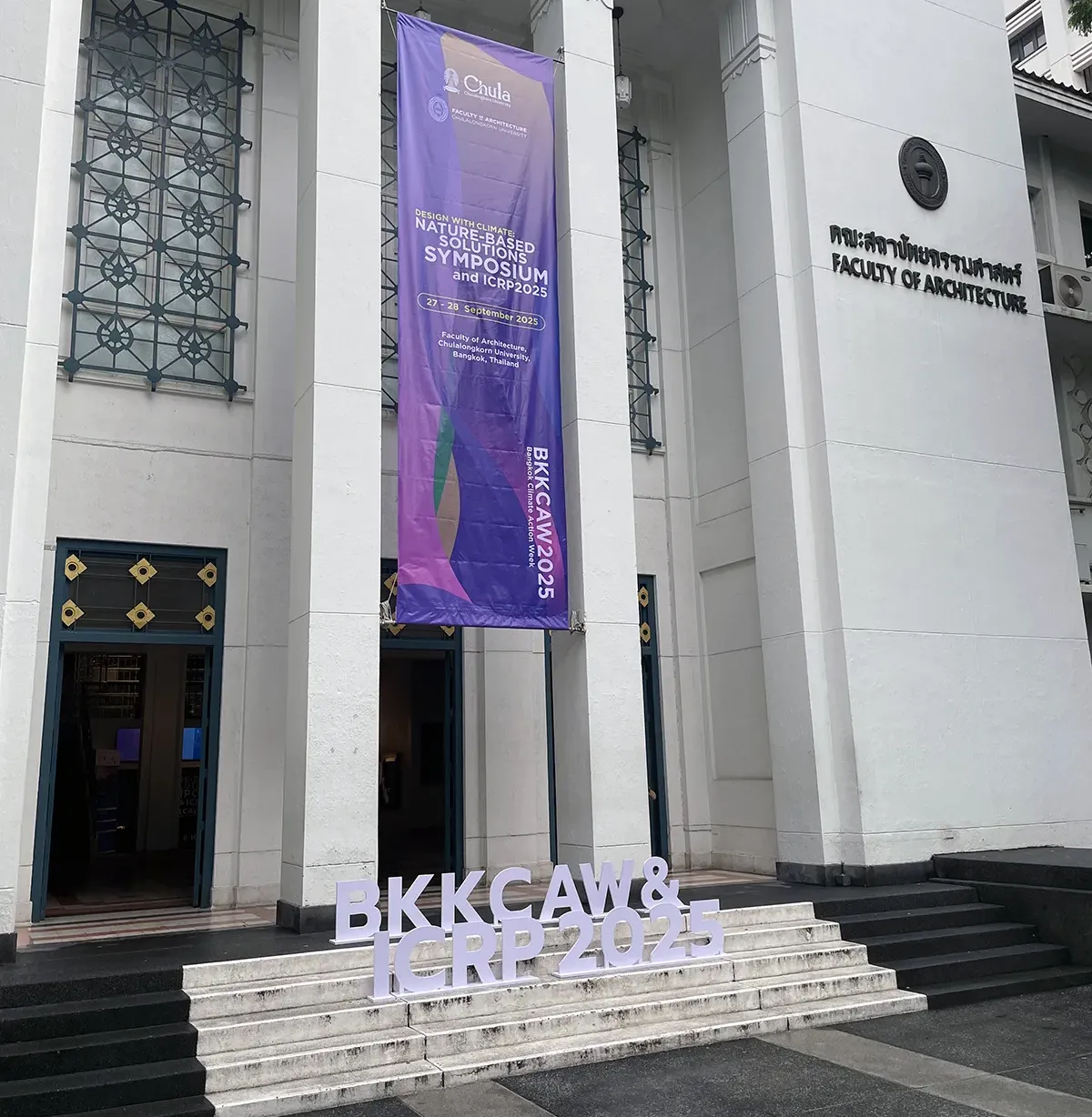
Throughout the two-day event, there were several recurring themes that landscape architects need to incorporate into their work, but also advocate when possible.
Education
There is a need for greater education about Nature-Based Solutions (NbS) within the profession and, more broadly, for governments (at all levels) and stakeholders. There is often a lack of knowledge or misunderstanding of NbS; it is frequently interpreted as just tree planting or rain gardens. We also need to ensure that the language and phrasing we use are accessible and that we showcase the successes through imagery and stories rather than technical diagrams and terminology.
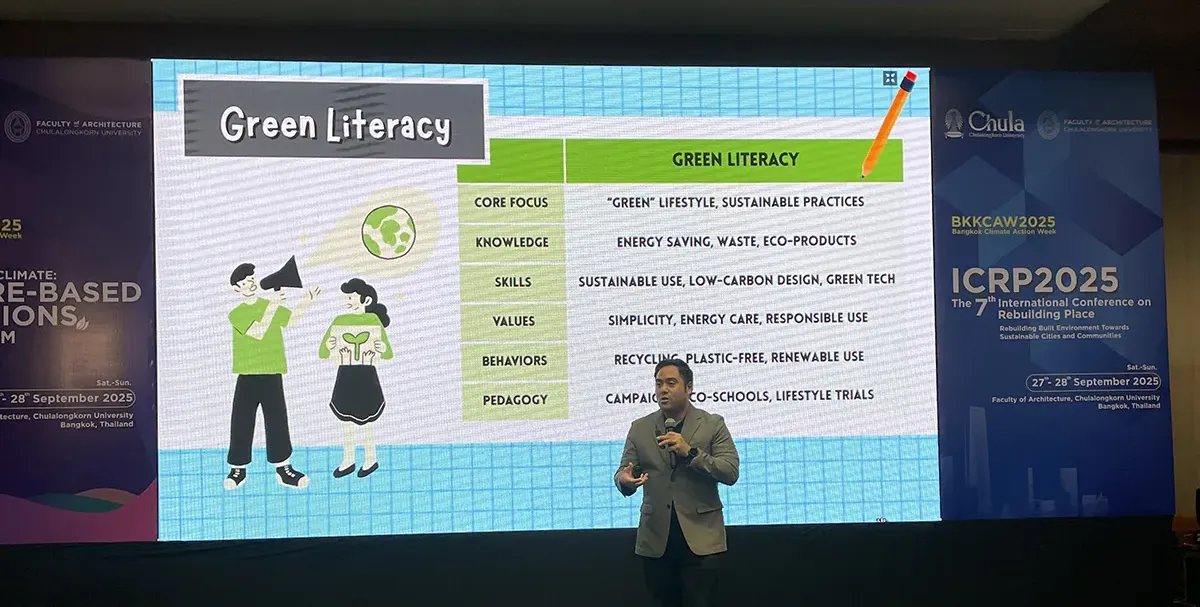
Educating young people in Thai schools is underway and is yielding results in addressing climate action and NbS. There is a greater need to teach climate literacy, environmental literacy, and green literacy to children and their parents, to ensure they are not passive learners but become active learners and participants in climate action.
Setting Realistic Expectations
The profession must also understand the principles and achievable outcomes of NbS, as well as what can realistically be achieved. We cannot advance the use of NbS and instil confidence if we create false expectations (e.g., achievable water quality, flood resilience, etc.) about what can be achieved with nature-based solutions.
We need to understand that NbS is not only about nature; it also needs to consider and incorporate grey, blue, and green infrastructure into designs where applicable.
Culture and Economic Issues
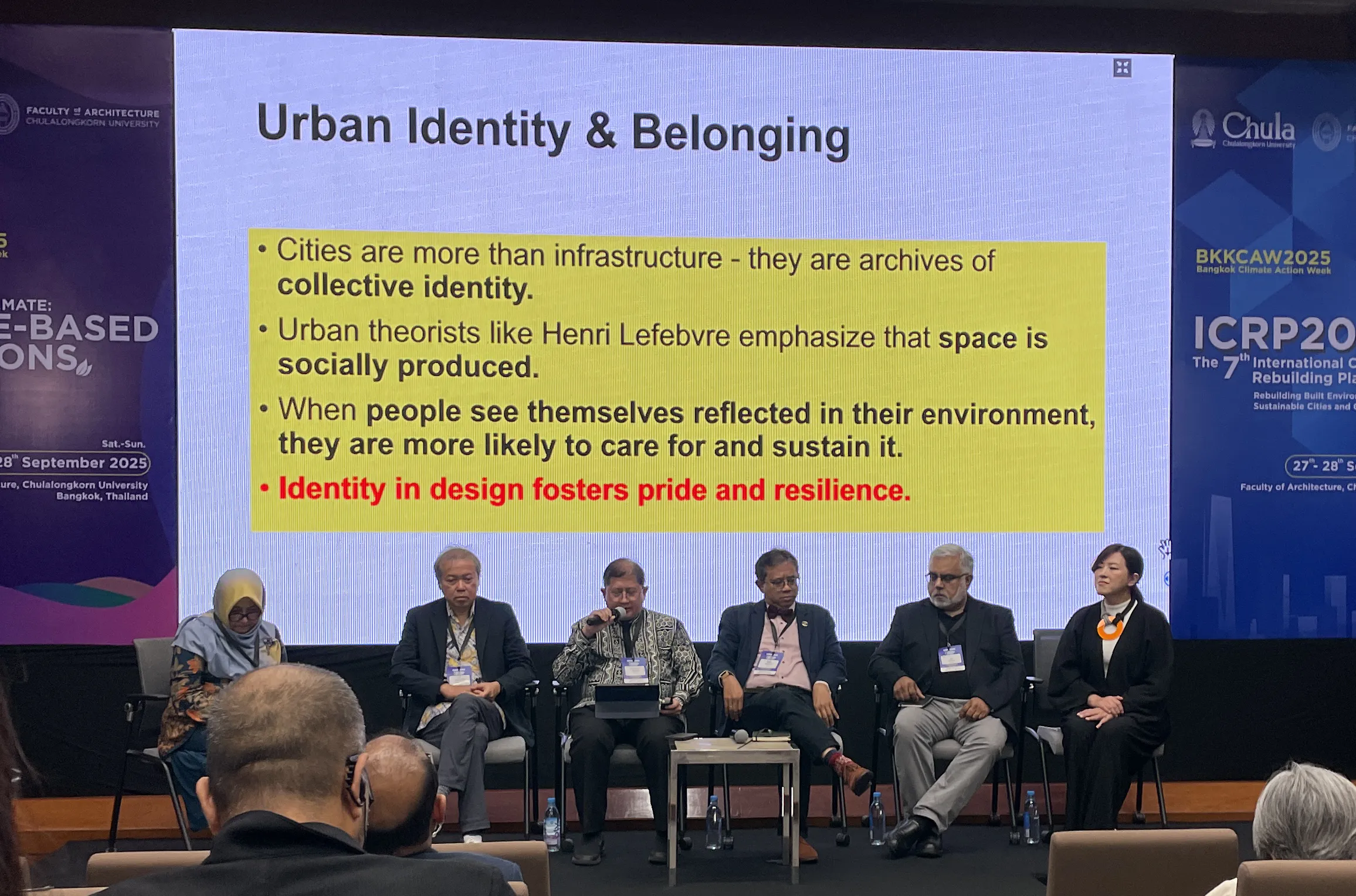
What was also clear from the speakers was the need to address cultural and economic issues with sensitivity. When we rebuild or adapt areas using NbS, we must ensure that we do not compromise the culture and identity of the people or place. There is a need to educate communities and also to have them participate in creating inclusive, resilient, and adaptive landscapes. Designing and building a landscape is a cultural process, not a design outcome.
Demonstration Projects
The need to realise demonstration projects to prove NbS is key in many countries and cities, increasing the chances of other projects being approved. The ability of government, allied professions, bankers, and the community to understand and support NbS is best shown through a successful demonstration project across varying contexts (river, waterfront, inland, etc.).
Elements of Nature
When designing NbS for landscapes, there needs to be broader consideration of all natural elements (climate, hydrology, topography, soil, flora, fauna) to ensure the project is successful and does not fail due to insufficient consideration of one or more elements. This has been especially true when working with water edges, as there have been examples of updated walled river edges in Thailand that considered flooding levels and high tides but failed to account for moon cycles and low tides. These projects experienced subsidence during the lowest tides of the spring moon cycle, leading to the failure of existing river walls.
Four types of Water
When designing in Thailand, it is necessary to incorporate four types of water: surface water, groundwater, rainwater, and wastewater. When designing with water, we may seek to address flooding issues due to storms, typhoons, and superstorms, and to improve water quality through NbS; however, we need to consider how wastewater is managed. In many cases in Thailand (and other countries), there is little to no treatment of wastewater; therefore, it is futile to design NbS landscapes that try to treat the other three types of water (surface, ground and rain) without ensuring that wastewater will not create issues during storm events.
Need for Update Policies and Standards
Many polices, design frameworks and construction standards in Thailand are outdated and do not account for climate change or consider NbS as a possibility. There is a need to update policies and standards to incorporate climate change factors and allow for the integration of NbS.
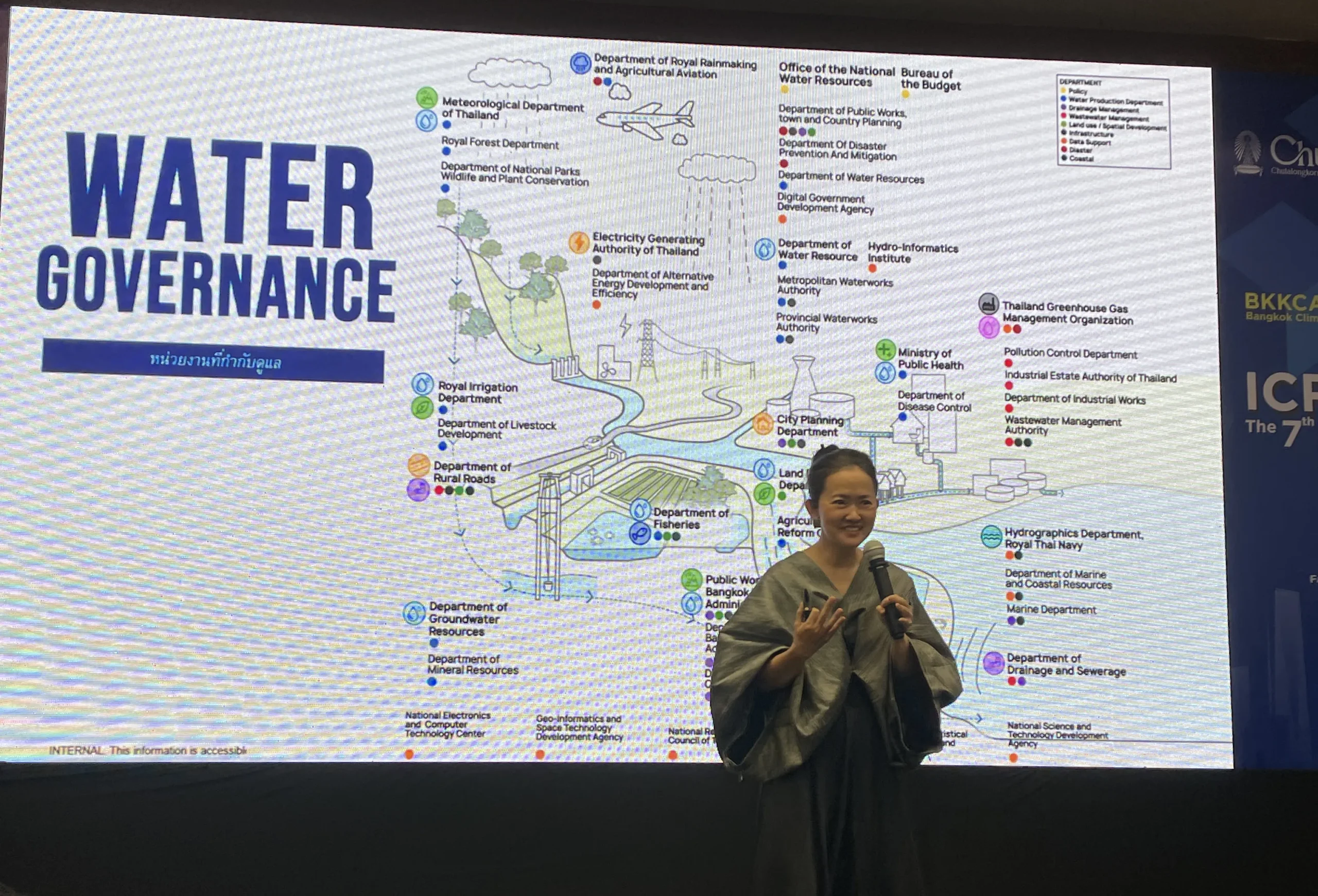
For example, there are numerous departments and agencies (over 50) in Thailand that include water in their portfolios. To try to educate them about NbS and convince them to update their policies and standards is proving challenging. However, the attitude and understanding that there is a need for change due to successful NbS demonstration projects. There is hope that this will eventuate in widespread updating of construction standards and government policies.
Private developers are creating demonstration projects
Developers in Thailand have begun integrating NbS principles into their projects, including retaining as many trees as possible, conducting extensive studies of soil, microclimate, flora, and fauna before development, and integrating nature into the site. The Bangkok project that was showcased retained 90% of the trees and increased the number of species from 83 to 173. The residents of the development also experience 3-4 degrees Celsius cooler temperatures than the surrounding area, and pavements and roads that were 22 degrees cooler in summer due to extensive tree canopy.
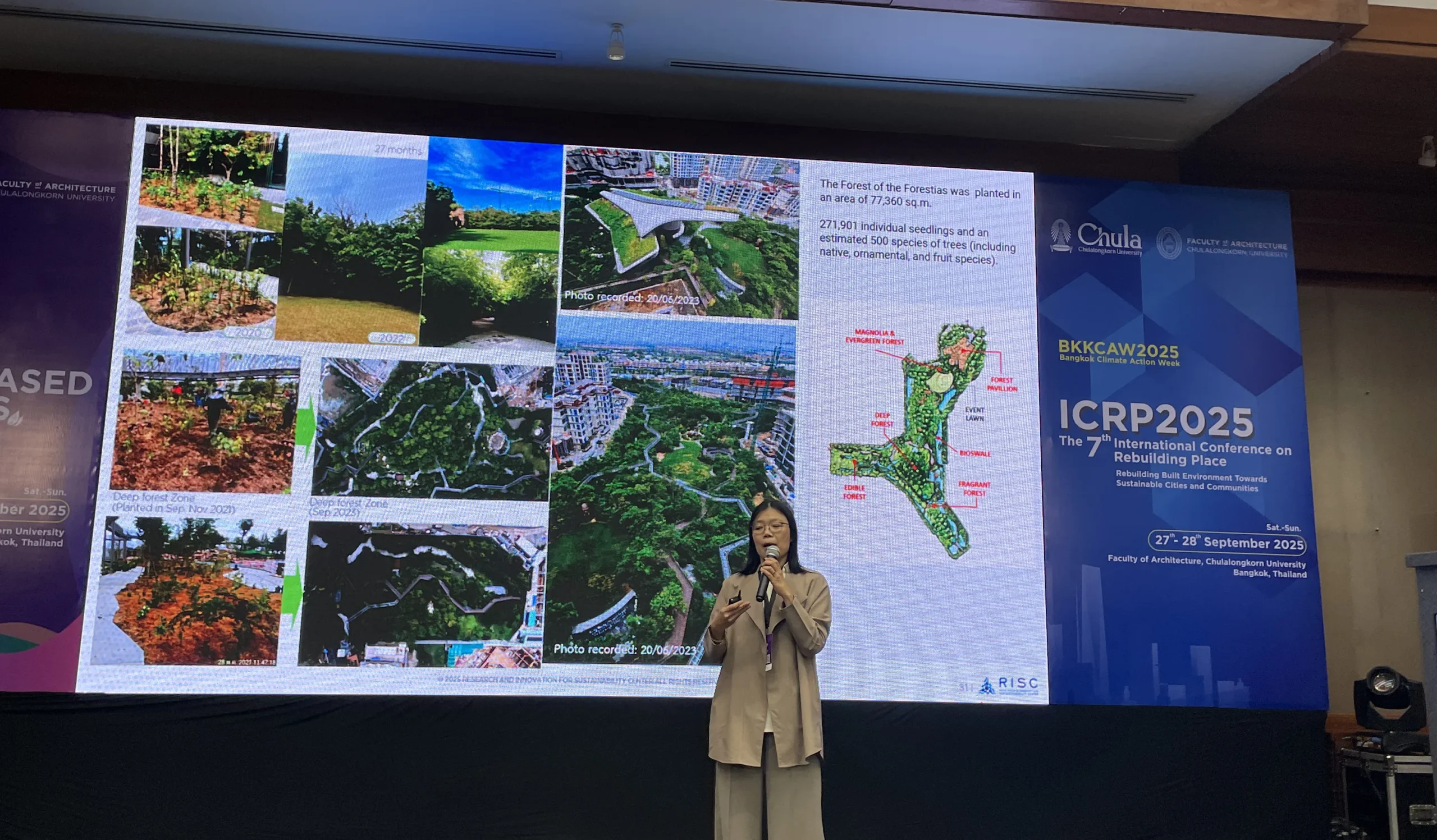
Teams Ready, Concepts Ready, Money Ready
The overall consensus was that there had been a series of successful pilot projects for NbS and Sponge Cities, with design teams developing proven concepts; this, in turn, had generated interest from banks such as ADB, which have allocated funds for investment in NbS projects. However, the main issue is a lack of demand from governments.
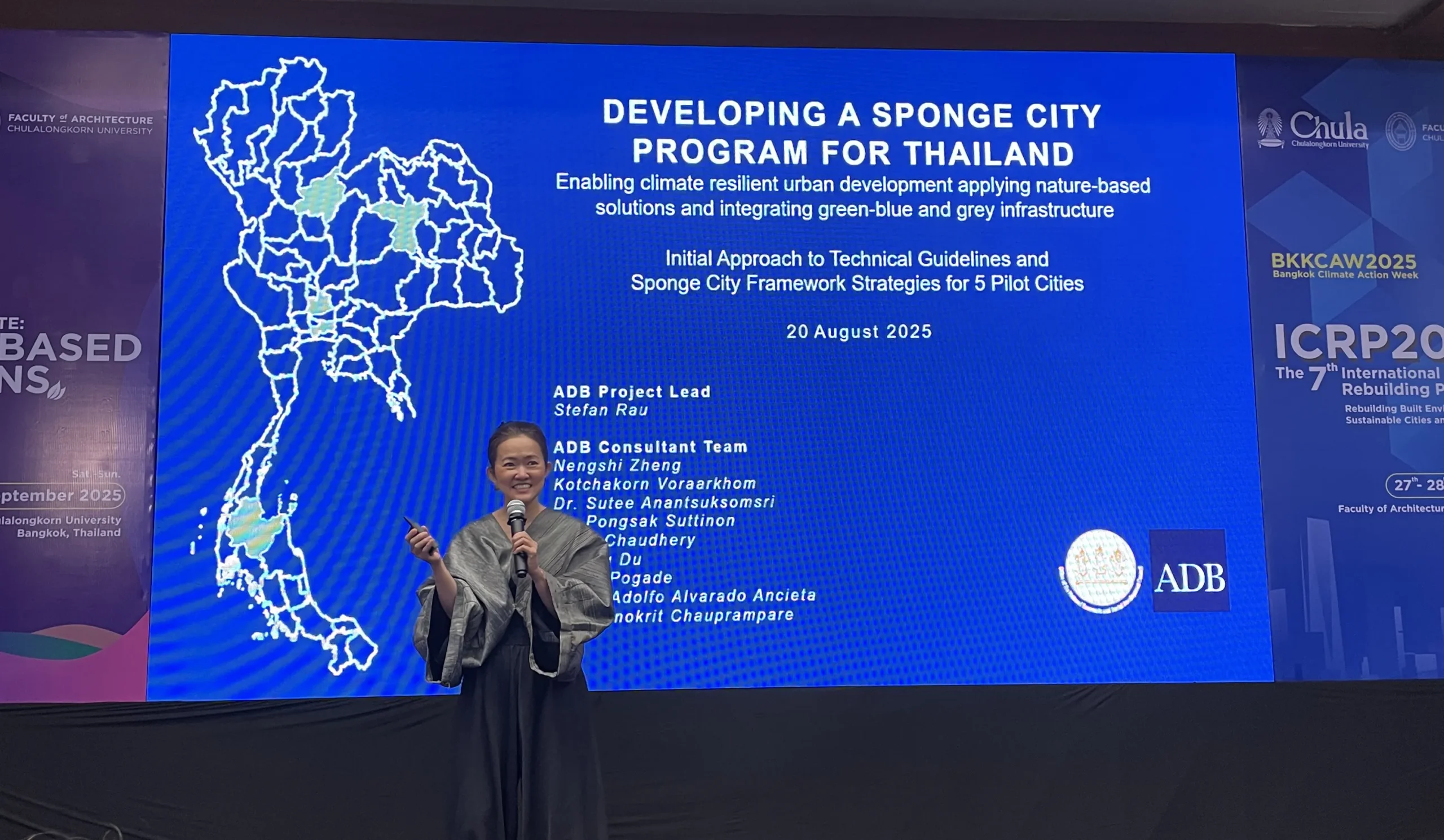
The lack of demand is due to governments not understanding the possibilities and how to petition for the funds successfully. Governments can often be bureaucratic, with an inability to develop inter-departmental approaches to projects and grant writing. Each department has limited power and scope and is unable to put together a holistic grant proposal. The other issue is that banks, professionals, and the public frequently think the government will solve the problem, but often don’t know how. This creates the need for greater education and guidance on how governments can access funds to convert feasibility studies into reality.
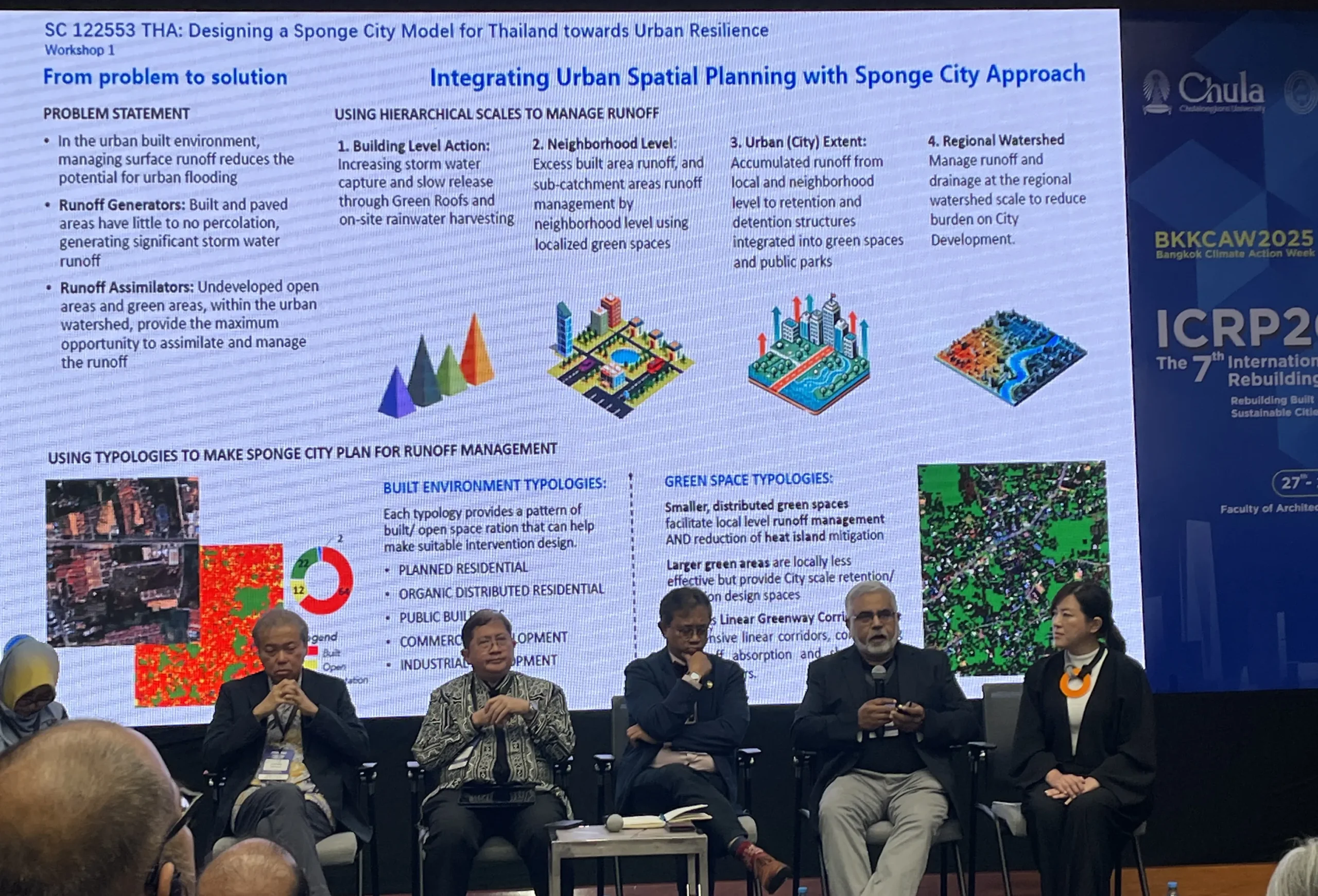
The symposium provided insights into the profession, government, and financiers’ approaches to NbS in Thailand, and into how they are integrating the principles and design concepts across a wide variety of projects and scales. The lessons taken away from this symposium should be reviewed and integrated by other nations, especially those in Southeast Asia facing similar climate challenges.
Article by Damian Holmes – Founder and Editor of World Landscape Architecture