
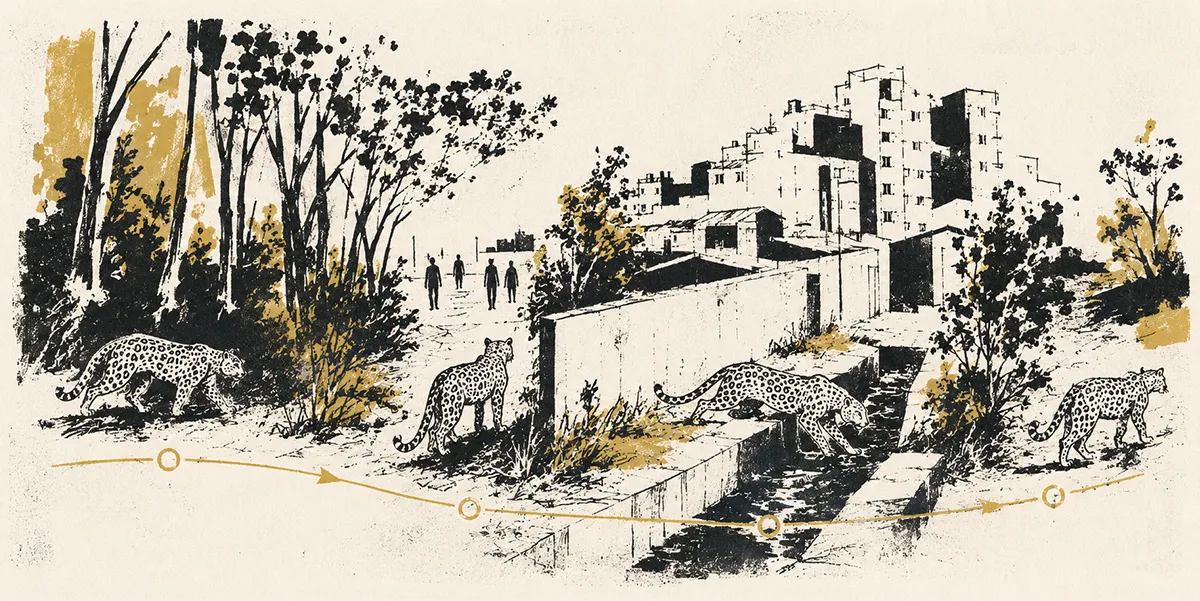
For many people growing up in Mumbai, visits to Sanjay Gandhi National Park (SGNP) followed a familiar routine. As evening approached, visitors made their way toward the exits, and the gates closed until the following morning. The landscape itself appeared unchanged, yet an unspoken understanding held that once darkness fell, it would be occupied differently. This simple shift between day and night became the starting point for a broader investigation into coexistence between people and leopards in Mumbai.
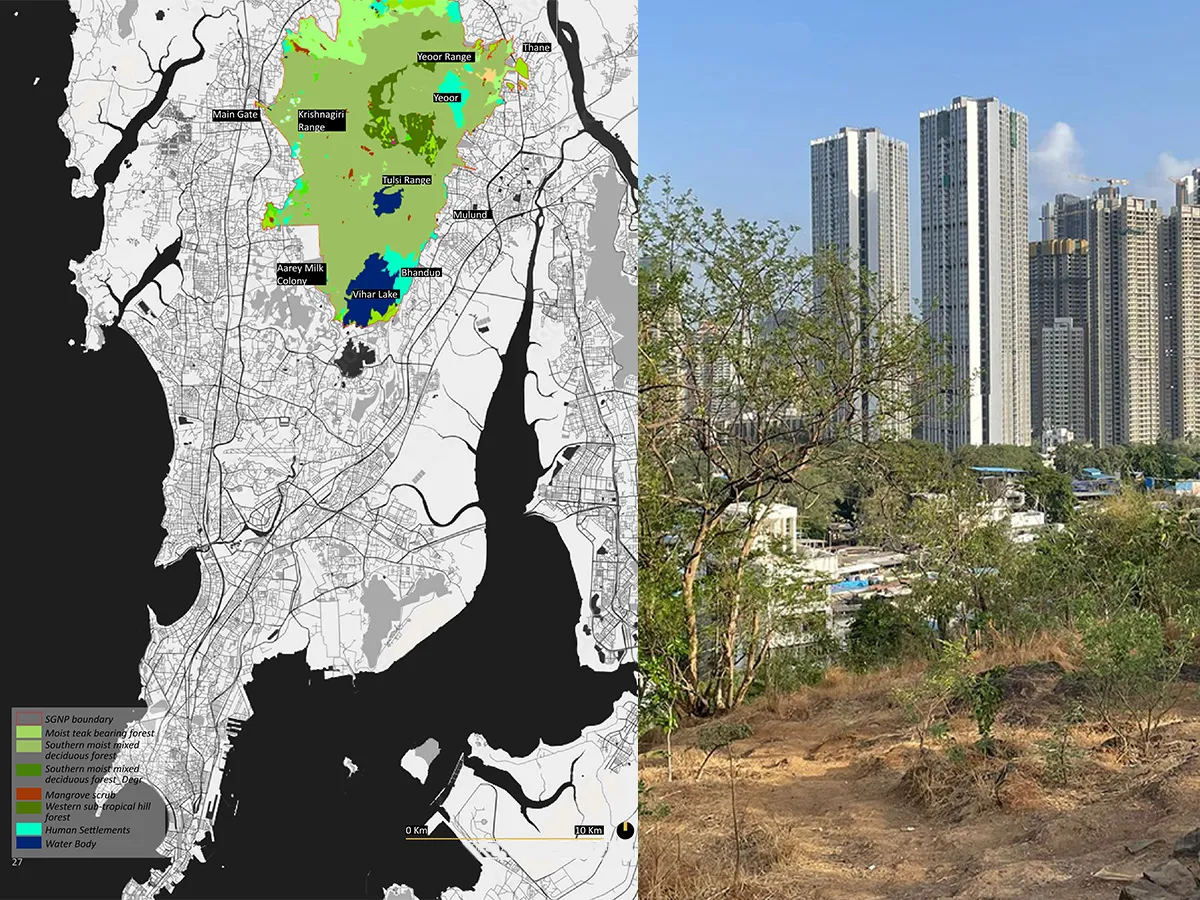
SGNP sits within one of the world’s most densely populated cities and covers approximately 104 square kilometres. The park supports a population of more than fifty leopards while existing alongside roads, settlements, institutions and expanding urban infrastructure. The presence of an apex predator within such a densely inhabited urban environment has made Mumbai one of the most remarkable examples of human-wildlife coexistence in the world.
Many conversations about coexistence focus on physical boundaries: the edge between forest and city, wildlife habitat and human settlement. While these distinctions matter, they tell only part of the story. The relationship between Mumbai and its leopards is shaped not only by space, but also by time.
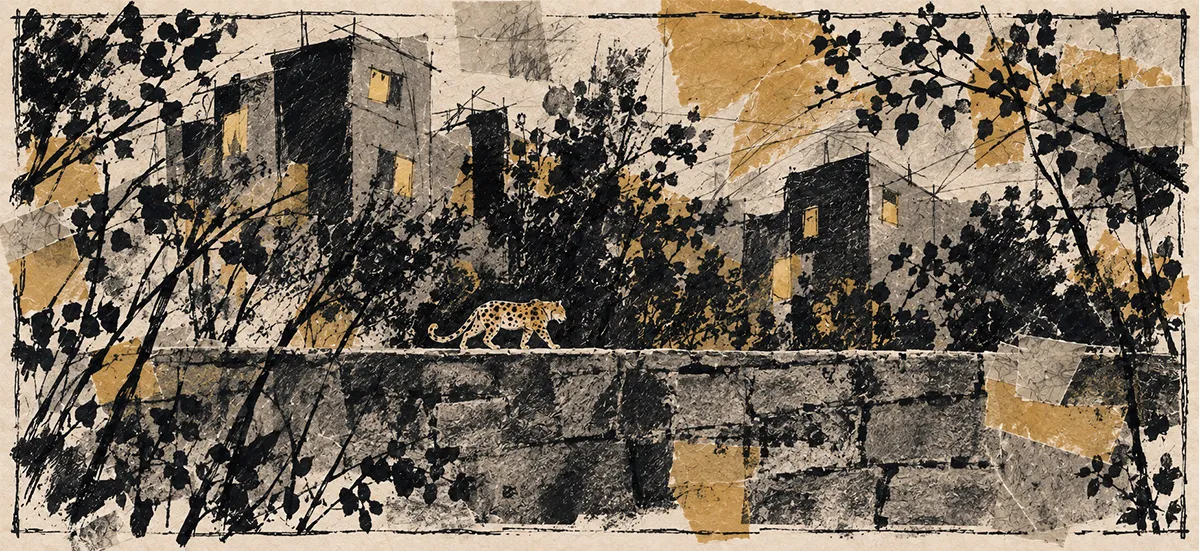
During the day, human activity defines the landscapes surrounding the park. Roads carry commuters across the city, residential streets become places of play and movement, and informal paths become part of everyday routines. These spaces are understood as extensions of the city, structured by human presence and occupation.
However, as daylight fades, the rhythm of the landscape begins to change.
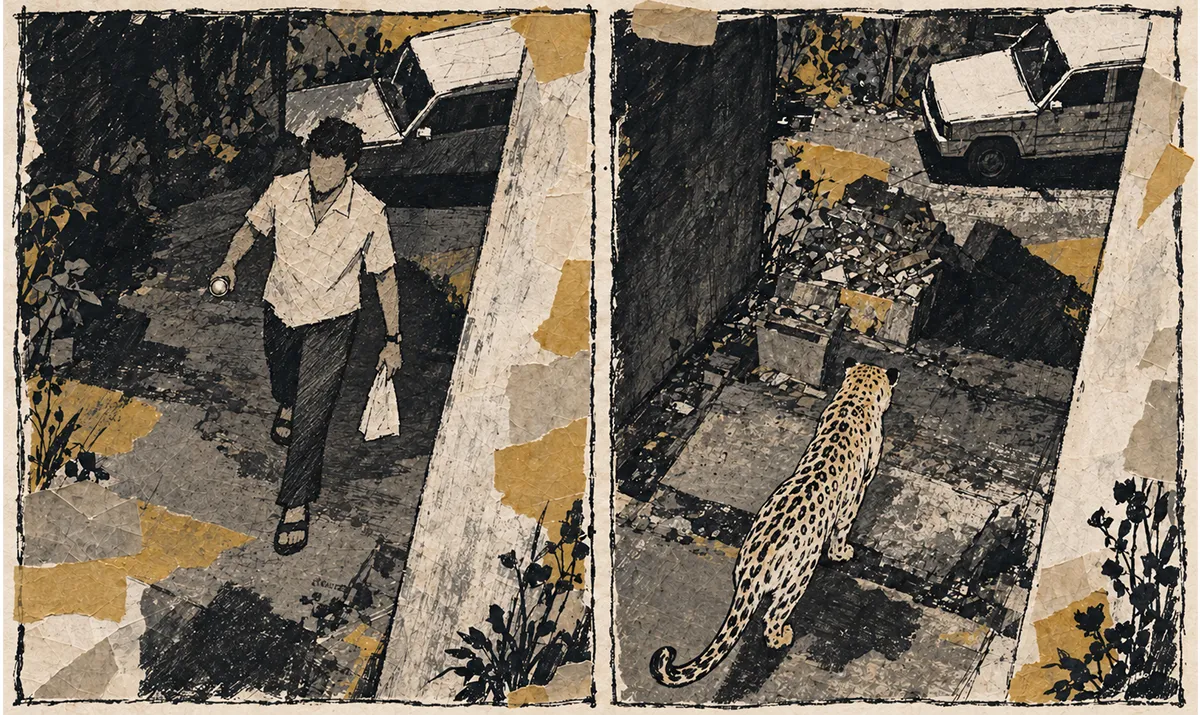
Traffic eases, streets grow quieter, and human activity gradually retreats. At the same time, leopards move through woodland fragments, roadside vegetation, drainage corridors and settlement edges. These places that seemed entirely human only a few hours earlier become part of a larger nocturnal network of movement. After dark, the landscape remains the same, but the relationships that shape it begin to change.
This shift prompts a simple but important question: if a landscape functions differently throughout a twenty-four-hour cycle, can it be fully understood through a static reading of space?
Research on leopards living within human-dominated environments shows that they are predominantly nocturnal, moving through the city when human activity is at its lowest. They navigate a patchwork of infrastructure, vegetation and urban edges rather than remaining confined to protected forest. Their persistence within Mumbai depends not only on habitat, but on rhythms of occupation that reduce direct encounters with people.
The project explores these changing relationships through the ecological concept of the landscape of fear. Traditionally, the term describes how animals respond to perceived risk, adjusting their behaviour according to where they feel safe or vulnerable. An apex predator can shape movement patterns across an entire landscape, often without ever being seen.
However, in Mumbai, fear operates in multiple directions.
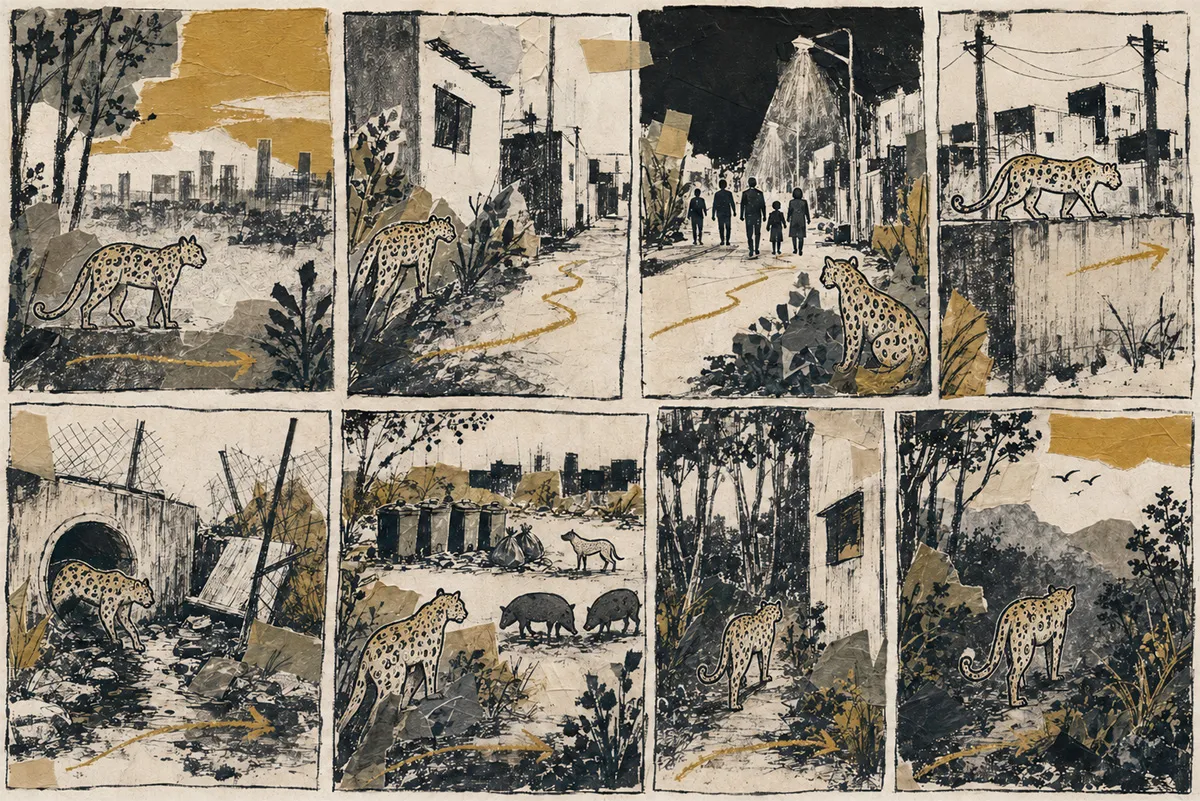
Leopards alter their movements in response to human activity, while people adjust routines after reports of leopard sightings. Dogs and prey species respond to predators, while lighting, traffic, vegetation, and noise continually influence movement patterns. This creates a landscape shaped by adaptation, avoidance, and negotiation.
Fear shapes how people and wildlife move through the landscape. A road that feels like an ordinary part of the city during the day may become a crossing route after dark. A drainage channel that often goes unnoticed can provide a vital connection through the landscape. The same place can offer very different experiences depending on who is moving through it and when. Risk, like movement, is constantly changing.
Importantly, perceived danger does not always correspond with actual danger. A leopard sighting can quickly transform how a place is understood, often prompting calls for brighter lighting, fencing or vegetation clearance. While intended to increase safety, such interventions can alter habitat connectivity and influence how wildlife moves through the city. In this way, fear becomes a force that shapes the landscape itself.
The project also considers how coexistence is understood culturally. Within Warli traditions, Waghoba, represented as a large cat deity, reflects a relationship with predators rooted in both respect and caution. The leopard is recognised as powerful and potentially dangerous, yet not solely as a threat. Instead, it forms part of a shared landscape that has been understood and negotiated over generations.
Different communities experience coexistence differently. People may share the same landscape, yet understand and navigate it through their own histories, cultural perspectives and everyday experiences. As a result, perceptions of risk are rarely universal.
Mumbai’s leopards demonstrate that coexistence does not depend on complete separation between the human and non-human worlds. Instead, it emerges through everyday rhythms of movement, adaptation and mutual awareness. When darkness falls, another version of the city emerges, shaped by different occupants, behaviours, and perceptions of risk. Recognising these landscapes after dark offers a richer understanding of coexistence and invites landscape architecture to consider time, behaviour and uncertainty as fundamental layers of the landscape itself.
Project Background
This research-led visual essay investigates coexistence between people and leopards within the urban landscapes surrounding Sanjay Gandhi National Park and Aarey in Mumbai. The project explores how patterns of occupation shift across space and time within a landscape shared by both people and an apex predator by combining spatial analysis, site observation, literature review and interviews with conservation practitioners.
Various published studies, including camera-trap and GPS-collar research, were reviewed to understand leopard density, movement patterns and predominantly nocturnal behaviour within human-dominated environments. These findings were considered alongside observations of settlement structure, infrastructure networks, vegetation, drainage systems, lighting conditions and everyday human activity.
The work is presented as a visual essay composed of maps and interpretive sketches. A regional map situates Sanjay Gandhi National Park within Mumbai’s wider urban context, while subsequent illustrations and sketches examine the relationships between forest, settlement, infrastructure and wildlife movement.
The project identifies the spatial, behavioural and temporal conditions that influence how people and wildlife share the same landscape. The research highlights the limits of static approaches to landscape analysis and argues that time, perception, and changing patterns of occupation should be considered alongside conventional ecological and spatial data when understanding and designing for coexistence.
Article by Aditi Sunder Nair
Images and Text Credit: Aditi Sunder Nair
Be the first to comment