
After receiving Reserved Matters approval earlier this year, plans for the first phase of Cheltenham’s Golden Valley are advancing toward implementation, supported by a landscape-focused framework for the £1bn project.
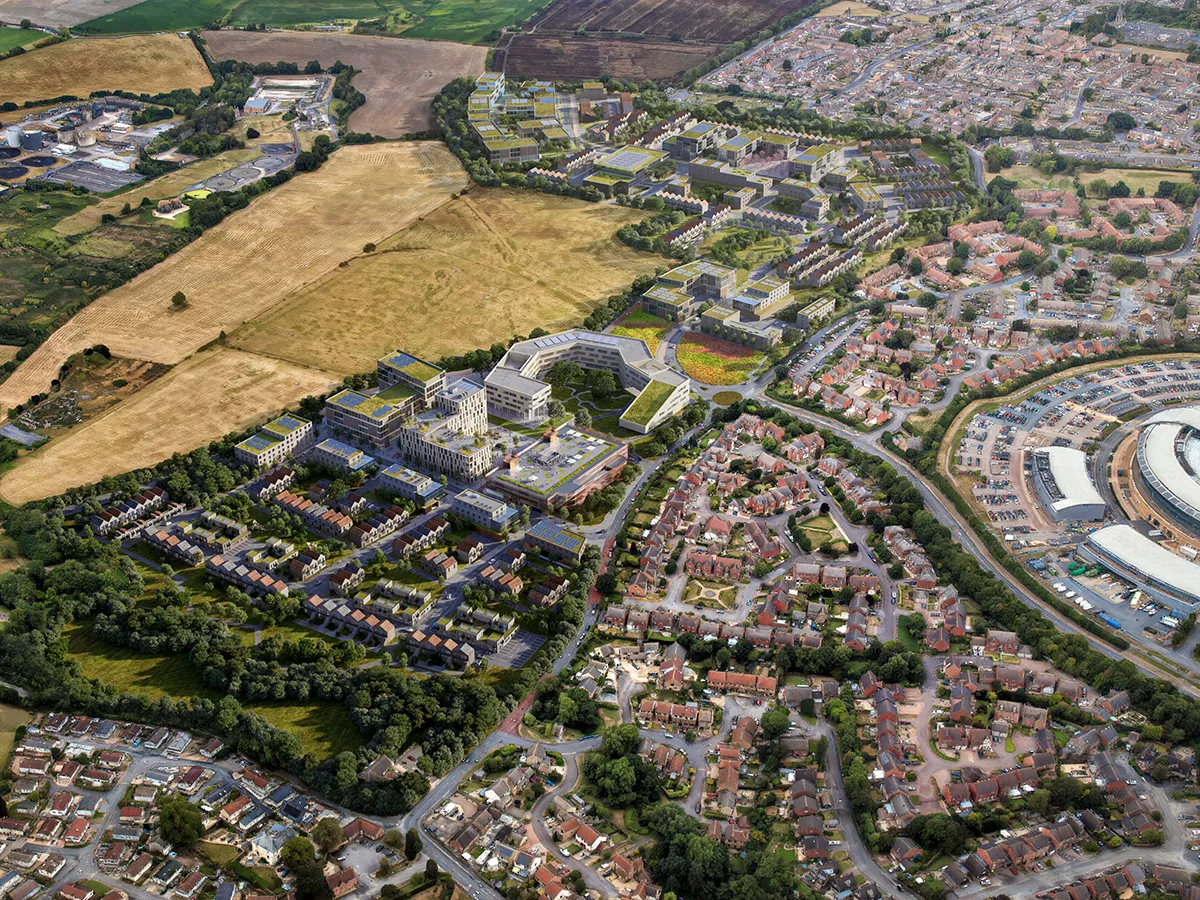
Being delivered by HBD, part of Henry Boot, in partnership with Cheltenham Borough Council, the 200-hectare scheme will create a purpose-built cyber and tech innovation campus, where pioneering companies will co-create the future of national security and defence as part of a nationally significant ecosystem.
Grant Associates has led the landscape strategy for the first phase, working as part of the wider consultant team to translate the masterplan into a detailed and deliverable public realm.
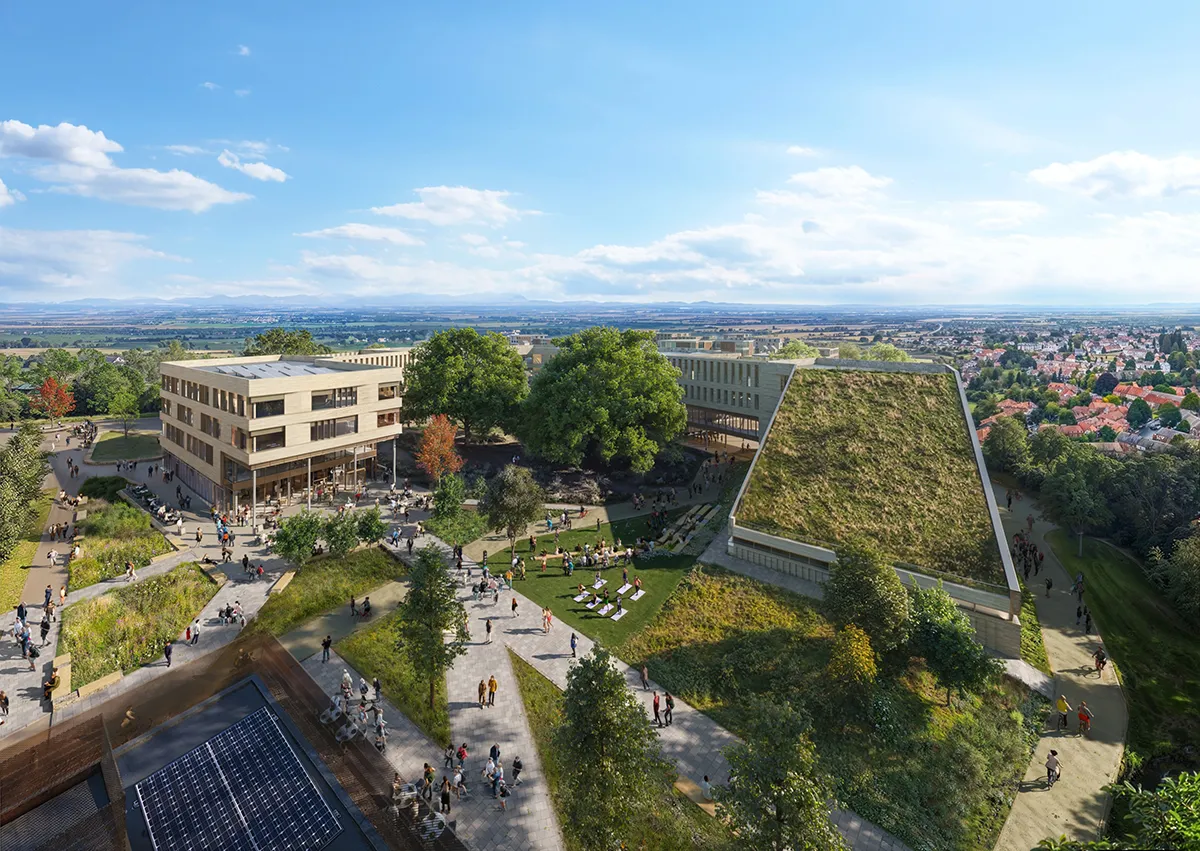
Grant Associates’ designs establish a clear landscape framework from the outset — using existing natural assets, movement routes and water systems to structure the development as it evolves and guide future phases as delivery progresses.
A landscape shaped by existing assets
The design is underpinned by four key principles:
- celebrating existing trees and hedgerows
- prioritising walking and cycling
- framing views and legibility
- integrating water management into the landscape
Existing landscape features play a central role in defining the layout. Established hedgerows provide structure and ecological continuity, while mature and veteran oak trees form a strong organising element across the site.
These ‘sentinel’ oaks are carefully integrated into the public realm — retained as focal points and connected visually and physically, while protected through sensitive design and construction approaches.
Movement and connectivity
A network of pedestrian and cycle routes is prioritised throughout, linking into the wider Golden Valley masterplan and connecting key destinations including ROUTER (a mobility hub) and IDEA (a 160,000 sq ft innovation centre), both designed by architect and lead consultant BDP.
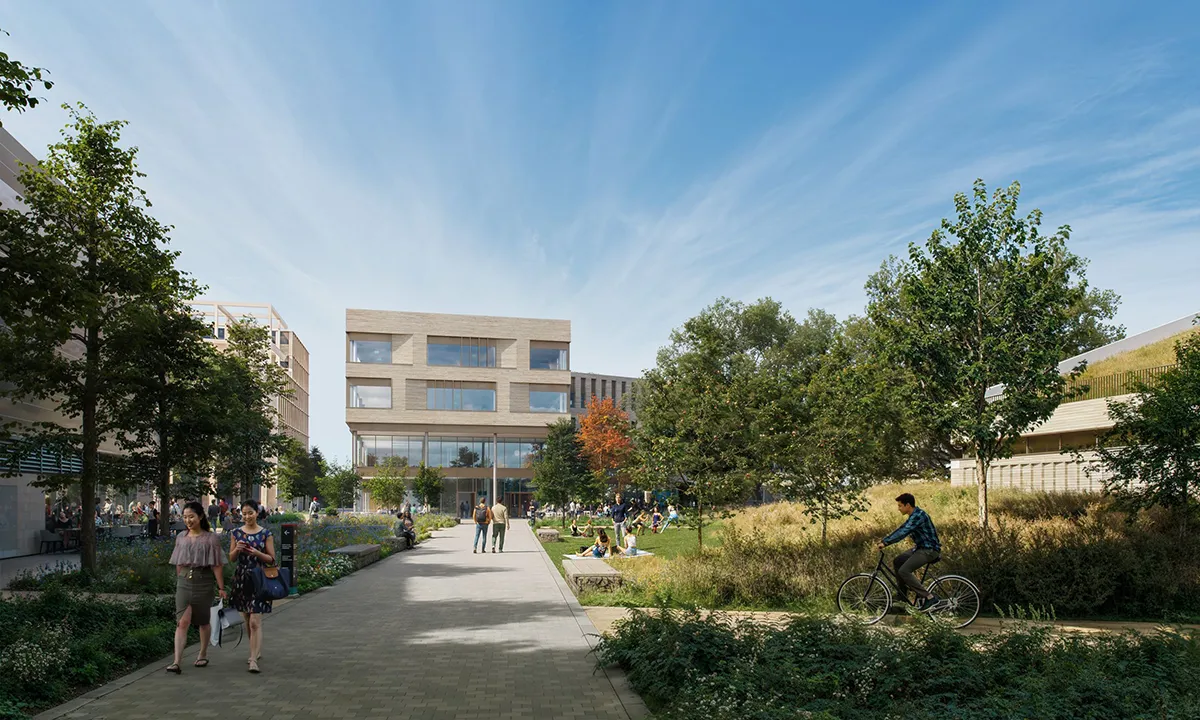
A Digital and Ecological Spine runs north–south along an existing hedgerow and watercourse at the western boundary. It serves as a main movement corridor and ecological link, enhanced by woodland edges, meadow habitats, and balanced lighting. Routes adapt to landscape features like views of veteran oaks, with paths widening to allow pauses and engagement.
Spaces for work, movement and pause
Key public spaces are designed to support a range of uses while reinforcing the landscape structure.
The Innovation Courtyard is centred on the veteran oak trees, with lightweight ‘no dig’ construction used to protect root systems. A series of direct and meandering paths, along with informal seating, create a space that supports both movement and informal gathering.
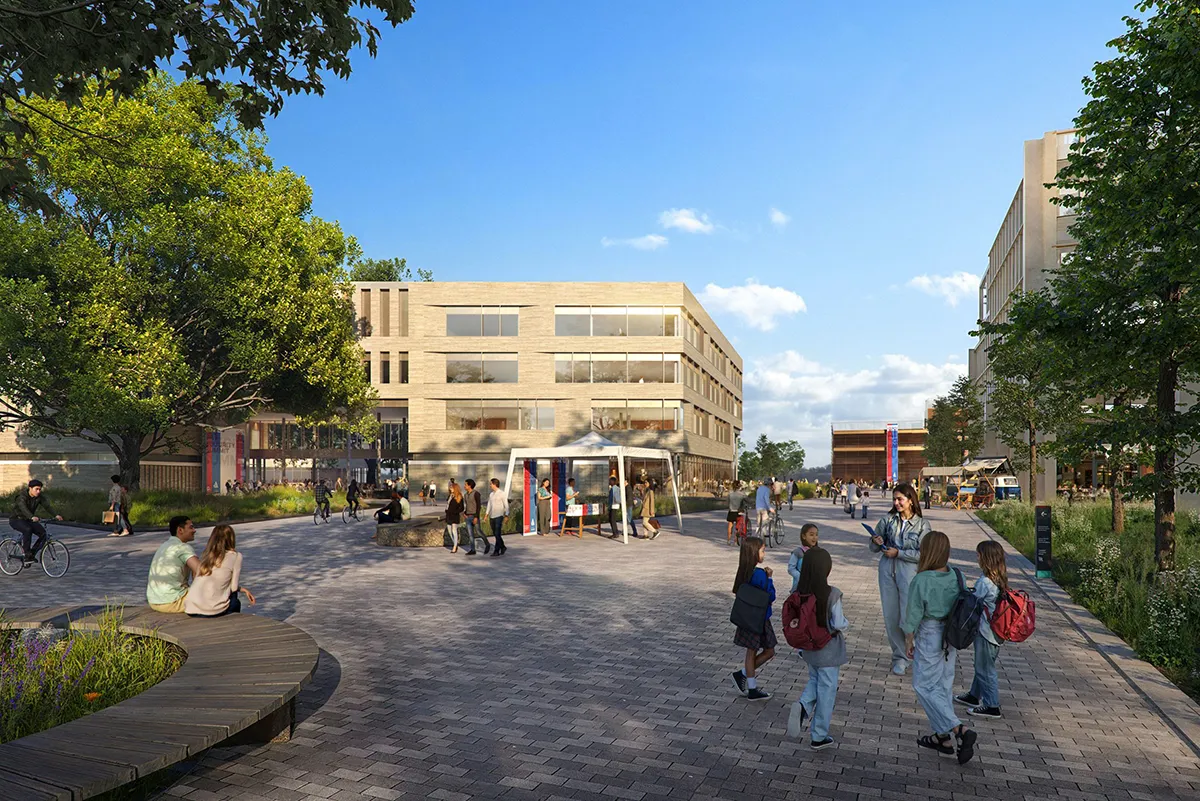
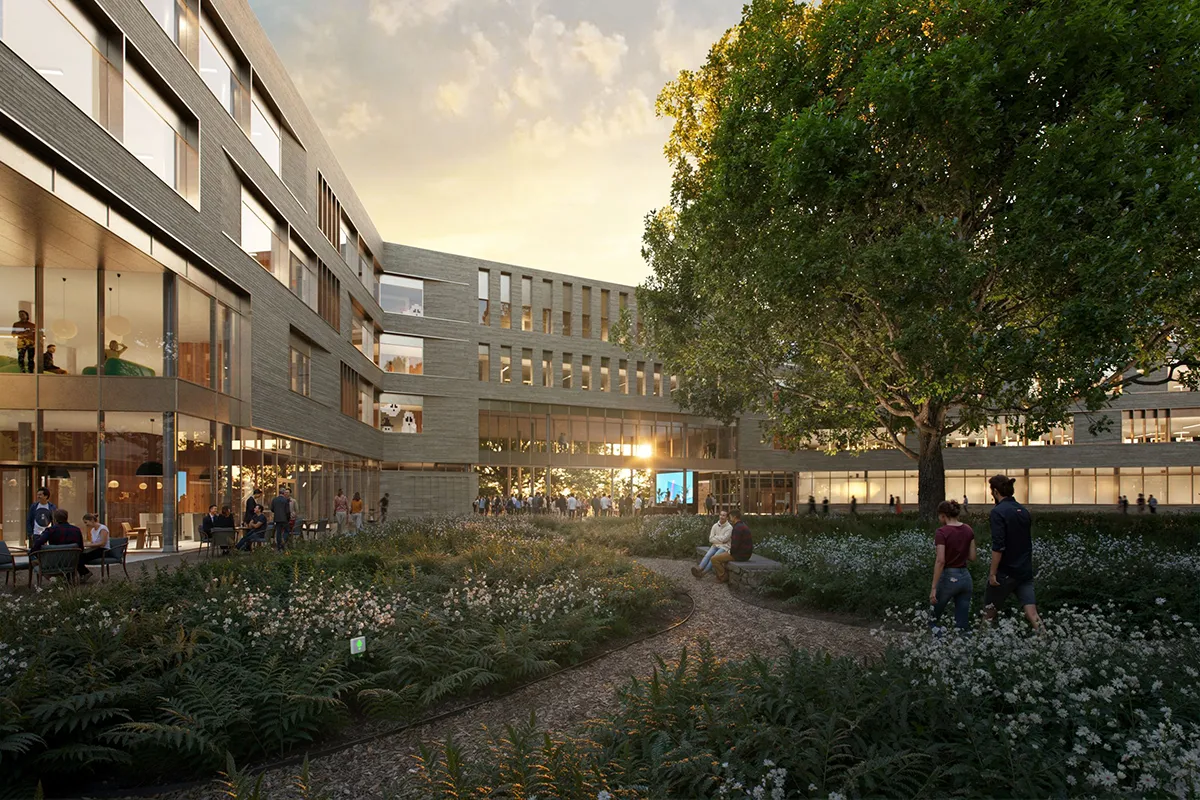
Around IDEA, the Innovation Gardens form a “green wrap” of planting, integrating SuDS features including rain gardens, swales and a detention pond. These are combined with terraces and seating to support outdoor working and social use, while maintaining a strong ecological character.
Water as part of the landscape
Water management is fully integrated into the design through a connected SuDS network that works with the site’s natural topography.
Rain gardens and planted swales capture, attenuate and convey water across the site, creating visually engaging features that support biodiversity and long-term climate resilience.
Images: Grant Associates