
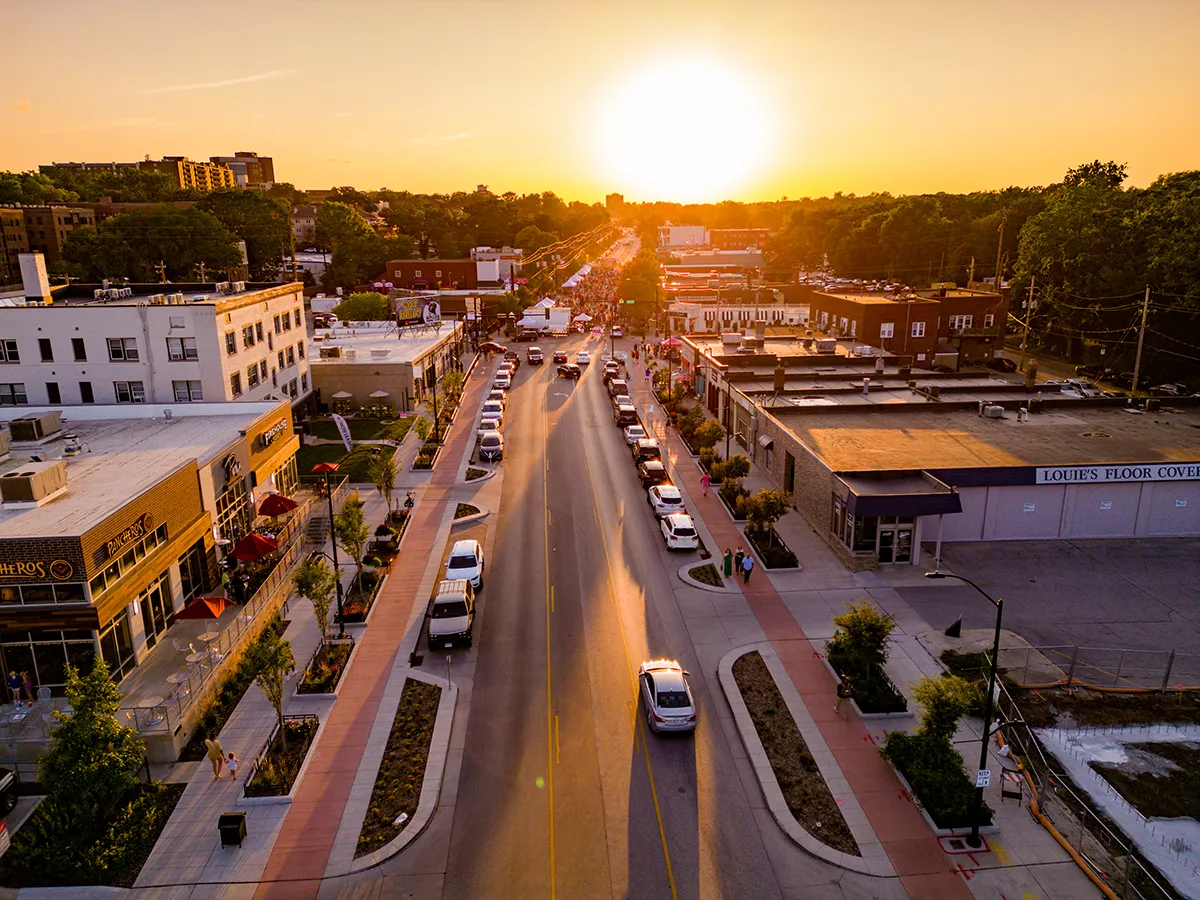
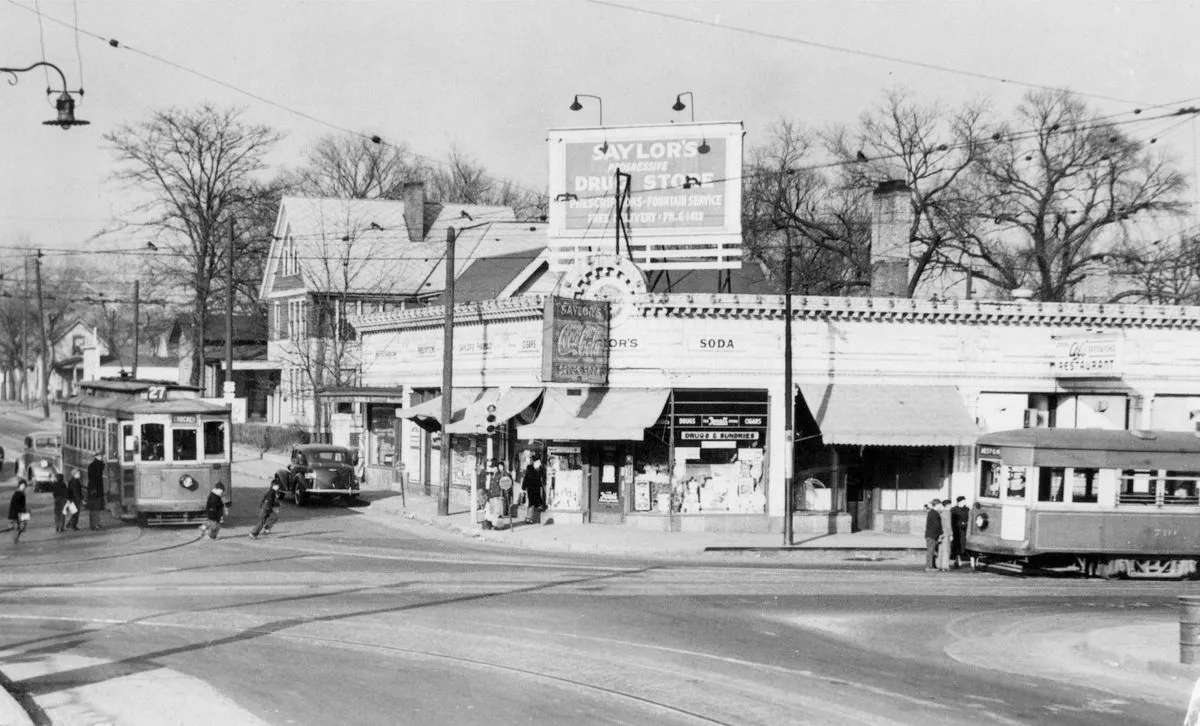
Ingersoll Avenue Streetscape is a 1.5-mile transformation of a unique corridor into a vibrant, multi-modal district. From 1895 to 1951, Ingersoll Avenue served as the primary artery for the city’s streetcar system, a legacy that laid the foundation of walkable, storefront-oriented architecture. In the decades following the streetcar’s retirement, the corridor evolved into a car-centric thoroughfare, with pedestrian and bicycle infrastructure treated as afterthoughts. High travel speeds and sparse protected crossings led numerous incidents, creating an unsafe environment for the thousands of residents, employees, and visitors who navigate the district daily.
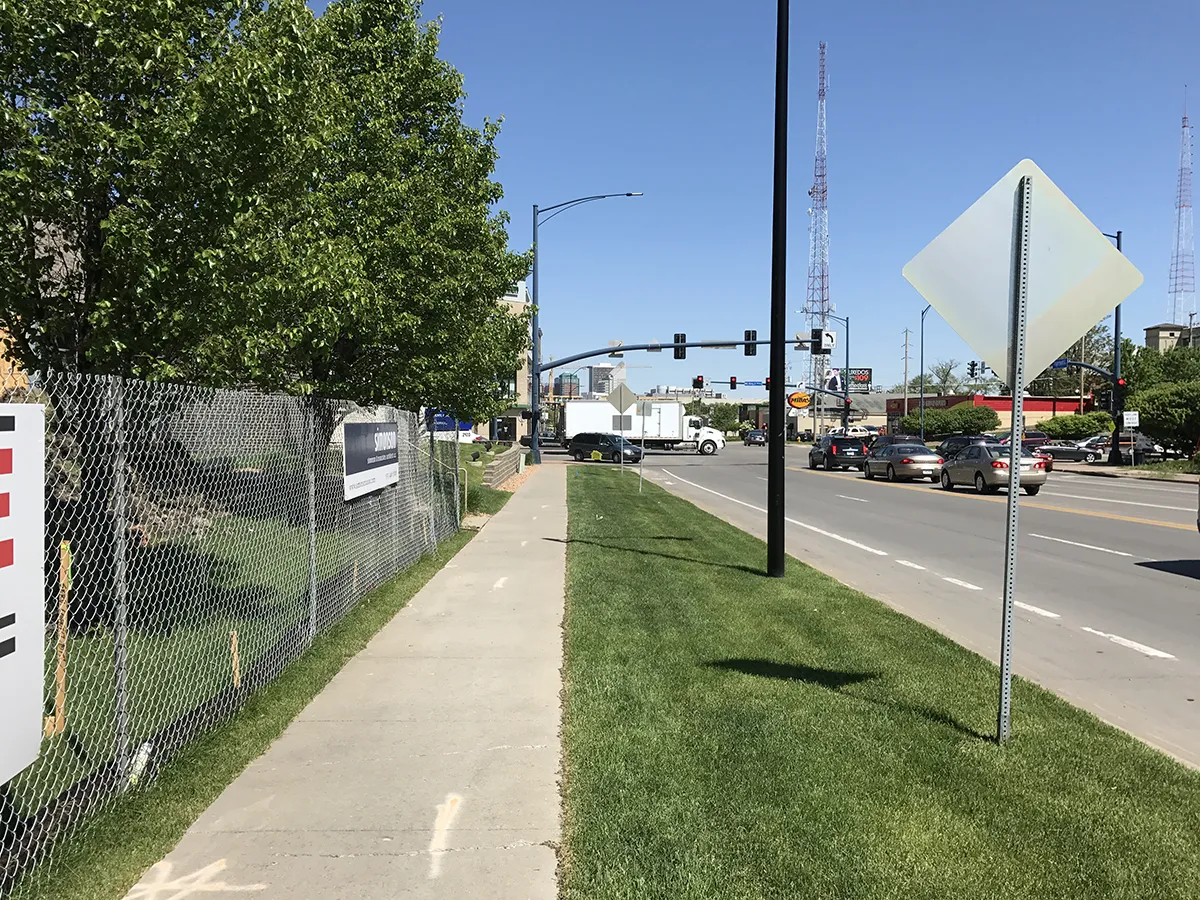
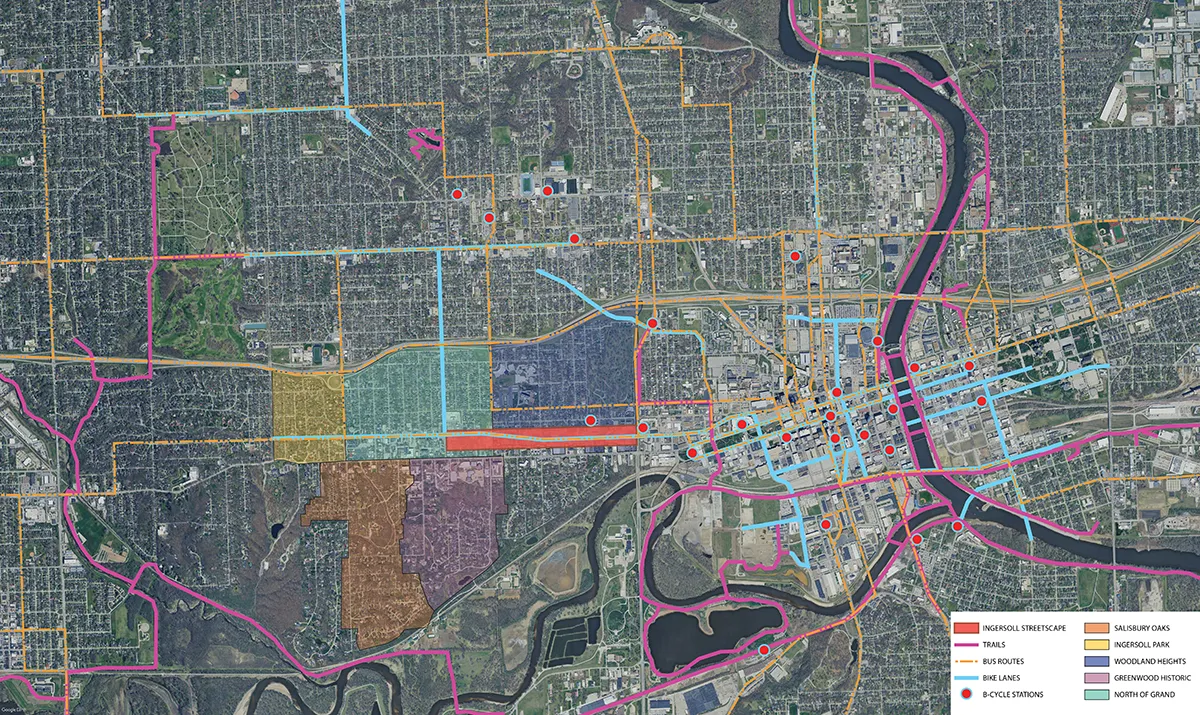
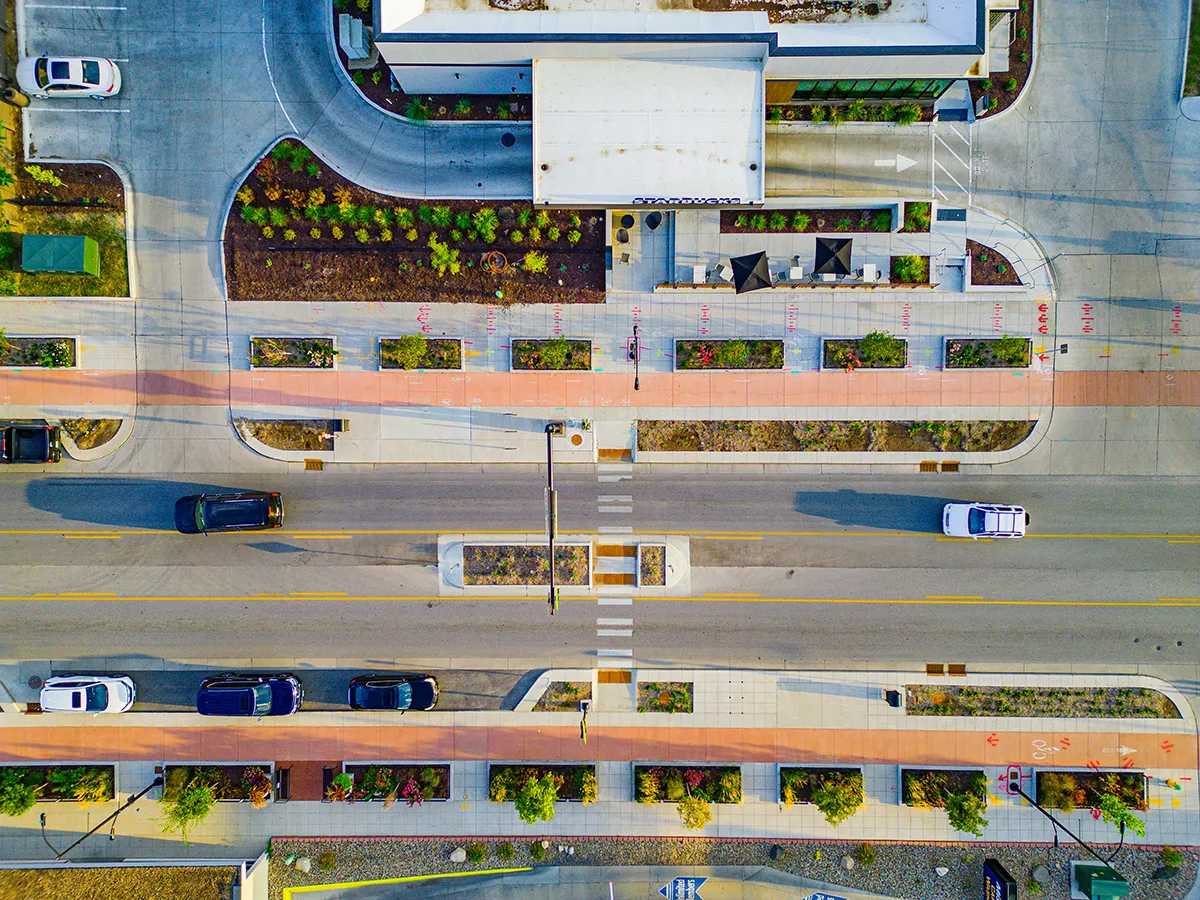
The project straddles five historic neighborhoods and serves as the front door for over 140 businesses and residences. The design philosophy centers on the belief that a street is a social gathering point and an ecological asset, not merely infrastructure for moving vehicles. By implementing the region’s first raised cycle track and narrowing vehicular travel lanes, the project slows traffic and re-prioritizes human experience. The streetscape integrates native, drought-tolerant plantings and a robust tree canopy to mitigate the urban heat island effect and stormwater management best practices, re-establishing Ingersoll Avenue as a premier urban destination where safety and economic vitality coexist within its ecological backdrop.
Role of the Landscape Architect
The landscape architect served as design steward for the corridor, first by authoring comprehensive Design Guidelines and subsequently as a subconsultant to the traffic engineer during four construction phases. This role ensured that technical requirements did not compromise the streetscape’s design objectives. The entrant established corridor-wide standards for safety, comfort, and ecology, and verified them through implementation.
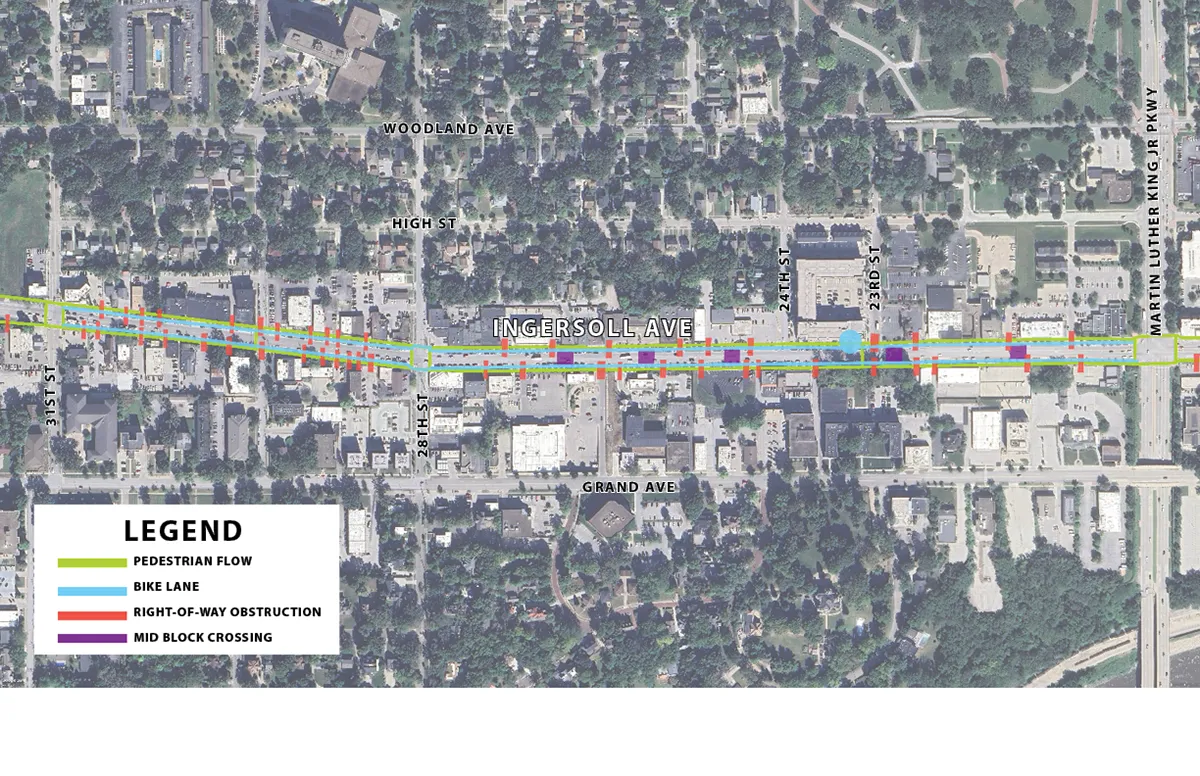
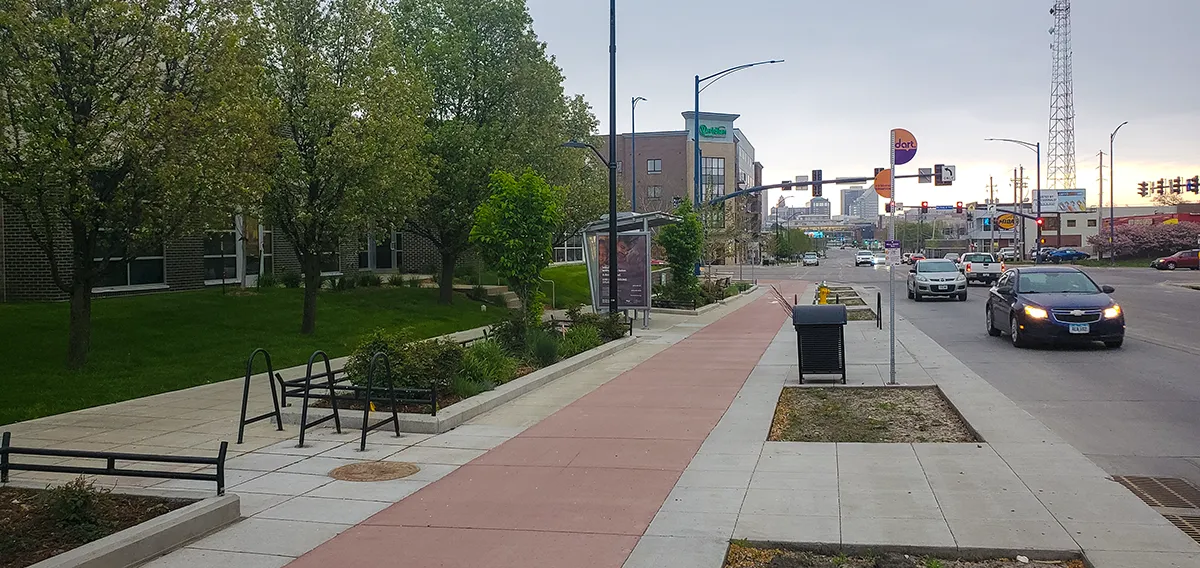
A foundational task was evaluating a streetscape pilot project on a single block of the corridor. The entrant assessed this area as a prototype to be improved, translating lessons from past experiences into repeatable corridor standards. The landscape architect refined key details to increase performance and reduce lifecycle costs. For example, the original planter railings were cast directly into the concrete curbs, making them expensive to repair and prone to causing curb damage from vehicular collisions. Additionally, ornamental projections at planter corners caused conflicts, including painful contact at the shins and damage to car doors. The entrant redesigned the system as a modular, breakaway railing that can be replaced efficiently without recasting the curb. Planter geometry was also modified to pull the guardrail back from driveway flares, the most common area for winter-weather collisions, prioritizing durability and maintenance.
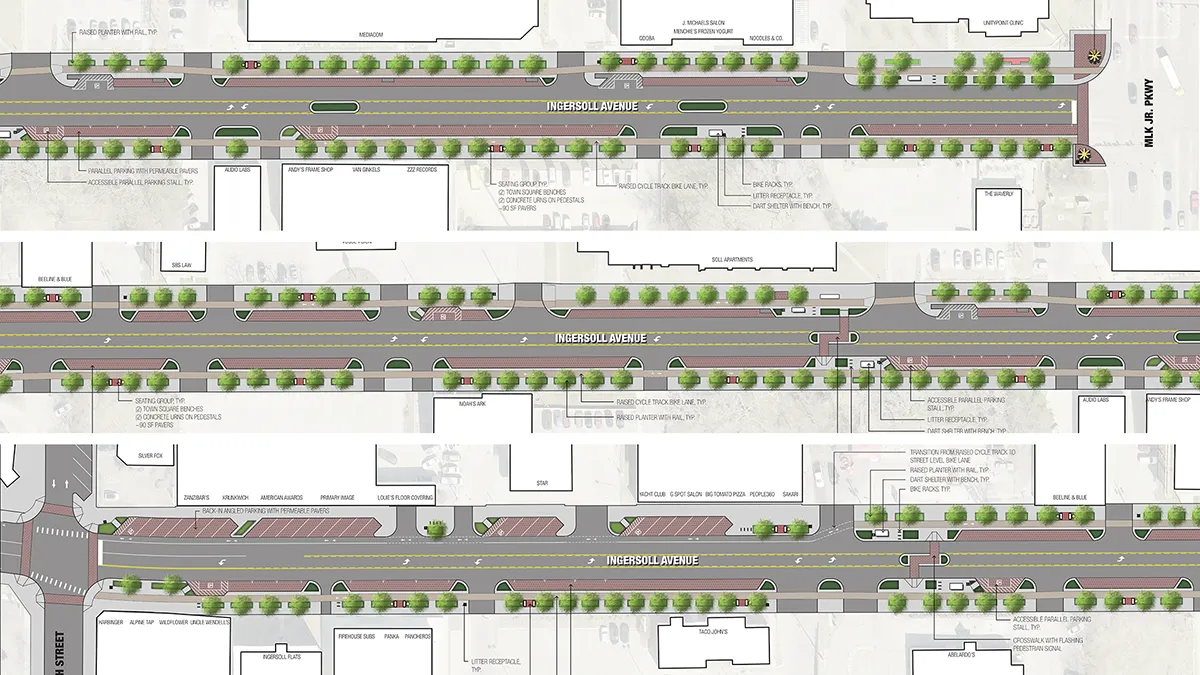
Beyond detailing, the landscape architect approached the corridor as an interdependent system. Pedestrian safety was strengthened through a legible organization: establishing a clear pedestrian zone, prioritizing additional mid-block crossings to reduce jaywalking, introducing comfortable seating nodes, and orienting benches perpendicular to the roadway rather than facing traffic. Bicycle mobility was advanced as a core system rather than an add-on. The entrant’s standards supported the integration of the region’s first curb-separated cycle track, providing a protected facility that makes bicycling a safe, desirable option for all ages. By treating bicycling as everyday transportation, the corridor draws the region’s trail culture into the urban core.
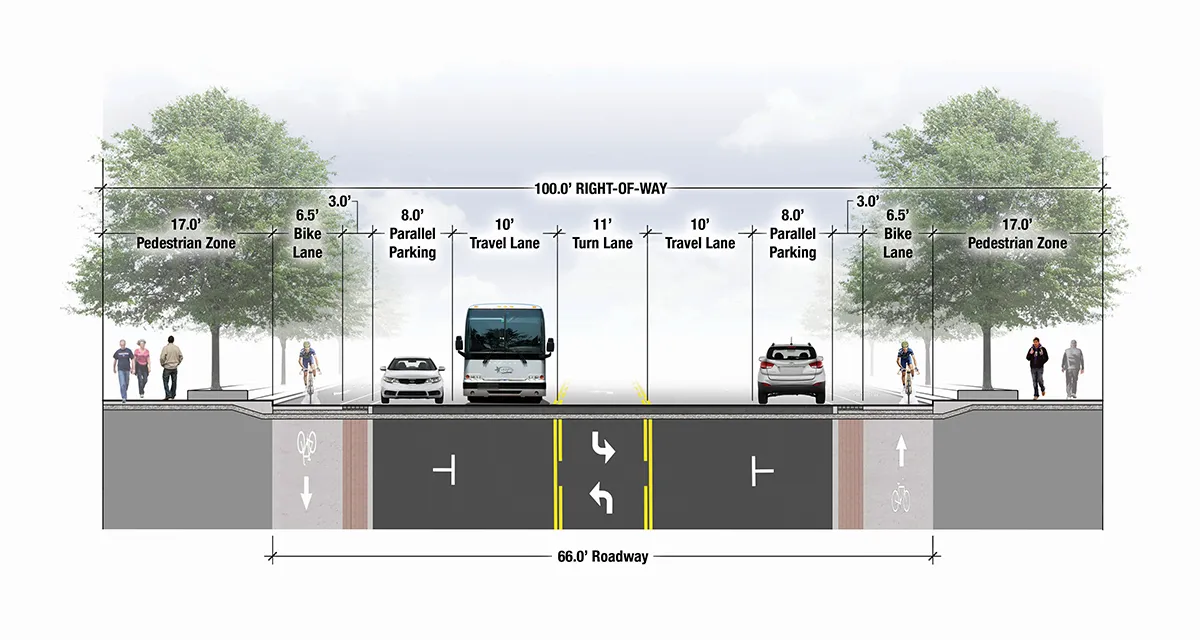
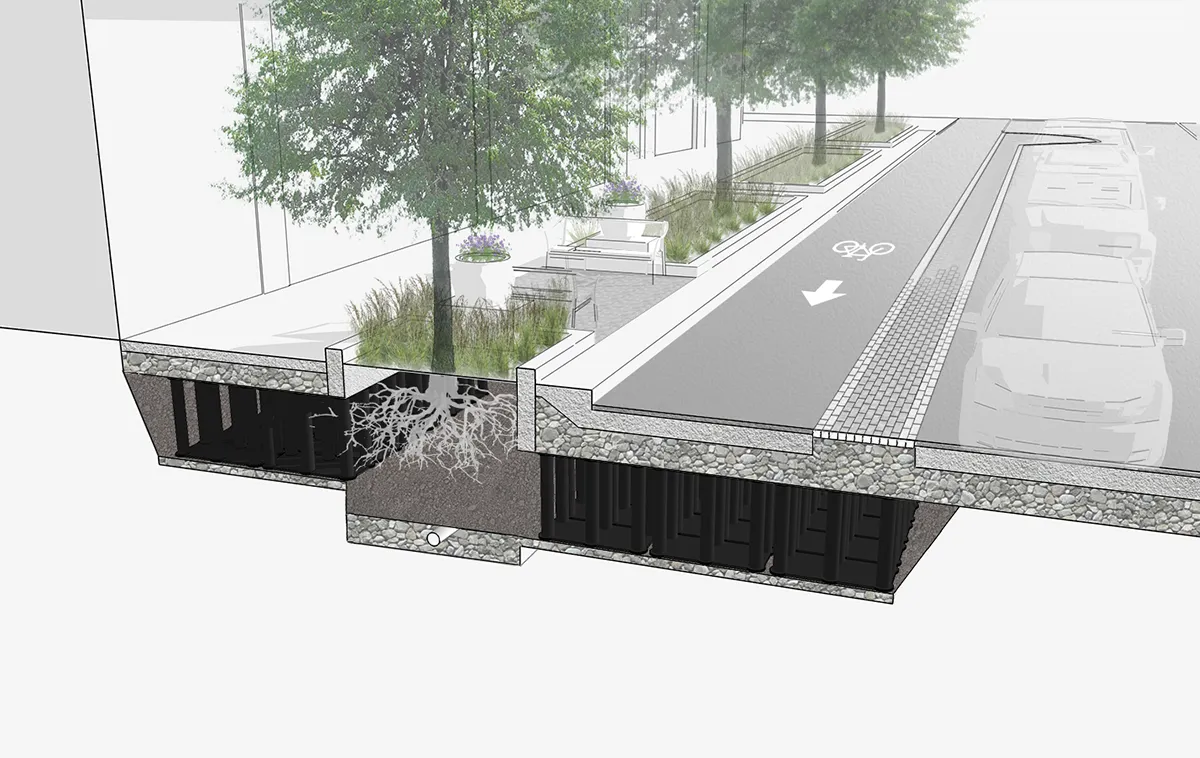
Environmental performance was similarly structured as a corridor system. The entrant developed a plant palette of native, drought-tolerant species that pair seasonal beauty with functional habitat. Planting beds and trees were intentionally deployed to mitigate heat and support stormwater management. Finally, the landscape architect advocated for accessibility improvements at the building edge. The entrant advocated regrading the pedestrian area as a requirement to remove stepped stoops at building entrances, create at-grade entrances, and align the public realm with the district’s goal of serving all users.
Special Factors
The project navigated significant budgetary constraints and a complex construction schedule. As a publicly funded, low-bid project, soil cells specified for the trees were value-engineered out. To maintain the integrity of the urban forest, the landscape architect adapted the design by maximizing topsoil depths and introducing structural soils to bridge gaps between beds, creating shared, continuous root zones beneath the pavement. This technical pivot supports the long-term health of 184 newly planted overstory trees, preserving the canopy goals central to corridor identity.
Public perception also required careful navigation. Construction fatigue demanded strategic communication to balance short-term disruption with long-term benefit. The landscape architect remained responsive to business concerns regarding parking and access while maintaining core safety objectives. This collaborative spirit is exemplified by the Streetscape Salsa Garden. During construction, a business owner requested to use a vacant plant bed for vegetables. The landscape architect and client embraced this grassroots initiative, which has since evolved into an annual tradition where multiple beds host edible plantings. The result is a visible expression of community ownership that complements the project’s people-centered intent.
Significance
Ingersoll Avenue Streetscape serves as a landmark shift in how transportation infrastructure is conceived in the region. While the metropolitan area is known for an extensive trail system, those assets are traditionally separated from commercial centers. This project leverages the city’s robust bicycle culture by bringing protected, high-quality cycling infrastructure directly into the urban core. By centering the design on the needs of people and nature rather than on vehicular throughput alone, the project demonstrates the unique value of the landscape architect’s perspective in solving complex urban problems.
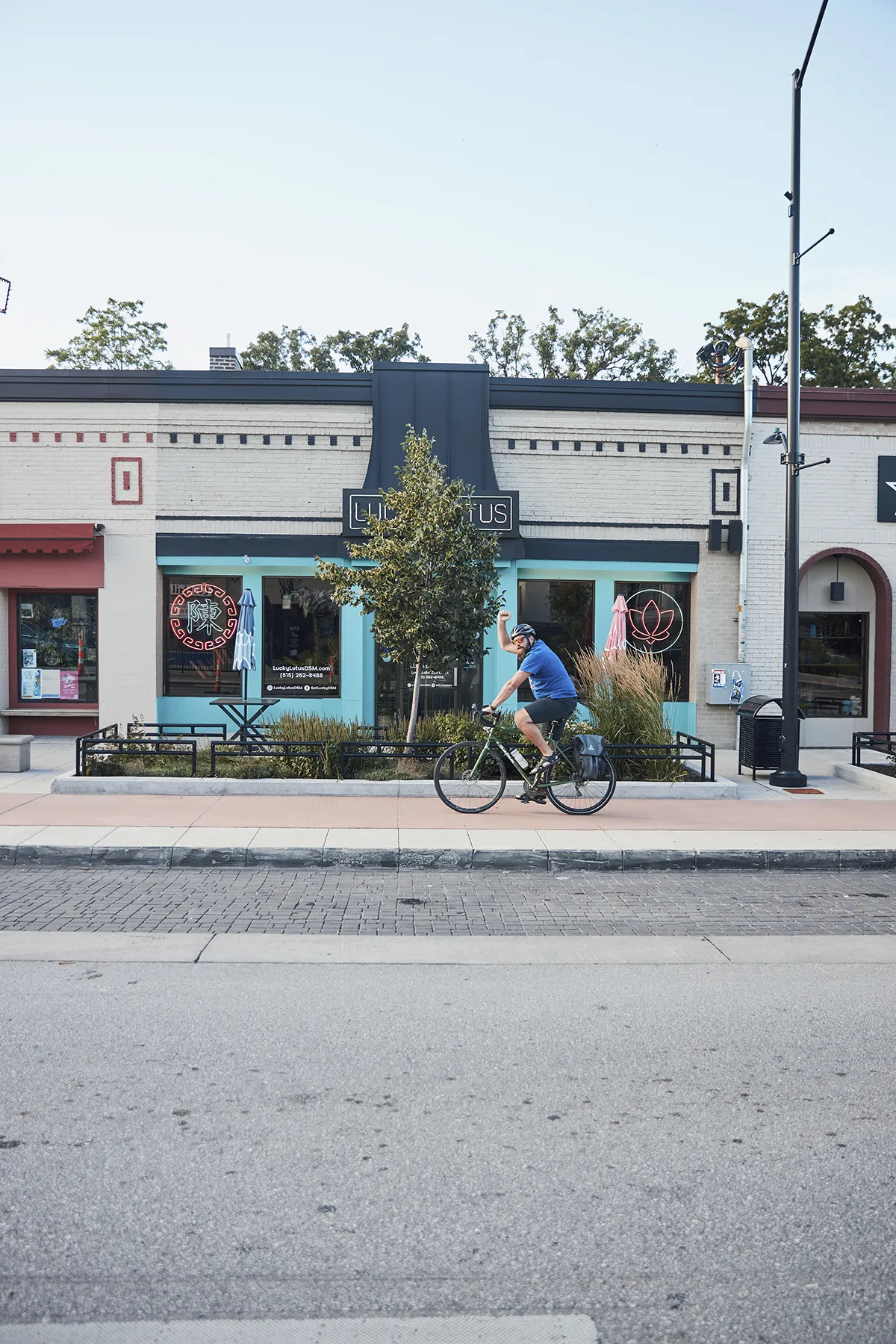
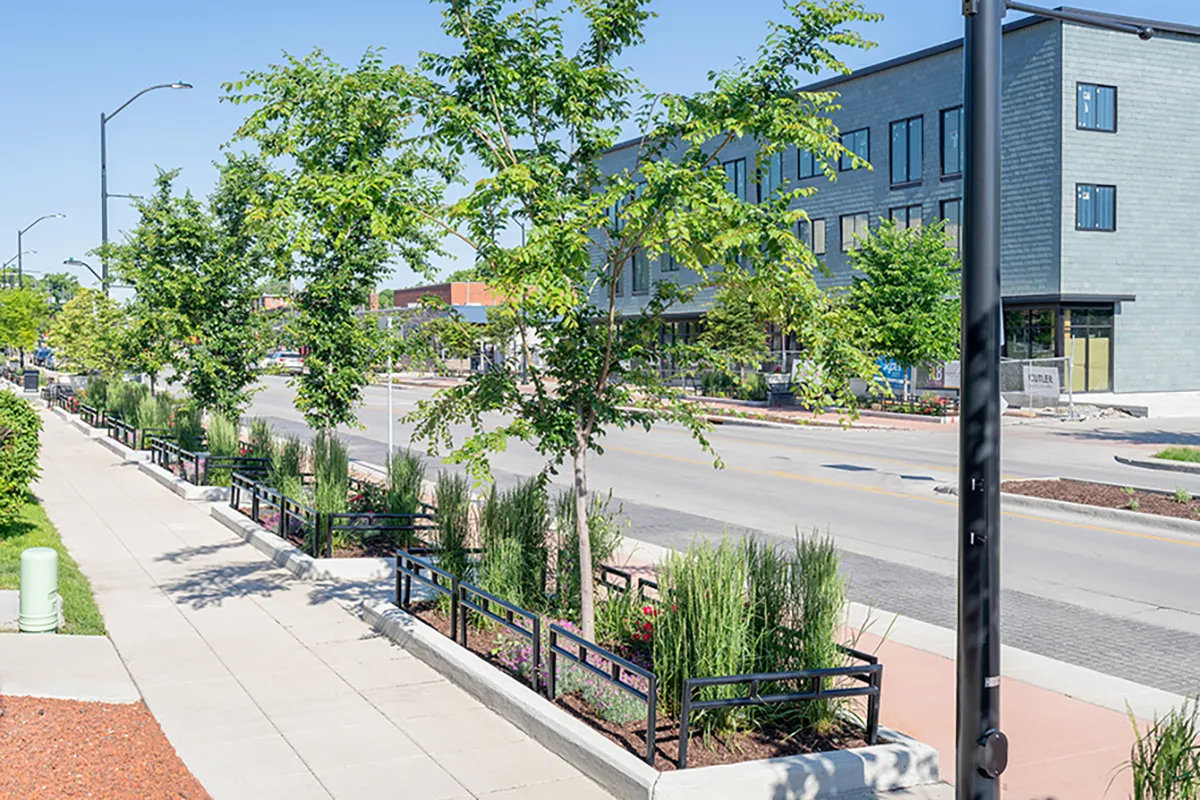
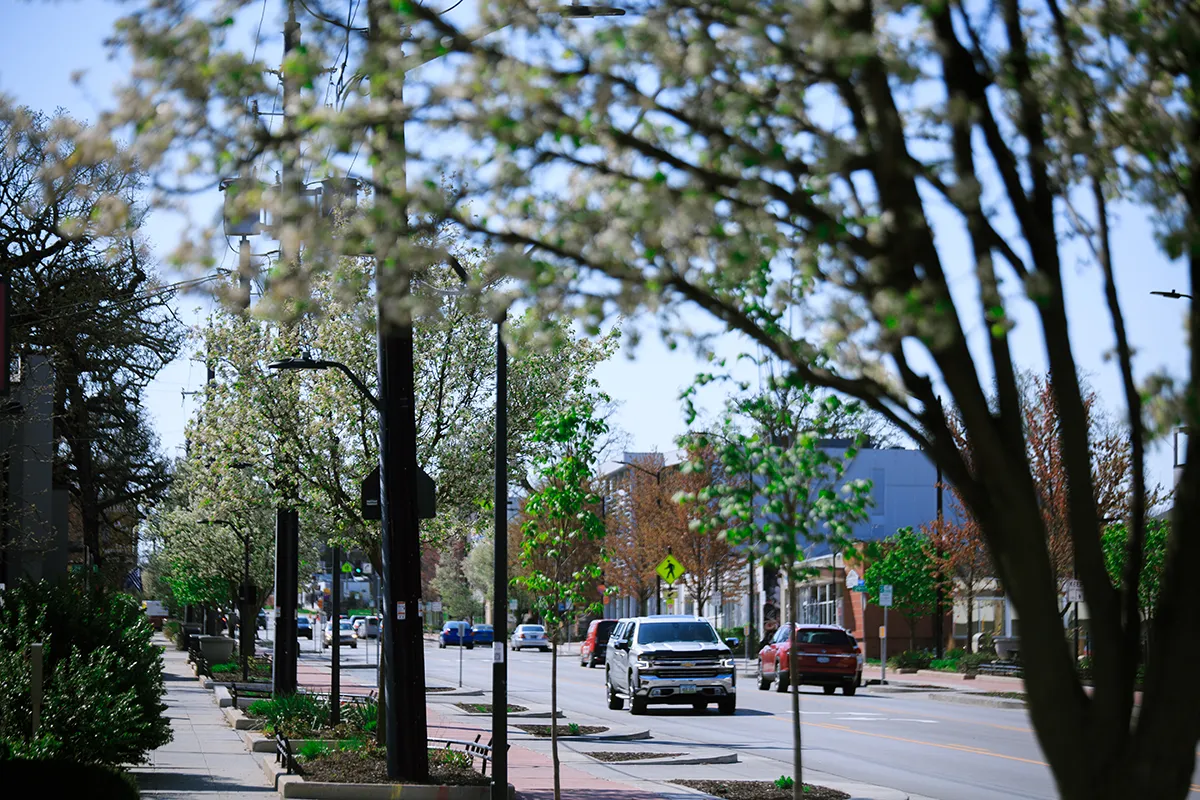
The project’s significance lies in its stewardship of both history and ecology while delivering measurable community and economic benefits. The streetscape builds upon the corridor’s transit-oriented past by replacing impermeable surfaces with a cooling tree canopy and native plantings that provide seasonal beauty and functional urban habitat. The design has catalyzed tangible improvements: traffic speeds have decreased by 16%, crashes have decreased by 50% since the conversion to three travel lanes, and congestion and travel times remain relatively unchanged, proving that safety and mobility are not mutually exclusive. The corridor now attracts over 2 million pedestrian visits annually, and the surrounding 50312 ZIP code experienced a 23% increase in retail sales following the improvements. Enhanced transit connectivity through DART routes 60 and 11 generated 300,000+ combined passenger rides last year, demonstrating the project’s role in supporting sustainable mobility for the district’s 140+ businesses and residences.
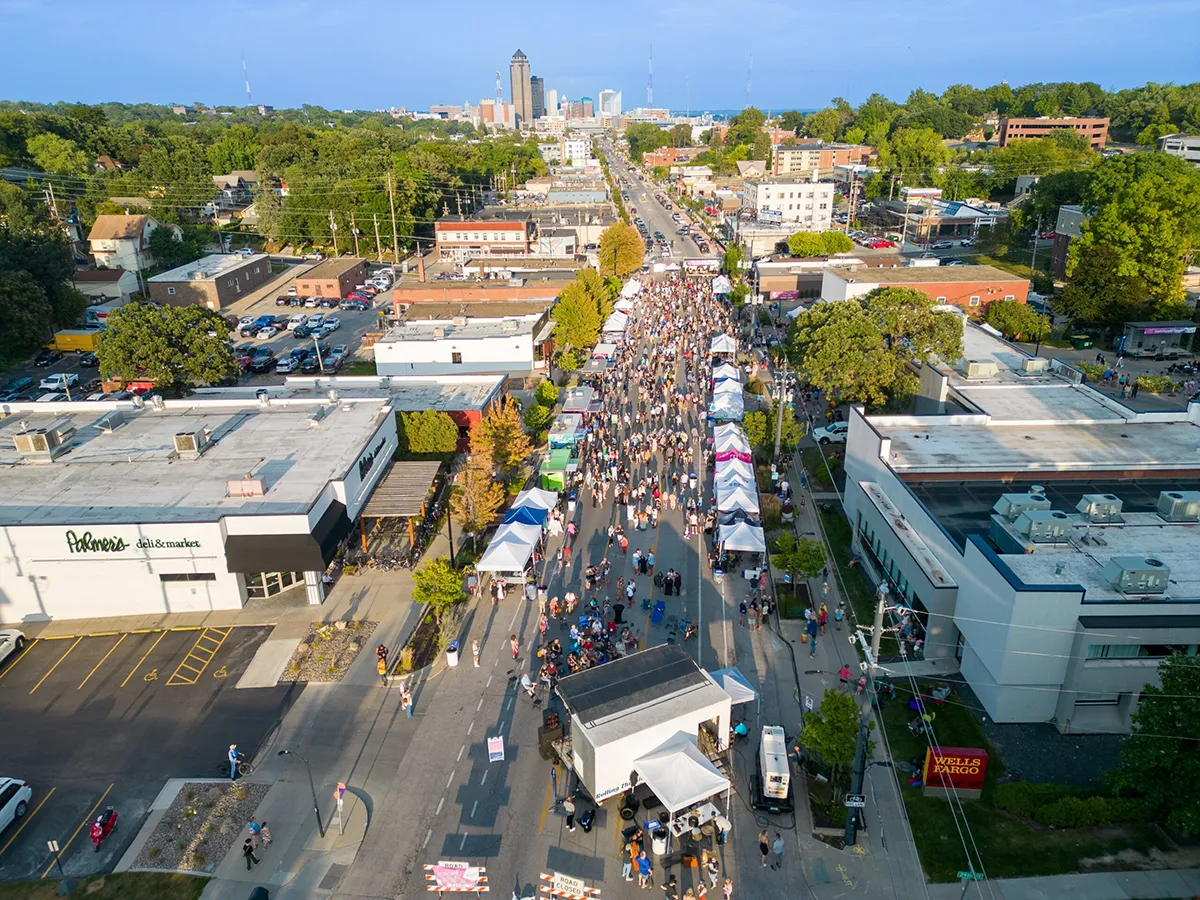
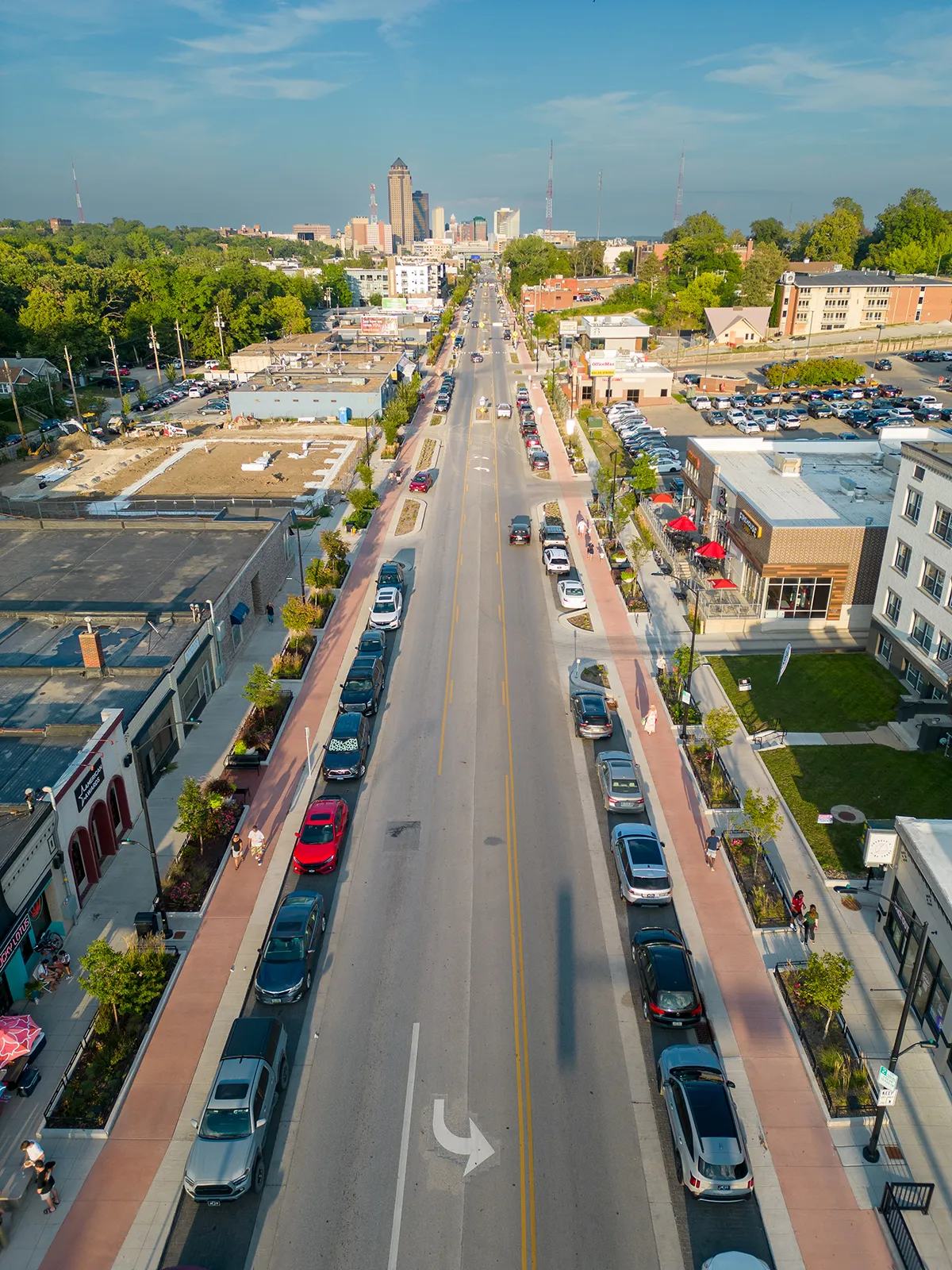
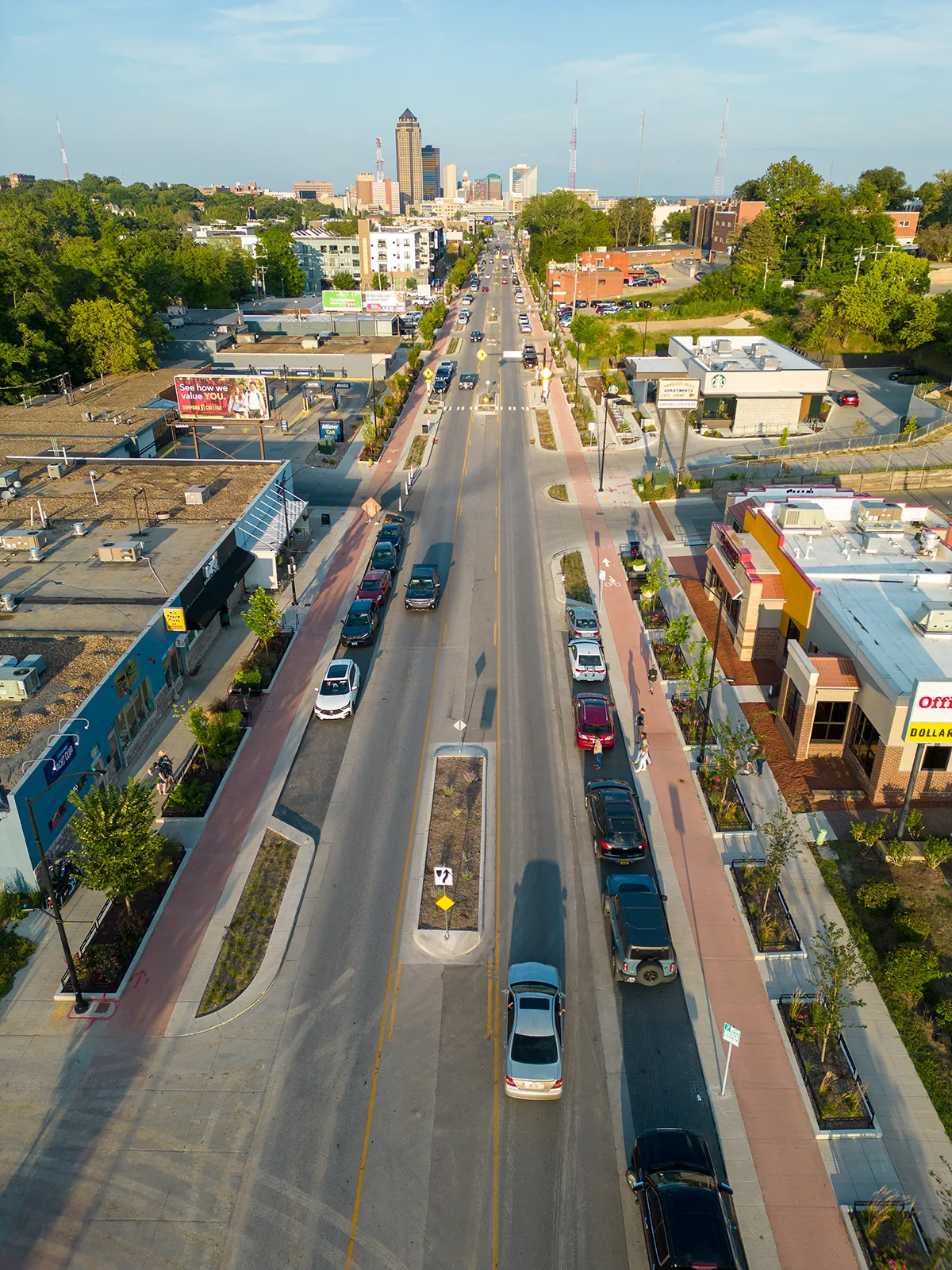
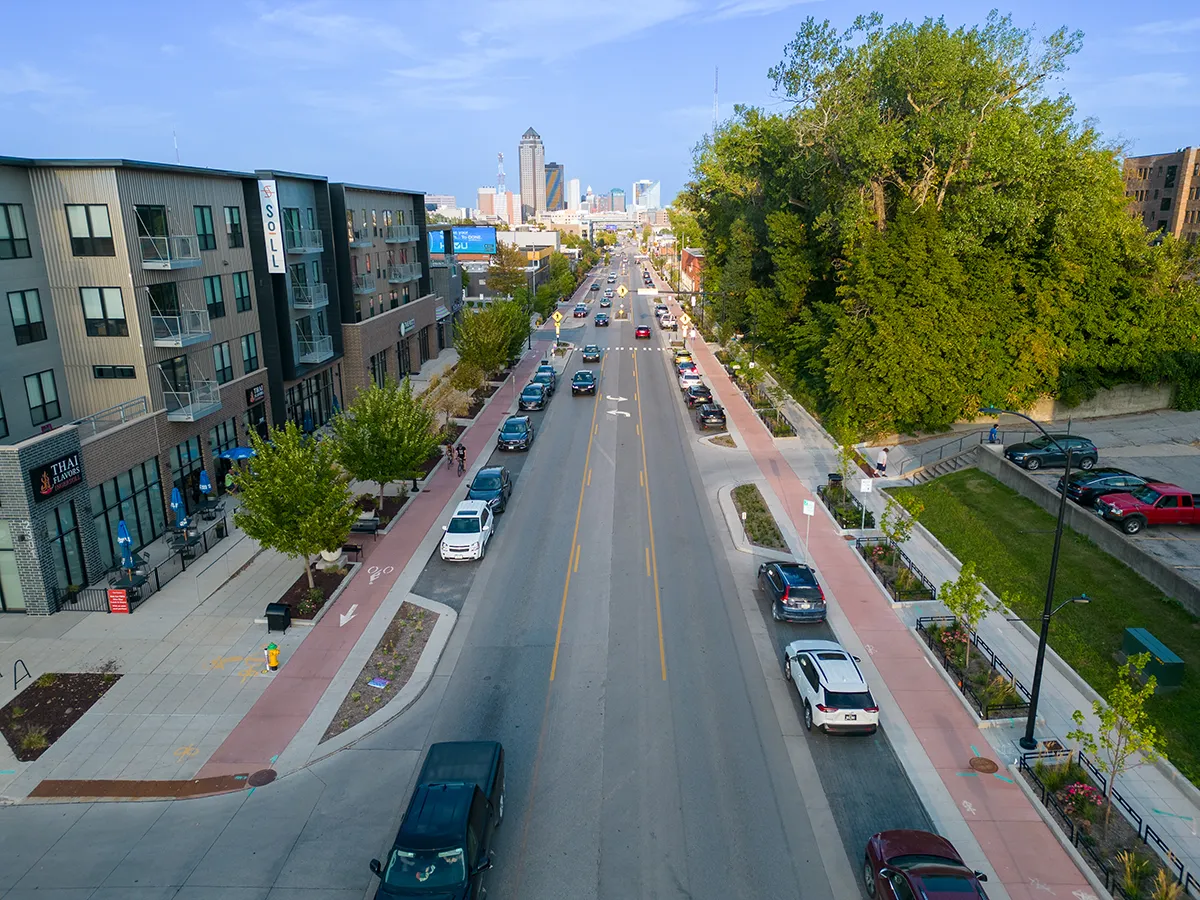
The result is a landscape that feels intentional and rooted, where the aesthetic quality of the plant palette serves as a visible indicator of the district’s health and where pedestrian-friendly design, outdoor seating, and bike infrastructure actively support local economic vitality.
Ultimately, the project proves that a street can be more than a conduit for traffic; it can be a complex, living ecosystem and a catalyst for social revitalization. By leading with a design-first approach, the landscape architect has transformed a dangerous thoroughfare into a safe, accessible, and economically flourishing district that serves as a template for future urban interventions across the state.
Ingersoll Avenue Streetscape
Landscape Architect: Confluence
Engineering: Bishop Engineering
Client: City of Des Moines
Images: Courtesy of Confluence