
Winner of the 2025 WLA Awards – Honourable Mention in the Built Sustainability & Resilience category
Illinois Beach State Park (IBSP) is the last remaining contiguous six miles of natural shoreline along Lake Michigan in the State of Illinois and has been suffering from severe shoreline erosion in recent years. Its ecological quality is globally recognized and IBSP was the very first dedicated Illinois Nature Preserve, recognizing its value to the State. In response to this threat to high-valued natural resources, Living Habitats, the ecological consultant for the design-build team, created innovative aquatic and avian habitat amendments, some of which are the first of their kind to be deployed in a Great Lakes shoreline restoration application.
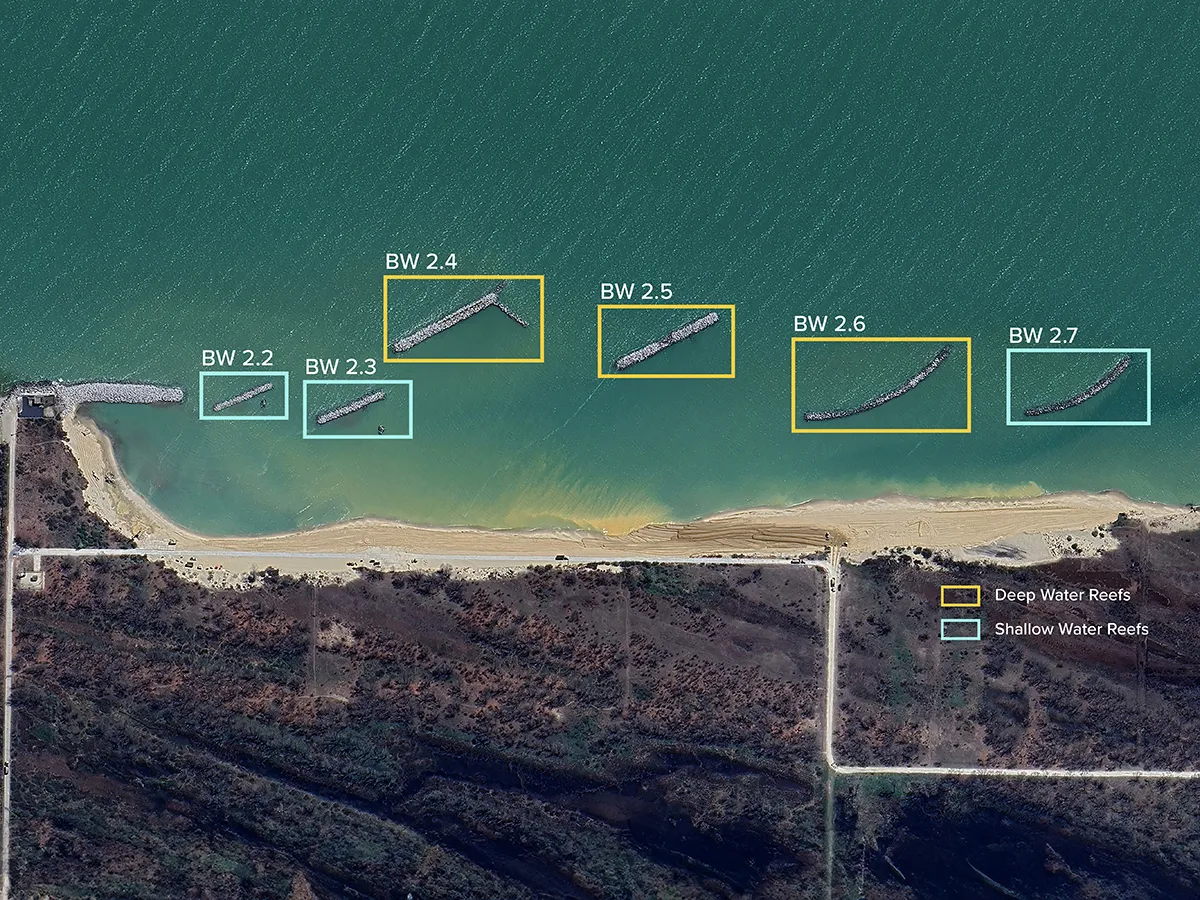
Fluctuations in Lake Michigan water levels threaten IBSP with severe shoreline erosion and associated inland flooding impacts. Historically, Great Lakes shorelines ebbed landward and lakeward over thousands of years across wide expanses of open space. Human made impacts and constraints limit the natural ability of the shoreline to resist erosional pressures. As a result, over 100 acres of rare shoreline habitats have already been lost to the lake.
The Illinois Department of Natural Resources (IDNR) initiated the project to protect 2.2 miles of this special shoreline and actively combat the loss of shoreline and rare upland habitat. This project follows a nature-based and resilient shoreline stabilization strategy, compatible with preserving the park’s unique ecological resources and character.
Rather than stopping erosion by building hard barriers along the shoreline, the design for IBSP seeks to guide and direct the movement of sand in ways that conform with the historic natural littoral processes of sand migration and replenishment along the western shore of Lake Michigan.
The team’s coastal engineers modeled and formulated 22 habitat islands in the form of breakwaters and submerged reef structures, positioned out in the lake rather than building armoring directly along the shoreline. Given the sensitivity and ecological value of this location, a thoughtful analysis of construction methods aimed at a reduction in potential impacts to the delicate ecosystems onshore and offshore was part of the planning from the onset.
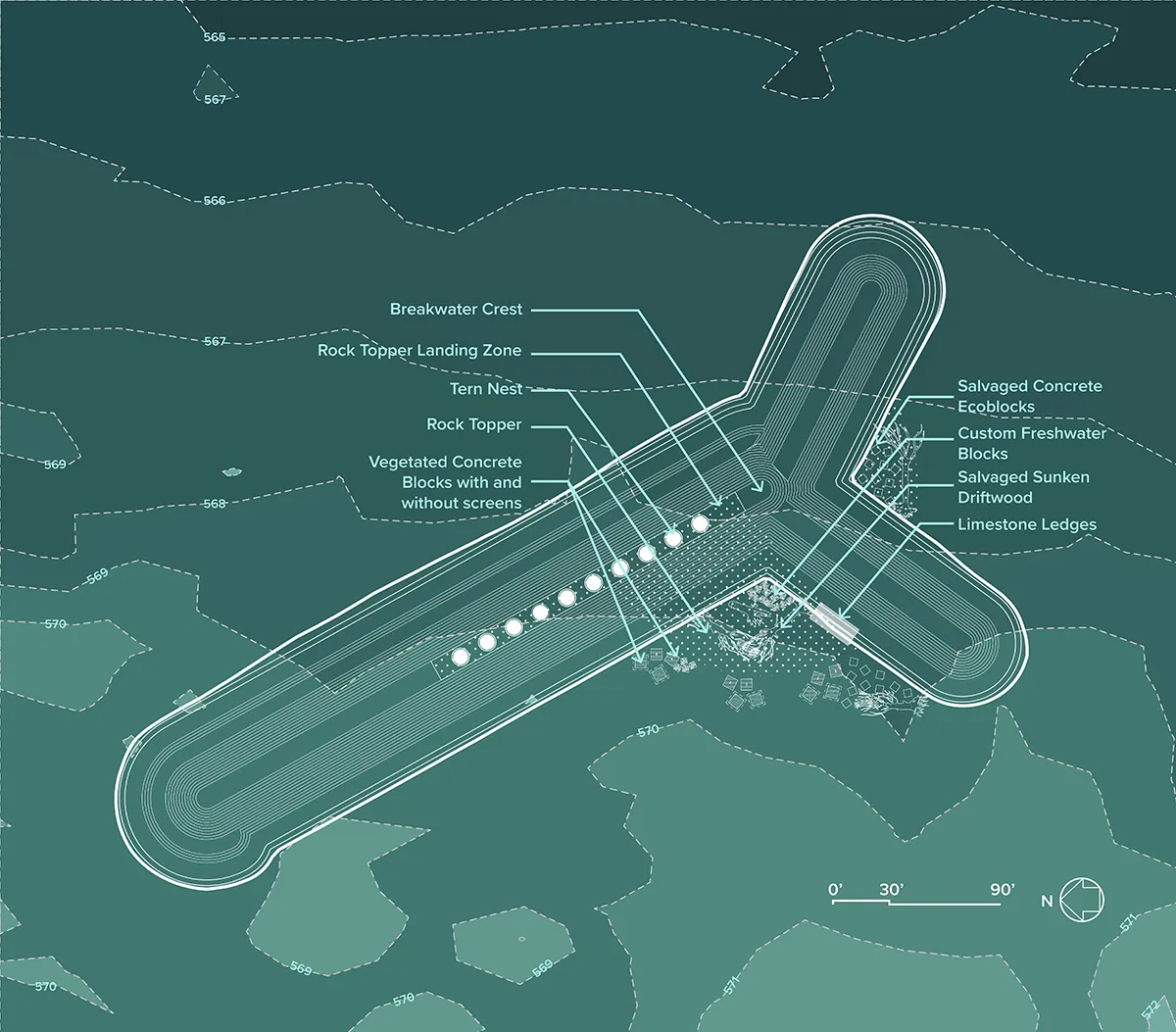
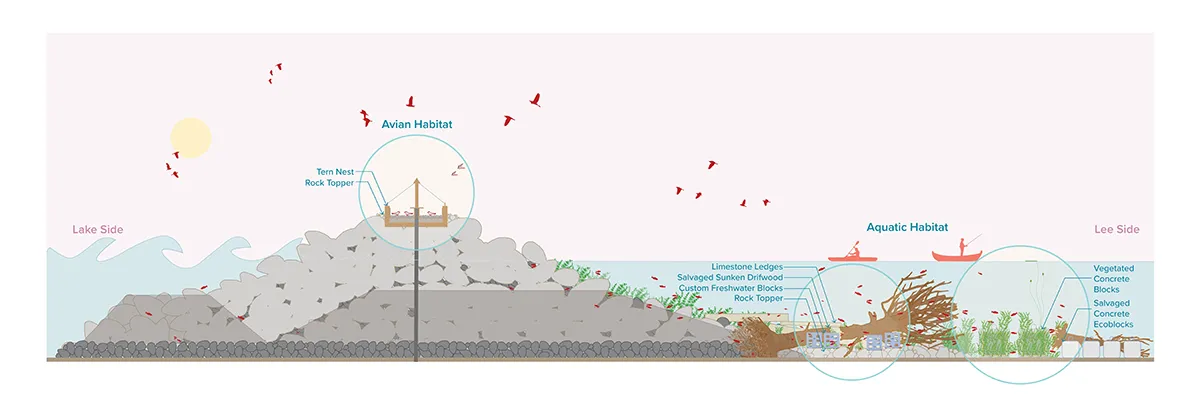
The design-build team was tasked with the final design, permitting and execution of the shoreline stabilization structures. The project goals included addressing specific avian and aquatic habitat creation and enhancement through targeted amendments.
IBSP attracts three coastal bird species of special importance that became focal species for the project’s avian habitat improvements: The Piping Plover, the Common Tern, and the Caspian Tern. The project’s beach nourishment activities will restore valuable nesting habitat for the Piping Plover along the beach and dune interface zone.
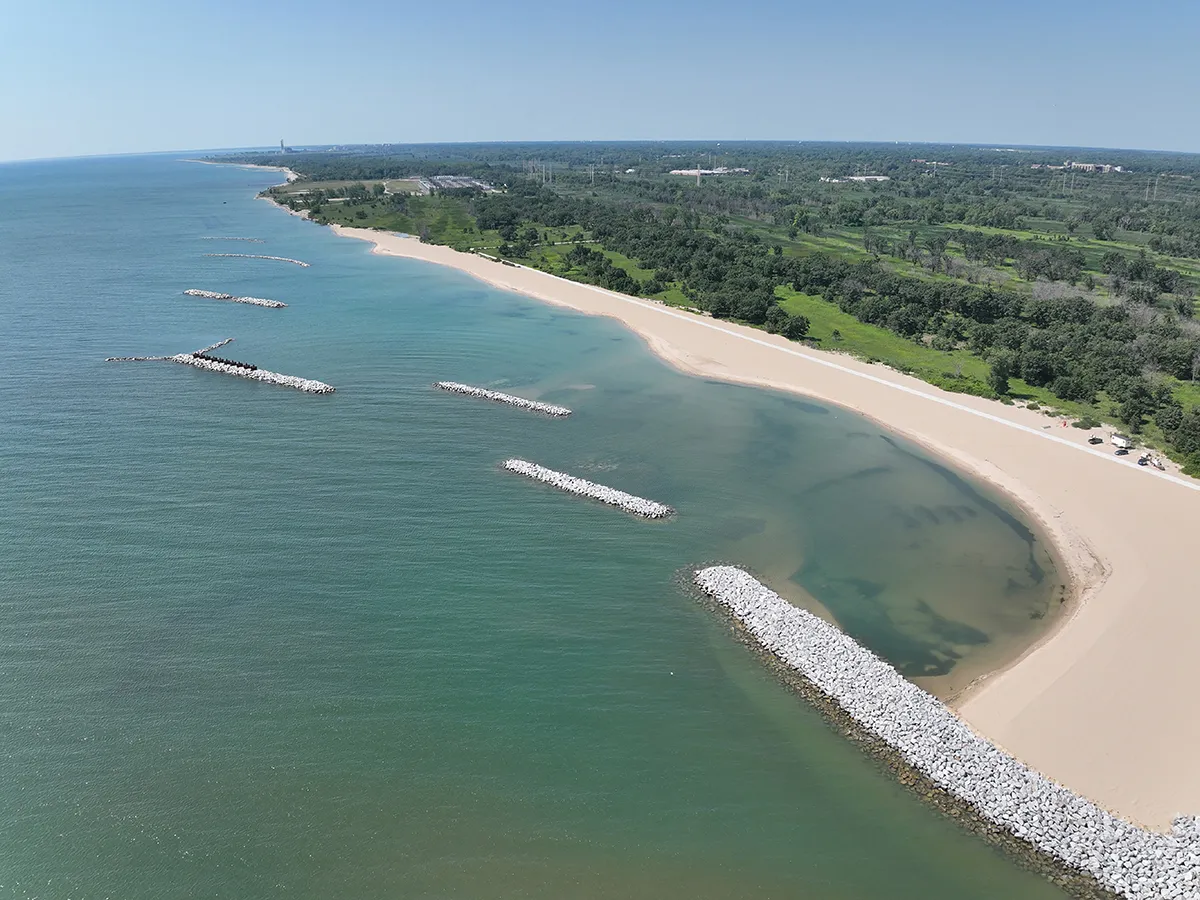
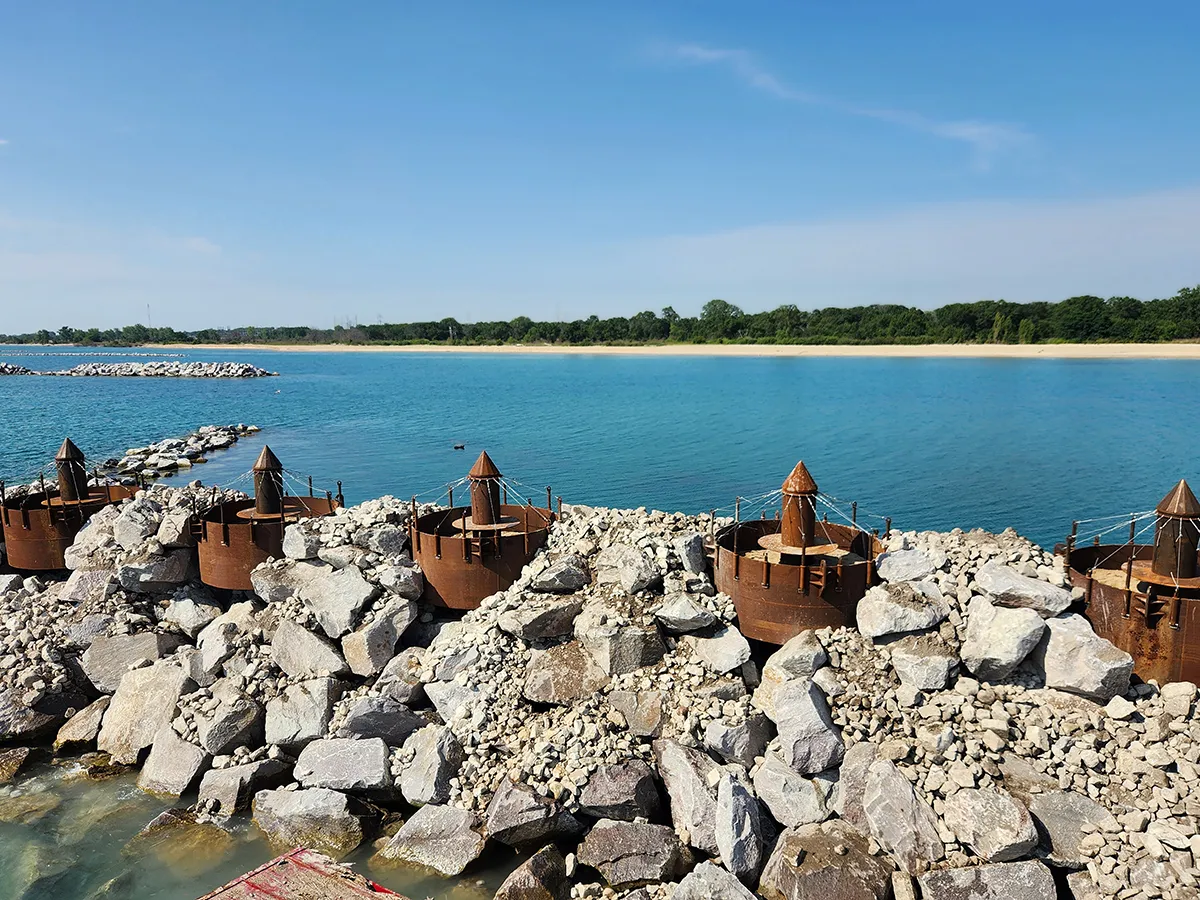
The breakwater structures hold the right lake position for Tern habitat and when enhanced with custom nest structures, the breakwaters have the potential to provide important new breeding locations for the Terns while simultaneously working to minimize loss of beach shoreline and create lower energy conditions on the shoreline side of the breakwaters. This new littoral habitat offers valuable new angling and bird watching opportunities for park visitors.
Mudpuppies and Yellow Perch were identified by the IDNR as target species for the aquatic design elements. This offered the opportunity for the design team to trial a variety of aquatic habitat amendments that could support a wide range of desirable species.
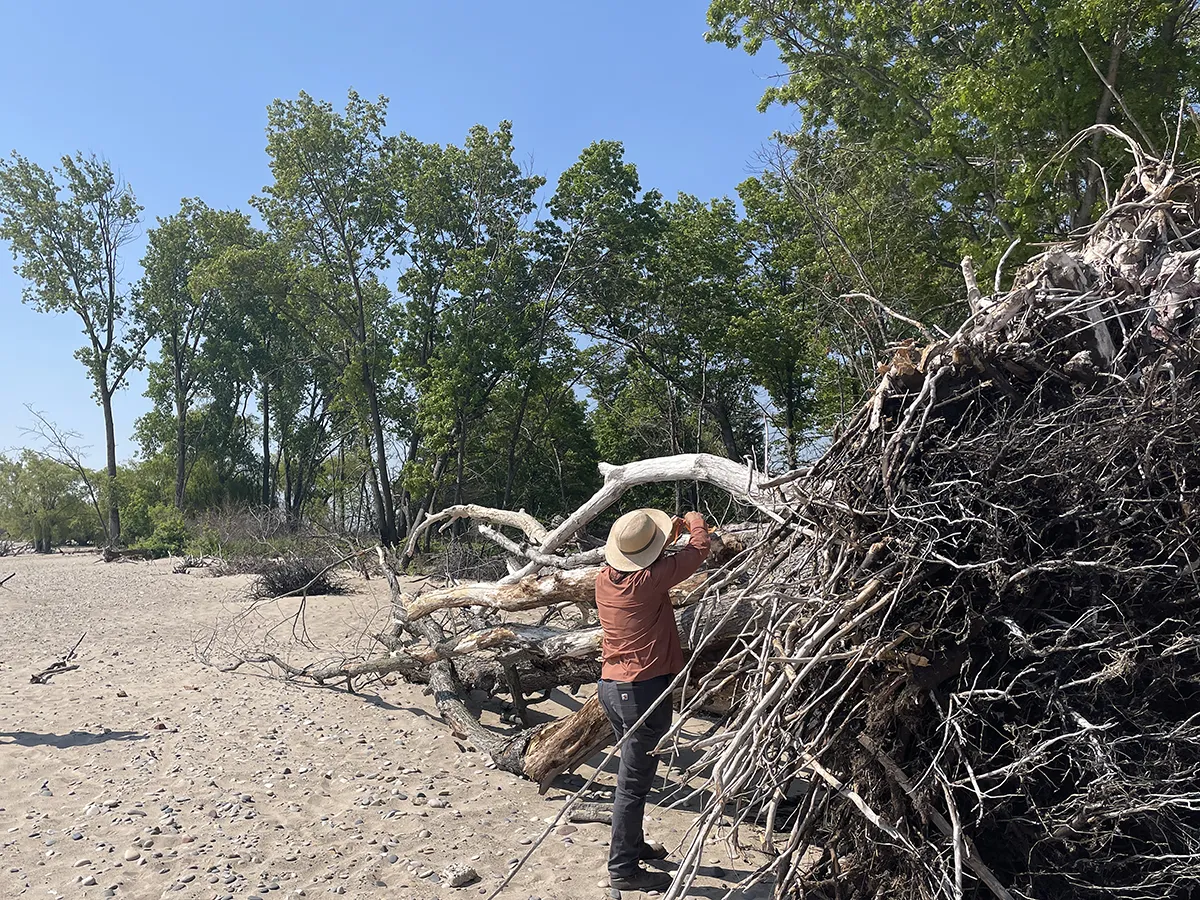
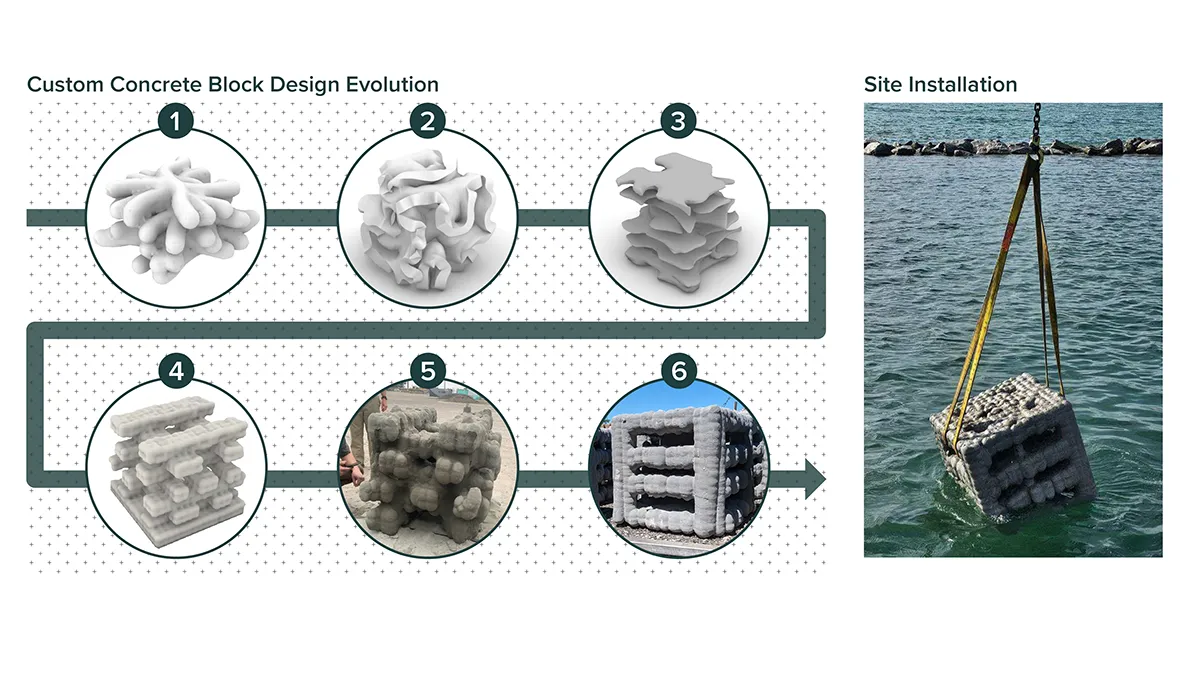
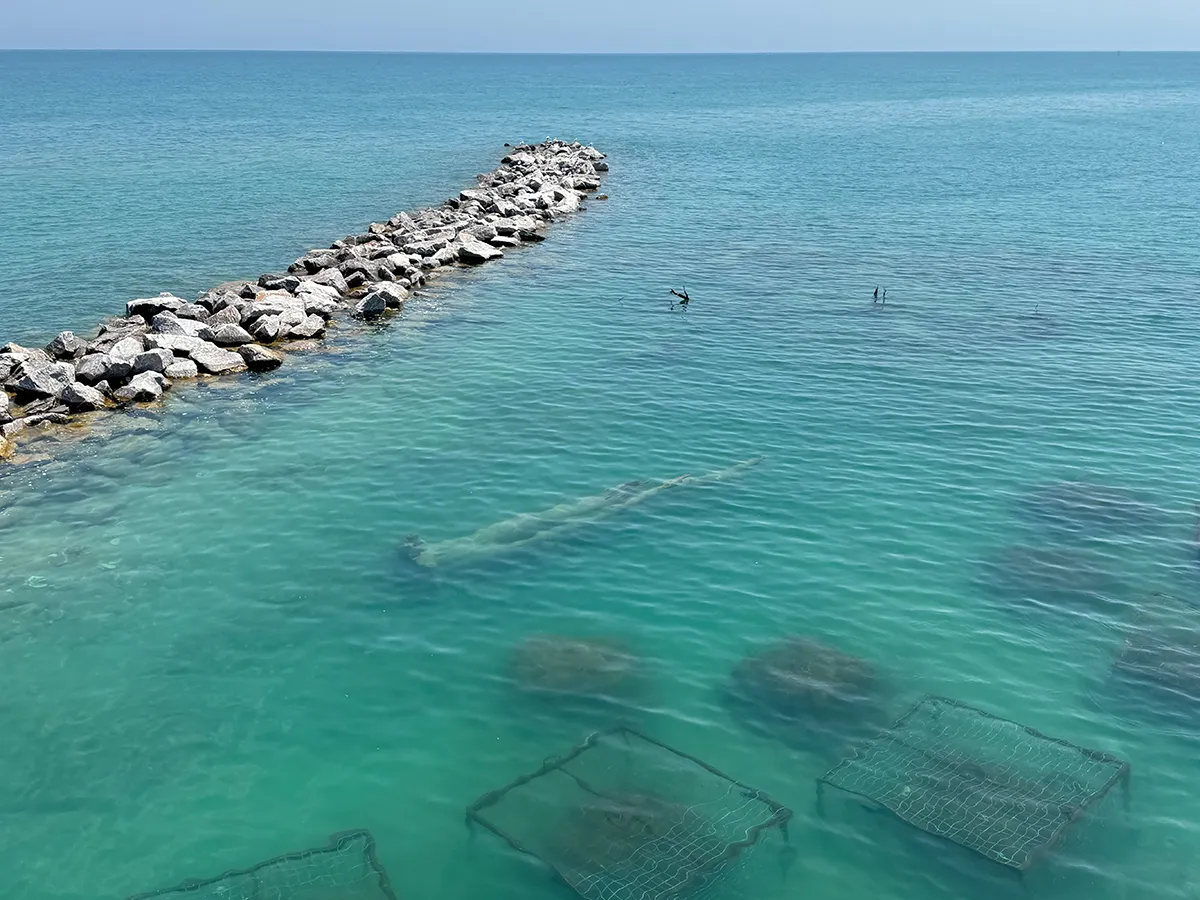
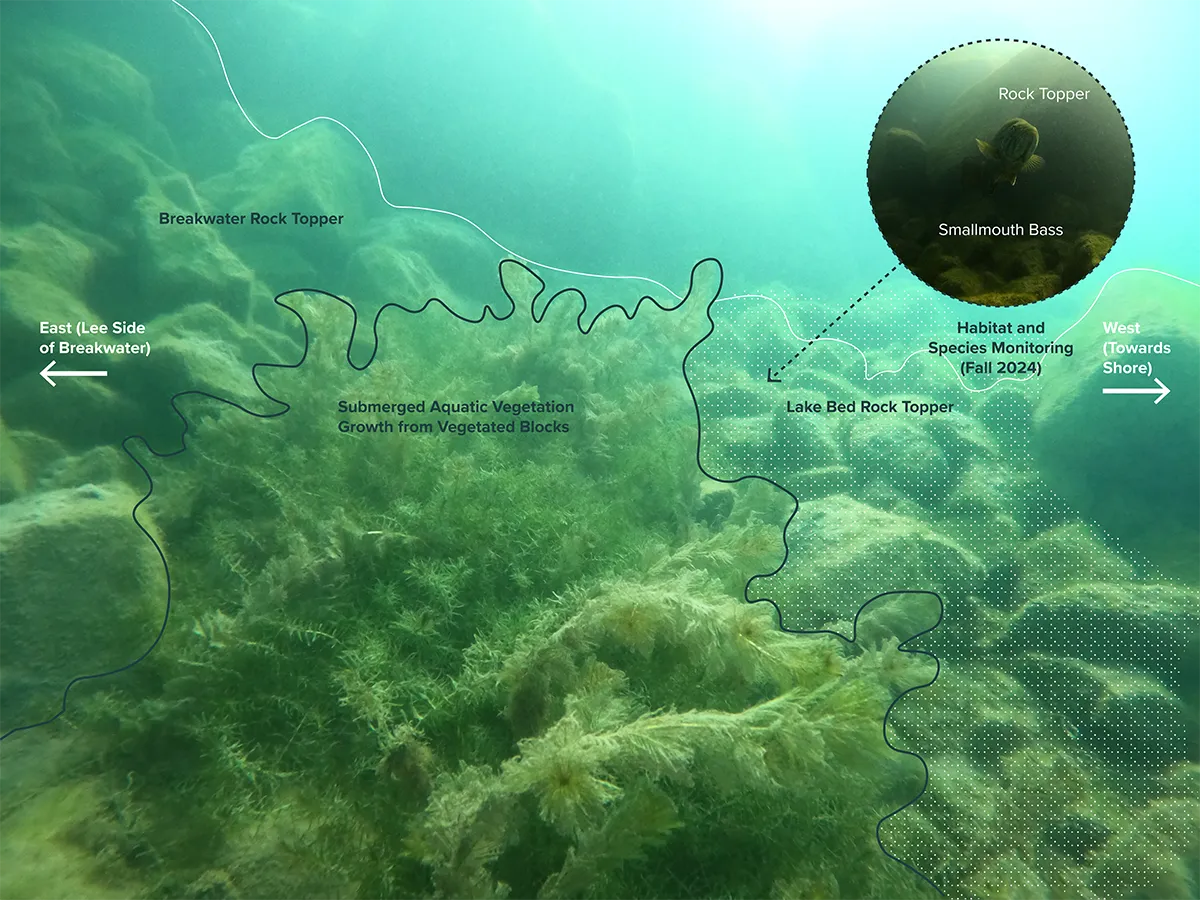
Innovative habitat structures have been custom designed by Living Habitats for these target species and were distributed on and around six of the breakwaters. These include custom and salvaged concrete habitat blocks, sunken driftwood, stacked limestone rock ledges, lakebed rock topper, and concrete blocks covered with growing media and aquatic plants.
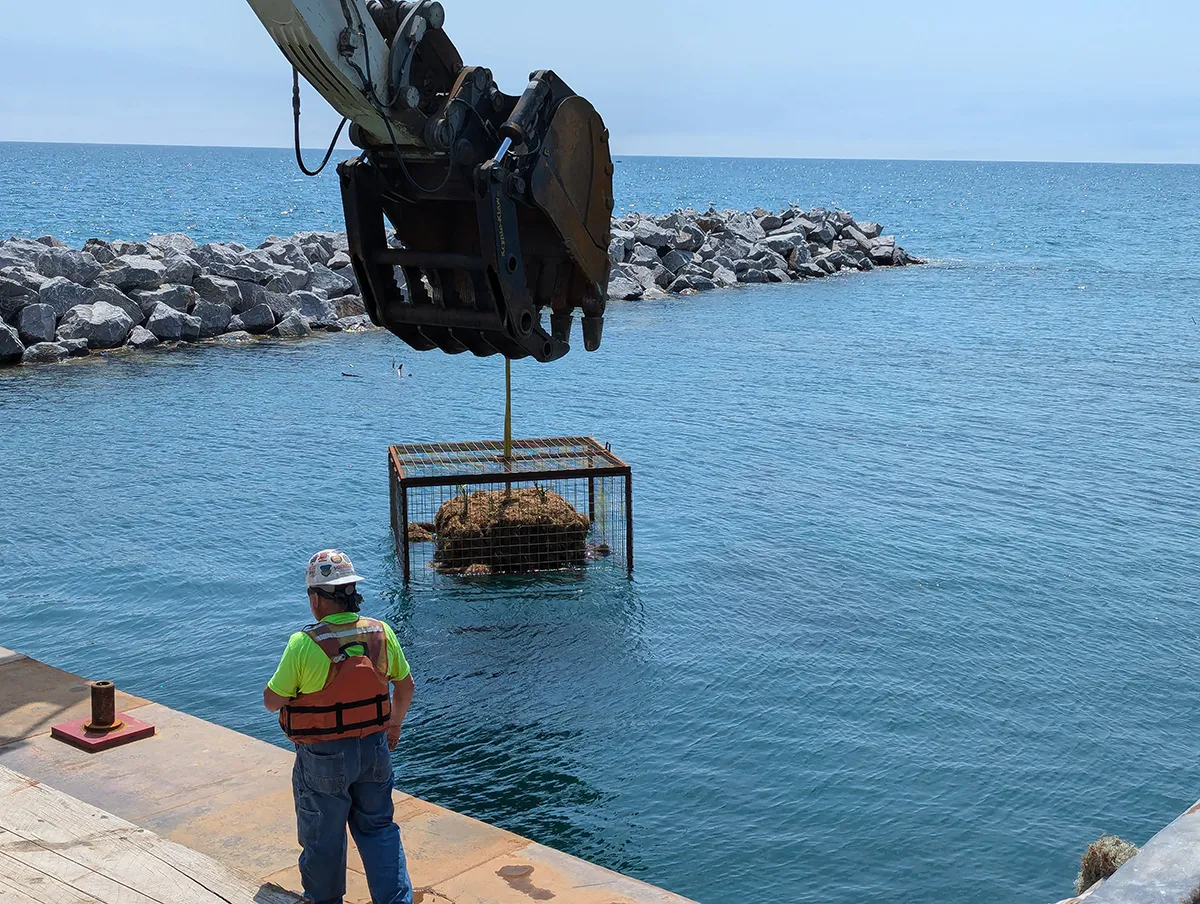
Late summer monitoring was conducted three months after the habitat elements were installed. Establishment of significant aquatic plant growth from the vegetated blocks positioned on the lakebed mid-June of 2024 demonstrated the benefits of the quieter shoreline condition that would allow for plant growth in such a high energy lake. A handful of native fish species have already been observed using the aquatic habitat elements.
Planned monitoring will continue with the goal of recording outcomes that will inform future Great Lakes projects hoping to protect vulnerable shorelines while also increasing valuable habitat. Living Habitats’ roles in the IBSP project included design documentation for the custom habitat elements, production of project-related graphics, public meetings and presentations, direct interface with project stakeholders, permitting assistance, construction documentation, project tracking with the design-build team, vegetated block fabrication, materials selection, construction site visits, and mock-up reviews.
In 2024, this project became the first in the Great Lakes region to be WEDG Verified by the Waterfront Alliance, due in part to the inventive approach to in-water habitat enhancements and design detailing.
Illinois Beach State Park Shoreline Stabilization & Habitat Enhancement
Location: Zion, Illinois, United States of America
Client: Illinois Capital Development Board
Landowner: Illinois Department of Natural Resources
Project Landscape Architect: Living Habitats LLC
Landscape Architect of Record: Living Habitats LLC
Coastal Engineer & Prime Consultant: Moffatt & Nichol
Construction Inspection & As-Built Documentation: Collins Engineers
Design Build Project Lead Contractor: Michels Construction
Other Consultant: Illinois Natural History Survey (Hillary Glandon PhD), SmithGroup
Photography Credits: Living Habitats LLC and Michels Corporation (unless otherwise captioned)