
Winner of the 2025 WLA Awards – Award of Excellence in the Built-Institutional category
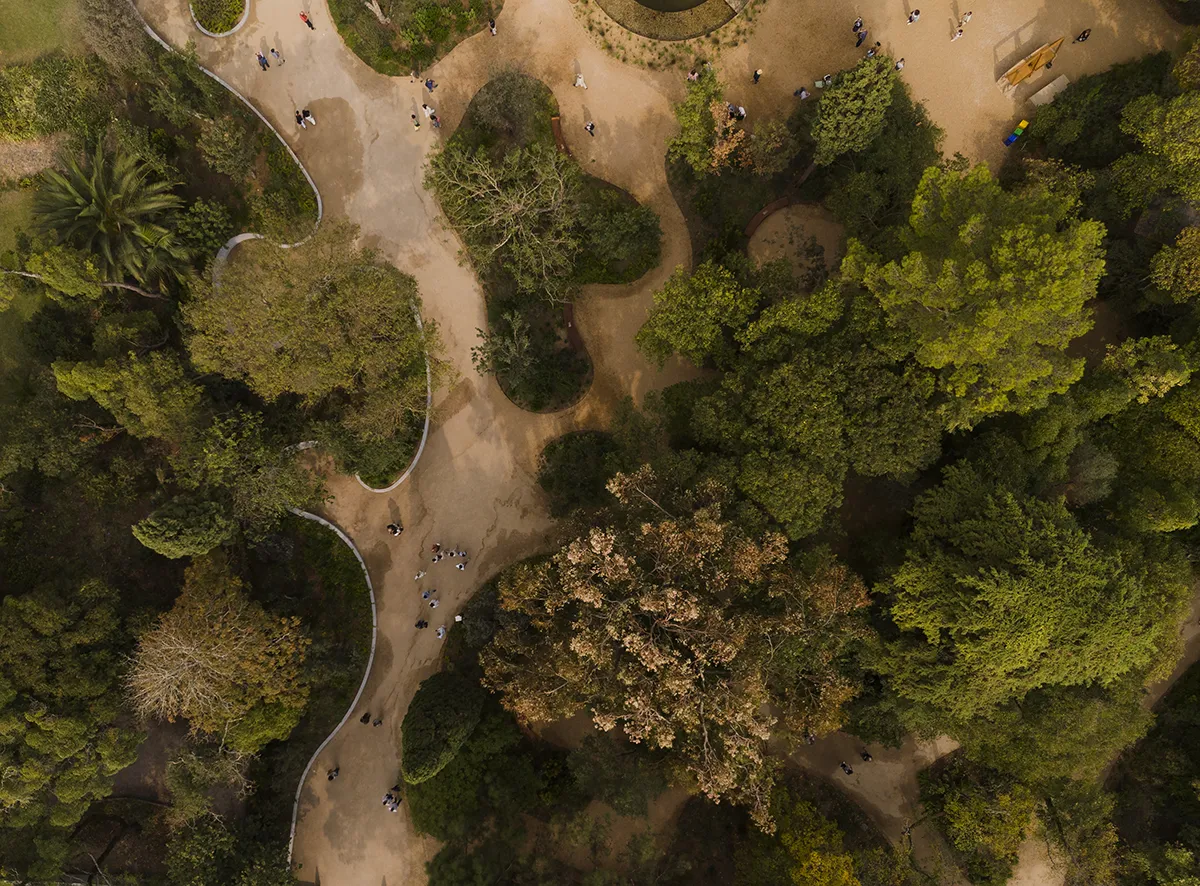
The original Gulbenkian garden was designed in the 1960’s by Goncalo Ribeiro Telles and Antonio Viana Barreto. It represents the best example of modern Portuguese landscape architecture and has a deep emotional connection with the people of Lisbon. Our intention was to create a seamless and respectful extension to the original garden. Instead of giving the new grounds a distinct touch, we opted to continue the essence and spirit of what the old masters have done, favoring continuity while putting nature at the forefront of the intervention.
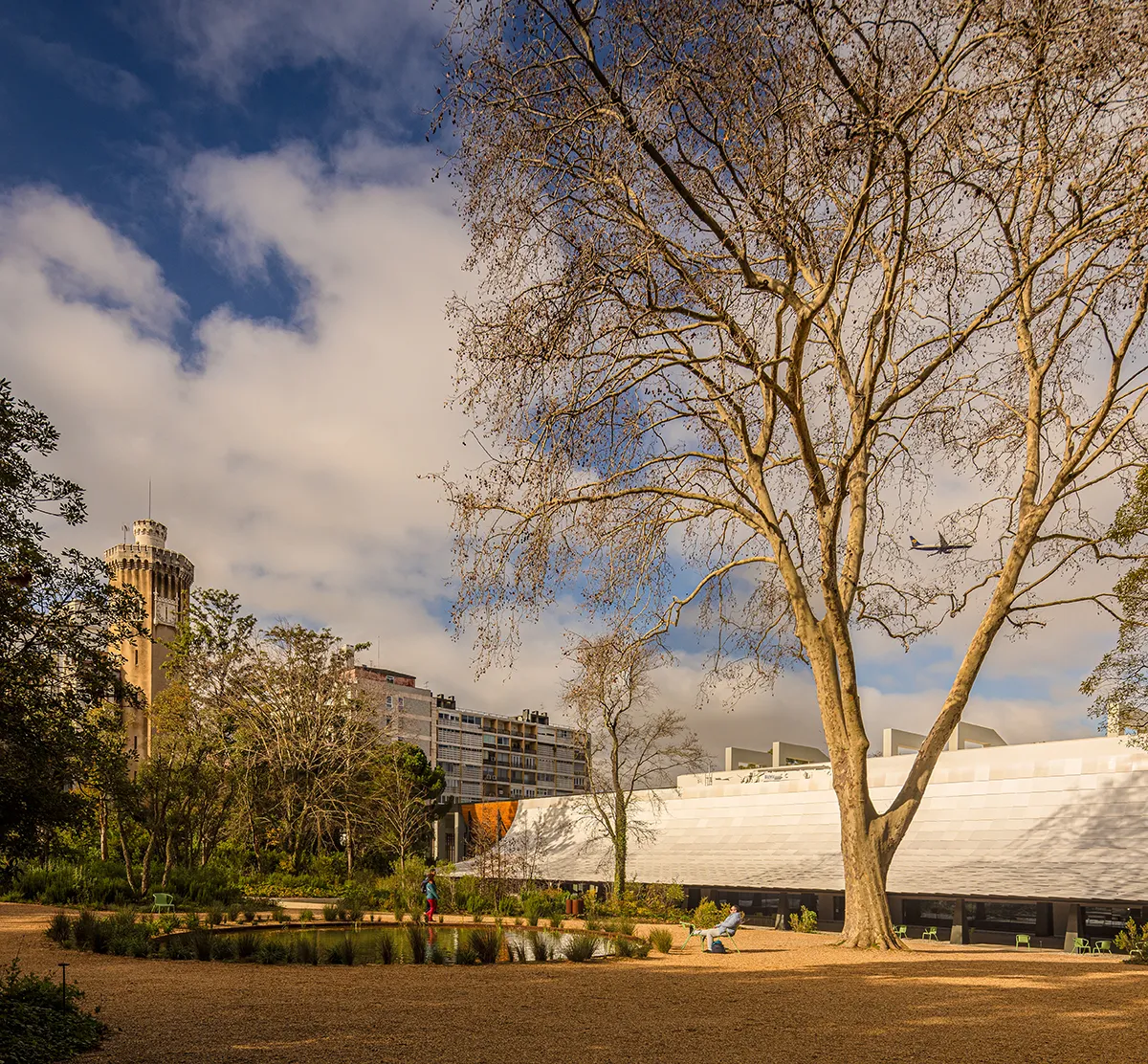
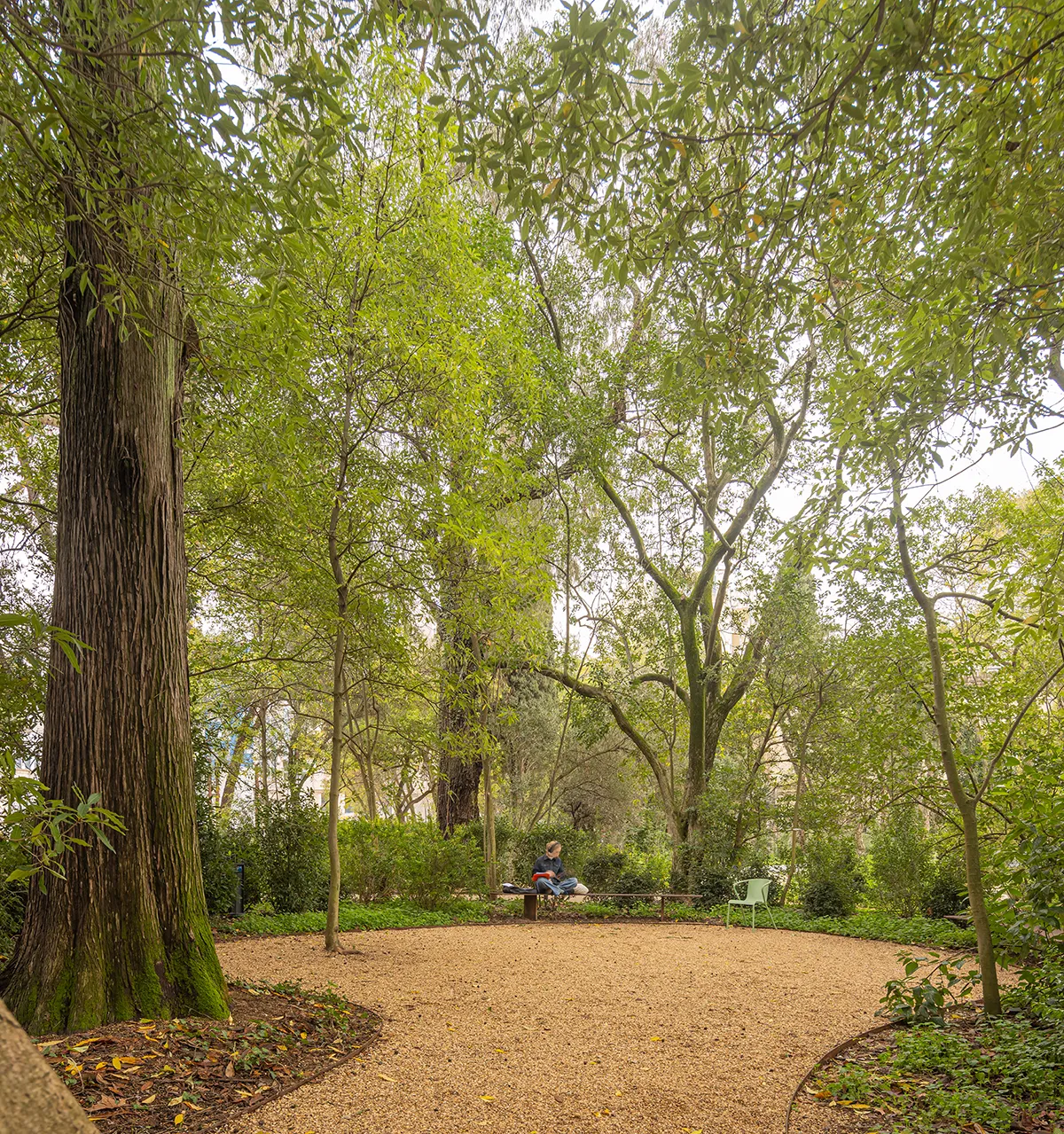
The garden was conceived as an urban forest where people could immerse themselves in nature. It was conceived as a natural system meant to develop its different ecologies with a high level of autonomy. More than a ‘designed’ landscape, we intended to set in motion different natural processes that will eventually result in complex and distinct habitats providing a myriad of conditions for urban wildlife and a platform where people could come in contact and appreciate the richness of native environments.
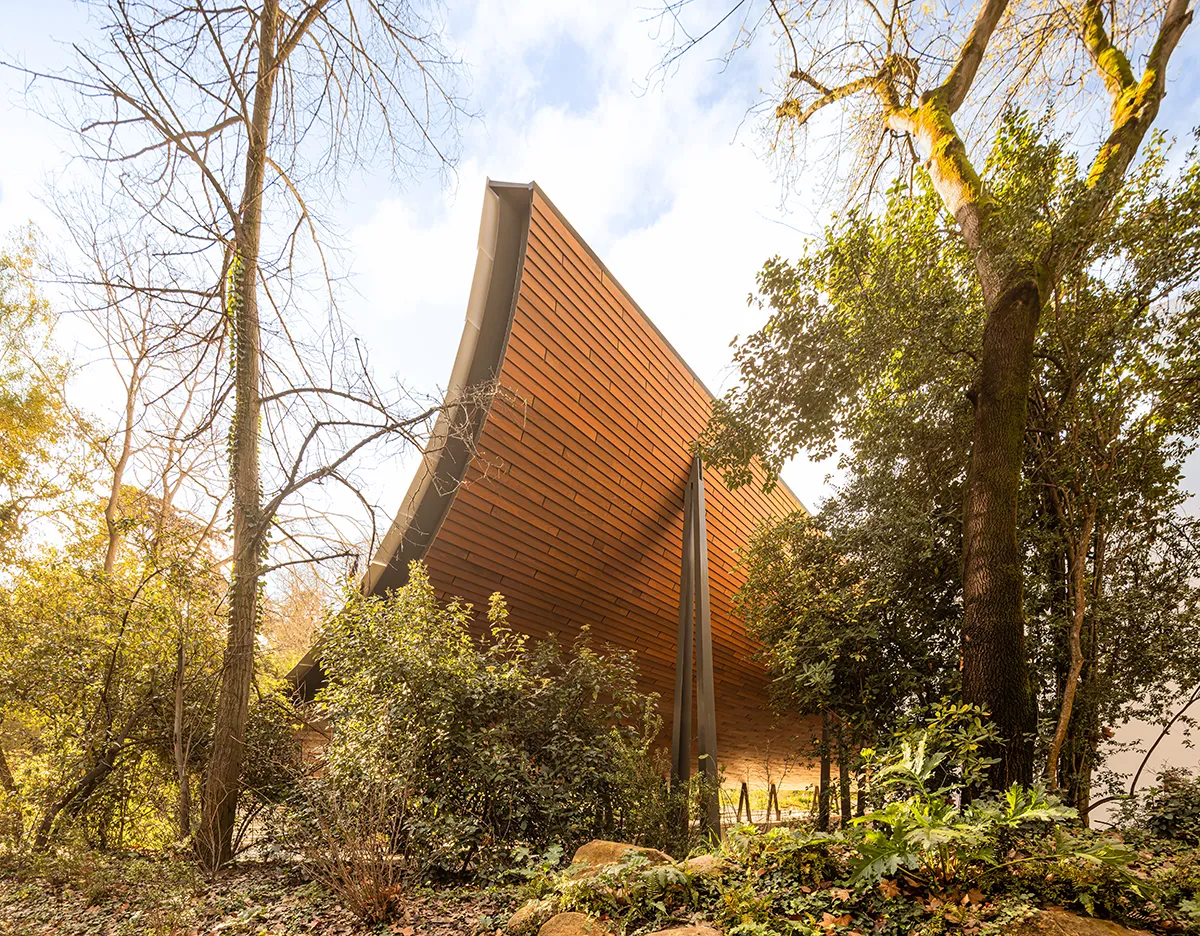
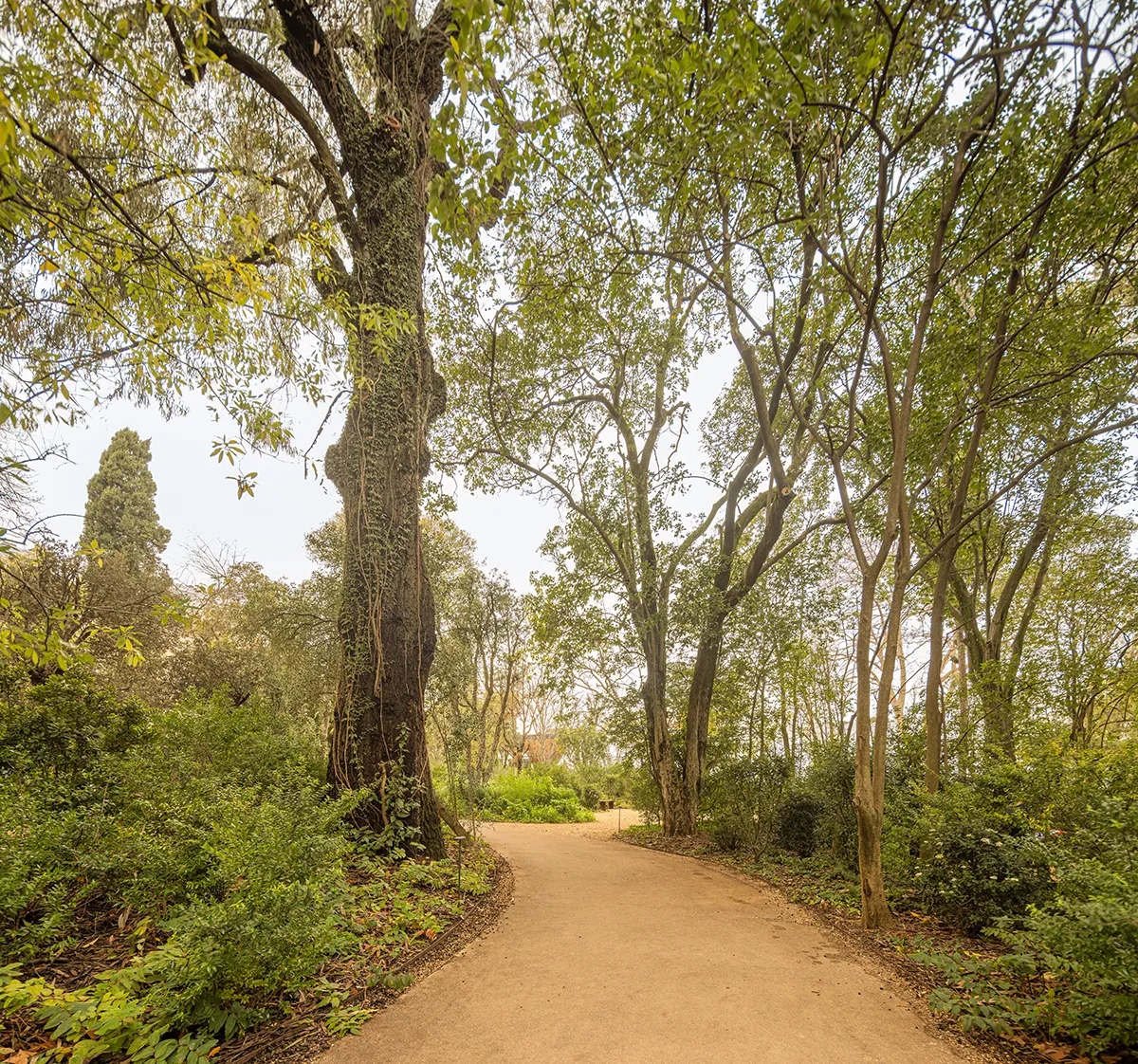
Exclusively autochthonous plants were incorporated, collected from several field trips, and propagated over a few years to establish an indigenous habitat. The garden, with its soft meandering pathways, full of layers and spatial richness, has been thought out as a total sensorial experience. Scents, textures and sounds were carefully orchestrated in order to achieve a holistic immersion. Seasonal changes were a fundamental consideration, as a means of revealing natural processes. These changes endow the garden with the ability to alter its relation with the building, the museum, and its urban context.
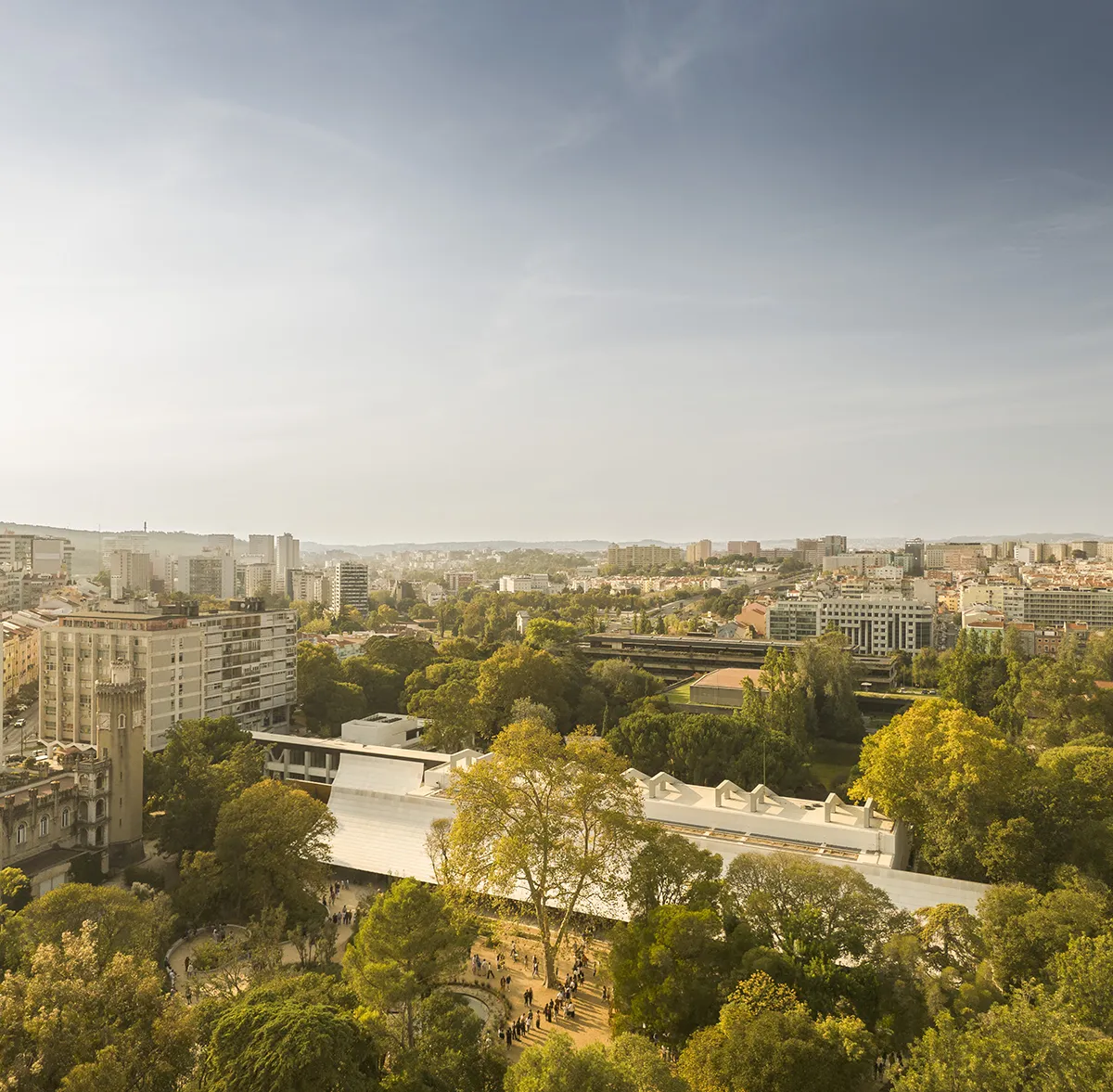
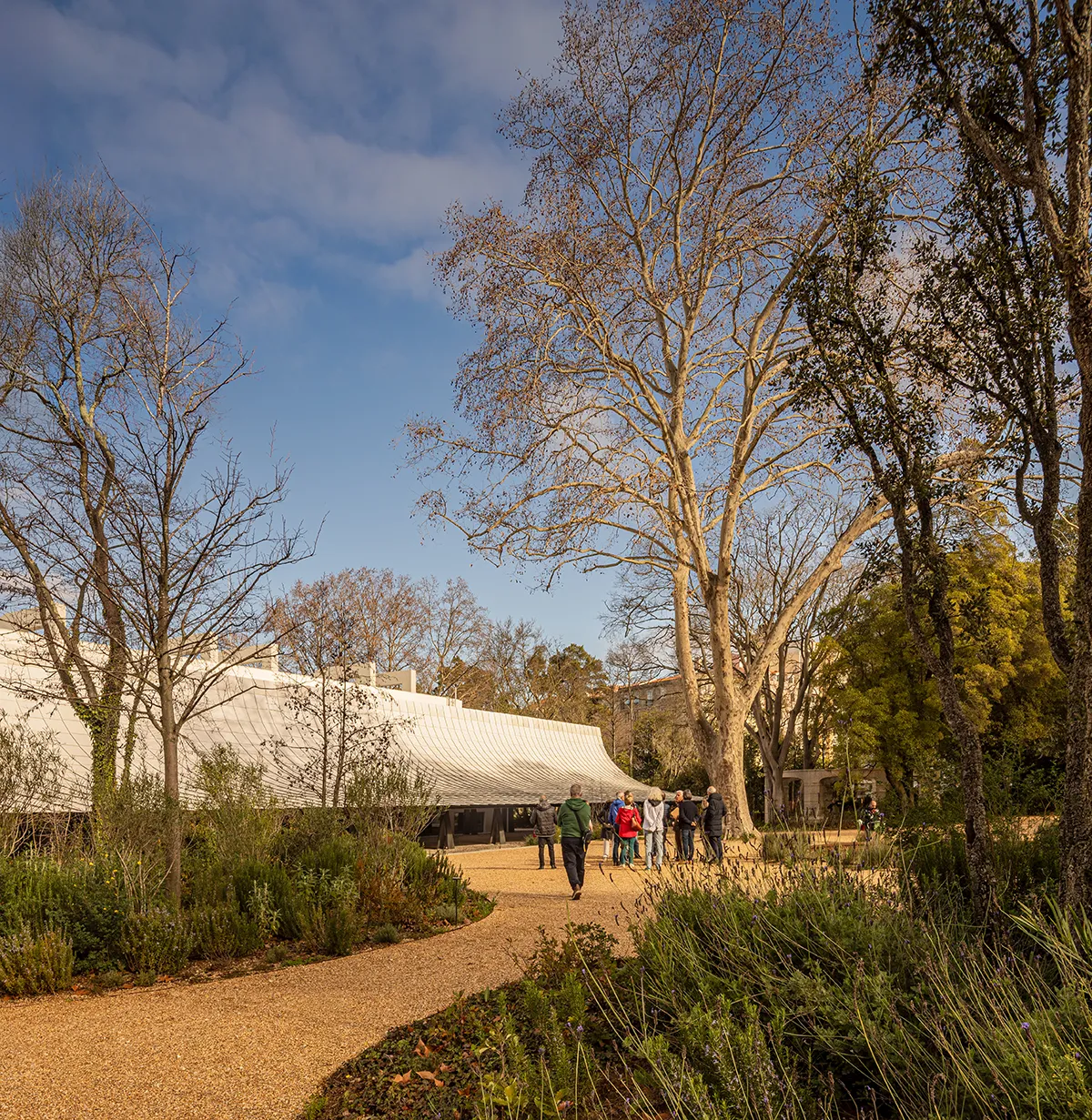
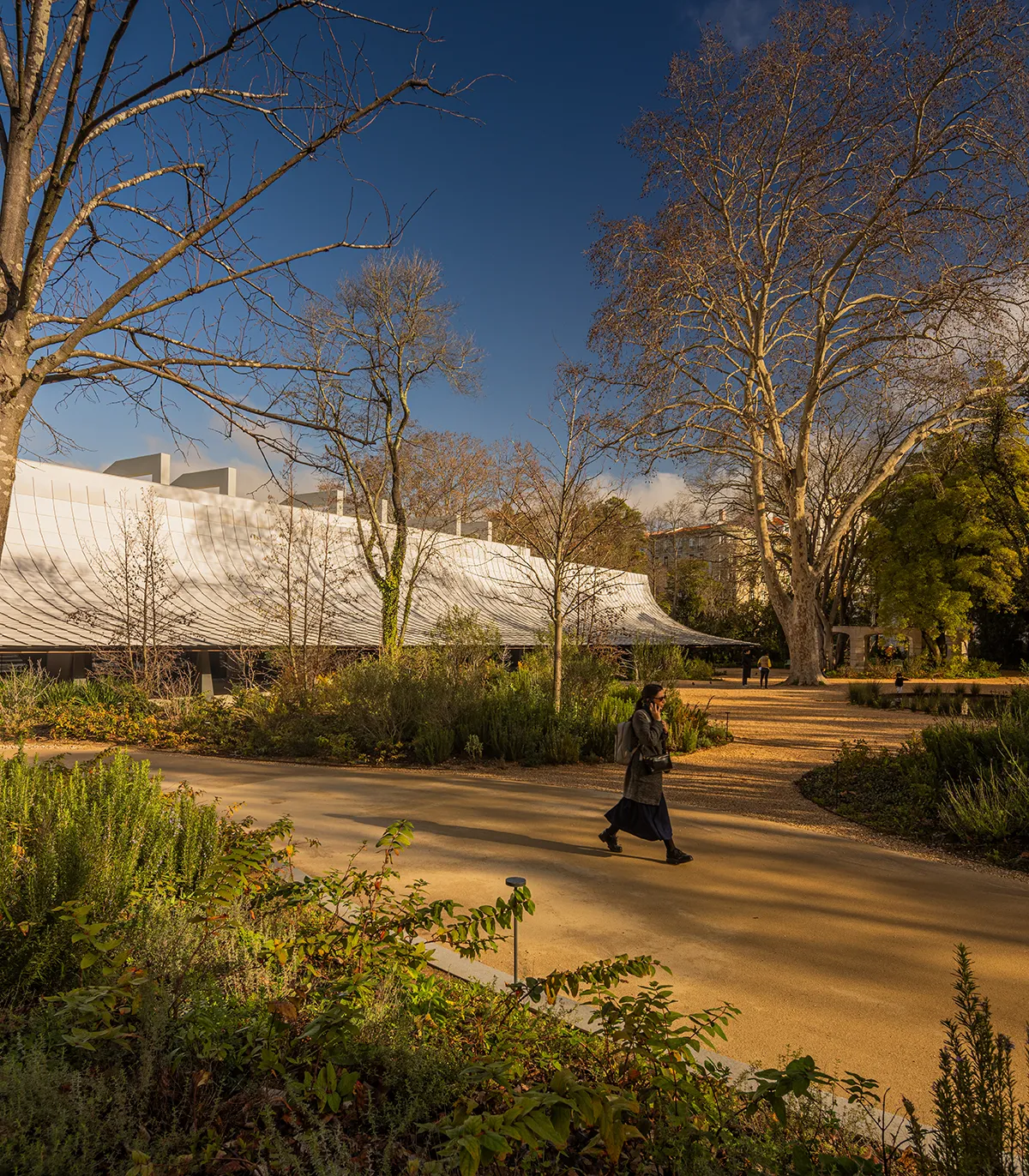
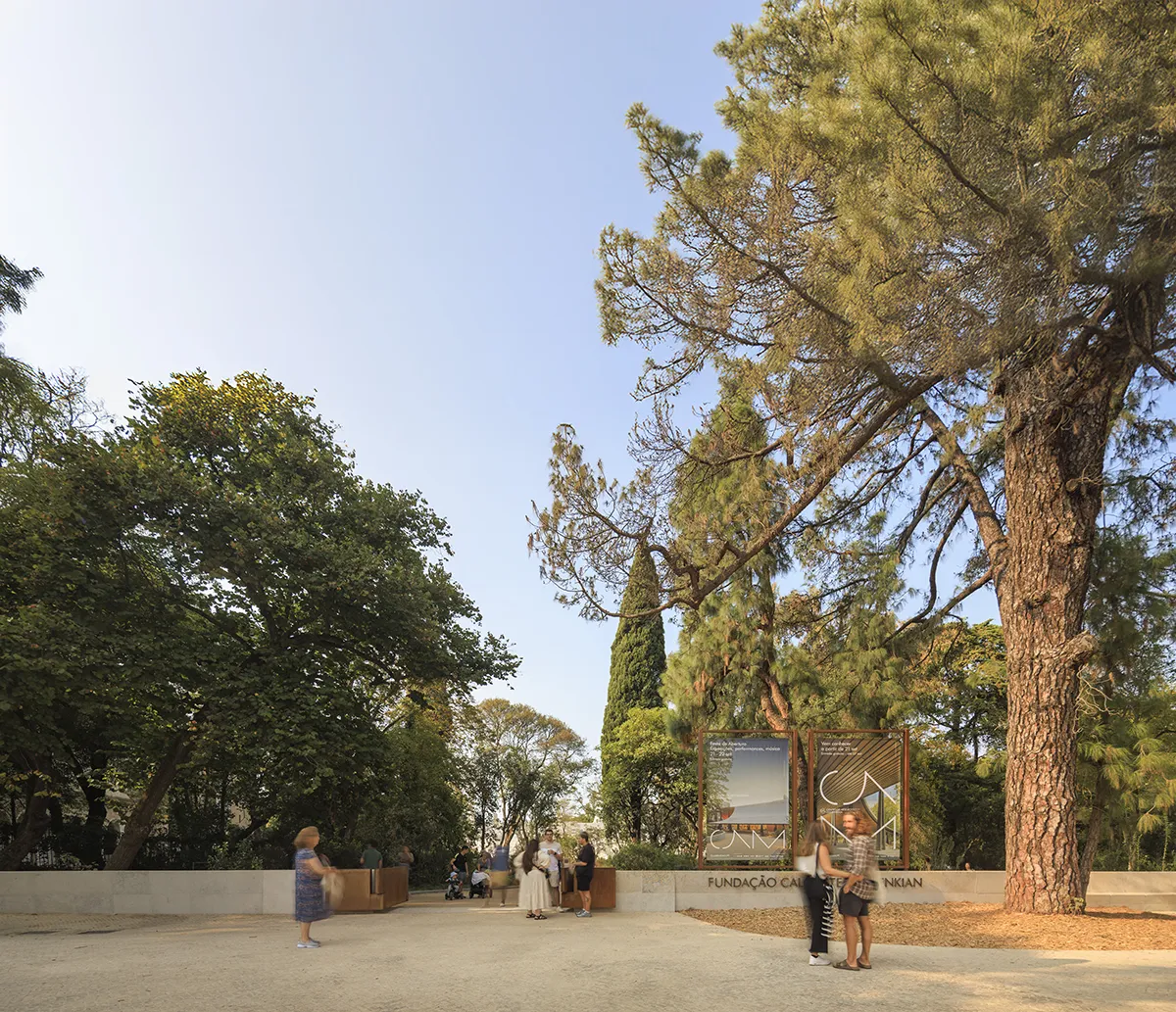
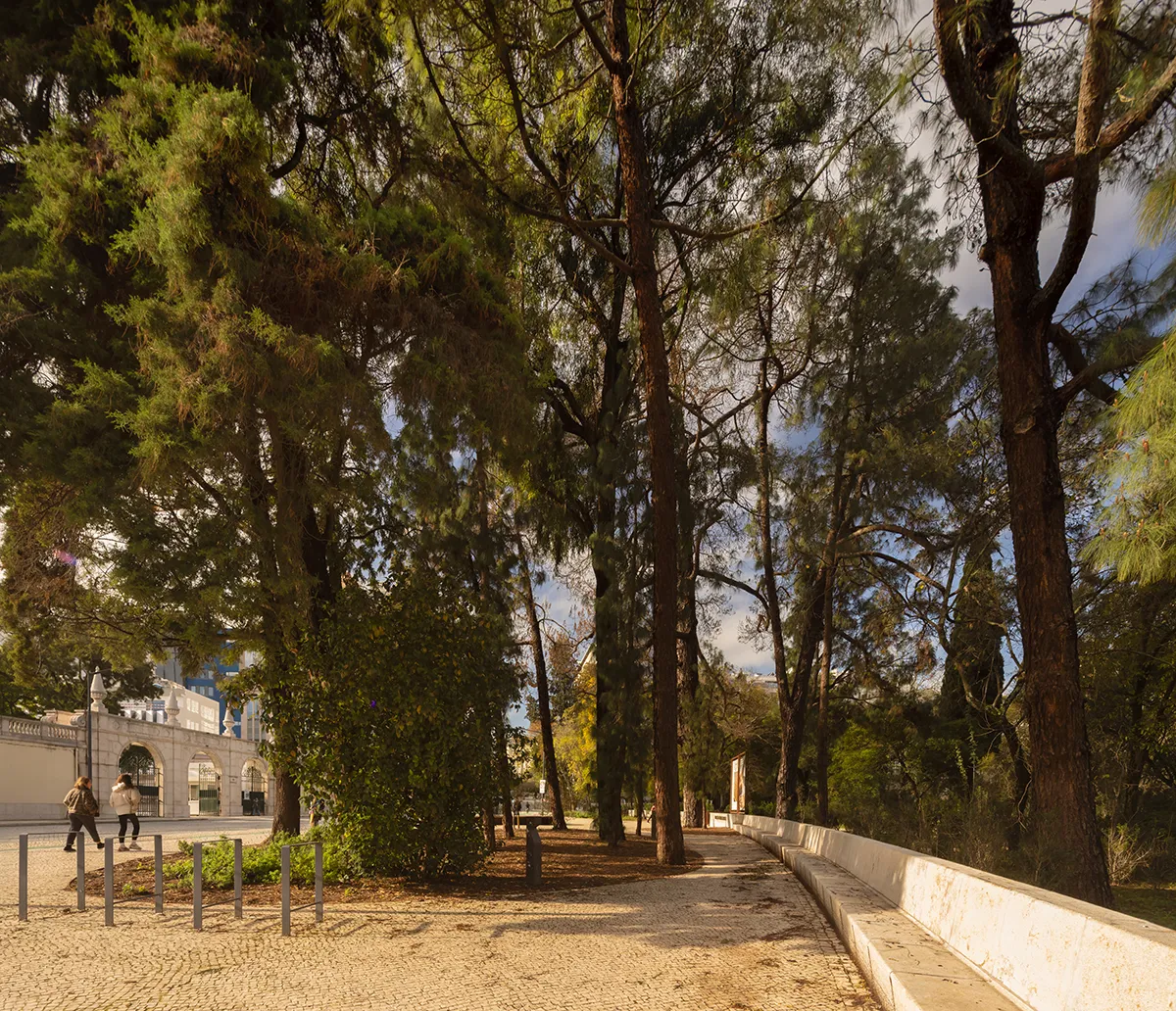
Both the old and new Gulbenkian gardens are intimately connected to the architecture. They are parts of a whole that can’t be disassociated. The project repositioned the Foundation vis-a-vis its urban context, radically transforming the way the institution relates to the city. The existing high boundary walls that used to conceal the garden were dismantled and set back, creating a new plaza along Rua Marques de Fronteira, facing the Vilalba palace. The old trees that once were in the South end of the garden are now part of this new public space. At the center of this space, a novel access to the Gulbenkian Foundation Campus is defined by sculptural corten steel gates and framed by long stone benches. These benches have been built with repurposed limestone blocks from the old existing boundary wall. Besides this main access to the South, the garden presents three other gates that connect it to the city, making it a highly permeable natural environment, seamlessly integrated within the surrounding urban fabric.
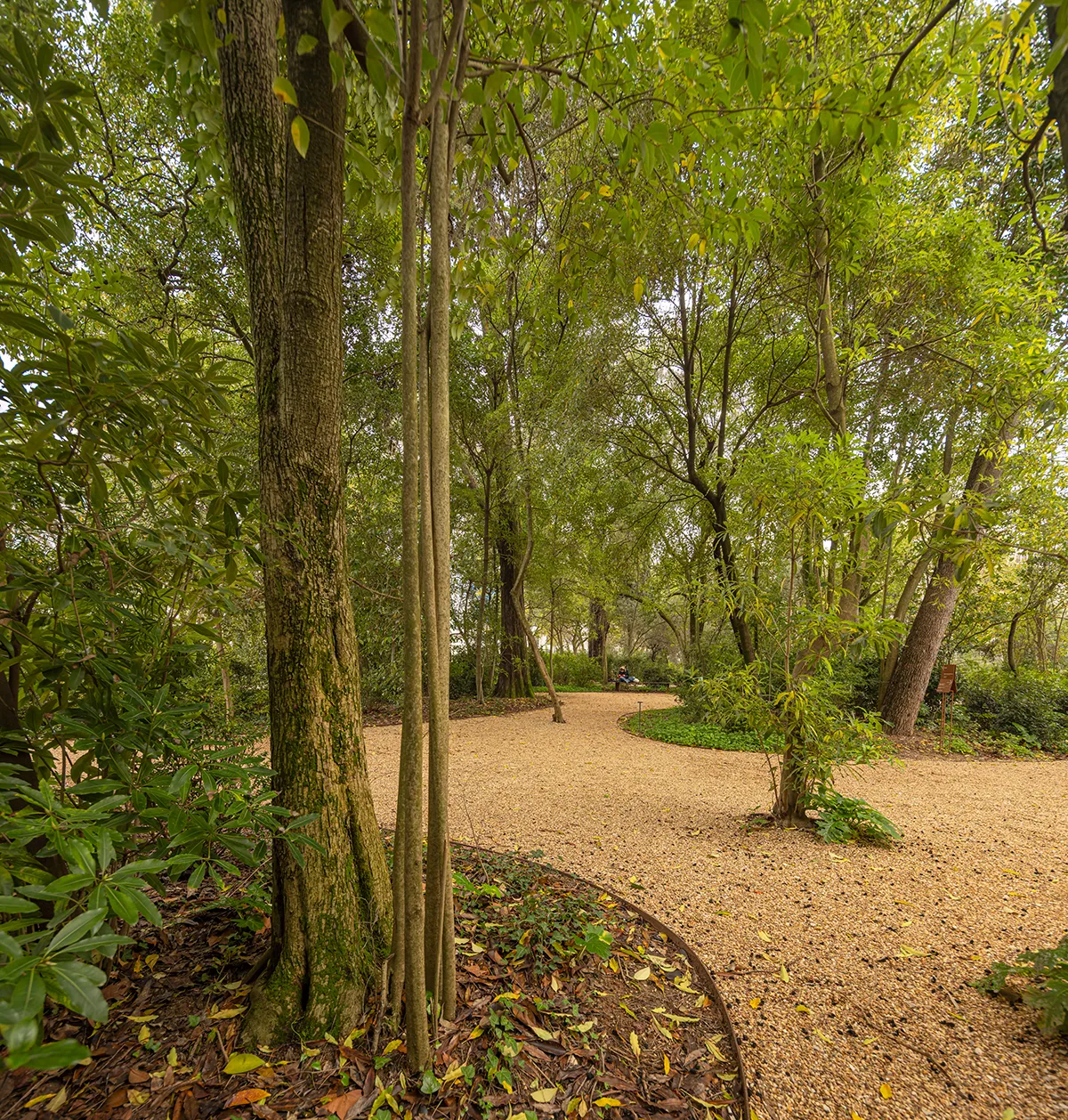
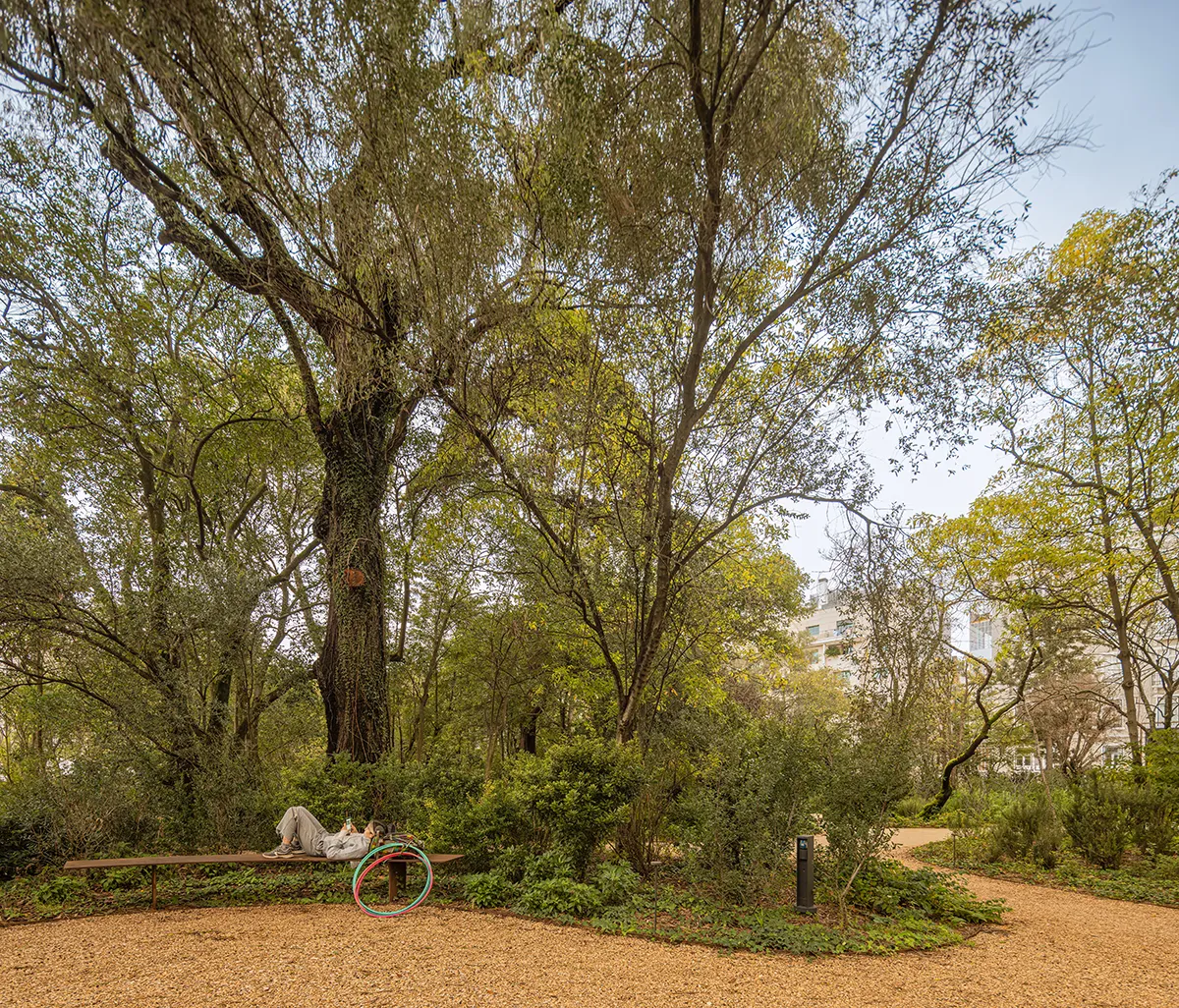
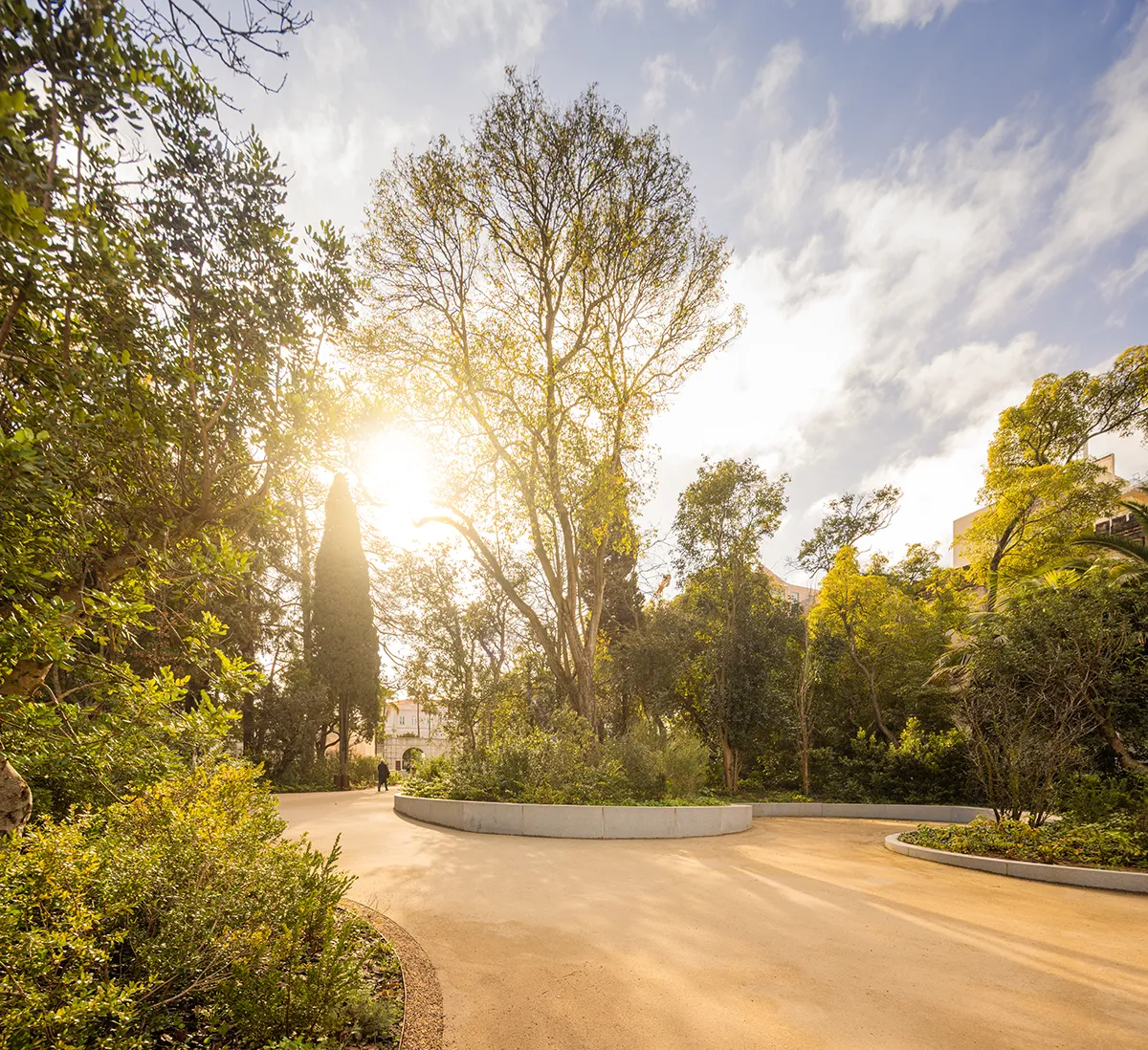
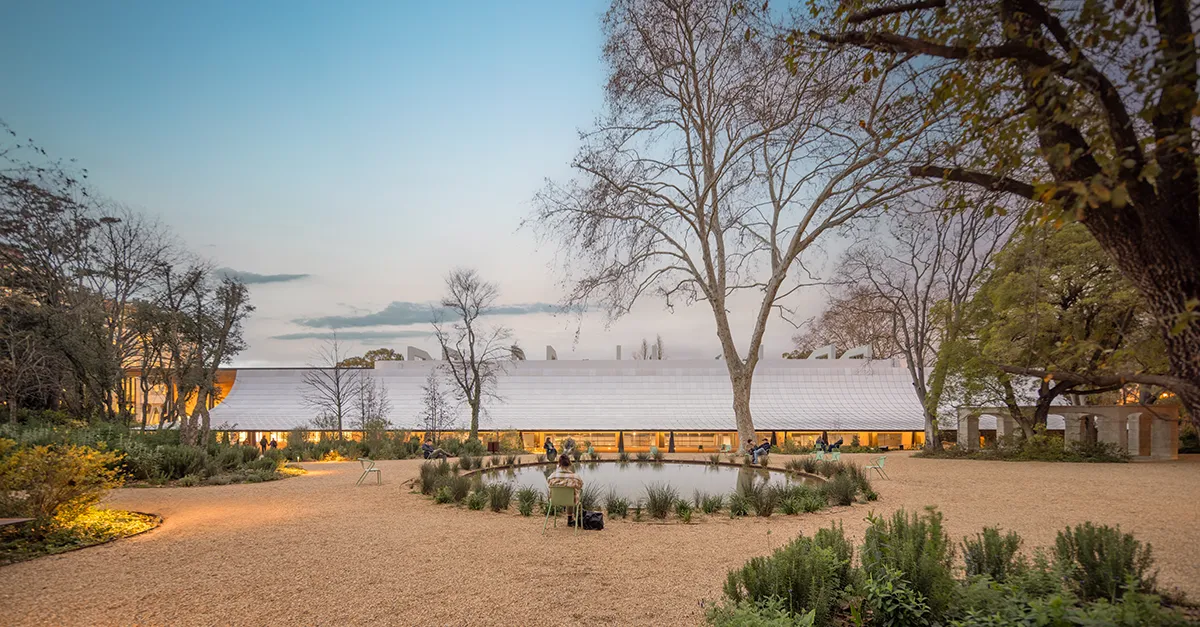
Our hope was to start a process that aims to transform a typical ornamental garden into an autochthonous natural environment. A move towards valorizing indigenous plants and their habitats, low water consumption, low maintenance, a move towards zero-chemicals in nature, and ultimately towards self-sustaining landscapes. The objective is to create, with time, a place for people and for wildlife, a space for harmonious cohabitation in the heart of the city.
Gulbenkian Foundation Garden Extension
Location: Lisbon, Portugal
Owner: Calouste Gulbenkian Foundation
Landscape Architect: Vladimir Djurovic Landscape Architecture (VDLA), Lebanon, Portugal
Vladimir Djurovic, Principal
Federico Arrieta, Director – Lead design architect
Nathalie Rizk, Lead senior project architect
Nour Bachacha, Landscape architect
Toni Farah, Coordination and supervision
Georges Labaky, Technical architect
Christian Hajj, Technical architect
Gerard Cabang, Visualization architect
Joseph Moukarzel, Visualization architect
Lead Design Architect: Kengo Kuma Architects and Associates, Japan
Local Architect: OODA, Portugal
Local Landscape Architect: Traços na Paisagem/ Lugar Invisível
Architect / General coordination: Teresa Nunes da Ponte Arquitectura, Portugal
Structural Engineer: Buro Happold; Quadrante
Mechanical Engineer: Campo d’Água – Engenharia e Gestão, Portugal
Irrigation Consultant: Engineer Bartolomeu Perestello; Engineer Miguel Tavares;
Lighting Consultant: Glu Projectos, Portugal
Project Manager: Teixeira trigo, Portugal
Main Contractor: HCI, Portugal
Steel Contractor: Arestalfer
Landscape contractor: Luis Fraçao
Softscape
Botanical consultants: Pedro Arsenio; Filipe Soares;
Phyto-sanitarian consultant: Francisco Coimbra;
Nursery: Sigmetum;
Planting contractor: Floraviva;
Photographer: Fernando Guerra