
Winner of the Outstanding Award – 2025 WLA Awards in the Built Large Public Space Landscape Design
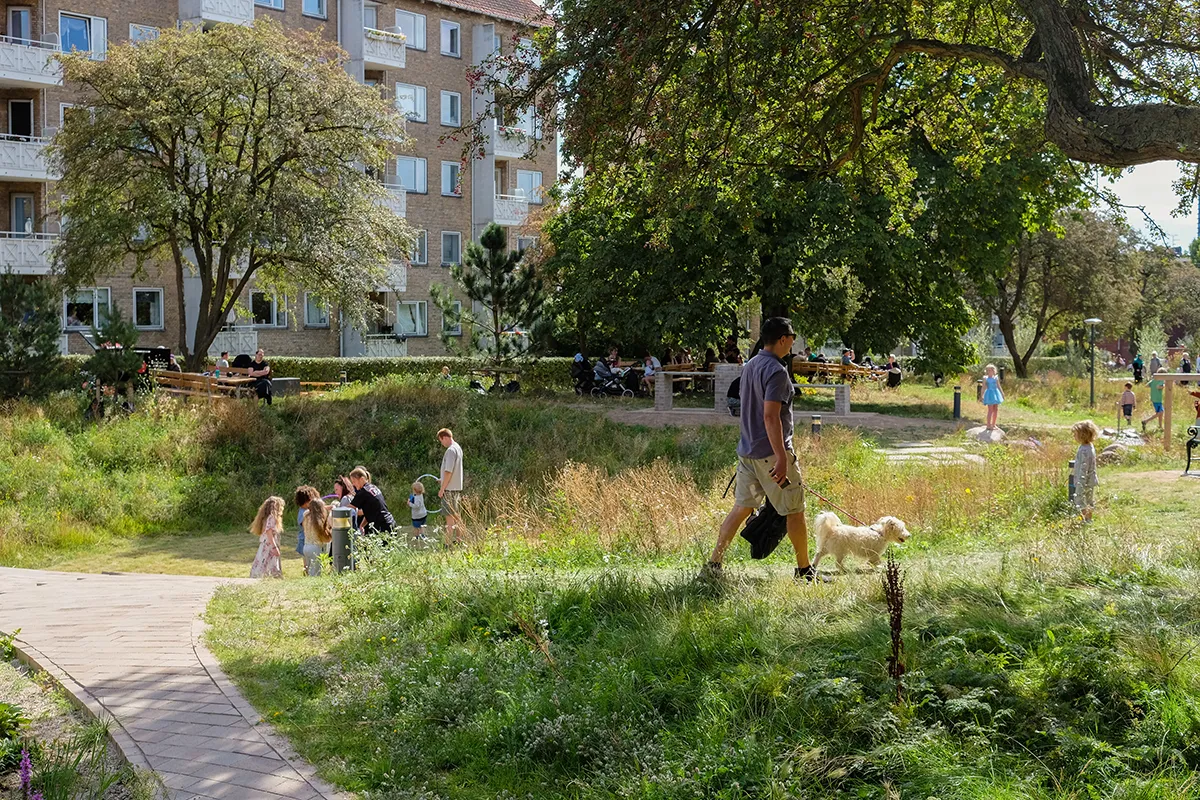
Grønningen-Bispeparken is Copenhagen’s most radical climate adaptation project to date, integrating nature in its wildest and most beneficial form as a part of the city. The project transforms 20,000m² of barren grassland into an undulating natural landscape with 18 natural rainwater bioswales that protect the area from flooding, enhance biodiversity, and serve as social pockets for residents.
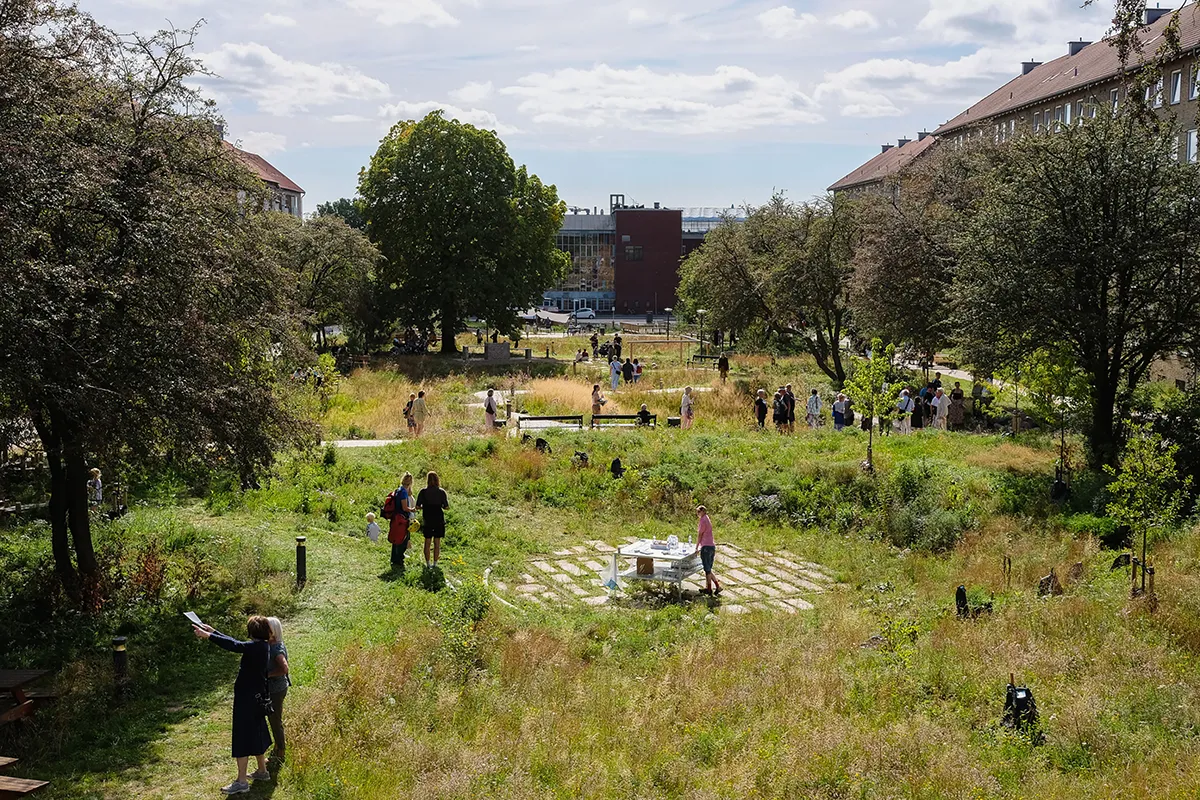
Grønningen-Bispeparken is not a romantic promenade park but a paradigm-shift in Copenhagen’s urban development: where form follows nature, and landscape architecture’s highest purpose is to create places for life – all life.
Context
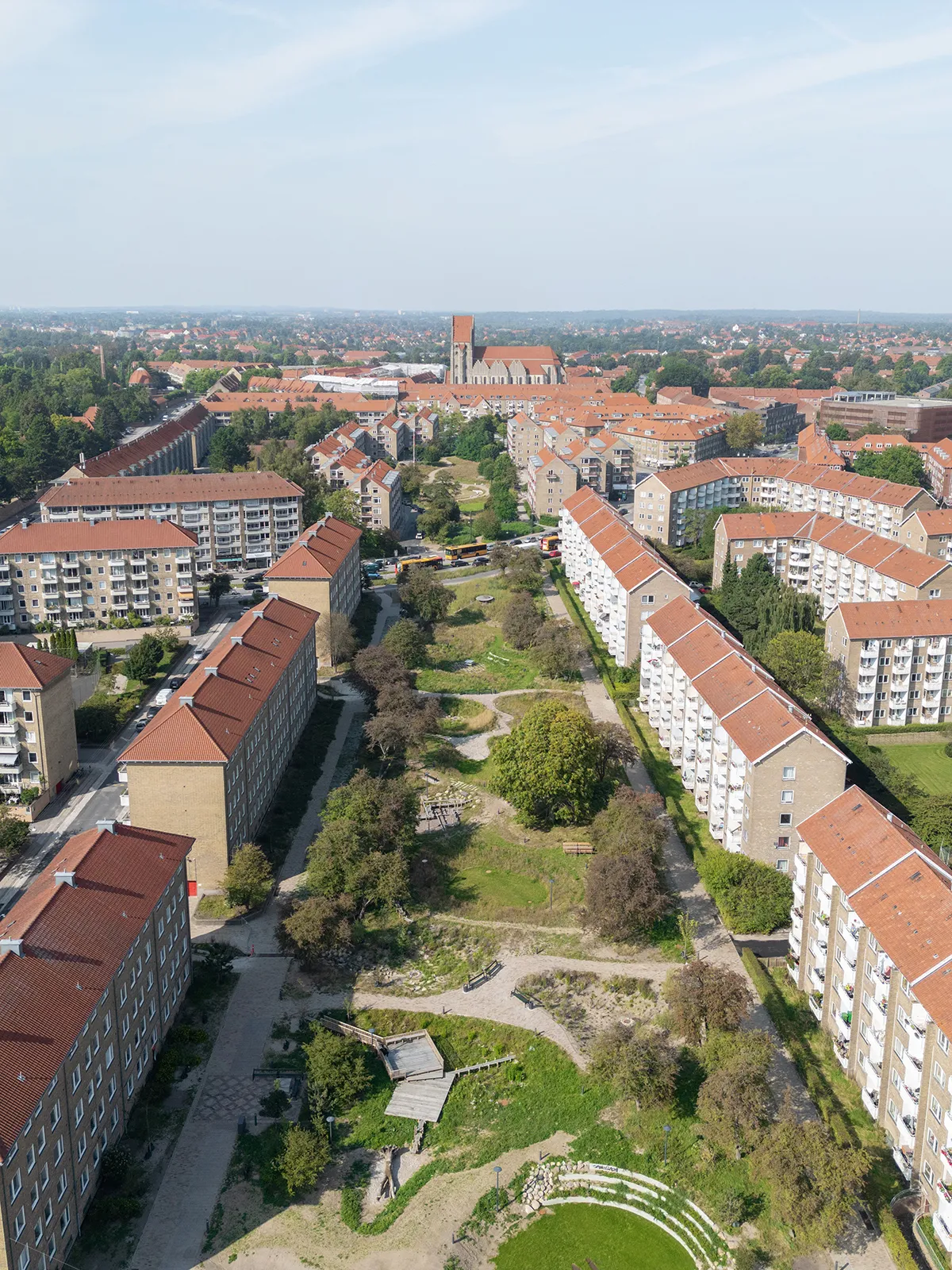
Grønningen-Bispeparken is a typical 1950s social housing estate in Copenhagen. The task was to transform the housing estate’s public spaces from derelict, unsafe, and barren grass lawns into a new climate park that would secure the area against thunderstorms and flooding while also adding social, biological, and cultural values to the neighbourhood.
Approach
To meet these goals, SLA designed Grønningen-Bispeparken to be Copenhagen’s most radical nature-based climate adaptation project to date.
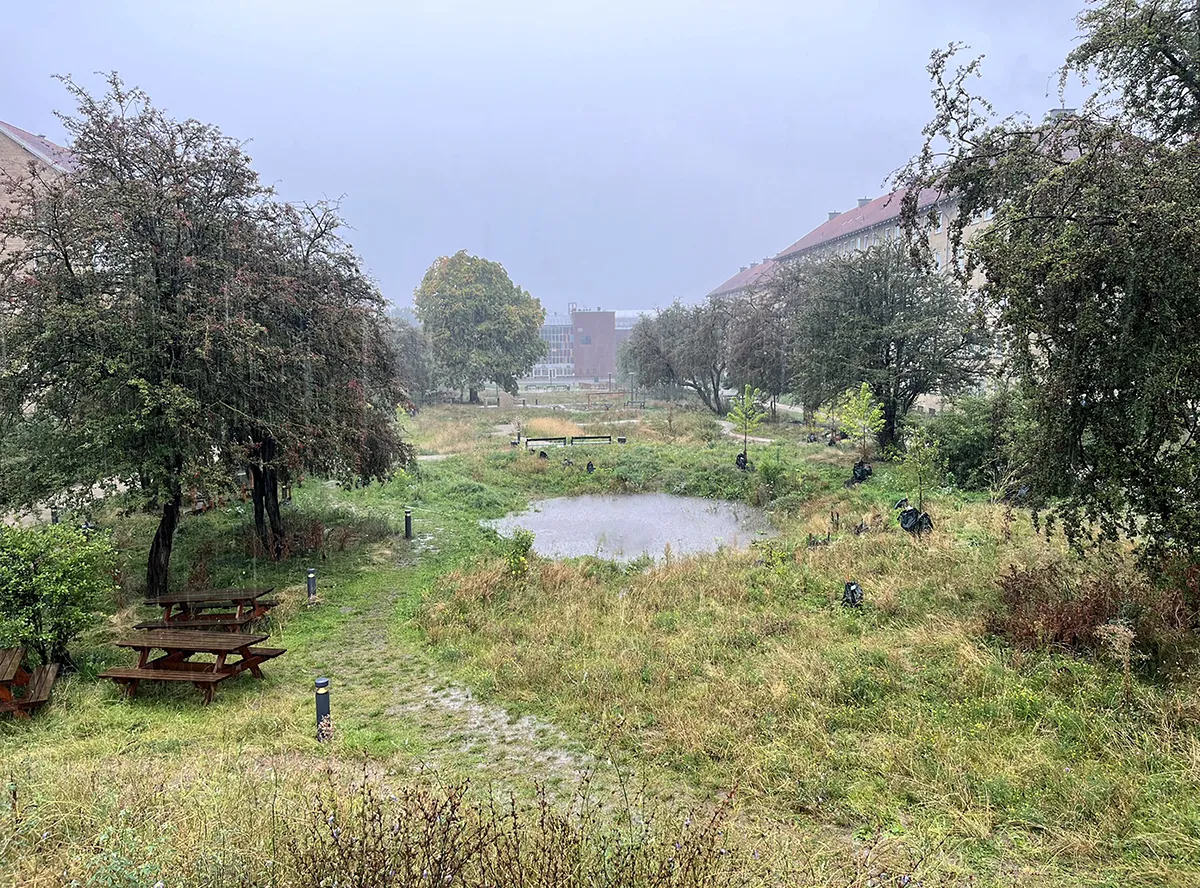
By letting the form of the park follow nature, SLA created an interconnected series of 18 bioswales throughout the sloping park that can collect, contain, and infiltrate more than 3,000 m3 of rainwater falling in the park and the adjacent courtyards and streets.
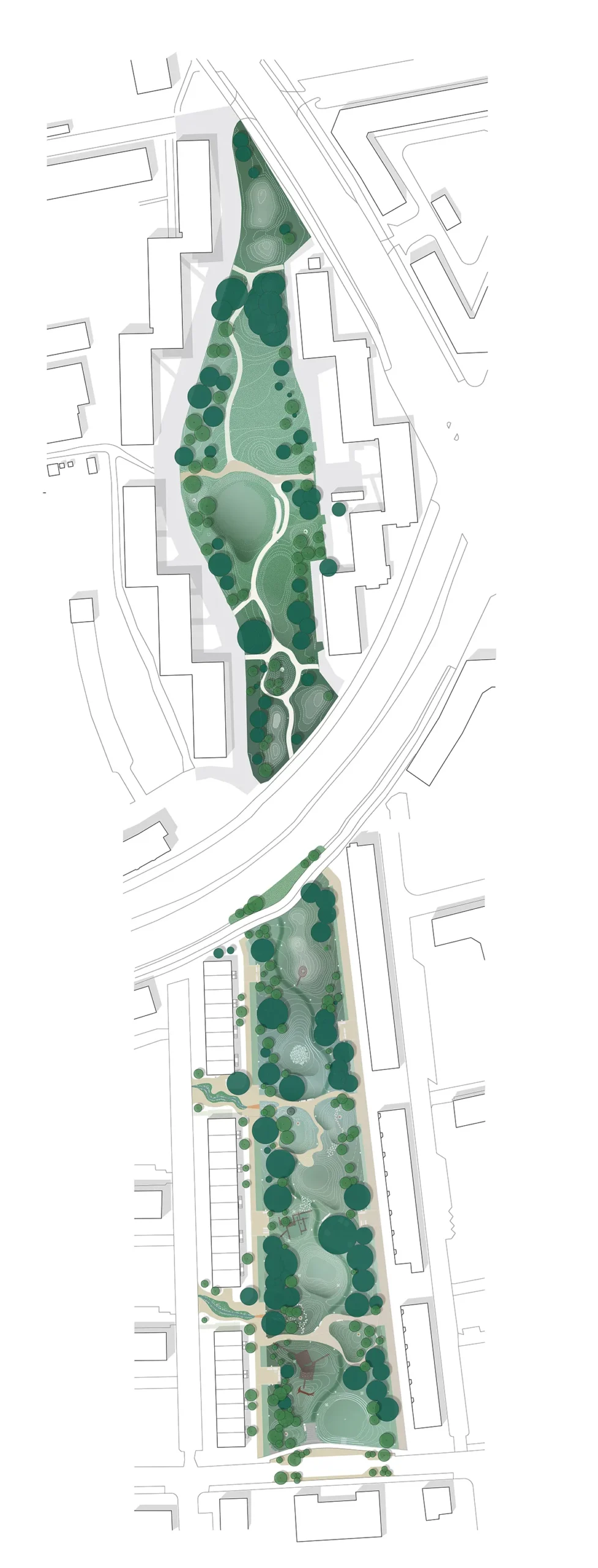
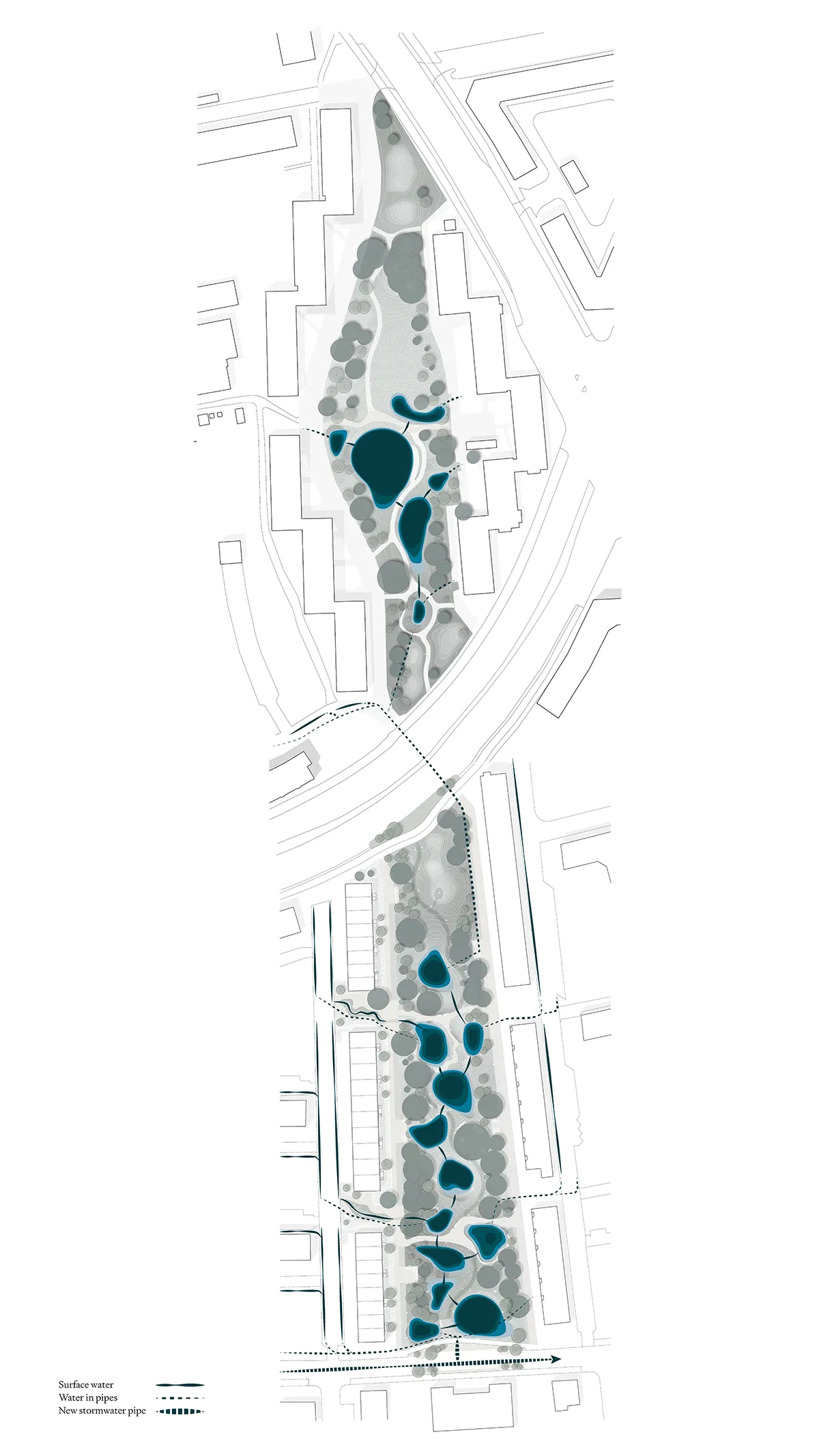
The park features five main nature typologies designed according to their climate and social functions:
- Bio Oases: Wetland zones prioritizing wildlife and ecological richness.
- Between the Trunks: Small, dry biotopes for intimate play and pause.
- Common Lawns: Open meadows for sports, markets, and gatherings.
- Pocket Squares: Informal social zones nestled between buildings.
- The Bunker Hills: Repurposed Cold War bunkers that become sun decks in summer and sledding slopes in winter.
By combining climate challenges with social and cultural opportunities, the bioswales double as ‘social swales’ providing the park with a host of playful, nature-rich, and safe meeting places for community and togetherness.
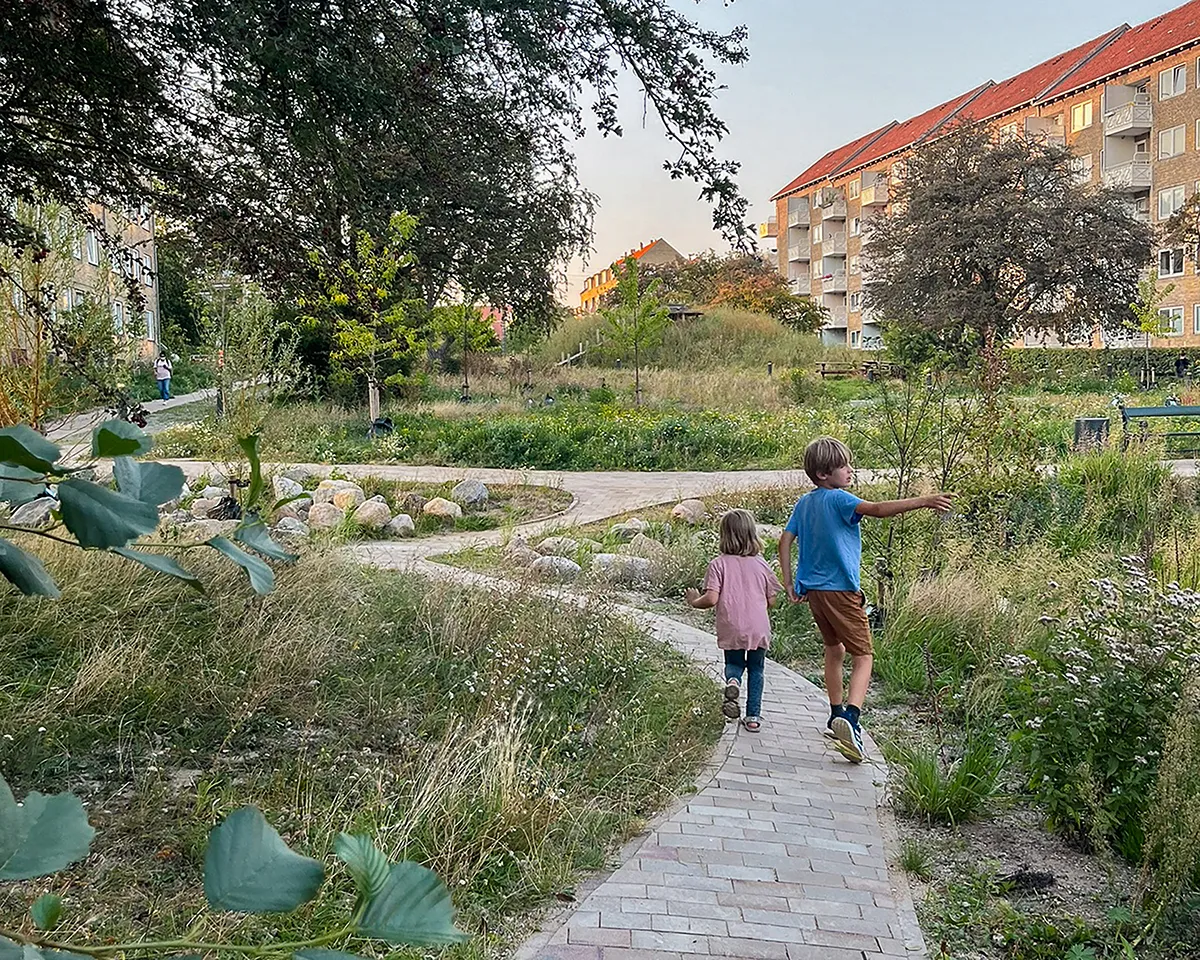
A meandering path of gravel and yellow tile (referencing the iconic nearby Grundtvig’s Church) ties the park together and invites residents to experience its varied ecologies.
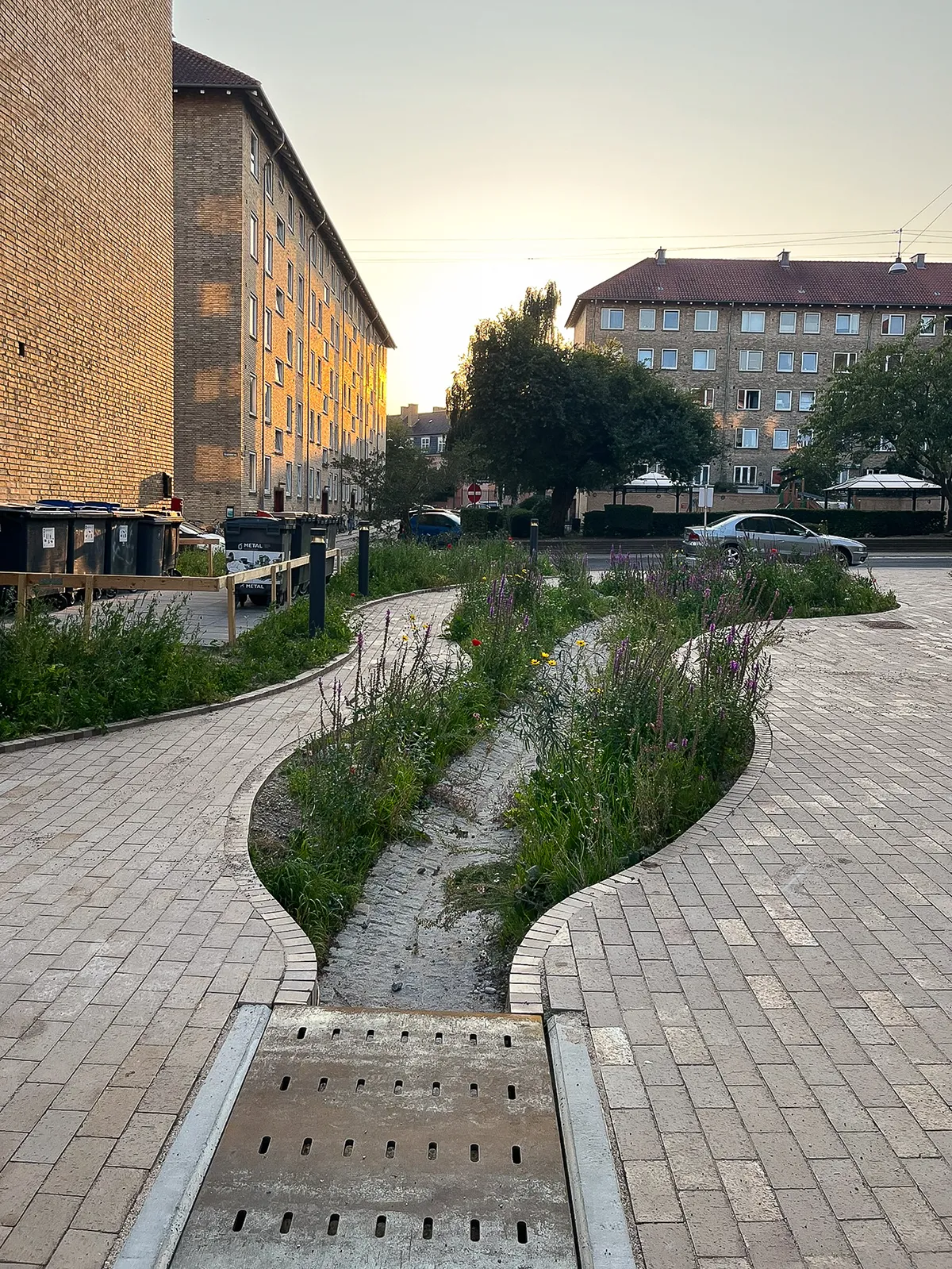
The planting scheme introduces 149 trees of 23 native species and over 4 million seeds from custom seed mixes. All vegetation is locally adapted to reinforce biodiversity and support sustainable ecosystems.
Art, Play, and Community Engagement
As part of the park’s evolution, the Danish Arts Council supported a four-year artistic intervention titled Concerning a Meadow. Blurring boundaries between planning, public art, and social engagement, the artist Kerstin Bergendal worked alongside local residents and planners to co-create informal, experimental elements within the park.
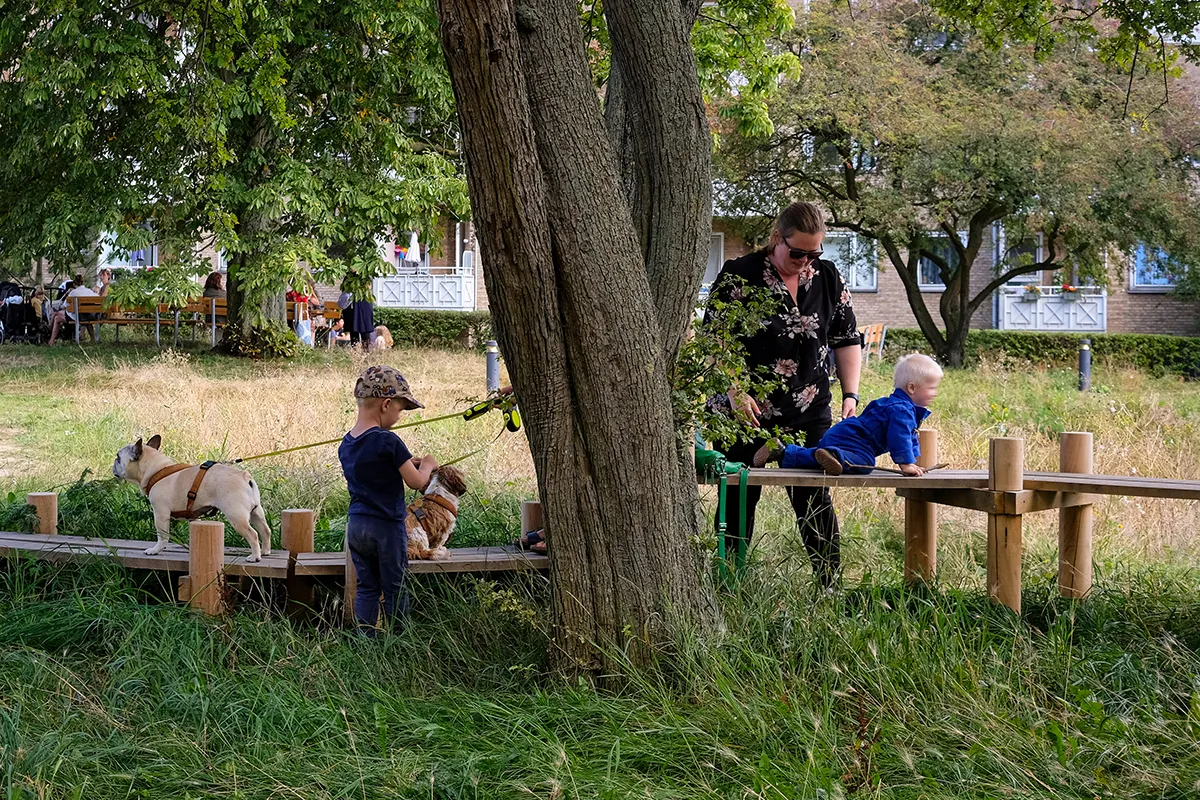
A series of wooden structures emerged from this process – integrated seamlessly into the natural landscape as places for play, rest, and movement.
In use
The park was inaugurated on August 31, 2024. Just five days later, a major thunderstorm flooded highways across Copenhagen. But in Grønningen- Bispeparken, the heavy rain only made the new park more sensuous and lush – while the surrounding houses remained safe and dry.
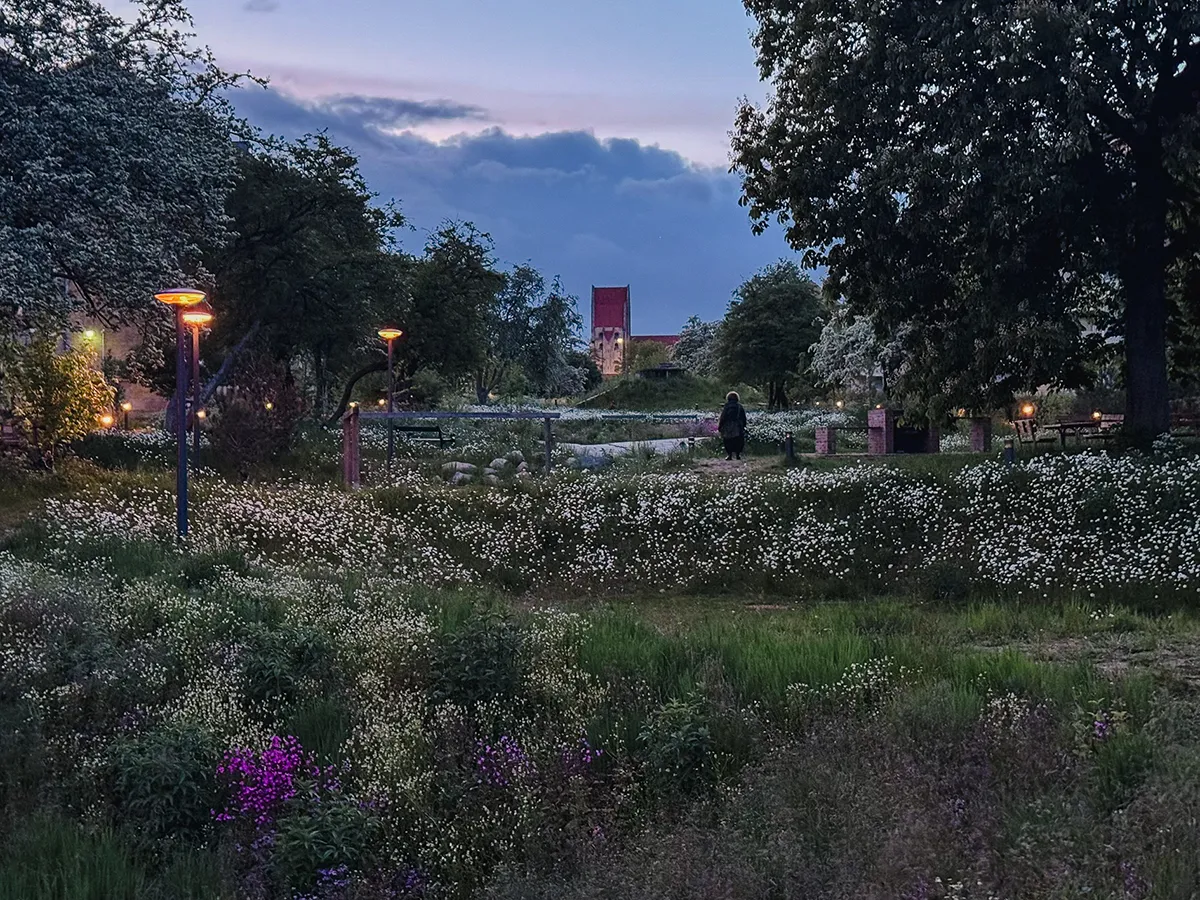
All proving that in Grønningen-Bispeparken, rain is not seen as a threat – but as a natural and social resource to be celebrated.
Grønningen-Bispeparken
Location: Copenhagen, Denmark
Designer Credit: SLA
Client: The City of Copenhagen
Company Role on Project: Landscape Architect
Collaborators/Other Consultants: Niras, Kerstin Bergendal, Efterland.
Photographer/Image Credits: SLA, The City of Copenhagen, Mikkel Eye, Marie Damsgaard