
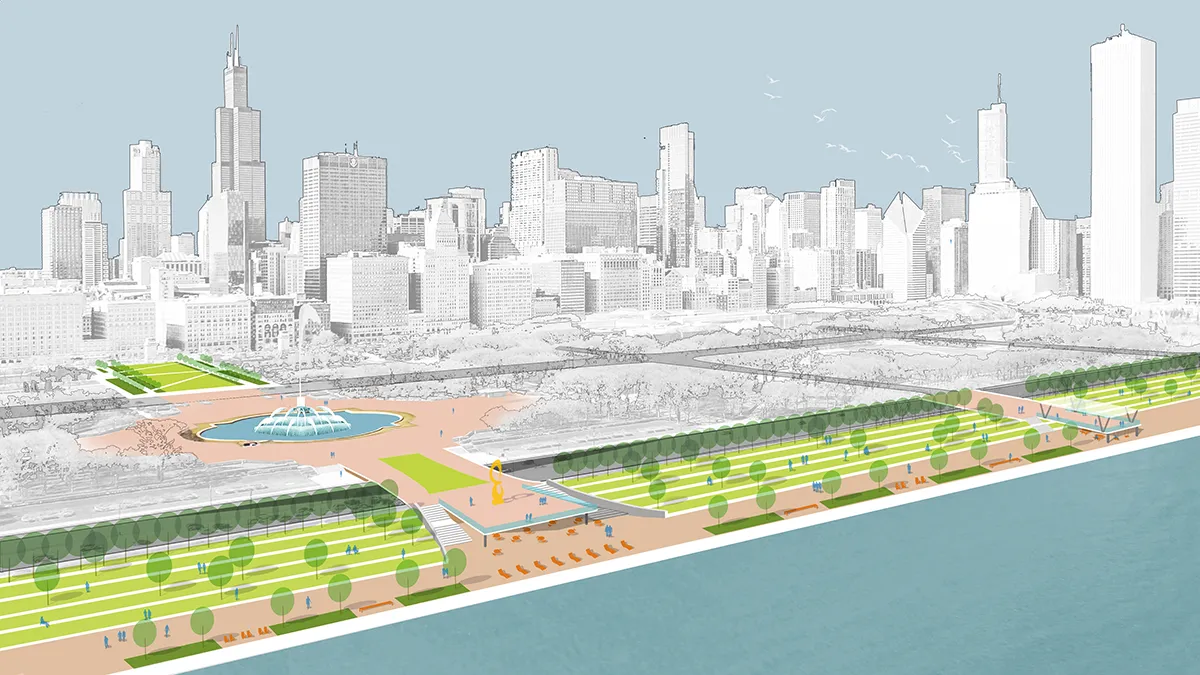
The Chicago Park District aims to revitalize Grant Park, focusing on preservation and landscape, recreation, events, safety and logistics, and mobility.
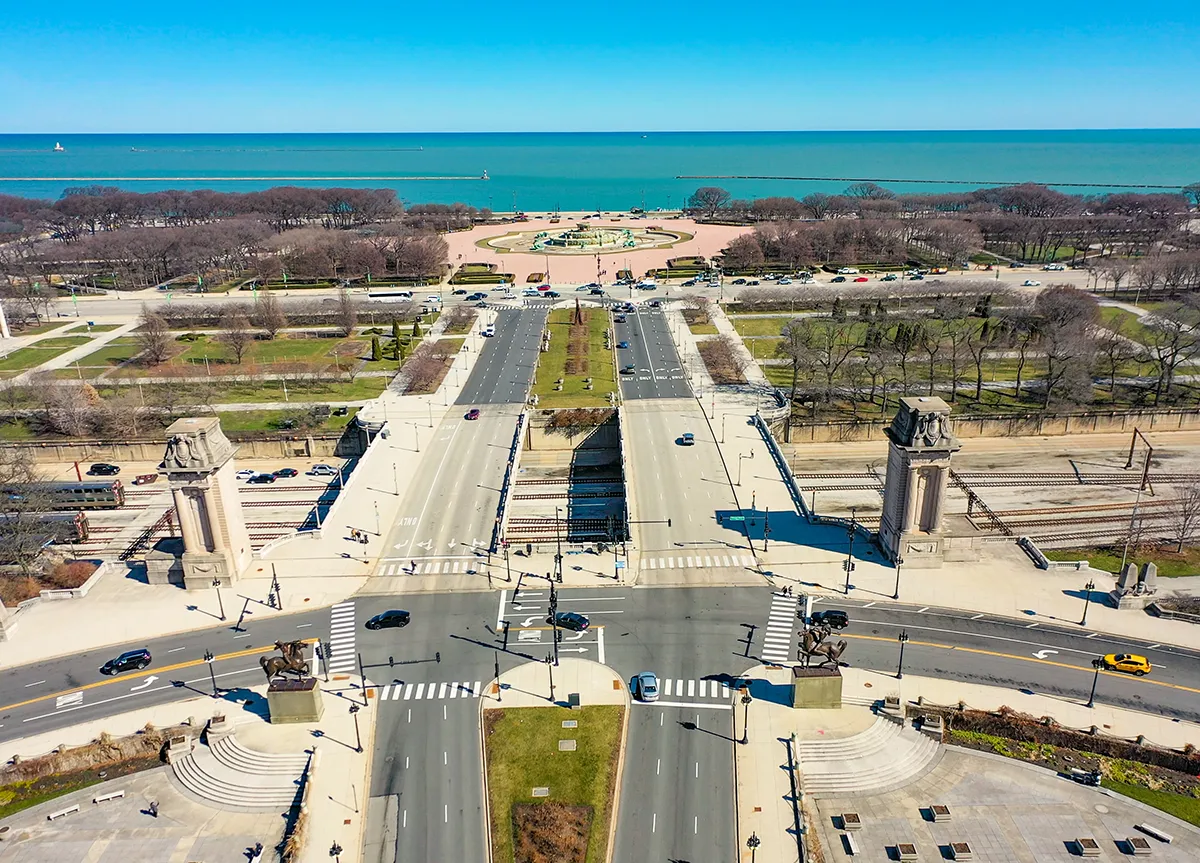
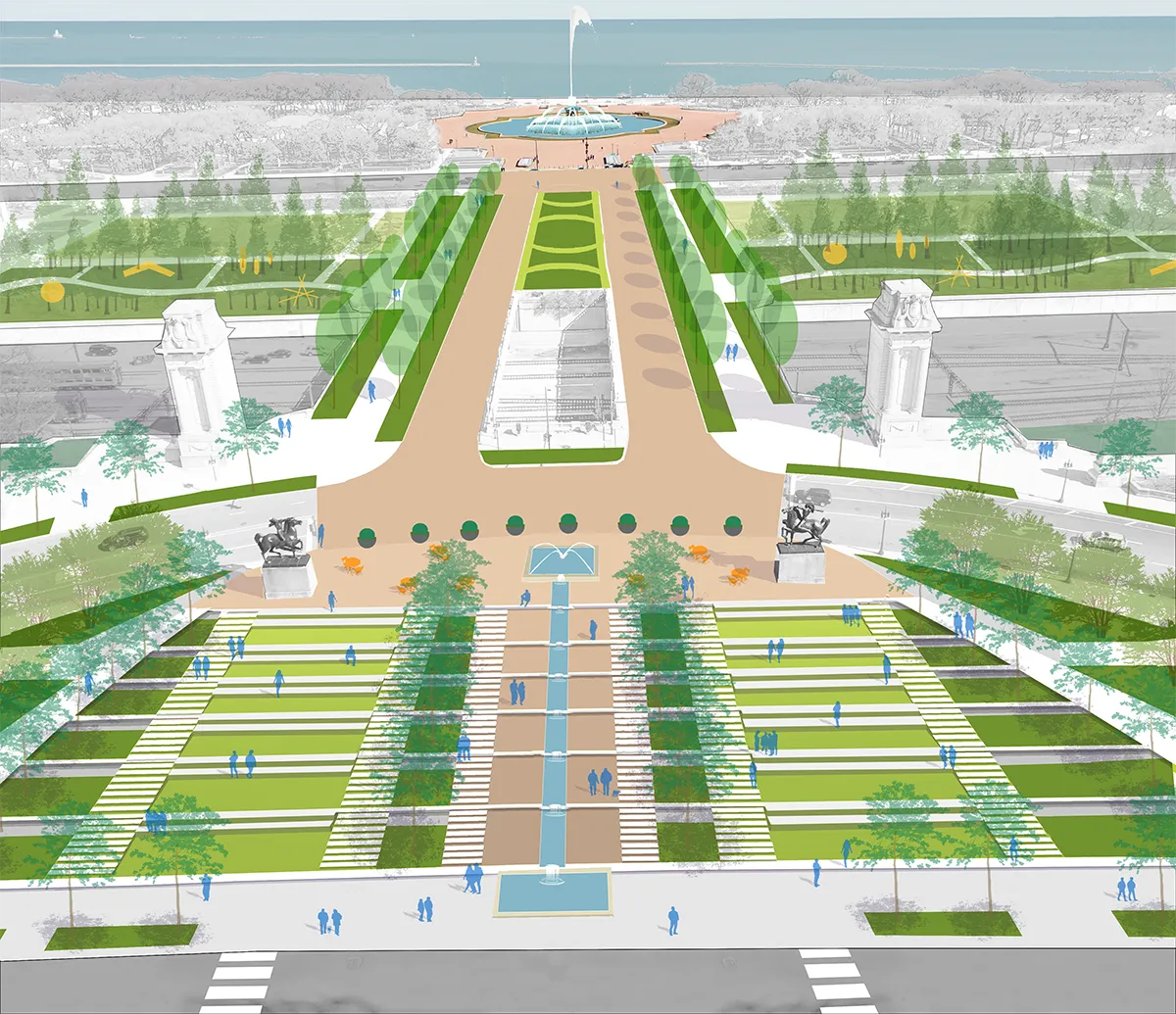
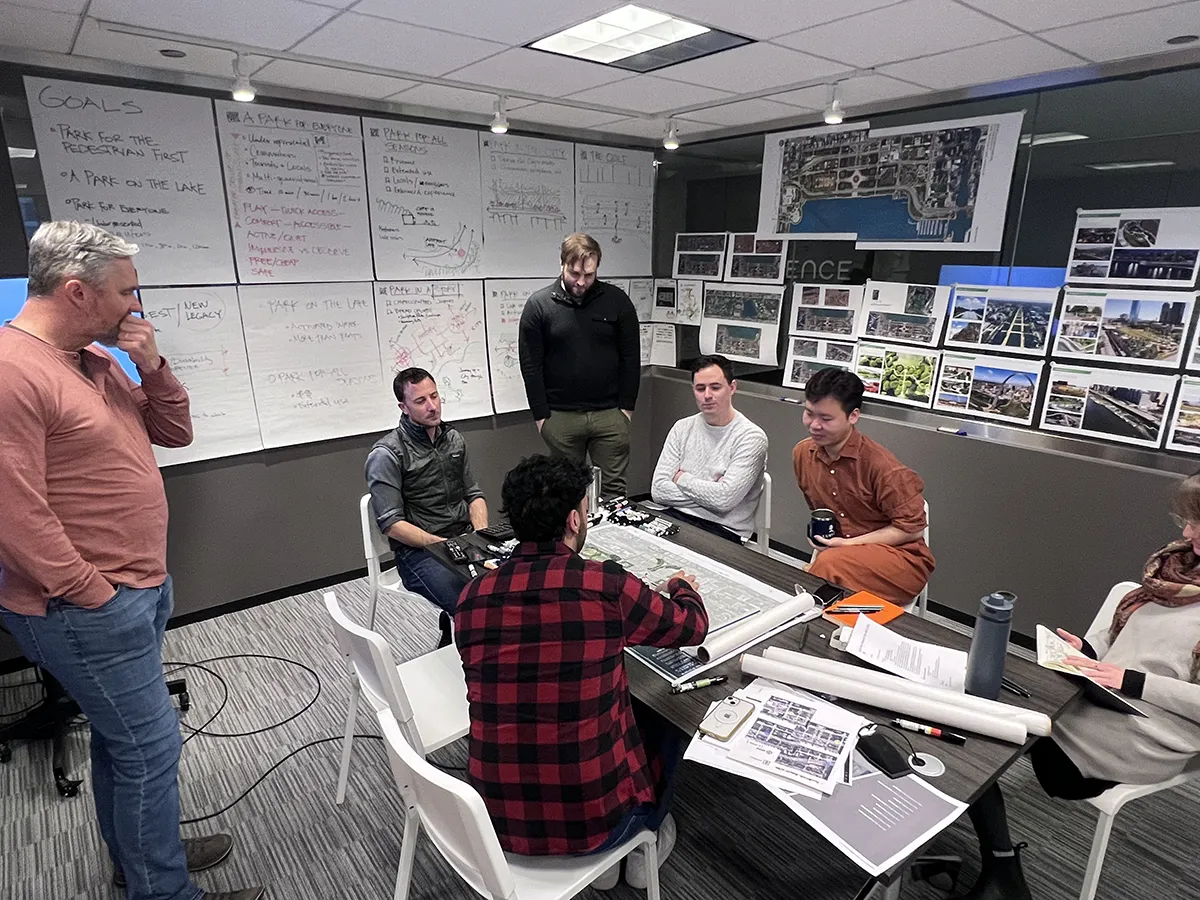
The Chicago Park District is revitalizing Grant Park, with Confluence leading the landscape architectural efforts of a multidisciplinary team to create an updated framework plan. This plan will guide the park’s revitalization and enhance its functionality for residents and visitors in the coming decades.
Grant (Ulysses) Park, proudly referred to as “Chicago’s Front Yard,” is a 313-acre Chicago Park District site bounded on the north by East Randolph Street, on the south by Roosevelt Road, on the east by Lake Michigan (Monroe and DuSable Harbors), and on the west by Michigan Avenue. A few of the park’s most iconic and notable features, today, include the Art Institute of Chicago, Buckingham Fountain, Millennium Park, Maggie Daley Park, and the Museum Campus (which includes the Art Institute of Chicago, the Field Museum of Natural History, the Shedd Aquarium, and the Adler Planetarium). Its beginnings date to 1835, with the original intent of the park being to prevent lakefront development and to protect the open space. The park’s original area east of Michigan Avenue was “forever to remain vacant of buildings”. Officially named Lake Park in 1847, the entire park is built on landfill, much of which consists of the charred rubble of the Great Fire of 1871. The park was renamed Grant Park, in honor of the 18th President of the United States, Ulysses S. Grant, by the South Park Commission (later to become the Chicago Park District) in 1901. Renowned American/Chicago architect and urban designer, Daniel H. Burnham, is credited with the park’s reconceptualization as a formal landscape including museums and other civic buildings, only to be contested by the Chicago based mail-order magnate, Aaron Montgomery Ward, who sought to protect the park’s open character. [1]
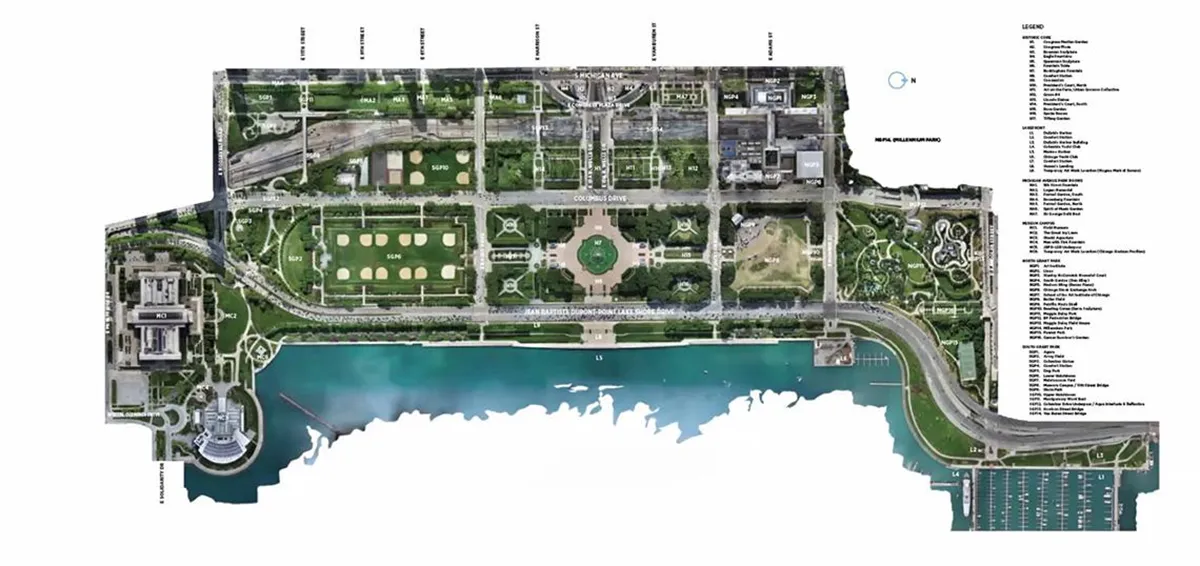
The team’s scope includes conducting a comprehensive review of the park’s existing conditions and developing a framework plan that addresses issues such as accessibility, sustainability, and safety. Proposed concepts improve the green spaces by strengthening Grant Park’s ornamental garden heritage and improving the pedestrian safety and experience throughout the park.
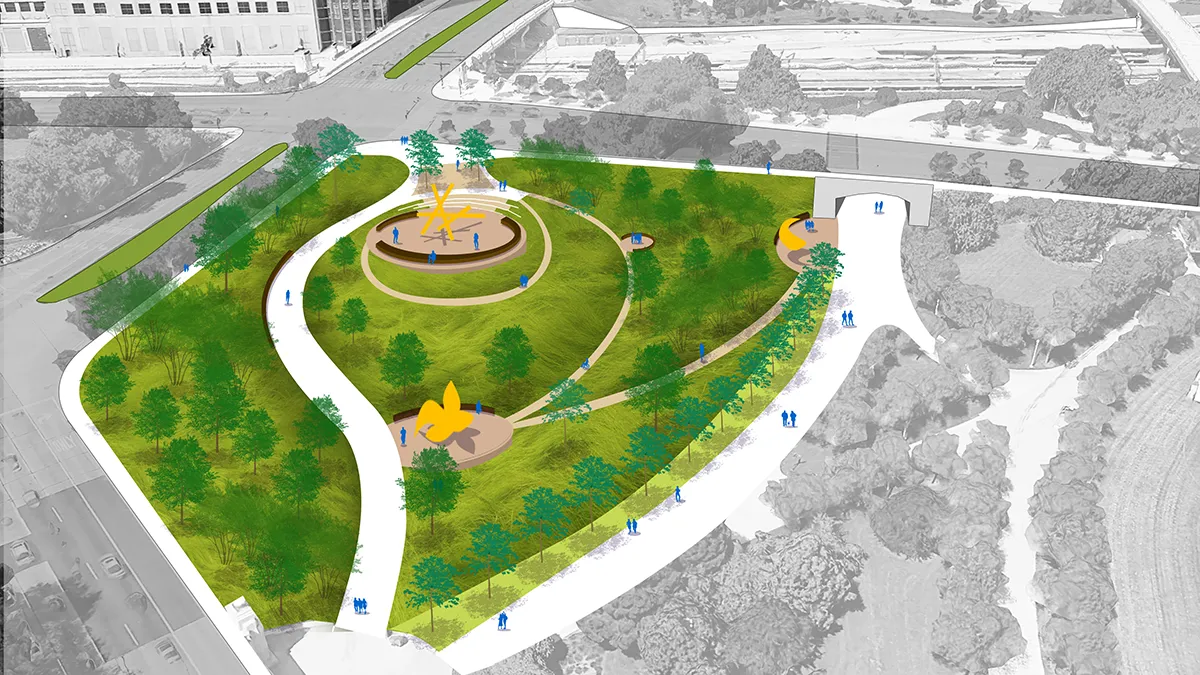
The plan proposes upgrades to neighborhood amenities, including sports courts, ballfields, playgrounds, and expanding the dog-friendly area. Finally, improvements and access to the park’s unique cultural amenities, such as Buckingham Fountain, Queen’s Landing, and Butler Field, will be planned to enhance the park as a premier destination. Ultimately, the goal is to transform Grant Park into a vibrant, world-class park that reflects the city’s rich history, culture, and its vision for the future.
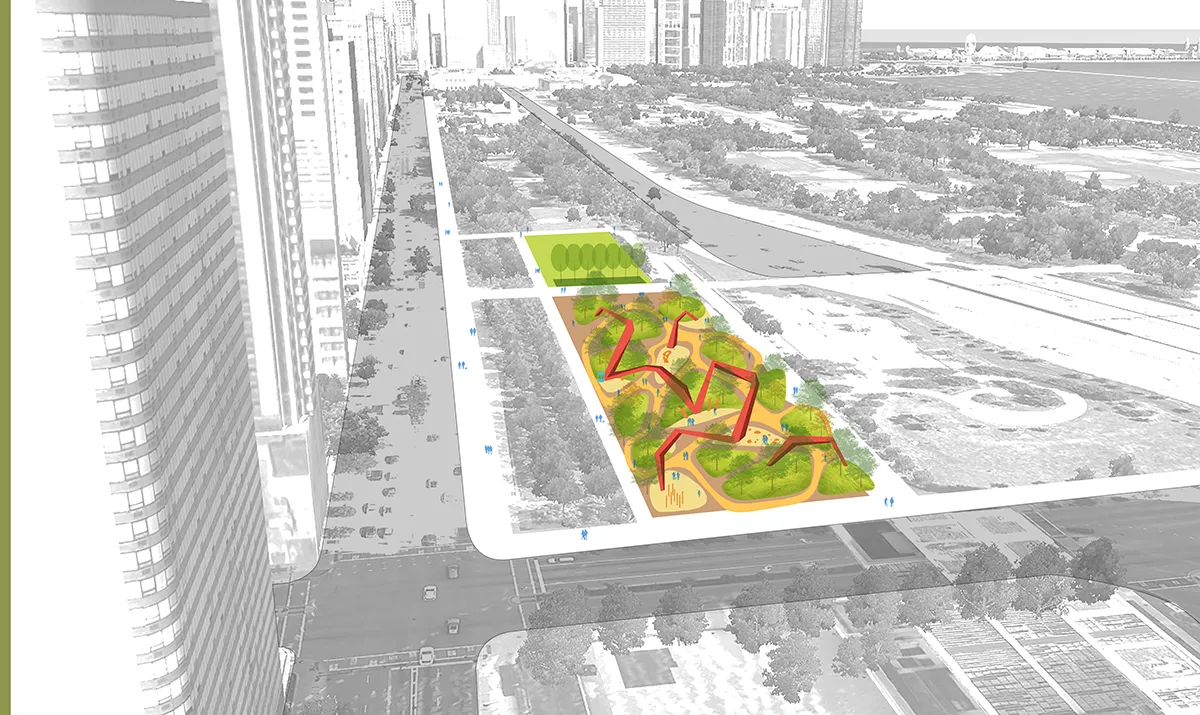
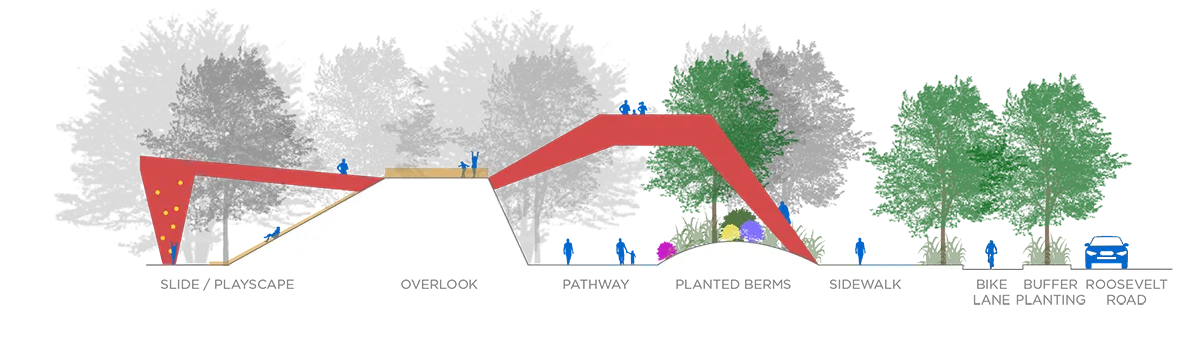
The Chicago Park District aims to revitalize Grant Park, focusing on preservation and landscape, recreation, events, safety and logistics, and mobility.
[1] Chicago Park District – https://www.chicagoparkdistrict.com/featured-capital-projects
Grant Park Framework
Location: Chicago, Illinois, USA
Client: Chicago Park District
Images: Confluence