
Water, whether abundant or scarce, is vital for developing and maintaining landscapes that are ecologically sustainable, socially appealing, productive, and resilient. Over the past hundred years, our view of water has changed from seeing it as a problem to be controlled to recognising it as a valuable resource that supports life. During this time, with urbanisation and intensive agriculture, we have tried to control the water cycle by eliminating wetlands, straightening waterways, putting water underground, damming rivers, and flattening landscapes to build cities and feed ourselves. However, in doing so, we have disrupted the water cycle and created severe problems, including droughts, flash floods, sea-level rise, and, in extreme cases, climate refugees.

In recent months (June-August 2026), Europe experienced extreme drought and floods, highlighting the planet’s multiple water challenges. This underscores the need for a holistic strategy to manage this complex issue. Consequently, we turn to the Sponge Planet model [1], which provides an integrated approach for climate mitigation and adaptation.
The Sponge Planet model shifts the reliance away from engineered solutions (grey infrastructure) to water- and nature-based solutions (blue-green infrastructure). It works with nature to restore the water cycle through slow water movement [1] and by creating an overall network of community-driven initiatives, rather than relying solely on major projects undertaken by governments and non-profit organisations. Scaling community-driven nature-based solution projects, such as wilding and naturalisation, is essential for tackling local, regional, and global water challenges.
Undertaking new rewilding or rehabilitation projects is important in addressing the disruption of the water cycle, but there is also a need for communities and governments to realise the errors of the past and to stop continuing bad land management practices, including housing development on riverplains, increasing impermeable areas through increased housing density, reliance on roads and eradicating soil biology through poor agricultural practices.
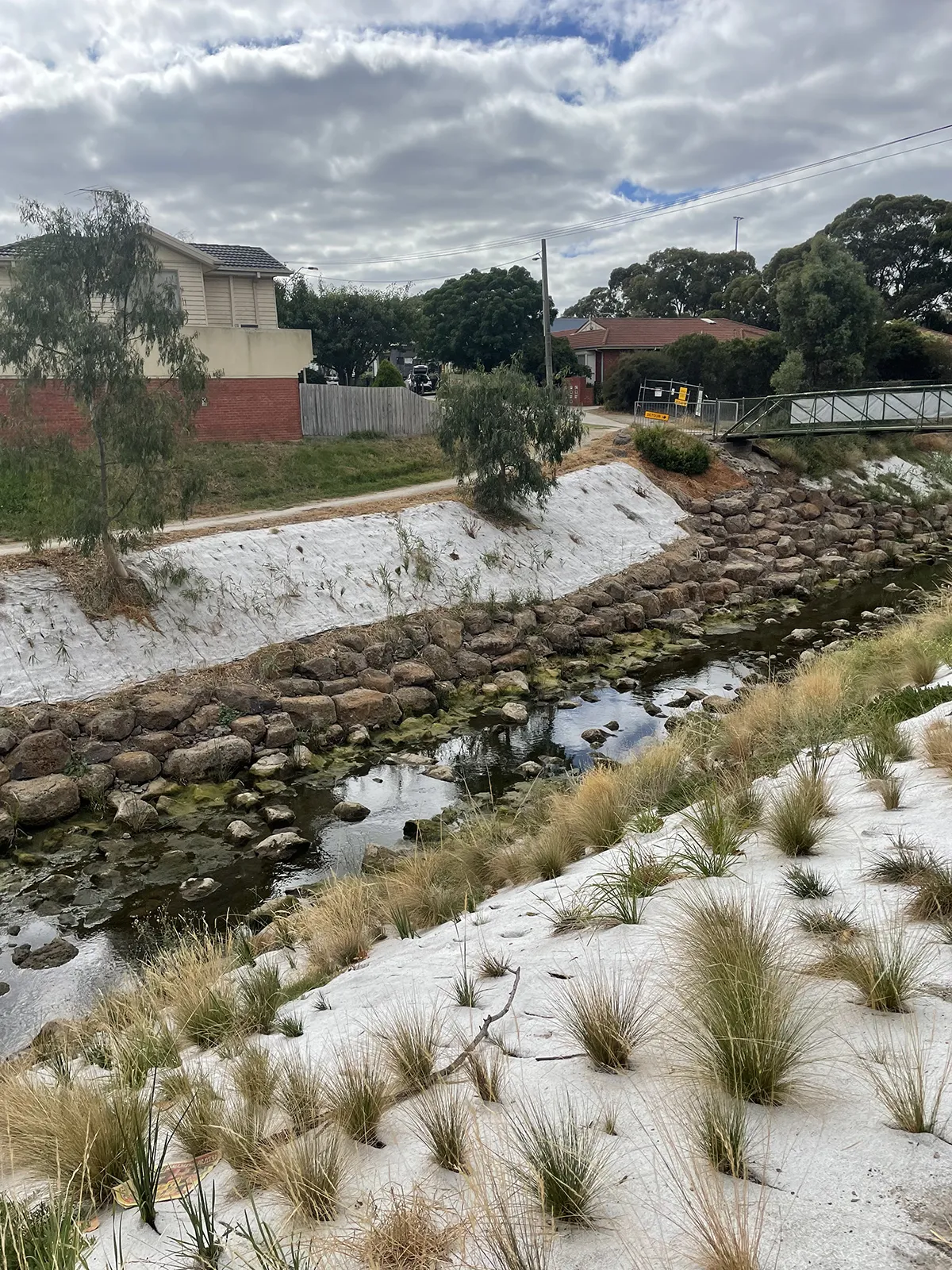
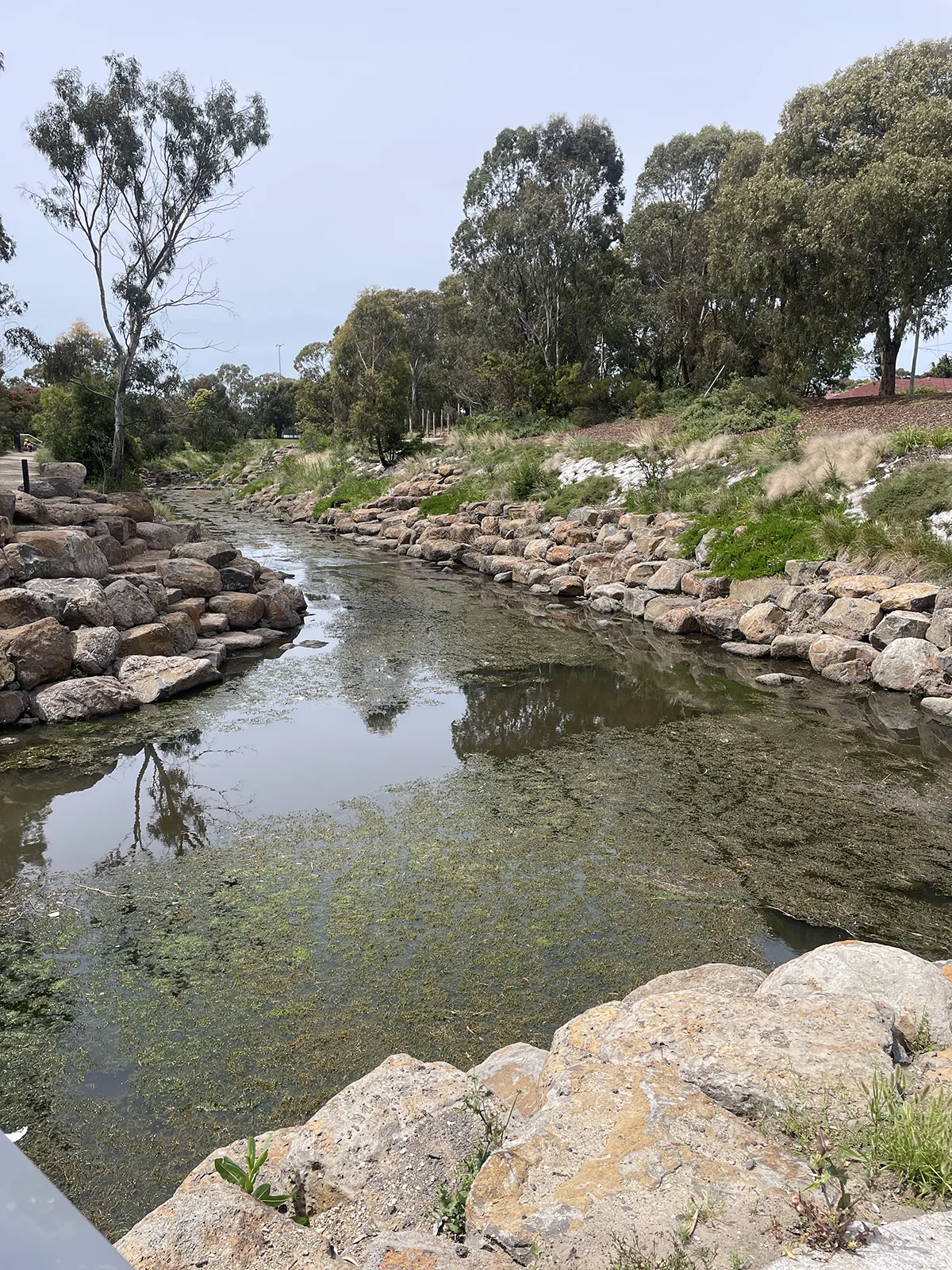
Rehabilitation of Moonee Ponds Creek – (Left 2024 | Right 2025) | Image Credit: Damian Holmes
Better land and water management practices can improve our lives through aesthetics and amenities (recreation) but also improve food security and increase biodiversity. Economically, many people can benefit from improving the water cycle, including professionals (ecologists, hydrologists, agriculturalists, horticulturalists, landscape architects) and communities as a whole. Improving the water cycle may also reduce insurance premiums, the costs of shifting or relocating people, and large-city investments in equipment and stockpiling for extreme events.
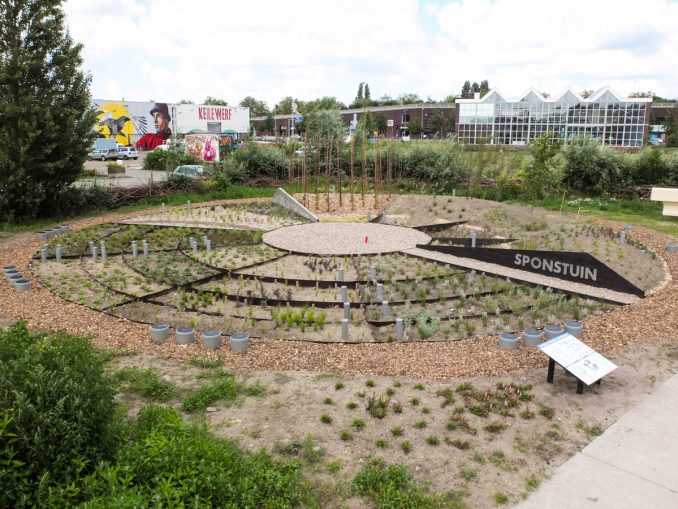
We will continue to see extreme events (droughts, floods, rain bombs) until there is a greater shift towards models such as Sponge Planet and other water- and nature-based models.
Attend the Sponge Planet session (Wed. 28 Oct) at the upcoming IFLA World Congress in Hong Kong to learn more about Sponge Planet and other water- and nature-based solutions.
Article by Damian Holmes – Founder & Editor of World Landscape Architecture
[1] Yu, K., Gies, E. & Wood, W.W. To solve climate change, we need to restore our Sponge Planet. Nat Water 3, 4–6 (2025). https://doi.org/10.1038/s44221-024-00355-x
Cover image: Benjakitti Forest Park | Turenscape and Arsomsilp Landscape Studio | Image: Courtesy of Turenscape