
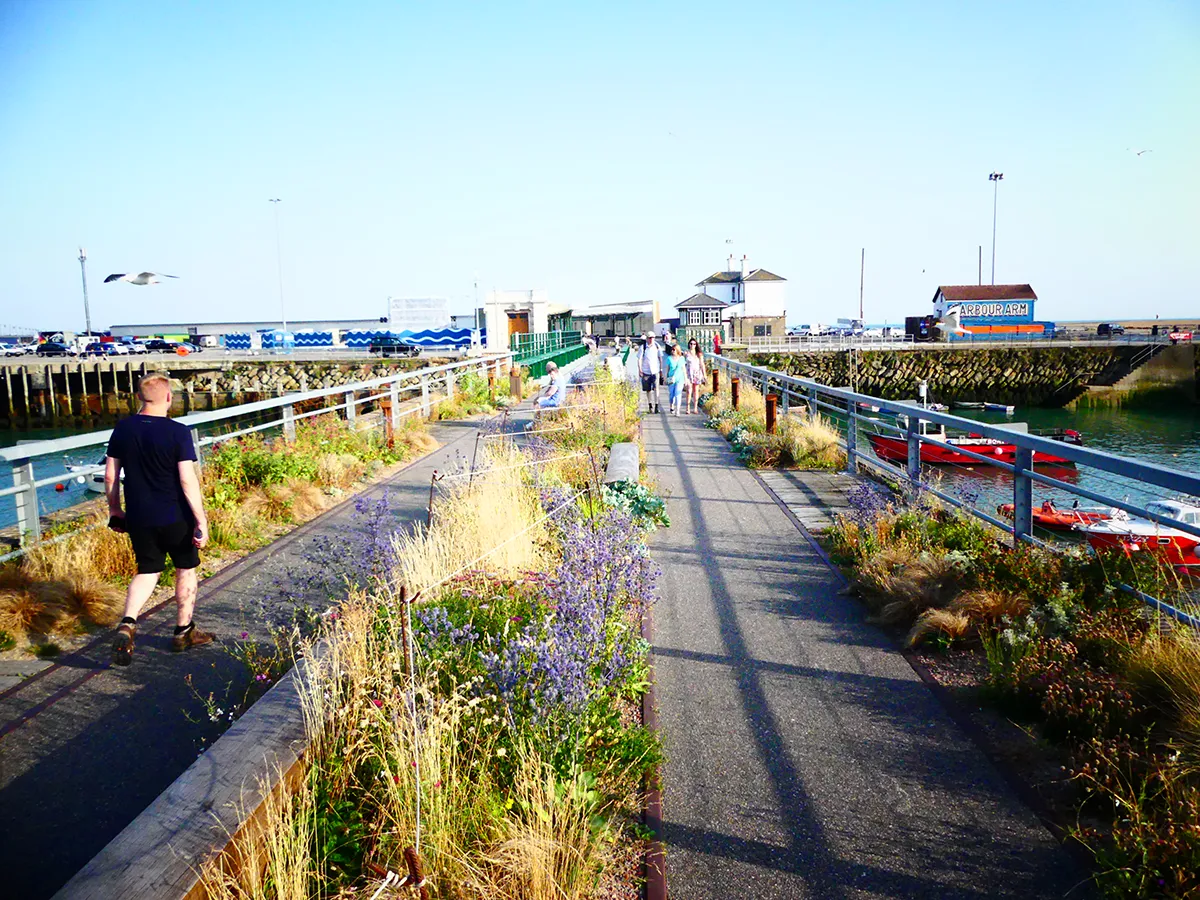
Once a thriving fishing port and the first UK terminus for a pioneering rail-sea-rail service to Europe, Folkestone’s harbour was for decades a key gateway for royalty, the elite, and everyday travellers alike. But the combined impacts of wartime bombing, competition from Dover’s ferries, and the Channel Tunnel’s opening in 1994 led to the decline of its port activities and surrounding town. By the early 2000s, the station, viaduct, swing bridge, and associated historic structures stood derelict, creating for them an uncertain future.
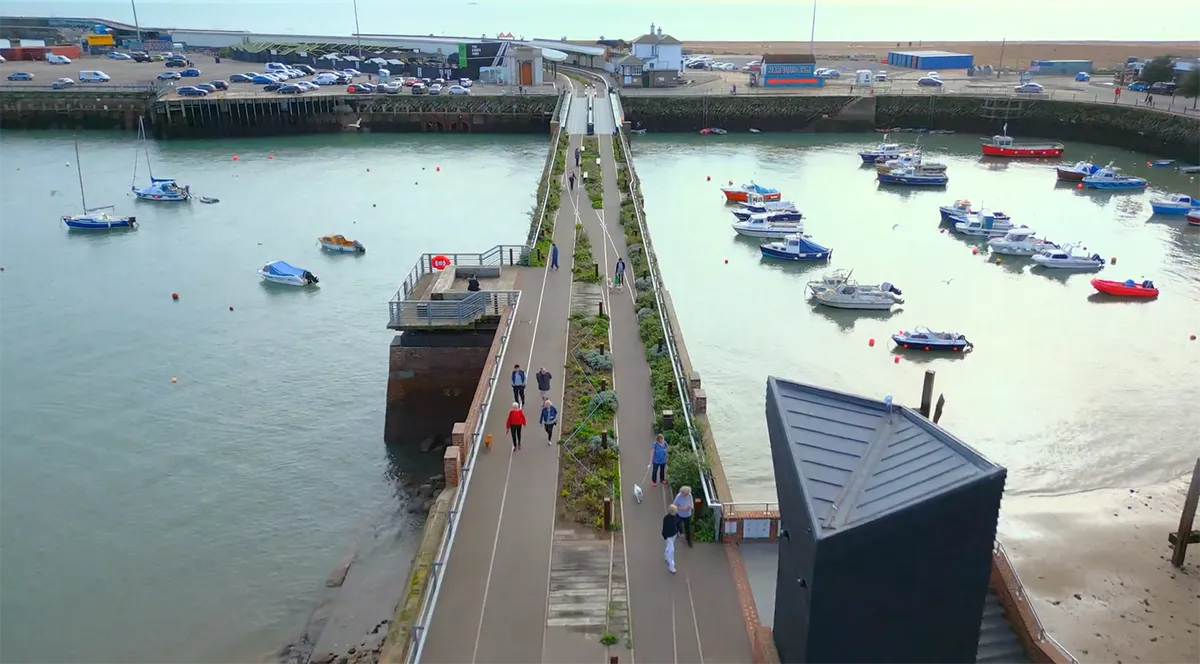
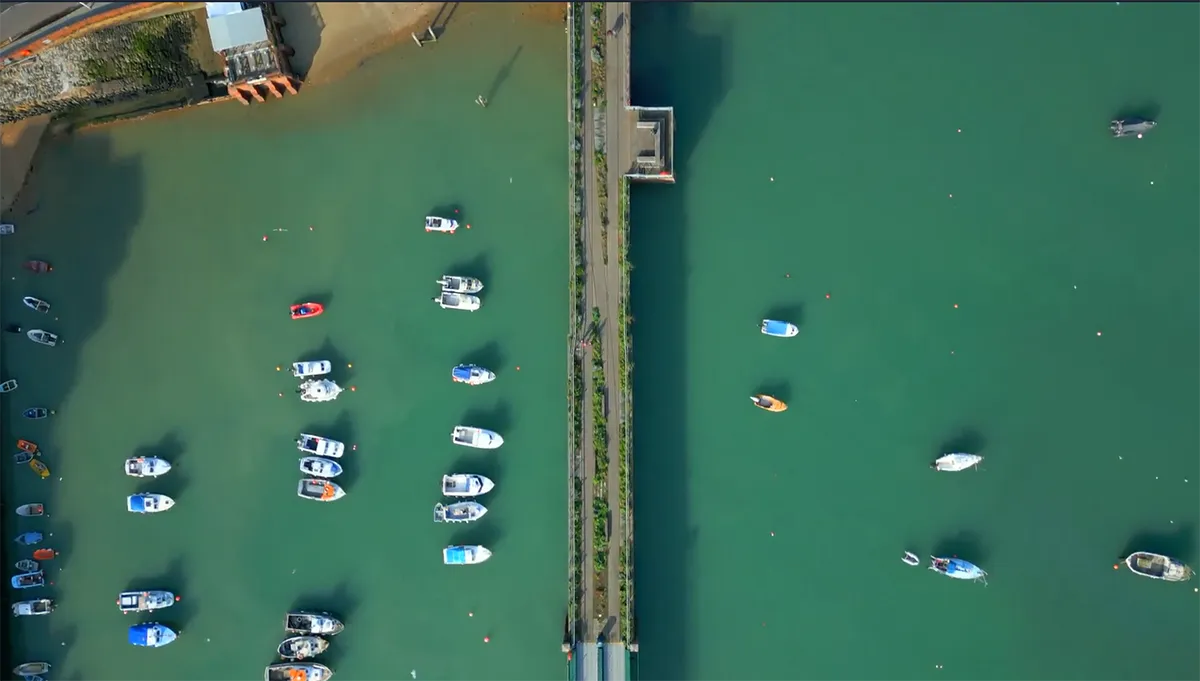
Folkestone Harbour Link project has successfully reversed this decline, transforming the site into an extraordinary linear public realm for pedestrians and cyclists – a sensitive regeneration that celebrates heritage while creating a new civic asset.
A Regeneration Vision
The revival of Folkestone’s seafront began in 2004, when Sir Roger De Haan established the Folkestone Harbour Seafront Development Company. A multi-million-pound regeneration masterplan was conceived, aiming to create a vibrant seafront quarter with a mix of residential, cultural, and leisure uses.
Within this vision, the Harbour Link – incorporating the Grade II-listed Harbour Viaduct, Swing Bridge, and the historic Harbour Station – was identified as a vital connective and placemaking element, linking the town to the revived Harbour Arm and Lighthouse beyond.
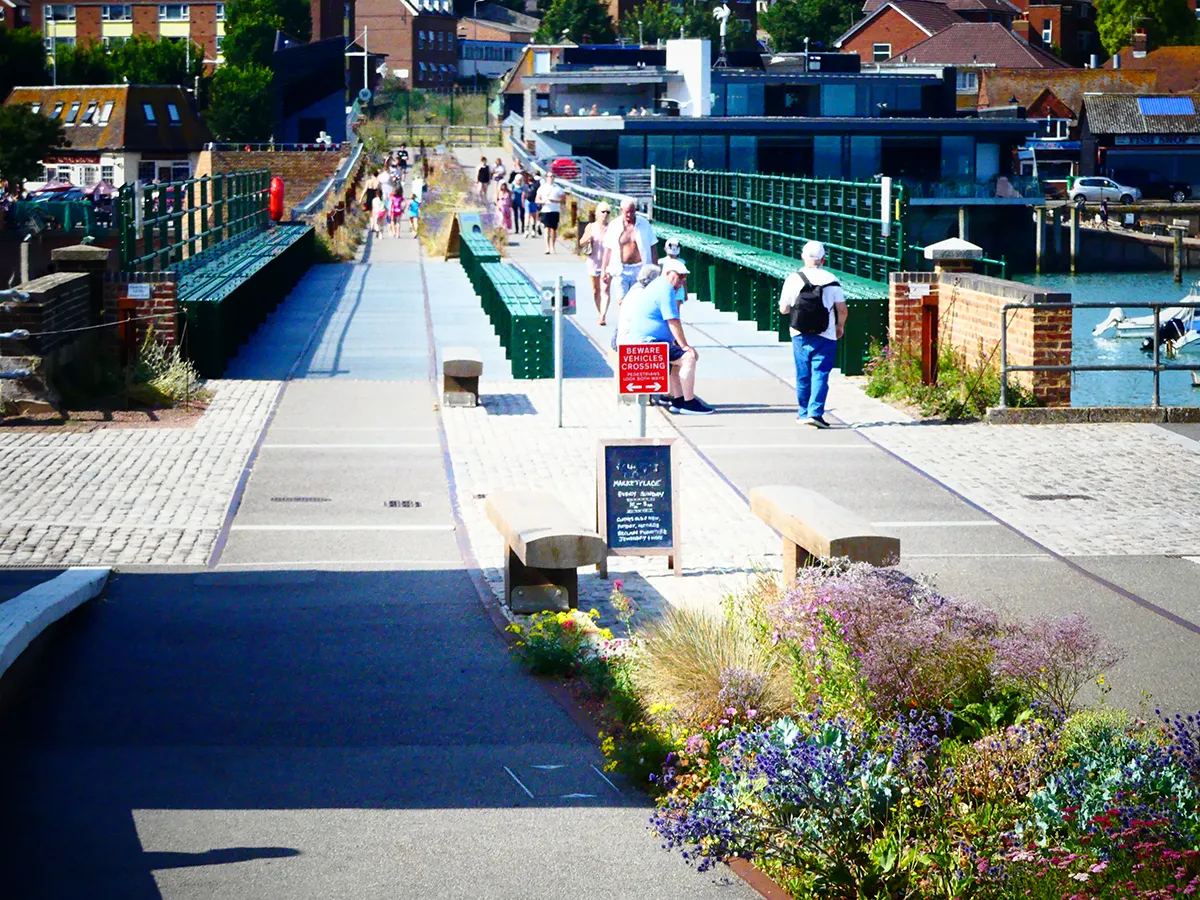
Macfarlane + Associates served as lead landscape consultant for the Harbour Link and Station, guiding the scheme from a listed planning application through tender and post-contract services. Their design objective was to create a high-quality, accessible route while retaining the integrity and distinctive character of the historic structures. They were supported by engineering expertise from Buro Happold who ensured the viaduct and swing bridge were sensitively restored, while Acme’s architectural input revitalised the station. The project was notably shaped by extensive historical research and close collaboration with Historic England.
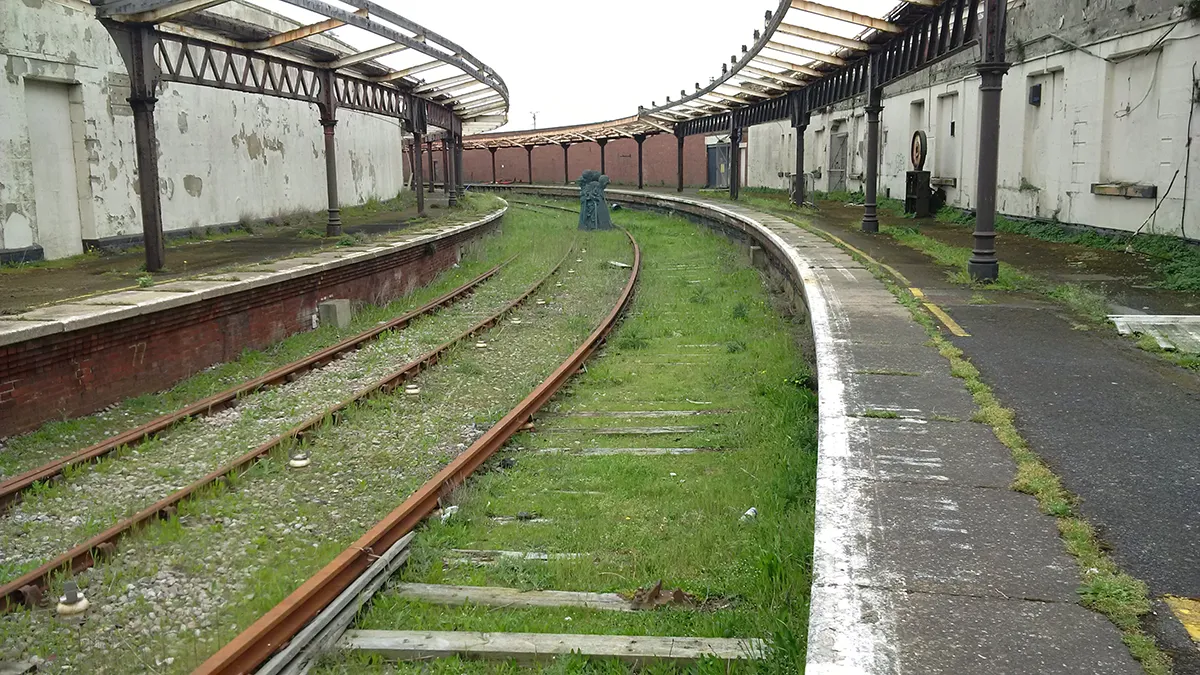
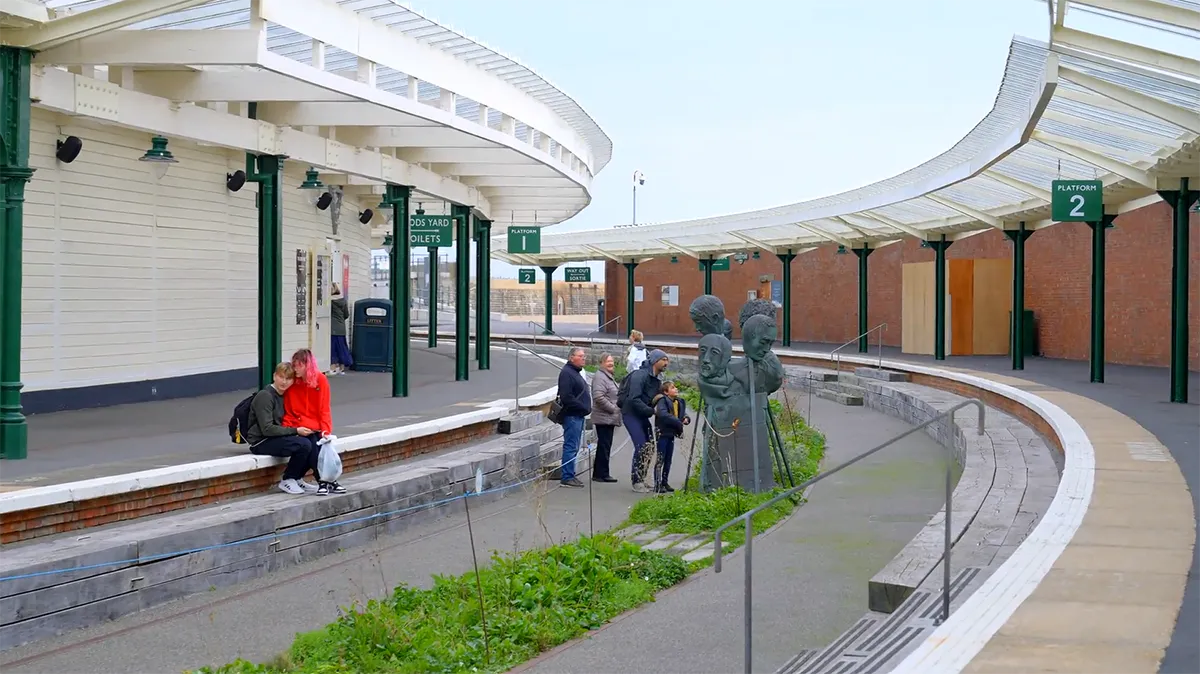
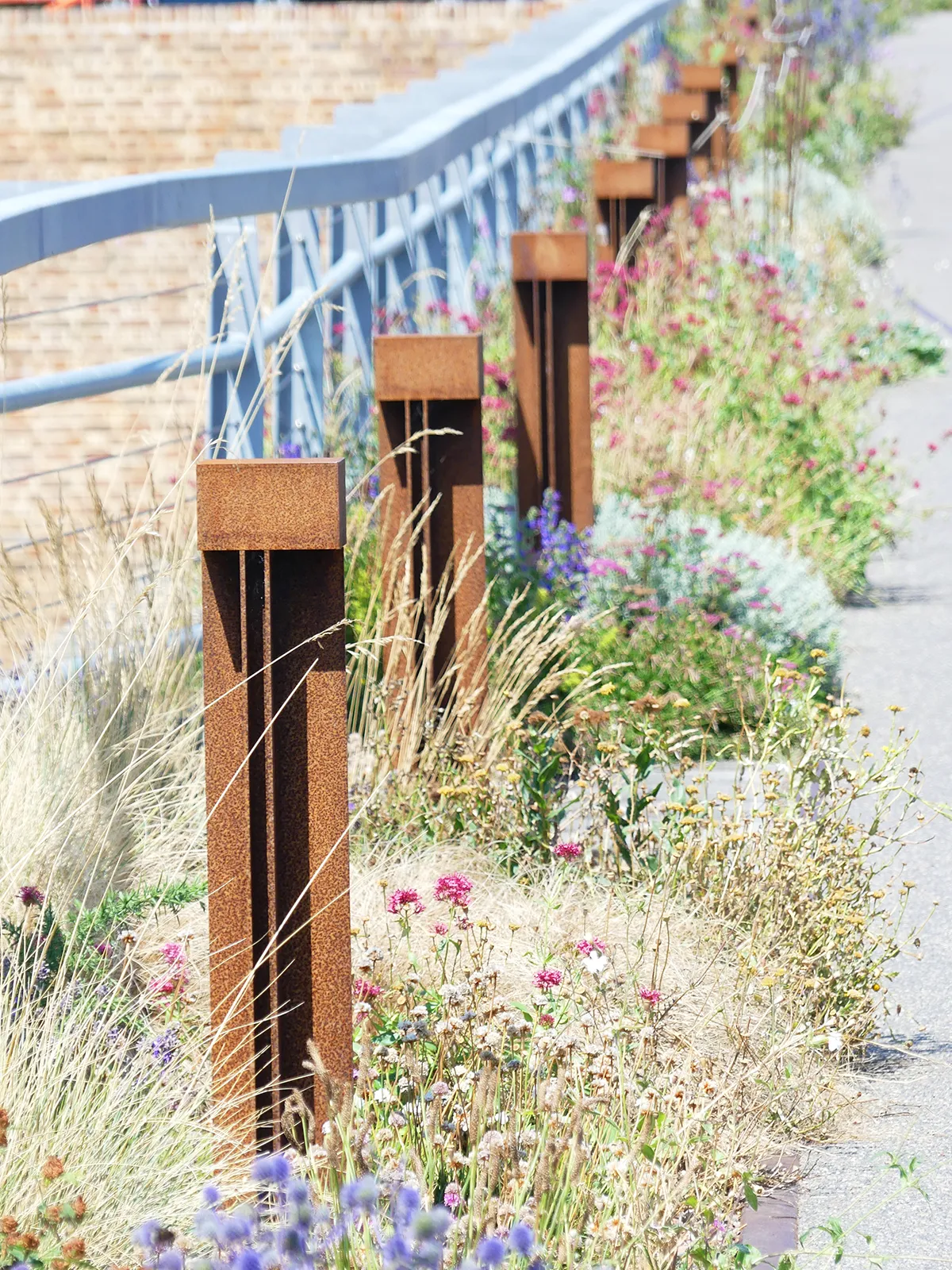
The design set out to achieve a strong sense of place. Throughout the route, historic references are woven into the contemporary design. Original rails remain embedded in the walking surfaces, corten steel bollards recall the site’s industrial past, and furniture is crafted from salvaged harbour timbers. The project allows visitors to physically trace the path once travelled by steam trains, now reanimated by steady flows of walkers and cyclists.
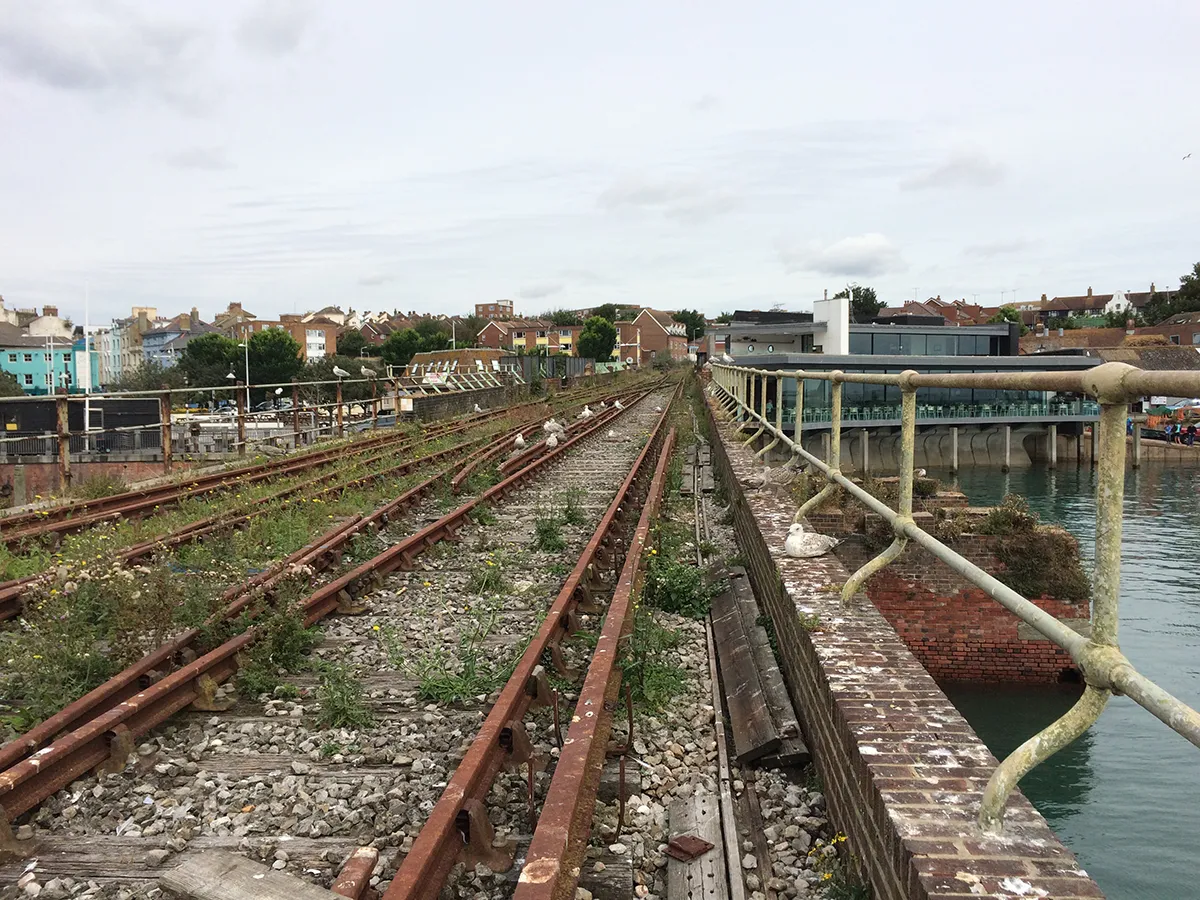
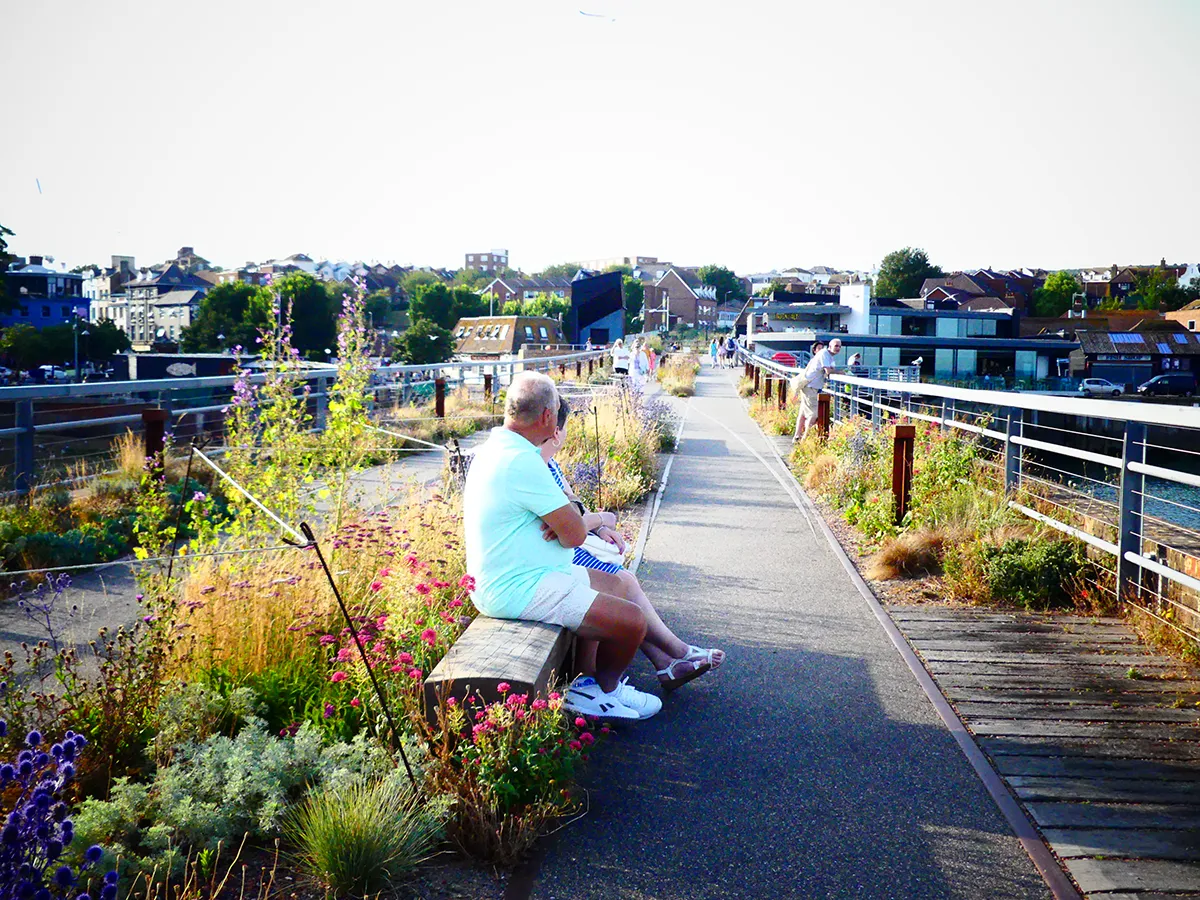
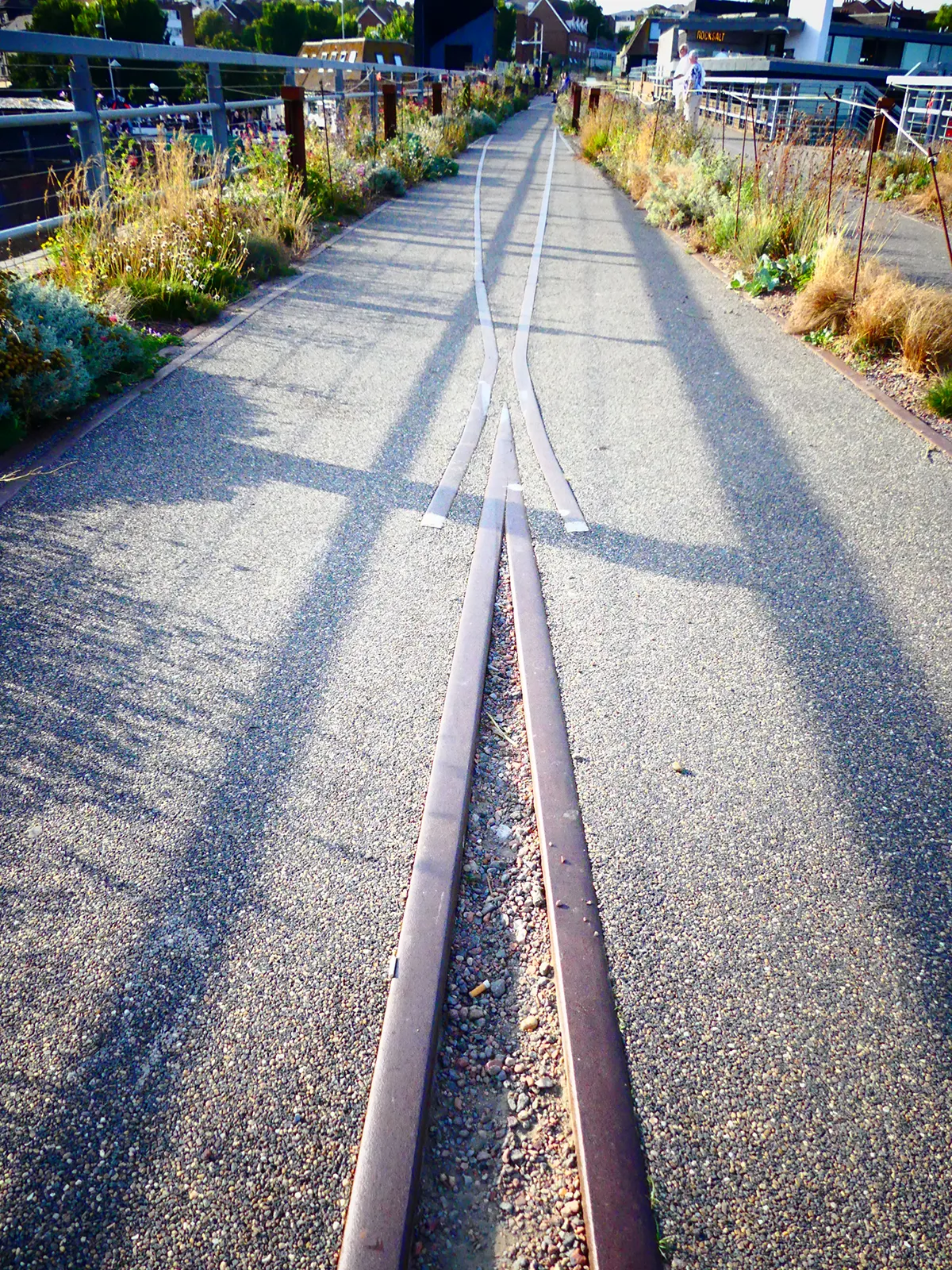
The linear route is punctuated by informal stopping points, seating areas, and event spaces for people to dwell and enjoy the space. Hard and soft landscape treatments were carefully chosen to differentiate between the viaduct and swing bridge, while remaining sympathetic to their engineering aesthetic. Importantly, interventions are clearly identifiable yet reversible, ensuring minimal long-term impact on the listed structures.
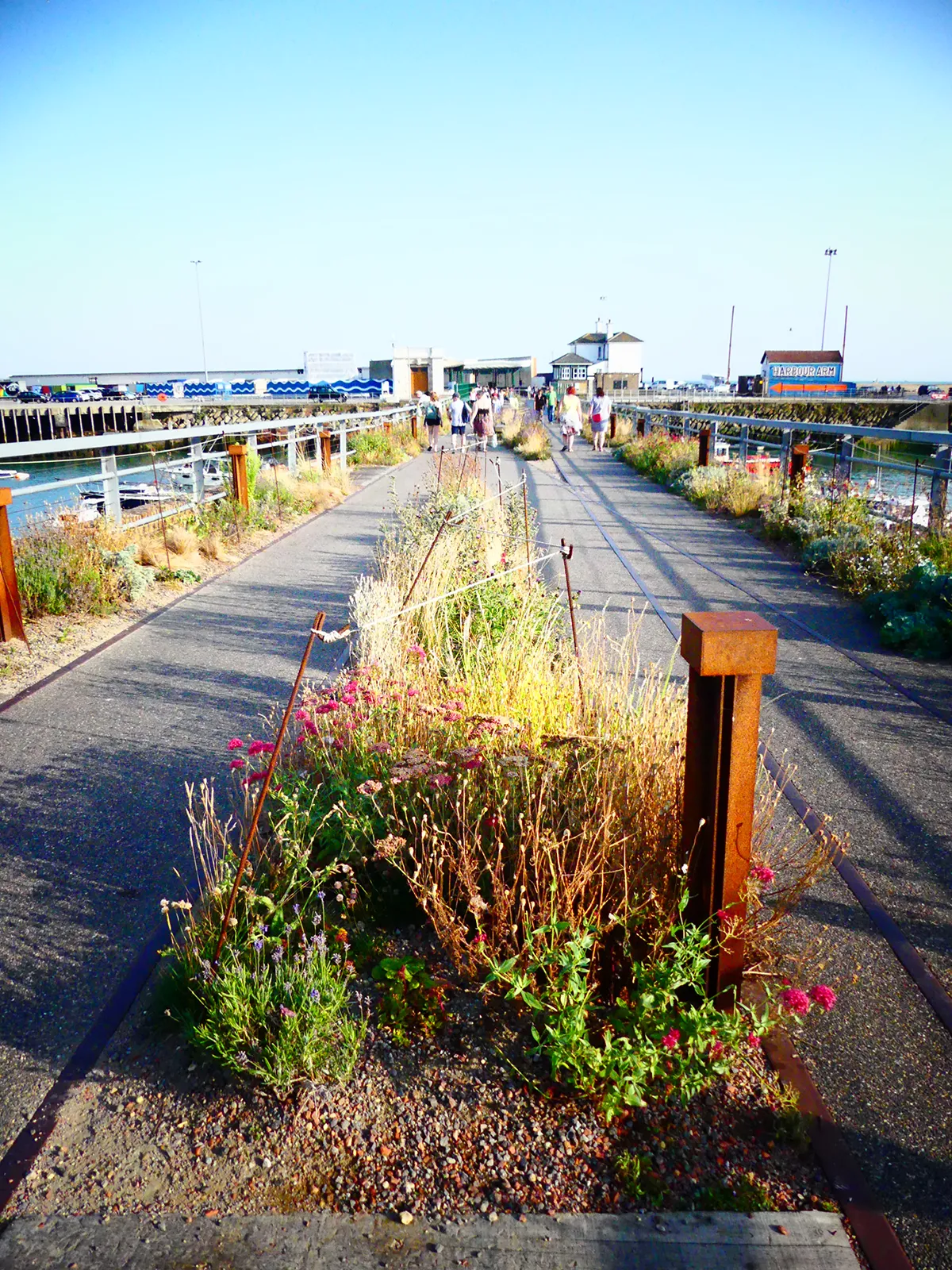
The viaduct surfaces use resin-bound gravel and composite decking between the preserved rails, framed by planting beds and bespoke seating made from re-machined harbour posts. The Swing Bridge decking employs steel mesh grating panels suspended above the original mechanisms, subtly lit to reveal the structure beneath and the station platforms have been restored as sheltered pedestrian spaces. Their stepped seating is intended to encourage pop-up performances.
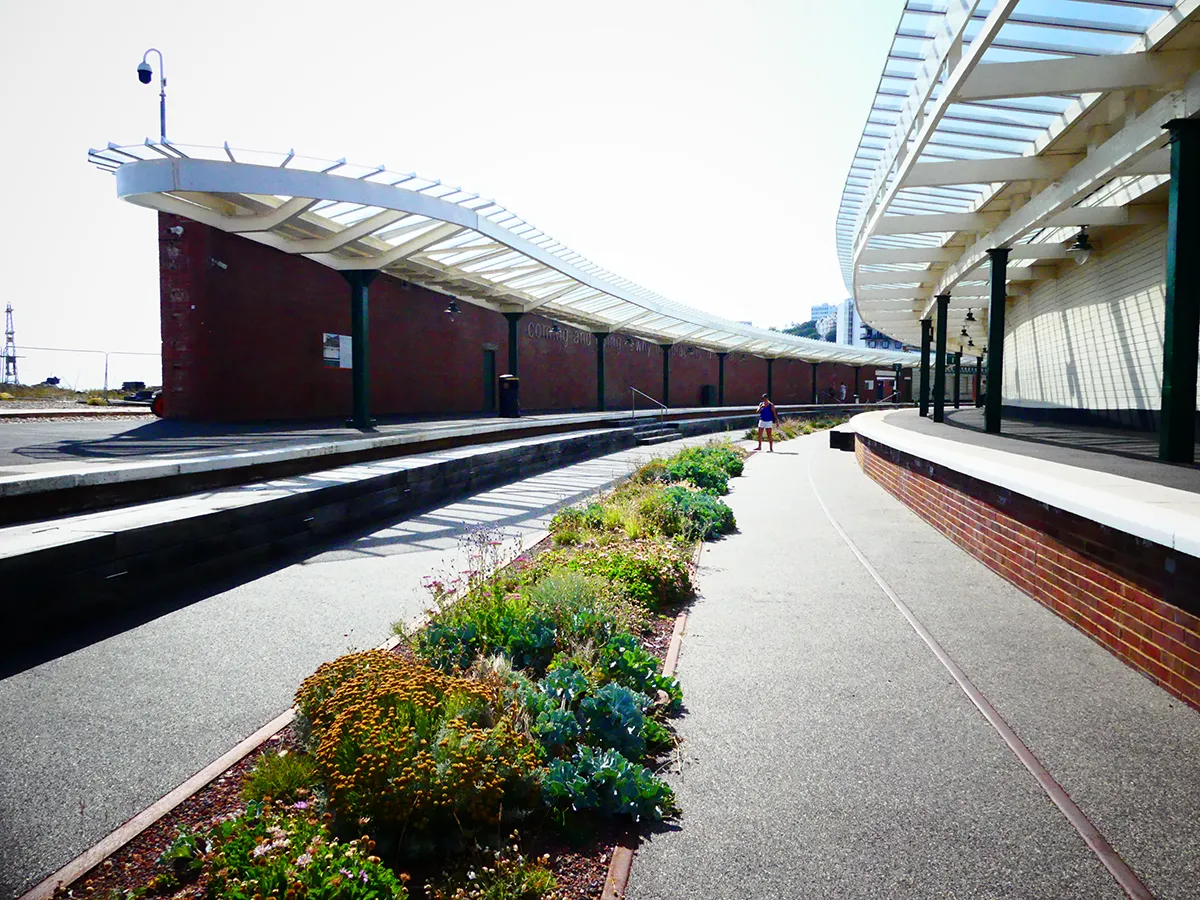
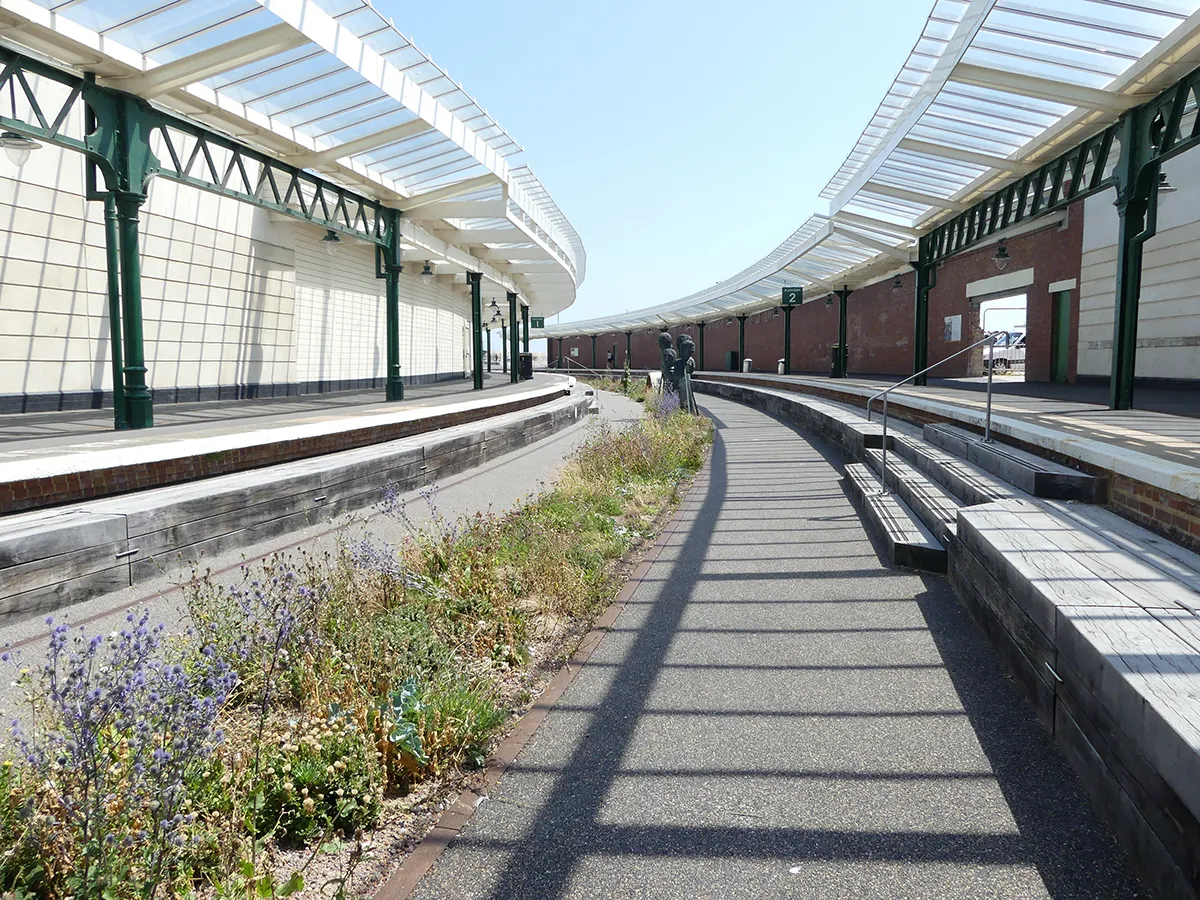
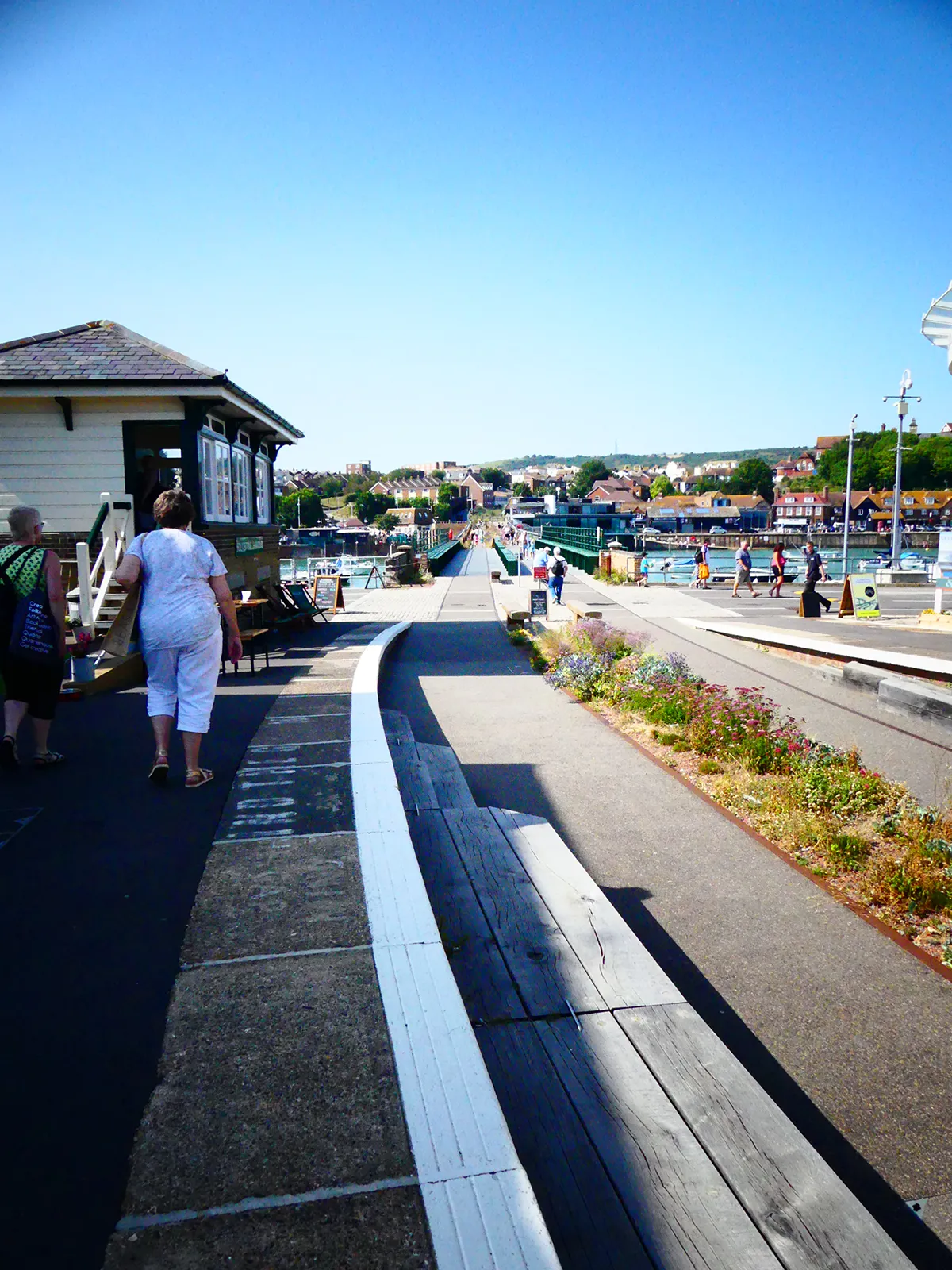
The Harbour Link doubles as a green corridor, with a planting palette designed for the site’s challenging maritime conditions. Salt, wind, and drought-tolerant species – some sourced from nearby protected landscapes such as Dungeness National Nature Reserve – provide seasonal interest and an important habitat for wildlife. Structural planting offers refuge for invertebrates and stabilises the environment over time, while a low-maintenance, irrigation-free strategy reduces environmental impact. This approach enriches biodiversity and reconnects the harbour to its coastal ecology.
Since its phased opening in 2017–2018, the Folkestone Harbour Link has become both a destination and a vital connector. It draws visitors from the Creative Quarter and Old High Street towards the waterfront, where cafés, cultural events, and the Harbour Arm have reinvigorated local life.
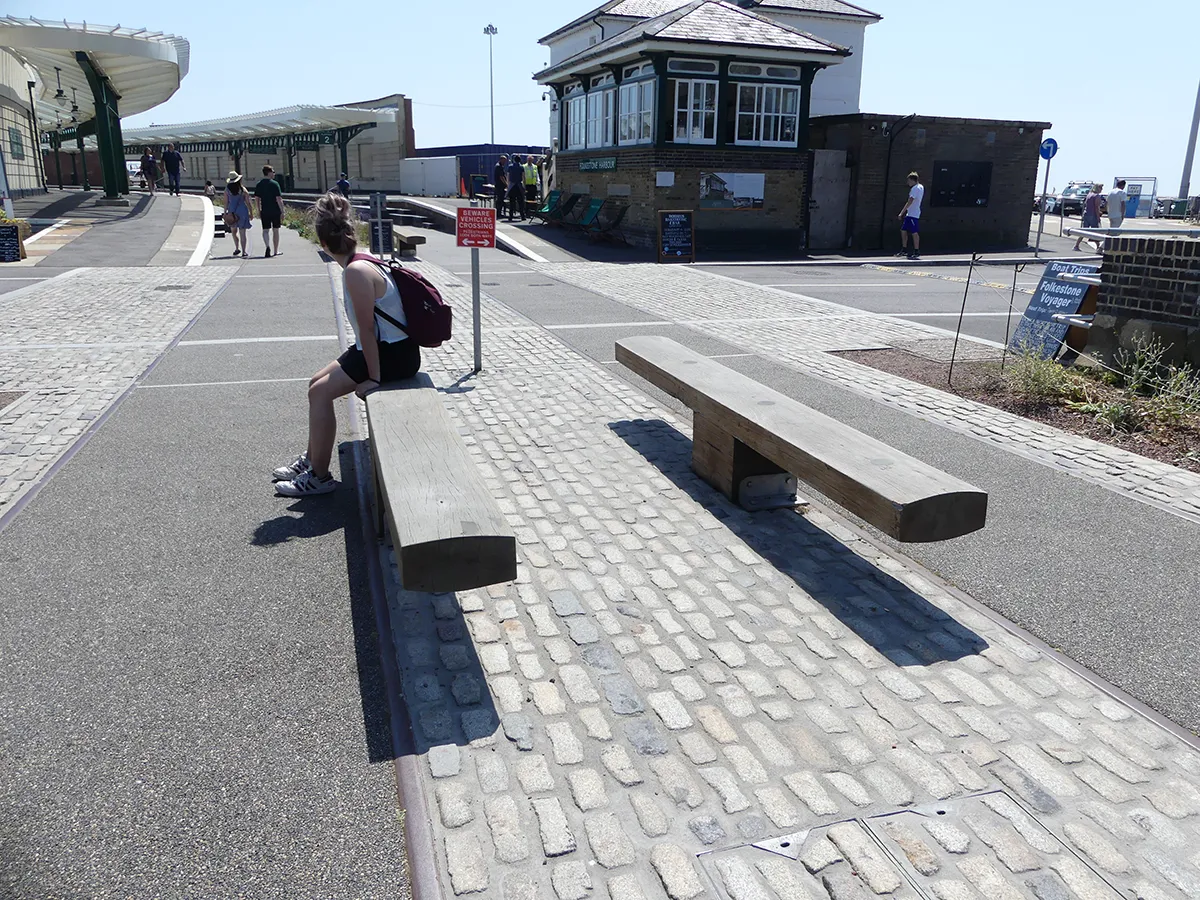
Without this intervention, the viaduct, swing bridge, and station might have been lost. Instead, they now serve as an enduring public space – a testament to how sensitive regeneration can breathe new life into historic infrastructure while shaping a vibrant future.
Folkestone Harbour Link
Client: Folkestone Harbour & Seafront Development Company
Landscape Architect: Macfarlane + Associates
Structural Engineer: Buro Happold
Architect (Harbour Staton): Acme
Heritage Advisor: Historic England
Images: Courtesy of Macfarlane + Associates and Courtesy of Horizon Imaging.