
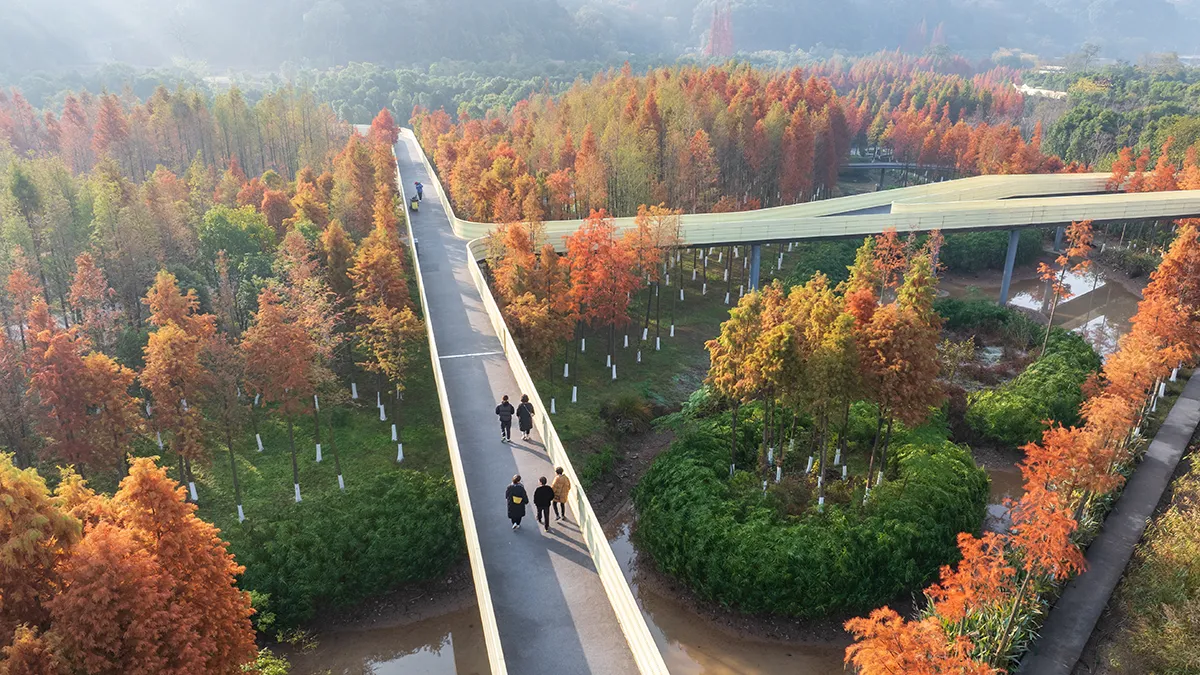
The Xingjiang River Ecological Corridor in Shangrao City revitalizes a 102-hectare floodplain, transforming it into a vibrant ecological and recreational space. Utilizing sponge city principles, the project enhances flood resilience, restores native habitats, and offers year-round public access. Rather than resisting seasonal floods, the design embraces water as a dynamic force, integrating it into the landscape to support biodiversity and urban resilience.
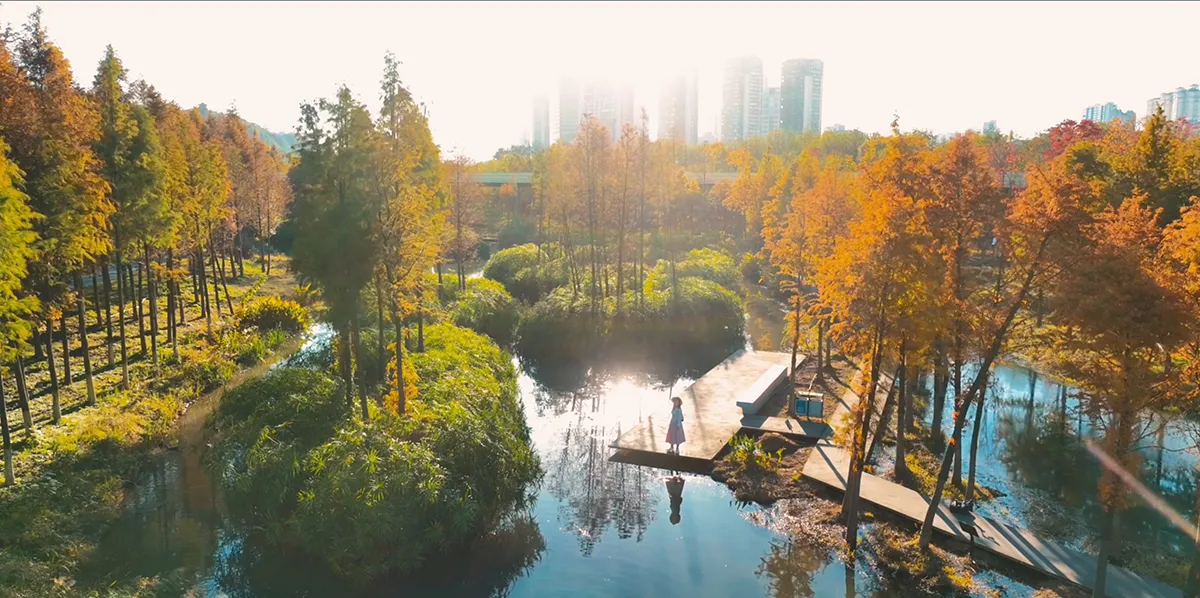
With a cost-effective and low-maintenance approach, the corridor reconnects people with nature while protecting the city from climate threats. Now a regional landmark, it serves as a scalable model for flood-prone cities worldwide.
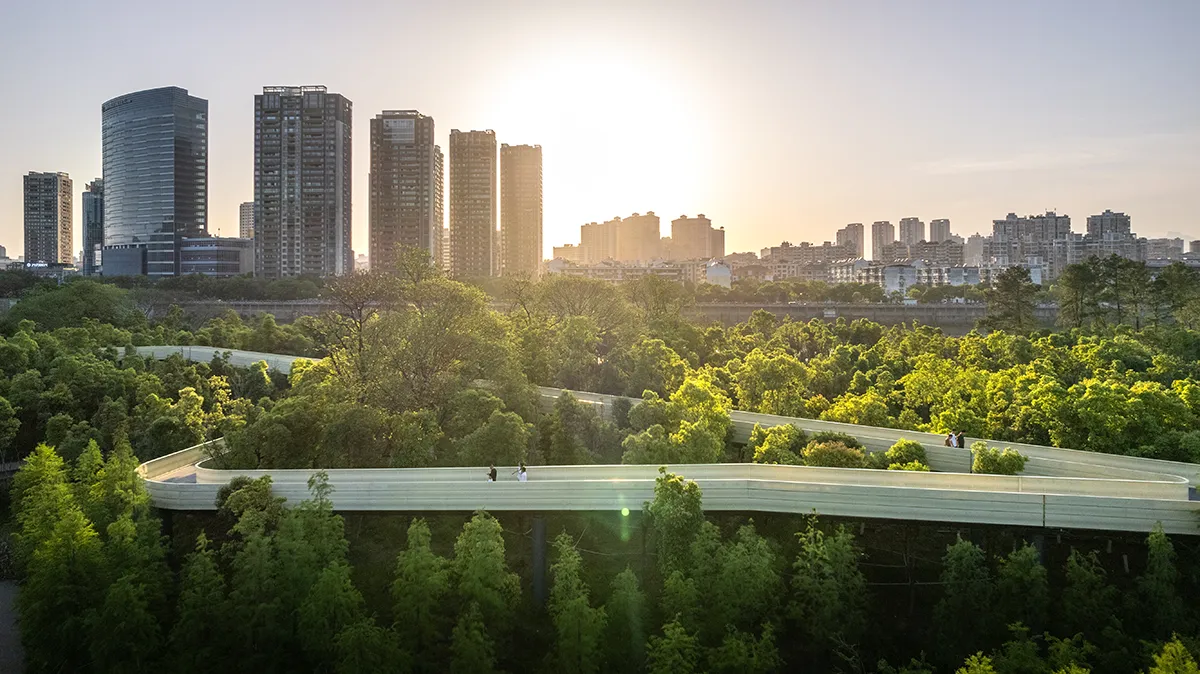
Challenges & Objectives
The 3-kilometer-long floodplain, once degraded by invasive species and informal agriculture, was frequently inundated by seasonal floods, making it largely inaccessible. With catastrophic floods every 20 years, the municipal government sought a solution that would:
- Improve flood management and water quality
- Restore native habitats and support biodiversity
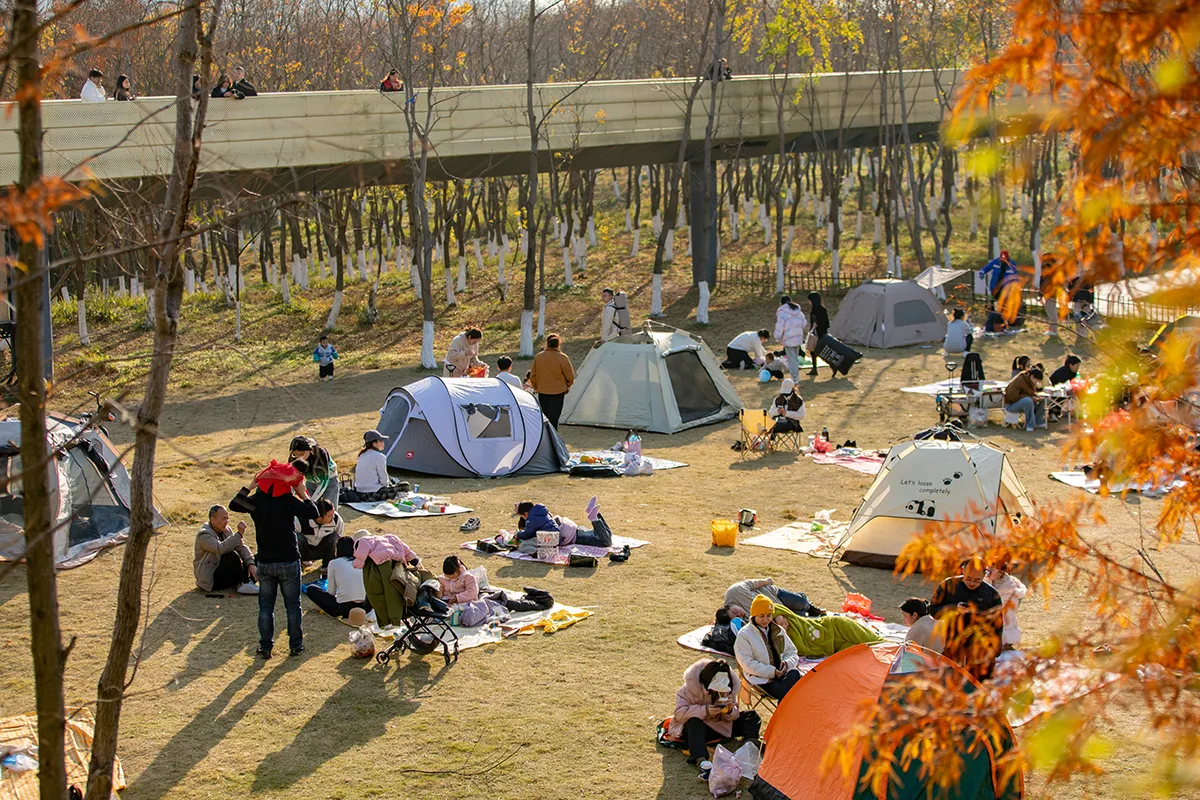
- Create year-round recreational spaces
- Offer a cost-effective and sustainable model for urban resilience
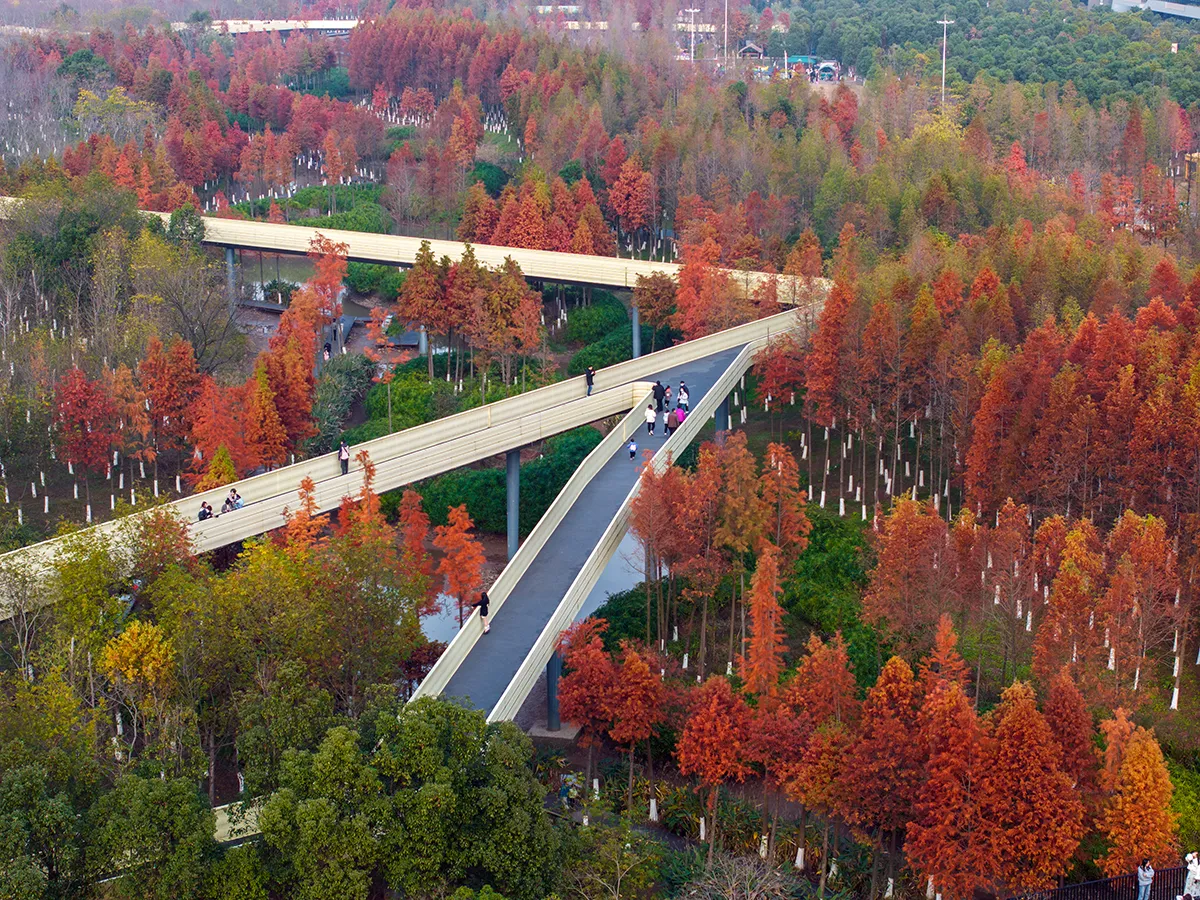
Design Strategies: From Floodplain to Ecological Corridor
Water-Responsive Landscape: Ponding & Islanding
To restore ecology and enhance flood resilience, the project employs ponding and islanding techniques:
- Ponding was used in degraded areas, creating porous landscapes that retain water, sustain site moisture, and form bioswales to filter stormwater from nearby mountain valleys.
- Islanding reshaped low-lying zones into diverse wetland habitats, enriching ecotones and supporting wildlife.
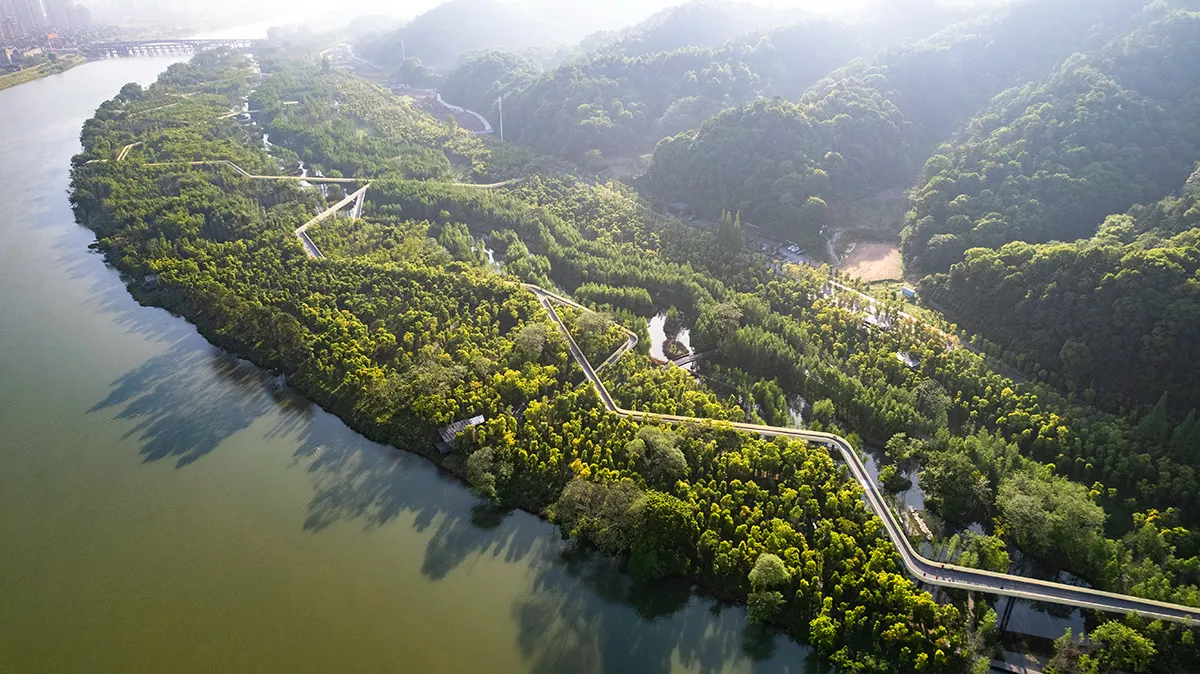
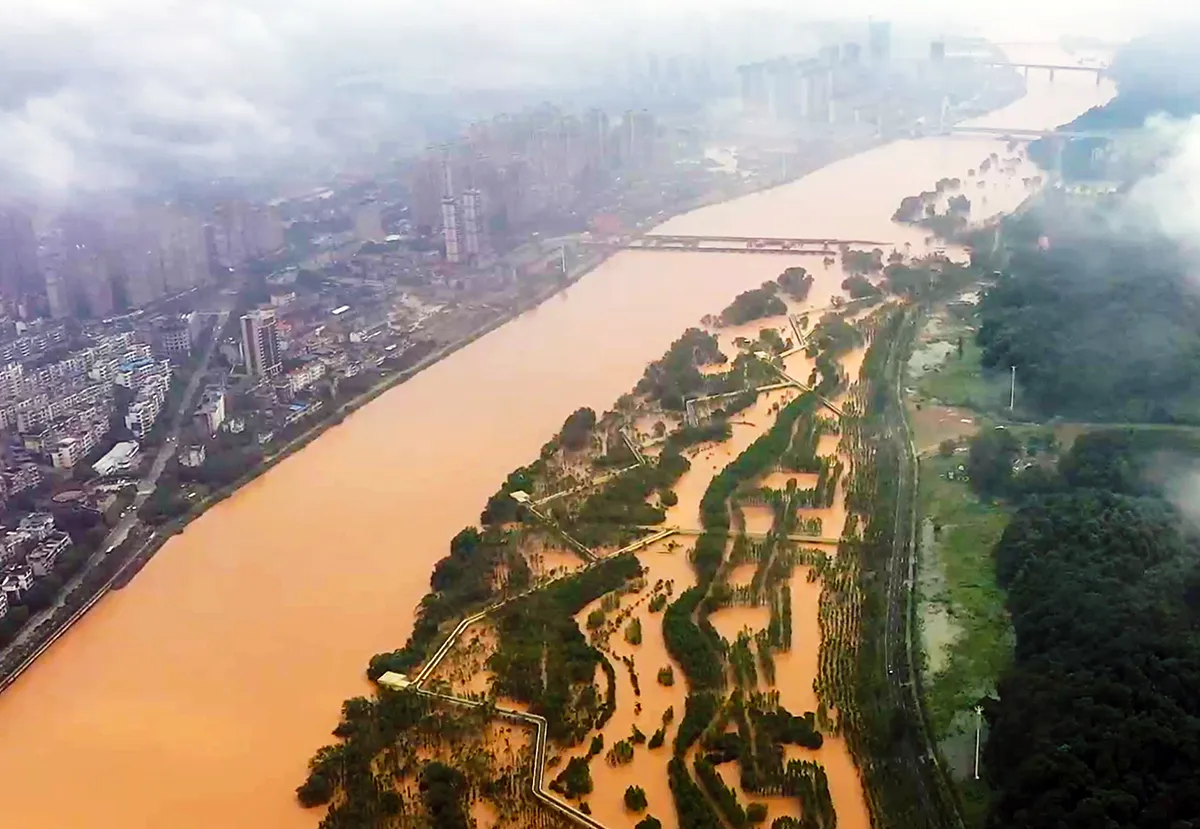
These strategies manage floods naturally, enhancing biodiversity while minimizing environmental disruption. Seasonal monsoons nourish the wetlands, regenerating the landscape and creating an ever-changing visitor experience.
Adapting to Water: A Resilient & Immersive Public Space
Flood-adaptive structures allow visitors to safely engage with the dynamic waterscape:
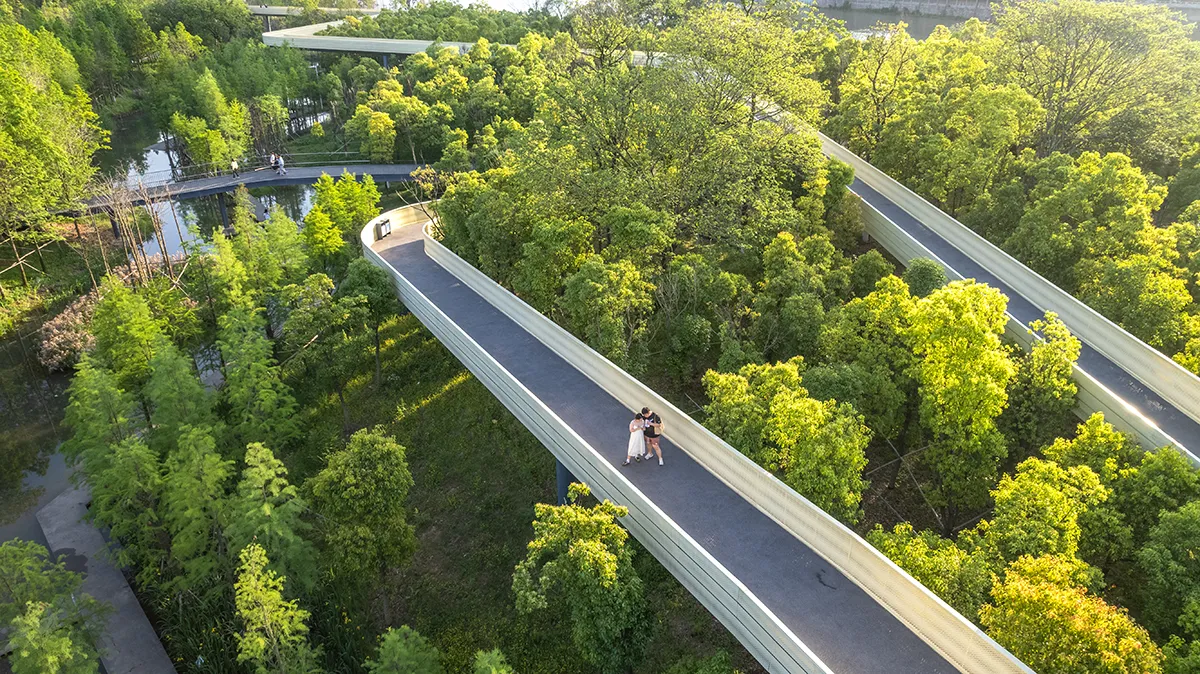
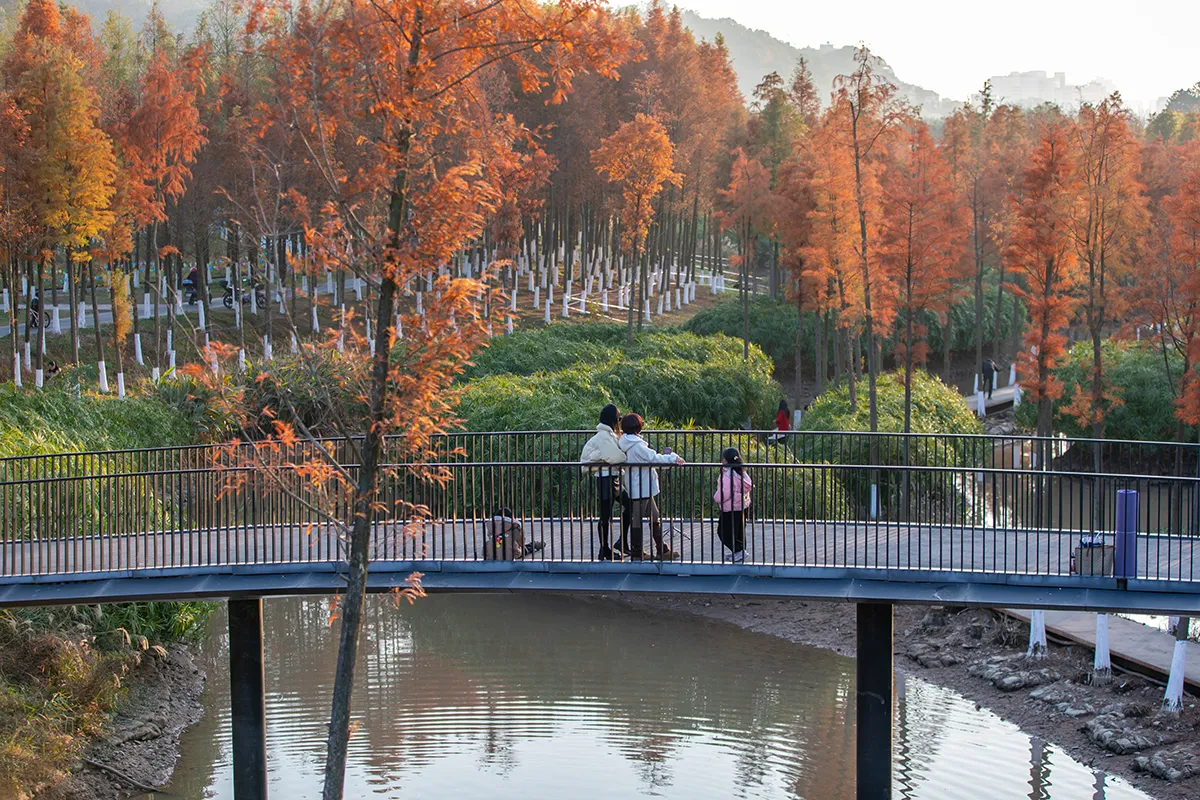
- A dual pedestrian system ensures year-round accessibility.
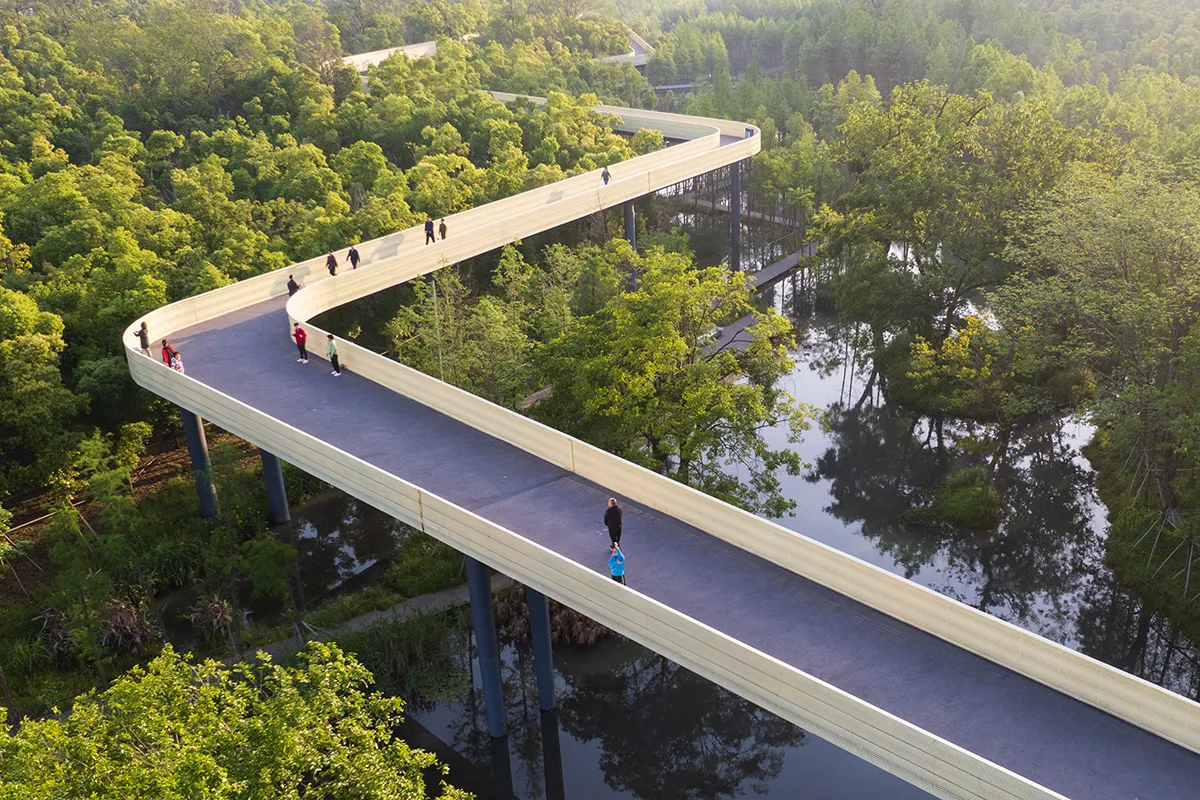
- An elevated skywalk stays dry even during a 50-year flood, offering panoramic views.
- Below, three adaptive boardwalk layers respond to fluctuating water levels, with the lowest submerging during monsoon season.
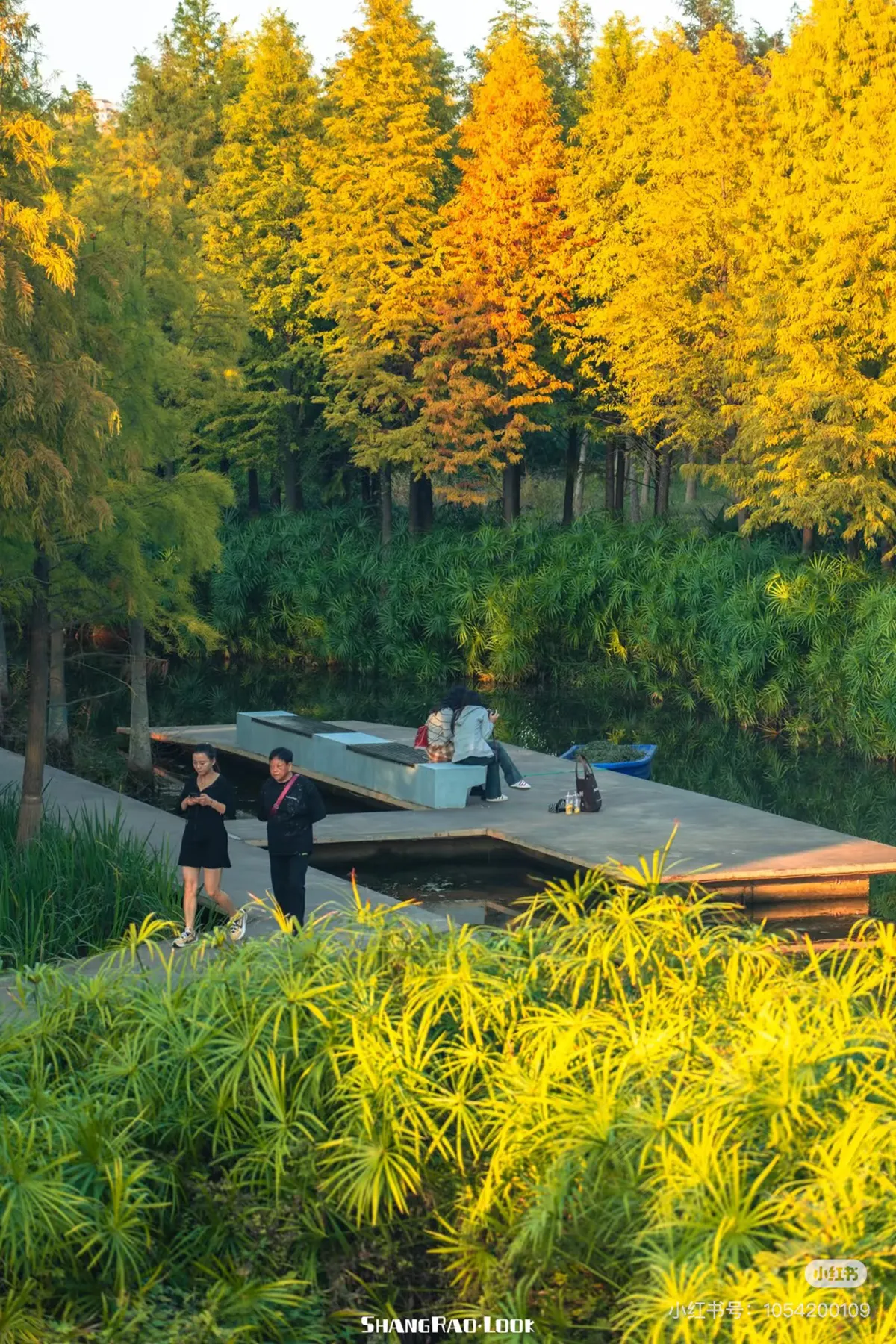
- Waterfront platforms and observation decks seamlessly integrate recreation with ecological education.
Sustainable & Cost-Effective Materials
Local materials and prefabricated components ensure low-cost, durable, and flood-resilient construction:
- Modular concrete walkways on pole structures withstand flooding and require minimal maintenance.
- Natural materials blend seamlessly with the environment while ensuring longevity.
Conclusion
The Xingjiang River Ecological Corridor is a pioneering nature-based solution that balances flood protection, ecology, and recreation. By embracing seasonal flooding as a design asset, the project boosts biodiversity, enhances urban resilience, and improves quality of life. Since its completion, it has become a regional landmark, offering a replicable model for sustainable floodplain restoration worldwide.
Embracing Flood: Xingjiang River Ecological Corridor
Location: Shangrao,Jiangxi, China
Design Firm: Turenscape
Client: Shangrao Urban Construction Investment and Development Group Co., Ltd
Photo Credit: Turenscape