
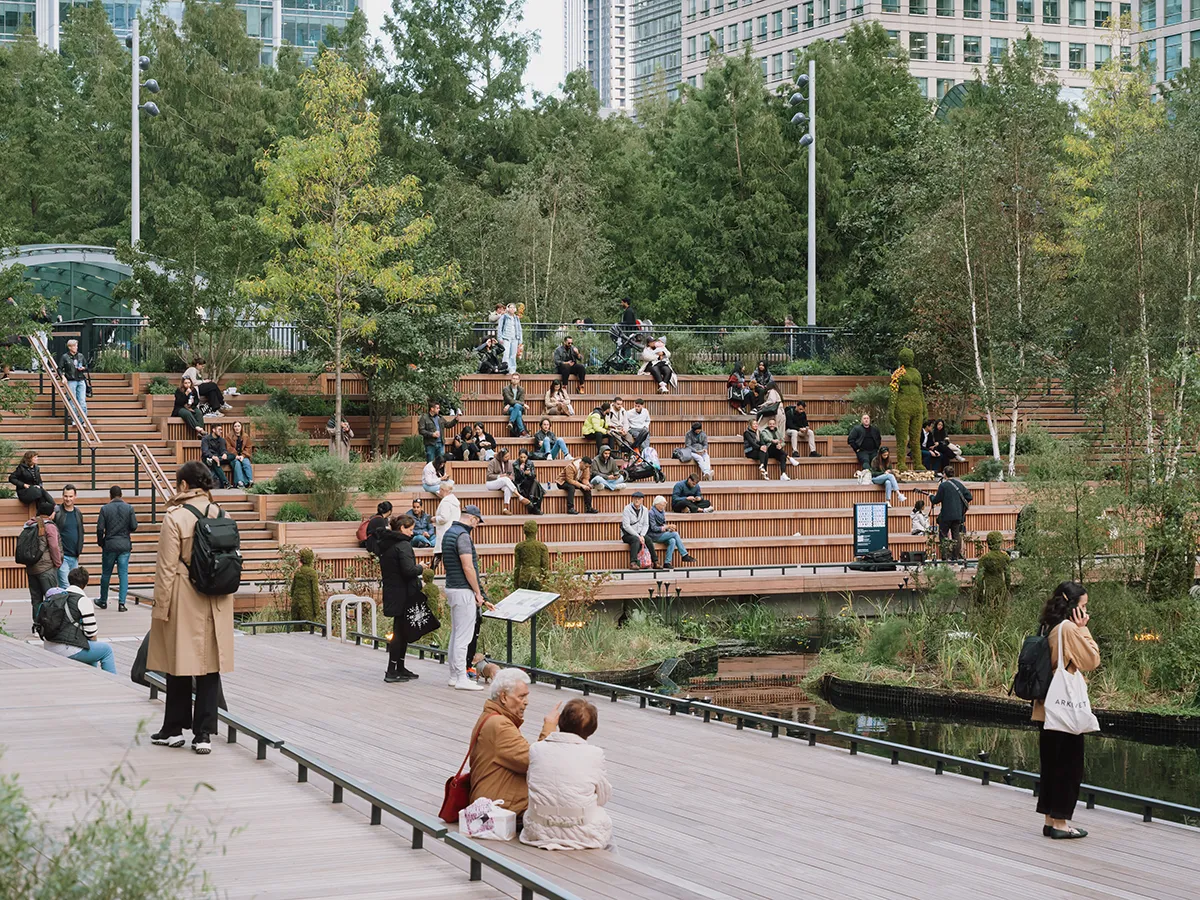
Eden Dock is a 1.55-hectare landscape in Canary Wharf, transforming a previously inaccessible 325-metre dock into a model for sustainable regeneration. Set within the historic London Docklands, the site was once unused and ecologically barren. Today, it combines nature-led placemaking with public access and ecological restoration, contributing to Canary Wharf’s shift from a business district to a mixed-use neighbourhood. Open year-round and free to use, Eden Dock reclaims the water’s edge as an inclusive space where biodiversity is restored, and communities connect with nature. It sets a precedent for how underused infrastructure can support climate resilience, wellbeing and urban ecological repair.
Design Intent and Public Realm
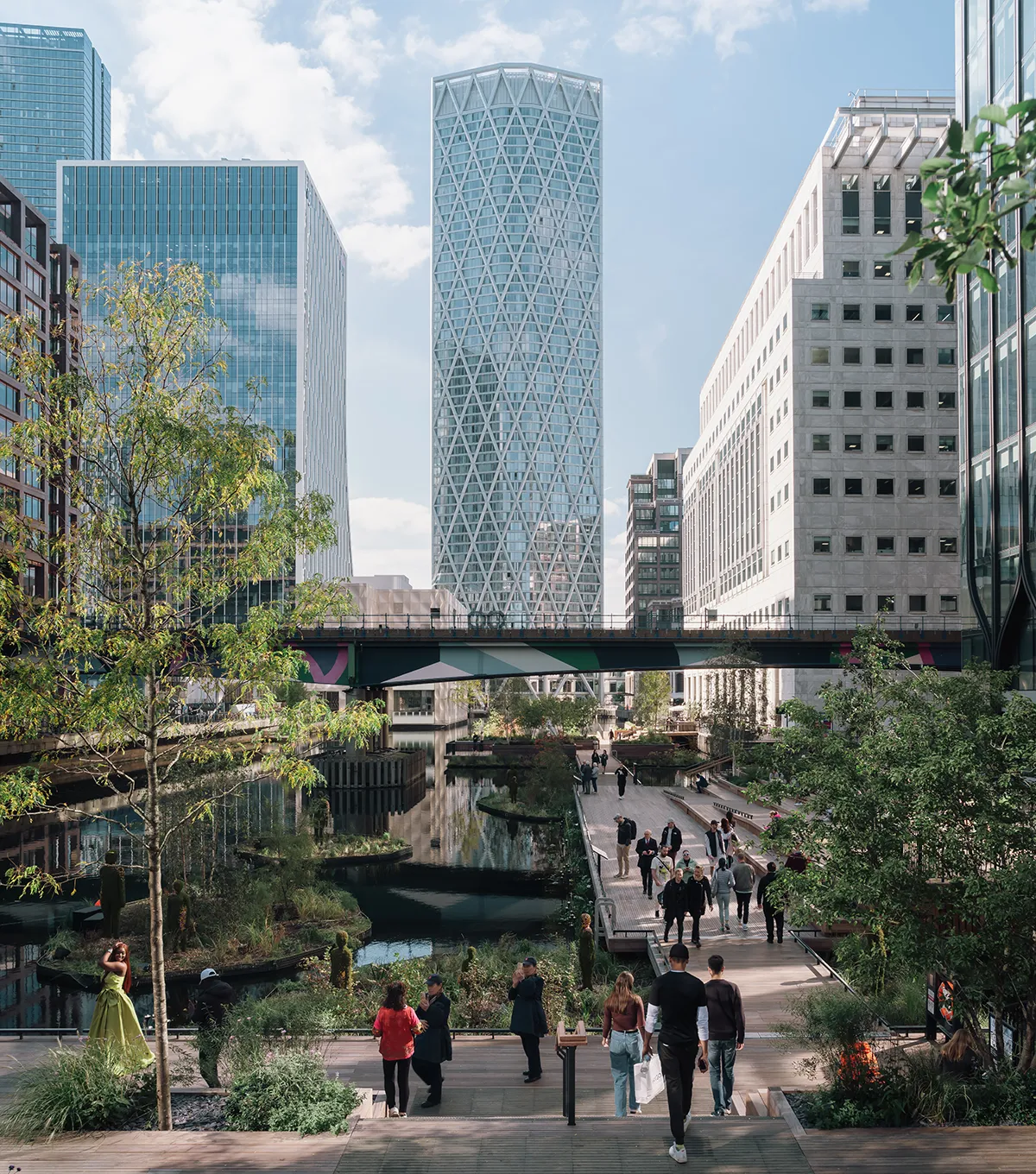
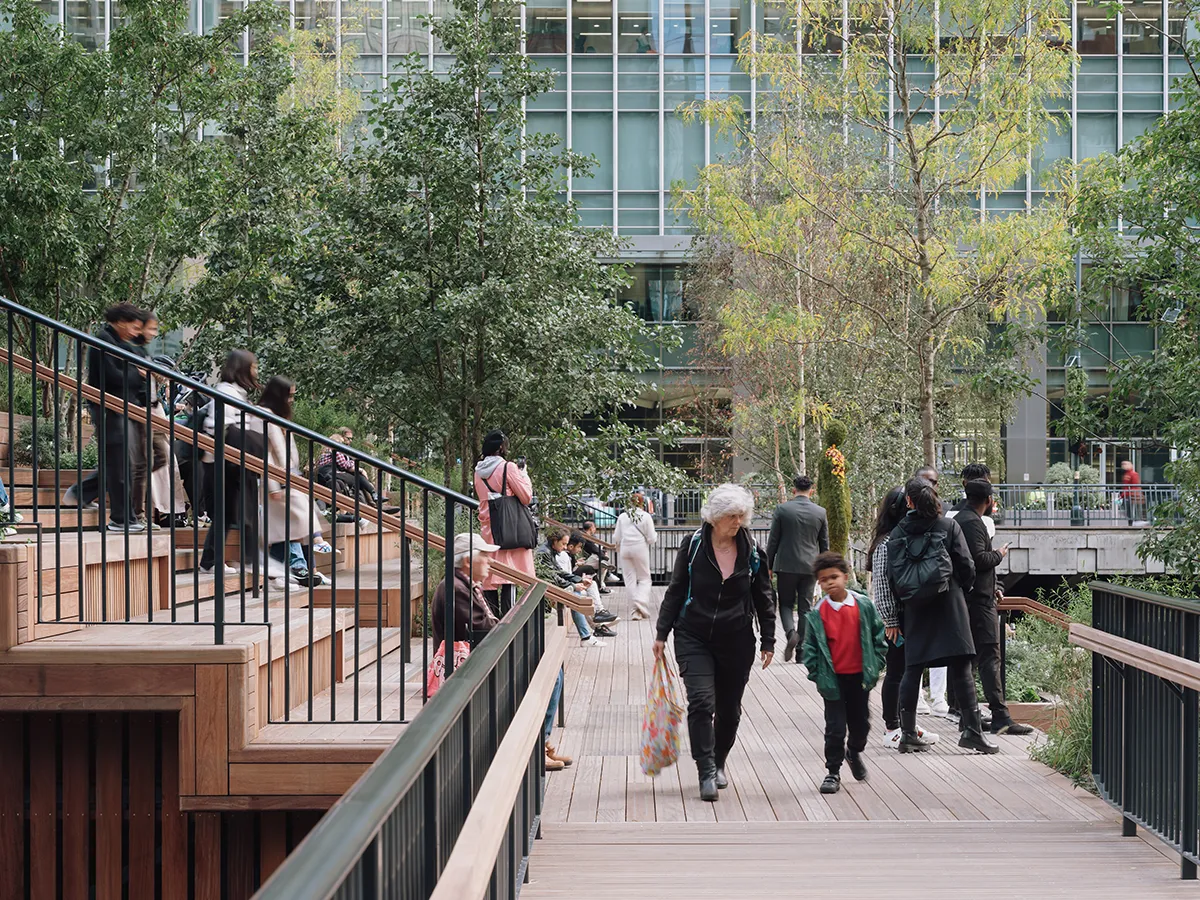
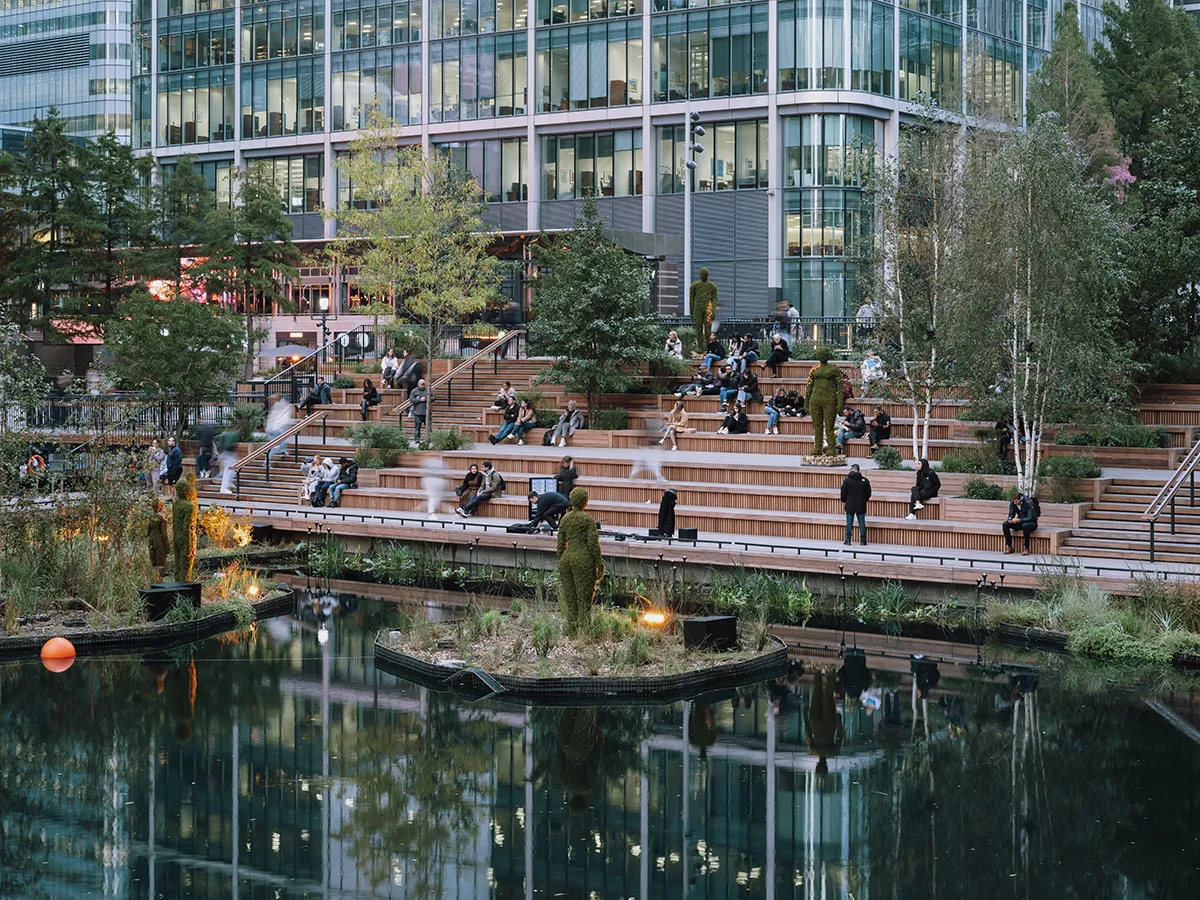
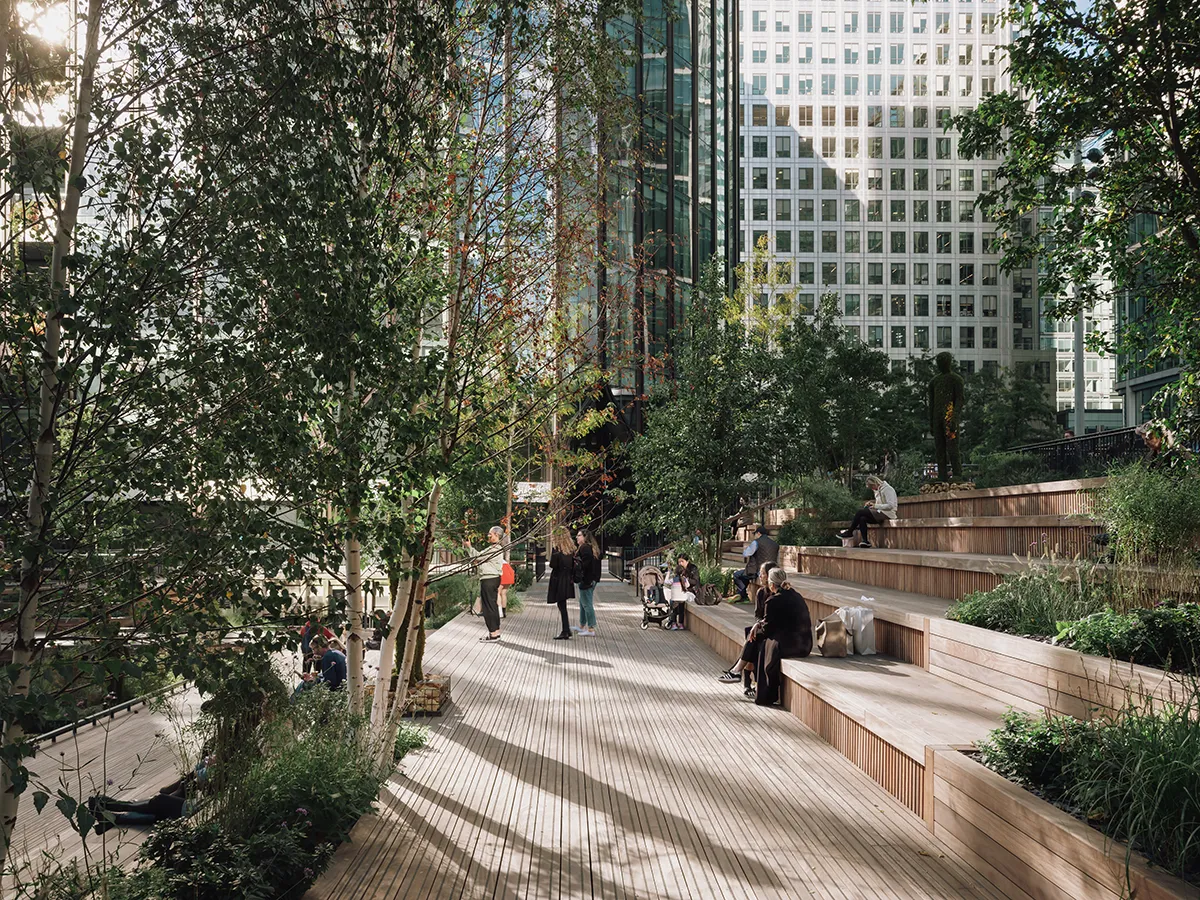
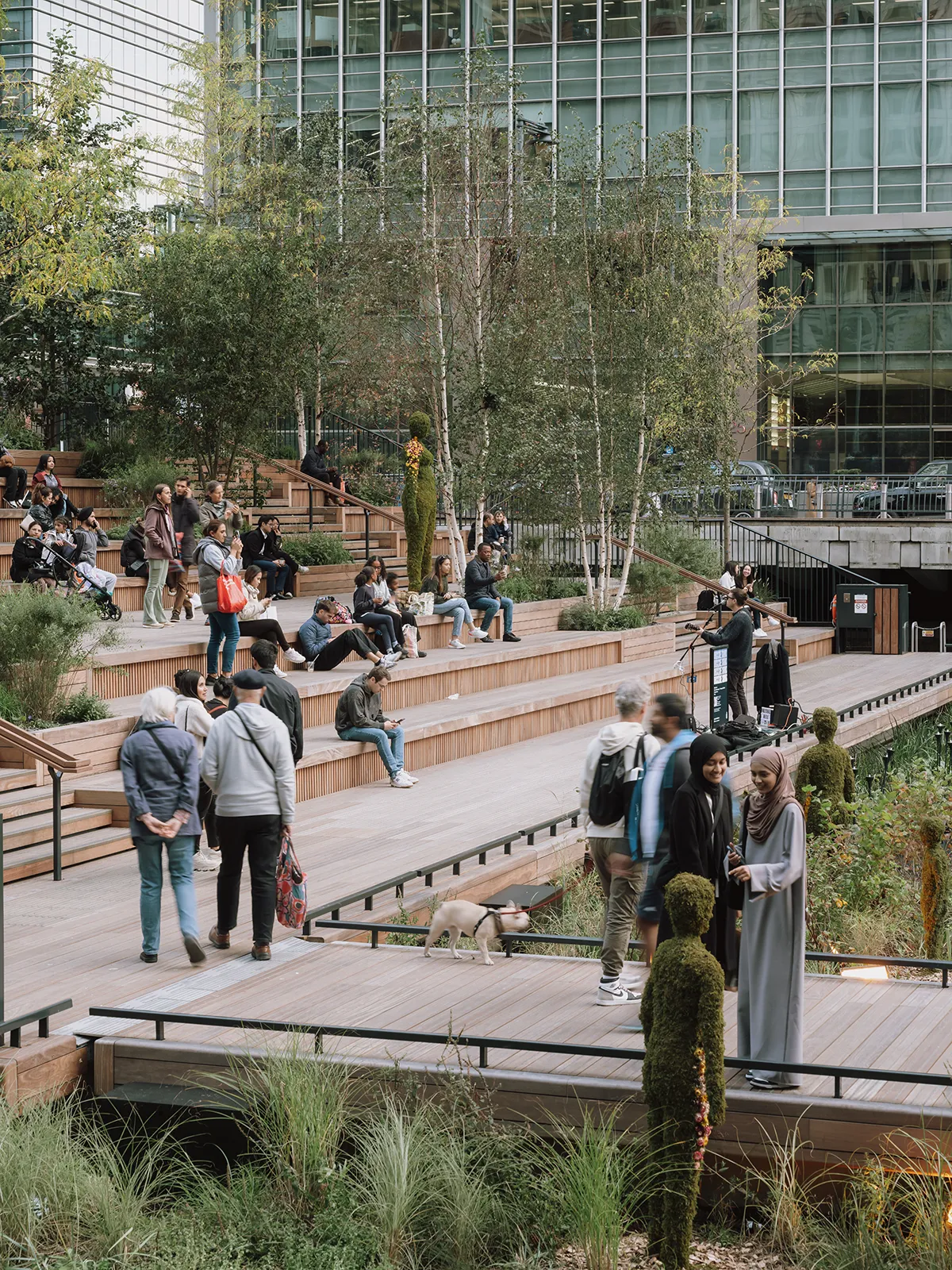
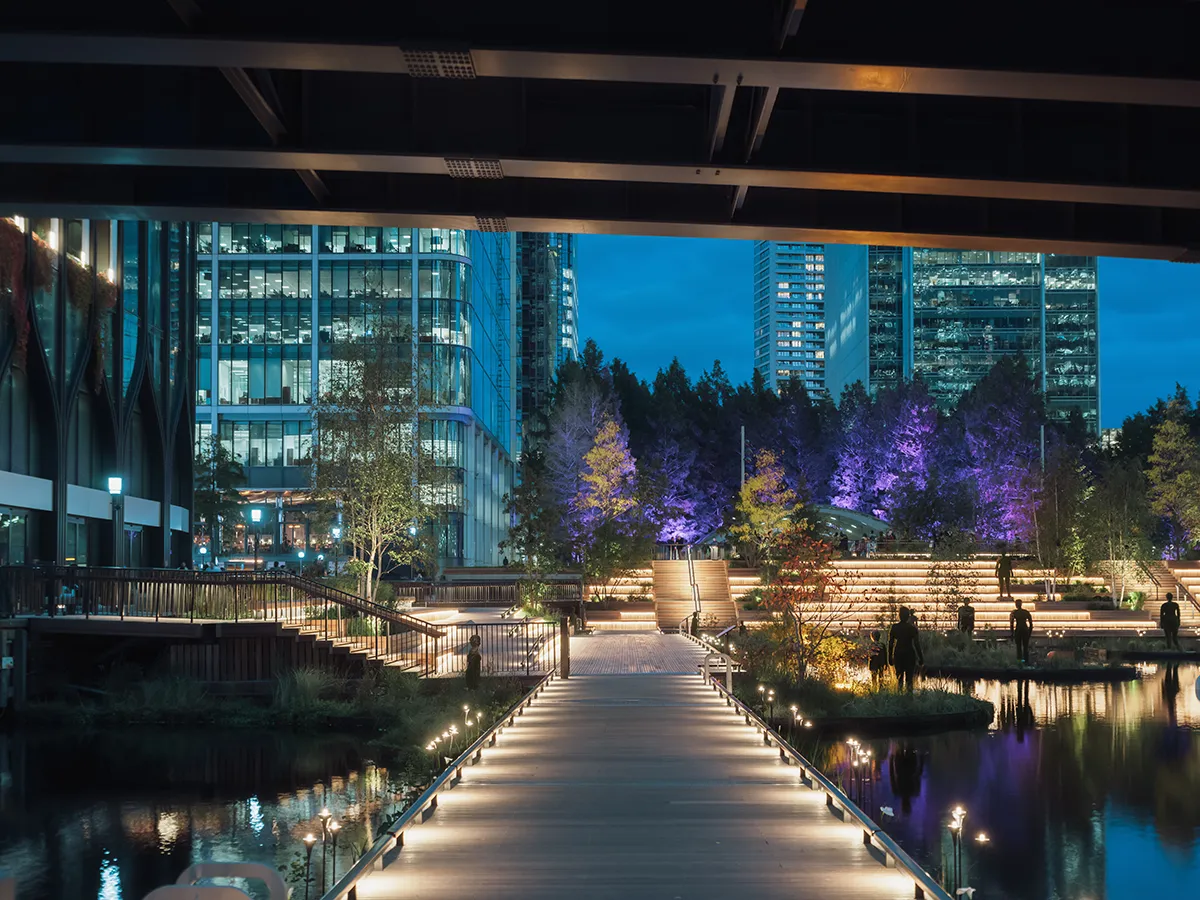
At Eden Dock, ‘shores’ of gradual inclines have been designed with timber bleacher seating integrated with steps, walkways and gardens, bringing the public realm down to the water level for the first time. Here, hollow concrete modular pontoon systems create new south and west-facing spaces for congregation, including floating gardens, educational spaces and social terraces. Just below water level, a 1.5-metre-wide cantilevered aquatic shelf provides a framework to support saline-resistant planting while discreetly protecting the public from the danger of deep water. A new north–south footbridge across the dock follows proven desire lines to link local landmarks.
Ecological Innovation: The Floating Forest
One of the most distinctive features of Eden Dock is the Floating Forest: a series of modular, planted islands that float just above the water’s surface, forming a soft and immersive edge to the dock. Inspired by biomimicry, the design draws on natural wetland ecosystems, creating diverse habitats that mimic the structure and layering of natural shorelines and floodplains. These planted platforms offer visual richness, reconnect people with nature, and support ecological resilience, greening the urban landscape while enhancing biodiversity above and below the waterline.
Biodiversity and Habitat Creation
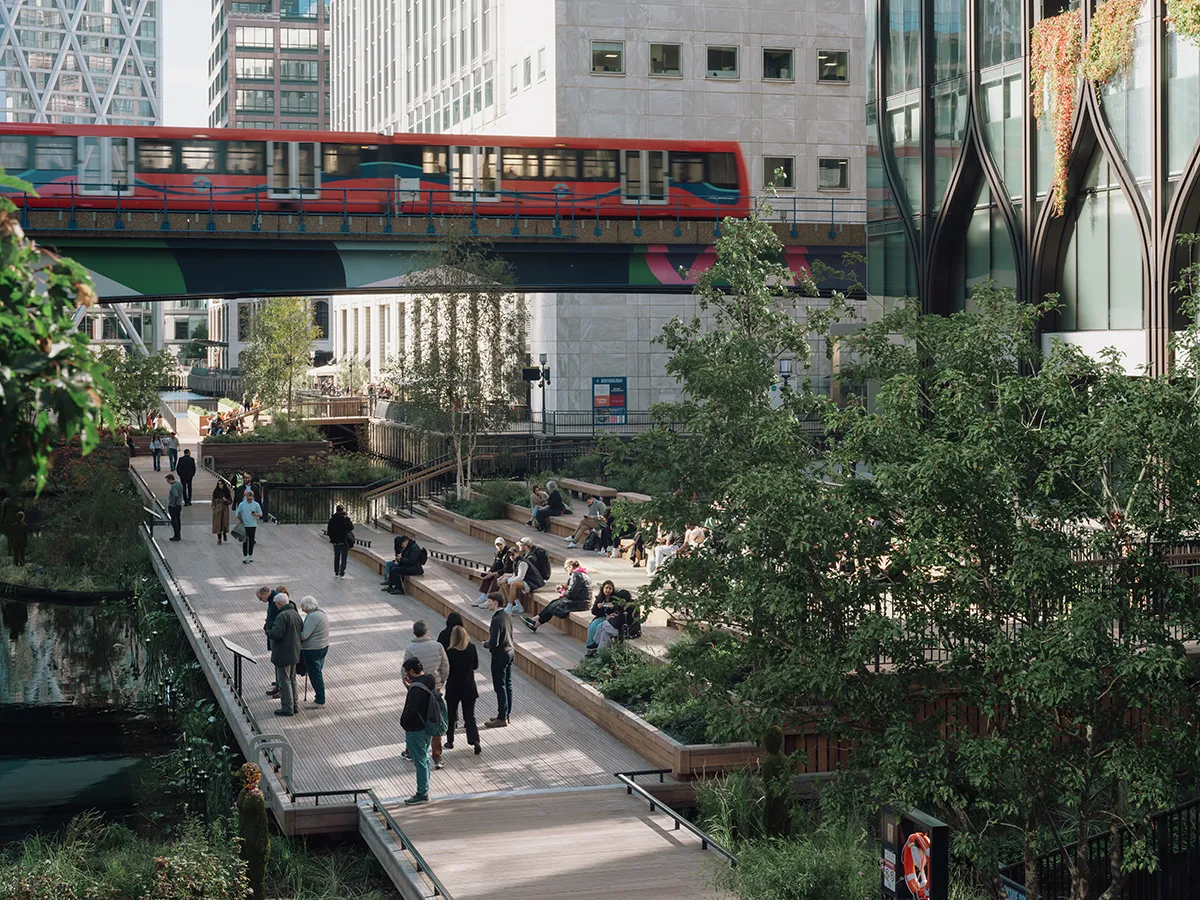
Eden Dock delivers a 55% biodiversity net gain, supported by 770 m² of native-planted floating islands and 42 new trees. Planting includes 70–80 resilient species, improving year-round habitat for pollinators, birds and aquatic life. Ecological performance is measured through reduced urban heat, carbon sequestration, and improved air and water quality. Temporary fencing protects young plants, while “duck doors” ensure safe access for wildlife. These measures collectively deliver a 100% uplift in predicted ecosystem service value.
Sustainable Materials and Low-Impact Construction
Sustainable materials, including recycled steel, FSC-certified timber and low-carbon concrete, were used to reduce embodied carbon. The floating structure avoids the use of concrete piles, limiting construction impacts on the dock. As the landscape matures, we will continue to monitor ecological outcomes, using AI-based tools to measure changes in biomass and biodiversity over time.
Community Impact & Public Engagement
At the water’s edge, boardwalks, bleacher seating and terraces create welcoming spaces to gather and engage with the dock. A timber-canopied Community Platform supports outdoor events, performances, and educational workshops. Natural play elements, including “mini worlds”, sandboxes and pond-dipping zones, encourage discovery and connection with nature. Inclusive design ensures accessibility for all, with spaces tailored for residents, workers, visitors, and children. Interpretive signage highlights ecological features, while a submerged aquatic shelf and underwater cameras enable citizen science and long-term marine monitoring.
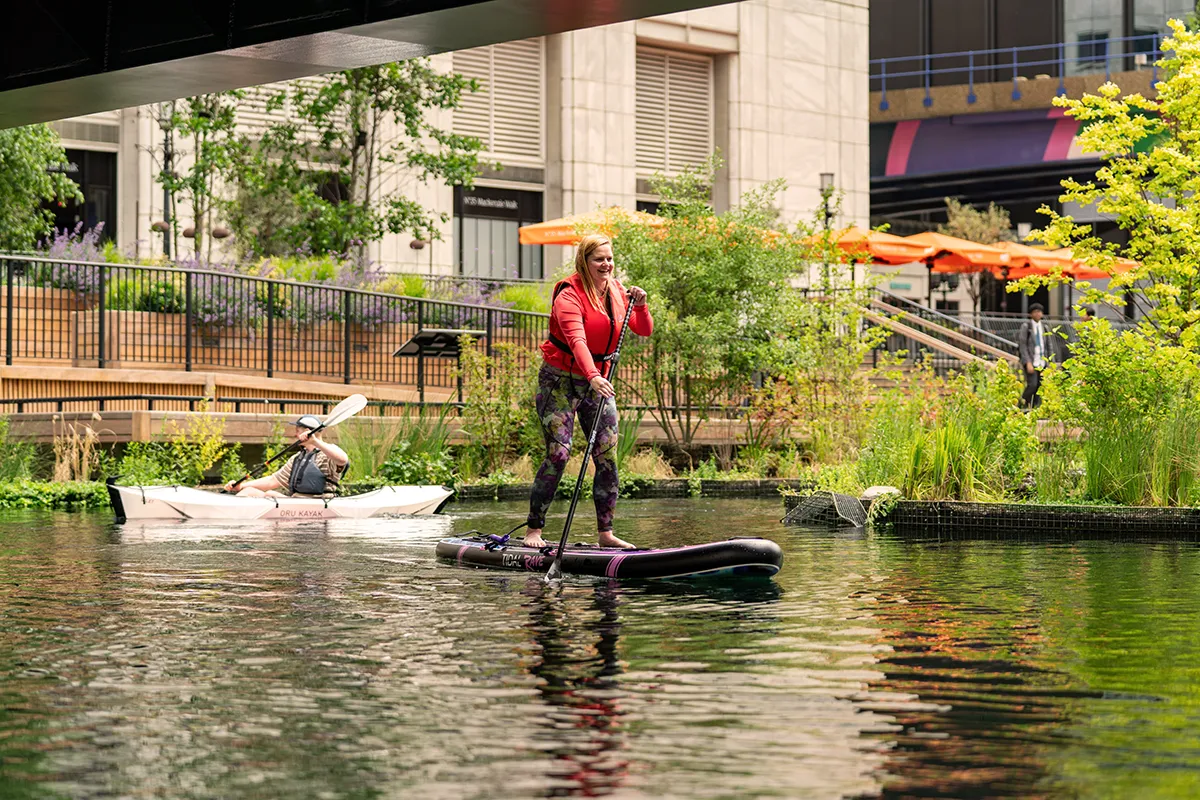
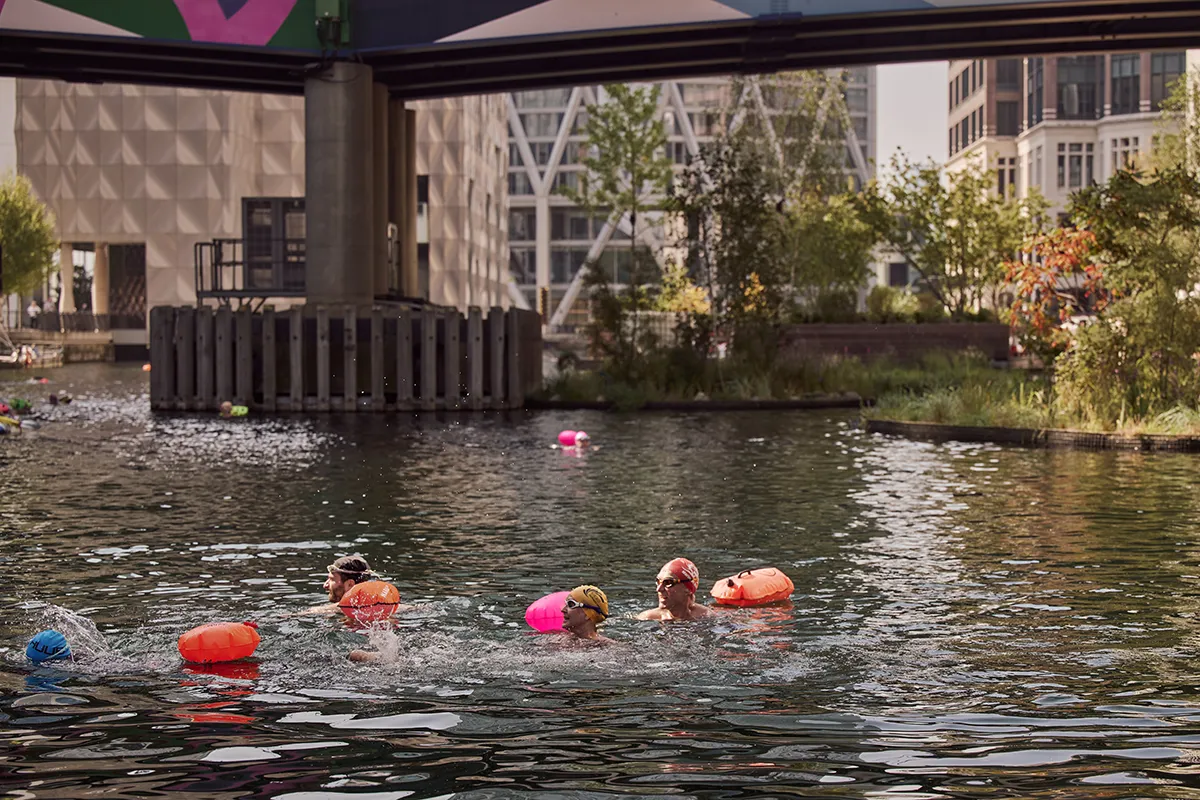
Construction was completed in summer 2024, with the dock opening to the public in September and the footbridge to follow in May 2025. The launch featured Nature Rising, a living artwork of 20 sculpted Ligustrum shrubs symbolising harmony between people and nature, now part of Canary Wharf’s permanent public art collection. Early indicators of success include a 7% increase in footfall and a 2.4% rise in local retail sales compared to the previous year, showing Eden Dock’s contribution to wellbeing and vitality.
Eden Dock
Location: London, UK
Masterplanner and Lead Designer: Howells
Landscape designer: HTA Design
Developer: Canary Wharf Group
Engineering: Arup
Lighting Design: Studio Fractal
Marine Engineer: Arup
Ecologist: Greengage
Consultant: Eden Project
Consultant: Canal and River Trust
Planning Authority: London Borough of Tower Hamlets
Image Credits: Tim Crocker; Canary Wharf Group; Veronica Aguilar;