
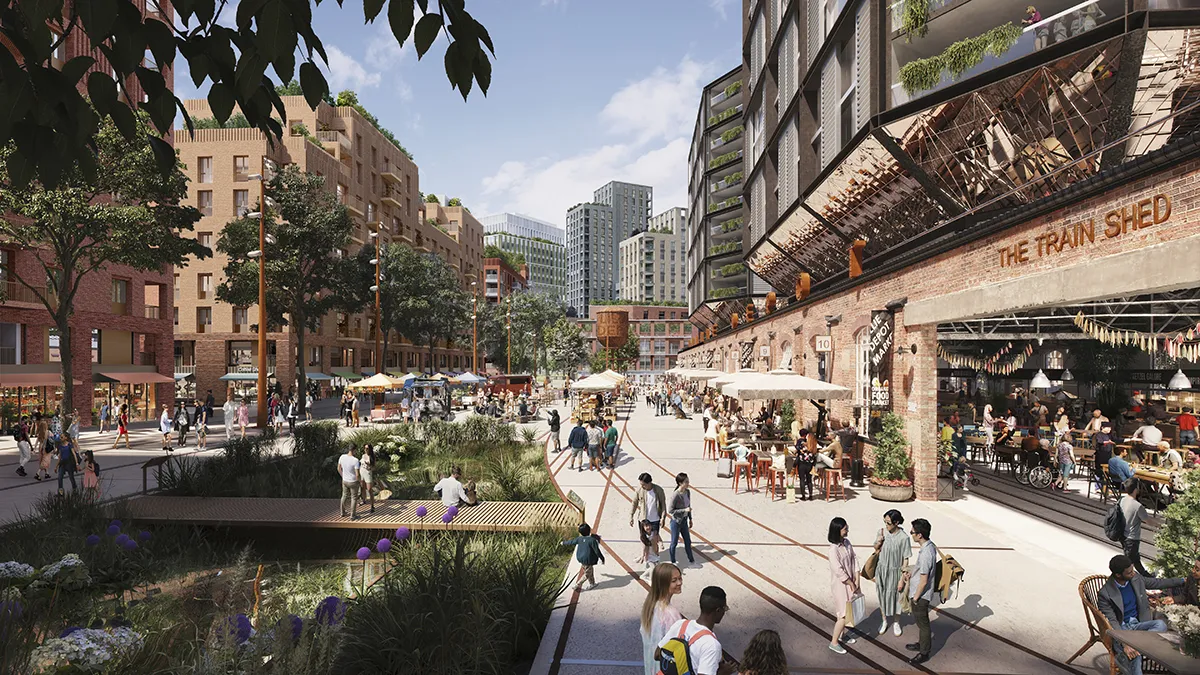
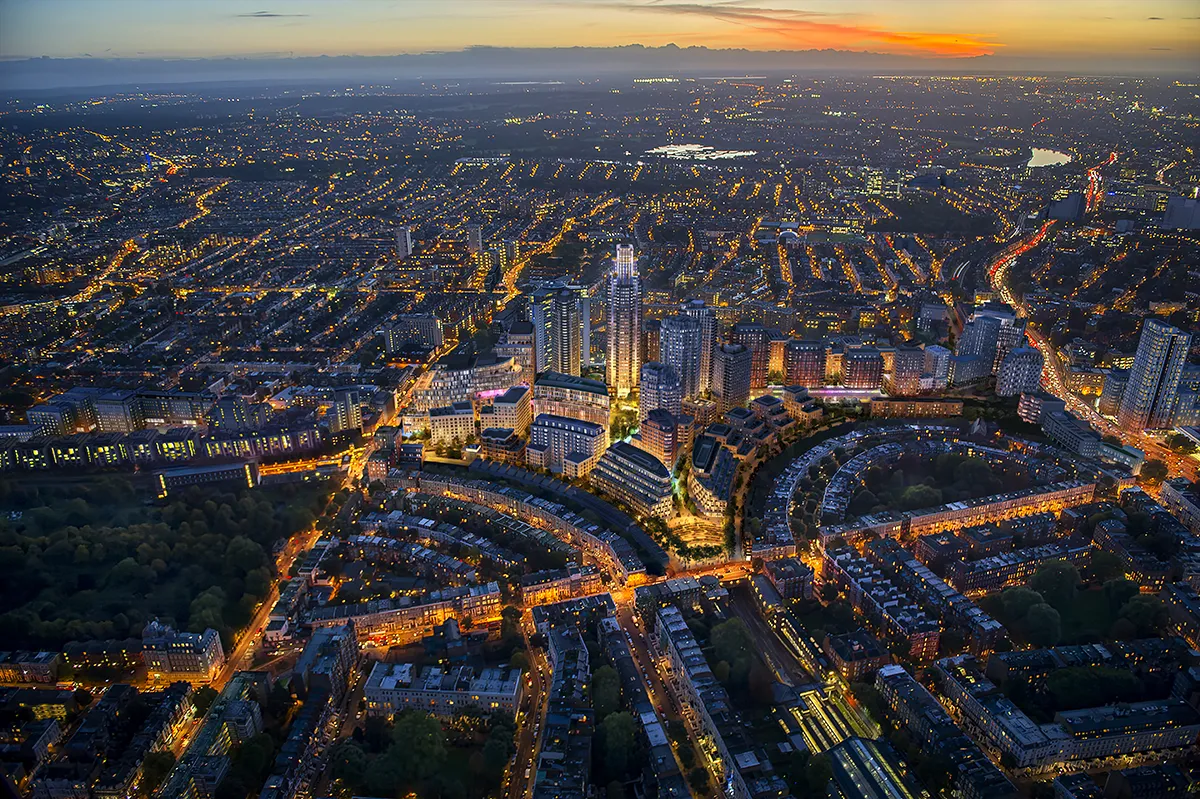
The Earls Court masterplan is a transformative, landscape-led urban regeneration project in West London – redefining 40 acres of disused land into a climate-resilient, inclusive, and biodiverse urban quarter. Anchored by a 4.5-acre central ‘Table Park,’ the masterplan prioritizes ecological infrastructure, climate adaptation, and spatial equity while delivering 4,000 homes, 12,000 jobs, and 20+ acres of green public space.
Context and Strategic Vision
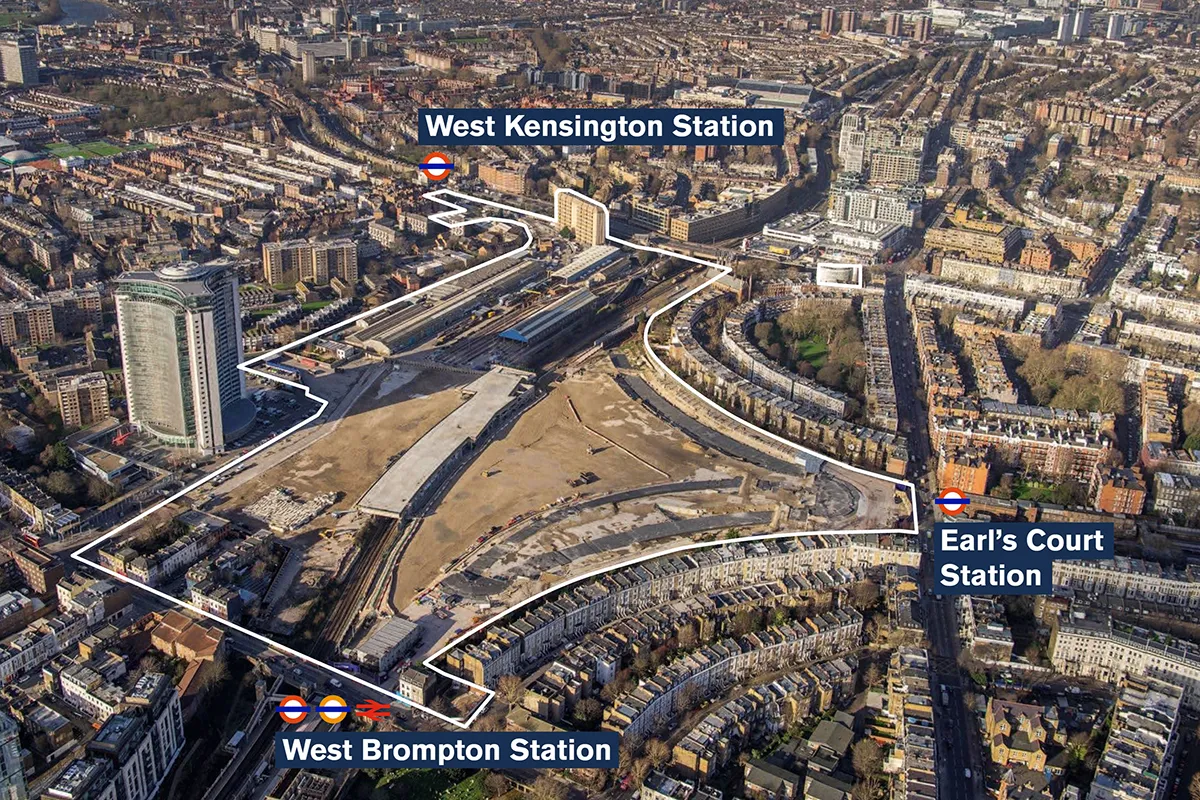
Once a vibrant cultural landmark, the Earls Court site was demolished in 2015 and has since remained a void in the middle of London. With three underground stations bordering the site, the location holds significant strategic potential to reconnect fragmented communities through a walkable, green public realm. The masterplan is built on three core pillars: Balance, Climate Resilience, and Wellbeing:

Balance: Integrating Landscape and Urban Form
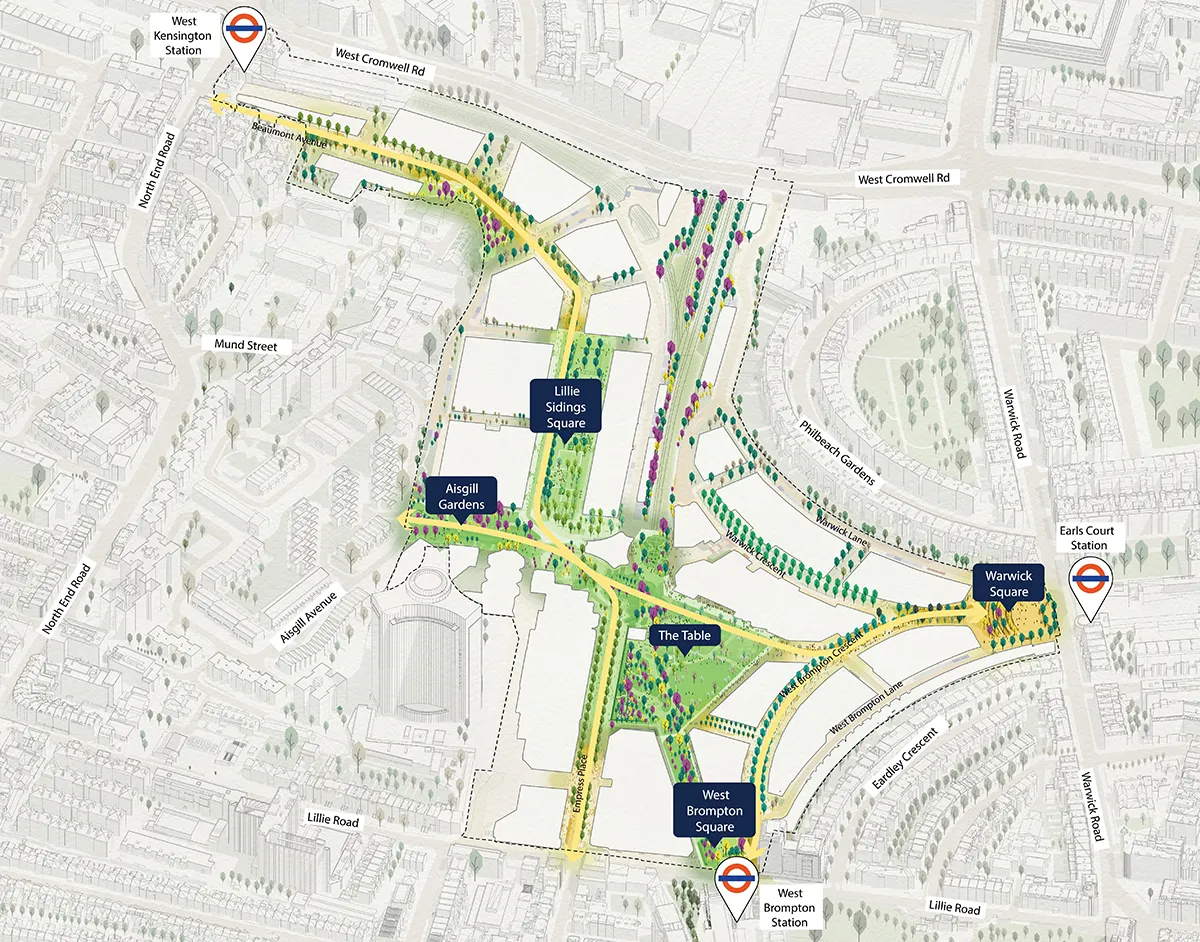
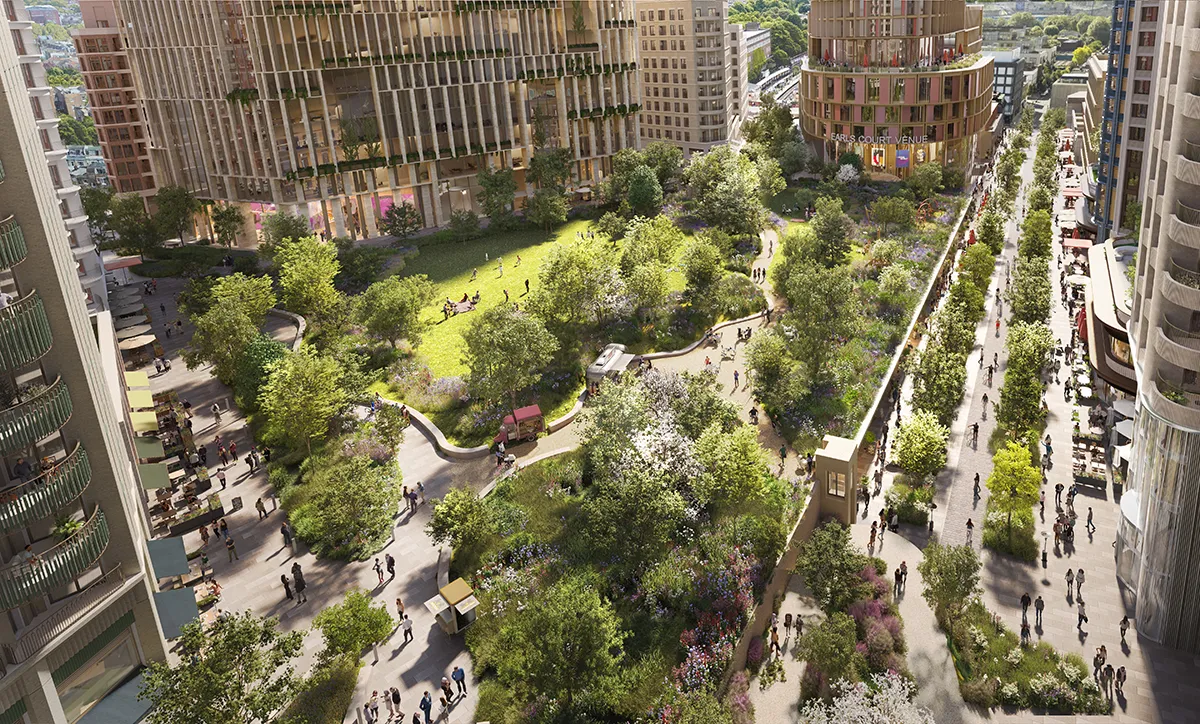
The principle of Balance guides the spatial composition and movement strategy. The public realm – comprising parks, squares, water features, and ecological corridors – occupies over 50% of the site, reconnecting previously fragmented neighbourhoods and opening up new routes across an area once closed to the public. Building massing is calibrated to maximise daylight, air flow, and landscape integration. Pedestrian and cycling routes link the three surrounding stations, while car access is restricted to the site perimeter, prioritising walkability and public transport. The Exhibition Gardens form a green network, ecologically connecting with Brompton Cemetery. This layered approach restores legibility and permeability, creating a balanced piece of city grounded in place.
Climate Resilience: Be good Ancestors
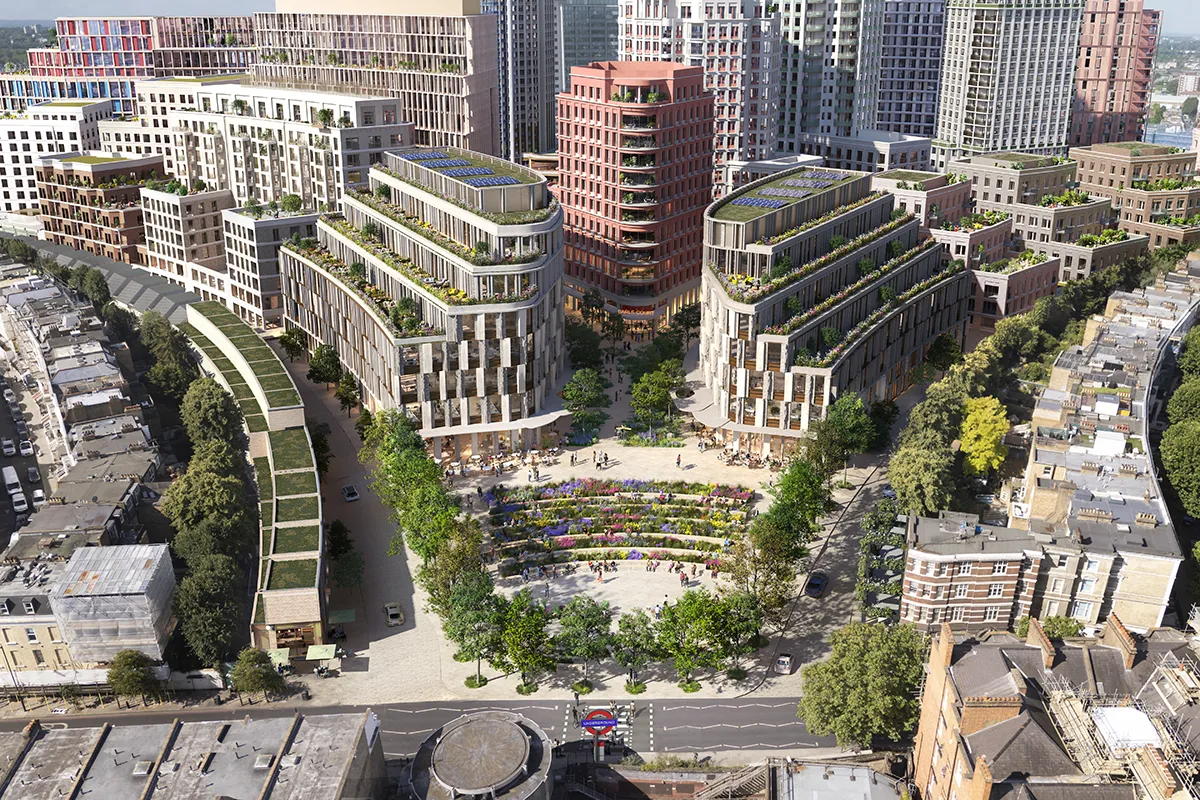
Landscape architecture drives the masterplan’s climate strategy. Nature-based systems are embedded throughout to manage water, reduce emissions, and create resilient ecosystems. SUDS are integrated across all public spaces, enabling >60% stormwater infiltration. A 40-day water storage capacity supports irrigation using rain and greywater. Over 1,000 new trees will be planted – 50% semi-mature – all specfically selected for carbon capture, urban cooling, and air purification. Native, climate-adaptive plant communities are designed to form layered, resilient ecosystems. The masterplan targets operational zero carbon and achieves an 85% Biodiversity Net Gain. Through its integrated ecological systems, Earls Court sets a new standard for low-impact, climate-resilient urbanism in dense metropolitan contexts.

Wellbeing: An Earls Court for Everyone
The masterplan positions landscape as a framework for health, inclusion, and community cohesion. A series of open spaces support social interaction, play, and quiet sanctuary, with universal accessibility throughout. Building placement and greening enhance natural ventilation and mitigate heat island effects. Extensive canopy cover and car-light planning improve air quality by over 10% vs. borough averages. More than 100 community engagements and a dedicated Public Realm Inclusivity Panel ensure co-design across diverse groups. The network of green spaces act as ecological and social connectors, supporting mental and physical wellbeing. By putting nature and landscape first, the masterplan creates an environment where public life, ecology, and wellbeing coexist.
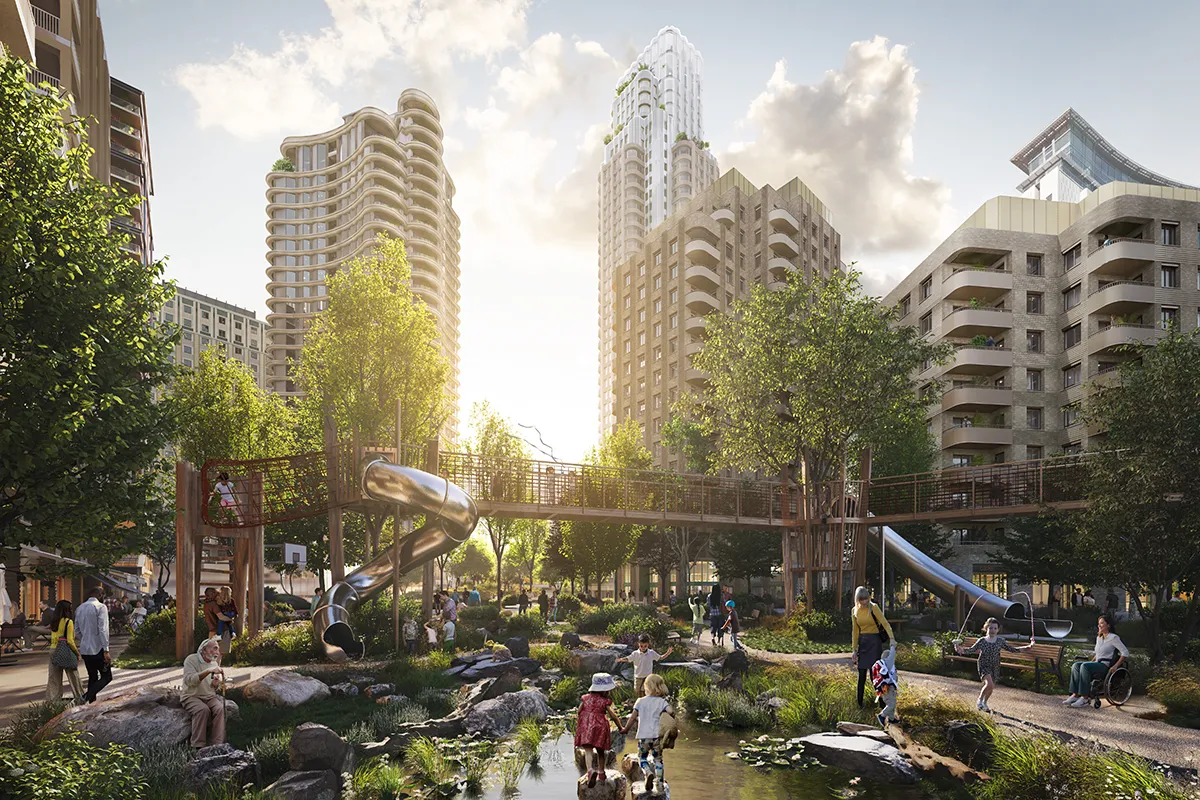
Earls Court offers a replicable model for net-zero, landscape-first urbanism – where ecological performance, climate resilience, and public benefit are foundational.
Earls Court
Designers: SLA, Hawkins\Brown, Studio Egret West
Client: The Earls Court Development Company
Collaborators/Other Consultants: Hoare Lea, WSP, DP9, ZCD Architects, Cast, Gardiner & Theobald, Tavernor Consultancy, Montagu Evans, Real Worth, London Communications Agency, Iceni, Field Communications, JLL, Knight Frank.
Image Credits: The Earls Court Development Company.