OMGEVING’s Bluegreen vision for the Integrated Flood Risk Management (IFRM) study in Thu Duc City sets a bold precedent for the management of floods in rapidly growing tropical cities. With climate adaptation at its core, the project combines hydrological engineering and landscape design to create a resilient, liveable and inclusive future for one of Ho Chi Minh City’s most vibrant districts. Vietnam is one of the countries most vulnerable to climate change, and Thu Duc City, which is part of the Ho Chi Minh City metropolitan area, is no exception. Faced with increasing urbanisation, subsidence and extreme rainfall events, the newly created city must urgently redefine its relationship with water.
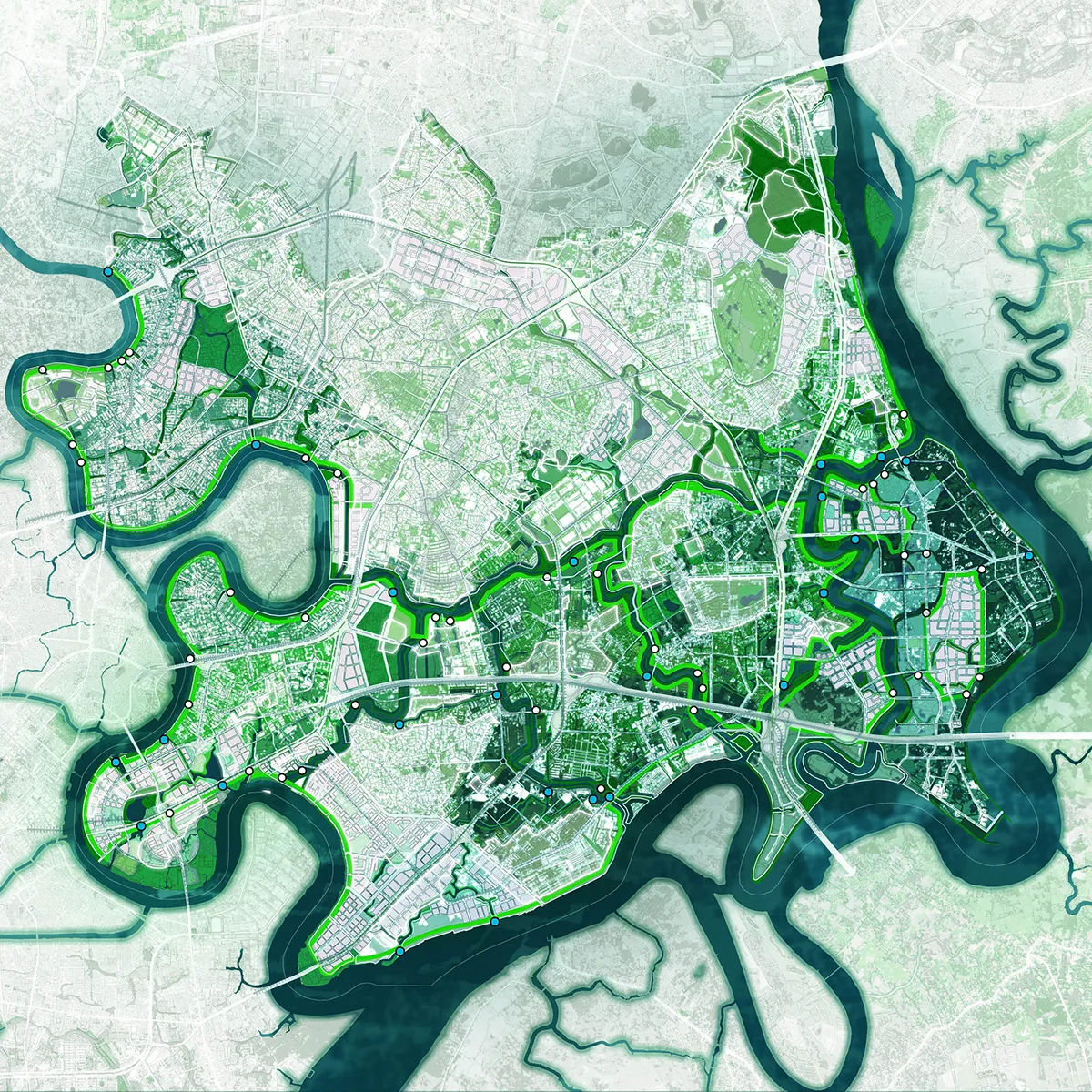
OMGEVING collaborated closely with lead consultant Royal HaskoningDHV and partner Delta Context B.V. to contribute an integrated blue-green vision and research- by-design approach to the study, identifying strategic areas for flood risk management across Thu Duc’s 210 km² territory. The project transforms the challenge of flood risk into an opportunity by viewing water not just as a threat to be controlled, but also as a vital agent of urban regeneration.
A BLUEGREEN VISION GROUNDED IN THE LANDSCAPE
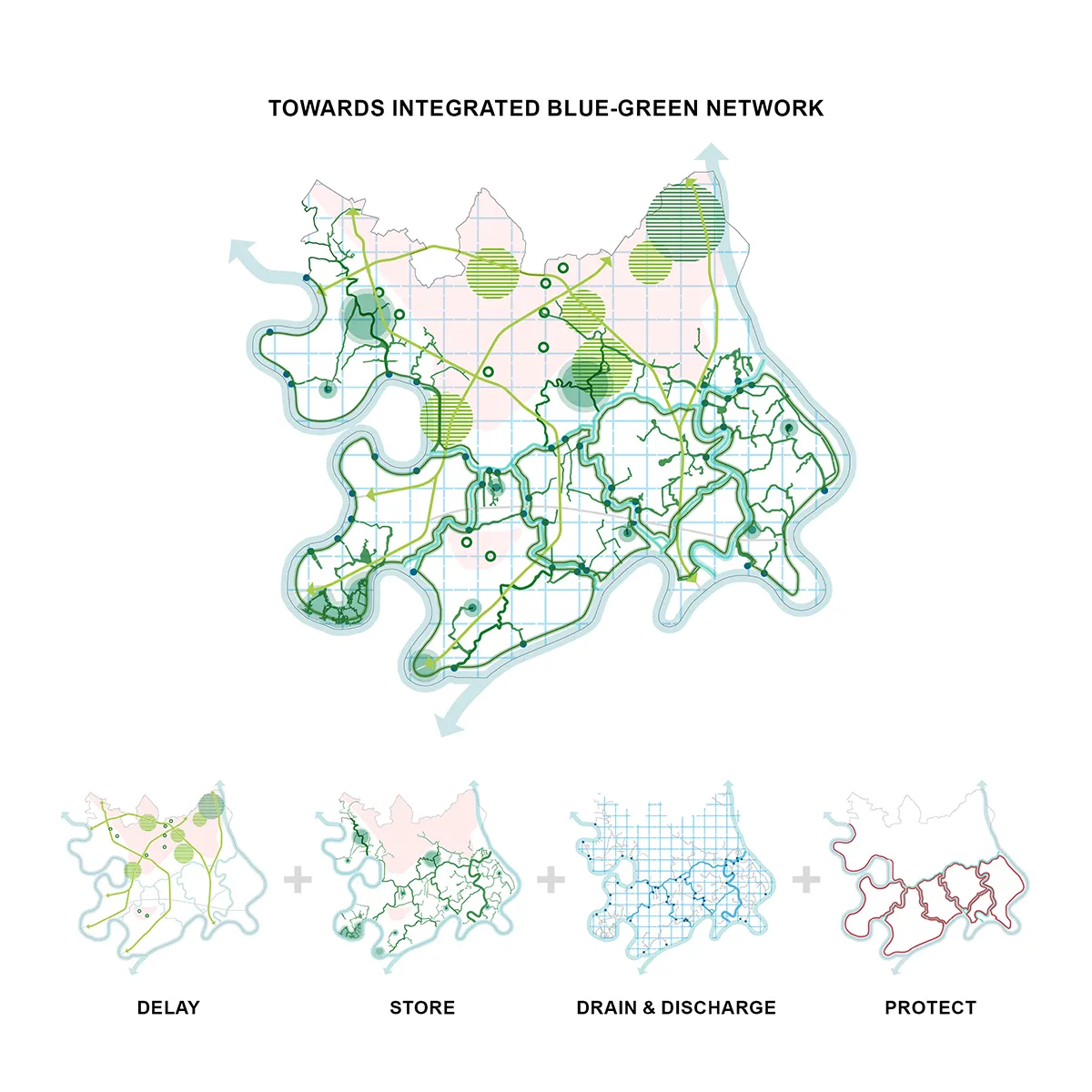
Rather than proposing a single infrastructure solution, the vision takes a layered, systemic approach to flood resilience. Based on OMGEVING’s core design principles of system thinking, integration and long-term value, the plan reimagines water as a structuring element of Thu Duc City.
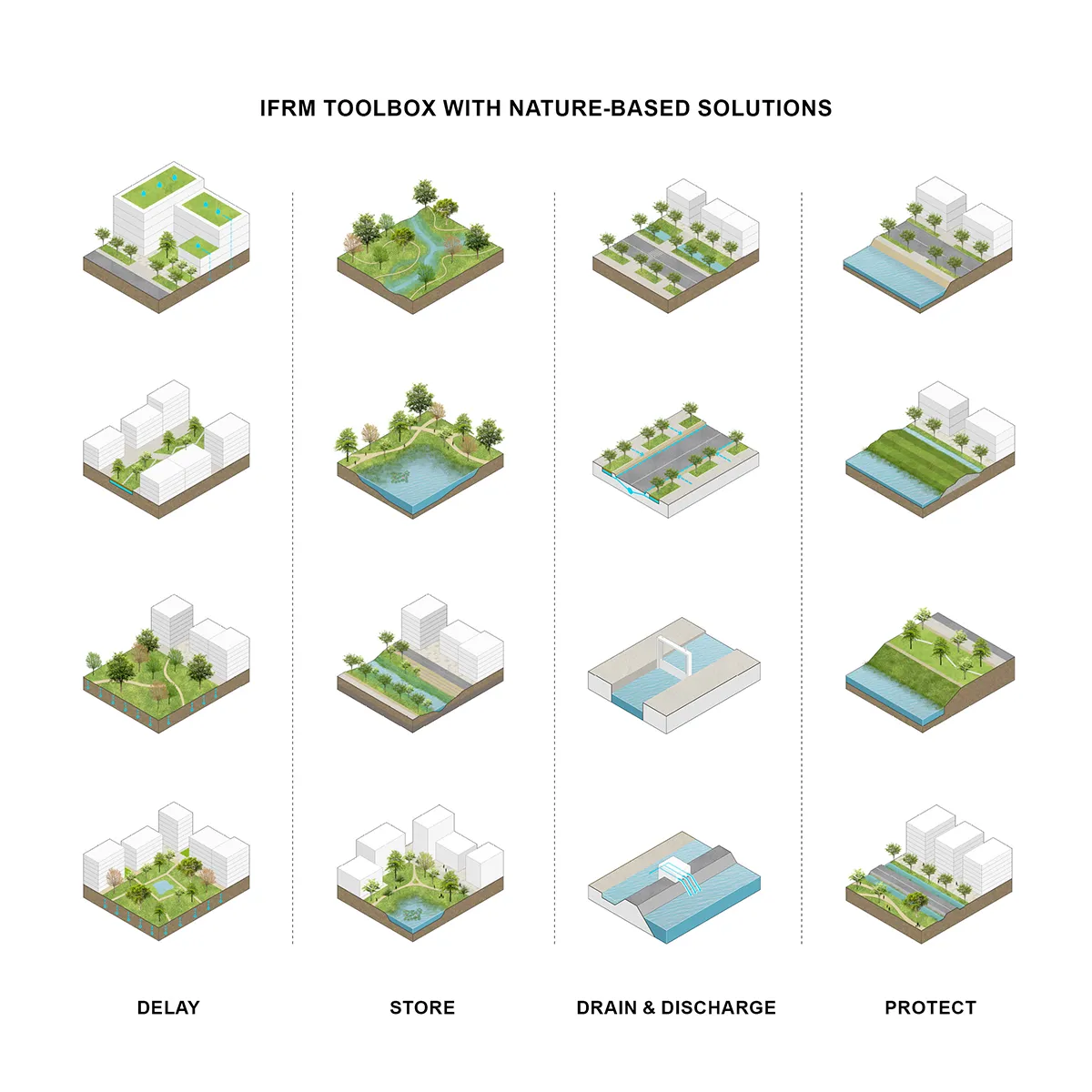
To address the flood challenges in this growing district, an integrated blue-green vision was developed at city scale, applying the key concept of ‘delay, store, drain and discharge’. This concept was also tested at a lower scale through design research around case studies of Nature-based Solutions (NbS).
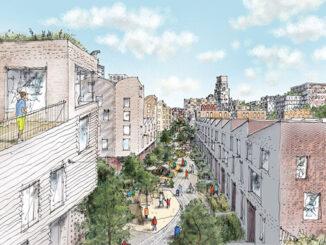
NBS TOOLBOX FOR ADAPTIVE LANDSCAPES
A central principle of the project is that expanding the green space behind the future dyke will safeguard the lowest areas of Thu Duc City and make the overall flood risk management system more efficient and cost-effective. This approach reduces the need for expensive technical infrastructure, such as pump stations, thereby lowering construction and long-term maintenance costs. The design is based on the Integrated Flood Risk Management (IFRM) toolbox, which prioritises Nature-based Solutions to create resilient, sustainable and adaptive landscapes.
FLOOD RISK AS A DESIGN OPPORTUNITY
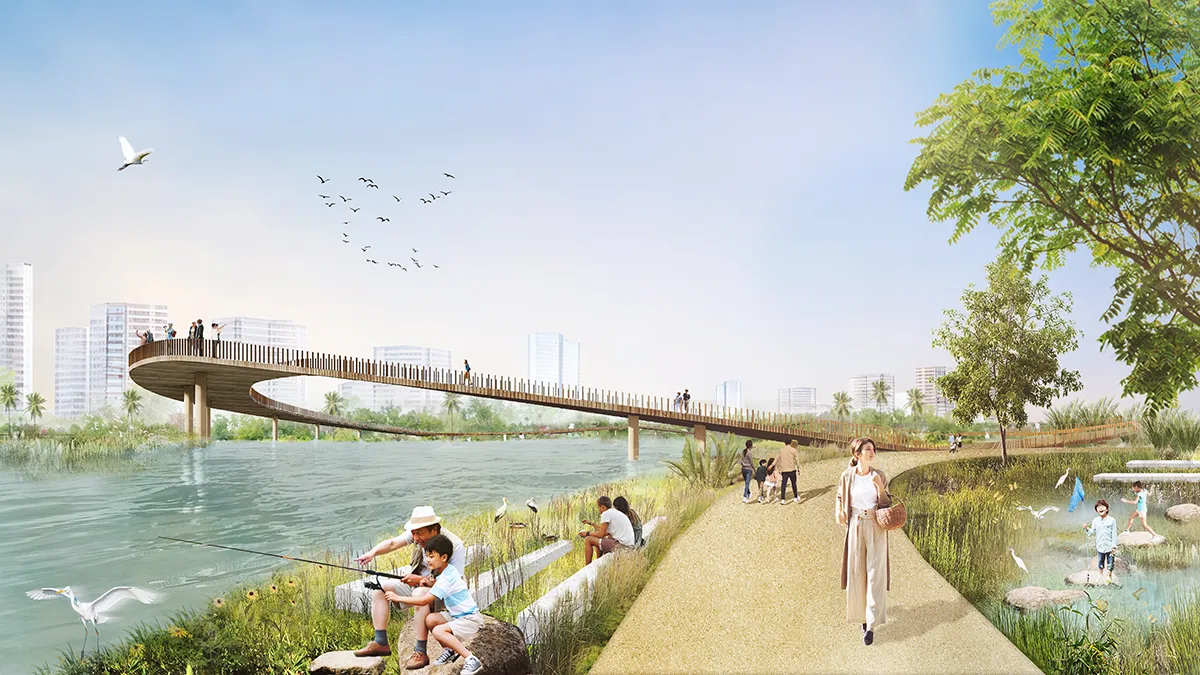
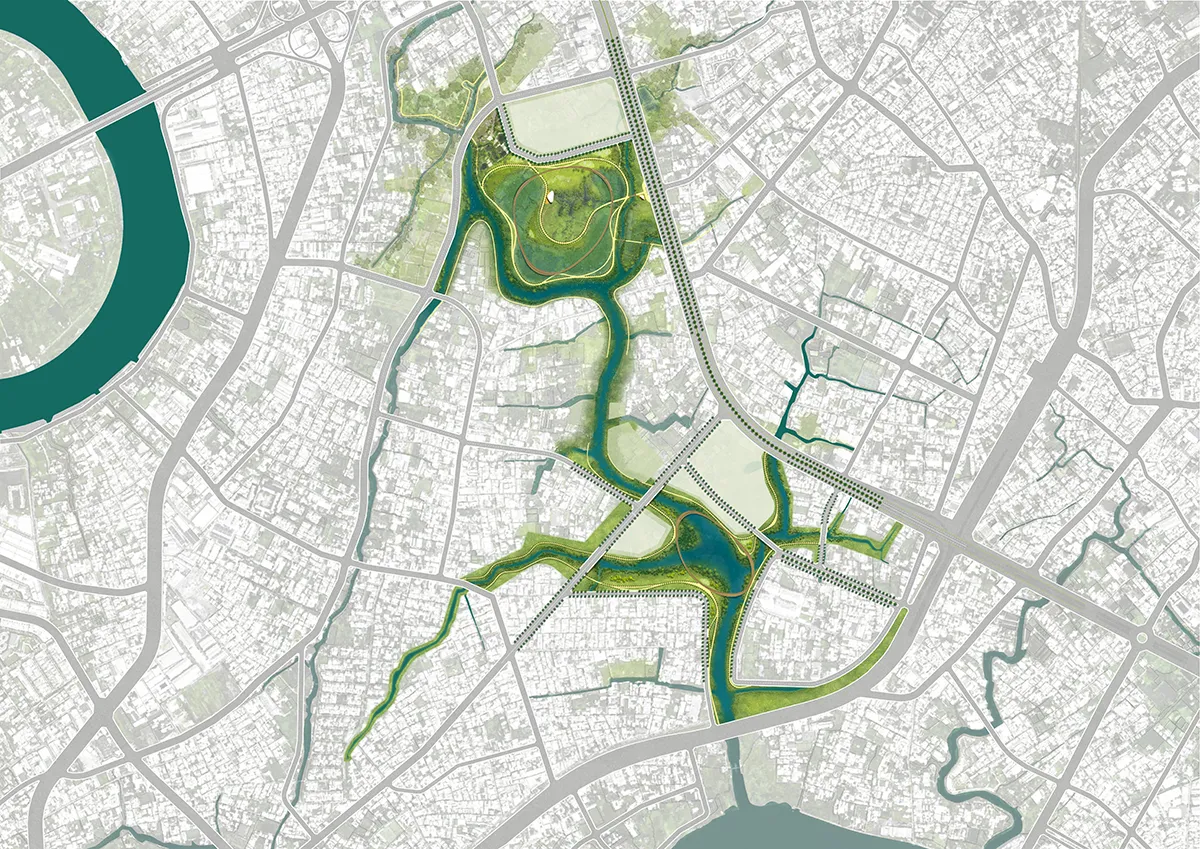
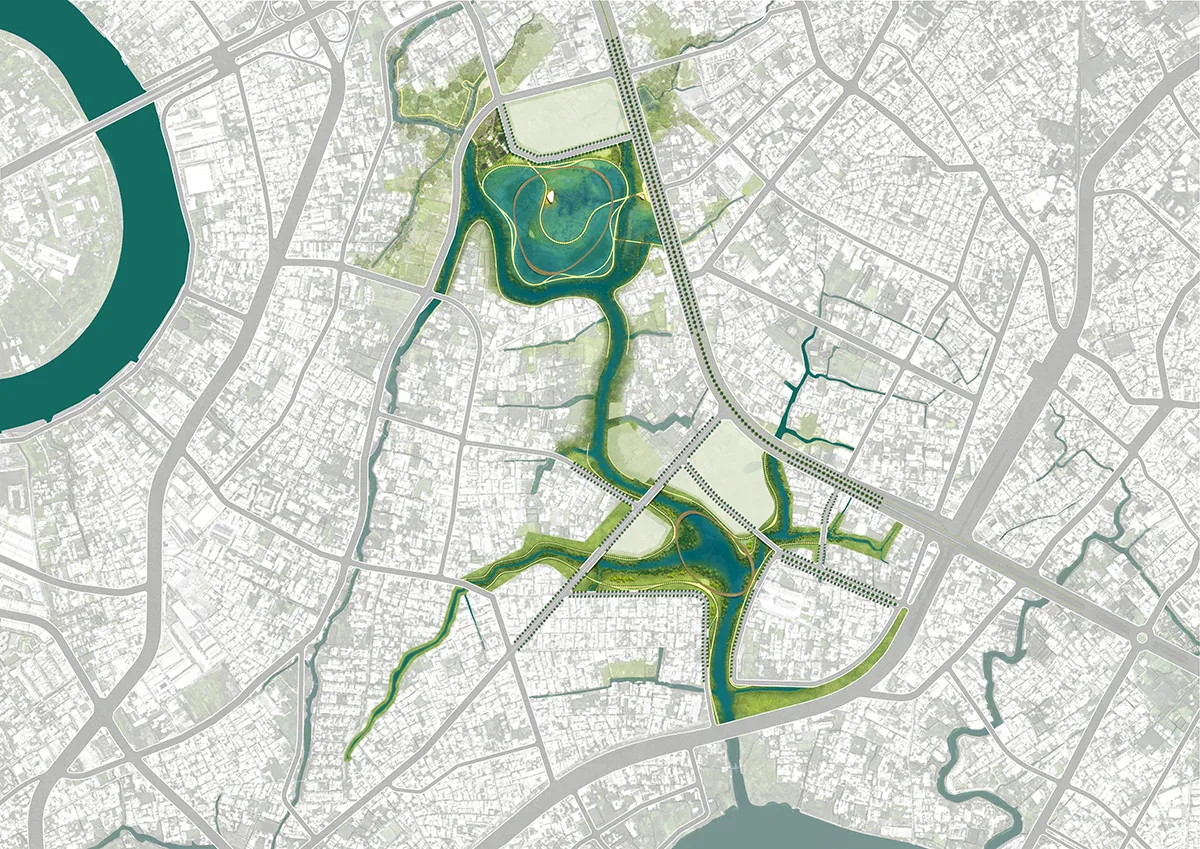
Rather than pushing water away, the project aims to create space for it by establishing an extensive network of blue-green infrastructure. Retention parks, permeable streets, restored wetlands and multifunctional canals work together to form a flexible system that absorbs and slows down stormwater.
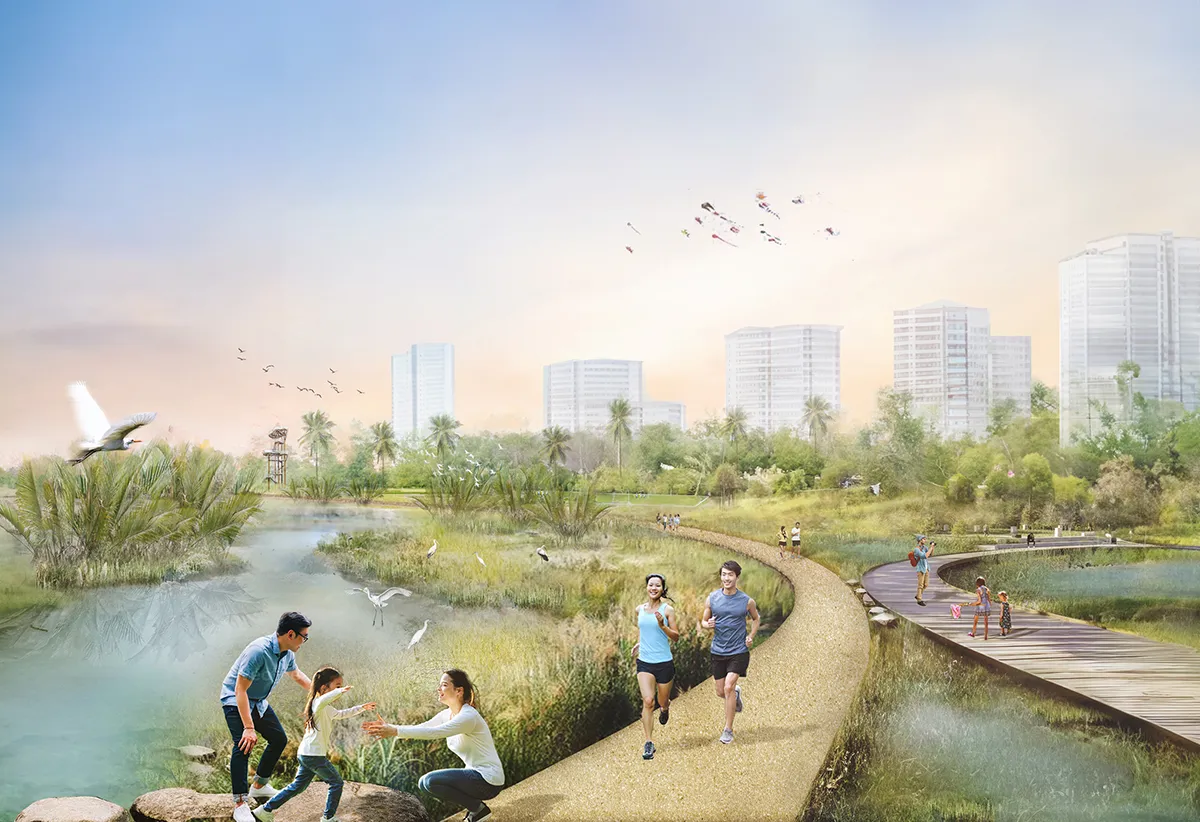
This shift from ‘grey’ to ‘green and blue’ infrastructure reflects a broader transition in urban design, moving from control to coexistence. Water becomes an integral part of residents’ daily lives, providing cooler public spaces, biodiversity corridors, and new leisure amenities, while also reducing flood risk.
PARTICIPATORY PLANNING WITH LOCAL IMPACT
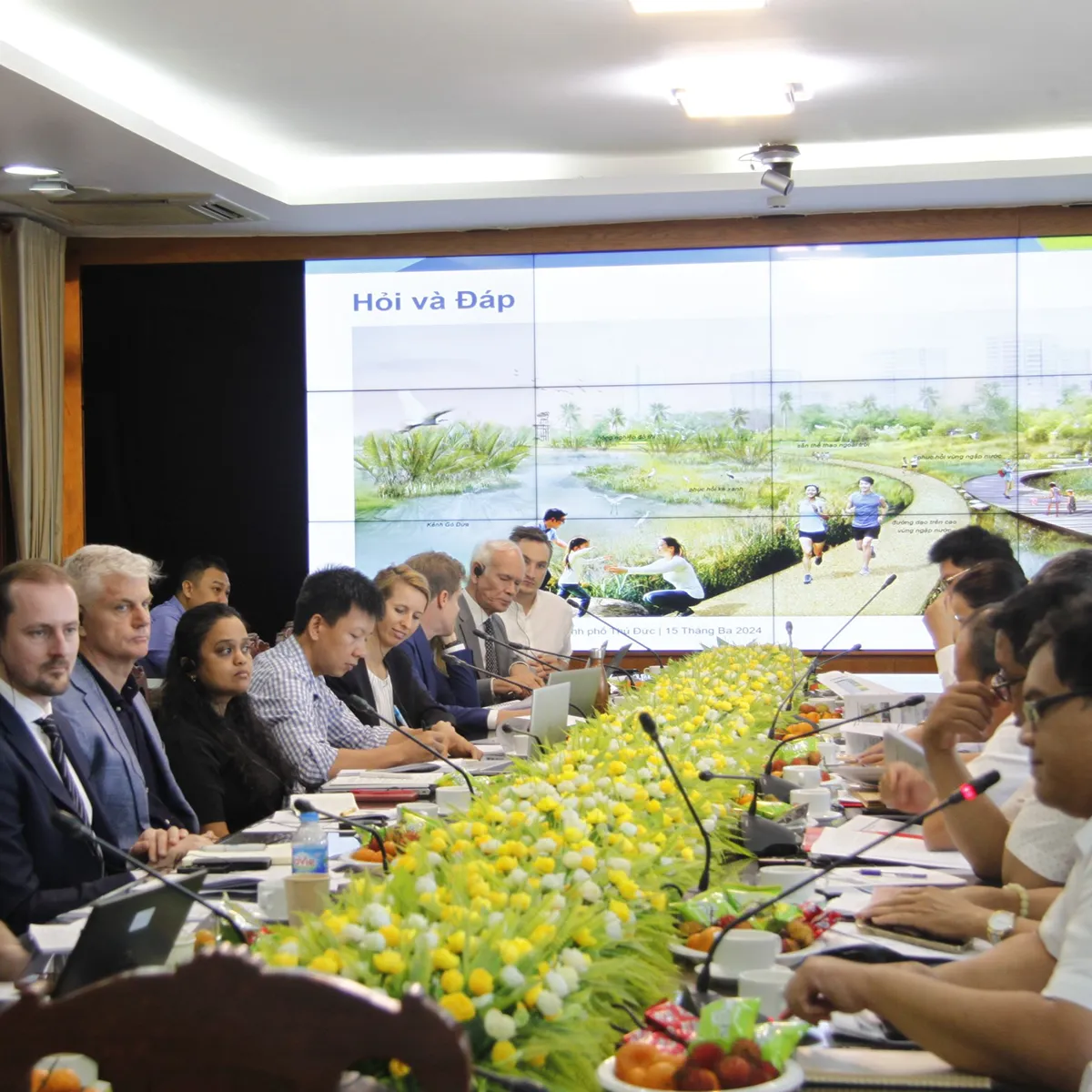
In addition to the technical and ecological aspects, the project employs an inclusive planning process. The IFRM approach aims to empower local authorities, engage communities, and develop capacity through knowledge transfer and pilot projects.
The vision identifies ‘quick-win’ projects and policy pathways to support the step- by-step transformation of the urban environment. This includes upgrading informal settlements using Nature-based Solutions, restoring floodplains, and designing new public spaces that can also act as stormwater buffers.
HIGHLIGHTS OF IFRM APPROACH
PROTECT
Dikes & embankments
- 95 km – 20 km less than the pre-study
- Navigation lock may be required
Ground raising
- 35 million m3 – 10 million m3 less than the pre-study
Living with water
- 1.250 ha in catchment 10 Among which planning residential areas
DELAY
- 200 ha
- Limited application due to alignment with Thu Duc City’s current and future planning
STORE
- 500 ha
- Giong Ong To and Ba Cua will enhance storage, boosting natural capacity by over 50%
DELAY & STORE
- 10% of Thu Duc City
- Additional water storage of 0.2 Olympic pools/ ha average
- Reduction of Estimated Annual Damage (EAD) by 860 USD/ hec – compared to the pre-study
DRAIN & DISCHARGE
Sluices and pumps
- 50 sluices and 21 pumps – 16 sluices less than the pre-study
Drainage system
- Designed for ‘delay and store’, copes with intense rainfall events beyond its original capacity
As mentioned earlier, the core idea is that by increasing green space behind the future dike, the overall flood management system becomes more efficient — significantly reducing the need for costly infrastructure such as pump stations and dikes. This not only lowers construction and maintenance costs but also enhances the resilience and sustainability of the area.
FROM RISK TO RESILIENCE
Thu Duc City’s integrated flood risk management plan shows how landscape architecture can be crucial for climate adaptation, particularly in the Global South. It is more than just a technical blueprint; it is a vision for a resilient, inclusive and nature-positive urban future.
By embedding hydrological intelligence into the city’s DNA, OMGEVING and its partners are offering a model that can be replicated in other delta cities facing similar challenges. The message is clear: designing with water is not only necessary, it can also be beautiful.
The Thu Duc City IFRM study is commissioned by the Netherlands Enterprise Agency (RVO) | Partner in Sustainable Development through the Partners for Water program in support of The World Bank. A follow-up assignment is currently translating the vision into guidelines that will support implementation in future urban developments.
Image and Text Credits: OMGEVING