
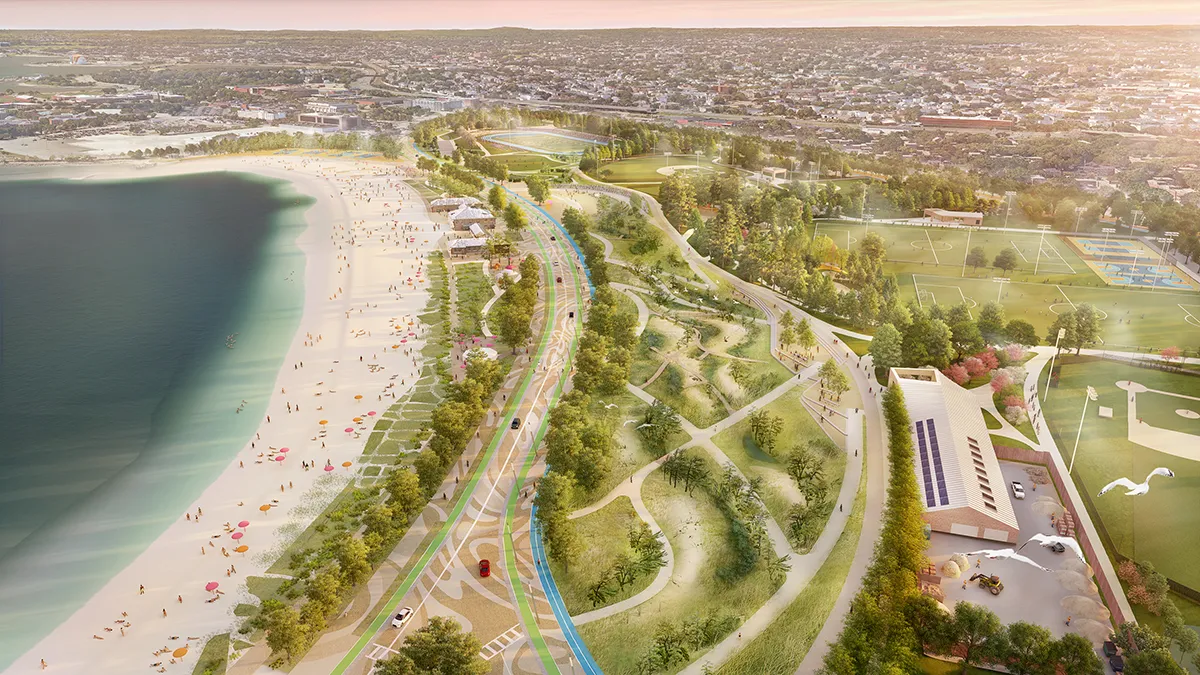
The City of Boston recently announced that Stoss Landscape Urbanism is the design lead and Weston & Sampson is the technical lead for the next phase of improvements at Moakley Park. Funded through the City’s five-year Capital Plan, this new phase of improvements will deliver a rebuilt and enhanced baseball field, upgraded facilities to support community use and long-term park maintenance, and a landscaped multi-use path with harbour views. The project will also advance critical coastal resilience measures to help protect the South Boston neighborhood from flooding and climate impacts.
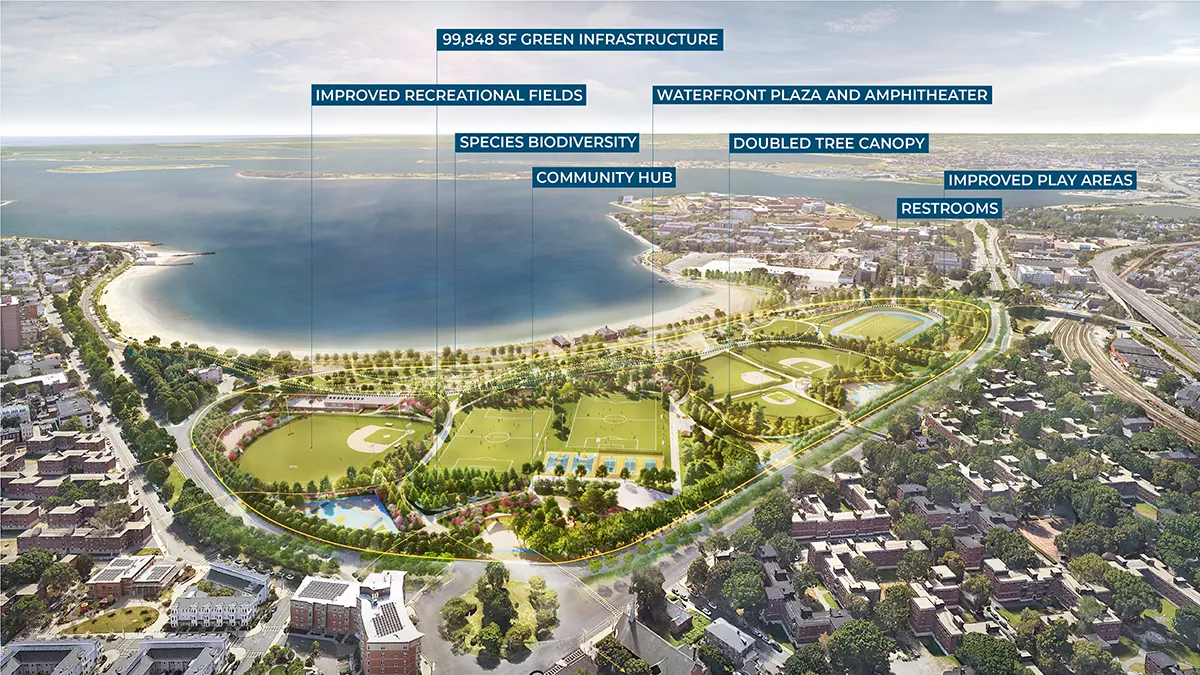
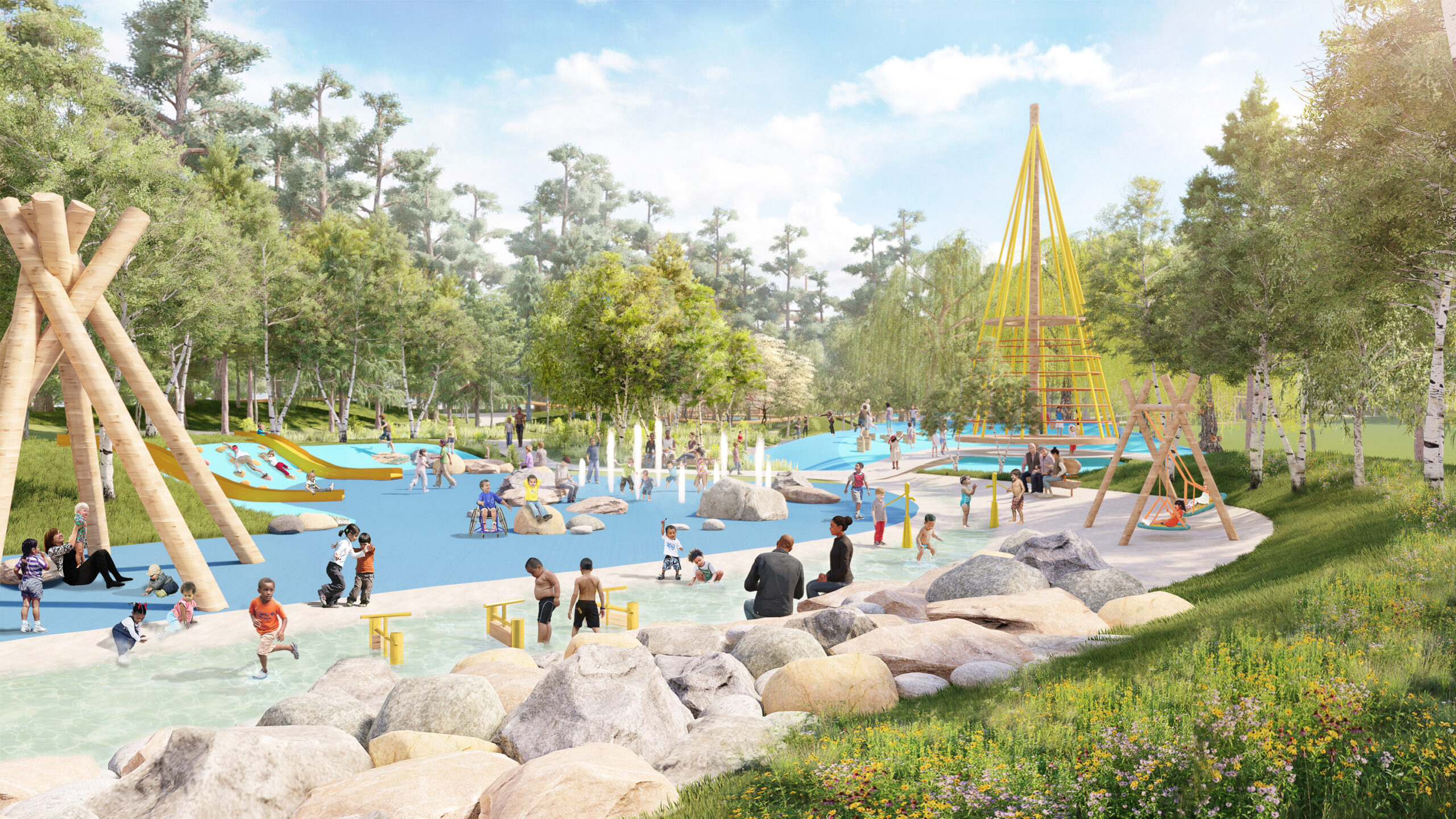
The 18-month design and permitting process, started in September 2025, will prepare Moakley Park’s first phase for construction. It will include relocating and upgrading ball fields to drier areas, with improvements in playing surfaces, drainage, and lighting to increase year-round play opportunities. Community features will consist of a top-tier baseball field with bleacher seating, a plaza with a splashpad, picnic spots, a half basketball court, multiuse paths, a maintenance building, and enhanced parking. Flexible areas will support seasonal and cultural events like community gatherings, neighborhood concerts, food truck festivals, and the annual Mayor’s Cup Tournaments.
Boston is taking action to adapt to and prepare for the impacts of climate change. Through its Climate Ready Boston initiative, the City of Boston has completed coastal resilience plans for our entire 47-mile coastline to reduce flood risk, enhance the city’s natural ecosystems, and improve connectivity, accessibility, and recreation along the waterfront.
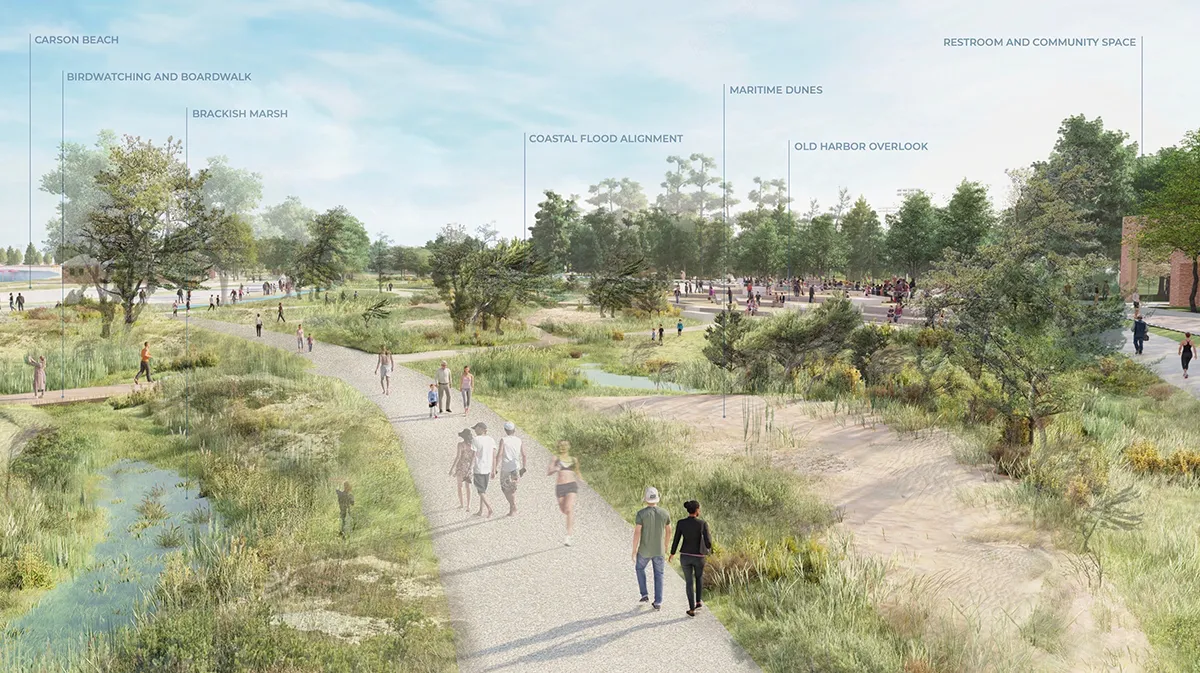
The coastal flood management strategy is integrated into the park landscape and provides additional environmental and social benefits. Topography required to prevent coastal flooding also functions to provide connectivity and visual access to the waterfront while creating space for new types of active and passive recreation, play, refuge, and social gathering. The community played an important role in the development of the vision plan and continues to provide critical feedback on desired activities and priorities for the park moving forward. Input has been gathered through online and on-site activities, community open houses, as well as partnership with local and city-wide advocates.
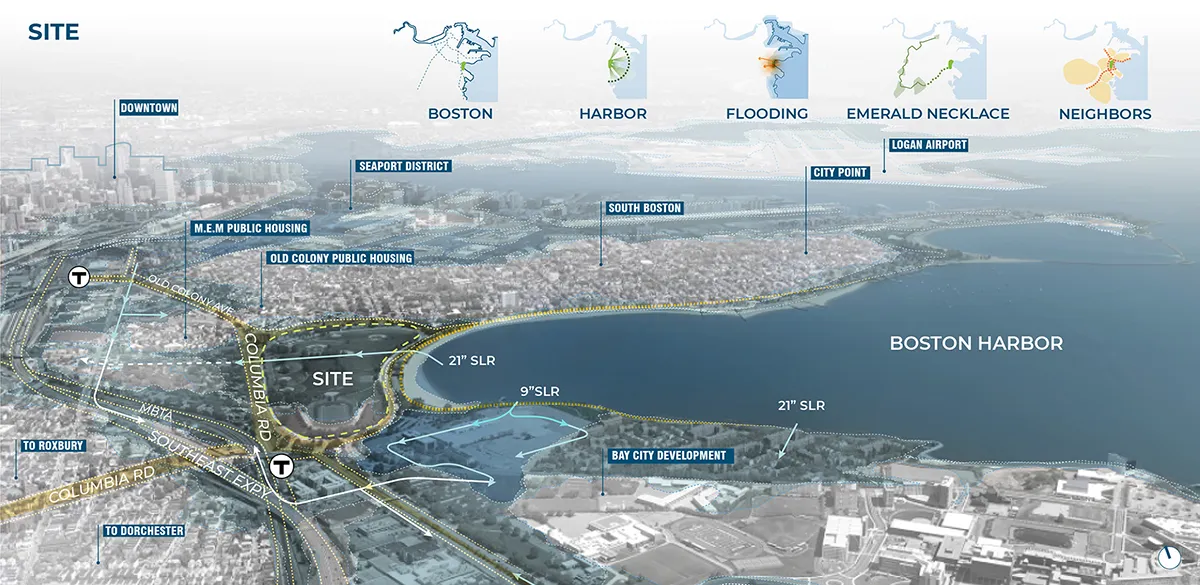
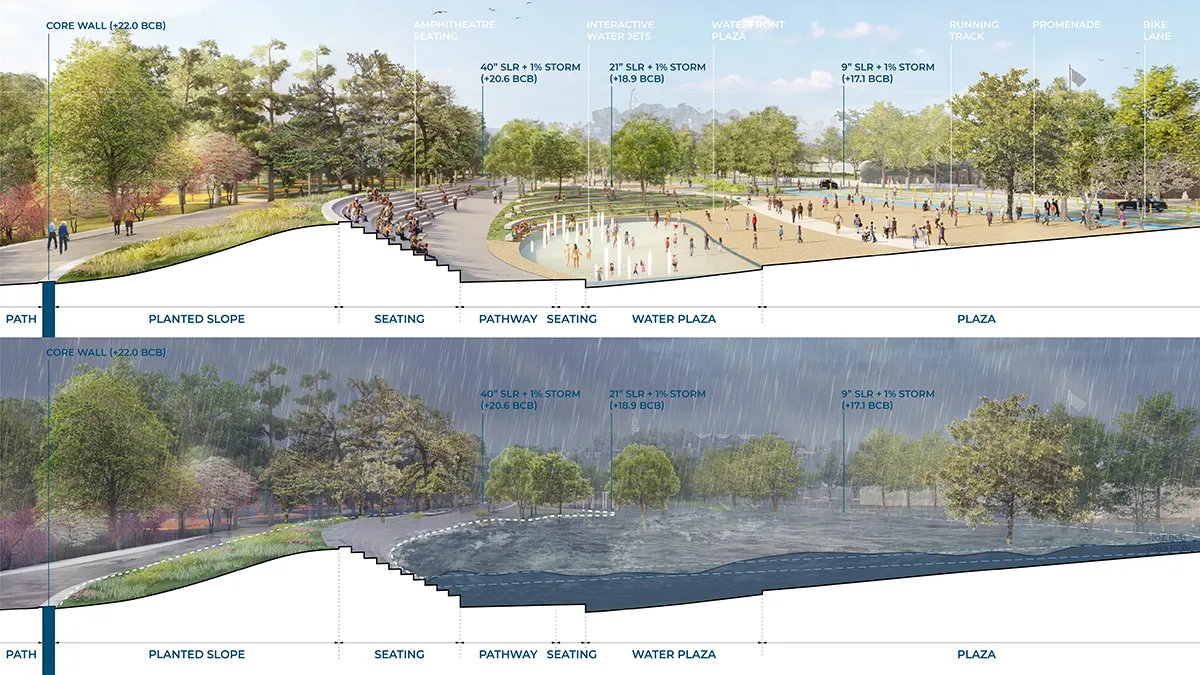
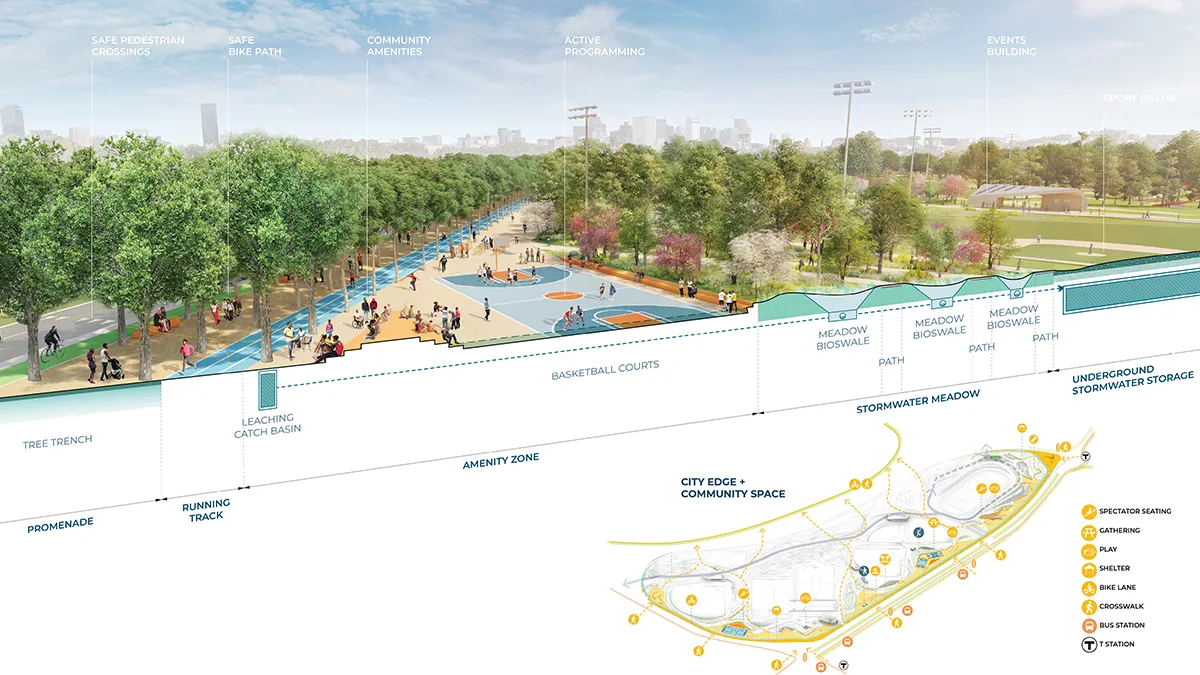
Image Credits: Stoss Landscape Urbanism