
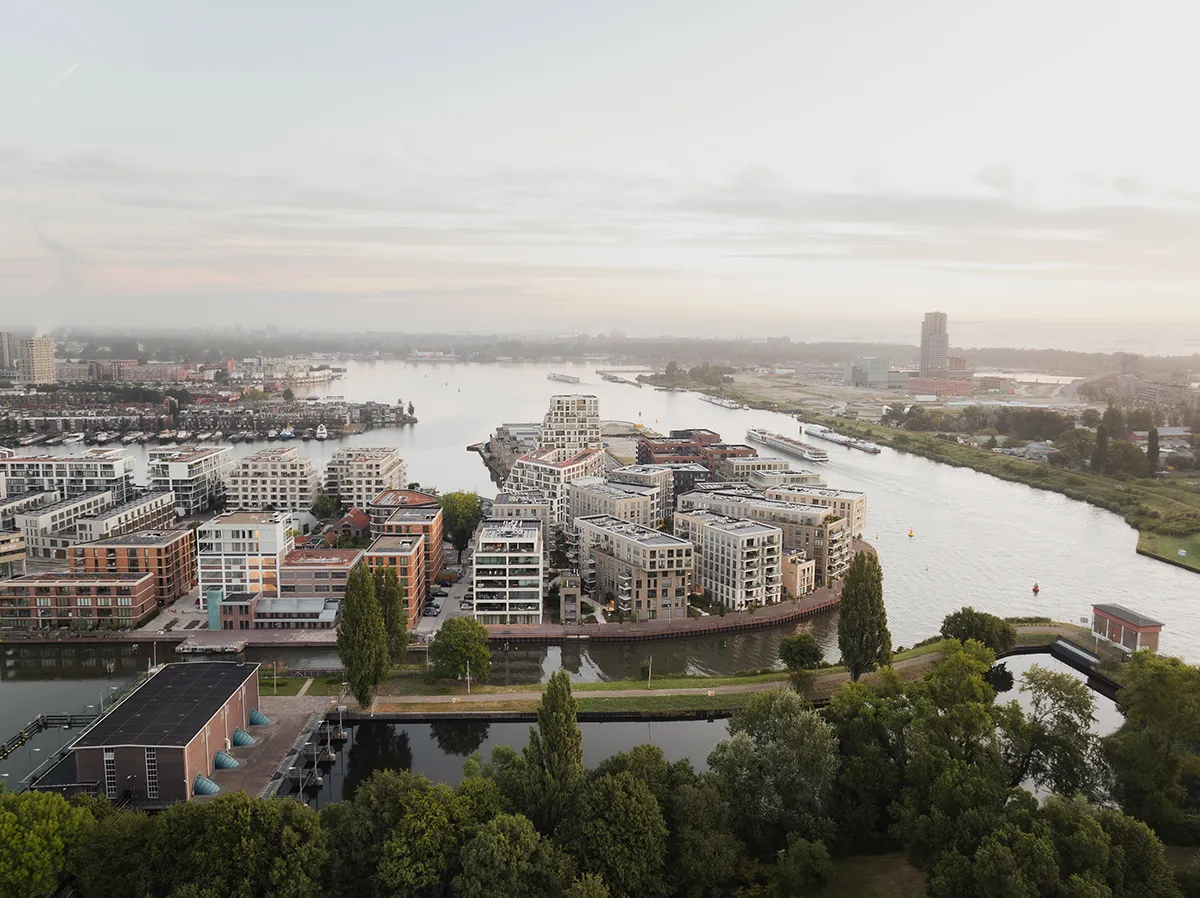
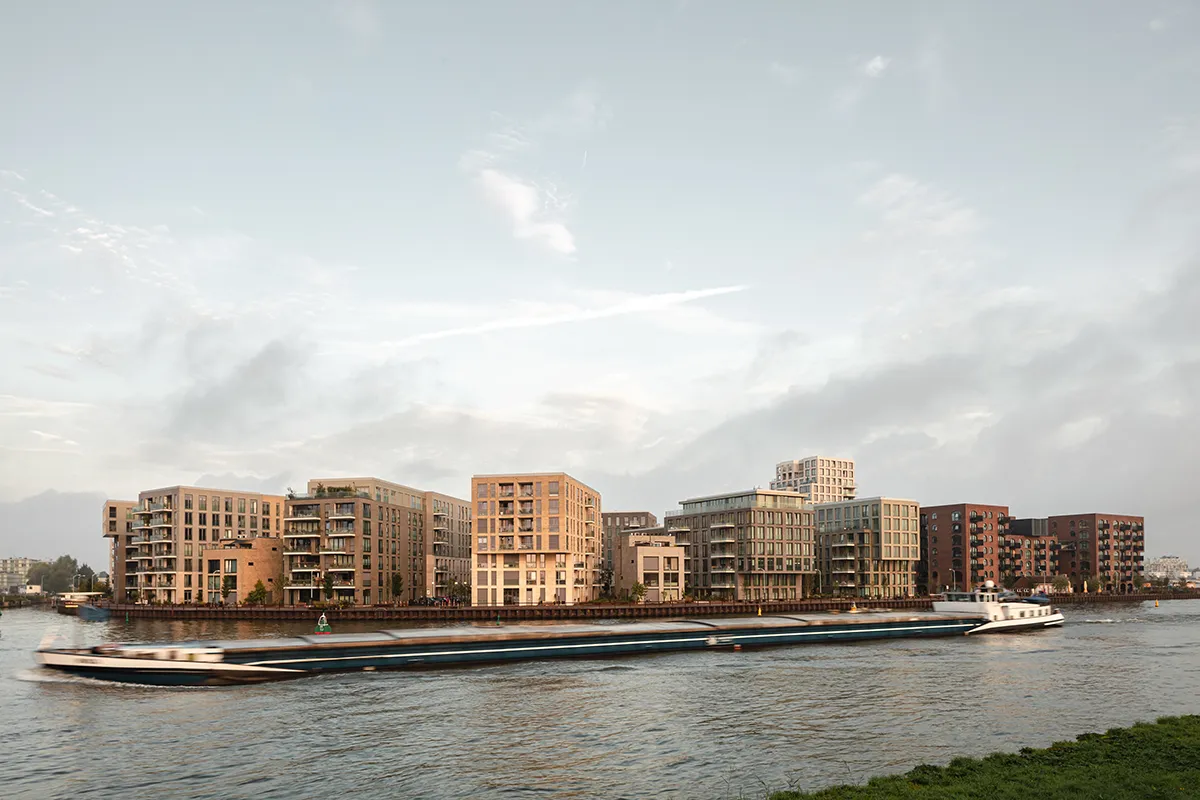
Cruquius Island, a human-made peninsula in Amsterdam’s Eastern Docklands, has evolved from a historic industrial zone into a lively residential area characterised by its distinctive waterfront environment. Built between 1875 and 1925 to expand the Port of Amsterdam, it transitioned from a cattle market to an industrial centre and now functions as a vibrant urban community. This redevelopment demonstrates how architecture, urban planning, and landscape design can adapt historic locations for modern use. Although the island’s industrial past is acknowledged, the emphasis is on its transformation into a contemporary living space.
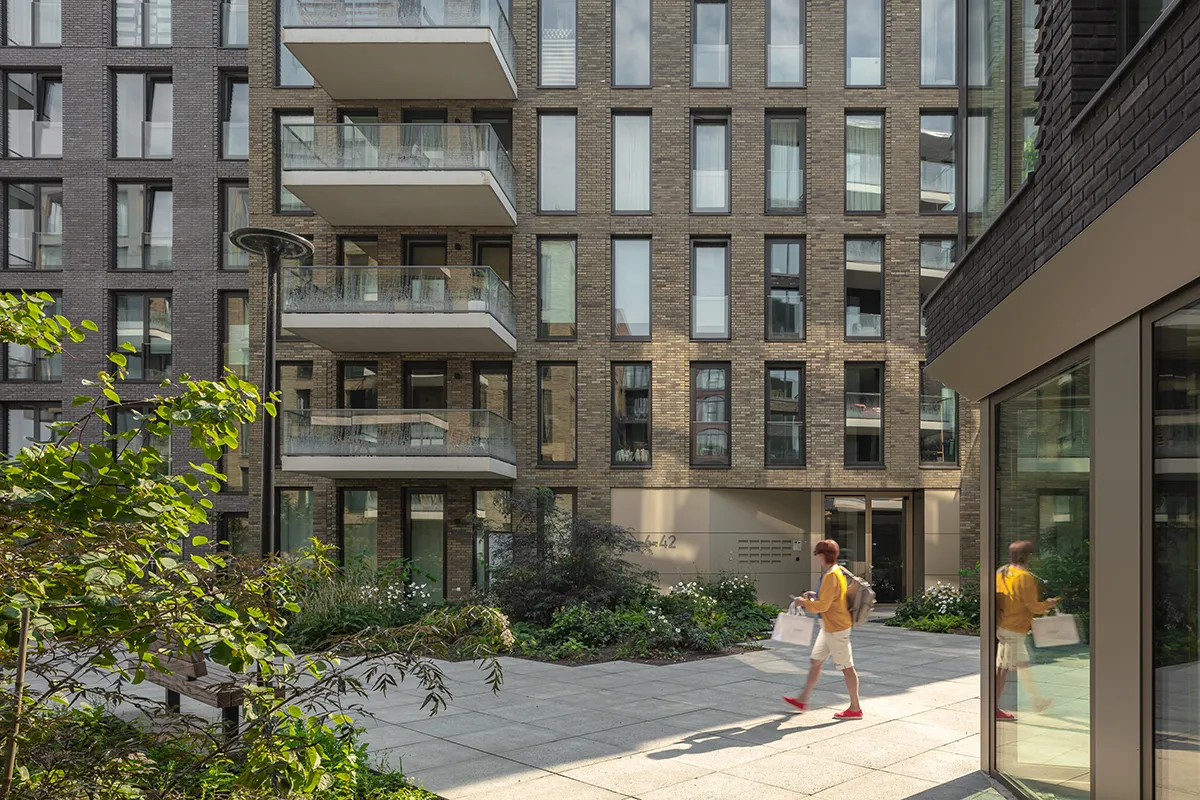
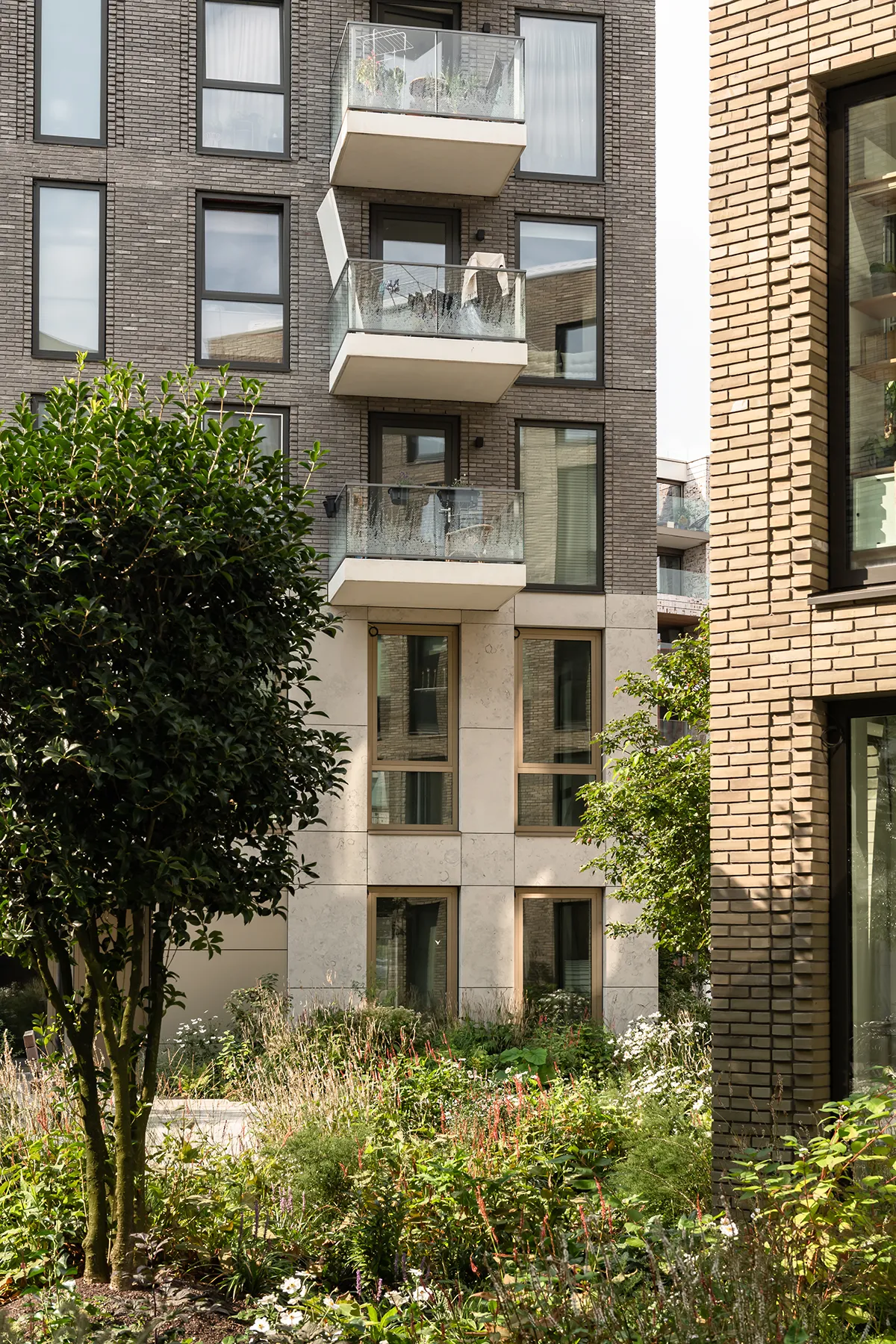
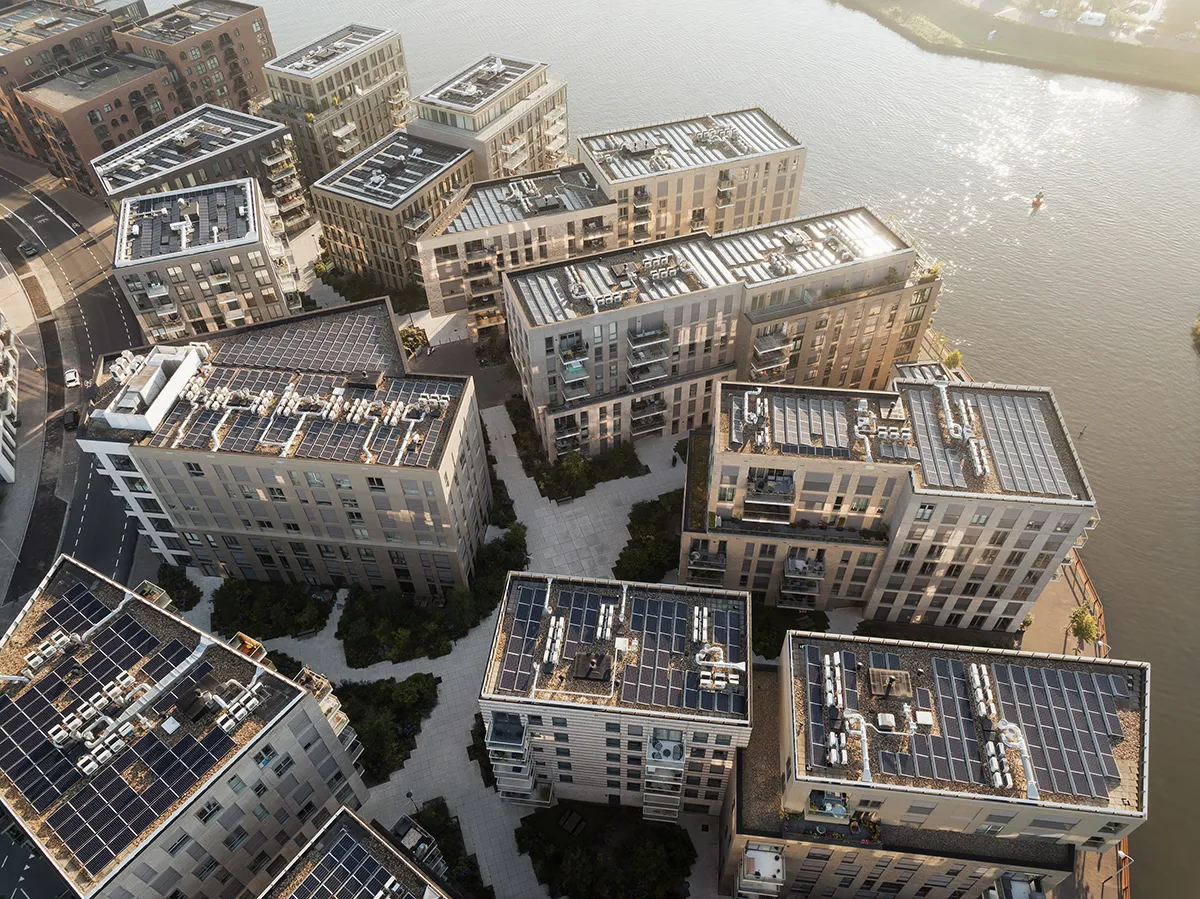
The former industrial zone, once filled with warehouses and factories, has transformed into a vibrant mix of housing and public areas. A fan-shaped layout of 14 buildings forms a neighbourhood with varied scales, transitioning from large, elongated structures reminiscent of historic industrial design to smaller, three-story duplexes. This arrangement balances density and intimacy, as each home features outdoor spaces such as balconies, gardens, or terraces. All residences offer water views, emphasising the project’s smooth integration with its waterfront setting.
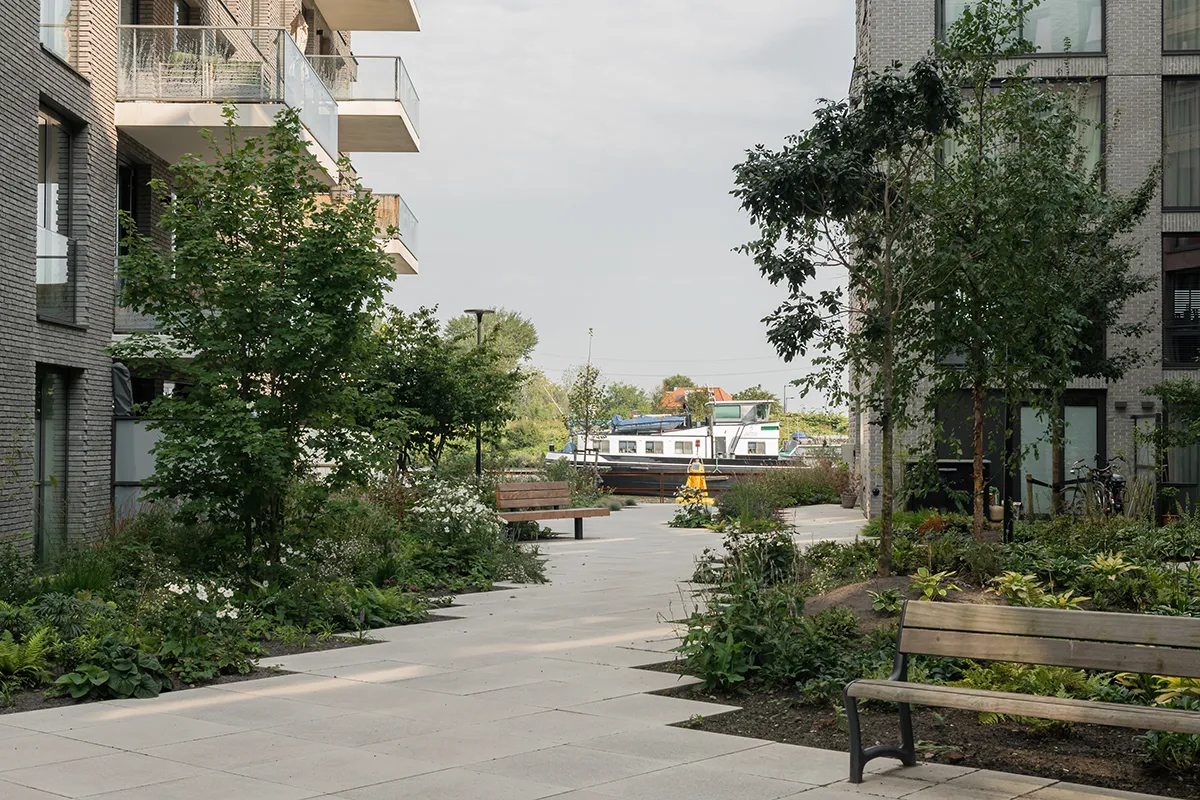
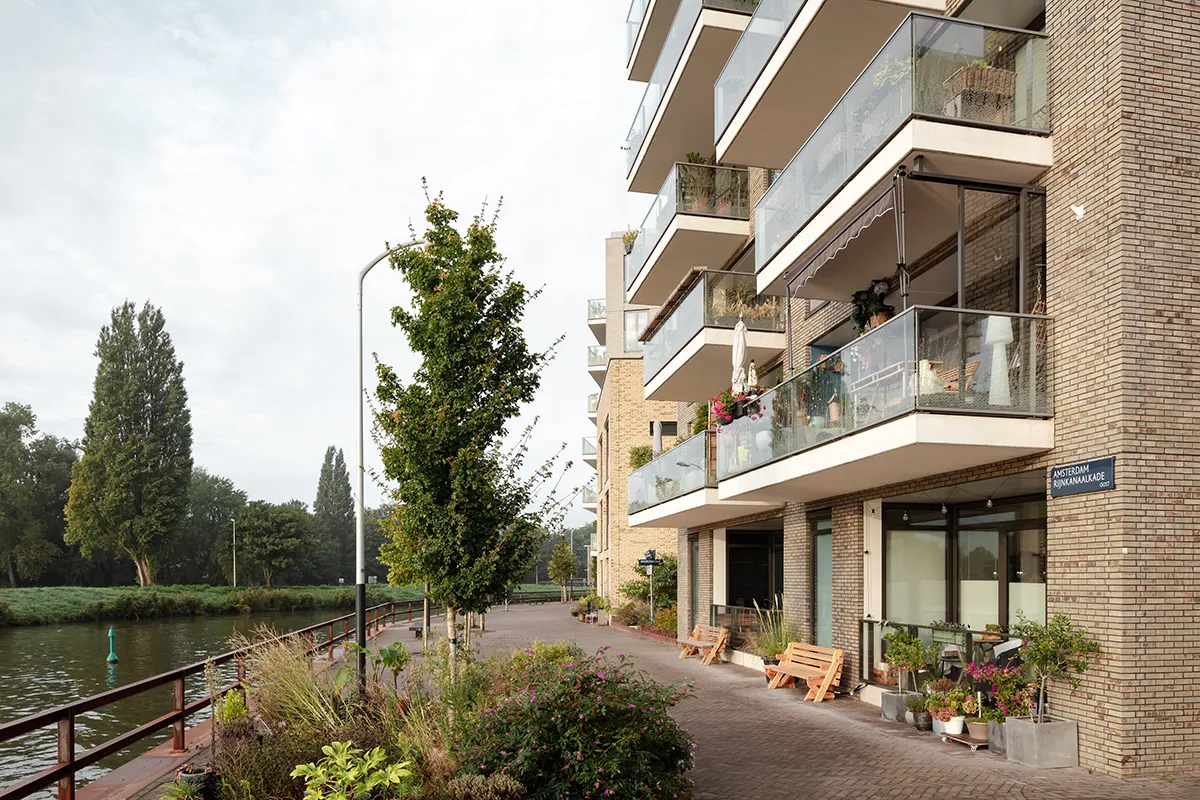
The urban plan emphasises a hierarchy of scales and spaces. From the Cruquiusweg, sightlines extend directly to the Amsterdam-Rhine Canal, reinforcing a strong visual connection to the water. Large ships navigate this busy waterway while pedestrians enjoy the tranquillity of the quay—a lively, car-free promenade lined with ground-floor residences, commercial spaces and recreational areas. The juxtaposition of these contrasting elements adds vibrancy to the neighbourhood, fostering a sense of place that is both intimate and expansive.
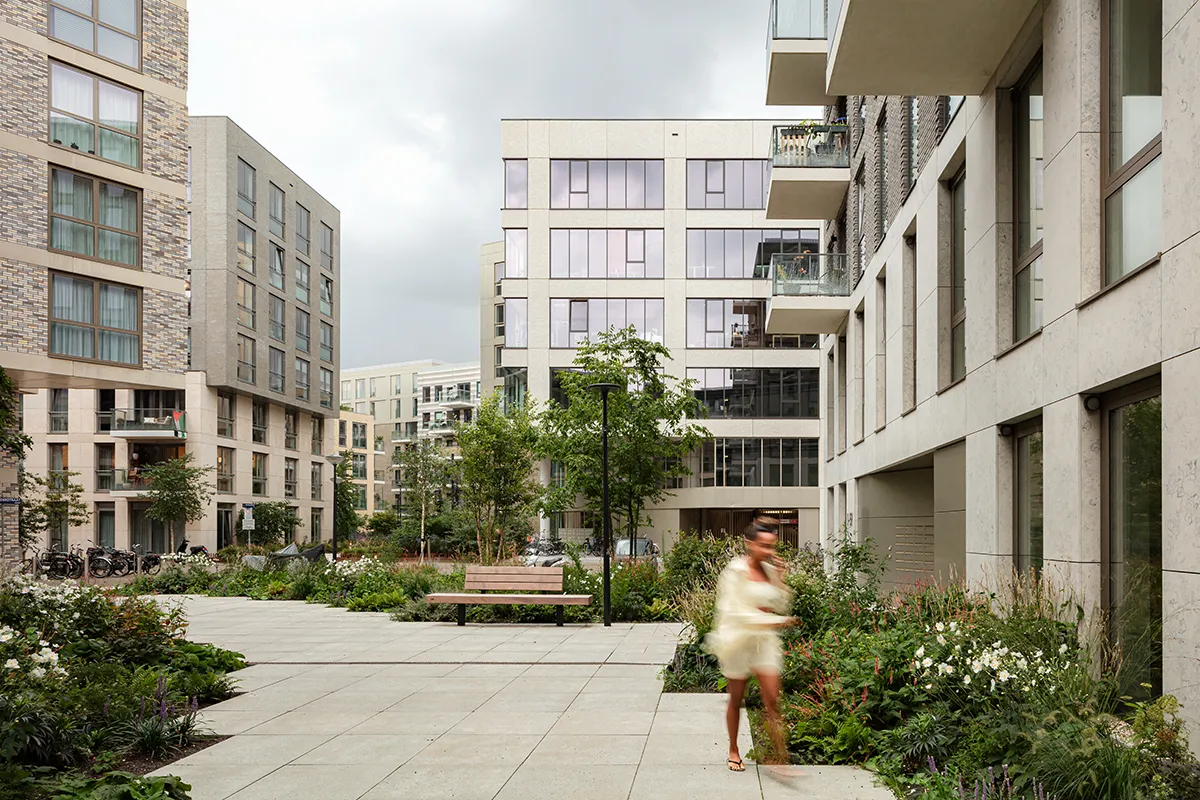
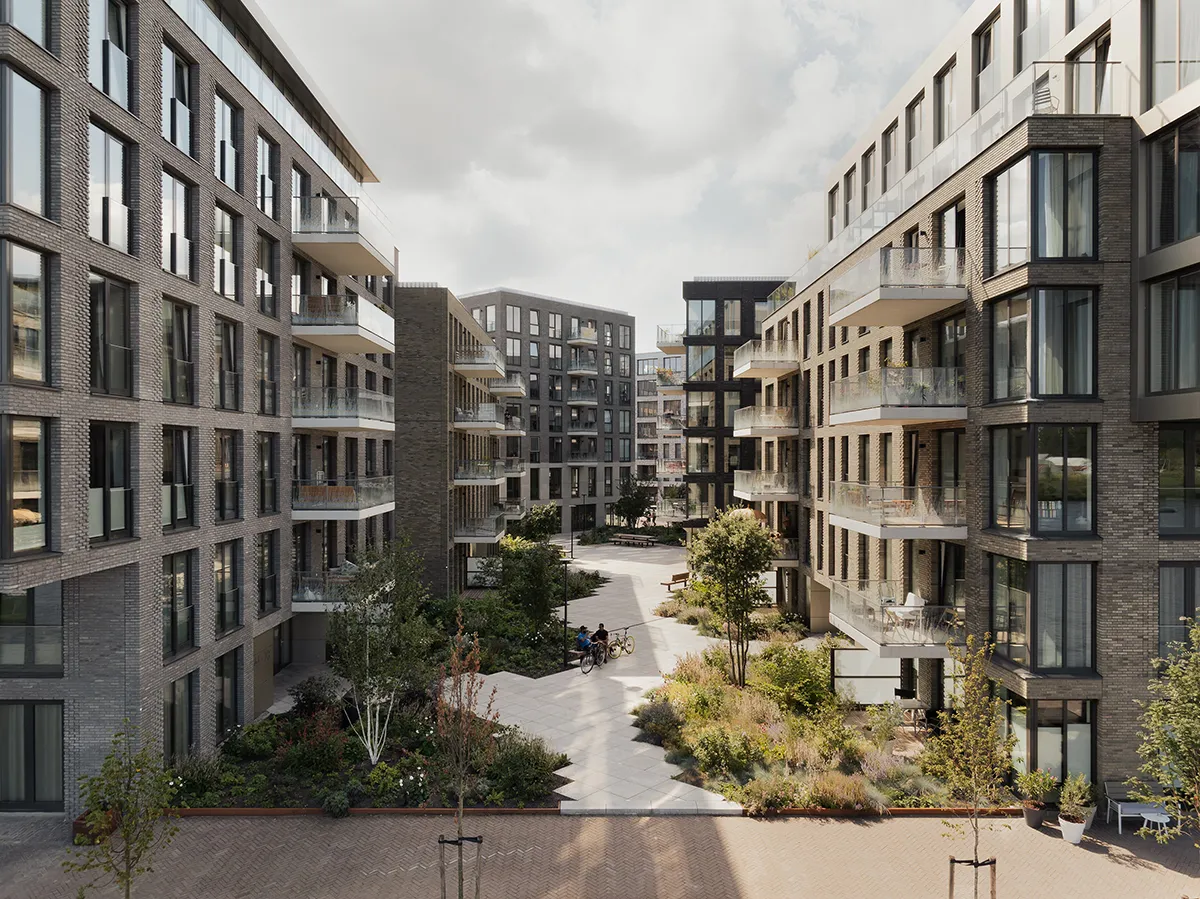
Landscaping plays a central role in the project, with pathways, semi-public gardens and communal green spaces woven into the urban fabric. These pathways, designed with irregular edges to evoke an organic aesthetic, guide movement through the site while creating inviting places to linger. Collectively, these elements enhance the area’s spatial quality, offering residents spaces to relax, socialise and enjoy a tranquil, pedestrian-friendly environment.
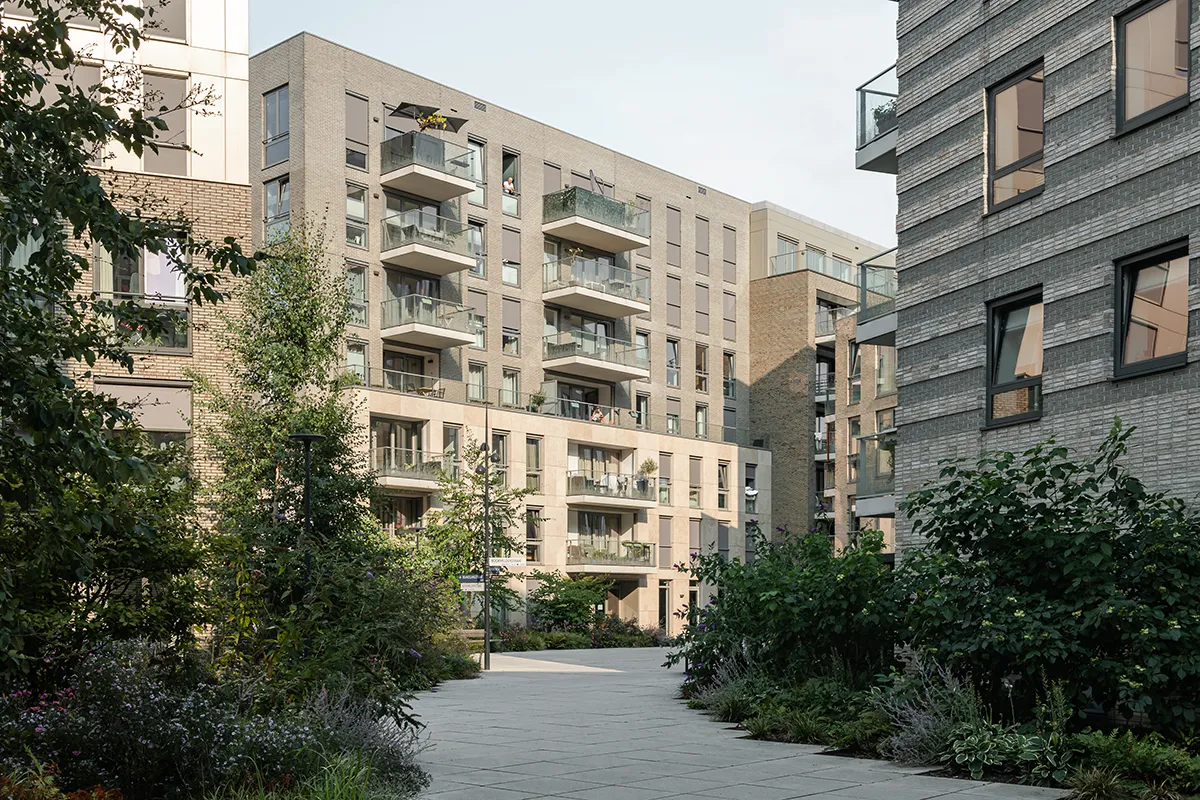
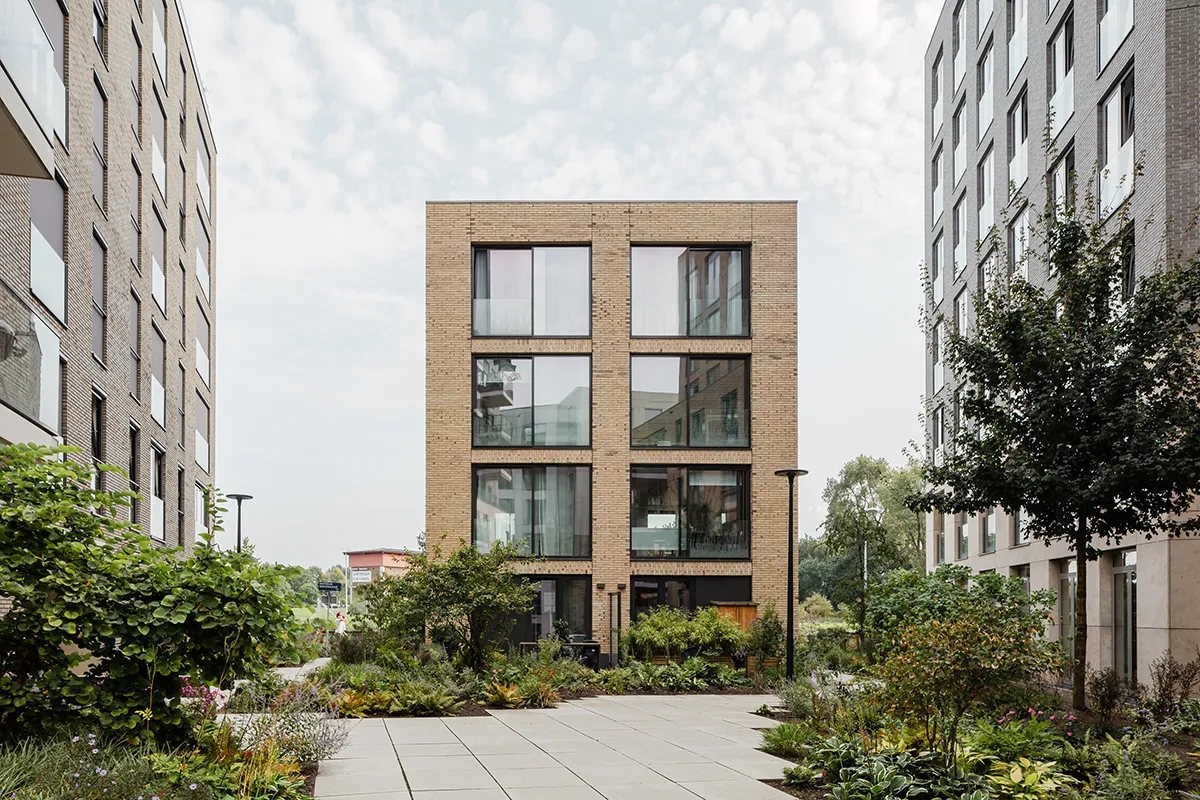
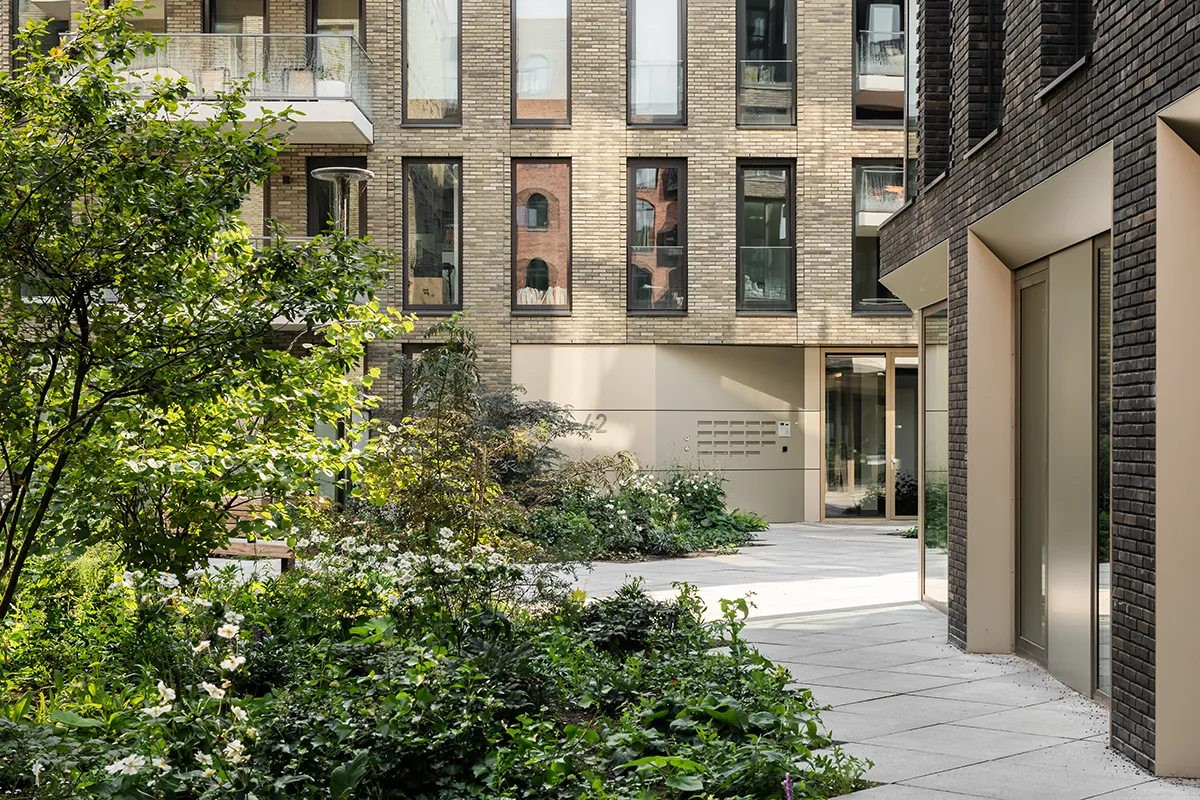
Sustainability underpins the project’s identity. Parametric design principles were employed to optimise sunlight access for residences and shared spaces. Green roofs, solar panels and energy-efficient systems minimise the environmental footprint, while semi-mature trees and extensive landscaping enhance biodiversity and improve residents’ quality of life. Ground-level spaces feature active, interactive facades that blend residential and community uses to foster engagement. Secure bicycle parking and accessible communal spaces further promote sustainable, urban living.
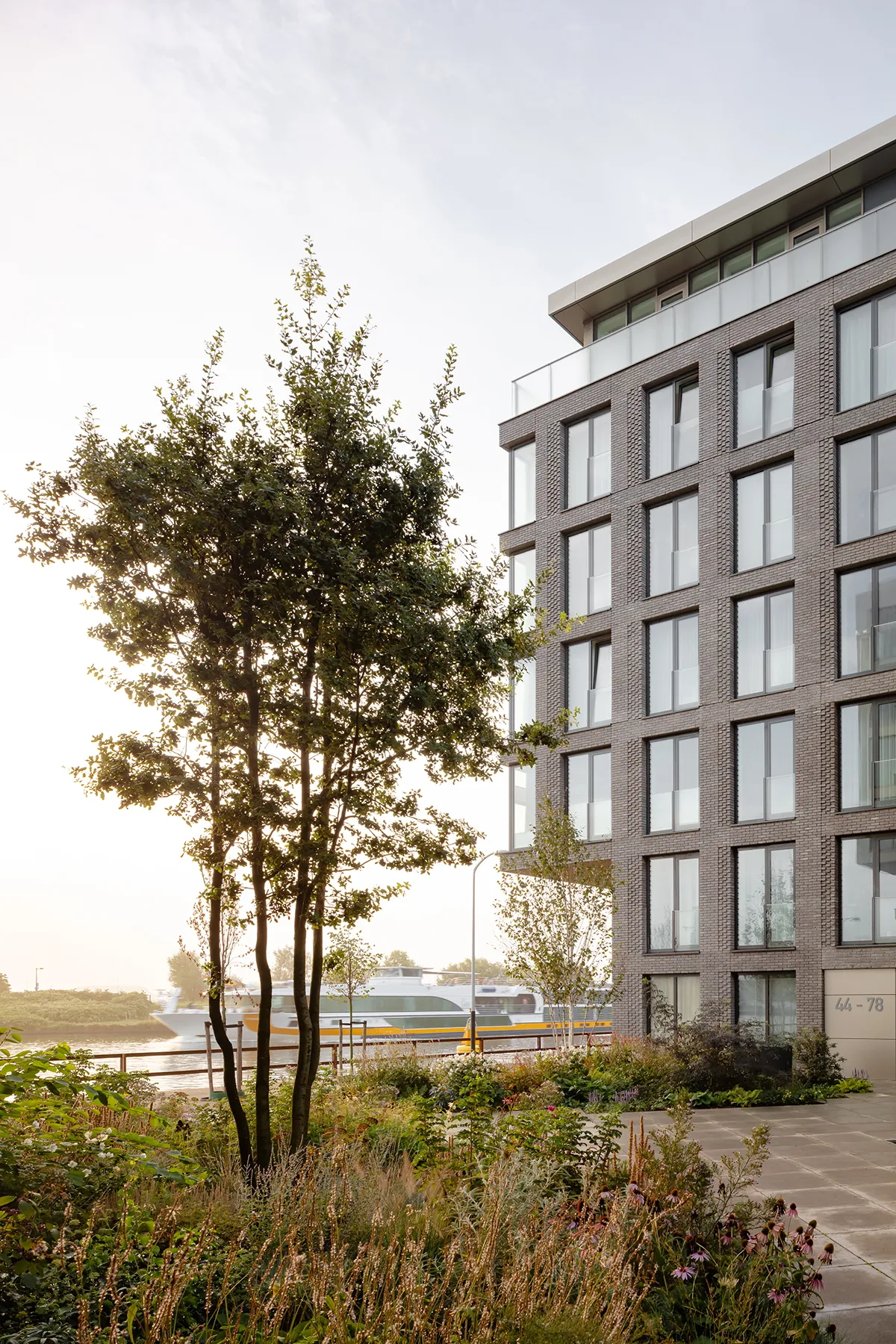
Through the complete transformation of former brownfield sites at this location, this housing project preserves and celebrates local character, while introducing modern residential amenities that ensure liveability and comfort. The playfully meandering landscaping and the porosity that it introduces to the spaces between buildings honour the area’s past while orienting it toward the future. The result is a neighbourhood within a neighbourhood, exemplifying how historical preservation and placemaking innovation can harmonise to create desirable new urban housing.
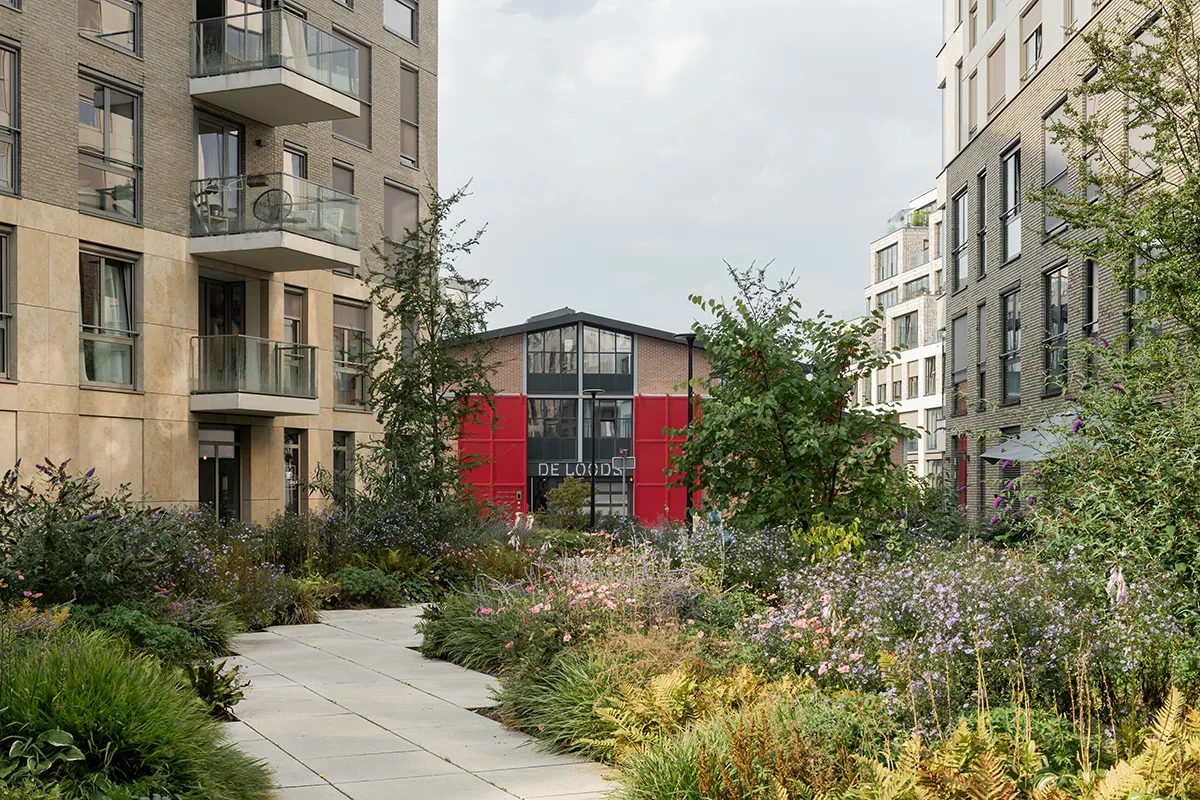
Cruquius Island, therefore, sets a standard for waterfront redevelopment, converting a former industrial district into a green, thriving community. By blending heritage, nature and modern city life, the project asserts KCAP’s commitment to sustainable redevelopment—and serves as a model for future initiatives in dense urban regeneration.
Cruquius Island
Client: AM (Cruquiuswerf), Amvest (Berkhout), ASR Real Estate
Architecture, Urban Design, Landscape Architecture: KCAP
Photography: Sebastian van Damme and Marcel IJzerman