
The Design Concept
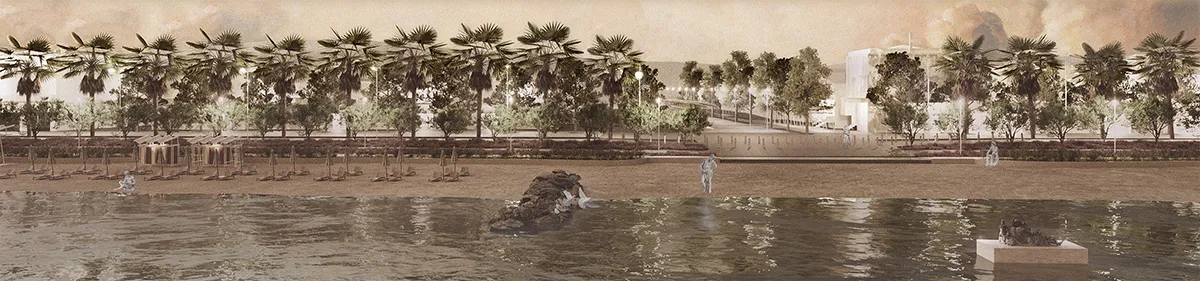
The design concept centers on linear parallelism and wavy forms that echo the natural coastal morphology. Water—its movement and forms—acts as a key reference. Elements of the Corinthian order, especially the acanthus leaves of the cynocephalon, are integrated as symbols of memory and cultural identity. Their curves inform an organic, flowing design that blends with the landscape. This approach shapes Corinthus Mollis—a new urban identity linking natural beach forms with Corinth’s heritage. Activity platforms, green areas, and walkways unite nature and city, forming a sustainable and aesthetically cohesive public space.
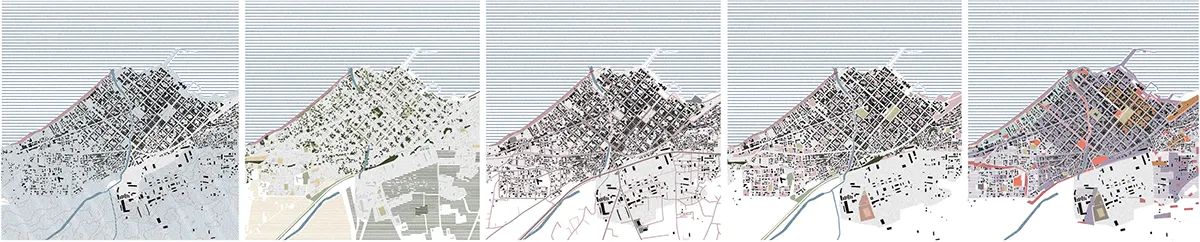
The New Seafront
The Proposal
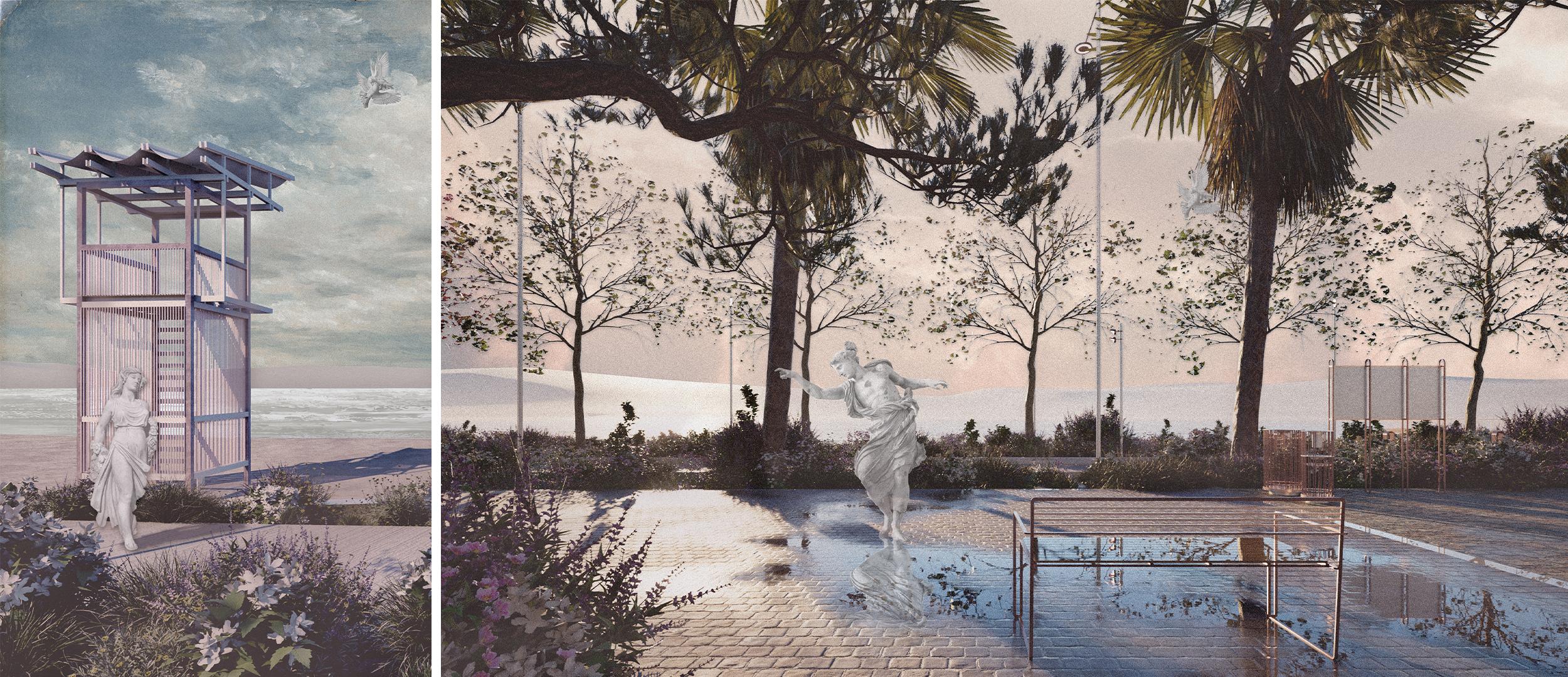
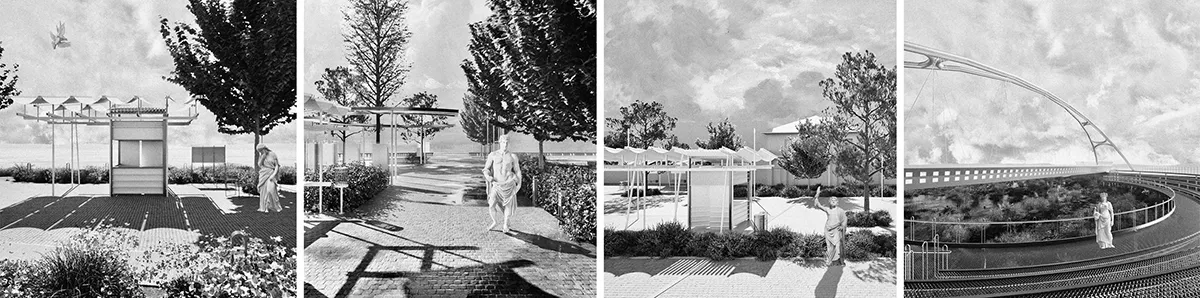
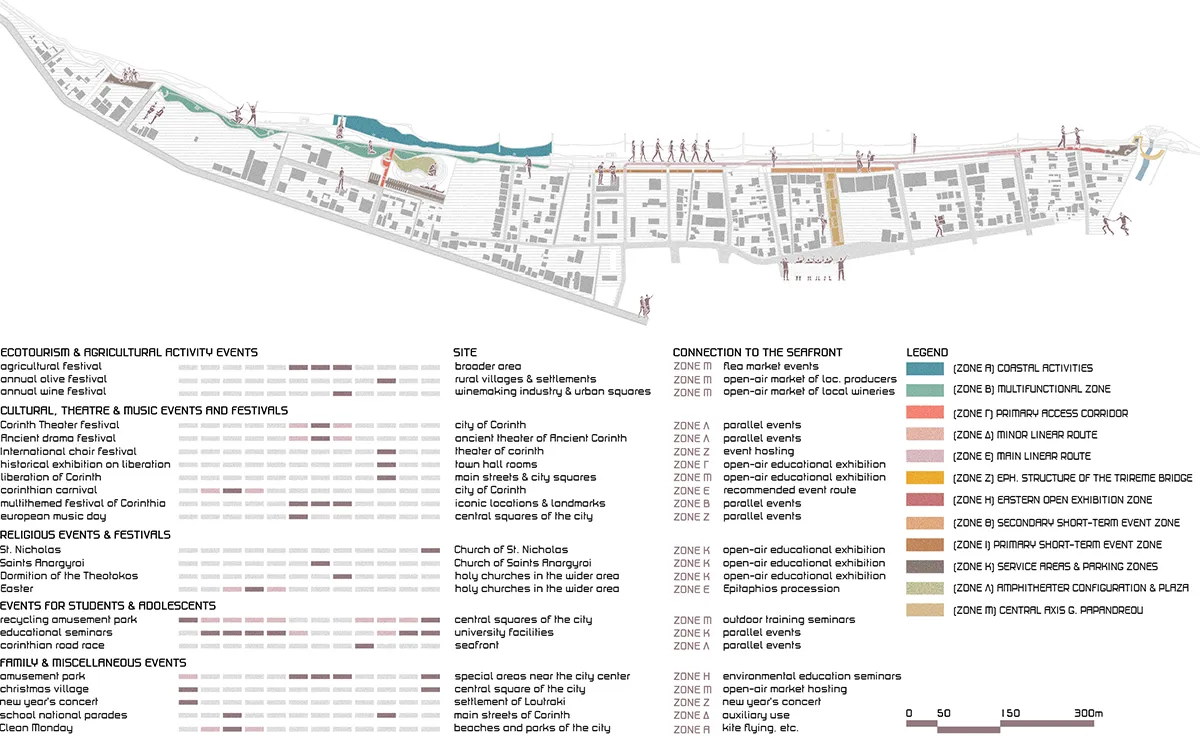
The central concept informs the overall master plan for regenerating Corinth’s ‘Kalamia’ coast, aiming to connect the city’s urban fabric with the beach through a cohesive network of public spaces. Gentle architectural gestures organize activities and blend natural with urban elements. Recreational zones, sports areas, and environmental hubs, along with pedestrian and cycling paths, promote sustainable mobility. Native vegetation and coastal terrain are integrated with infrastructure, while gathering points, such as dining areas, support year-round use. A unified road system enhances connectivity to the city. The use of linear and wavy forms ensures aesthetic unity, combining sustainability, cultural identity, and environmental awareness.
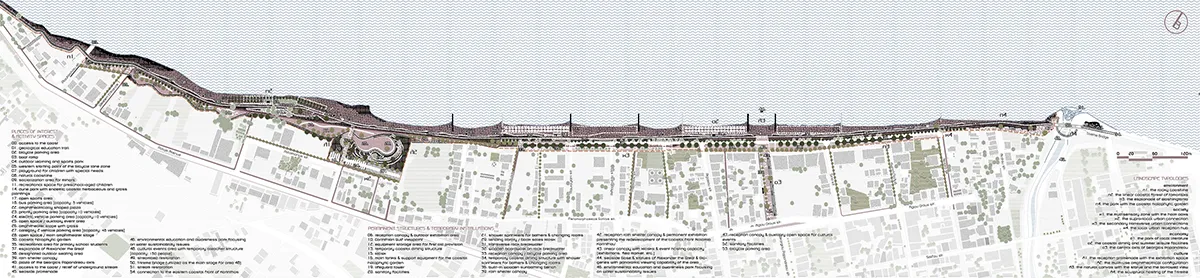
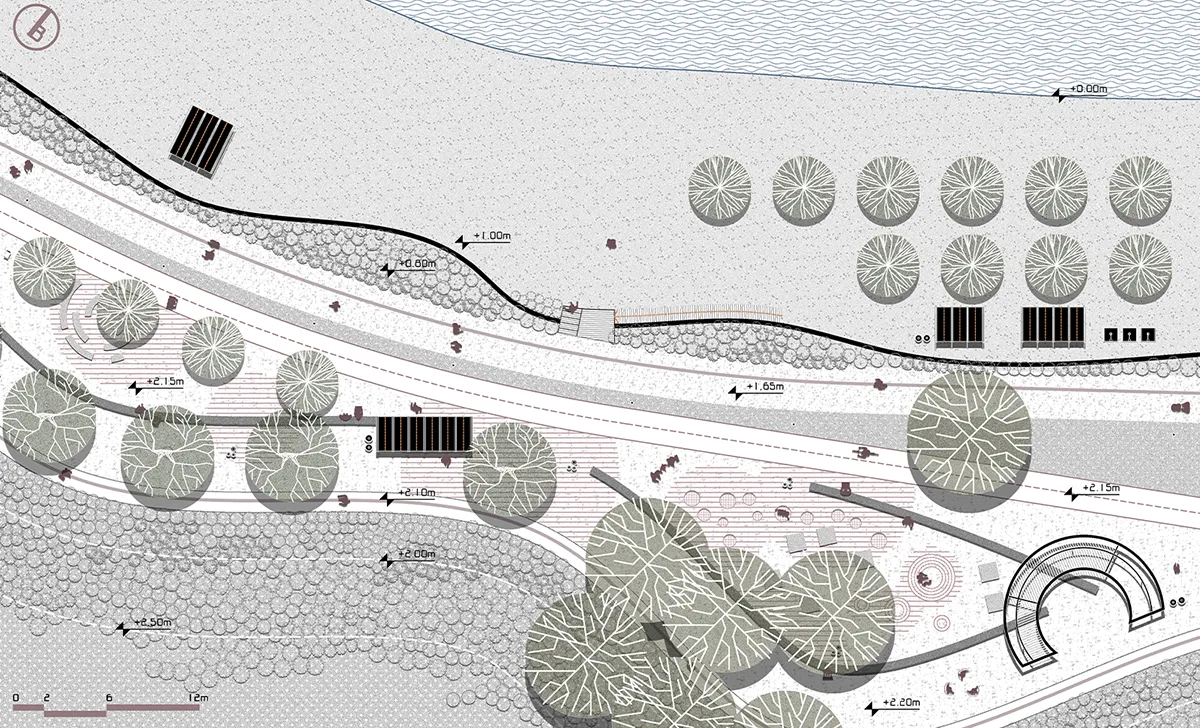
The Landscape Architecture Approach
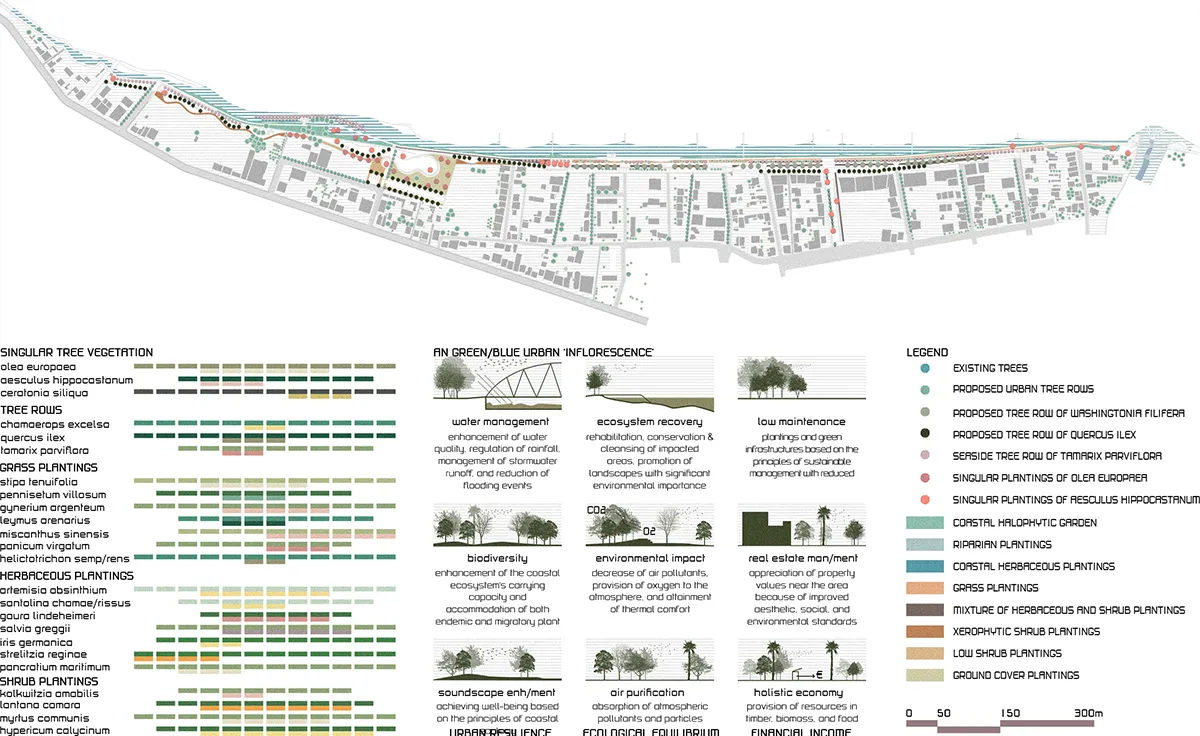
The approach is based on sustainability principles and the integration of landscape into public space. Orientation, sunlight, the sea’s effect on the microclimate, and the urban context are considered. Planting species suitable for the Corinth area provides shade, reduces temperature, and protects against wind. At the same time, it highlights the view and creates a welcoming, balanced environment for residents and visitors alike—offering a sustainable landscape architecture solution that enhances both function and aesthetics.
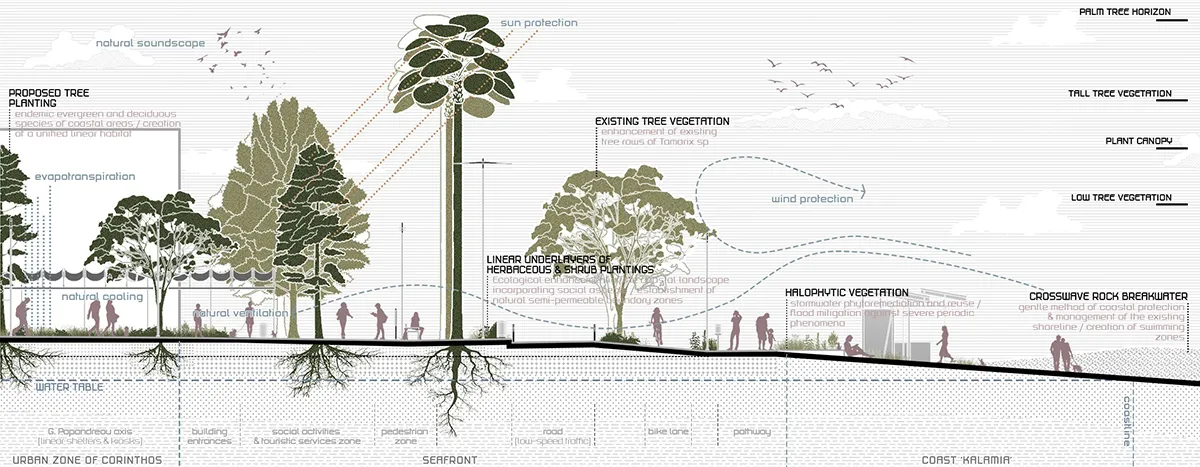
The Coastal Halophytic Garden
The coastal halophytic garden is inspired by rain garden principles, tailored to seaside conditions. It features salt- and drought-tolerant plants (low shrubs, herbaceous plants and grasses) that also endure flooding. During heavy rain, it retains and filters runoff, while in droughts, stored water irrigates resilient vegetation. The system includes drainage and water treatment: water filters through soil, moves via a perforated pipe to a sediment well, then through a filter and into a tank for salt removal. Reverse osmosis provides clean water for irrigation, creating a self-sustaining, climate-resilient ecosystem.
Coastal Rotation
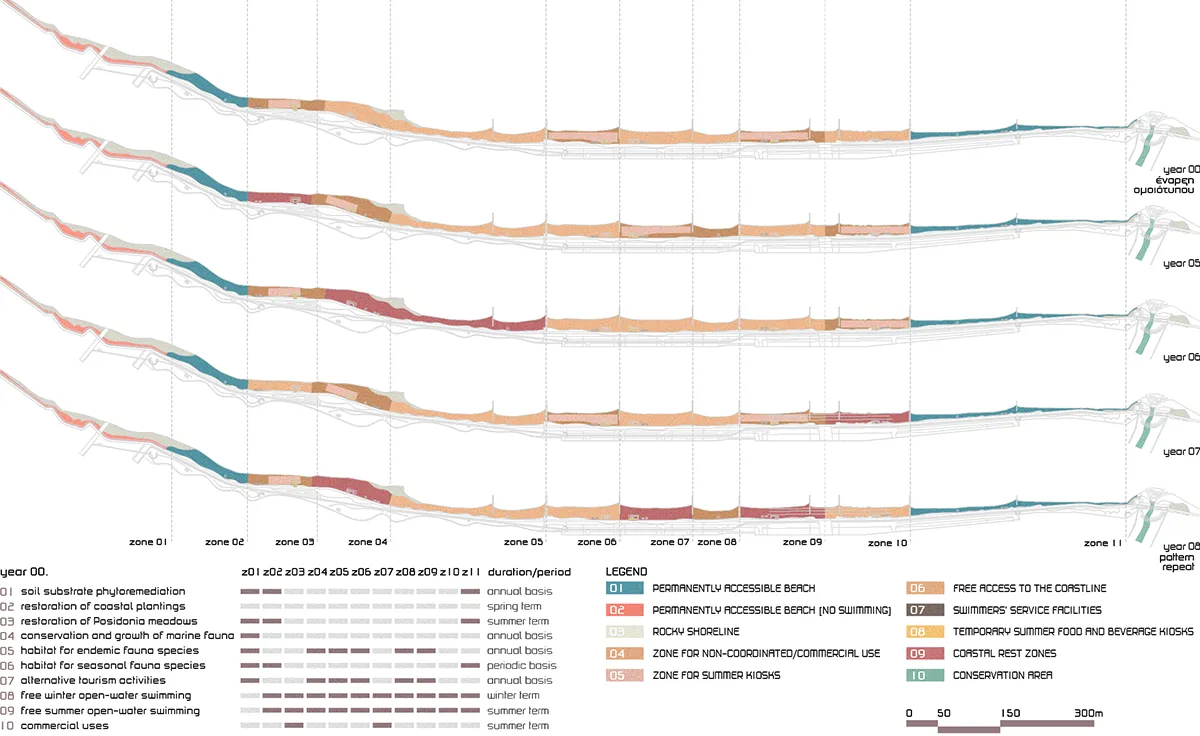
A dynamic planning model for sustainable coastal management, balancing human use with ecological restoration. It involves rotating uses annually, aligned with seasonal, environmental, and social needs. In summer, coasts support recreation, sports, and commerce; in winter, they shift to protection and natural regeneration. Some zones remain accessible year-round, while others are seasonally restricted or reserved for habitat recovery. Infrastructure and activities adapt to ecological demands through timed use. This flexible approach enhances ecosystem resilience and sustainability, integrating environmental stewardship with socio-economic objectives.
‘Corinthus Mollis’
Location: Coast Kalamia, Korinthos, Greece
Landscape architecture study: Dimitris Giouzepas, Alexandros Mpantogias
Architectural study: Aimilia Karapostoli, Varvara Toura
Landscape architect collaborators: Athina Papaioannou, Myrto Pediotaki, Maria Ploussou
Client: Municipality of Korinthos
Text: Alexandros Mpantogias, Varvara Toura
Images: Alexandros Mpantogias