
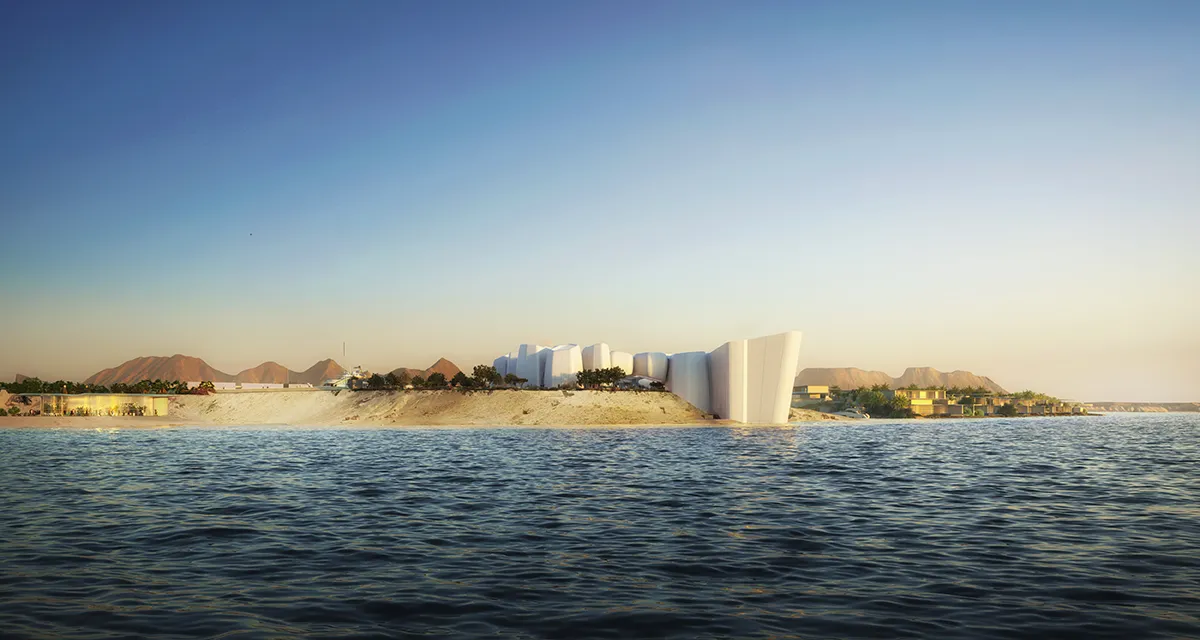
Winner of the Outstanding Award in the 2025 WLA Awards – Concept Private Space category
The Corallium Marine Life Institute, located on the shores of the Red Sea within AMAALA’s Triple Bay development, is envisioned as an immersive destination for marine research, education, and conservation. The project draws its inspiration directly from the surrounding ecological richness particularly the coral reef systems and expresses this through an integrated design that blends landform, planting, materiality, and environmental performance. The result is a seamless transition between desert, coastline, and marine environment, where the landscape plays a crucial role in shaping both the visitor experience and the ecological resilience of the site.
The conceptual foundation of the landscape is rooted in biomimicry, particularly the branching and fractal forms of coral structures. These organic geometries are translated into the site layout through curving pathways, soft berms, and fluid planting zones that evoke the patterns of reef growth and movement. The ground plane is sculpted to create visual softness while responding to environmental factors such as wind, sun, and topography. These landforms are not only expressive but also functional- helping to capture stormwater and provide shade and cooling in targeted outdoor areas.
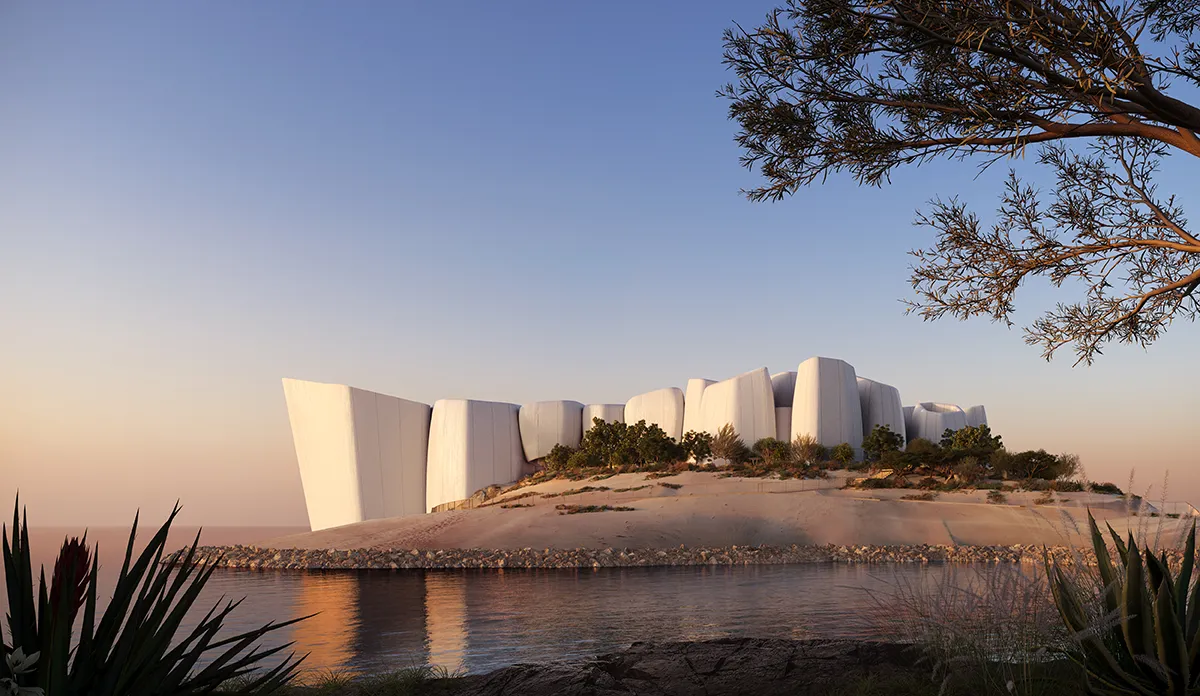
A carefully curated palette of drought-tolerant and native species defines the planting strategy. Selected for their ability to thrive in harsh coastal conditions, the vegetation provides structure and texture while requiring minimal irrigation. Low-growing shrubs, succulents, and native grasses form layered compositions that reflect the regional ecology and reinforce the site’s connection to its natural surroundings. Over 40 percent of the site is vegetated using such species, contributing to habitat restoration, biodiversity support, and microclimate regulation.
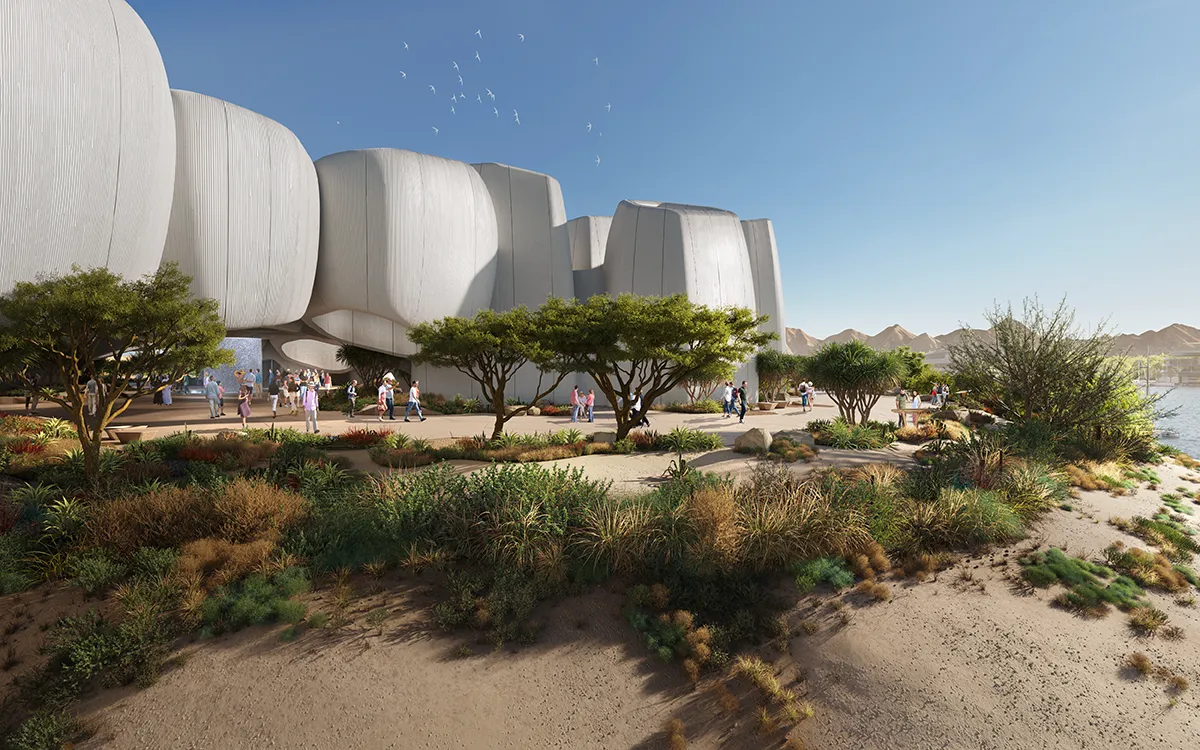
The arrival sequence is defined by a transition from the arid desert landscape into a more immersive, shaded environment that gradually reveals the building. Planting islands and soft, rippling hardscape textures create a sense of movement and anticipation. Natural paving materials, including light-toned aggregates and in-situ concrete finishes, are used throughout to reflect heat and visually tie the exterior spaces to the surrounding desert and coral sand palette. These materials were chosen not only for their aesthetic compatibility but also for their durability and low-maintenance qualities in a saline, wind-swept climate.
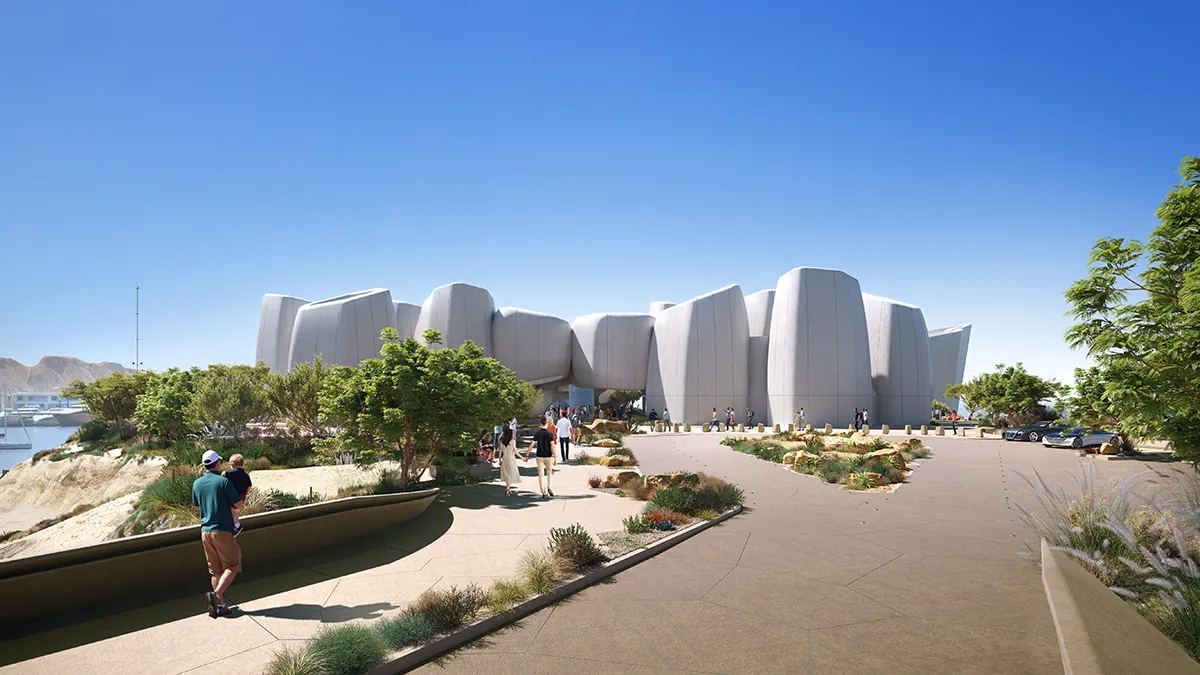
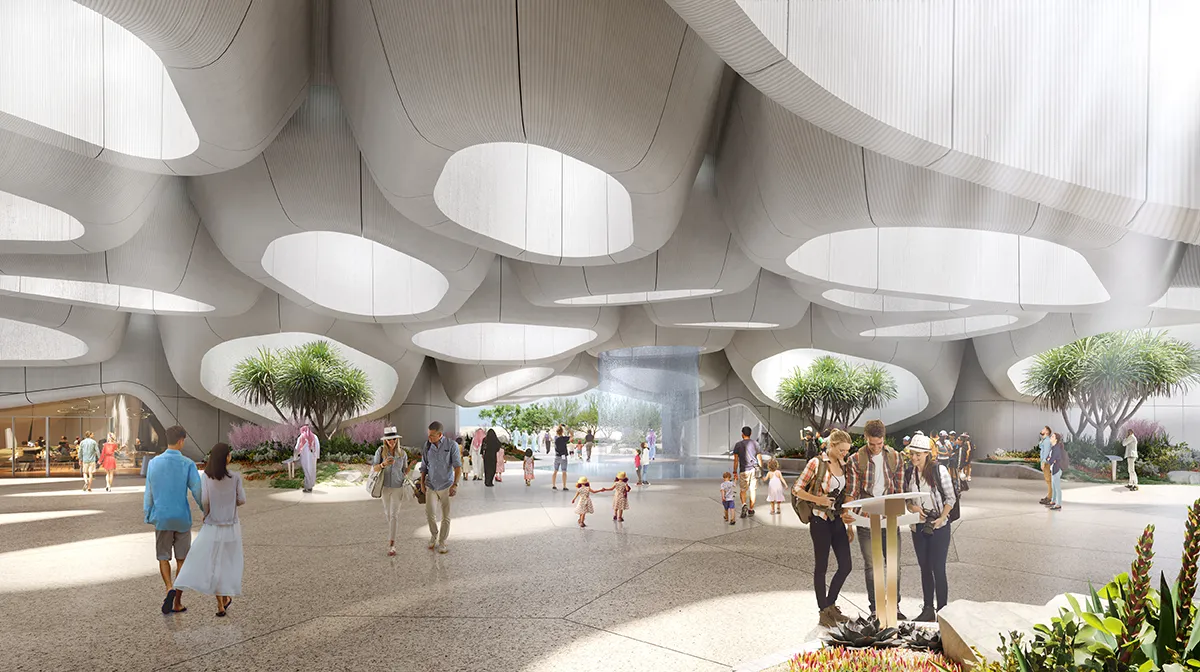
Outdoor circulation is designed as a journey- visitors move through a series of spatial thresholds marked by shifts in vegetation, terrain, light, and shadow. Canopy trees and shade structures punctuate key gathering areas, providing respite from the sun while supporting passive cooling strategies. Subtle grade changes and shaded benches enhance the experiential quality of the landscape without relying on architectural interventions.
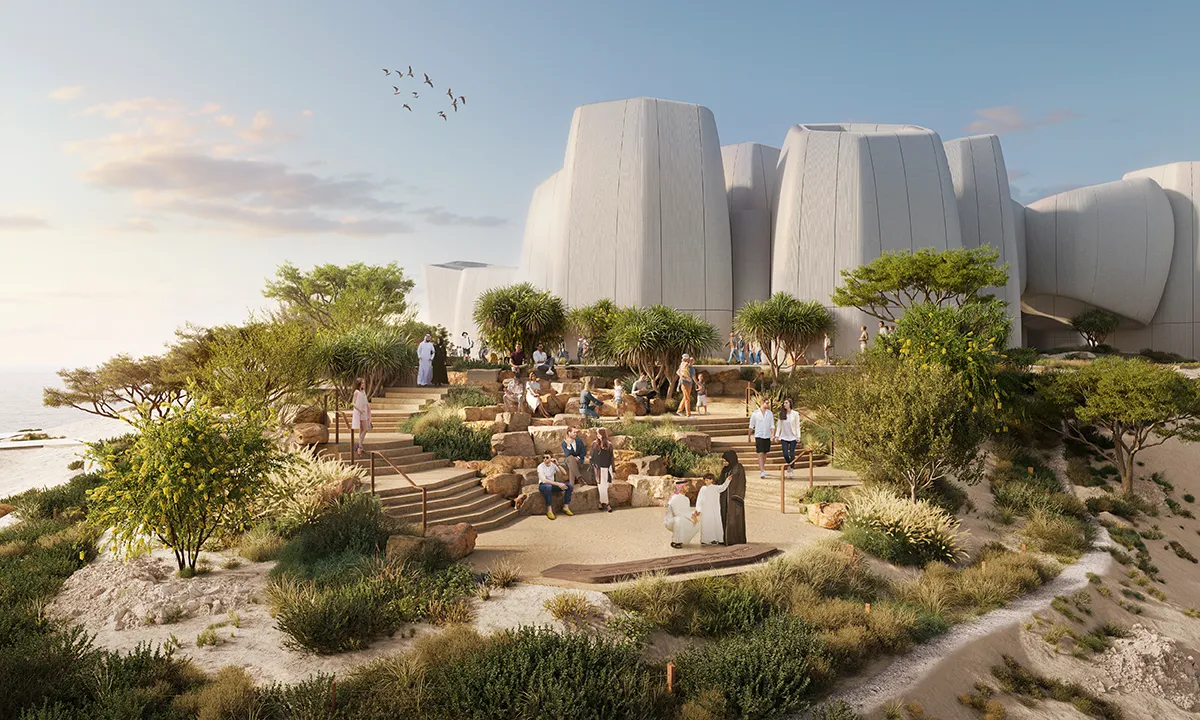
Water-sensitive strategies are embedded into the site’s topography to manage and retain rainwater before it reaches the sea. A discreet gravel trench, positioned at the base of the natural slope, functions as a key collection feature capturing surface runoff and allowing water to percolate gradually into the ground. These features not only enhance stormwater management but also act as microhabitats, enriching the site’s biodiversity.
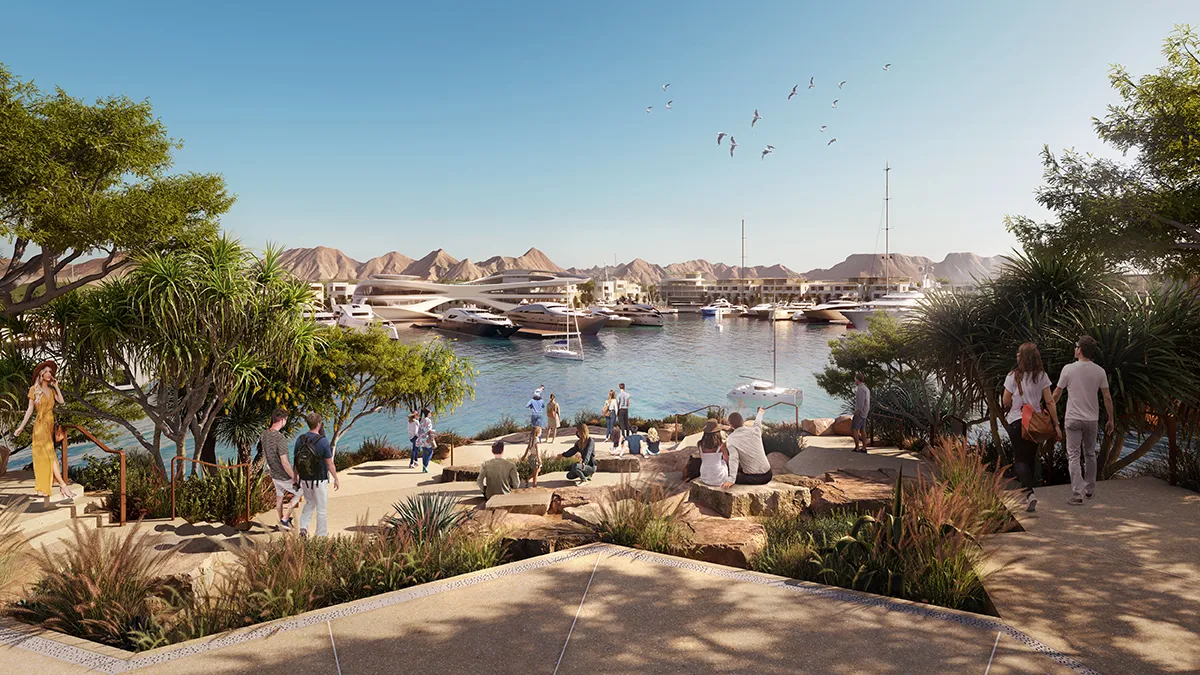
Light pollution is carefully controlled, allowing nocturnal ecosystems to thrive. Outdoor lighting is minimal, low-glare, and precisely directed to reduce skyglow and prevent disruption to local wildlife. This restraint preserves the natural darkness of the coastal environment, enhancing both ecological sensitivity and visitor experience after dusk. Crucially, the entire development is powered by renewable energy, aligning the project with the environmental priorities of Saudi Arabia’s Vision 2030.
Material selection and detailing contribute to the cohesion of the landscape with the architecture. Surfaces are textured and tactile, curbs and edges are soft and organic in form, and transitions between hard and softscape are intentionally blurred. The result is a landscape that feels alive- always shifting, adapting, and responding to its environment.
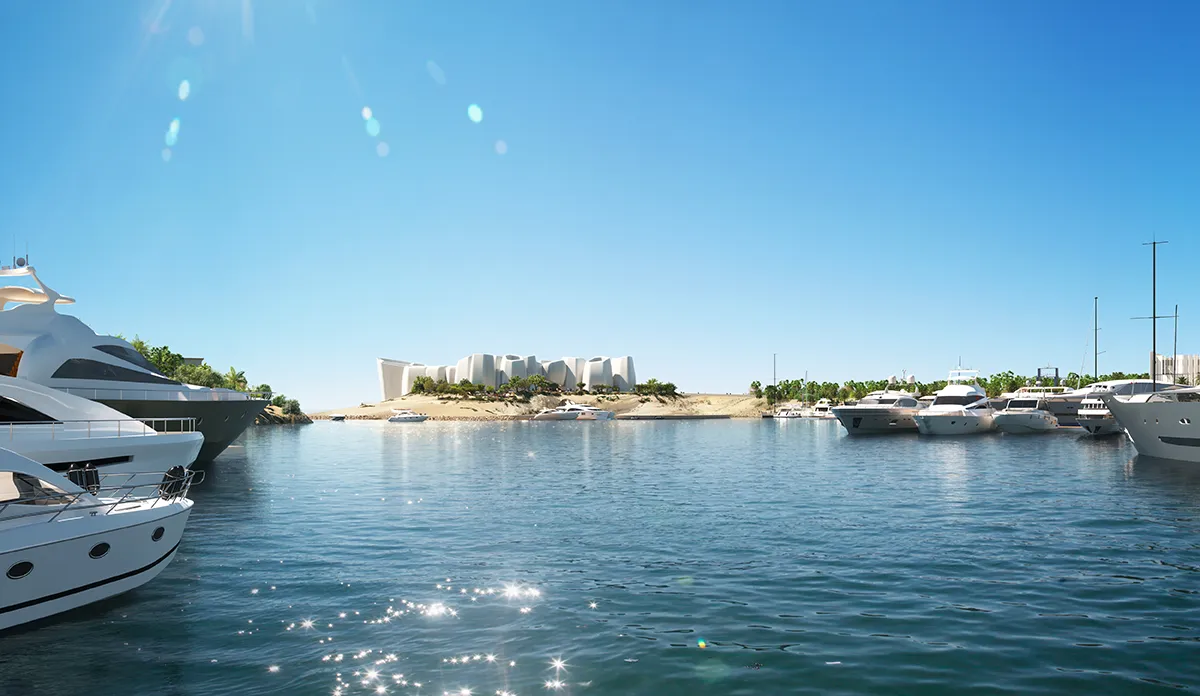
The Corallium Marine Life Institute’s landscape design reflects a deep sensitivity to site, ecology, and the emotional rhythm of visitor experience. It is not a backdrop, but an active contributor to the Institute’s identity. Through material restraint, environmental intelligence, and natural beauty, the landscape enhances understanding of the fragile marine environments it was designed to support and protect.
Corallium Marine Life Institute
Location: Triple Bay, Kingdom of Saudi Arabia
Client: Red Sea Global
Lead Consultant: Foster + Partners
Landscape Consultant: The Vero Studio
Engineering Consultant: WSP
Lighting Consultant: Delta Lighting Design
Signage & Wayfinding: Limah Design
Water Feature MEP Consultant: Aquashi
Marine Aquatics: AAT
SeaTrek Specialist: Subsea Systems
3D Renderers: Asymmetrica
Image Credits: Asymmetrica / Foster + Partners / The Vero Studio