
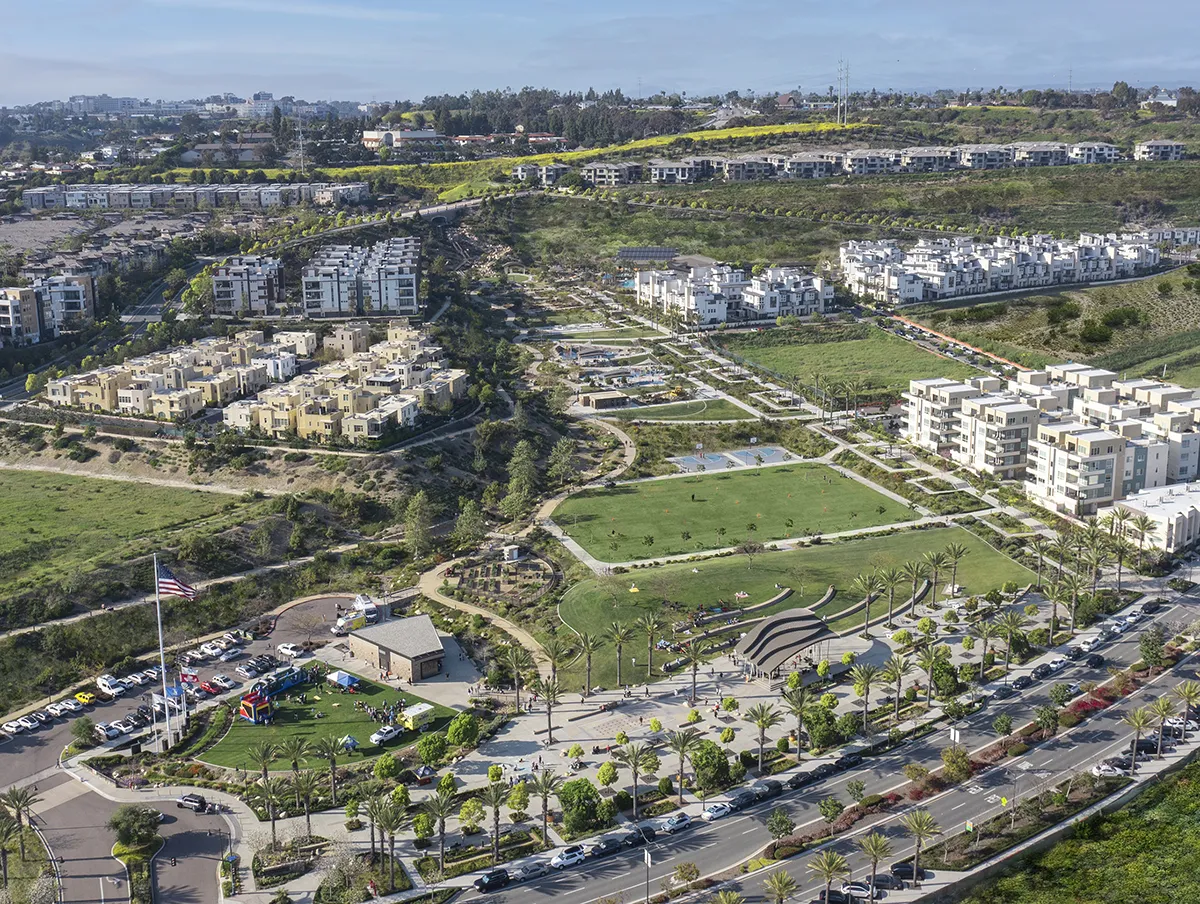
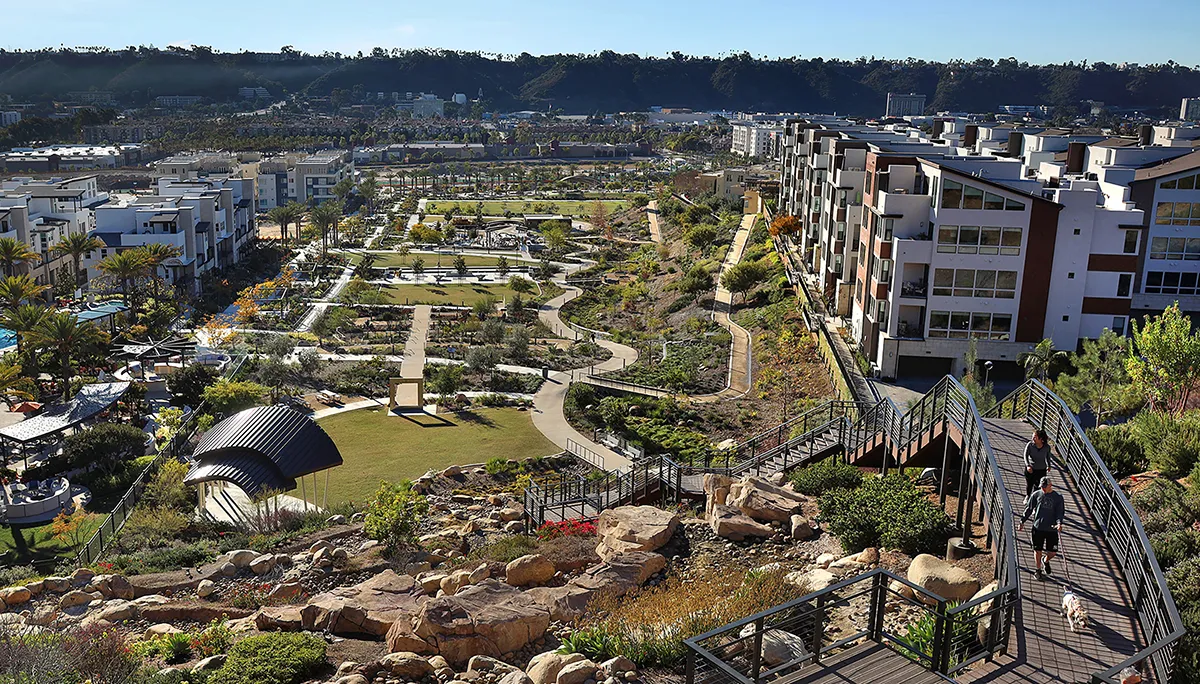
Civita Park is a 14.3-acre civic centerpiece within the 230-acre Civita urban infill community in San Diego’s Mission Valley region. Envisioned as the “green heart” of the neighborhood, the park is more than open space; it’s an ecological, social, and cultural catalyst that has made high-density development viable and desirable. When complete, the surrounding Civita development will include 4,700 homes and nearly one million square feet of commercial and retail space. The park is both a response to and an opportunity born from its unique site history and topographic challenges.
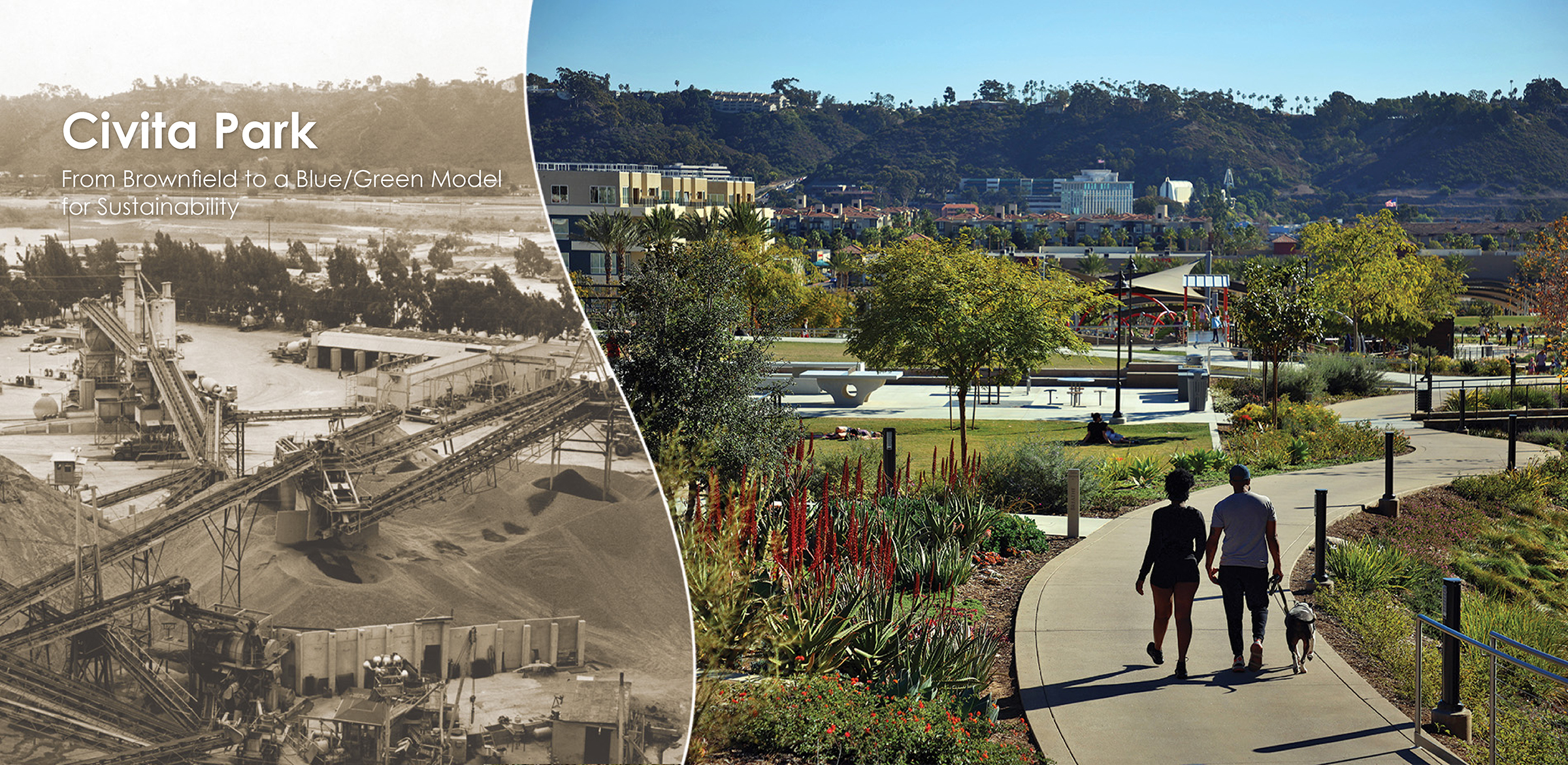
For over 70 years, the site operated as a sand and gravel quarry, resulting in a 200-foot-deep excavation scarred by steep, unstable slopes and severe hydrological disruption. Reimagining this post-industrial void required a strategic landscape solution that could repair the environmental damage, respect the site’s complex history, and create a public space with regional significance.
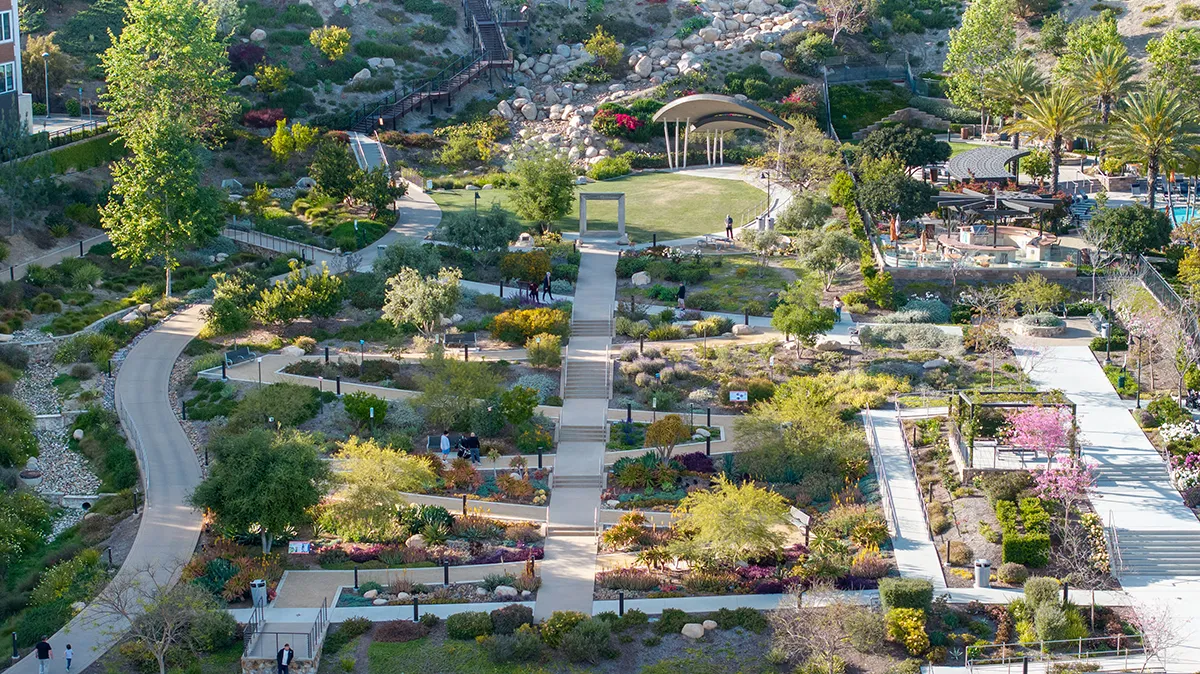
At the core of the design is an intentional synthesis of urban form and natural systems. The park’s terraced landforms descend more than 165 feet in elevation, tracing the contours of the former quarry and restoring a sense of geologic authenticity. Inspired by the interplay between the natural meander of the nearby San Diego River and the rigid urban grid surrounding it, the park transitions from structured civic space at its eastern edge to a more organic and ecological landscape to the west.
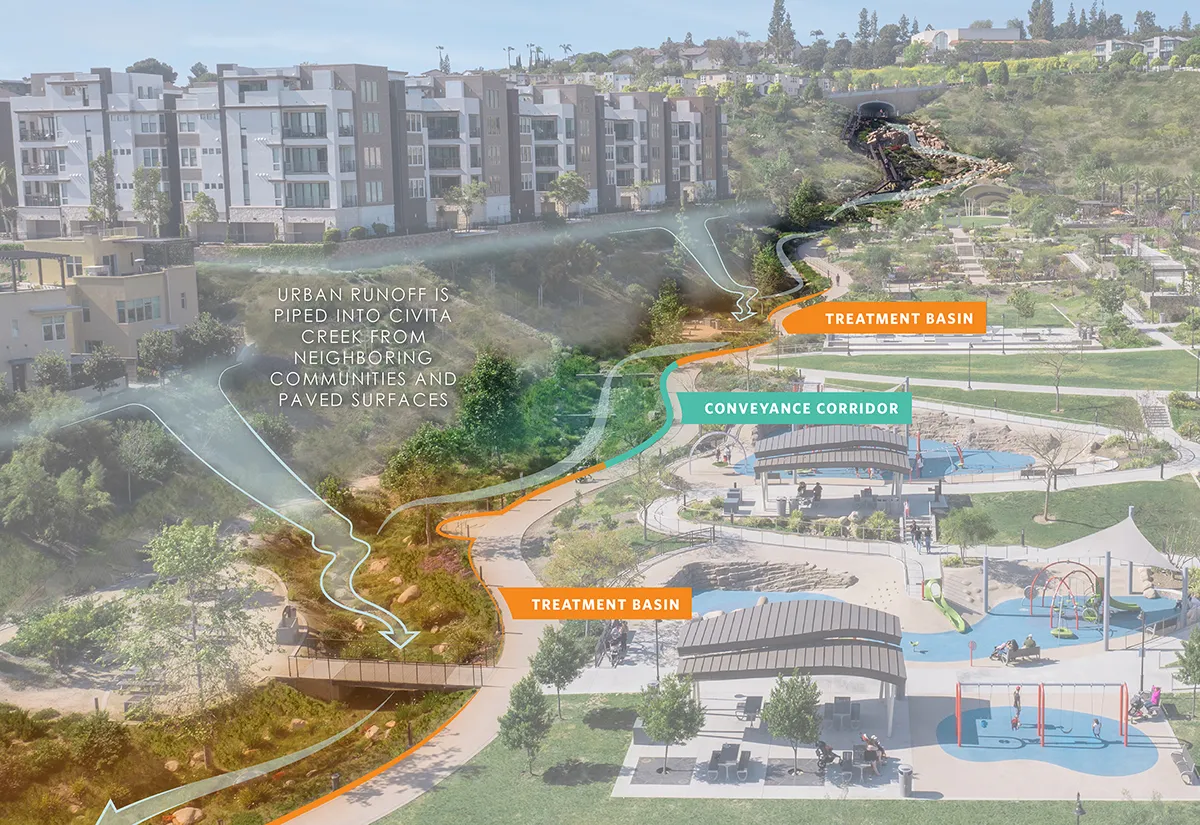
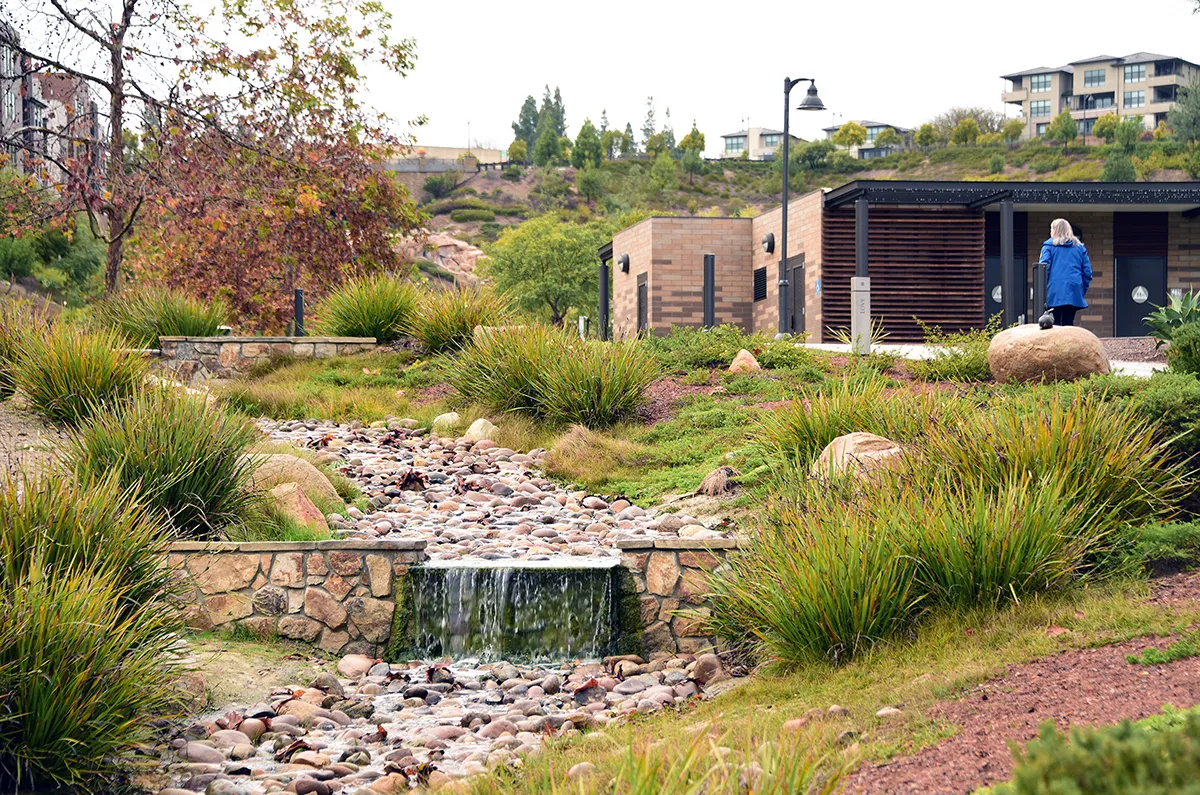
The eastern promenade, adjacent to dense urban development, draws inspiration from mining conveyor systems. Its linear geometry creates a formal civic edge, referencing the site’s industrial heritage while providing a strong connective thread to adjacent housing, retail, and pedestrian corridors. In contrast, the western portion of the park features a more naturalistic topography anchored by the creation of “Civita Creek”, a cascading, gravity-fed stormwater system that flows along the park’s length. This blue/green infrastructure feature treats and slows urban runoff through a series of infiltration basins, vegetated swales, and sculpted conveyance channels before releasing it into the San Diego River watershed.
The park is also a model of water sustainability. An on-site blackwater recycling facility treats community wastewater and reclaims 74.7 million gallons annually. This is enough to meet 87% of irrigation needs throughout the park and the broader Civita community. The integration of reclaimed water systems into the park’s landscape and operations furthers its role as a climate-responsive civic asset.
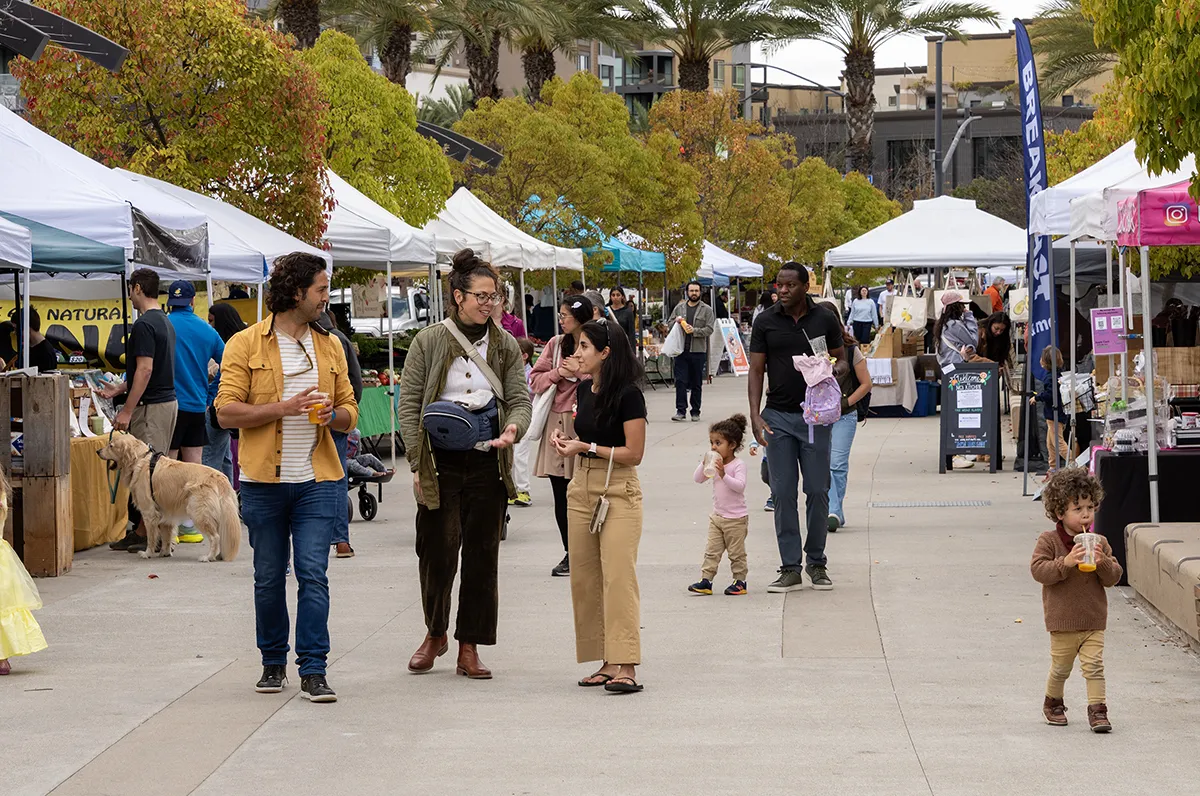
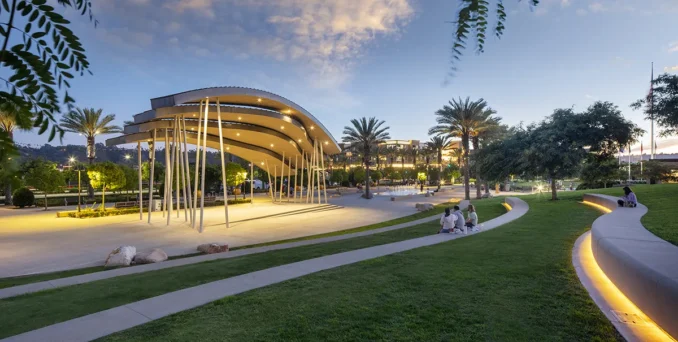
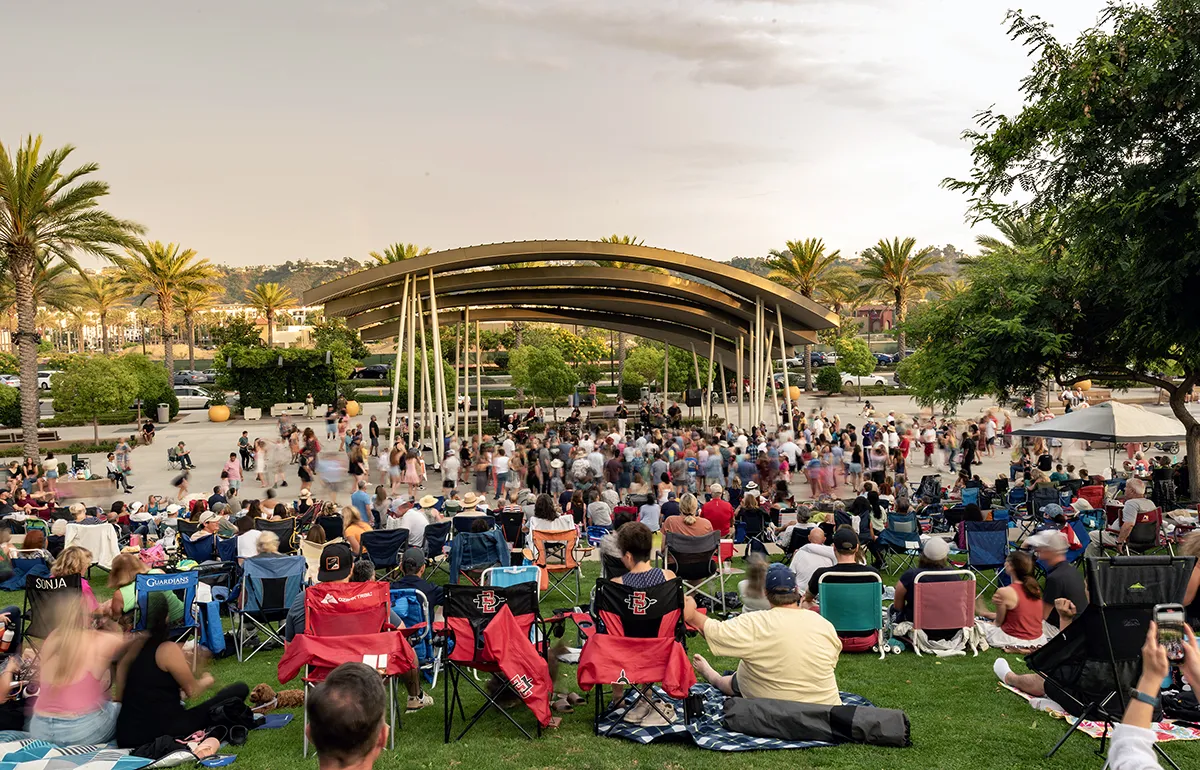
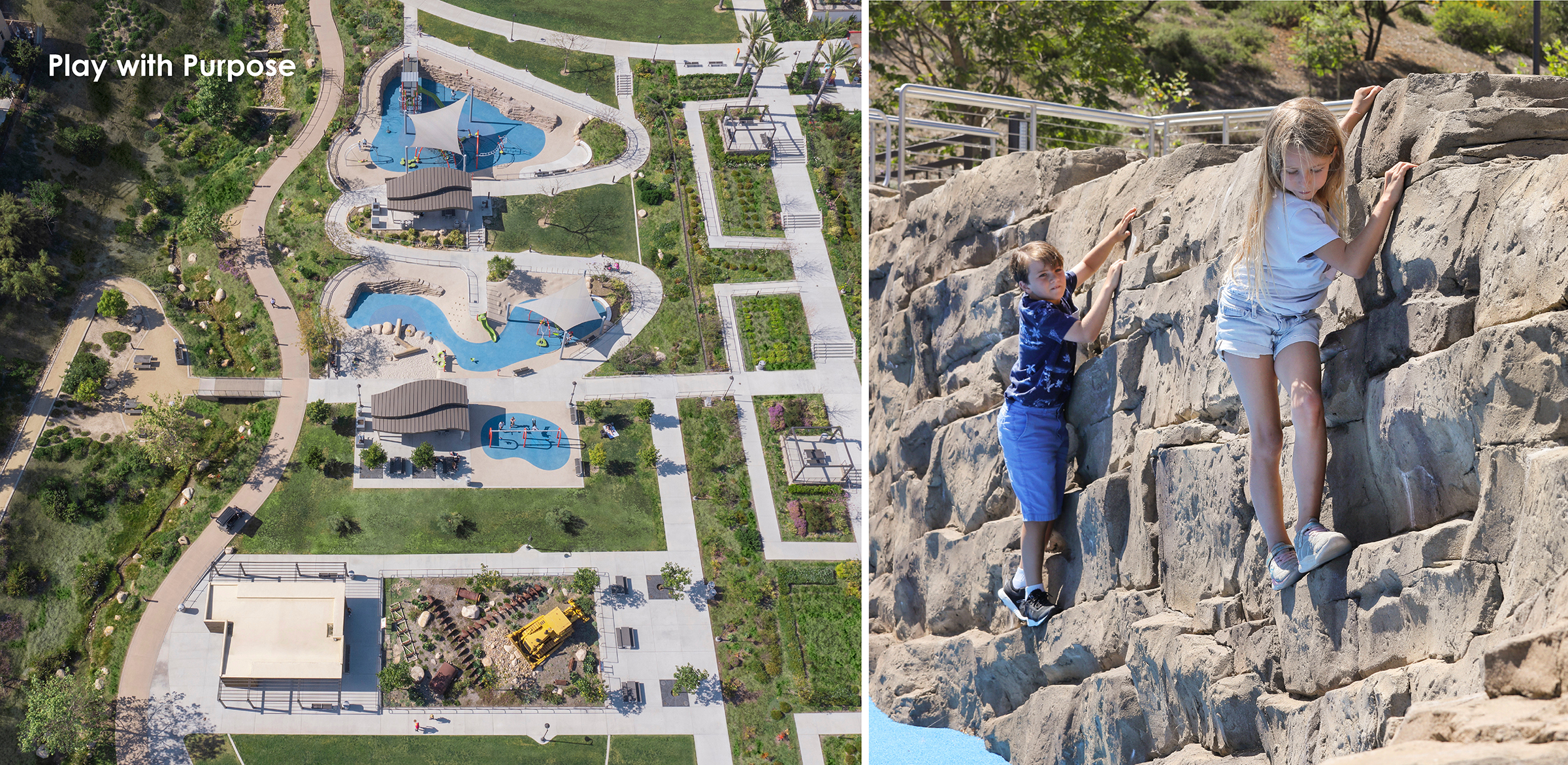
Civita Park serves not only as an environmental and infrastructural achievement but as a cultural and social anchor. At its heart lies Celebration Plaza, a central gathering space that hosts concerts, farmer’s markets, festivals, and everyday community life. Within the plaza, Cloud Amphitheater, inspired by the valley’s coastal fog and storm systems, acts as both a performance venue and a visual landmark. The park also features miles of trails and elevated walkways, sports courts, exercise stations, shaded outdoor rooms, and two dog parks. A large, multilevel children’s playground complete with quarry-inspired climbing walls offers historically resonant play opportunities.
Layered throughout the park are moments of interpretation and education. The Mining Relic Garden repurposes historic quarry machinery into sculptural and educational elements. Interpretive panels highlight the site’s industrial legacy and its transformation into a regenerative landscape. A series of terraced gardens offer quieter experiences, from a scent garden and pollinator-friendly winged garden to a succulent garden showcasing vibrant climate-adapted plants. The park’s native and regionally adapted plant palette enhances biodiversity. Year-round pollinator-friendly blooms support birds, butterflies, and beneficial insects, creating a vital habitat corridor that connects to the adjacent San Diego River flyway.
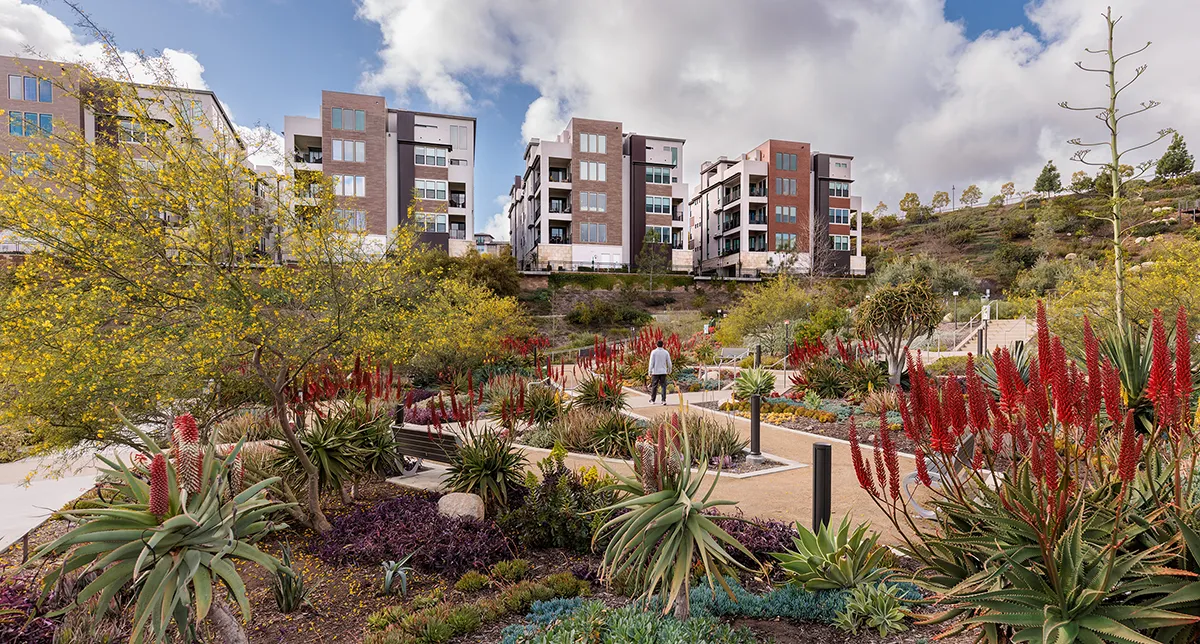
Equity and access were foundational to the design. Located near a regional public transit hub, Civita Park provides much-needed green space in a historically underserved area. Universal design principles ensure inclusive access to trails, play areas, restrooms, and shaded gathering spaces. The variety of amenities and experiences caters to all ages, cultures, and abilities.
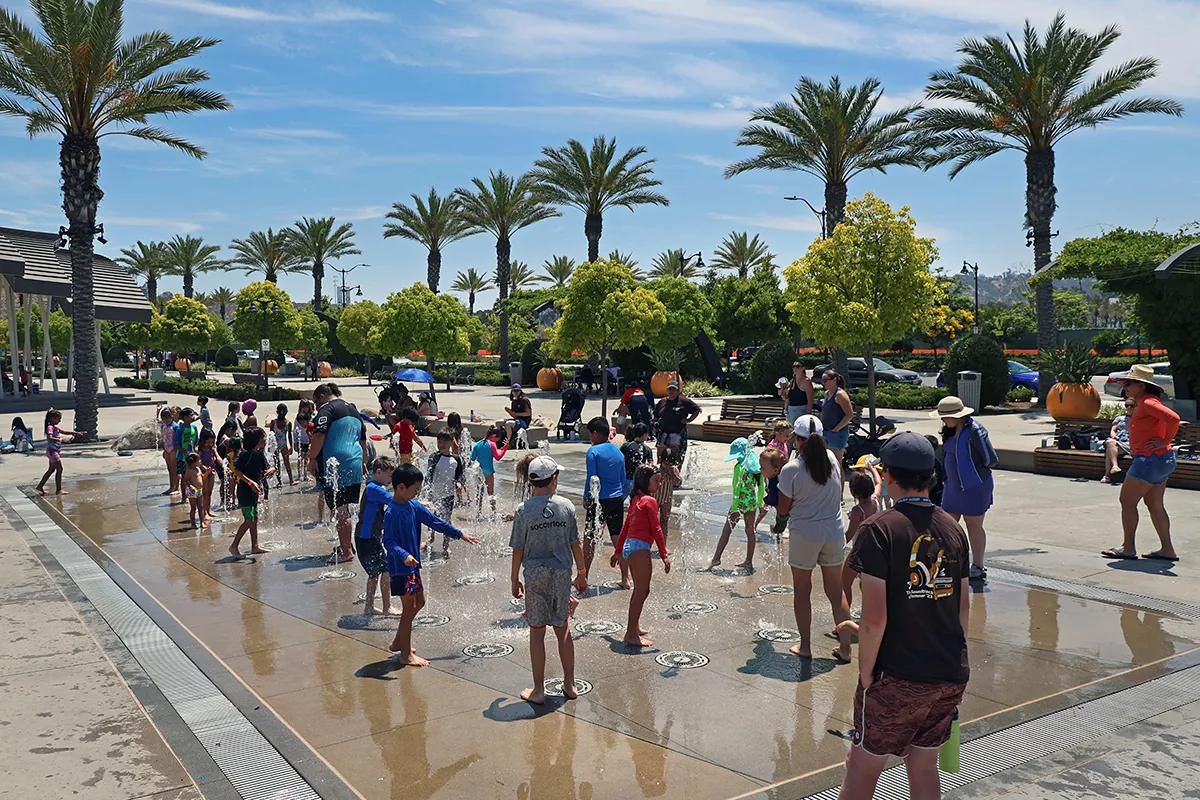
Since its opening, Civita Park has become a cherished community destination and a model for sustainable urban redevelopment. It represents what’s possible when landscape architecture is used not simply to beautify, but to heal, connect, and transform.
Civita Park
Landscape Architect: Schmidt Design Group
Client: Sudberry Properties
Collaborators
Structural Engineer: BWE
Architect: HGW Architecture
Geotechnical Engineer: Geocon, Inc.
Electrical/Mechanical Engineer: Turpin & Rattan Engineering
General Contractor: Hazard Construction Company
Landscape Contractor: Brightview
Civil Engineer: Rick Engineering Company
Mosaic Artist: Jane Wheeler
Bronze Sculptors: James Nelson and TJ Dixon
“The Frame” Sculpture Fabricator: Amos Robinson
Civita Falls Construction: Outside the Line (OTL)
Mural Artist: Kevin Anderson
Photography Credits: Schmidt Design Group; Devon Boutte; LeeLoo Gilet, Juan Tallo, Alan Decker;
Shortlisted for the 2025 WLA Awards in the Built – Masterplan and Urban Design category