
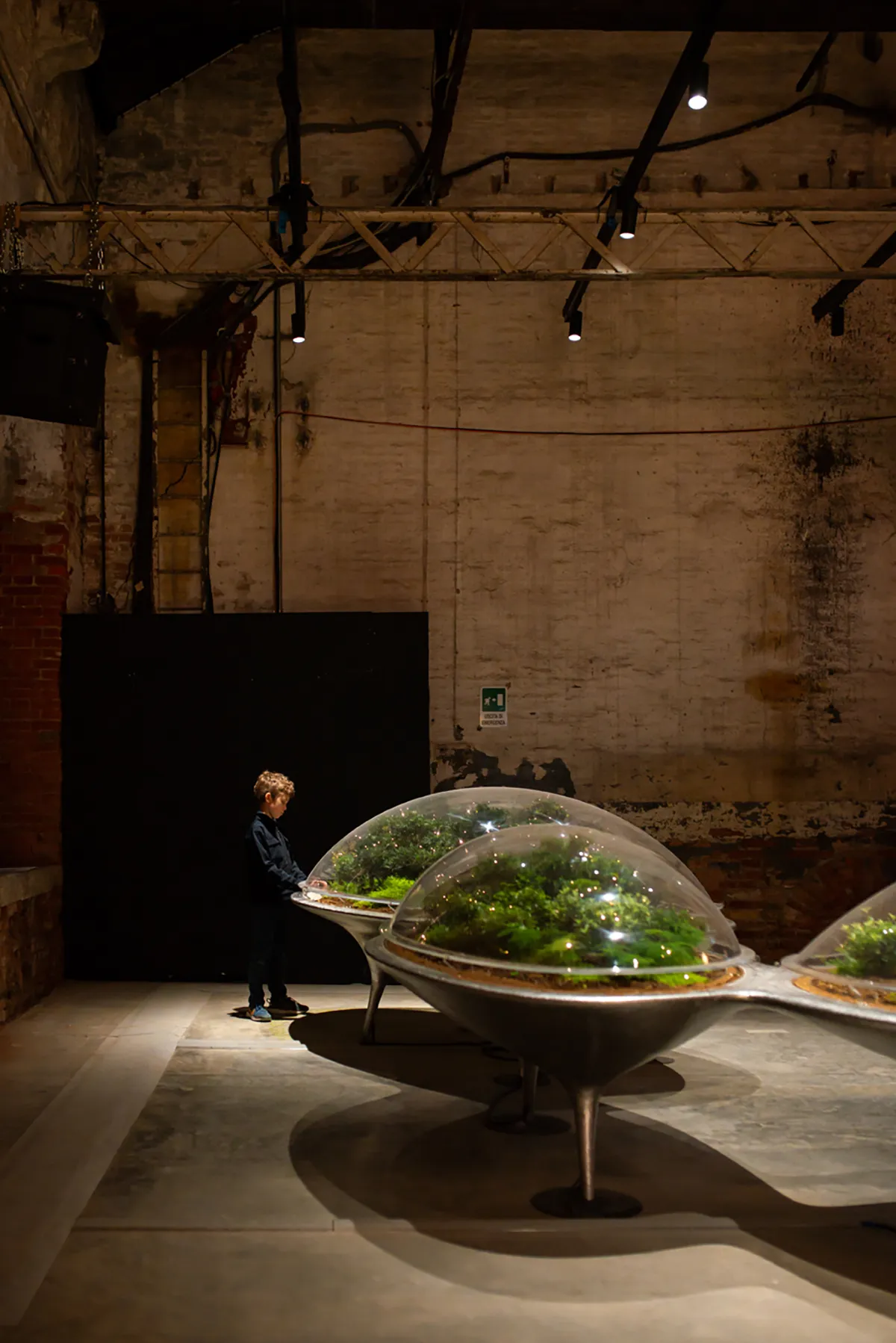
City of Plants is a research project that challenges our relationship with nature in the urban realm. Presented at the Biennale Architettura 2025, curated by Carlo Ratti, it is the result of a collaboration between Parcnouveau and MAD. The project explores new scenarios of coexistence among humans, plants, and artificial intelligences.
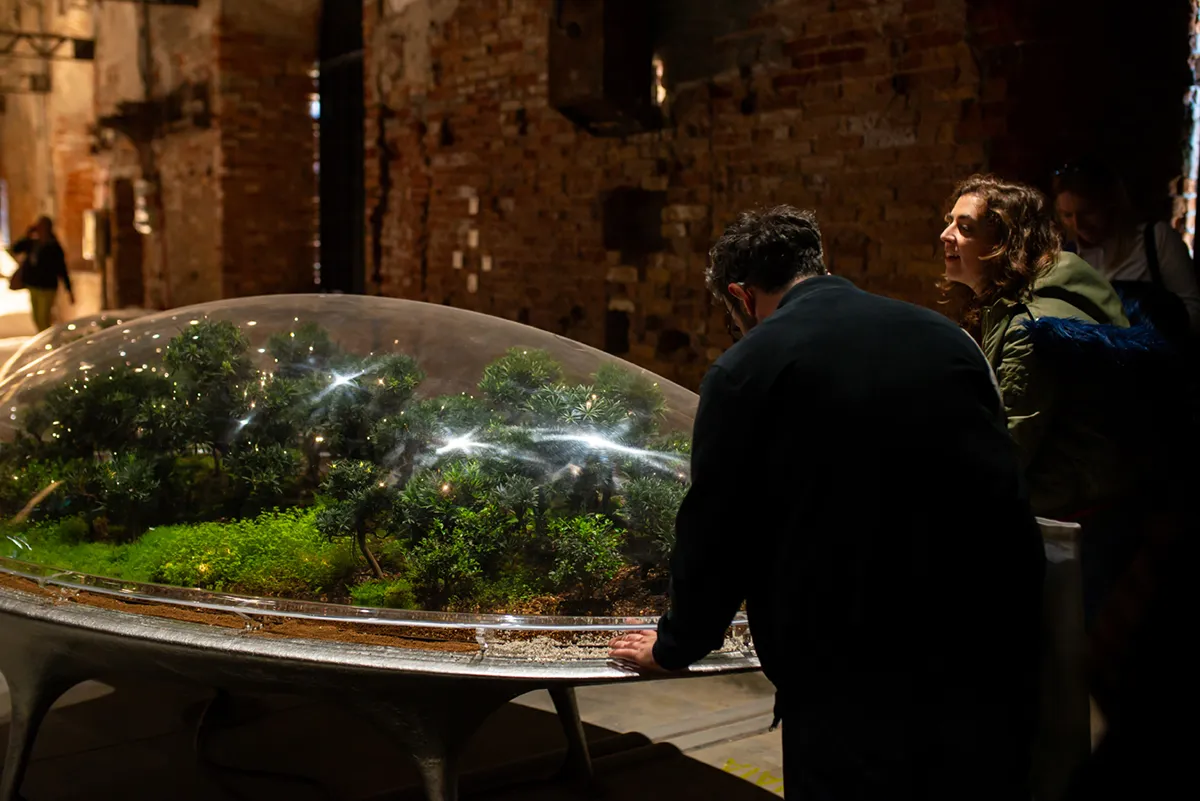
In an era where cities are complex layers of materials, technologies, and living presences, Parcnouveau and MAD propose a paradigm shift: to rethink the landscape not as a static backdrop, but as a relational, fluid, and dynamic system where people, nature, and AI can coexist as active agents.
The City of Plants installation emerges from this research. It explores new models of urban coexistence and challenges anthropocentric dominance, asking: what would happen if we could listen to plants? And what if artificial intelligence could mediate a new form of dialogue between us and the vegetal world?
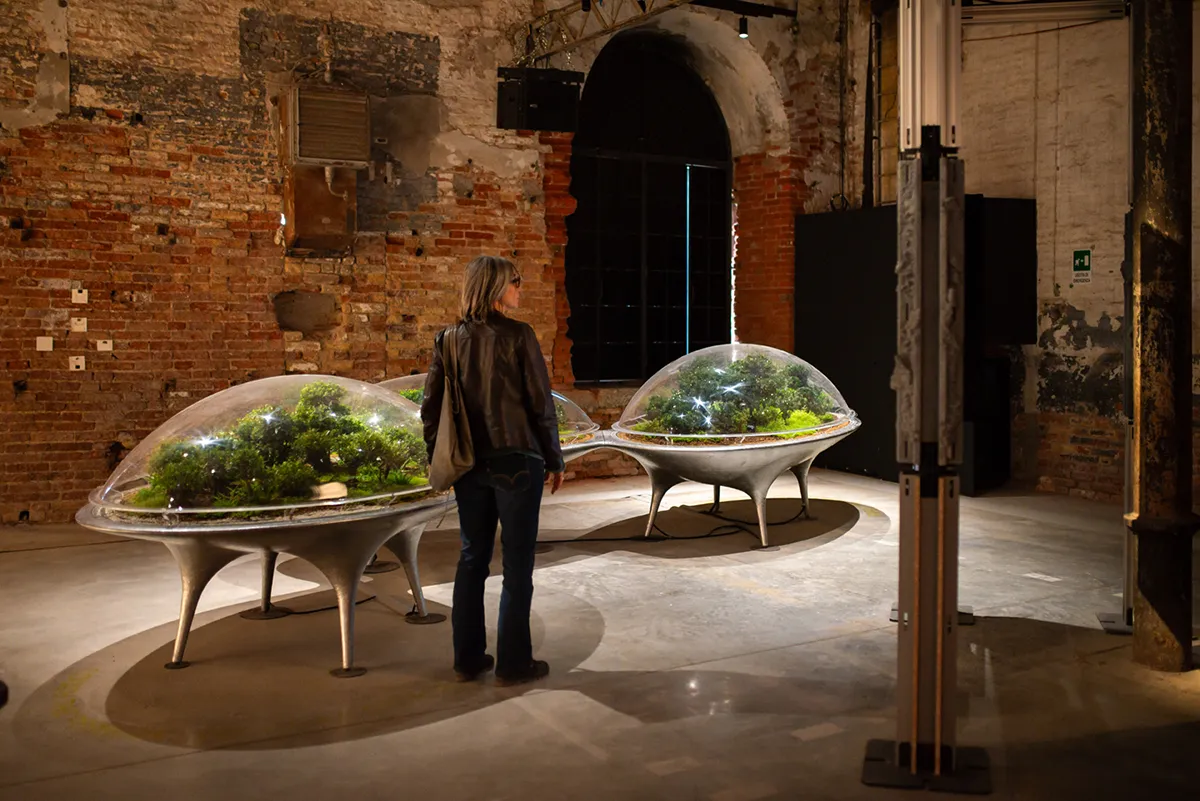
City of Plants is conceived as a responsive ecosystem, made up of three elements: a base equipped with environmental sensors, three living micro-landscapes enclosed in transparent cases, and an immersive experience composed of ever-changing sound and light.
With the contribution of the Campus Bio-Medico University of Rome, the installation uses electrodes to capture environmental conditions affecting the plants, humidity, temperature, light, transforming them into sound frequencies that compose a real-time musical landscape. Simultaneously, visitors’ movements are detected and translated into sound by intelligent algorithms, creating a direct and poetic interaction between humans and nature. In this space, natural and artificial intelligences converge to create a shared language. Plants are no longer passive objects in our environment, but active interlocutors capable of expressing states, needs, and rhythms.
“City of Plants is an invitation to rethink the role of landscape in contemporary cities—towards spaces that are not only efficient or optimized, but capable of hosting creative encounters between intelligences and generating harmony through complexity.” Margherita Brianza, Founder, Parcnouveau
The installation will be on view inside the Corderie dell’Arsenale until November 23, 2025, continuing to evolve through the passing days, seasons, and the relationships it will be able to activate.
Technology and Sustainability: An Interactive Ecosystem
City of Plants integrates advanced tools of environmental sensing, artificial intelligence, and bio-interaction to construct an immersive experience in which the vital data of plants become a relational interface between nature and the visitor.
The technological core of the project includes:
- environmental sensors (temperature, humidity, light) capable of real-time monitoring of the plants’ life conditions;
- generative sound design algorithms that convert this data into dynamic soundscapes, also influenced by visitor presence and movement via vibration sensors.
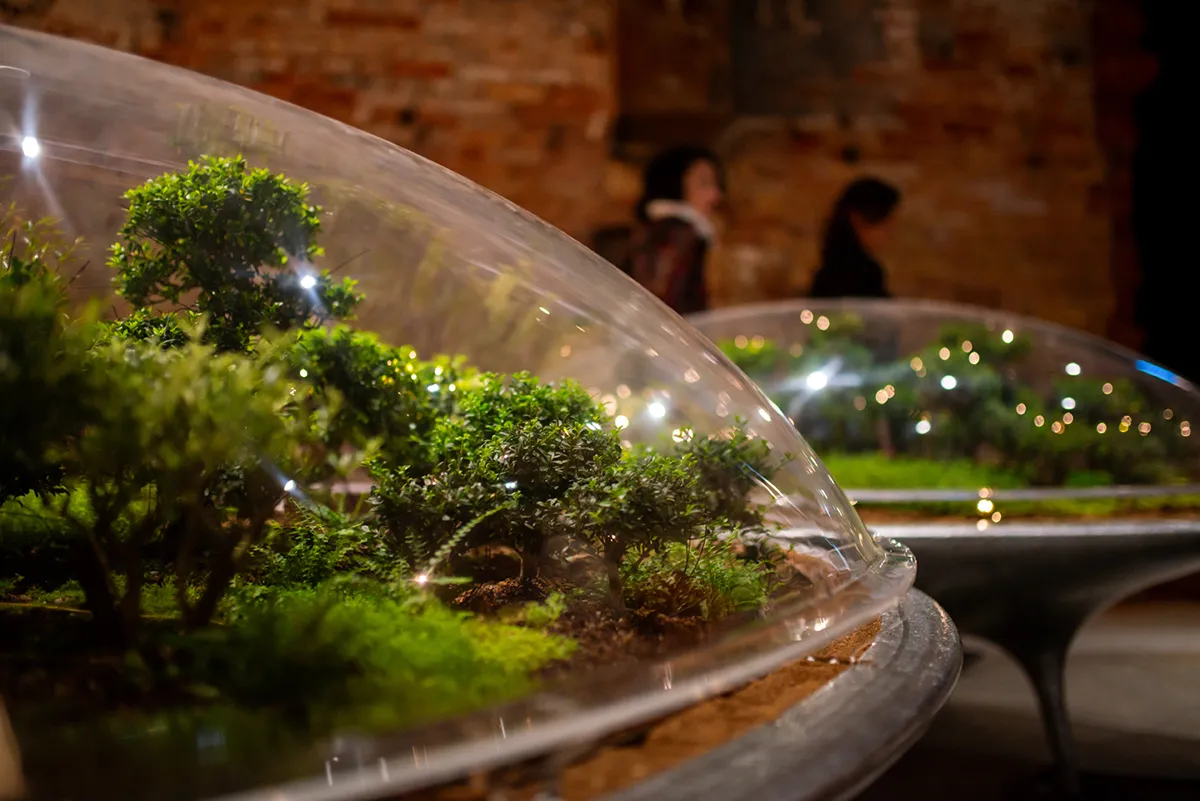
This system creates a communicative platform between natural and artificial intelligence, where sustainability is not only material or energetic, but relational and perceptive: an ecosystem where each element reacts, responds, and adapts. City of Plants explores the potential of interactive technologies applied to landscape and urban environments, promoting a vision where innovation serves ecological empathy and multispecies coexistence.
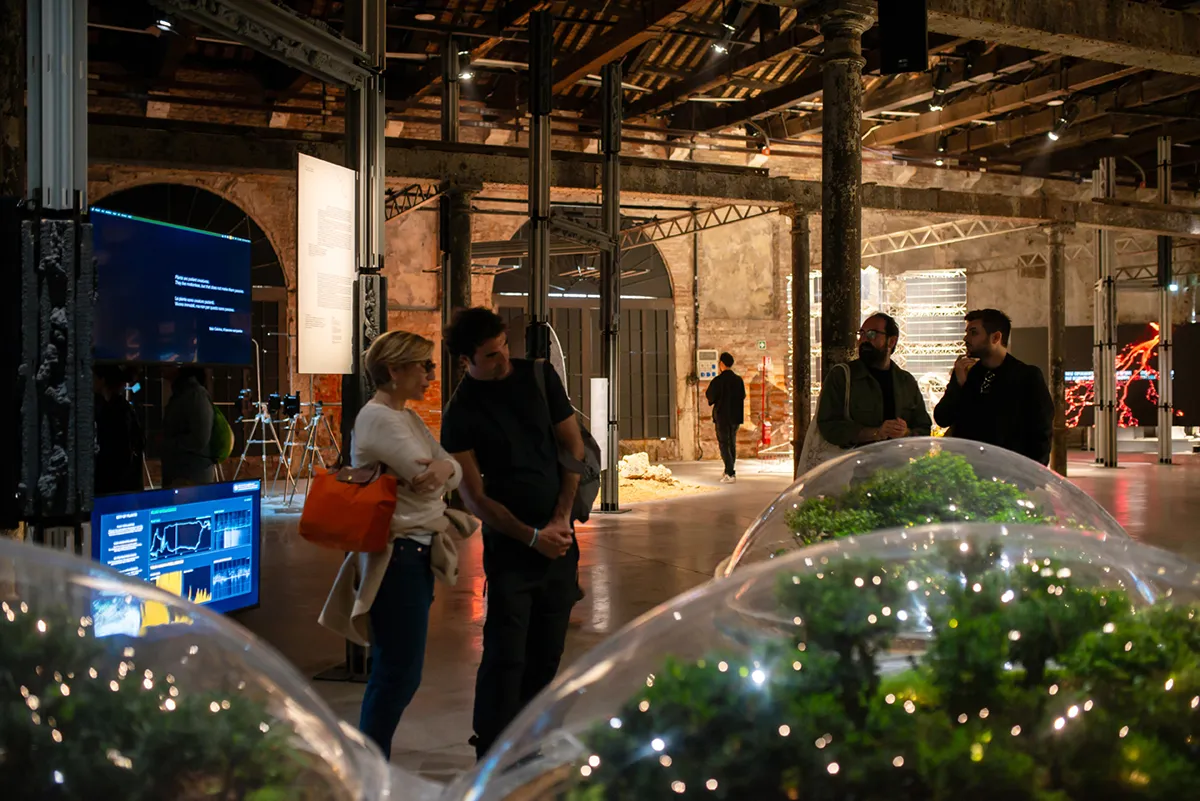
Design: A Sensitive Architecture Between Art, Landscape, and Technology
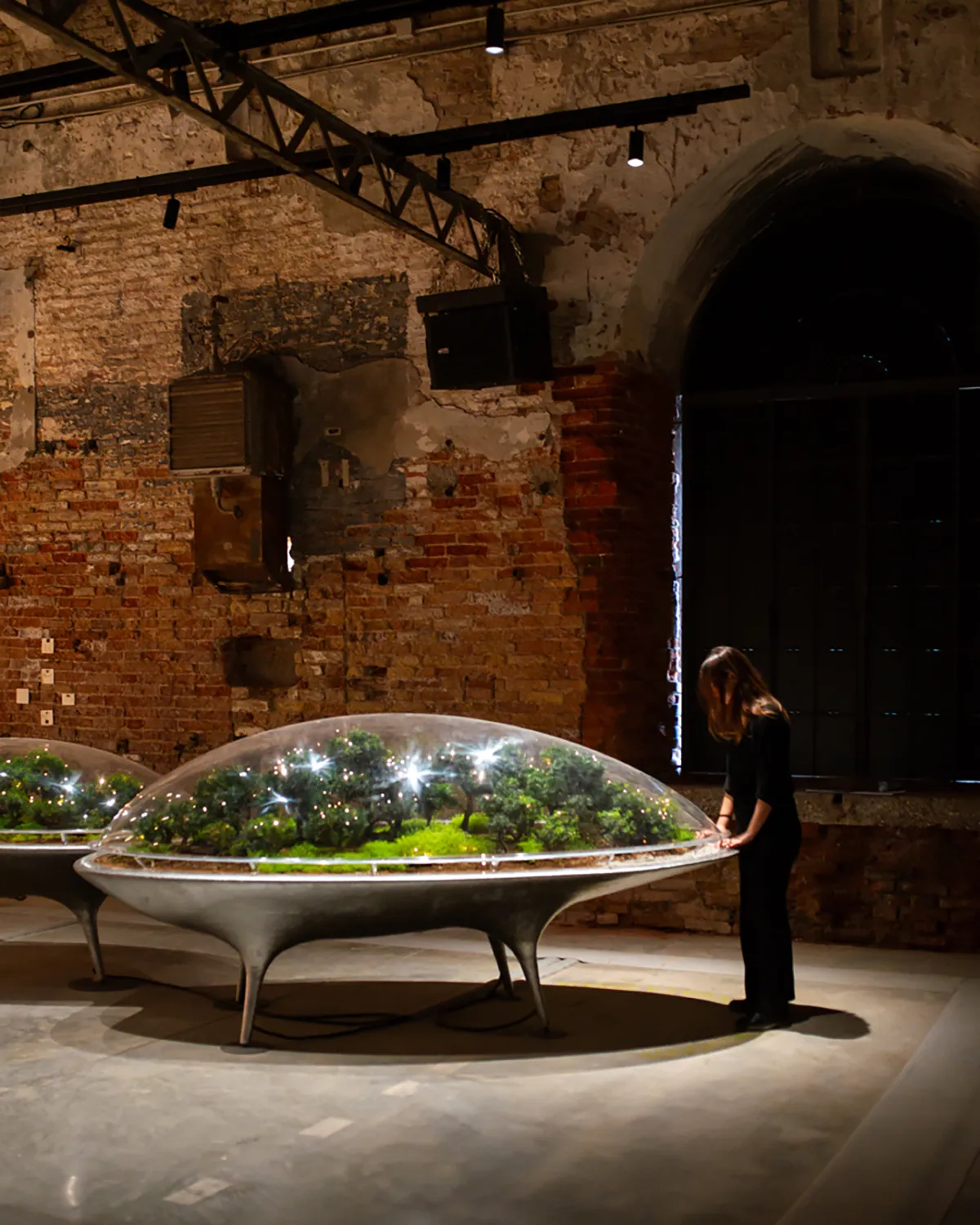
The City of Plants installation presents itself as a hybrid creation: part sculpture-object, part living ecosystem, part interactive device. The transparent cases, resting on organically shaped bases, host miniature landscapes—curated and self-regulating micro-forests that recall self-sufficient yet vulnerable worlds.
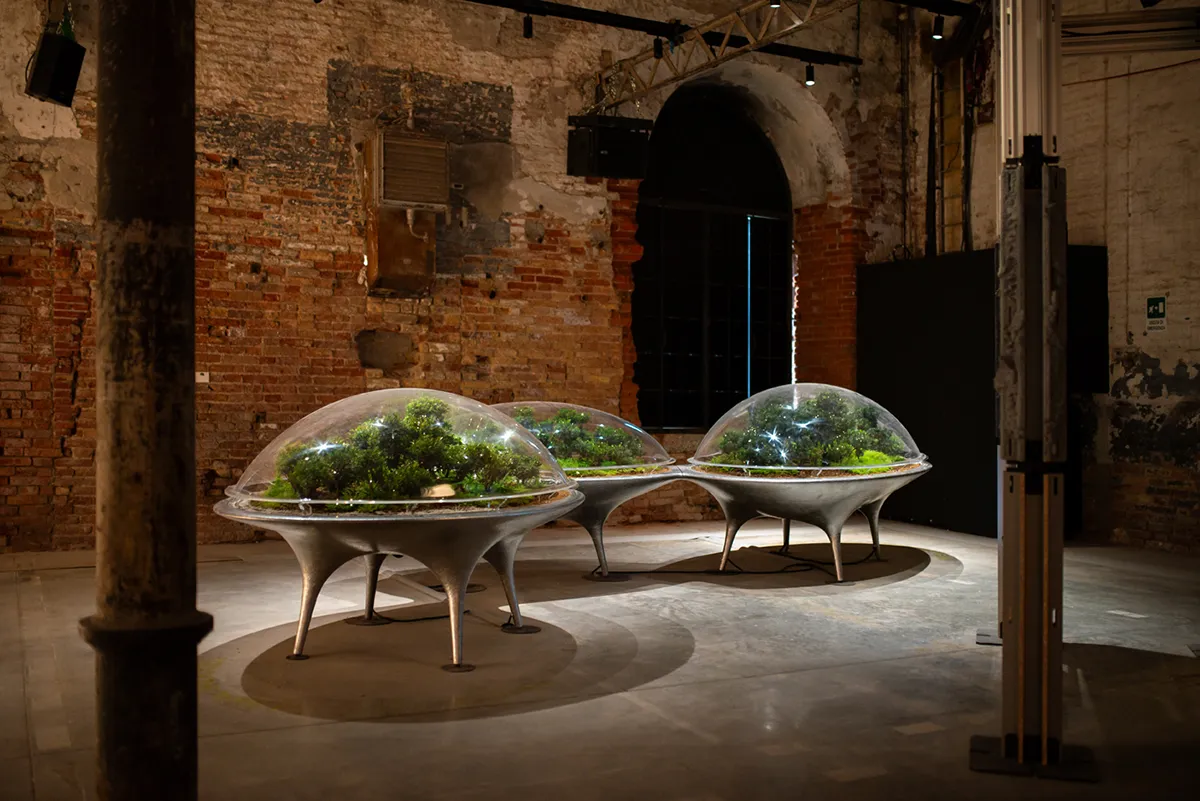
In the interplay between the engineered structure of the shell and the spontaneous vitality of the green interior, a foundational tension between architecture and nature emerges. These transparent-domed bodies resemble landed spaceships or futuristic greenhouses, evoking a neo-organic aesthetic blending biology, design, and science fiction.
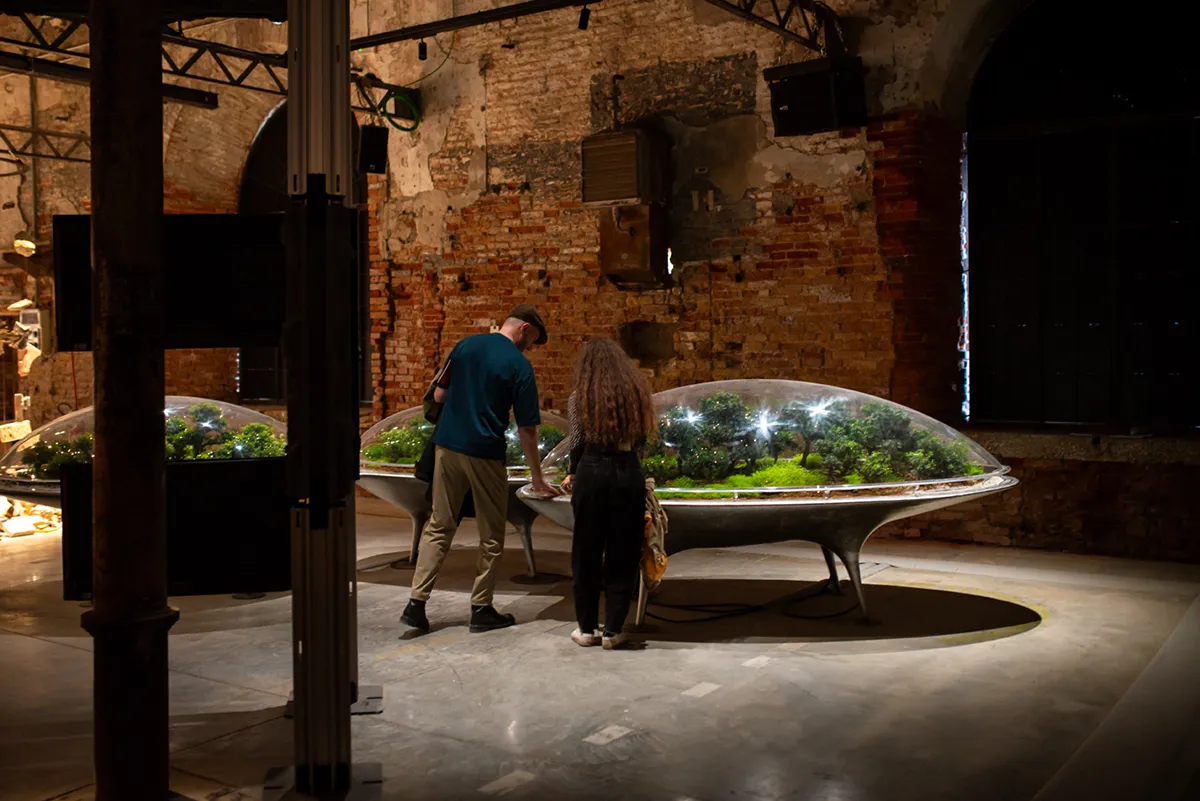
Visitors are invited to touch, listen, and perceive, transforming the space into a sensory machine in which the human body completes the work. The architecture becomes porous, alive, reactive, not merely a built environment but an experiential threshold between human and vegetal intelligence.
The material and historical backdrop of the Corderie dell’Arsenale (raw bricks, traces of time) contrasts with the smoothness and precision of the bubbles, creating a powerful sense of temporal suspension. Here, nature is not nostalgia, but a project for future cohabitation.
City of Plants
Location: Venice Architecture Biennale 2025
Project by:
MAD, Parcnouveau, Bruno Zamborlin, Flux CS, CRESPl Bonsai, Michele Tadini, Proloog, Università Campus Bio-Medico di Roma, ENEA agenzia, Logli Saint-Gobain.
Image Credits: Parcnouveau