
Winner of the 2025 WLA Awards – Award of Excellence in the Concept – Private Space Landscape Design
Founded in 1913 as a tuberculosis sanatorium, City of Hope became a leading medical center by 1946. Located in the San Gabriel Valley, 16 miles from downtown Los Angeles, the campus spans Duarte and Irwindale. It houses a research hospital, treatment and donor centers, outpatient facilities, a conference center, and research labs, serving over 12,000 patients, scientists, and staff.

The landscape design for the City of Hope Medical Campus integrates sustainable practices with the principles of therapeutic landscapes, addressing the complex challenges of urbanization in Southern California. Rooted in a holistic approach, the design fosters healing for both people and the environment. It supports recovery through four interconnected dimensions: Body (physical well-being), Mind (sensory engagement), Soul (emotional comfort), and Environment (climate resilience and environmental justice).
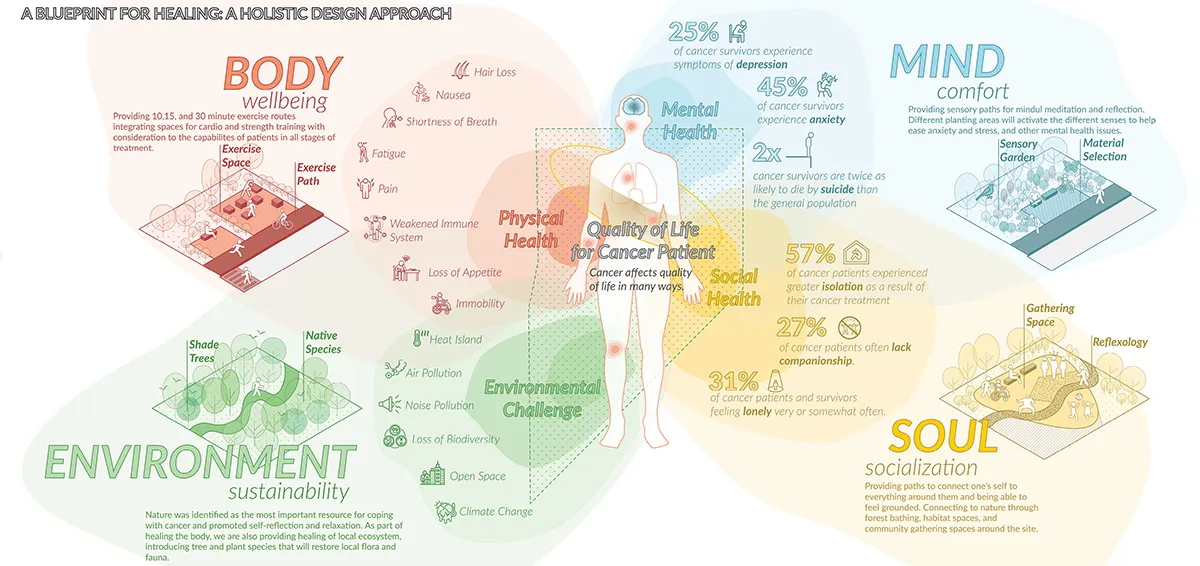
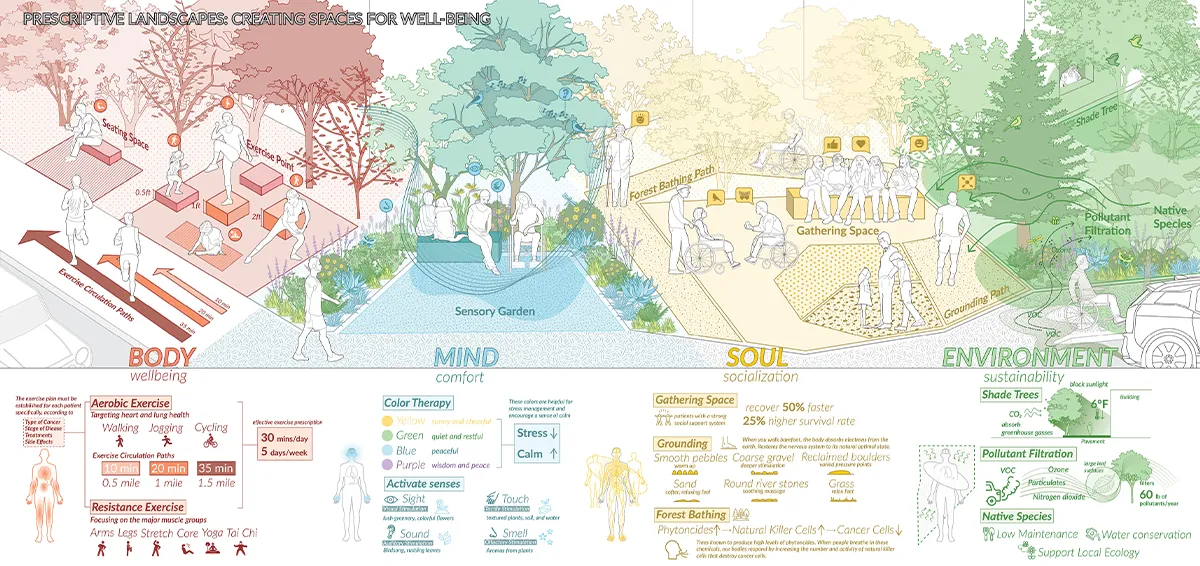
Each specific research-based treatment and solution of Body, Mind, Soul, and Environment is carefully translated into a thoughtful sequence of outdoor experiences that guide patients through multiple stages of recovery. The design supports not only the physical and emotional health of patients but also creates meaningful spaces for staff and the surrounding community. Open spaces invite movement, rest, reflection, and connection to nature while also restoring the ecological health of the campus. This comprehensive approach responds to urgent challenges such as climate change, rising cancer rates, excessive hardscape, lack of shade, and limited community access. By reimagining outdoor space as an essential extension of healthcare, the landscape offers a forward-thinking model for sustainable, inclusive, and restorative healing environments.
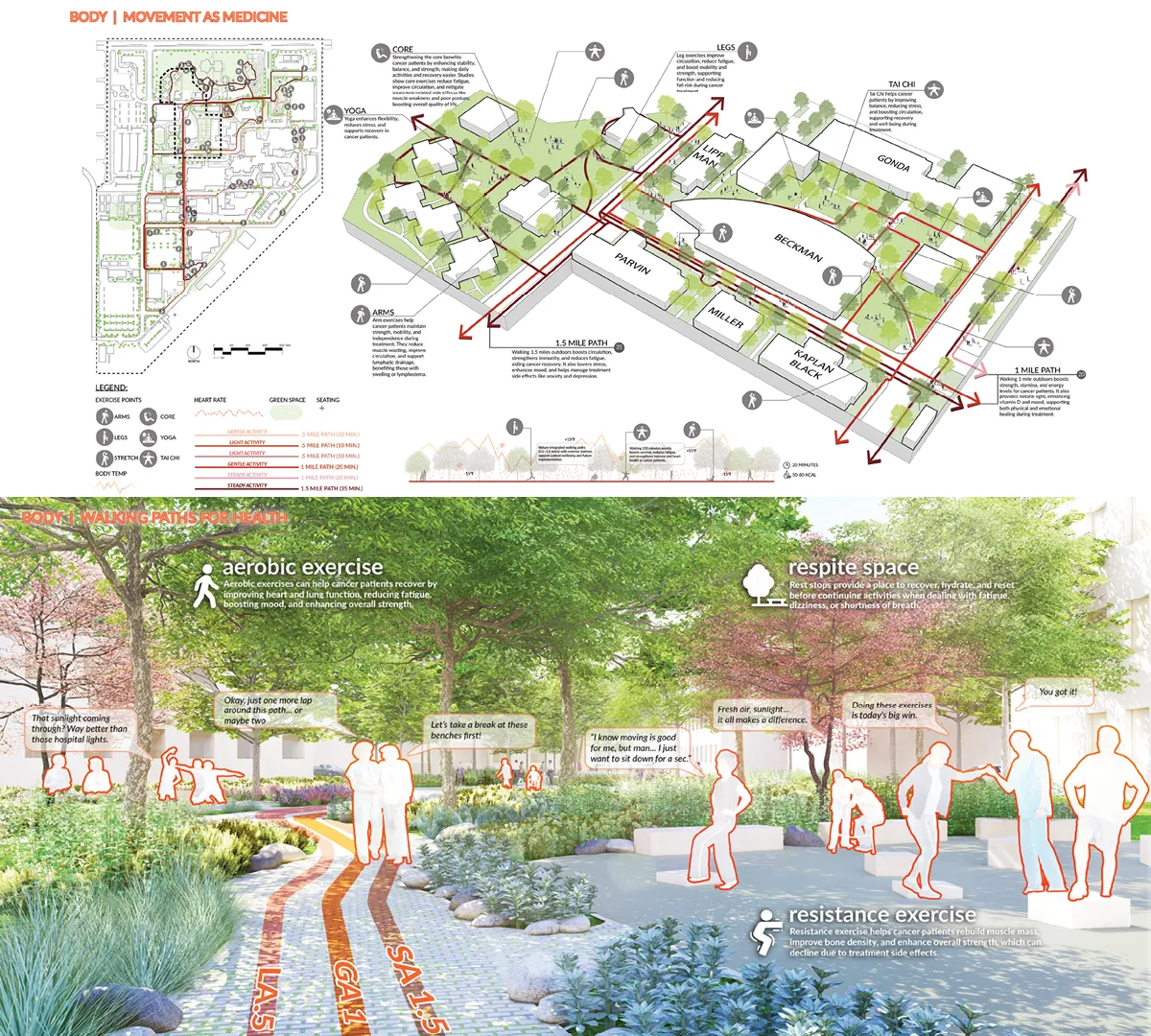
Body: Physician-prescribed outdoor paths integrate movement, nature, and rehabilitation to aid recovery. Five pathways—three 0.5-mile, two 1-mile, and one 1.5-mile—support different healing stages: light for early recovery, steady for endurance, and gentle for consistent movement. Resistance training zones promote strength and flexibility through yoga and tai chi, while strategically placed seating provides rest areas.
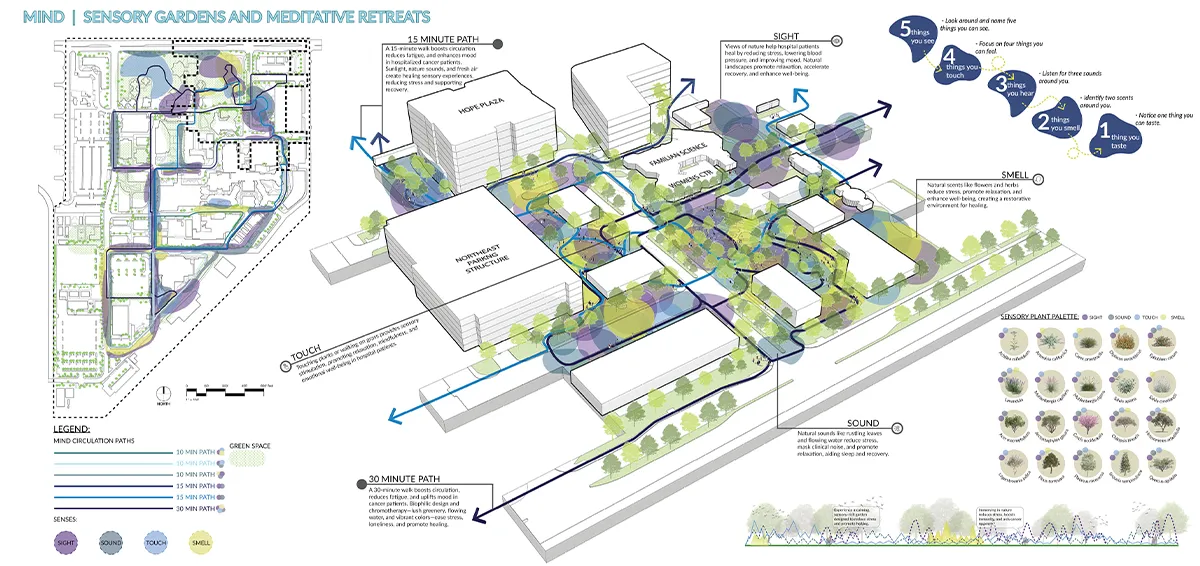
Mind: Sensory gardens engage multiple senses to foster psychological healing. Color therapy, lush greenery, fragrant plants, and natural sounds create a soothing environment. Five sensory pathways—three 0.5-mile, two 1-mile, and one 1.5-mile—highlight different sensory experiences and promote mental wellness. The design integrates the 5-4-3-2-1 anxiety method, fostering mindfulness, presence, and emotional healing through sensory awareness.

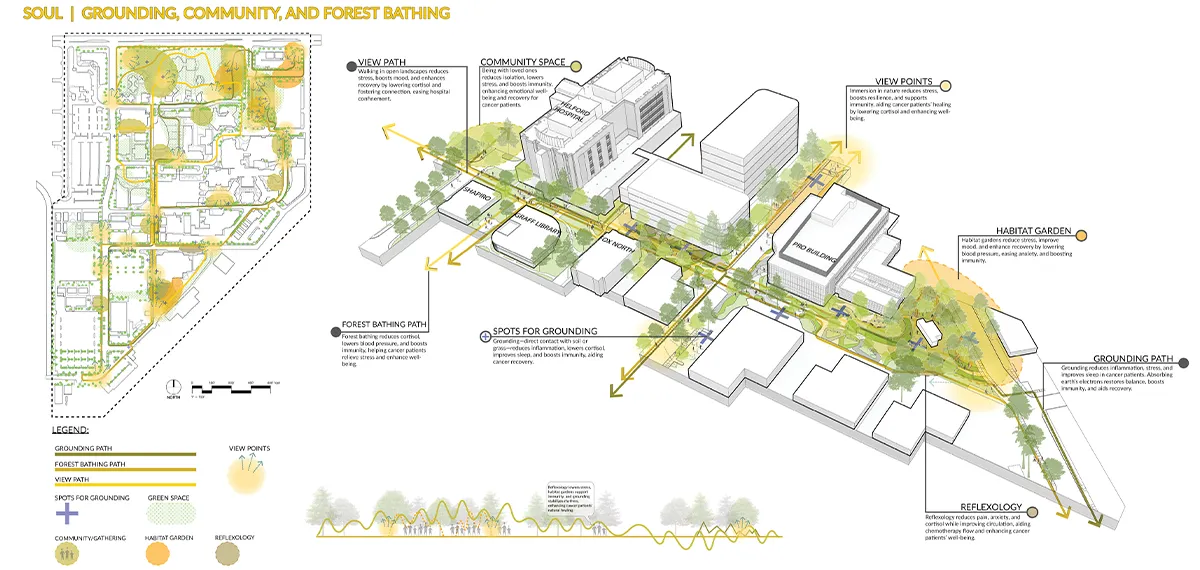
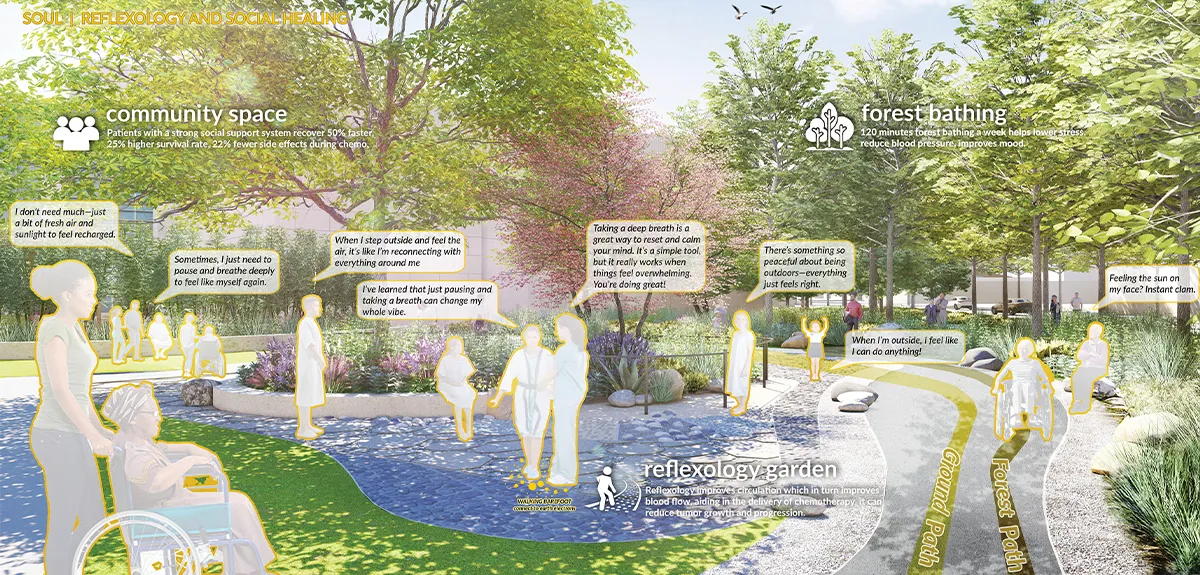
Soul: Holistic healing is supported through grounding techniques, reflexology paths, gathering areas, and forest bathing experiences. A grounding path helps reduce stress and inflammation, while reflexology paths with smooth stones stimulate circulation and ease chemotherapy-induced neuropathy. Forest bathing (Shinrin-yoku) immerses users in nature; tree-released phytoncides help enhance immunity and elevate mood. Social connections are nurtured through community gathering spaces, and a designated view path invites moments of quiet reflection and presence.
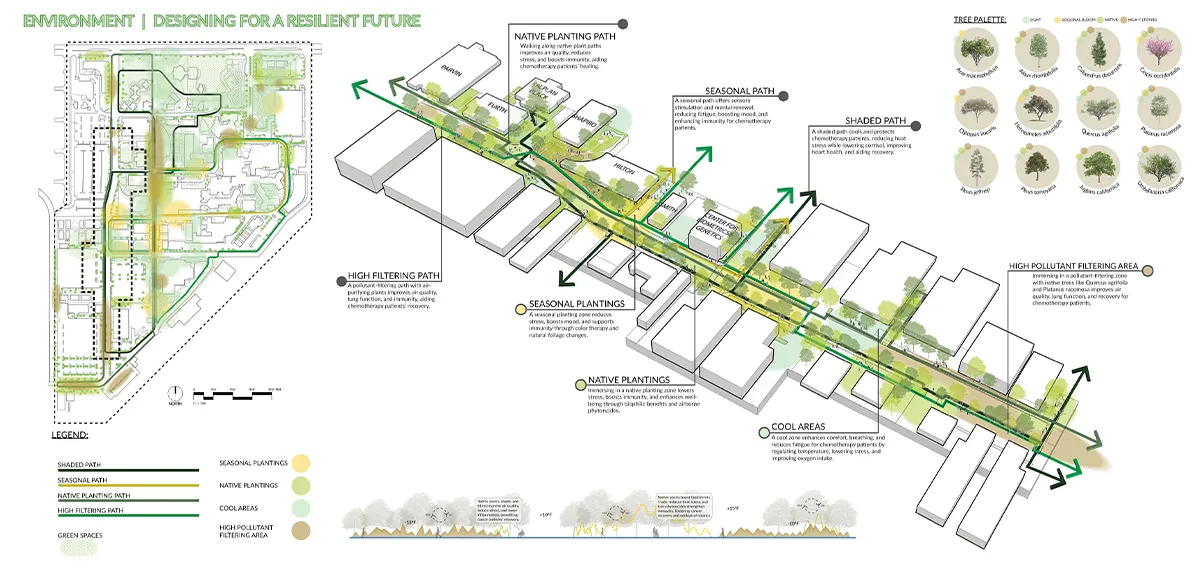
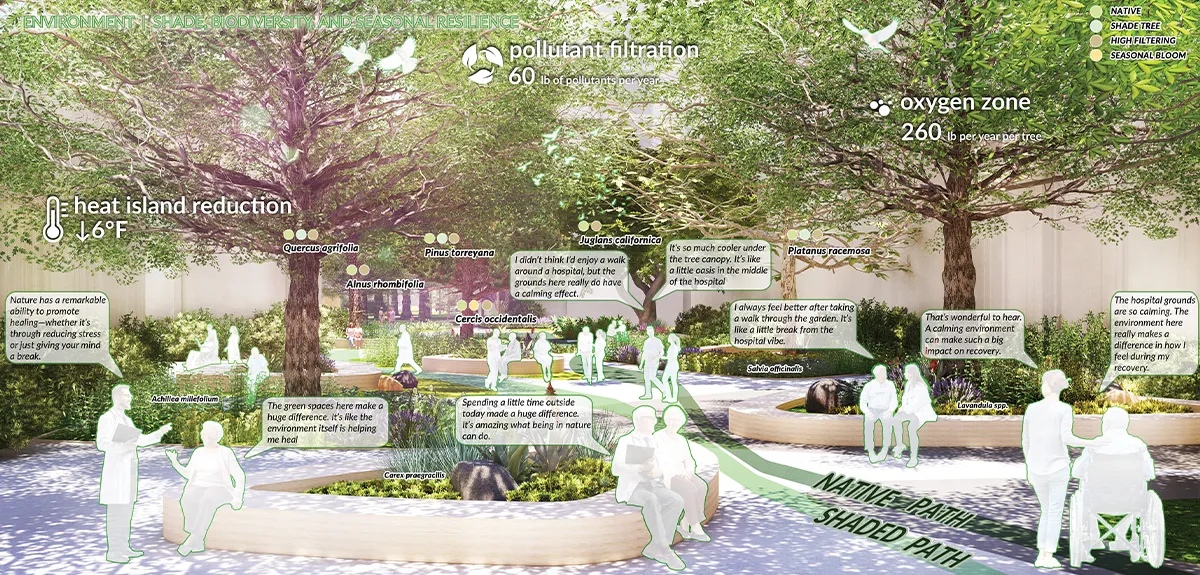
Environment: The landscape serves both human health and ecological restoration. Healing green spaces reduce stress, improve recovery outcomes, and promote biodiversity and sustainability. Shaded paths with Coast Live Oak (Quercus agrifolia) and California Sycamore (Platanus racemosa) provide UV protection while creating wildlife habitats. Seasonal blooming paths, featuring Desert Willow (Chilopsis linearis), attract pollinators, strengthening biodiversity and supporting local ecosystems. High-filtering paths, planted with California Black Walnut (Juglans californica), improve air quality and sequester carbon. Native planting paths restore local flora and soil health, reconnecting the campus to its natural environment.
This visionary landscape design unites patient healing with ecosystem restoration, setting a new benchmark for sustainable, therapeutic environments. Thoughtful planting enhances biodiversity, air quality, and climate resilience, while offering cancer patients meaningful spaces for recovery, reflection, and connection to nature. Transforming 3.6 miles of concrete sidewalks, 4,600 unshaded parking spaces, and 671 existing trees, the design introduces 875 higher-quality trees, expands tree canopy by 30% (4 acres), and creates 19.5 miles of Body-Mind-Soul-Environment pathways. It increases healing and exercise space by 13%, removes 8 tons of pollutants annually, and sequesters 2 metric tons of carbon—delivering measurable benefits for people and planet alike.
City of Hope Medical Campus
Location: Duarte, United States
Project Credits: HKLA
Image Credits: HKLA