
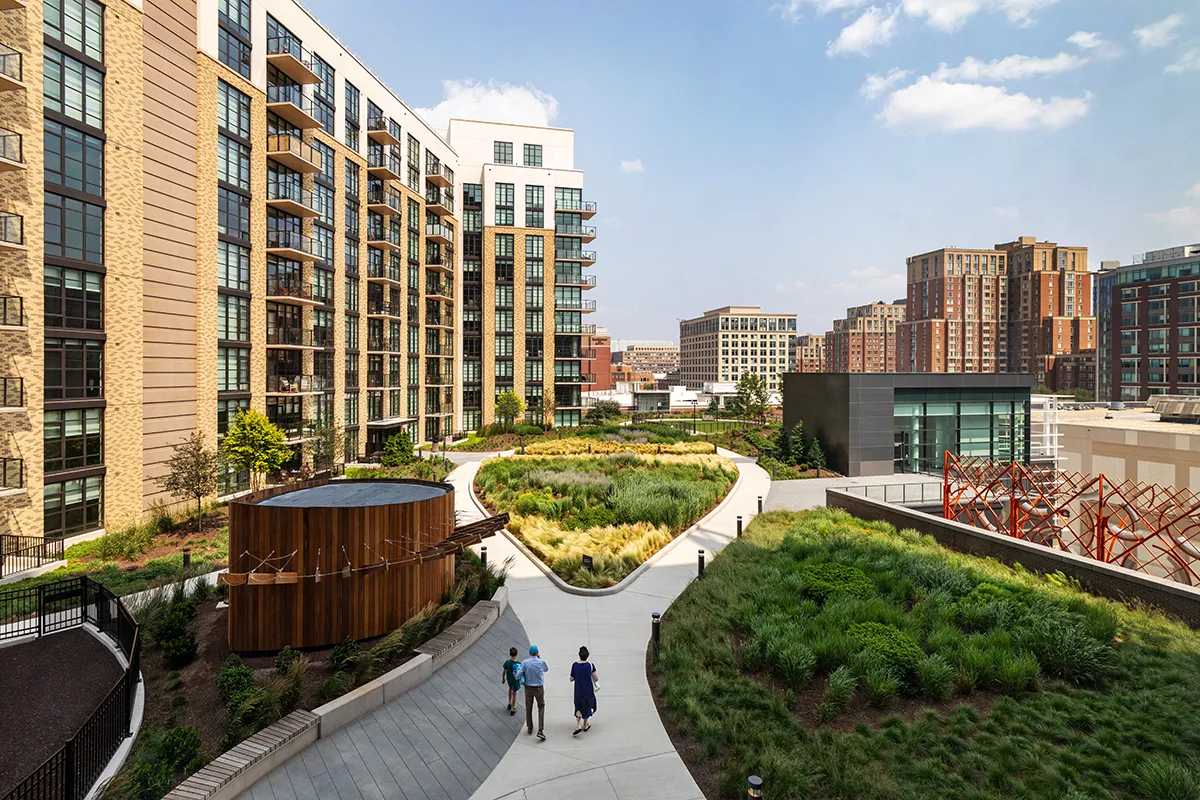
In the 1980s, the Eisenhower Avenue Corridor in Alexandria, Virginia was identified as an opportunity zone for economic development. However, it was missing a commercial anchor that would propel its transformation into an urban district. In 2017, Stonebridge recognized the opportunity to redevelop a 5.2-acre vacant lot adjacent to the WMATA Metro Station for a precedent-setting mixed-use development— Carlyle Crossing. Spanning 1.7 million square feet (approx 157,000 m2), the development is comprised of three high-rise residential towers with ground-level retail and dining. A central plaza and bordering streetscape serve as Carlyle Crossing’s front door, inviting residents and passersby to explore and linger. A private, 2.5-acre park sits atop a five-story podium and connects the three towers. This continuation of the public realm experience provides residents with ample open space in a dense urban environment with unobstructed views of the city.
The approach to the site’s landscape architecture is a testament to the symbiotic relationship between urban and green infrastructure. The design integrates open space into the mixed-use fabric to create a multi-dimensional public realm that blurs the lines between public and private space.
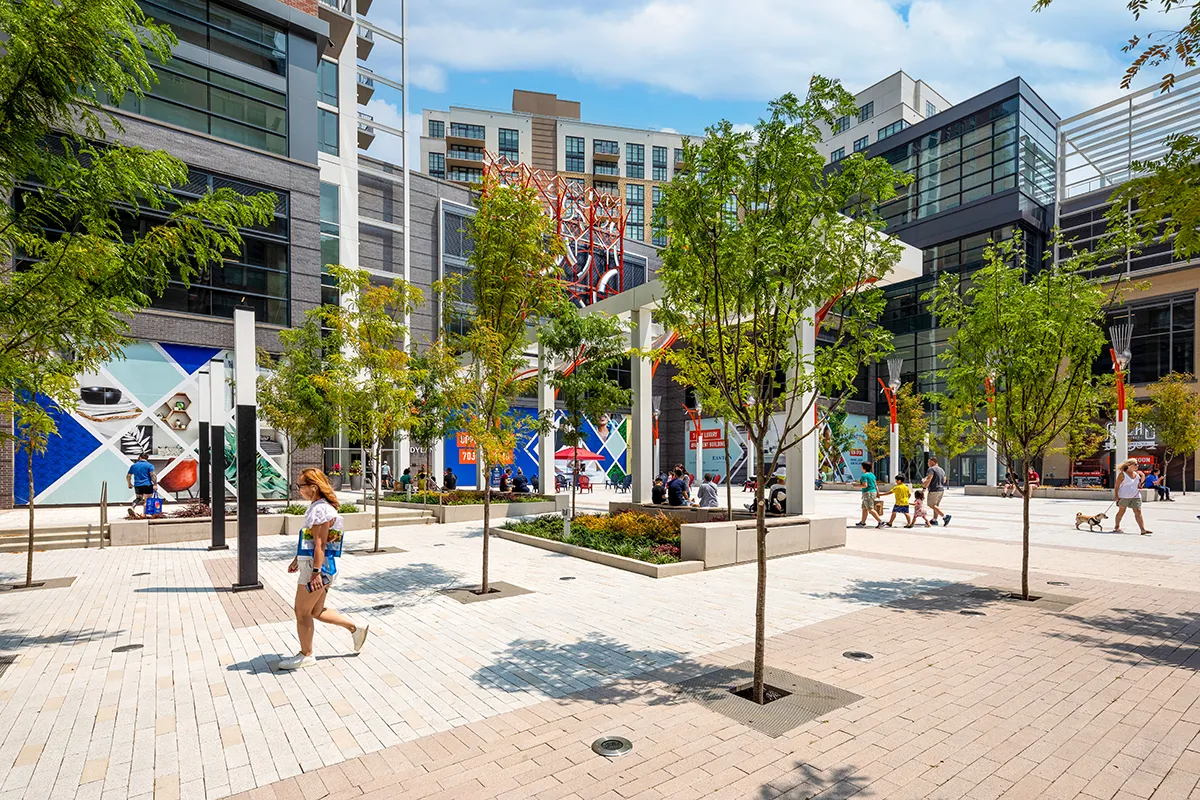
At the ground level, a central plaza and surrounding streetscapes are activated by trendy retail, dining, and entertainment uses. The hardscape plaza is designed to accommodate community programs and events, like markets and festivals. A layer of public art, including murals, lighting, and architectural features, serve as visual markers of the public realm and meet the city’s requirements for public art inclusion. To further enhance pedestrian safety and connectivity, a road diet was implemented to create space for an at-grade bike trail. The landscape along the bike trail is designed to blend the trail into the streetscape, further connecting it to the overall development.
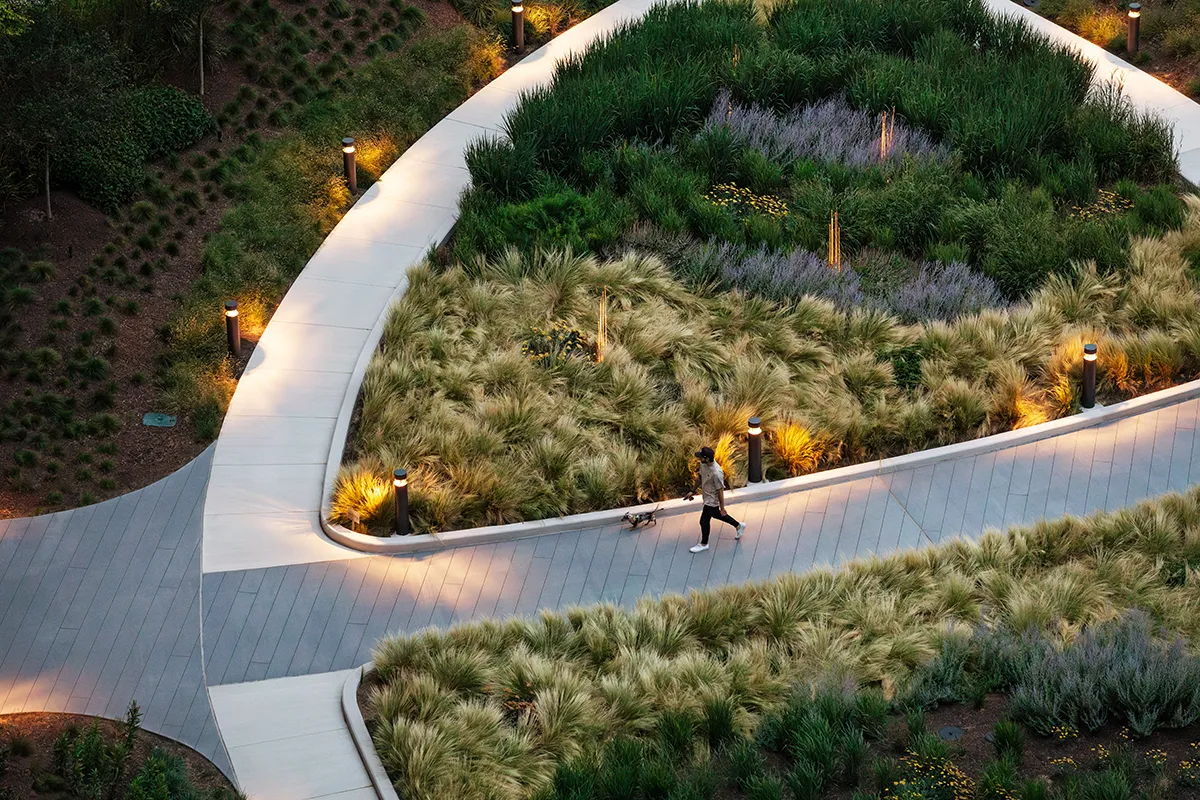
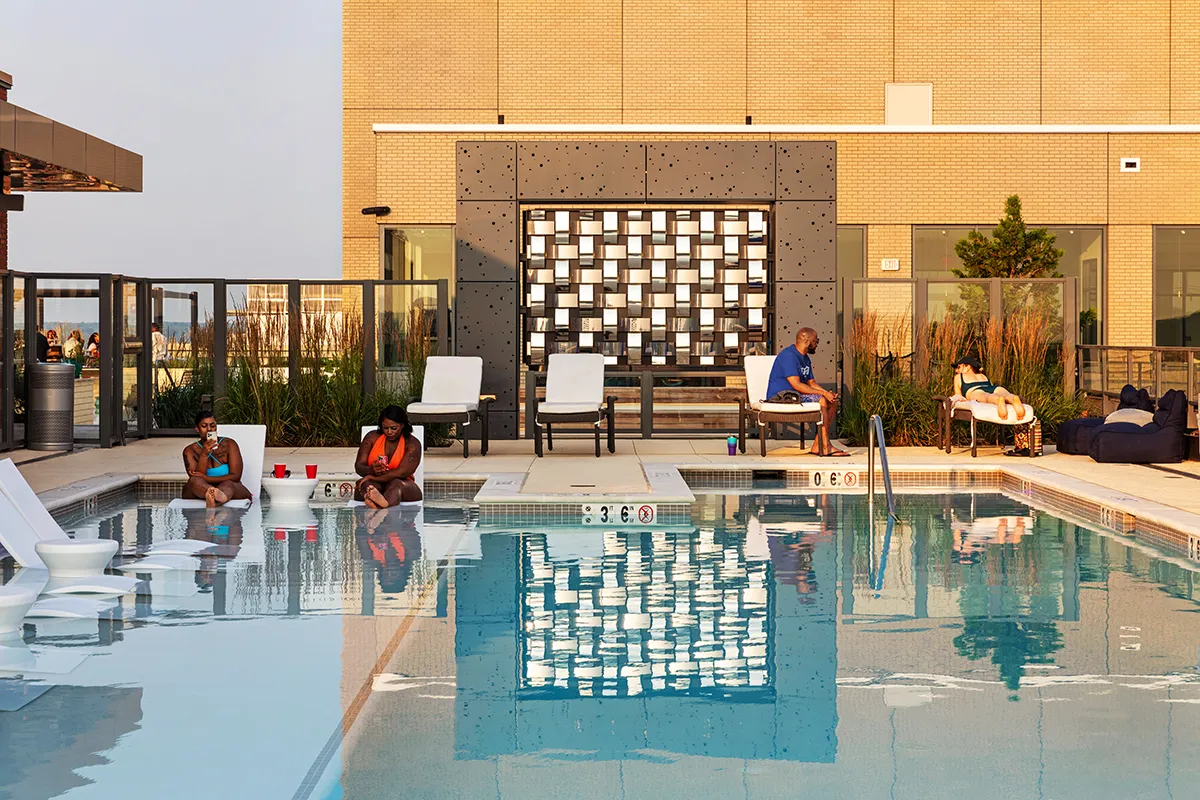
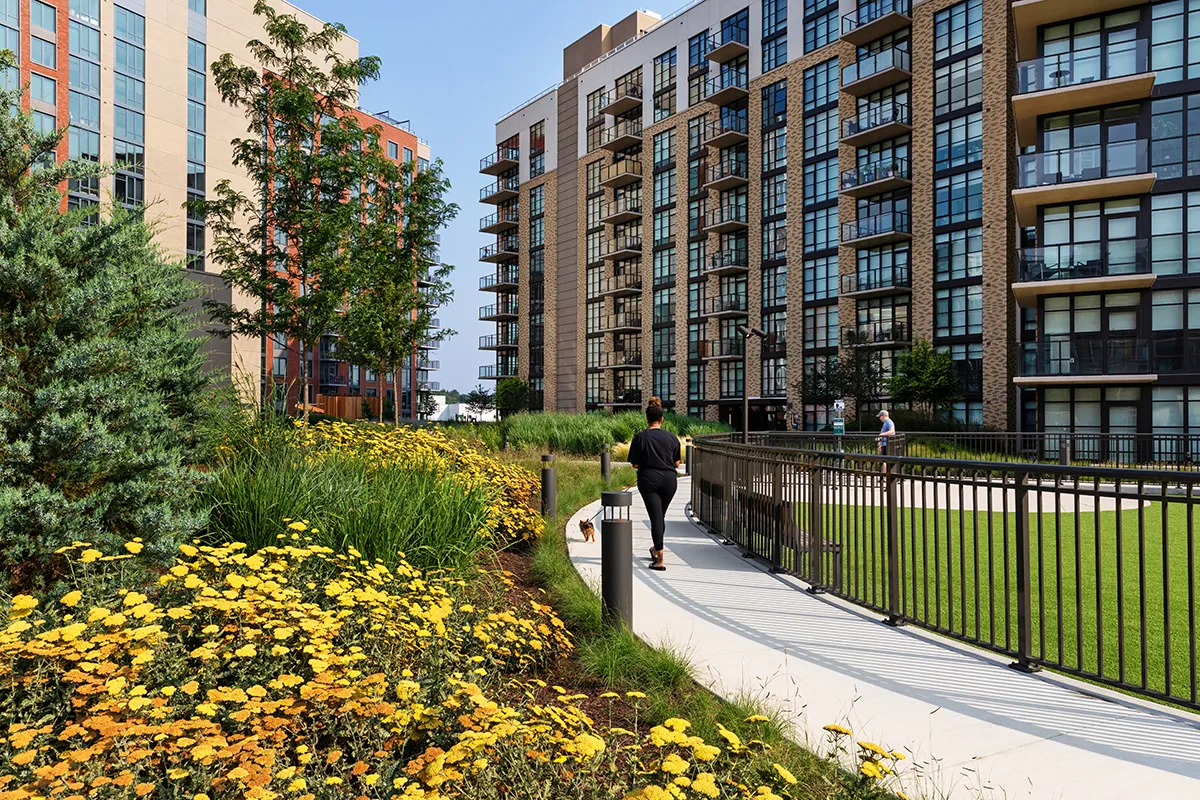
At the podium-level, a 2.5-acre park spans the multi-family towers and connects residents to nature. Intentional berm placement and vegetation create an immersive, nature-forward environment in a heavily urbanized district. Circulation studies were conducted to identify key access points between the east and west terrace to ensure optimal resident access from the three buildings. A series of pedestrian paths, cohesive plant palette, and flexible furnishings create a seamless experience for residents as they traverse each terrace. Additionally, amenitized areas and three pools provide ample gathering space where residents can enjoy one-of-a-kind views of Alexandria.
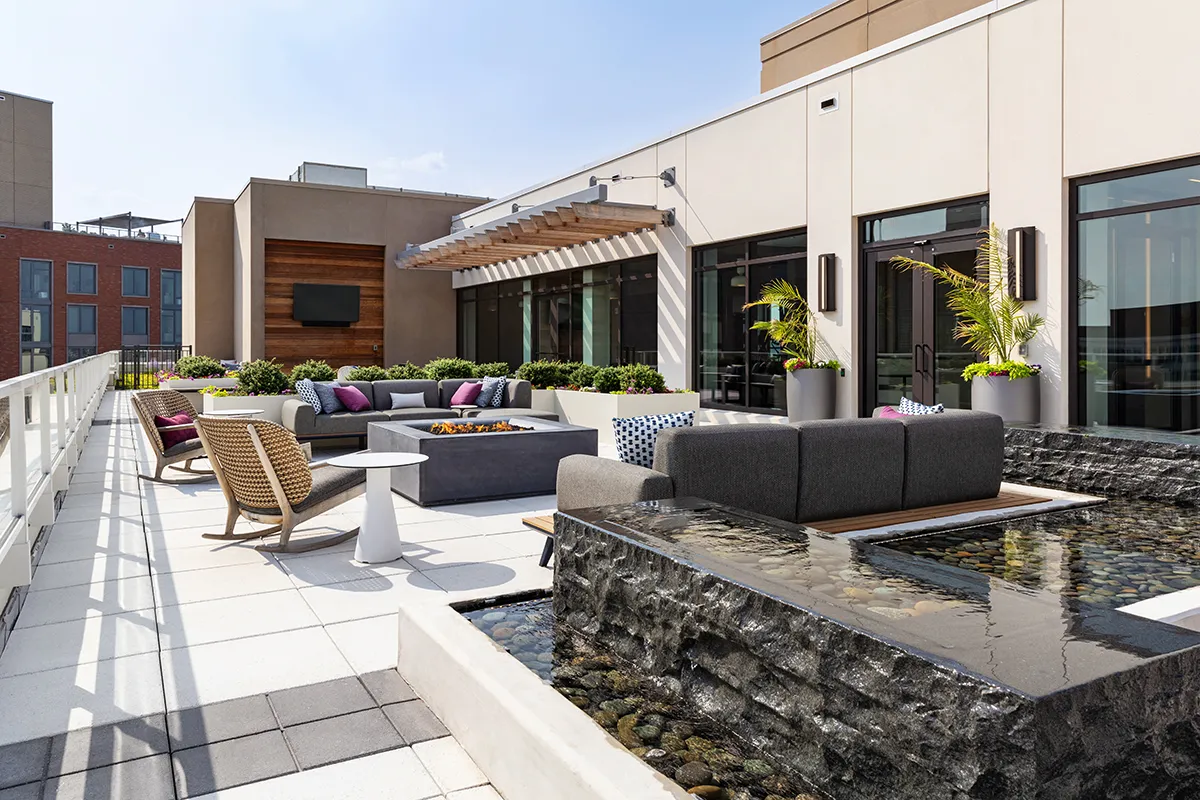
Designing a park on-structure at 65 feet in the air presented many challenges, but also opportunities for innovation. The design considers the physical strain of the park on the buildings and plants that would thrive at a higher altitude. Lightweight soil minimized stress and native plants and ornamental grasses, which comprise 85% of the planting palette, encourage longevity and lower maintenance.
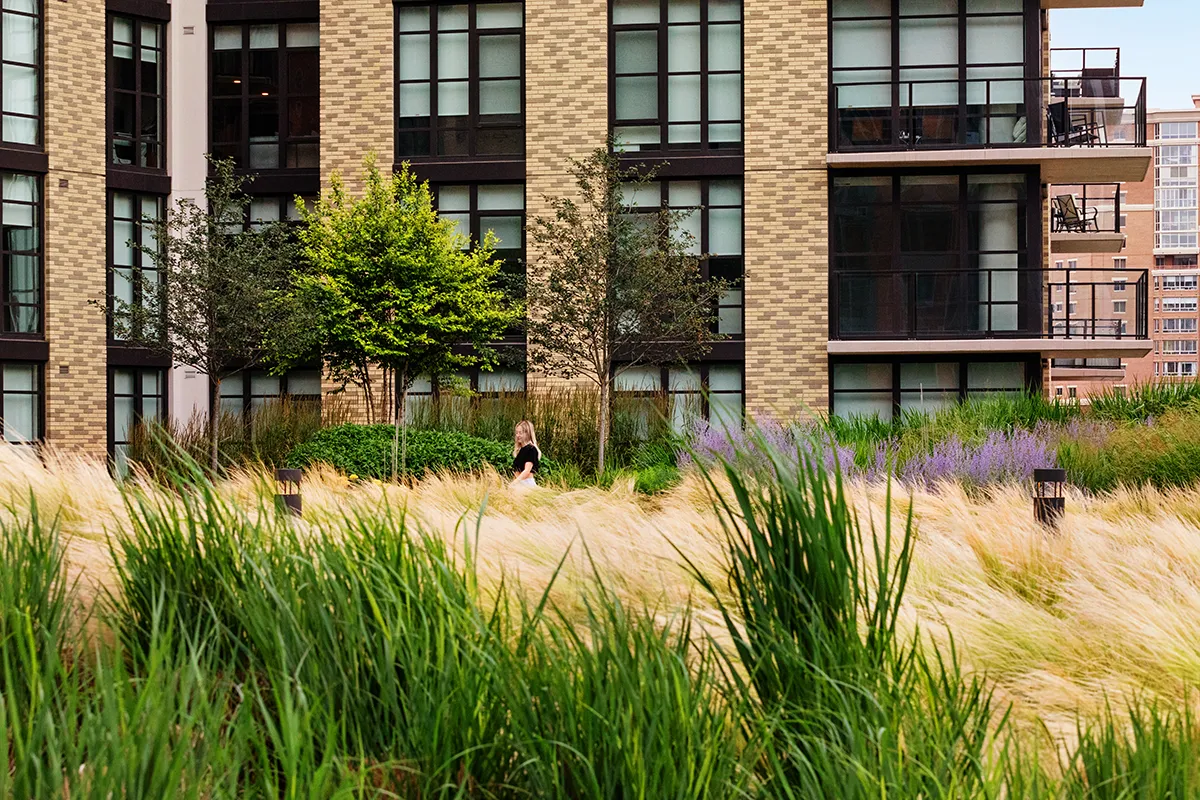
Beyond aesthetic appeal, the park serves a crucial role in the site’s stormwater management system and meets the City’s requirement for treating runoff. The native planting palette, soil selection, and berm placement are compliant with City standards and contribute to an aesthetically pleasing environment for residents. The park treats 1.62 acres of impervious runoff – 33% of the total stormwater management treatment requirements for the development.
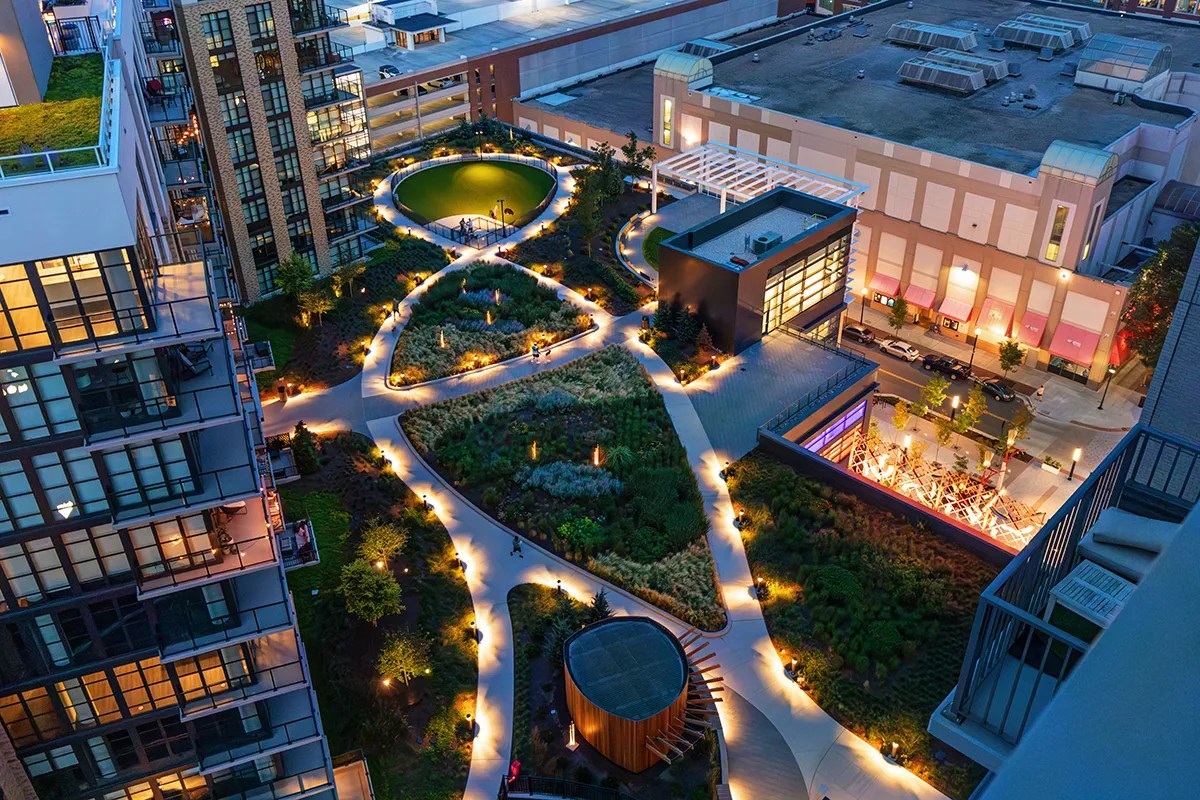
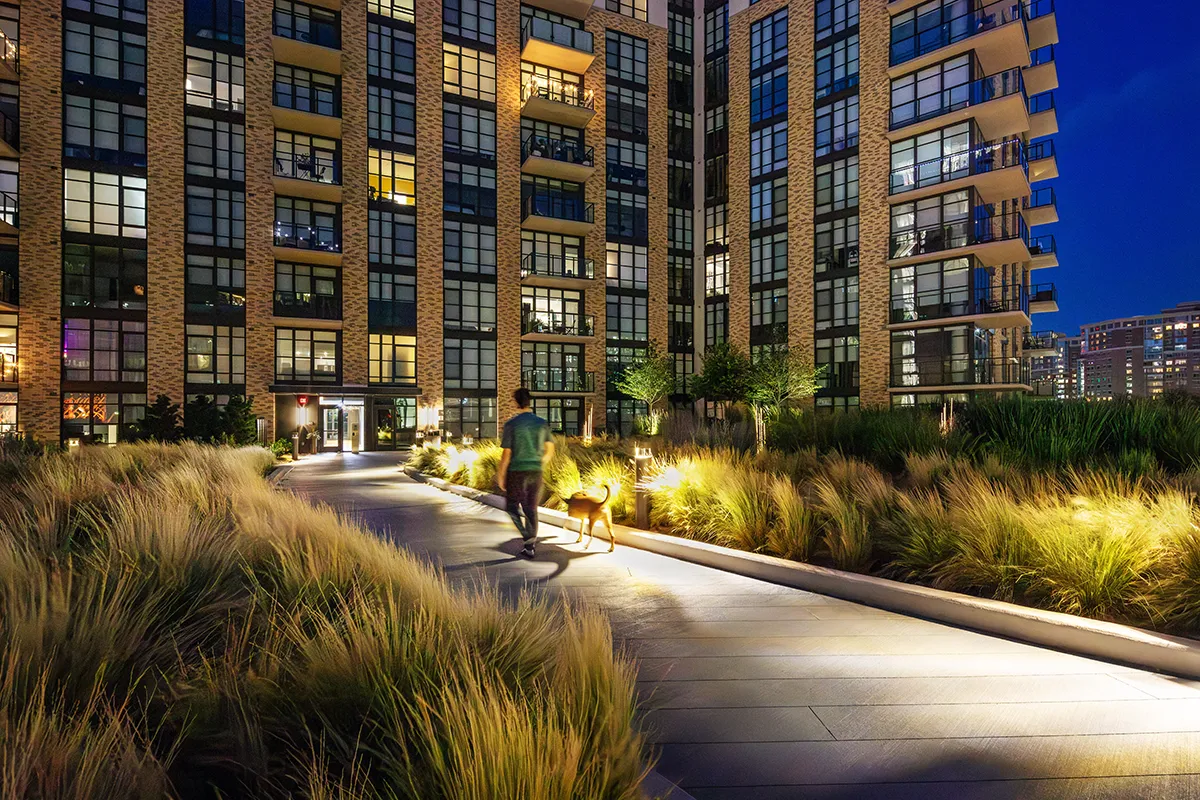
Today, Carlyle Crossing stands as a testament to the transformative power of landscape architecture in urban redevelopment. By seamlessly intertwining urban infrastructure with nature, our design has not only revitalized a once-neglected site but has also set a precedent for sustainable, community-centric development.
Carlyle Crossing
Project Credits: LandDesign, Stonebridge
Image Credits: Denise Retallack