
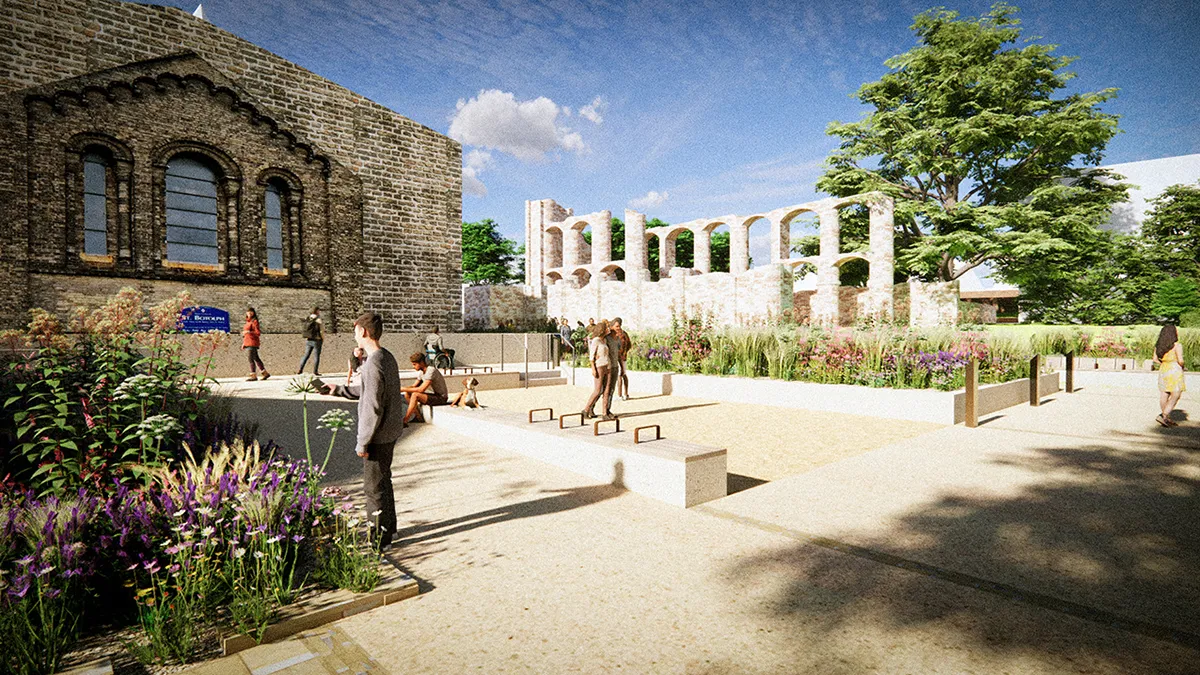
A proposed £7 million project aims to transform St Botolph’s Quarter in central Colchester and has been submitted to Colchester City Council for approval.
Colchester, known as Britain’s first city and the former capital of Roman Britain, has a rich and diverse history. The proposed plans for St Botolph’s Quarter aim to honour this heritage while supporting future growth. The project involves transforming an existing car park into St Botolph’s Square, a vibrant public space for community events and markets.
The scheme has been developed by Colchester City Council in partnership with LCR Property, LDA Design, Haworth Tompkins, and HAT Projects.
The site is a Scheduled Ancient Monument, featuring St Botolph’s Priory, the first Augustinian priory in England. This historic site, dating back to 1100, showcases early Norman architecture. The plans seek to improve access to the Priory and enhance its surroundings to attract more visitors and allow residents to enjoy this free city asset.
Designs were created in collaboration with Historic England and English Heritage, using historic maps to restore the Priory Gardens’ original layout. The new footpaths reflect this history, with seating and plants for relaxation.
A key feature of the plan is a new green pedestrian route connecting Colchester Town station to Colchester Castle. This inclusive route passes through the Scheduled Ancient Monument, including St Botolph’s Square, Priory Gardens, and the Priory itself, crossing over the Roman Wall on Priory Street. It serves as a heritage trail and provides visitors with a scenic and informative journey through the city center, arriving conveniently at the station.
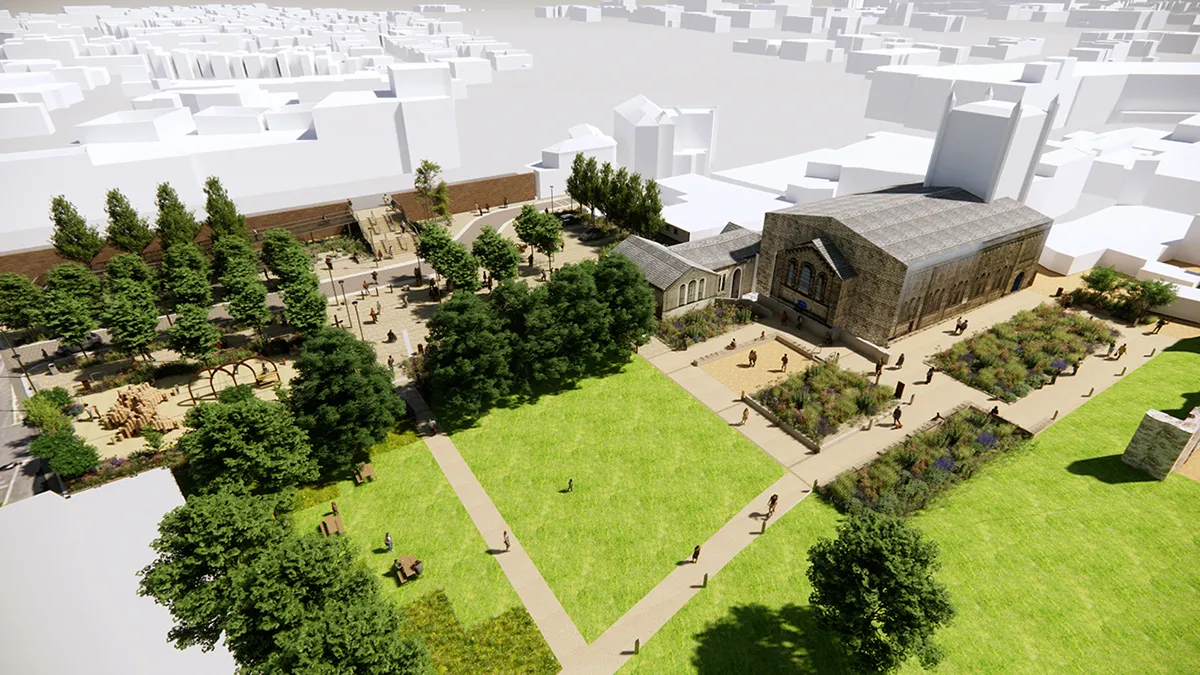
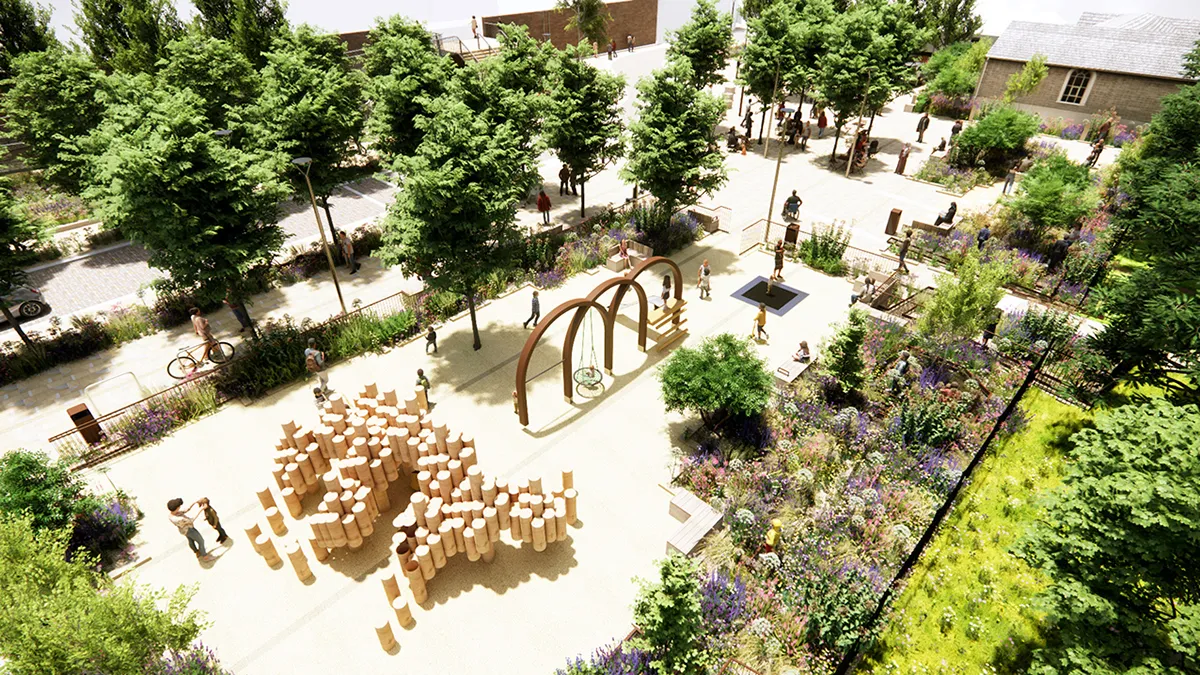
The project also includes a new play area inspired by the Priory’s unique architecture. The area will be enhanced with lighting to ensure safety and invite visitors into the evening.
This planning application is an important step toward the wider regeneration of Colchester’s city center, aiming for completion by 2030. It has been shaped by extensive public consultations with residents, businesses, community groups, and organizations representing those with disabilities, ensuring the scheme is inclusive and accessible. The feedback received has influenced the layout and navigation.
A review period will now commence, and if approved, construction could begin in spring 2026.
Images: LDA Design