
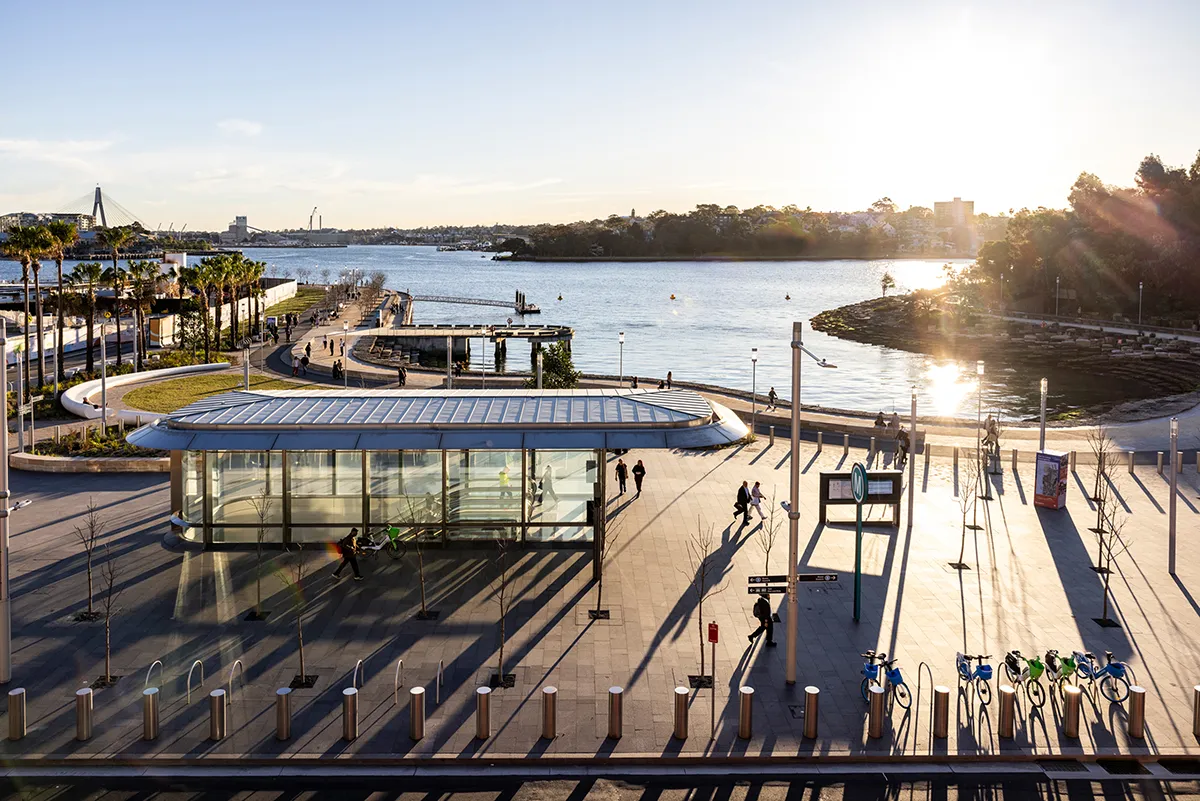
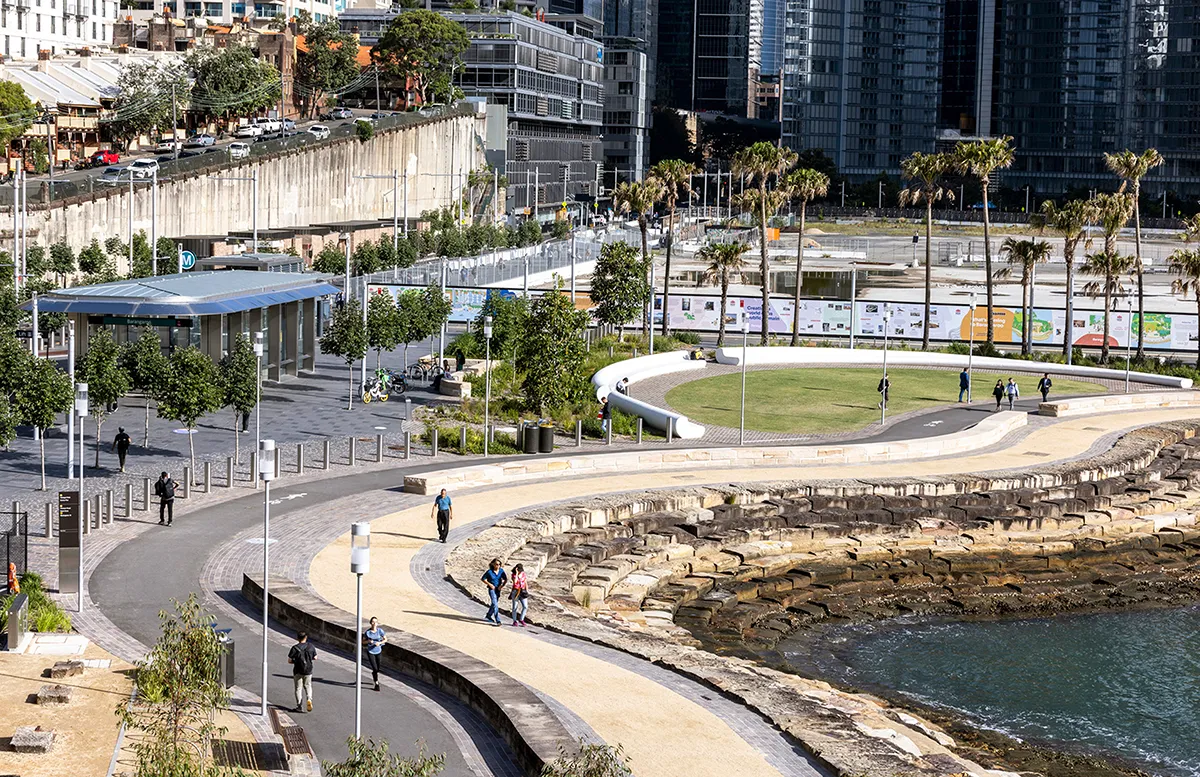
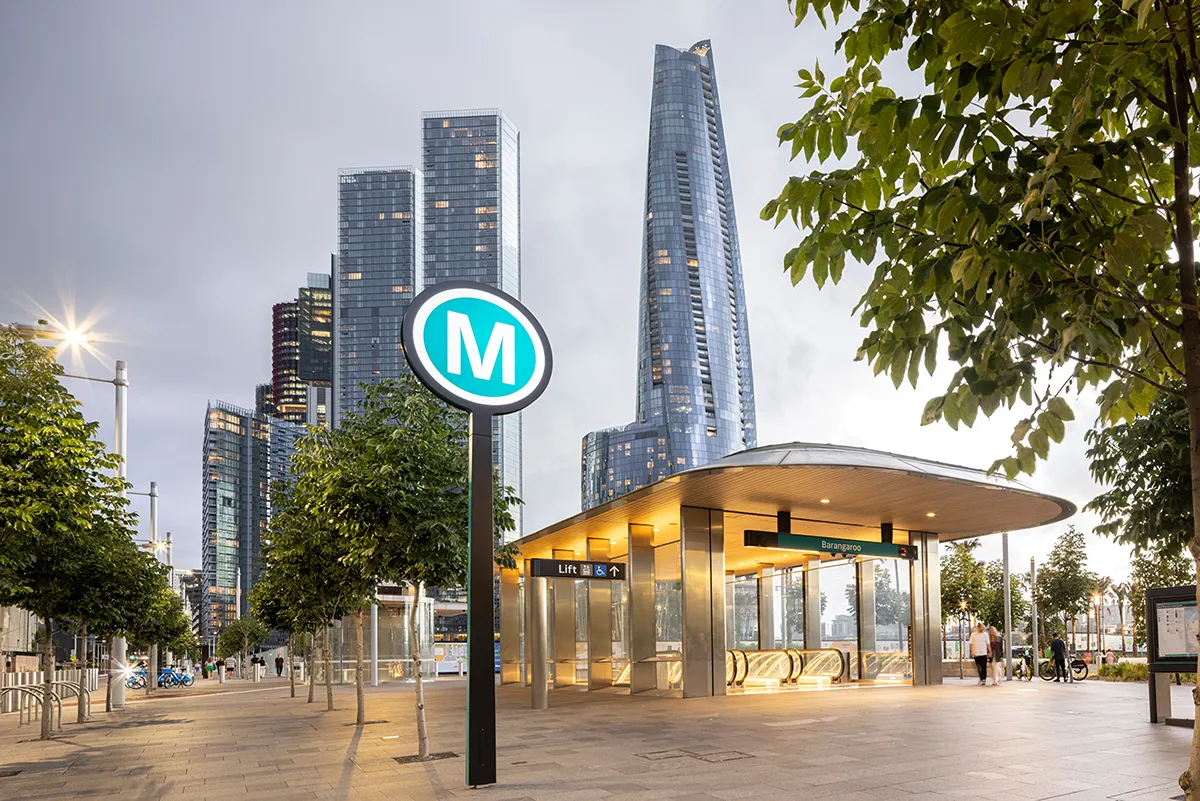
Thousands of people a day pass through Sydney Metro Barangaroo station daily, commuting to Barangaroo’s commercial and dining precinct, the headland park or through to the Walsh Bay Arts and Cultural Precinct and the Rocks. The landscape design at Barangaroo Station Park, including the station entrance, the Nawi Cove and Hickson Road public domain, with its stunning backdrop of Sydney Harbour, has created an iconic and memorable station plaza and park that instills the site’s heritage and Indigenous culture through artwork and interpretation.
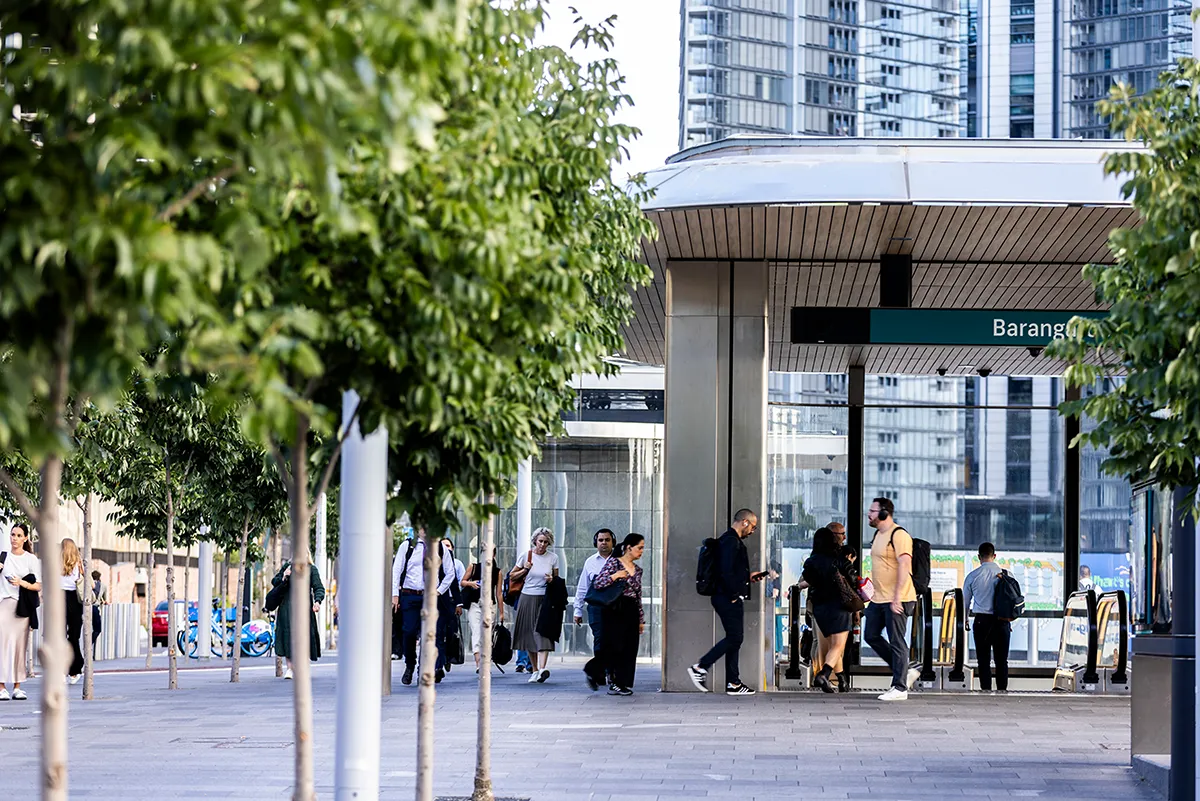
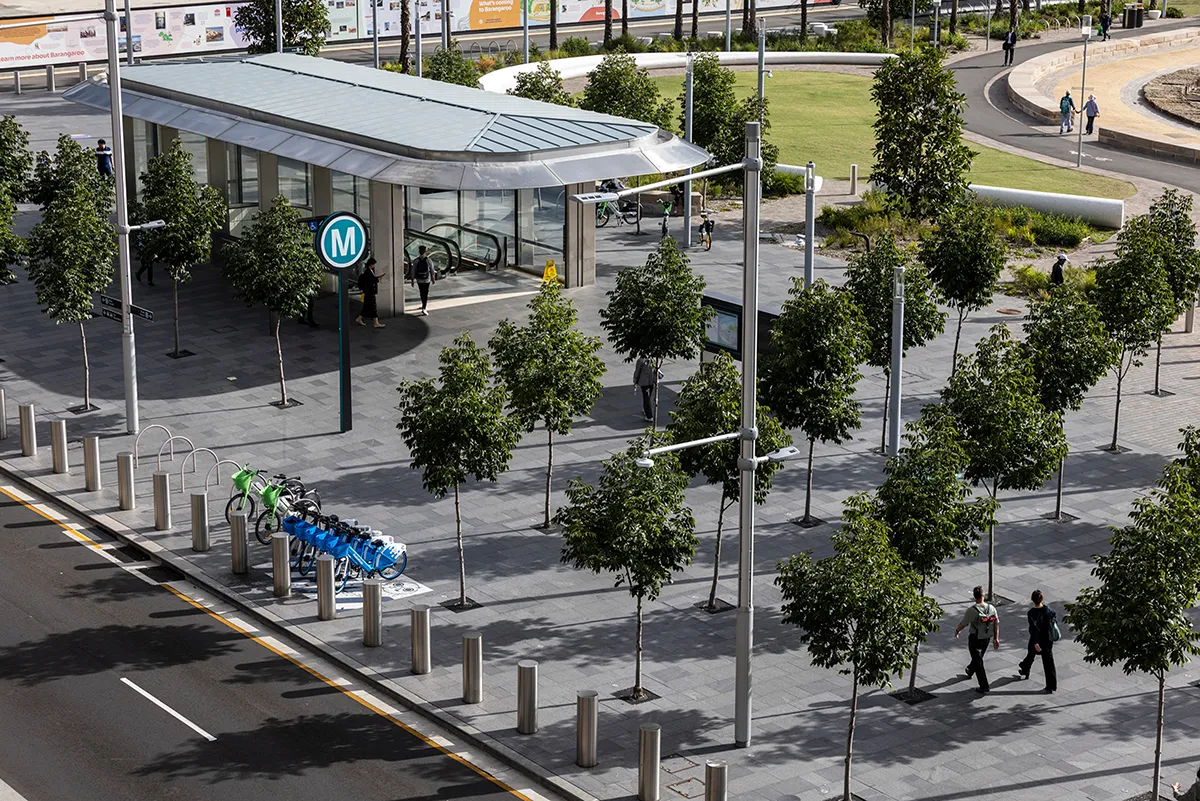
The design team for Sydney Metro Barangaroo station goal was to create an iconic and memorable station interface with world class transport infrastructure, serving as a catalyst for development across the entire precinct. The station interface needed to be of remarkable contemporary design, respectful of the heritage fabric of the area and well-integrated with the existing public domain, including Nawi Cove and Barangaroo headland park.
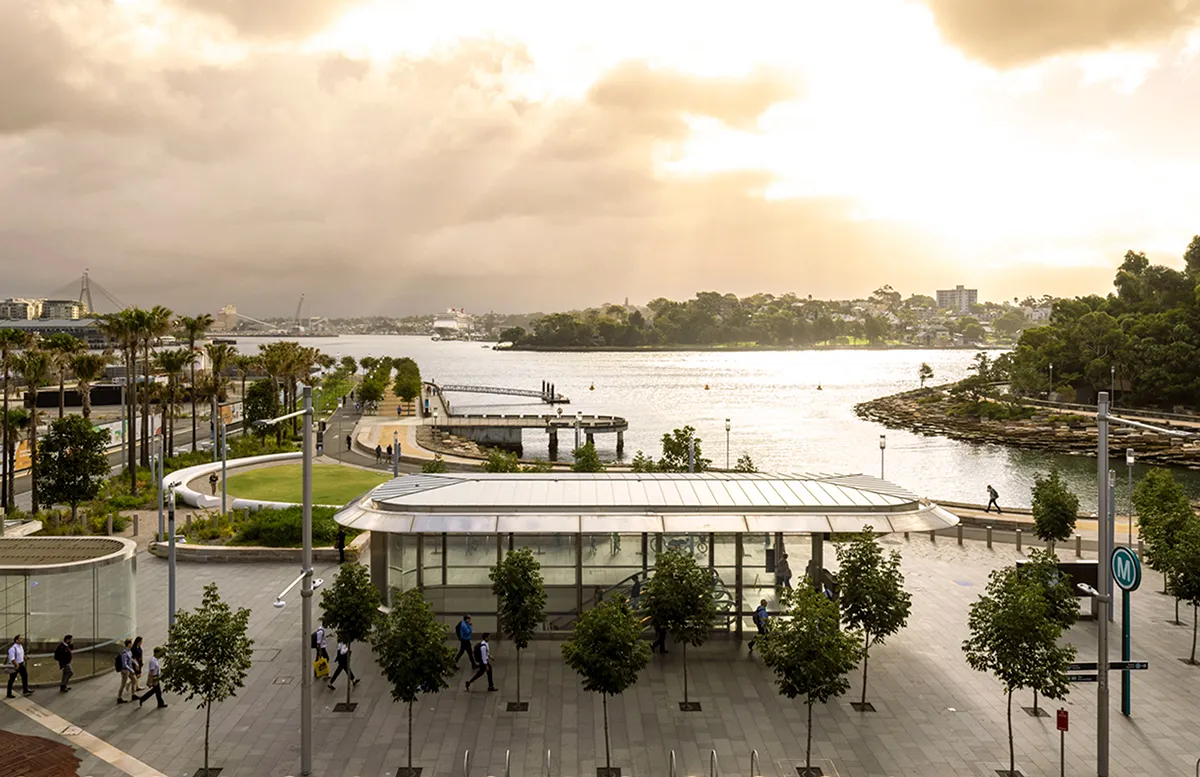
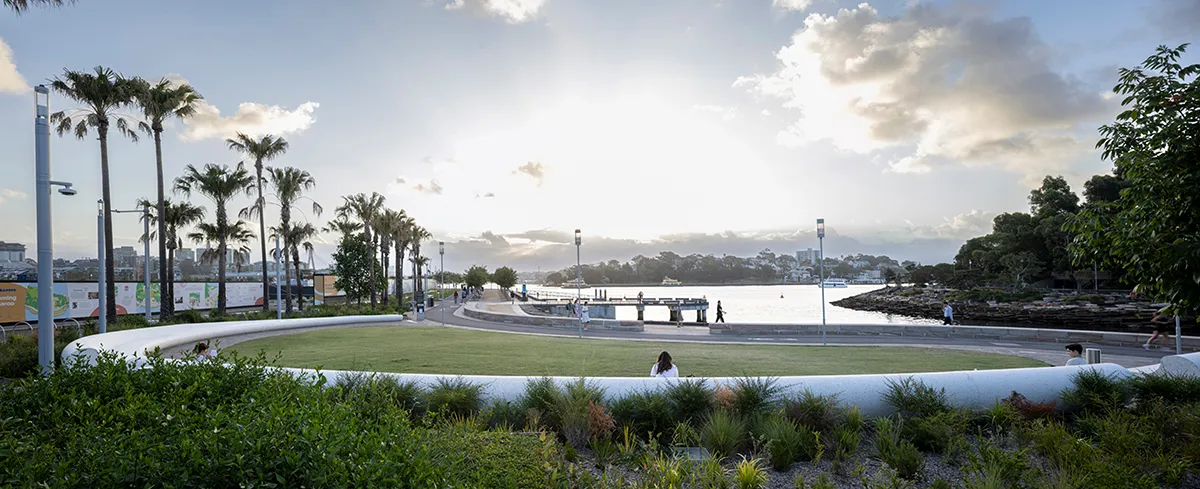
The landscape design responds to a complex site with a multitude of stakeholders to deliver a significant and interconnecting piece of Barangaroo public domain. The landscape architects and heritage consultants supported Sydney Metro through the multiple project interfaces and public domain design including parkland, streetscape, plazas, cycleways, urban, planting and the heritage and interpretation elements.
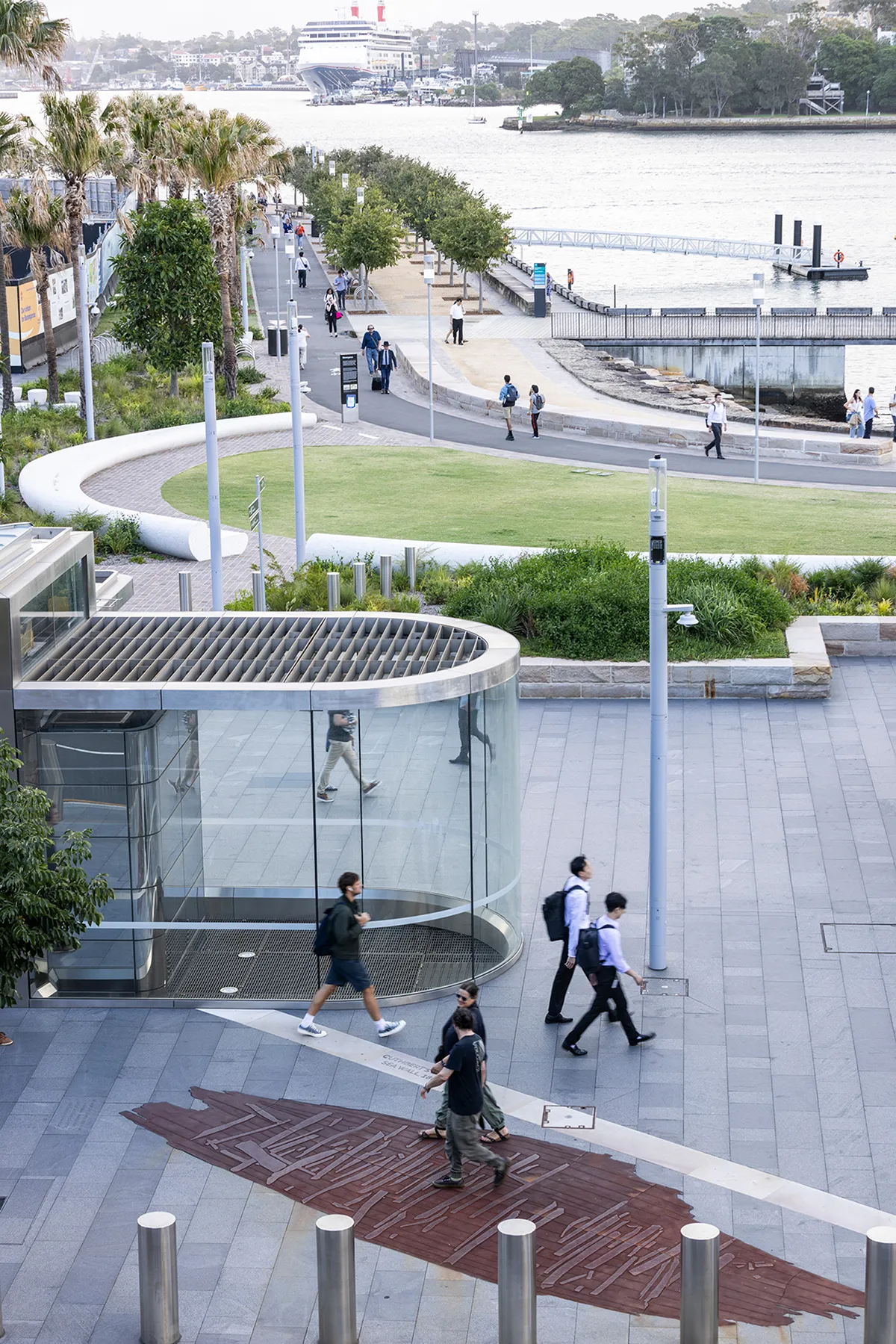
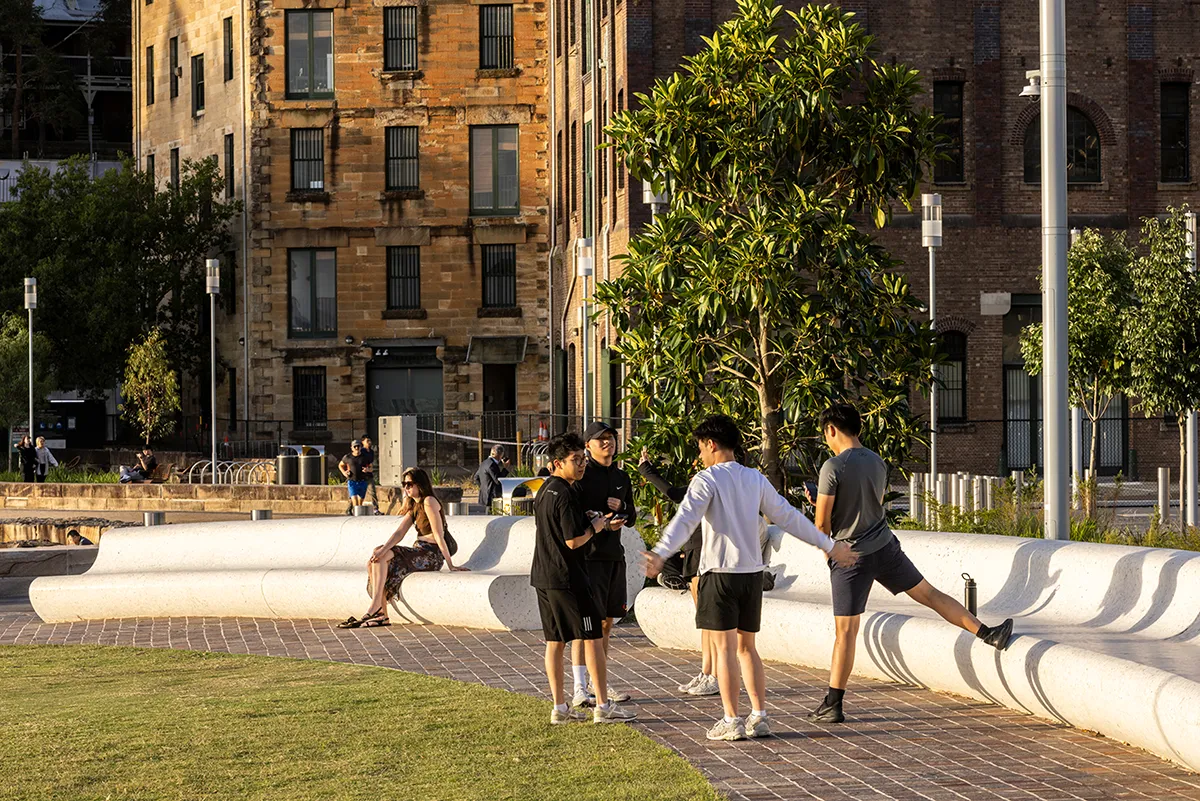
This was an opportunity to present the public domain as a locally distinct and representative cultural landscape, the product of numerous phases of land use. Extensive research, consultation and collaboration with First Nations Knowledge Holders was conducted to ensure interpretation strategies adhered to the cultural heritage of the area. The team also collaborated with archaeologists to identify methods of integrating information, incorporating documentary research and graphic material to illustrate the historic significance of the site.
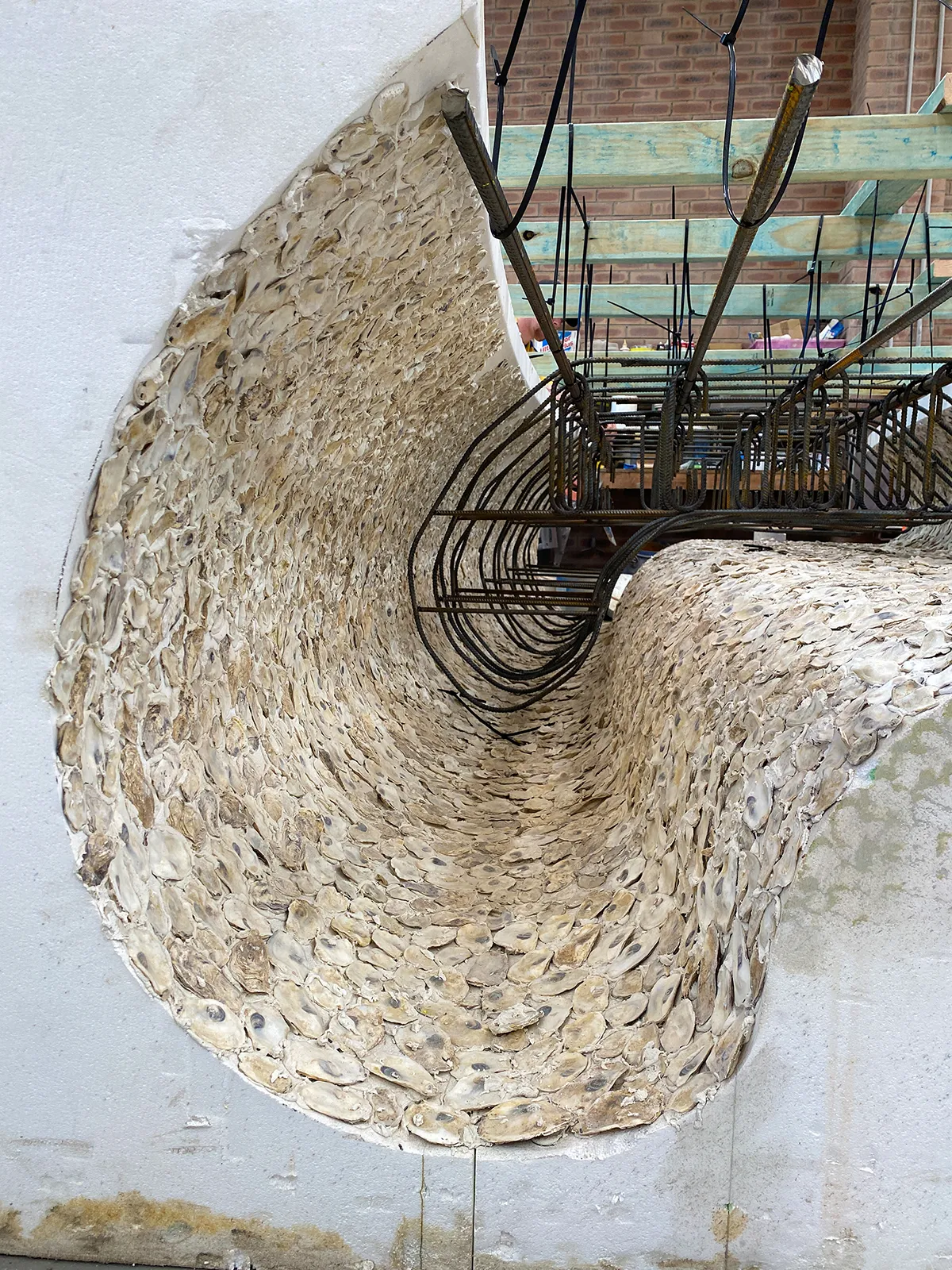
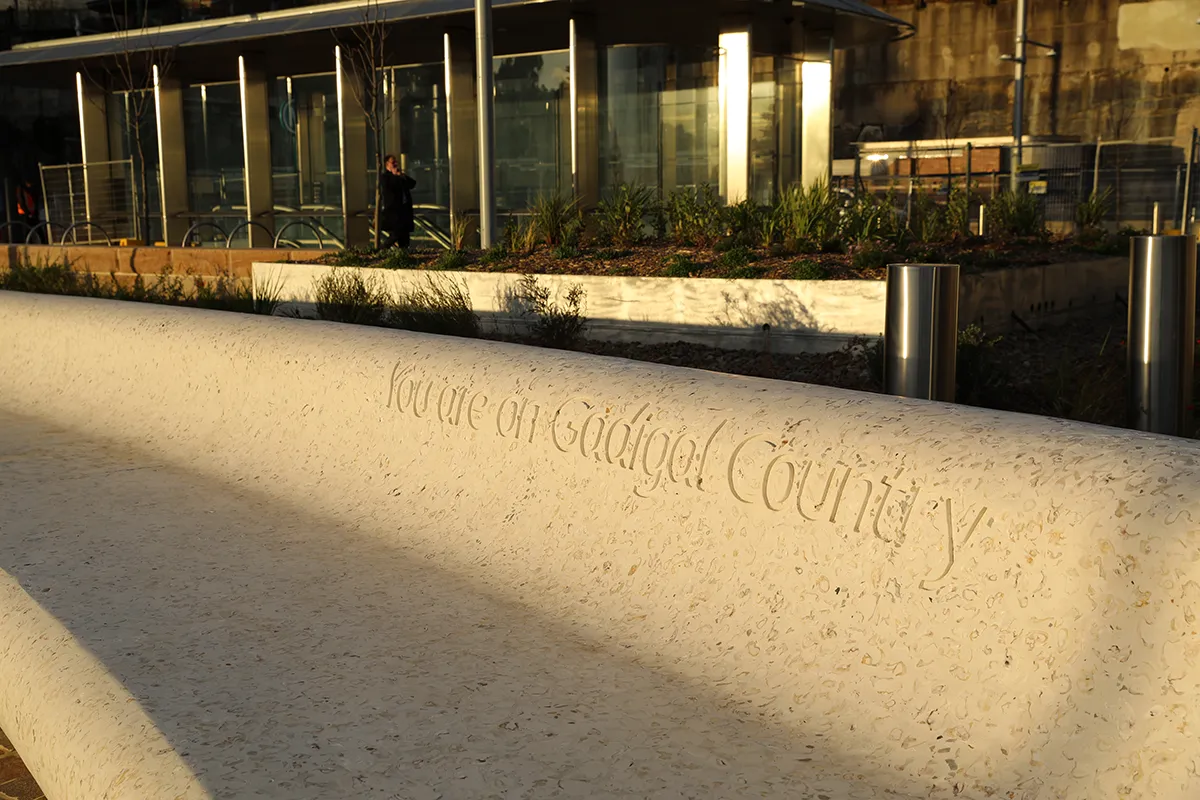
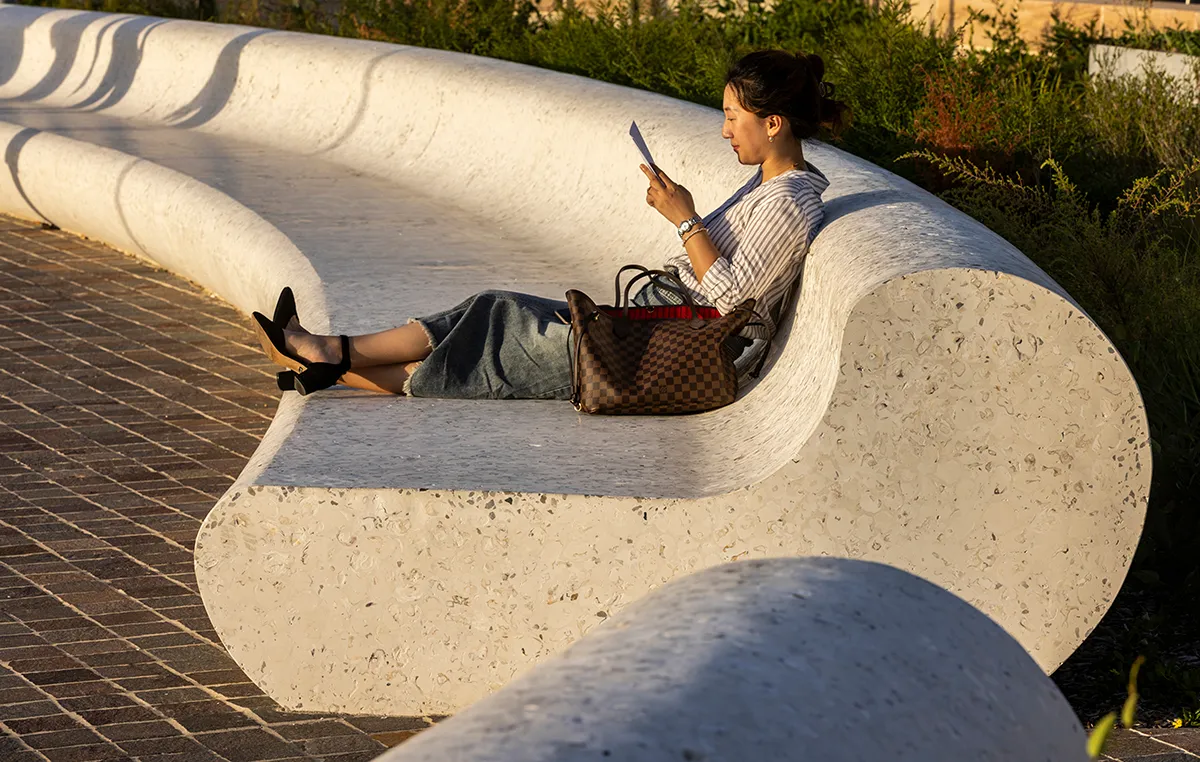
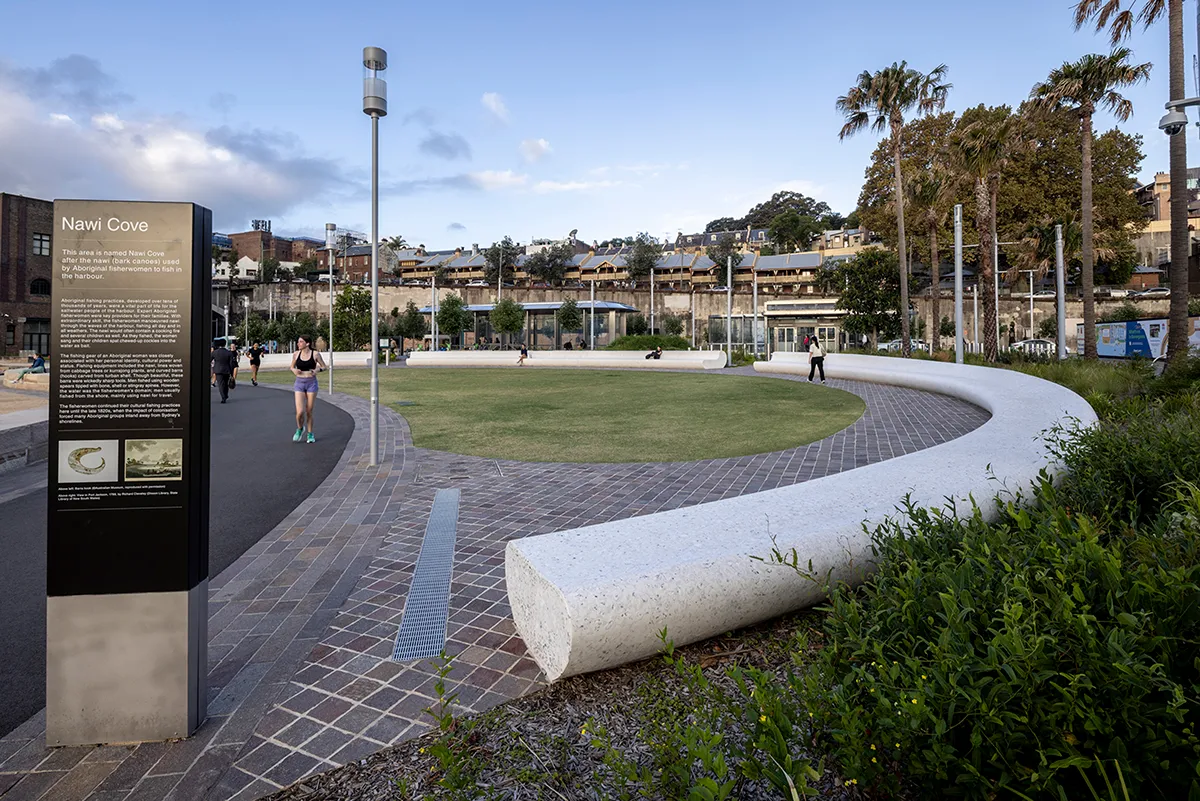
The centrepiece of the park at Sydney Metro Barangaroo Station is the interpretive feature seat which celebrates the Nawi Cove’s traditional use by Gadigal peoples as a fishing ground. The seat has created a unique element in the public domain. Precast white concrete seeded with oyster shells collected within the Sydney Basin references the shell fishing hooks used by the expert Aboriginal fishing women who fished from nawi (bark canoes) in the cove. Writing on the seat welcomes visitors to Gadigal Country. Aboriginal history of the space is shared on interpretive signs. A summary of the exceptional life of Barangaroo is relayed on one sign, while visitors can read detailed accounts of the fishing practices, including the use of nawi and the naming of Nawi Cove, on another.
Landscaping and plant species choices are a key feature of the Nawi Parklands. The park has created an accessible green space planted with species that were in the area before European occupation. The lawn area naturally lends itself to being a meeting place, which the Barangaroo area has also come to be regarded by the Indigenous community. The curve to the back of the lawn references the shape of the barra hook, whose form was carved from the turban shell to catch fish effectively. Visitors feel a living connection to the Indigenous narrative within the space.
During 2018, archaeological investigations for the Barangaroo Station site unearthed the Barangaroo Boat. Built in the 1820s, the unique find was the oldest discovery of its kind in New South Wales. While the boat has been conserved and transferred to the Australian Maritime Museum, the interpretation of the boat where it was found is a key feature at Barangaroo Station Park.
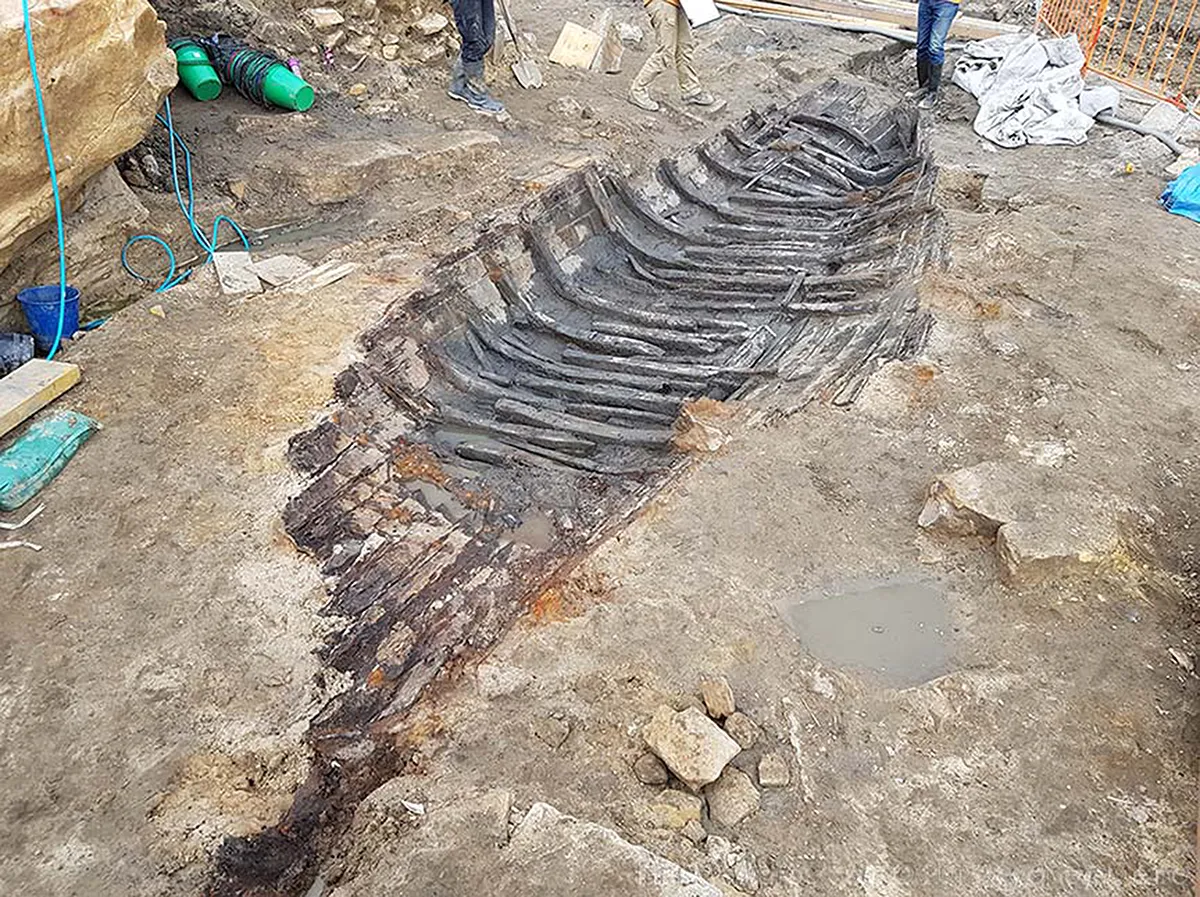
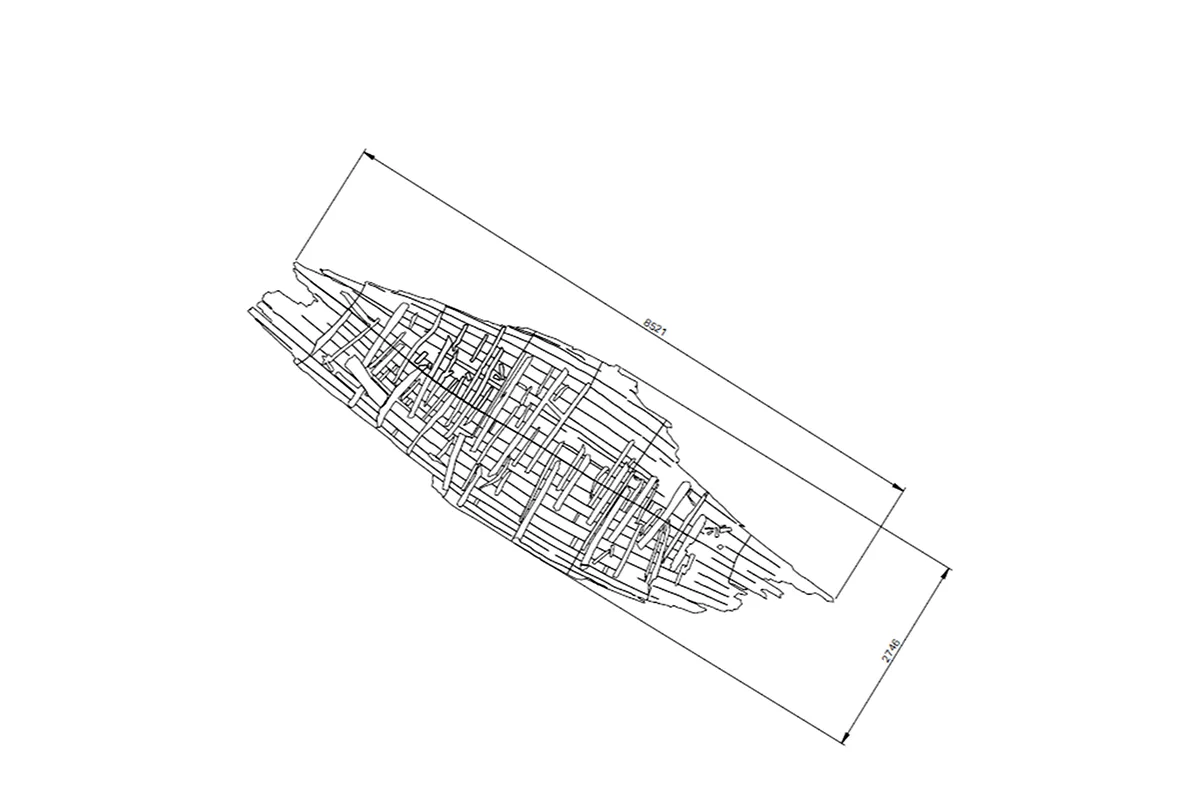
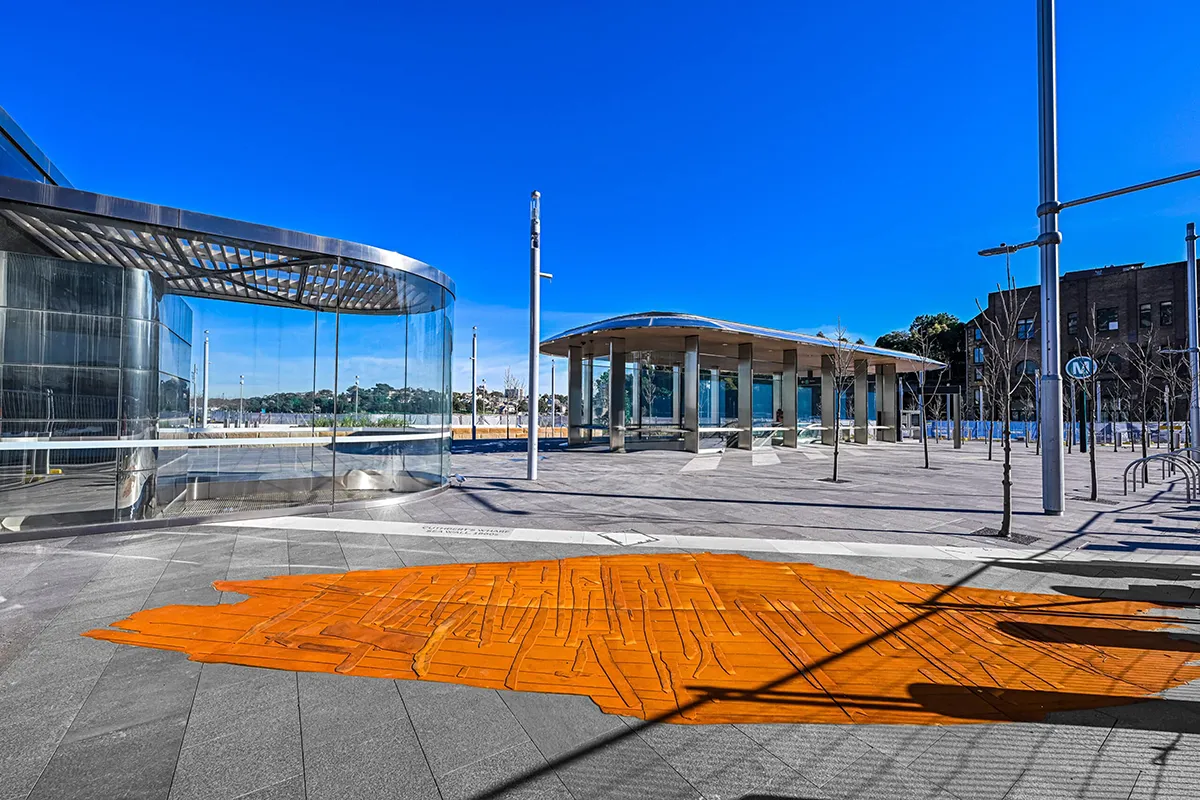
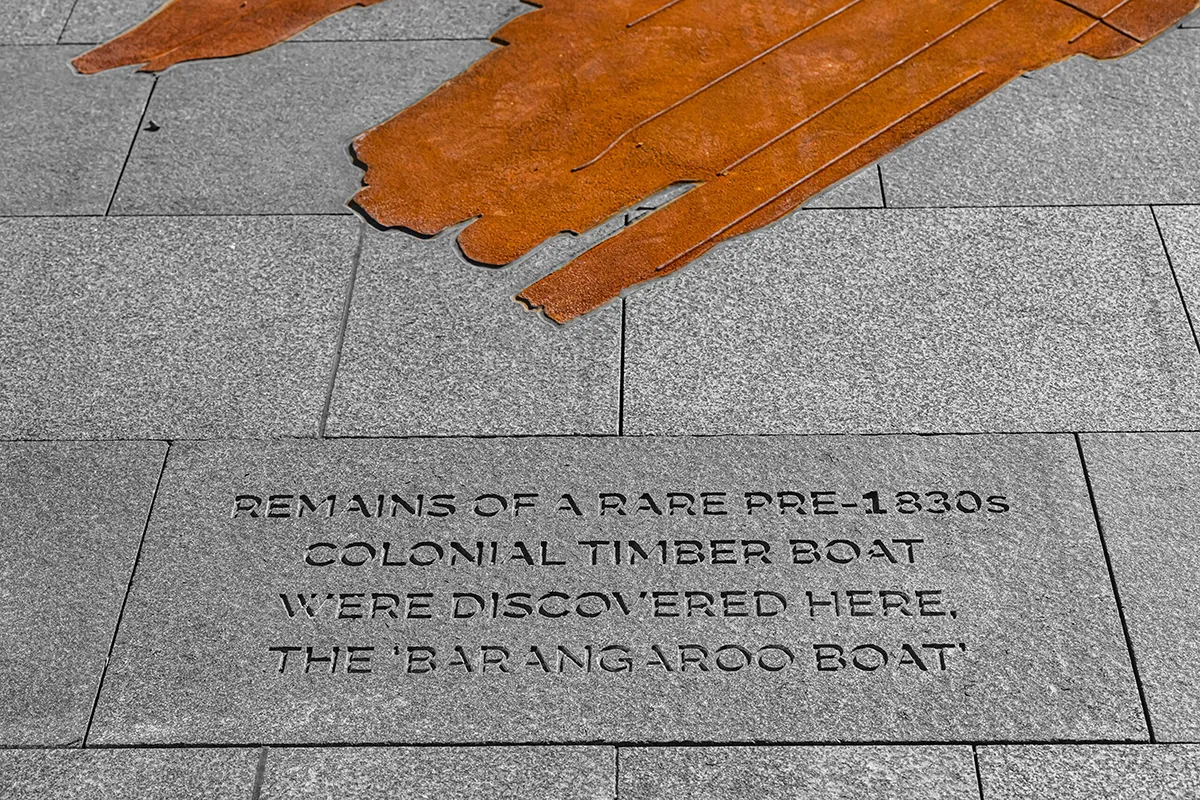
As pedestrians move through the space, they pass a paving inlay of the ‘Barangaroo Boat’—an 8 x 3 metre, two-dimensional representation of the boat as it was discovered by archaeologists. Fabricated in cast iron, the boat artwork is positioned to connect users to the early colonial heritage of the site, creating a visual narrative of Sydney’s past and providing an educational opportunity for visitors.
The landscape of the Barangaroo area has changed dramatically through its maritime use, with mid 1800s land reclamations and an increase in maritime activities resulting in multiple human-altered shorelines onsite. Archaeologists also discovered the components of a seawall, which Arcadia has designed a brass ground inlay that outlines the location of the seawall and shoreline in 1865.
Barangaroo Station Park
Location: Barangaroo NSW
Indigenous Nation: Dharug (Eora) – Gadigal
Landscape Architect: Arcadia Landscape Architecture
Key Collaborators:
Foster + Partners: Design architect
Architectus: AEO and executive architect
Artefact Heritage and Environment: Heritage consultants
METRON consortium, Mott MacDonald and Arcadis: Project lead and engineering design
SESL: Soil consultants
Tilt Industrial Design
First Nations Collaborators:
Sydney Metropolitan Land Council
Yerrabingin: design jams and consultation
Jiwah: Planting strategy co-design/collaboration
Client: Sydney Metro
Images: Brett Boardman