
Article by Henry Jefferies
New public spaces, reconnecting the Thames Path and a surprising bug hotel all delivered as part of London’s new super sewer.
150 years ago, a civil engineer named (Sir) Joseph William Bazalgette was appointed as Chief Engineer of London’s Metropolitan Board of Works. His major achievement in this position was the creation of the London Main Drainage sewer system as a response to the Great Stink of 1958.
The Bazalgette sewage system was designed for a London population that is now half its current size, so the new Thames Tideway Tunnel project aims to ensure the capital’s sewerage system is fit to support its projected population for at least the next 100 years. The new tunnel will address sewage pollution in the river, ensuring that sewage is collected and treated before it is released into the Thames.
The primary aim of the new super sewer is to prevent further pollution to the Thames, which will effectively allow the river’s ecological balance to start to restore; however, this article focuses on the benefits beyond the big infrastructure, the less apparent opportunities for creating spaces within a larger framework with bigger drivers for change.
The project has identified 24 sites across London where existing sewers will be intercepted and replaced with new sewer infrastructure. Some of these sites form part of a series of new high-quality public spaces that will provide London with new opportunities to enjoy the river and its environment, and that are a fitting addition to the work that Bazelgette initiated 150 years ago.
With collaboration at the heart, the team provided design direction and problem-solving throughout, working closely with artists, specialist manufacturers and local authorities, ensuring that the quality and design intent from the early planning stages carried through to completion. The result of which is an enduring, well-used public realm and functional, considered service spaces that support the tunnels’ ongoing use and maintenance.
FOCUS SITE: Putney Embankment Foreshore
As part of the seven sites developed for detailed design and delivery in the west section of the tunnel, Putney Embankment Foreshore is a new, high-quality public space that celebrates a unique riverside location and the start line of the Oxford-Cambridge boat race.
Arup, as part of an integrated team, has developed the detailed design for the Putney Embankment Foreshore site. As landscape architects on the project, we have coordinated with the other disciplines to detail a high-quality, distinctive public space that celebrates the history of the Oxford-Cambridge boat race, which starts at this point on the Thames. The design delivers an enduring public realm that provides opportunities for events or a space for quiet contemplation adjacent to the river.
Artist Claire Barclay was commissioned to create a series of artworks for the new public space at Putney. Her work draws on the site’s history, as outlined in Tideway’s Heritage Interpretation Strategy. For the western section of the tunnel, the cultural theme is “Recreation to Industry: Society in Transition.” At Putney, this narrative explores how cultural context has shaped popular movements for social change, inspiring diverse forms of political engagement.


FOCUS SITE: Barn Elms
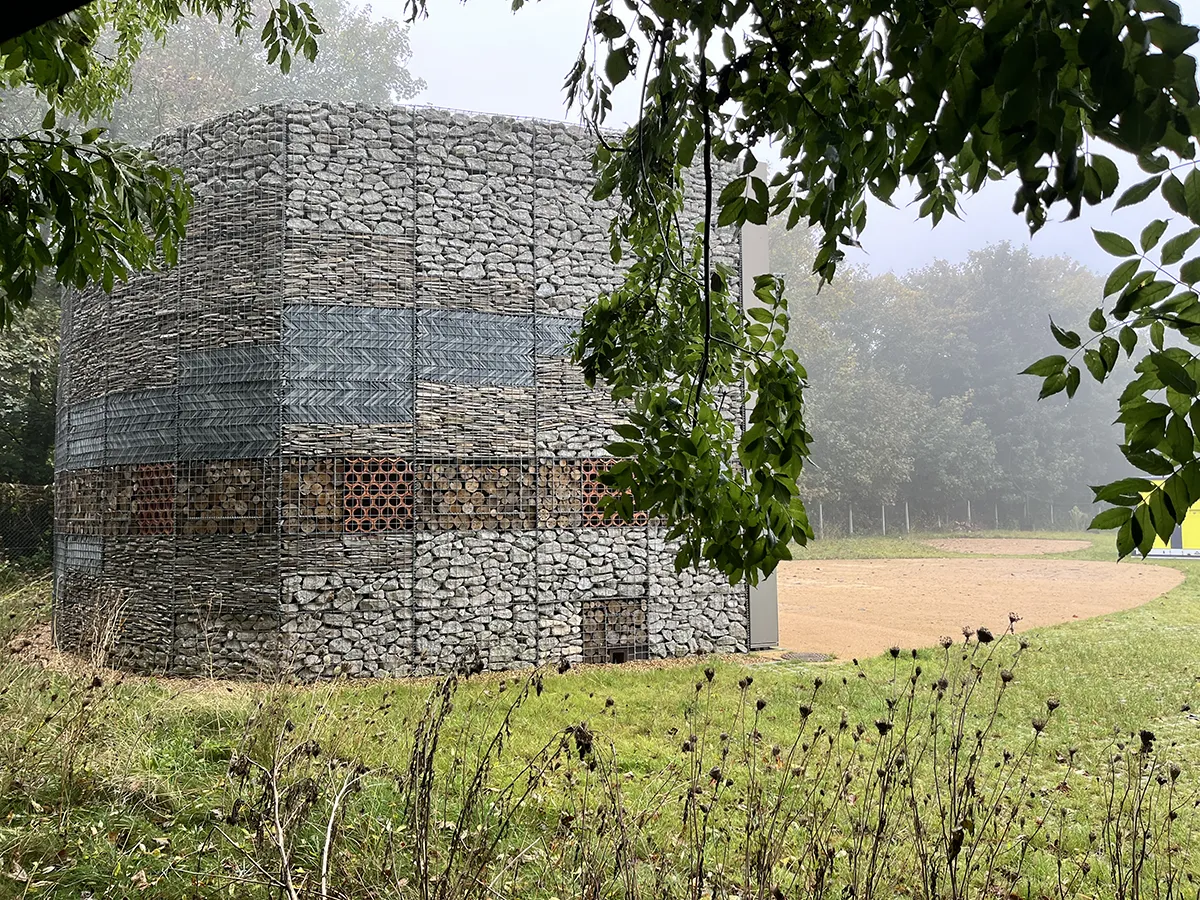
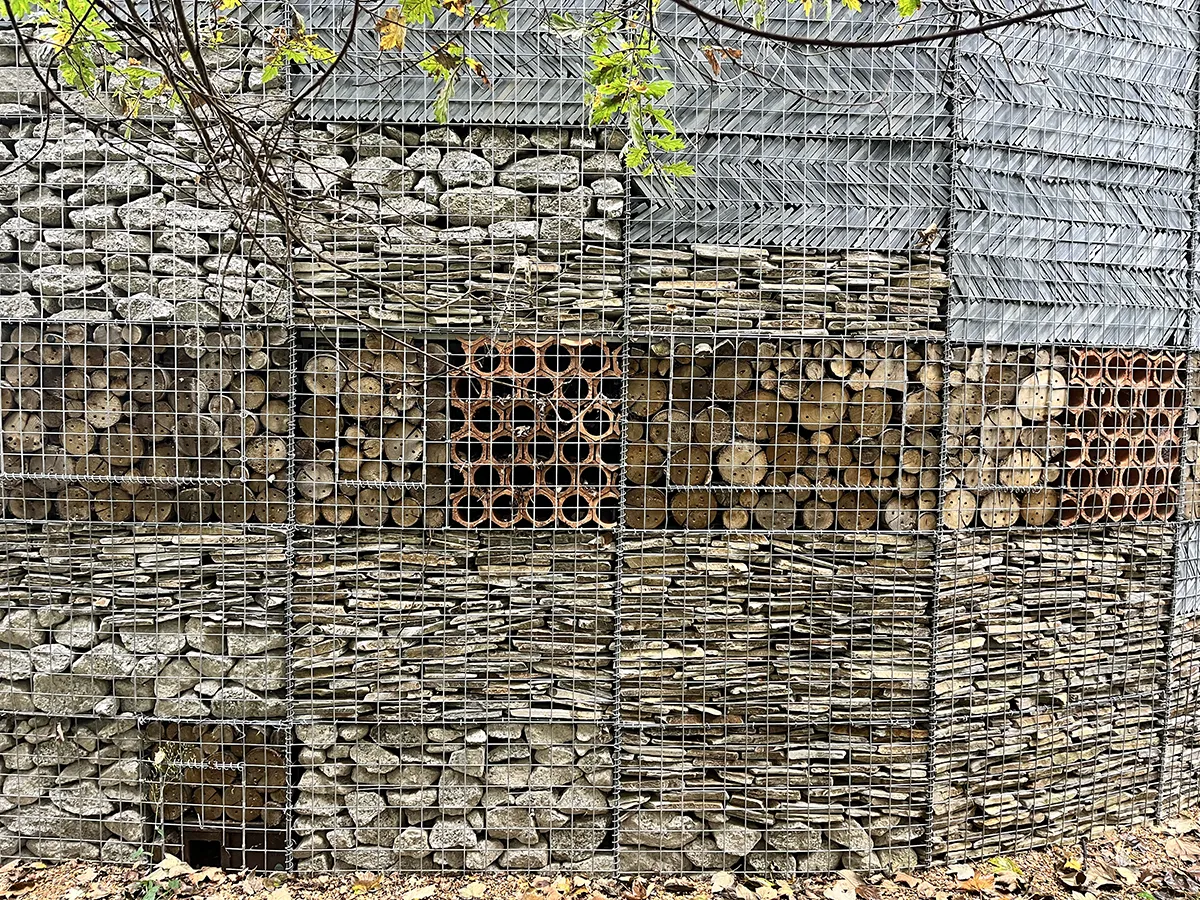
The Barn Elms ecological kiosk is much more than a structure to house mechanical and electrical equipment; it’s a celebration of sustainability and nature. Designed with the environment in mind, it features a brown roof and a living wall that boost local biodiversity, create habitats, and connect green spaces to the nearby London Wetland Centre.
Built using locally sourced materials, the design allows for easy deconstruction and reuse, ensuring a long life cycle and promoting a circular economy.
Nestled in a vibrant wildflower meadow, the kiosk offers visitors a beautiful, nature-rich space. Bat and bird boxes nearby help conserve local species, while the kiosk’s curved shape mirrors the flow of Beverley Brook, blending seamlessly into the landscape.
To make the kiosk even more special, British artist Adam Chodzko created an integrated artwork for its façade. This unique collaboration transforms the kiosk into a striking green sanctuary that leaves a legacy for both people and wildlife.
FOCUS SITE: Carnwath Rd
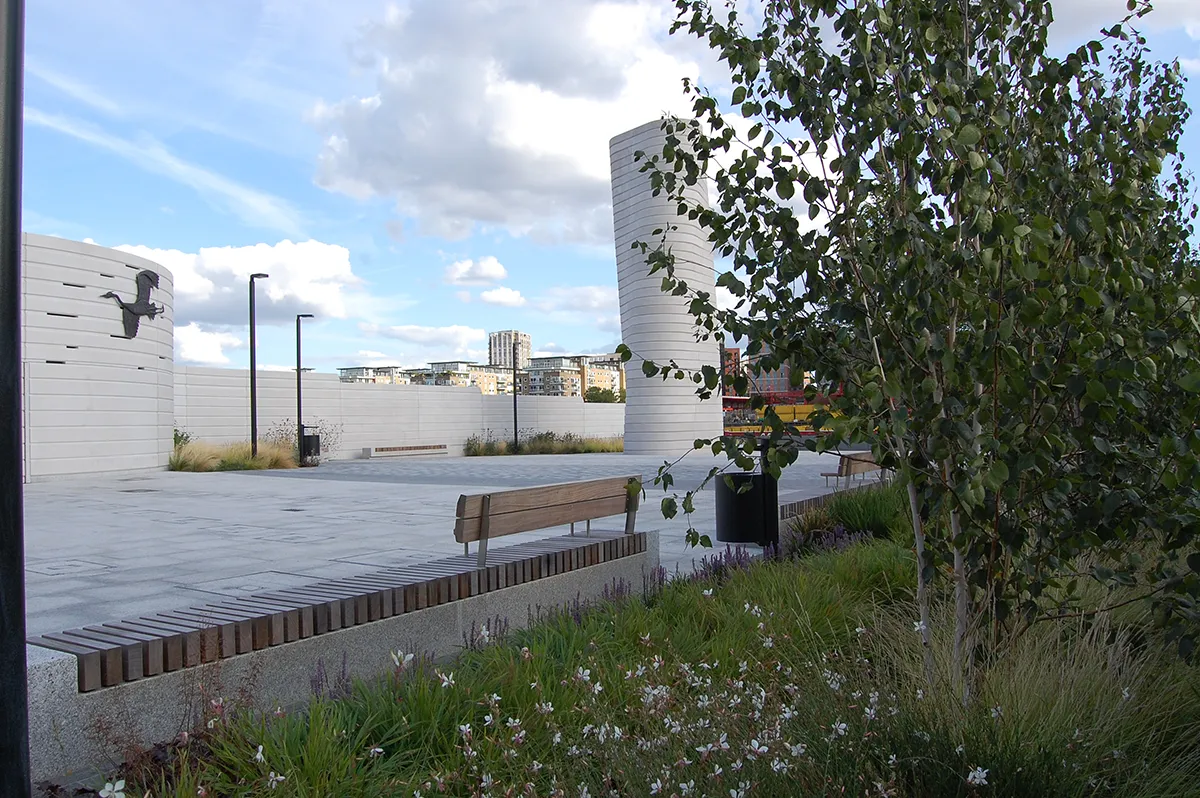
This small urban square opens a new access direct to the river, with permanent seating and a welcoming space for the community to enjoy. The previously obstructed section of the Thames Path now stretches across the entire riverside section of the site as a generous six-metre-wide walkway. To keep the riverfront open for the future, the fifteen-metre ventilation column has been set back, paving the way for the path to continue along Hurlingham Wharf.
The design language takes inspiration from the river itself. Sinuous bands inspired by the bend of the Thames and the nearby reeds undulate through the space, appearing in the ventilation column, the kiosk building, and the boundary wall along Hurlingham Wharf.
The foreshore sits within a designated Site of Importance for Nature Conservation, bringing nature into the heart of the design with sixteen semi-mature trees, vibrant shrubs, ornamental grasses, and perennial planting. A 150-square-metre biodiverse roof sits atop the ventilation building, and a special nesting feature has been created for the Black Redstart.
Artworks integrated throughout the park celebrate the river’s rich heritage, its role in commerce, and its natural environment, making this space not just a route but a destination. Artist Sarah Staton created two bronze sculptures for the site that celebrate the area’s industrial and cultural history. The two-part artwork entitled Standing Heron and Heron in Flight responds to the water’s wildlife and echoes the site’s connection to artists and craftspeople who worked on the fringes of the local manufacturing buildings.
The Thames Tideway Tunnel is more than essential infrastructure; it’s a catalyst for creating vibrant public spaces and restoring London’s connection to the river. These relatively ‘quieter’ interventions, from ecological kiosks and biodiverse roofs to art installations and accessible walkways, each blend a multidisciplinary approach to enhance biodiversity, celebrate heritage, and improve well-being. They leave a legacy for both people and wildlife, ensuring the Thames remains a vital, sustainable part of London for generations to come.
Crucially, this success was only possible through deep collaboration. Designers, engineers, contractors, artists, local authorities, and specialist manufacturers worked together from concept to completion, ensuring that technical excellence aligned with cultural and environmental aspirations. This integrated approach allowed challenges to be solved collectively, maintained design intent throughout delivery, and encouraged innovation across disciplines. It demonstrates that when infrastructure projects embrace collaboration, they can achieve outcomes that are not only functional but also socially and ecologically transformative.
As London continues to grow, this model sets a benchmark for future projects, proving that engineering and placemaking can work hand in hand to shape a sustainable urban legacy.
Thames Tideway Tunnel
Article by Henry Jefferies
Arup was part of the Arup Atkins Joint Venture (AAJV), which played a significant role in the project, particularly in developing landscape proposals, detailed design and delivery for the seven western sites.
Image Credits: As captioned