
Winner of an Outstanding Award in the 2026 WLA Awards – Built | Large Public Space Design category
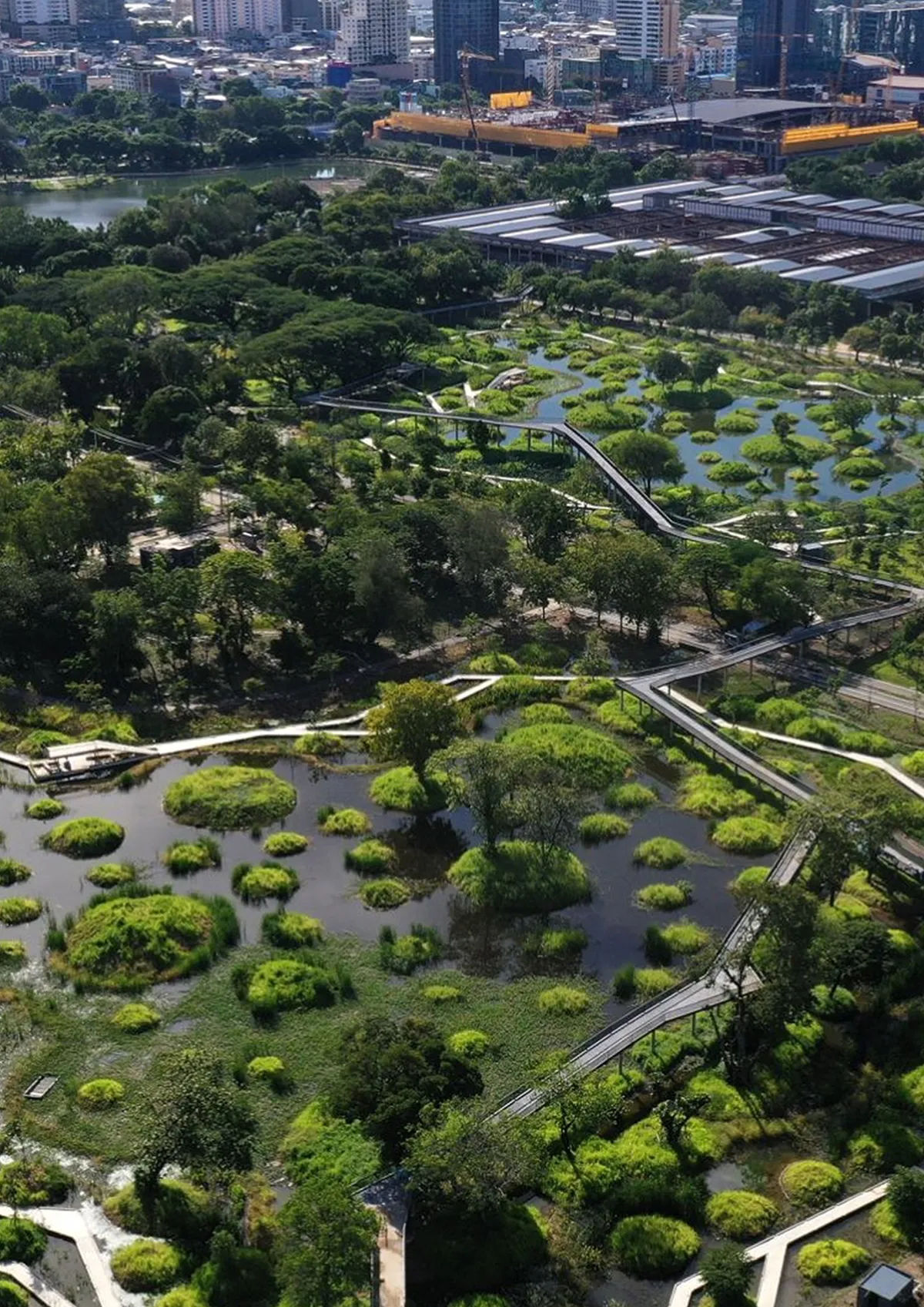
Benjakitti Forest Park is an urban park located on the former Tobacco Factory site in central Bangkok, owned by the Treasury Department, Ministry of Finance. Covering approximately 720,000 square meters, the site was transformed into a public green space after the factory was relocated, creating a new ecological and social landmark for the city.
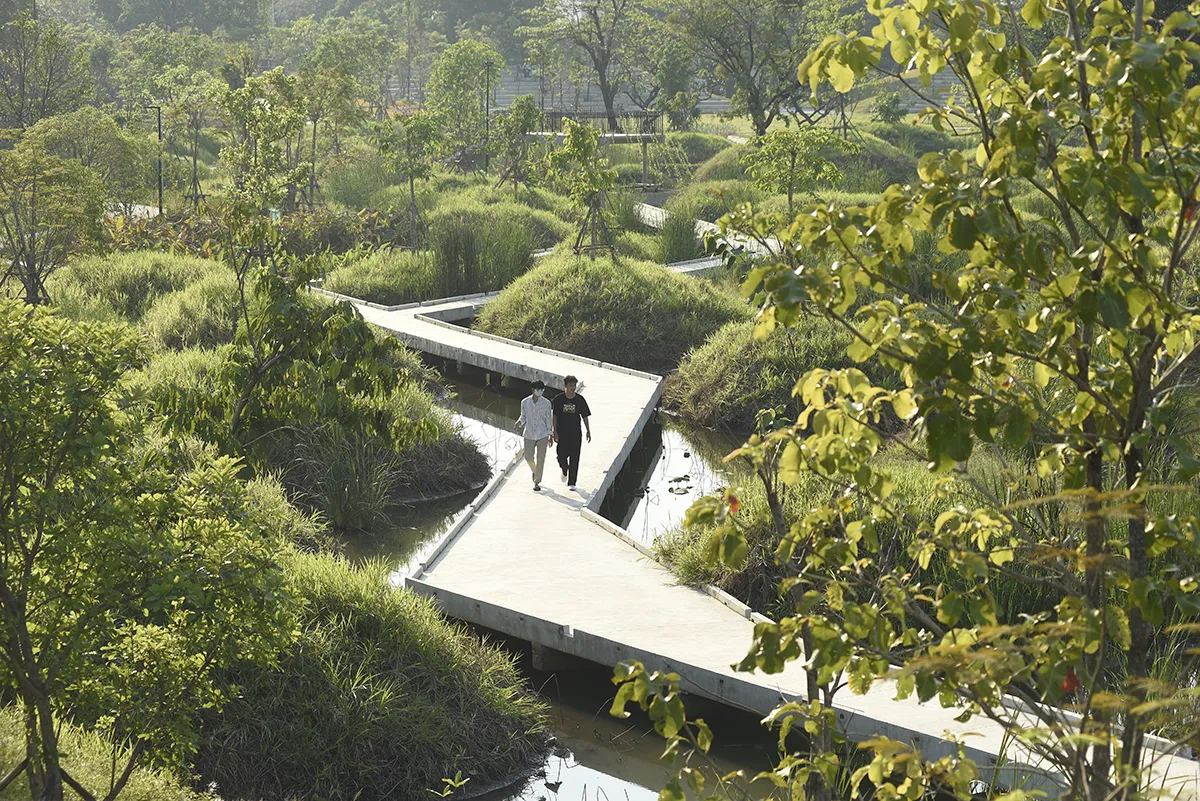
Thailand’s monsoon climate presents significant challenges from both flooding and drought. The park functions as a large urban “sponge,” retaining rainwater during the wet season and releasing it during dry periods, with a total water storage capacity of 128,000 cubic meters. Water from the adjacent Phai Sing To Canal, previously contaminated by urban runoff and sewage, is treated through bioremediation using
wetland plants, producing up to 1,600 cubic meters of clean water per day.
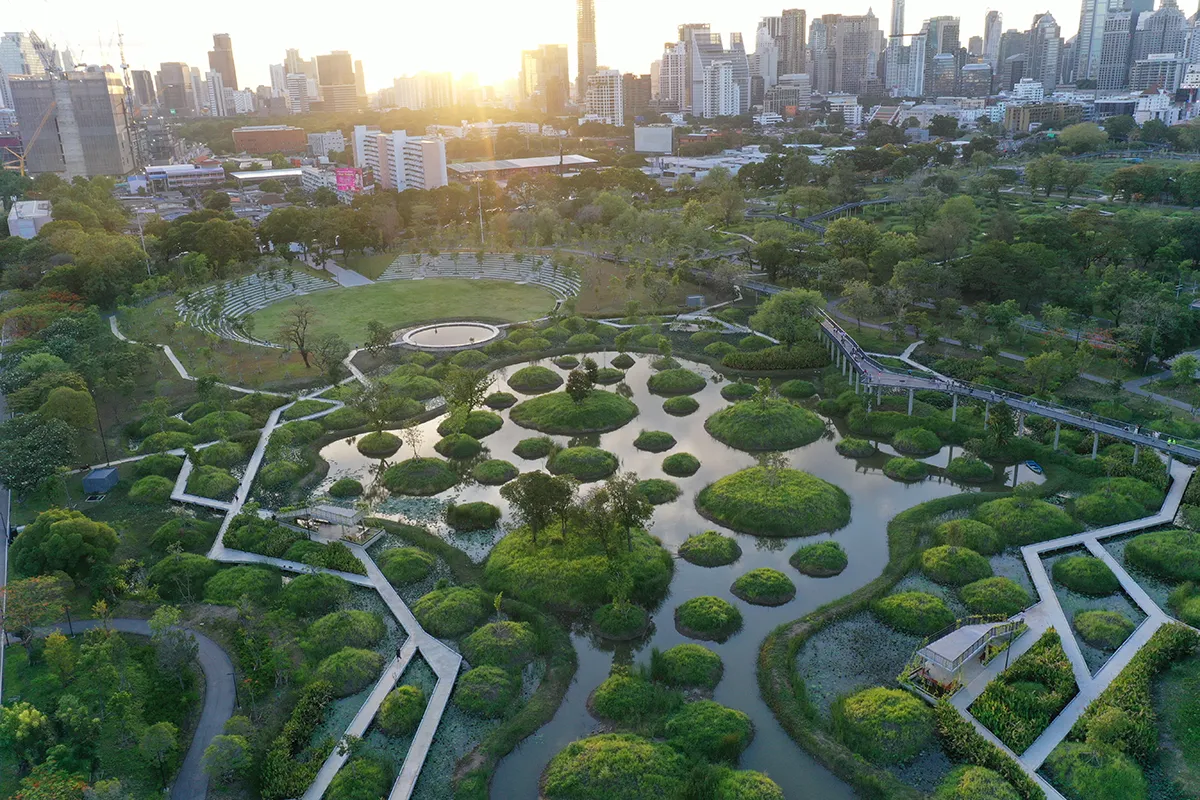
The site is flat and low-lying, with an average elevation of only 0.5 meters, and was originally swampland with high groundwater levels. Traditional Thai agricultural wisdom was adapted by elevating tree root zones to avoid flooding and incorporating raceways and irrigation canals to manage drainage and water distribution, demonstrating climate-adaptive strategies rooted in local knowledge.
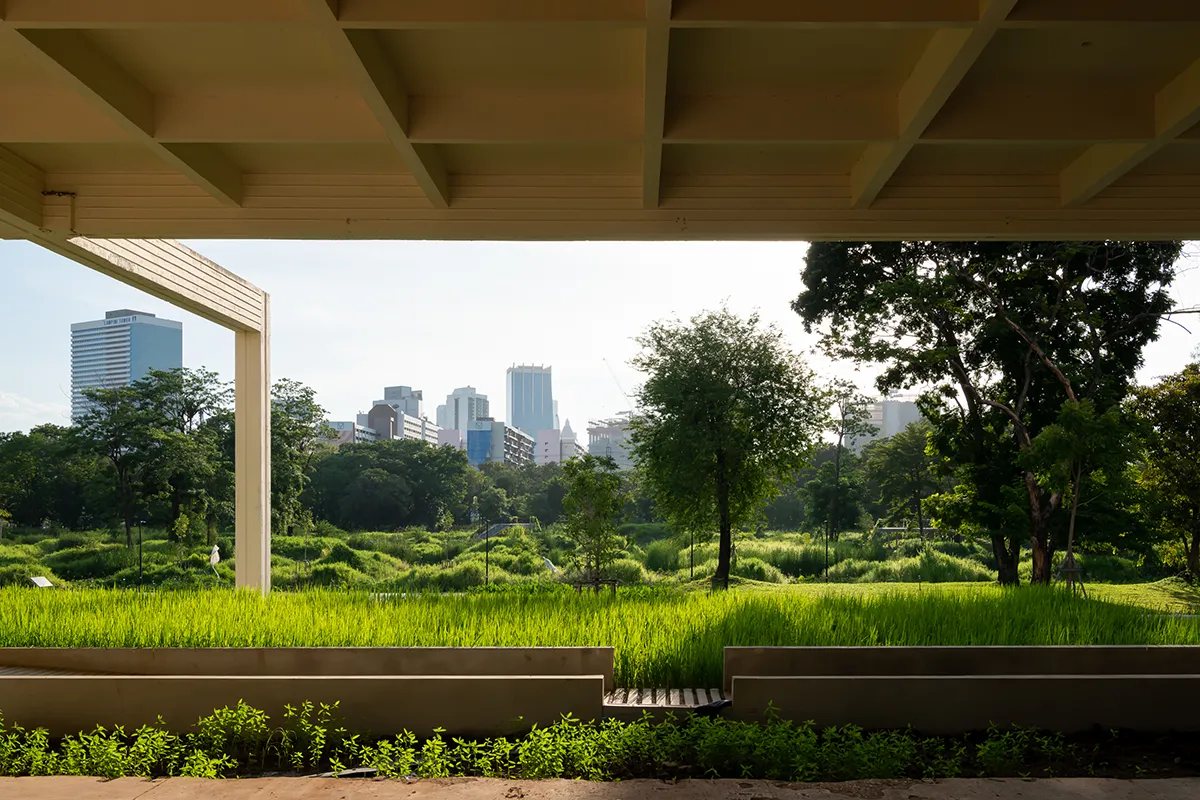
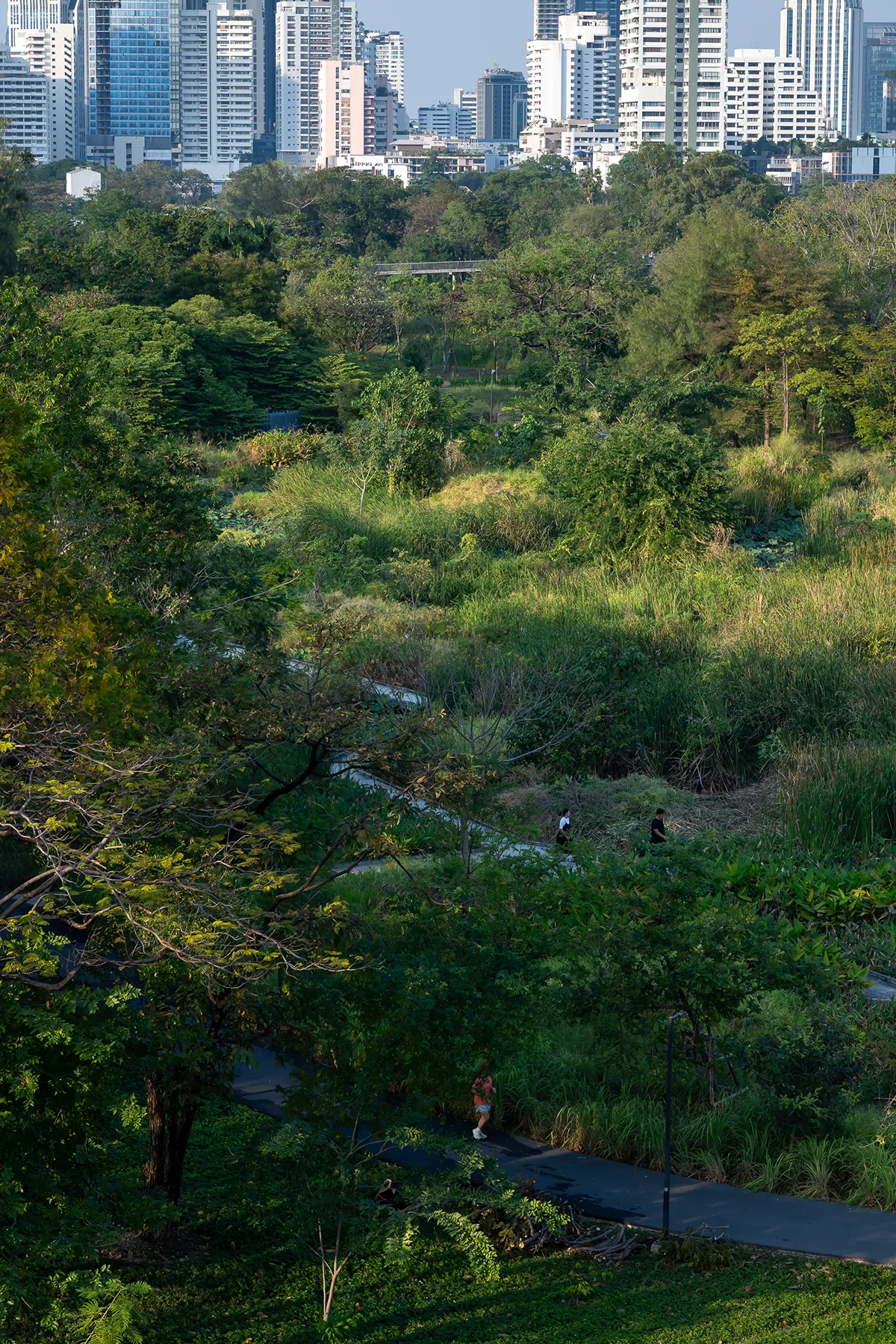
The project transformed compacted clay soil into a wet, spongy habitat capable of supporting a diverse native plant ecosystem with minimal irrigation. A total of 5,600 seedlings representing 360 rare indigenous tree species from Thailand’s central river basin were planted, combined with small to medium-sized plants that provide shade and support early growth. Existing trees on site were preserved and integrated into the design, reinforcing ecological continuity.
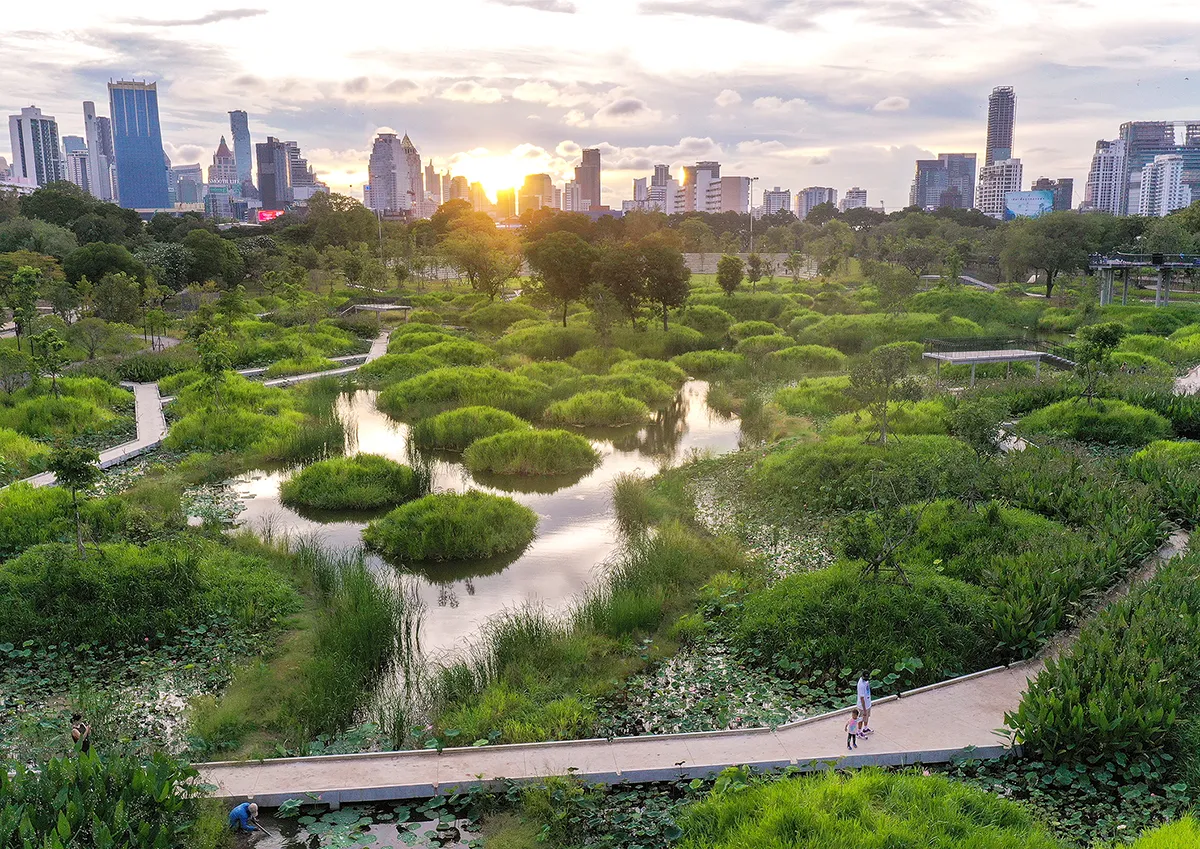
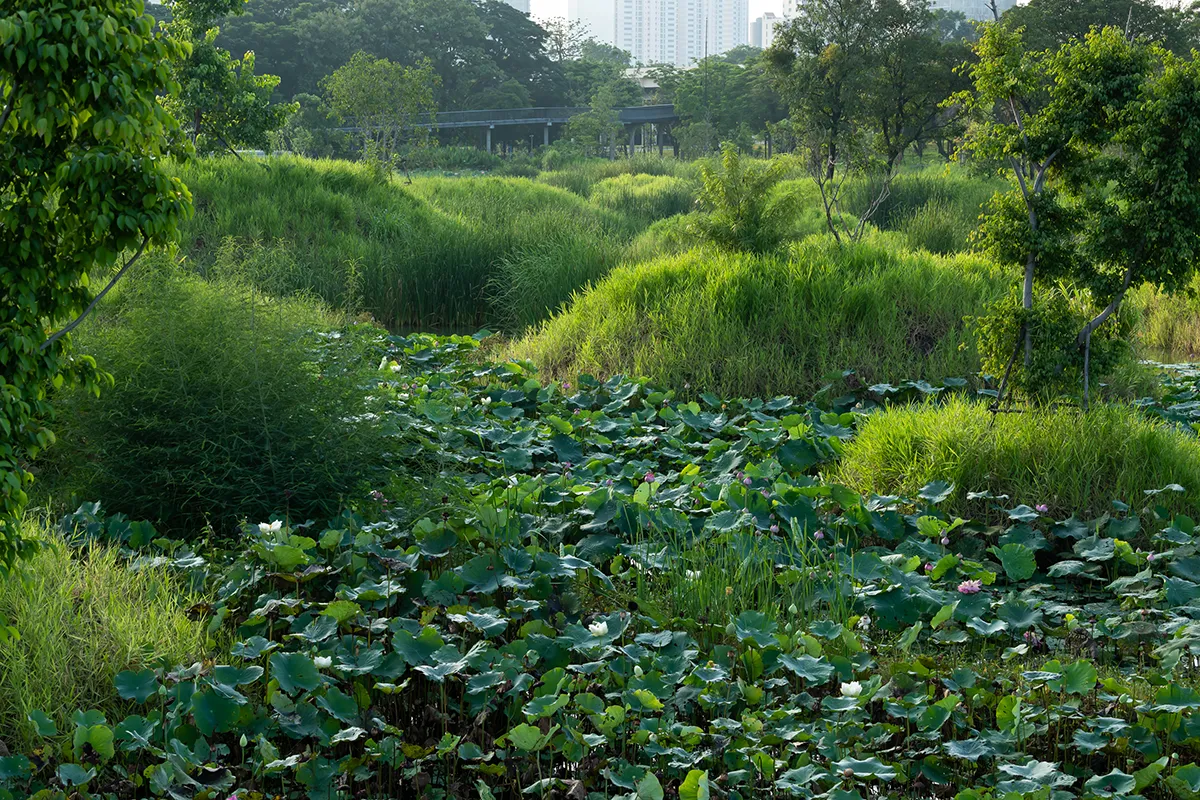
Cut-and-fill earthwork techniques were used to create varied landforms across the site. Materials from on-site demolition, including stone and concrete, were reused as foundations for berm islands and as filtration layers within the water treatment system. Existing concrete paving blocks were reused for bicycle parking areas, while former tobacco factory buildings were renovated into new facility spaces, reducing
construction waste through circular material reuse.
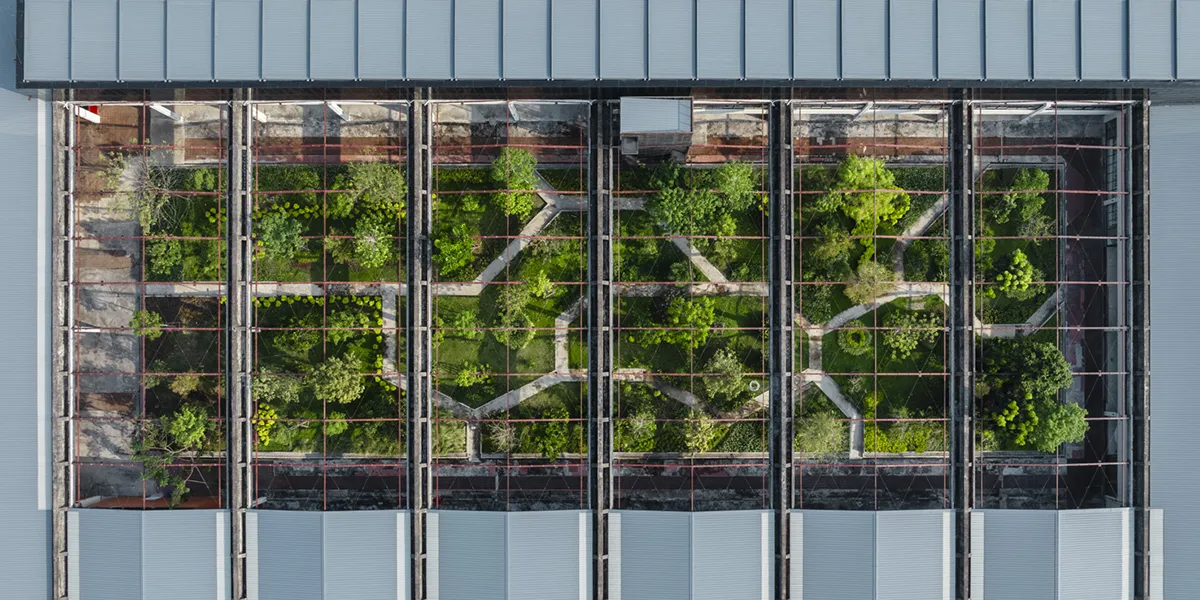
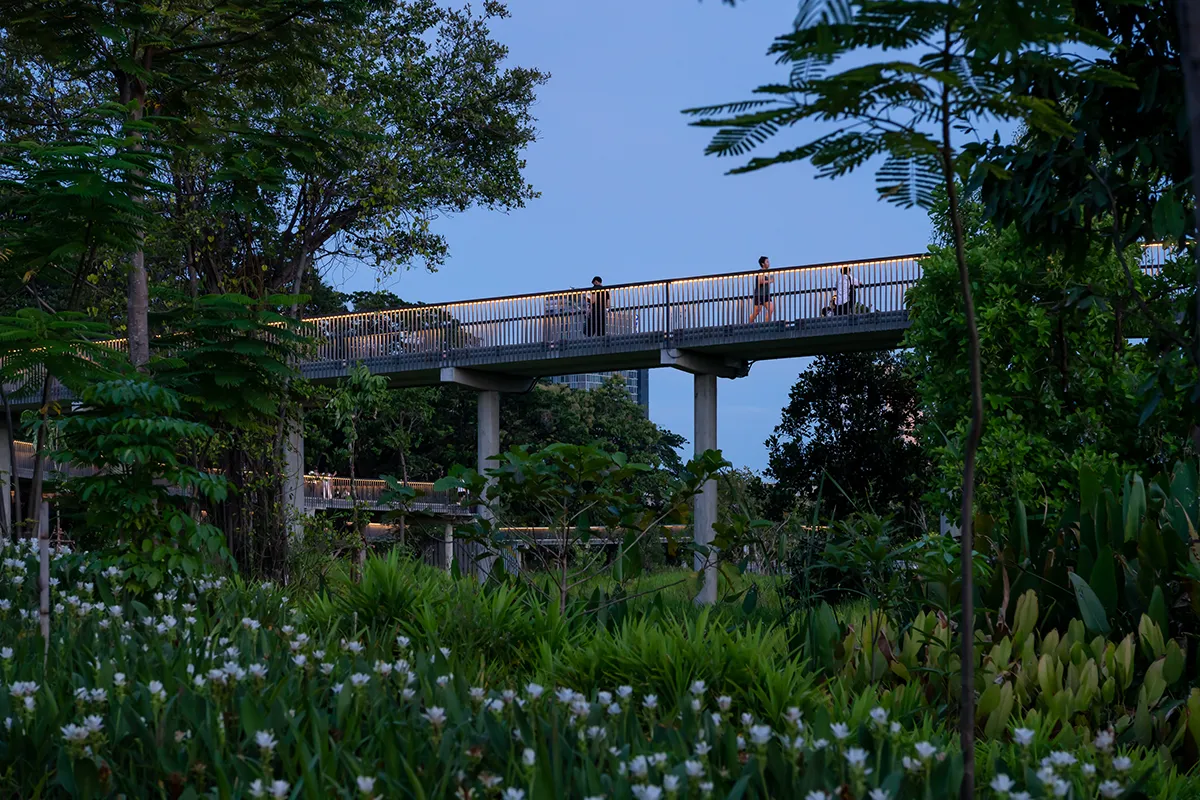
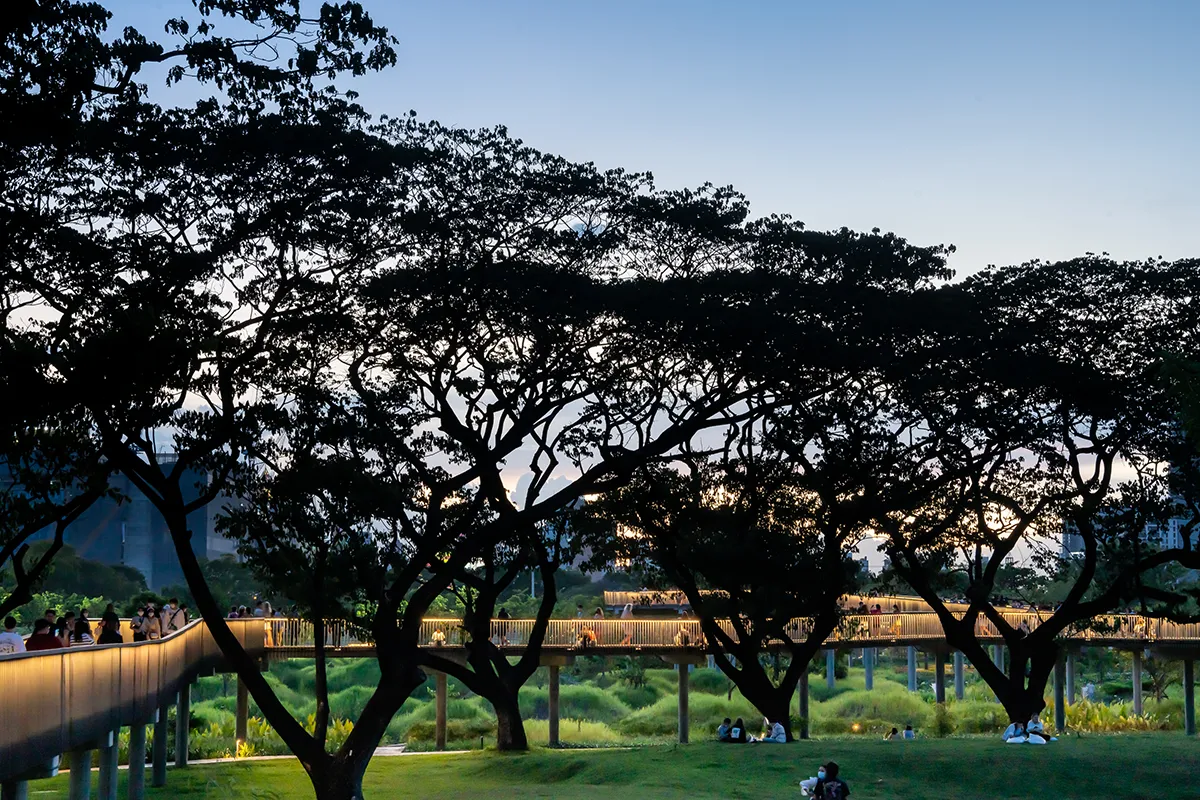
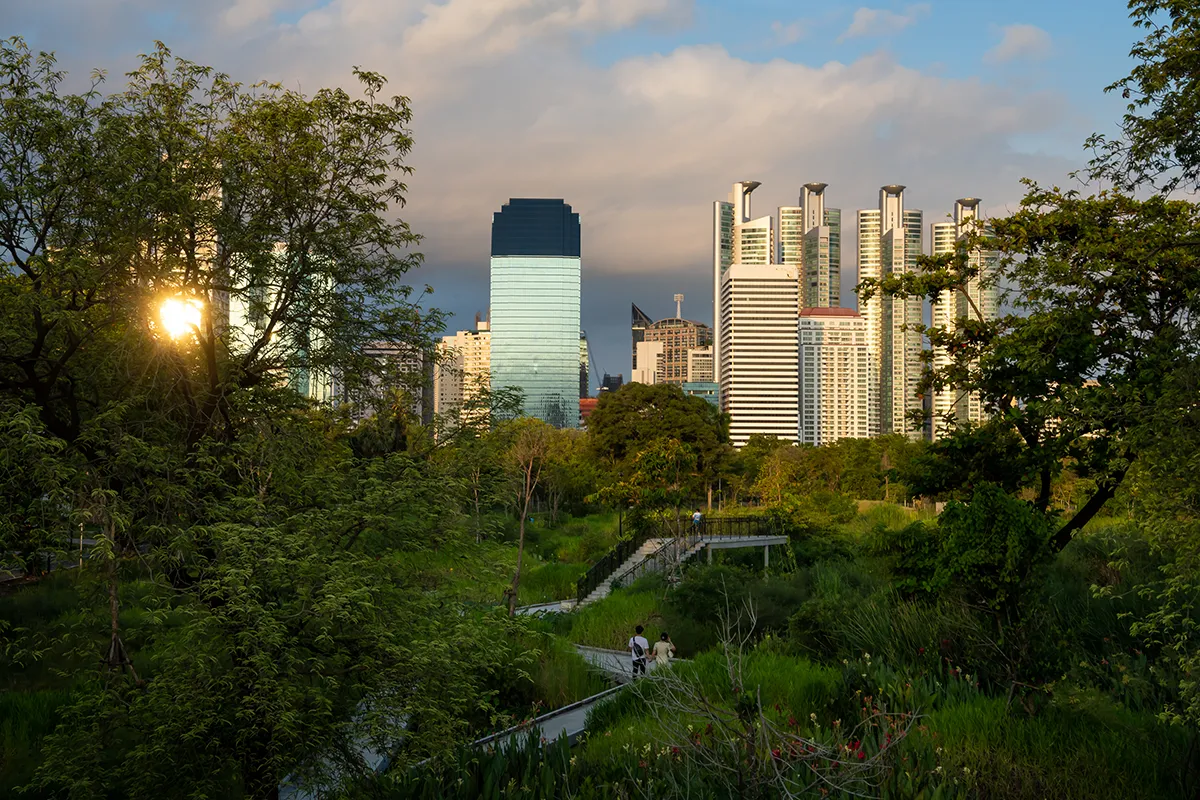
The park is accessible to people from surrounding communities and across Bangkok, offering a place to immerse in a holistic urban ecosystem. Wetland islands serve as refuges for wildlife, enhancing biodiversity within the city. The park is connected by a 1.67-kilometer-long universally accessible skywalk, functioning as a running path, leisure route, and nature learning corridor. Inclusive public spaces throughout the park include bicycle paths, shaded walkways, boardwalks, healing gardens, open lawns,
and waterfront gathering spaces. Renovated factory buildings are planned as museums and sports centers featuring sun-roofs, natural ventilation, and indoor trees to improve air quality and energy efficiency within a limited budget.
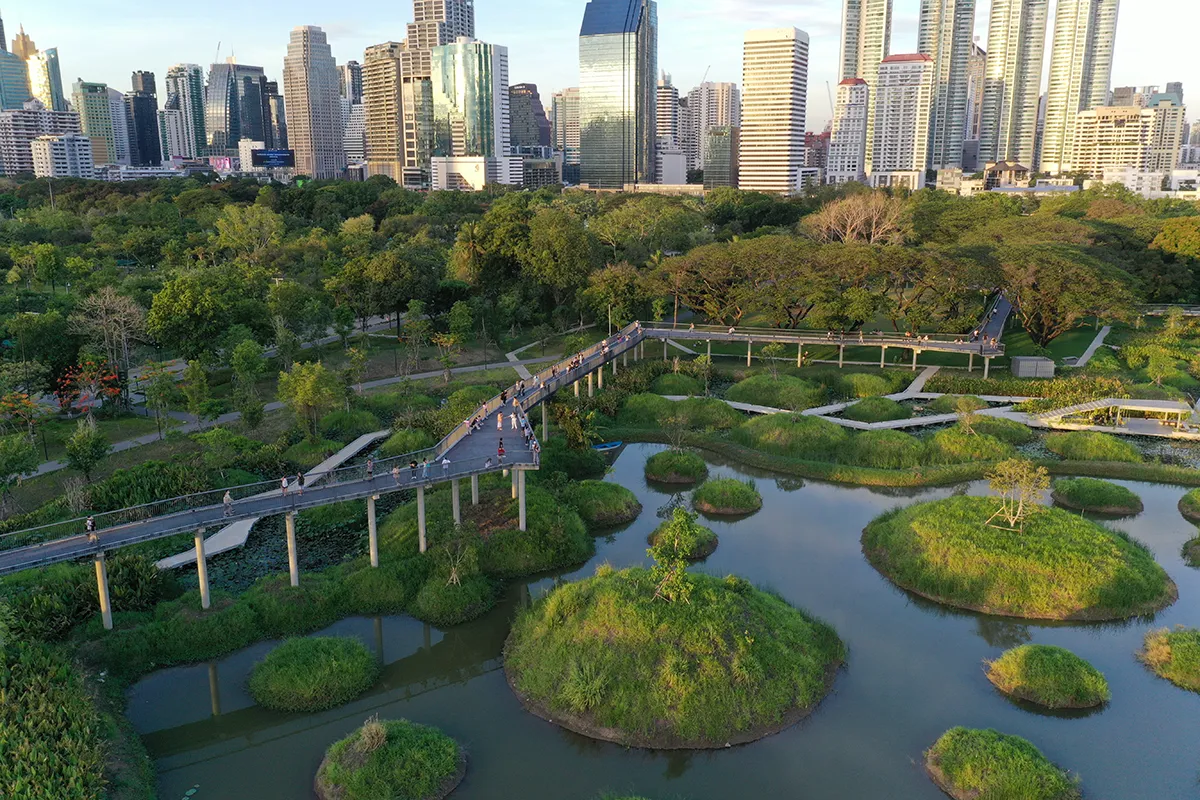
Benjakitti Forest Park has also become an important urban habitat for wildlife. More than 200 bird species have been recorded, including migratory species such as the Scaly-breasted Munia, Blue-tailed Bee-eater, and Ornate Sunbird (ref: ebird.org), establishing the park as a key birdwatching destination in Bangkok.
By creating a holistic ecosystem within the city, Benjakitti Forest Park serves as a biodiverse botanical classroom, demonstrating how sustainable landscape design can restore ecological function while enriching urban life.
Benjakitti Forest Park
Design Firm: Arsomsilp Community and Environmental Architect + TURENSCAPE
Design Consultant: Turenscape, China
Client: The Treasury Department Tobacco Authority of Thailand
Structure Engineering: KASEMDESIGN & CONSULTALT
M&E Engineering: Optimology Co., Ltd
Construction Management: Stonehenge Co., Ltd
Contractor: Royal Thai Army
Signage Design: Plan Motif Co., Ltd
Universal Design: Center of Excellence in Universal Design, Faculty of Architecture, Chulalongkorn University
Text: Arsomsilp Community and Environmental Architect
Image Credit: Arsomsilp Community and Environmental Architect; W Workspace Company Limited;