
Winner of the Outstanding Award in the 2025 WLA Awards – Built Sustainability & Resilience category
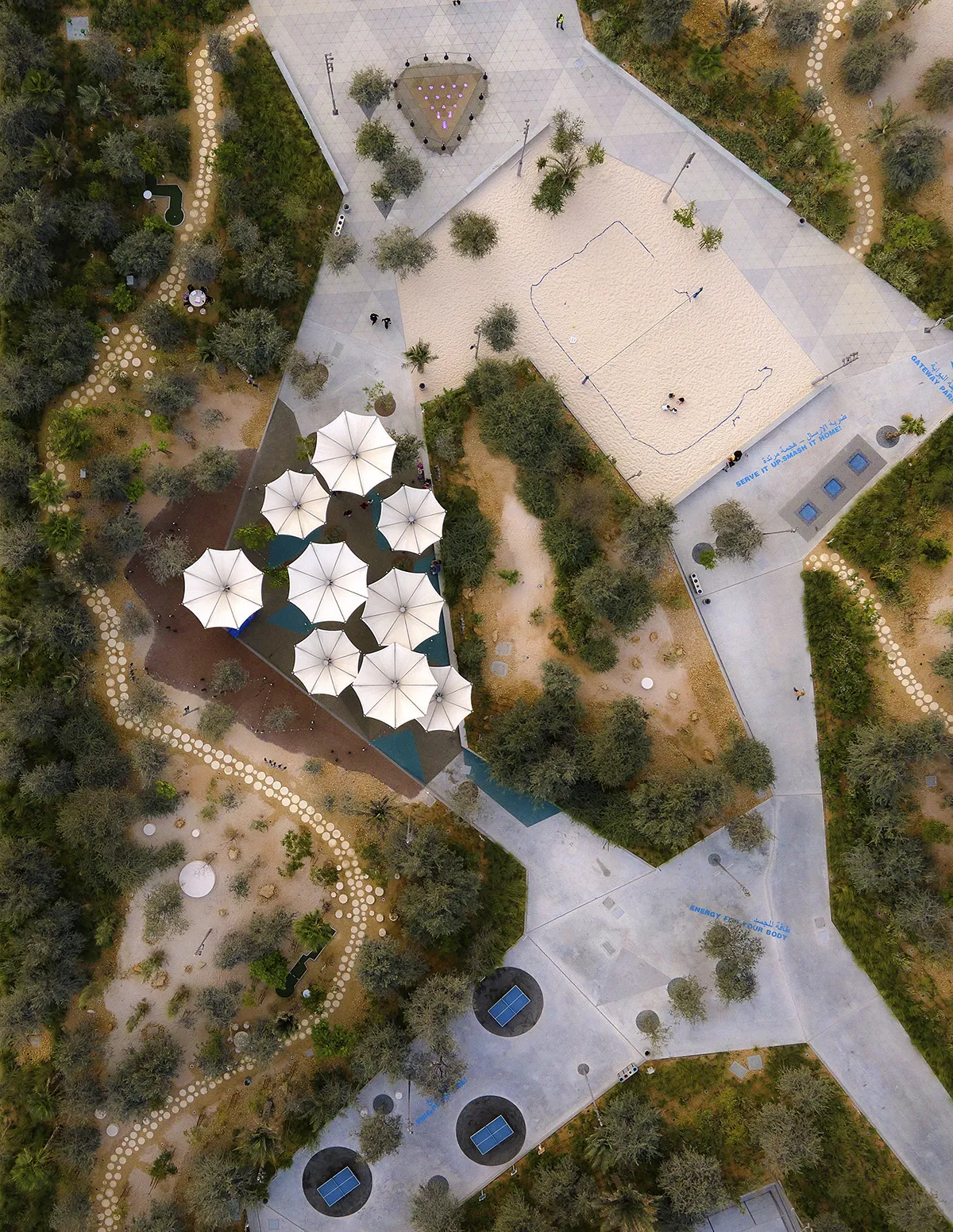
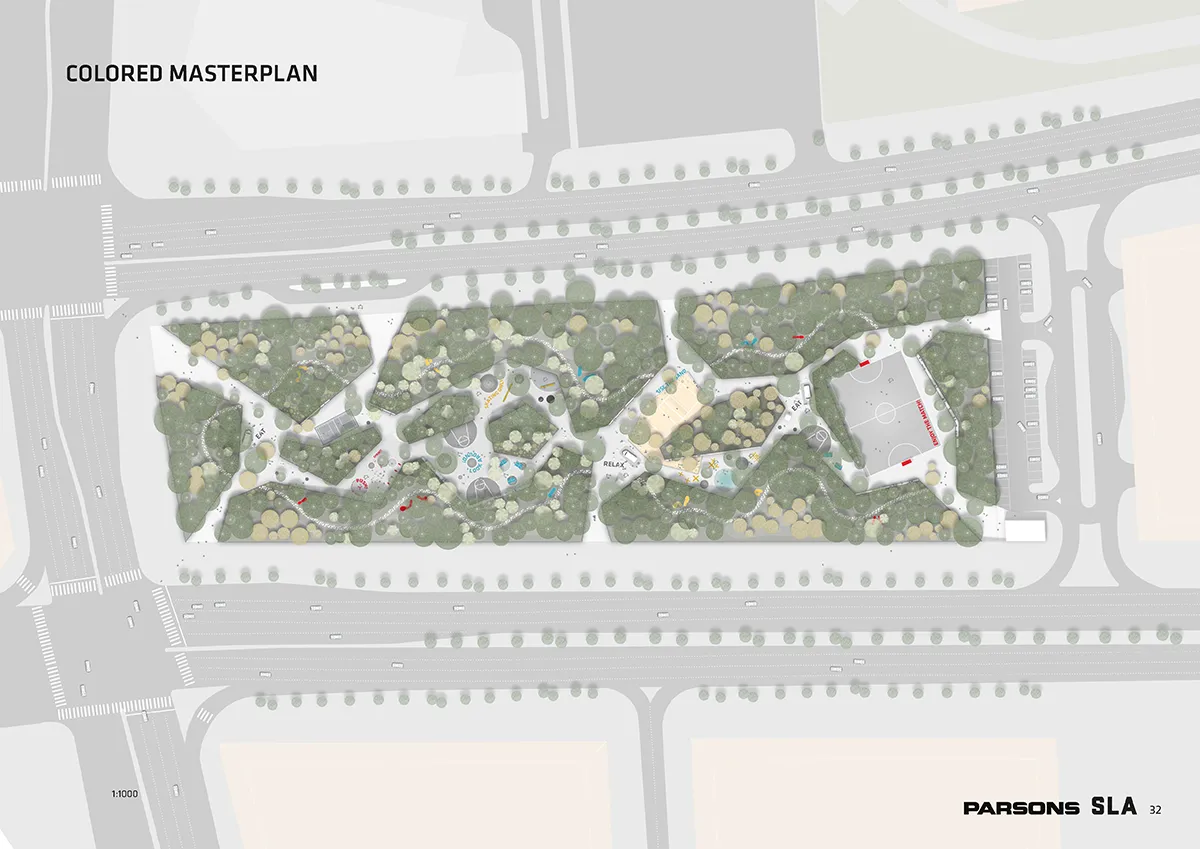
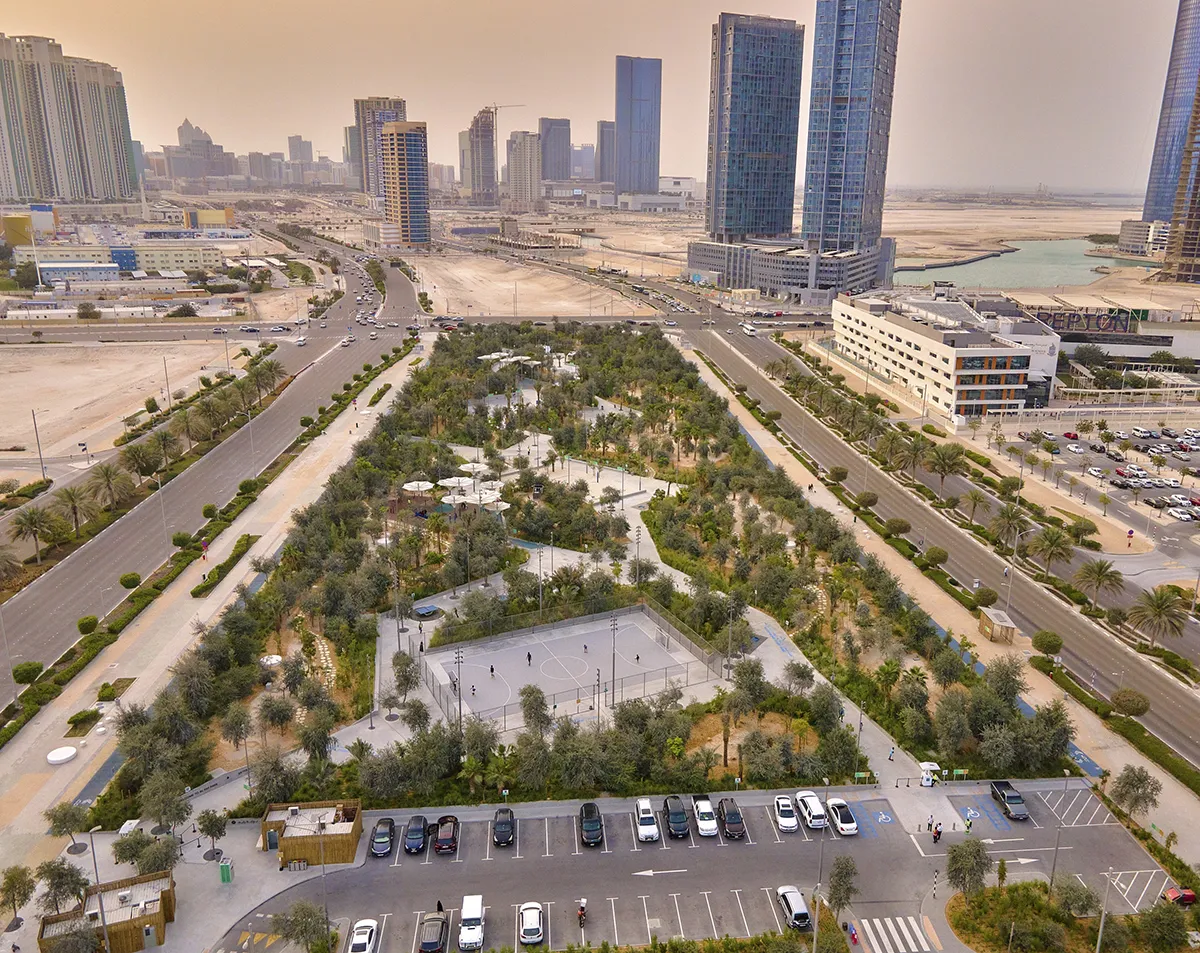
Al Fay Park is the Middle East’s first urban park explicitly designed around sustainability and climate resilience. Designed as a counterpoint to the region’s typical water-intensive “Las Vegas landscapes,” the park introduces a new urban typology – rooted in native biodiversity, ecological heritage, and nature-based solutions. Conceived as purely a sports park, the project evolved into a prototype for climate-responsive park design in arid environments. The result is a 27,500 m² public park with 100% native vegetation and integrated ecological systems that is both socially inclusive and environmentally resilient.
Approach
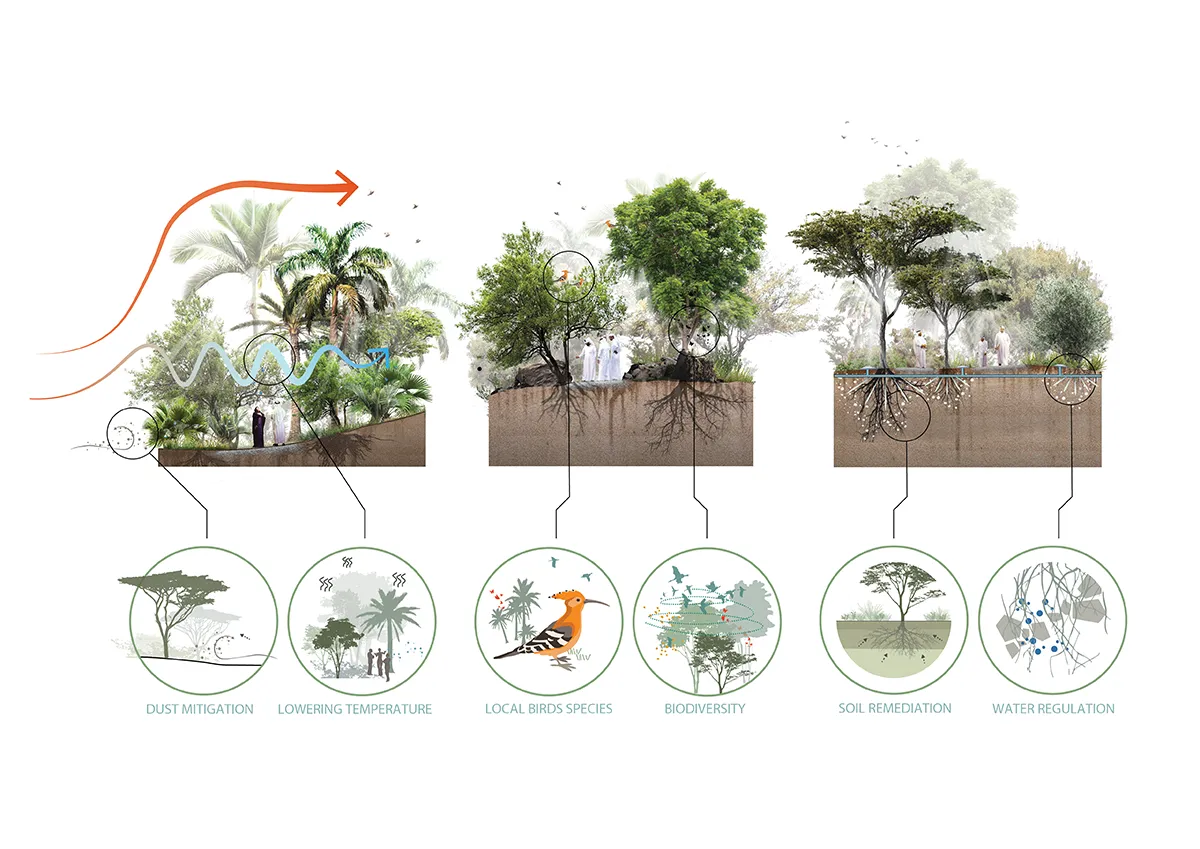
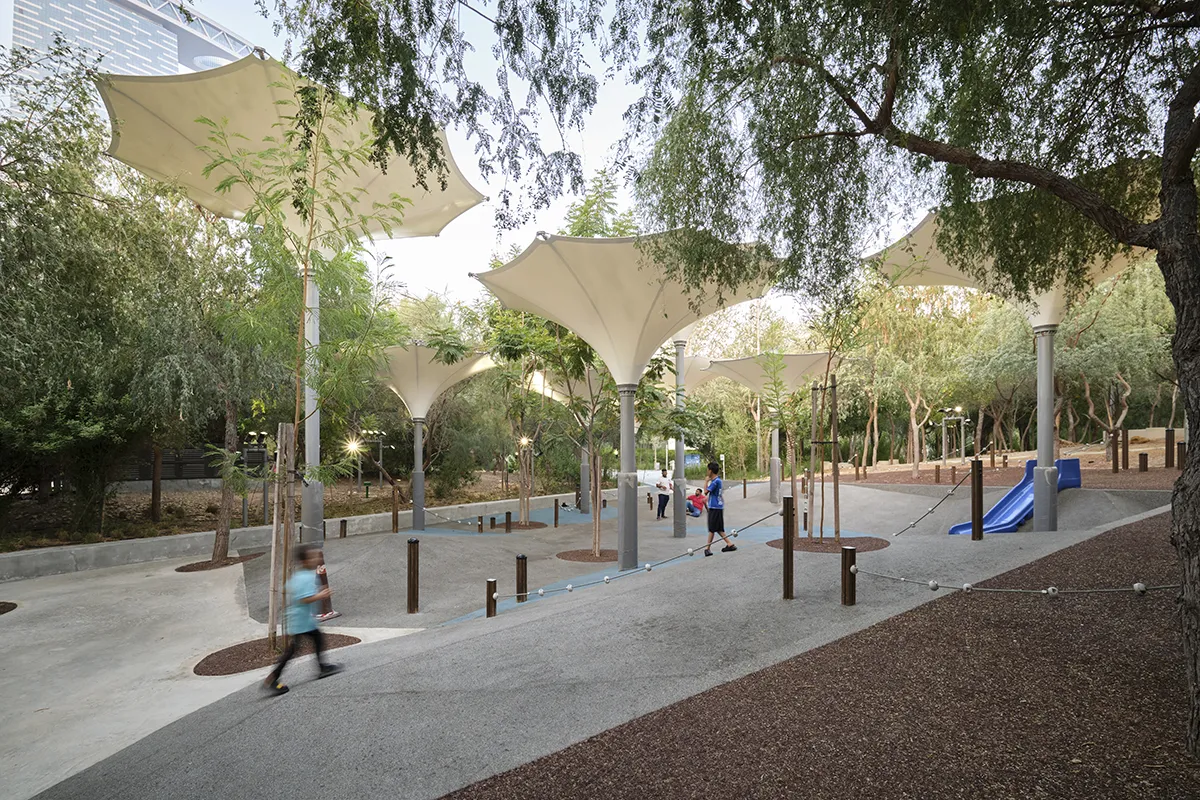
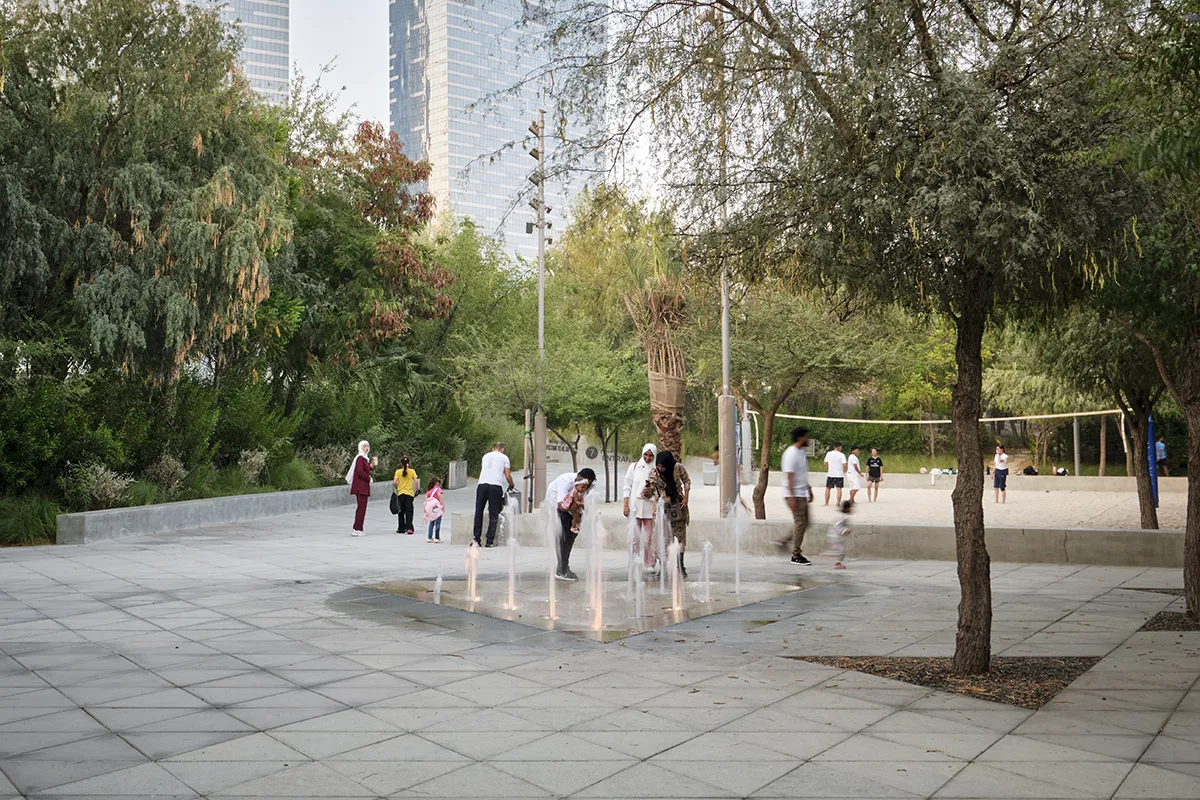
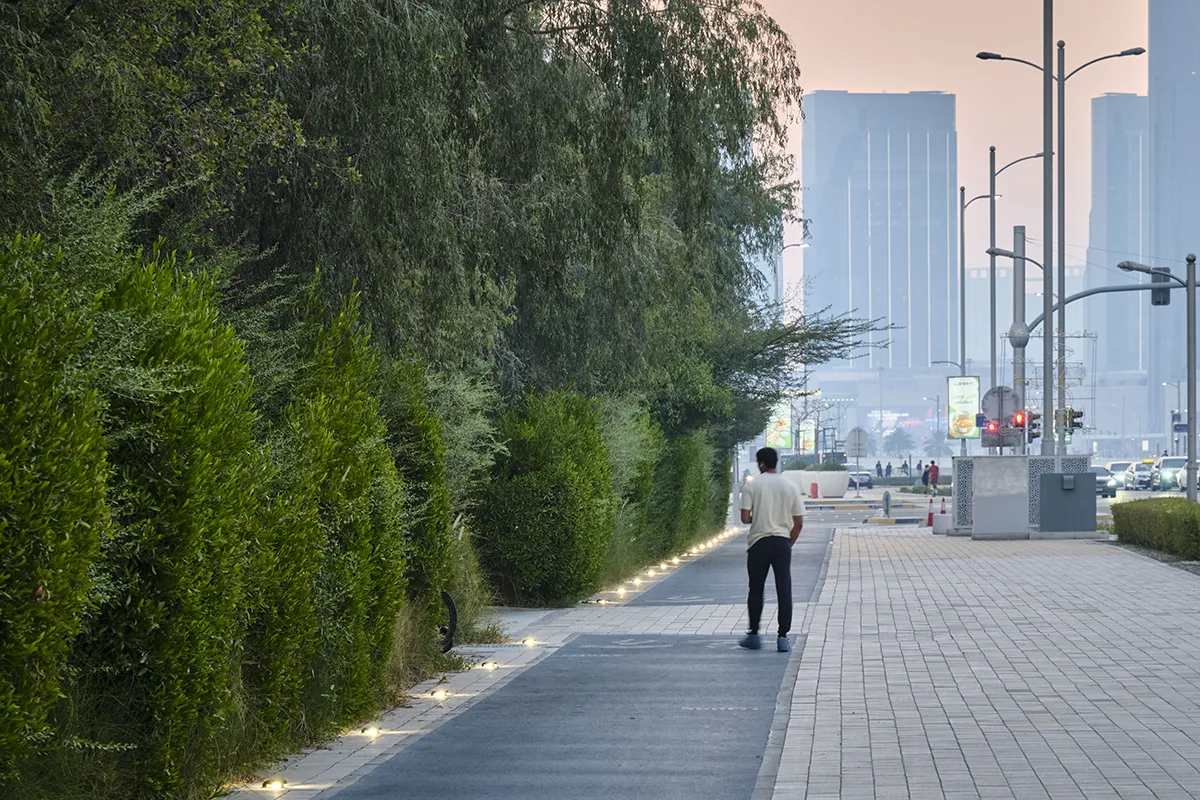
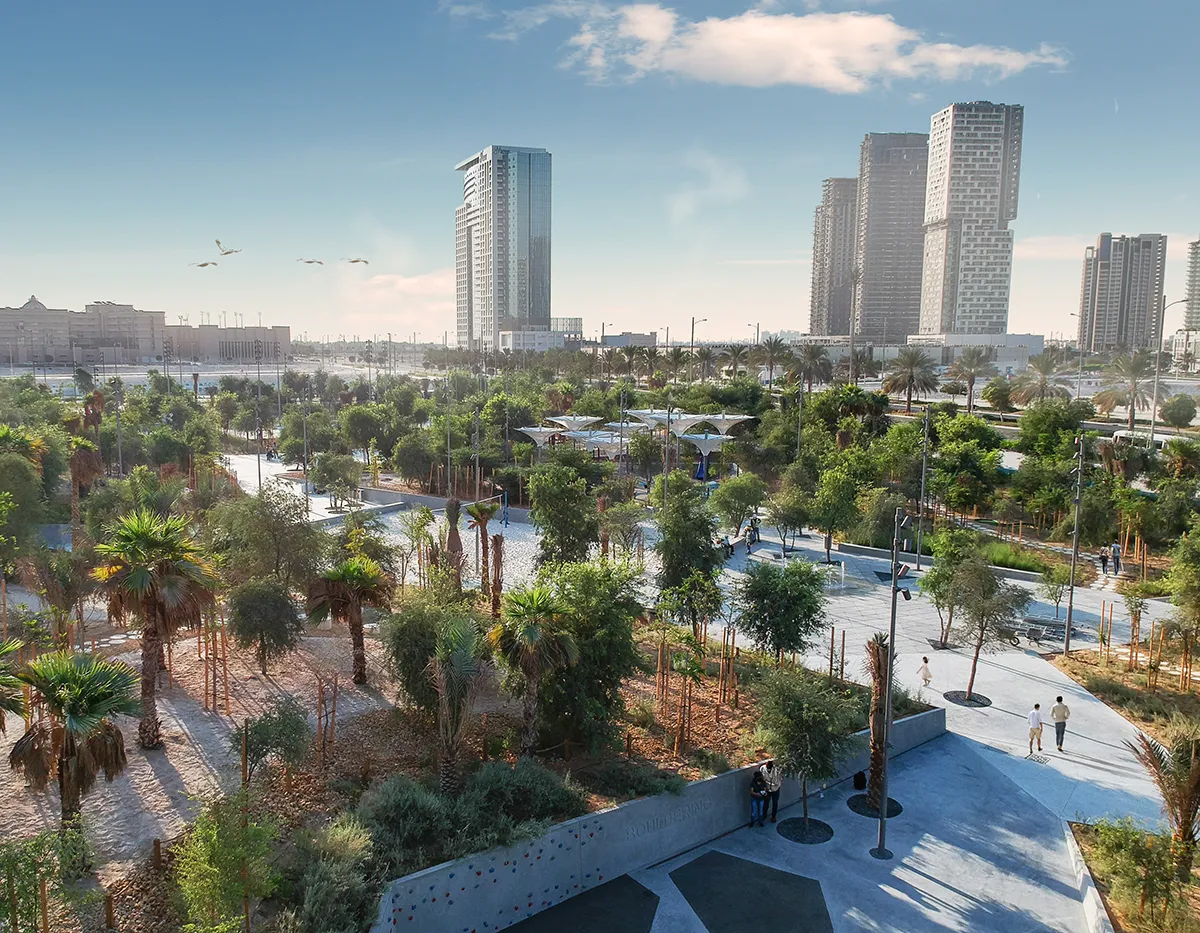
The park’s design was informed by extensive research conducted by our in-house ecologists and planting designers, grounded in field studies of UAE’s desert ecosystems as part of the Ghadan21 and Climate Resilience Initiative. Over 2,000 native trees and shrubs – including the national Ghaf tree – were selected and composed into structured plant communities designed for climate adaptation, biodiversity, and microclimate regulation. The layout integrates designed biotopes that channel cooling breezes into the park and simultaneously buffer sand infiltration and noise pollution. These passive design strategies reduce temperatures by over 10°C compared to the surrounding city, creating a shaded, forest-like microclimate that supports extensive recreational programming.
A park for all life
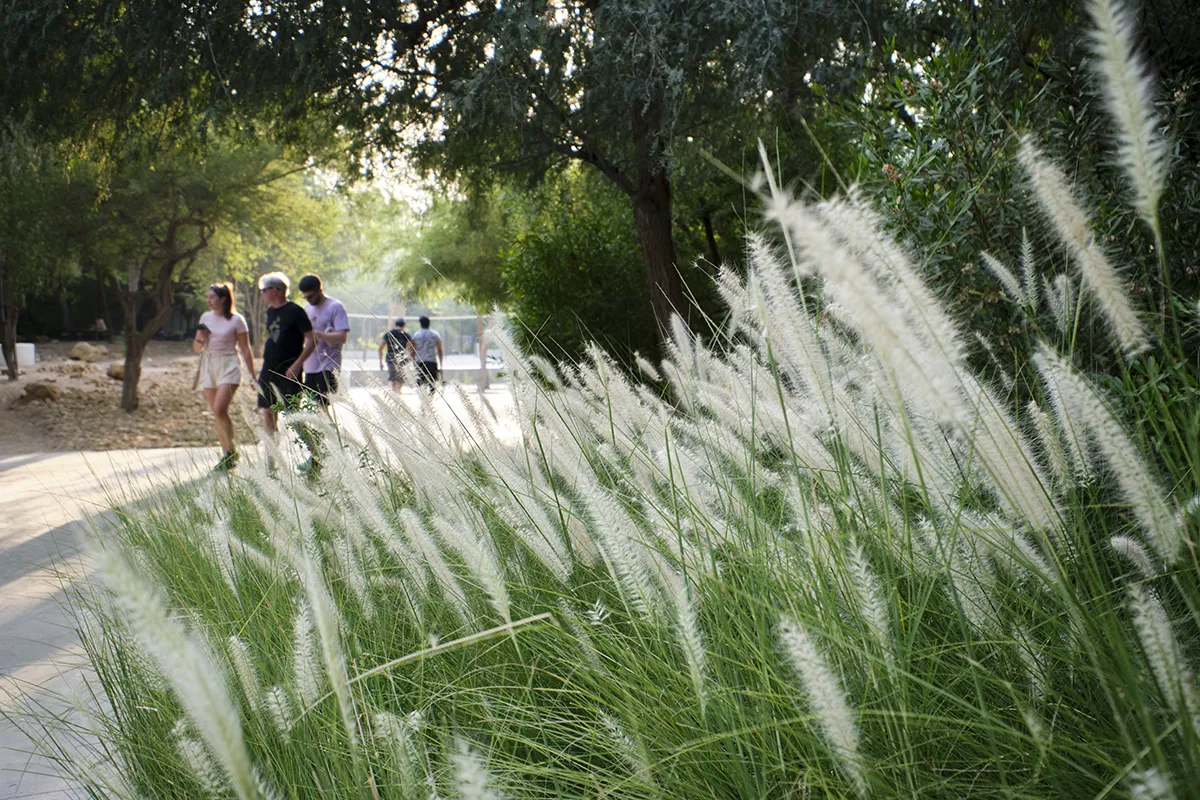
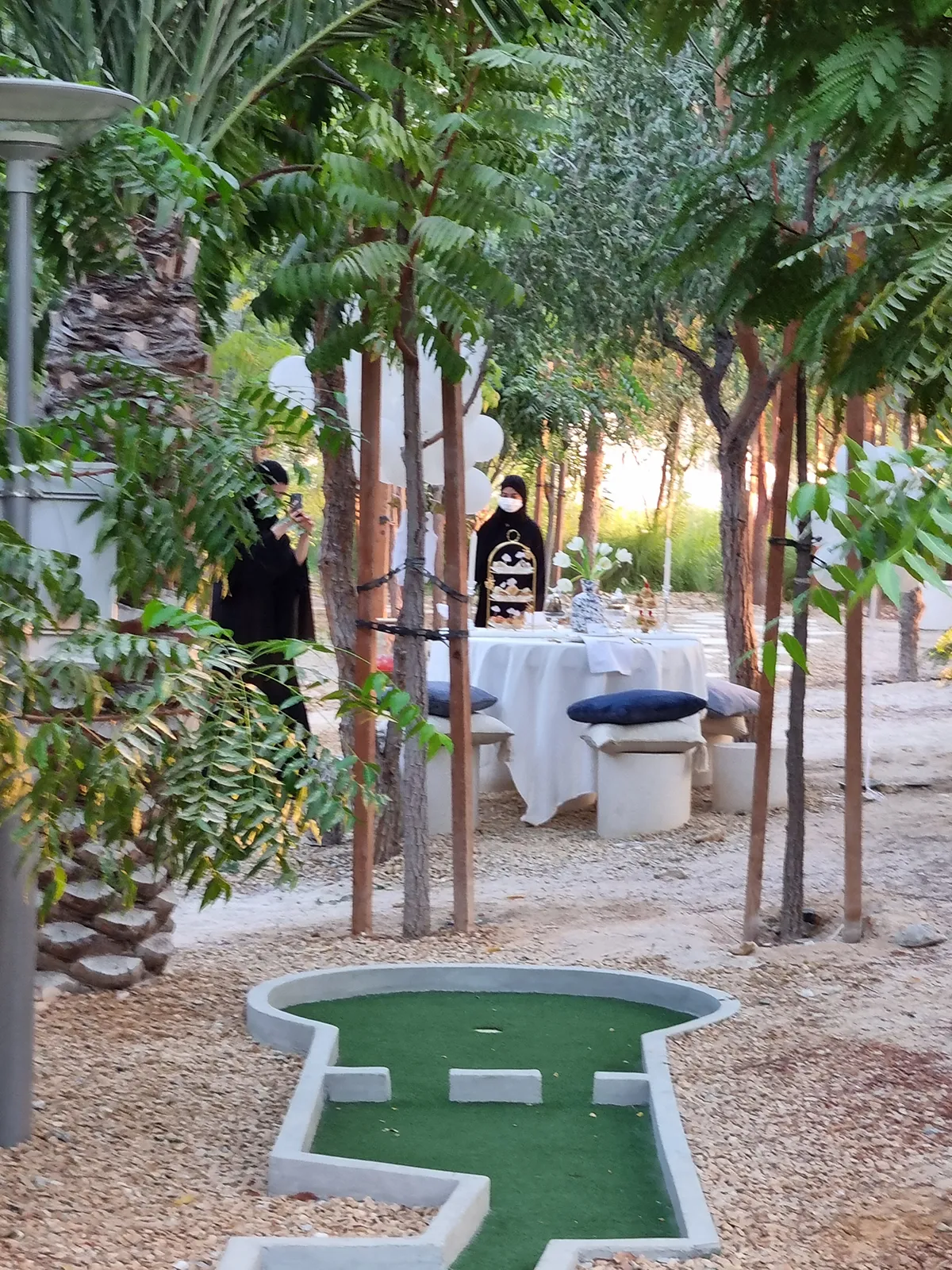
Utilizing this improved microclimate, the park integrates a wide range of recreational functions from playgrounds, minigolf, and food trucks to a meandering “Forest Track” under the tree canopies – promoting both health and social equity. Beyond human enjoyment, Al Fay Park is also a thriving habitat for native fauna and flora, creating authentic desert forest ecosystems that challenge conventional notions of urban greening in arid climates.
Sustainability and climate impact
Addressing critical regional challenges – such as urban heat islands, sand infiltration, biodiversity loss, and excessive water use – Al Fay Park pioneers new strategies in arid climate landscape architecture. Key sustainable innovations include:
- Exclusive use of xerophytic native species with low evapotranspiration rates, in sharp contrast to the region’s conventional palm trees and lawns.
- Implementation of a precision irrigation system tailored to each plant community.
- Layered forest-like planting structure, where upper canopy species provide shading for mid- and ground-level vegetation, reducing overall evapotranspiration.
- A special “root zone design” enables symbiotic relationships between co-planted species, enhancing subsurface moisture retention and nutrient exchange.
- Custom soil composition supports a microbiome of beneficial fungi, Fabaceae, and microorganisms that regenerate organic nutrients and further reduce irrigation needs.
Together, these strategies have already achieved a 50% reduction in irrigation demand, with projected savings of up to 75% once all ecosystems fully mature.
Legacy
Al Fay Park has redefined urban green space in the UAE. Its success has influenced official standards, including a new water-use target of 3.5 l/m²/day in Abu Dhabi. More broadly, the project has set a new benchmark for how UAE cities integrate local nature and climate strategies into public space design. By embedding ecosystem logic into every layer – from microclimate engineering to soil biology – Al Fay Park has shown how landscape architecture can maximize sustainability and climate action, increase life-quality, and radically improve the biodiversity of an entire city – even on barren sand.
Al Fay Park
Location: Abu Dhabi, UAE
Designer Credit: SLA
Client: Abu Dhabi Department of Municipalities and Transport
Company Role on Project: Landscape architect
Collaborators/Other Consultants: Parsons, iGuzzini, Barari
Photographer/Image Credits:
SLA / Jon Walis / Phillip Handforth