
Located on Con Bap islet in Cam Nam Ward, Hoi An City, Vietnam, the 6.5-hectare Hoian d’Or agri-ecotourism zone forms a vital part of the 25-hectare Hoian d’Or ecological and cultural resort complex. Surrounded on three sides by rivers, the project is master-planned with a strong environmental vision, integrating renewable energy systems and sustainable materials.
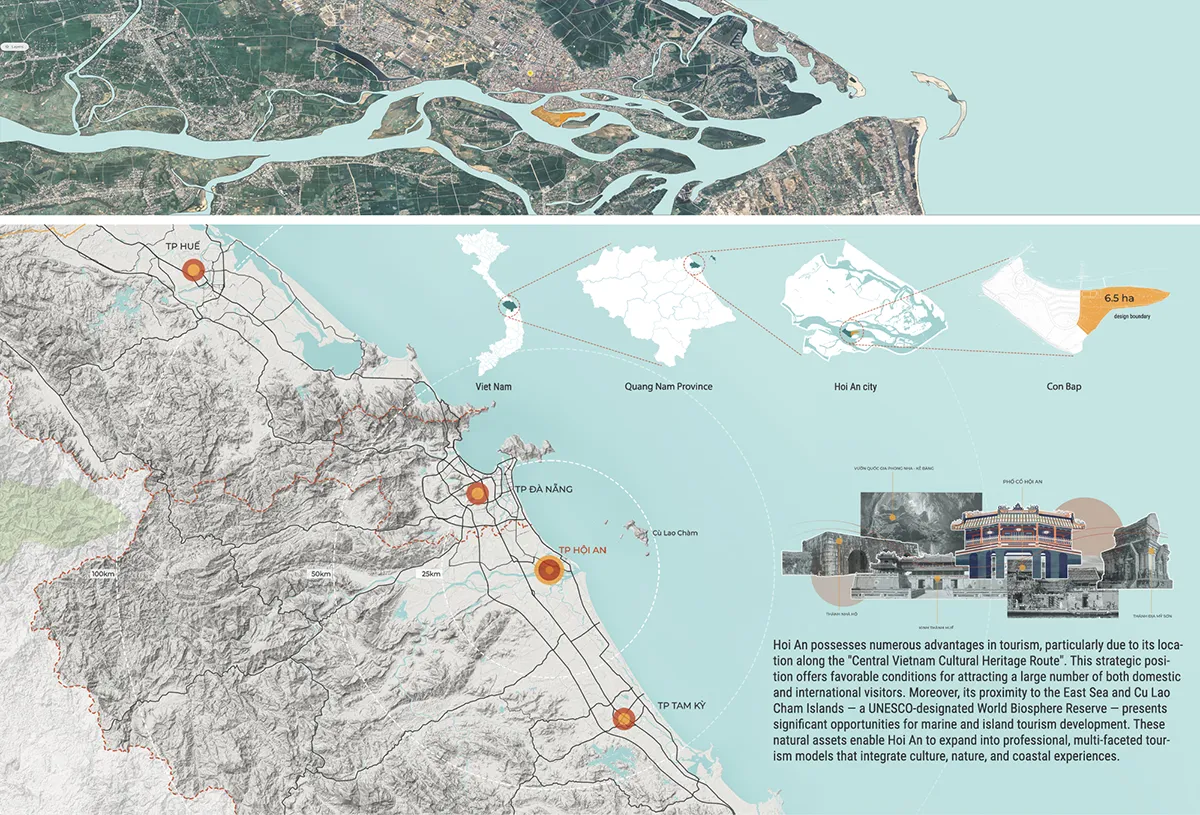
As the ecological heart of the development, the agriculture zone anchors one of the project’s three strategic keywords — Culture, Commerce, and Ecology — playing a central role in shaping Hoian d’Or into a vibrant new destination that enriches the cultural and tourism landscape of Hoi An.
Inspired by the renowned literary work “The Adventures of a Cricket” by Vietnamese author Tô Hoài and deeply rooted in the cultural essence of Hoi An, the project was envisioned as a gateway for international visitors seeking authentic, sustainable travel experiences — those who value immersive connections with nature and culture, and who are willing to invest in meaningful journeys.
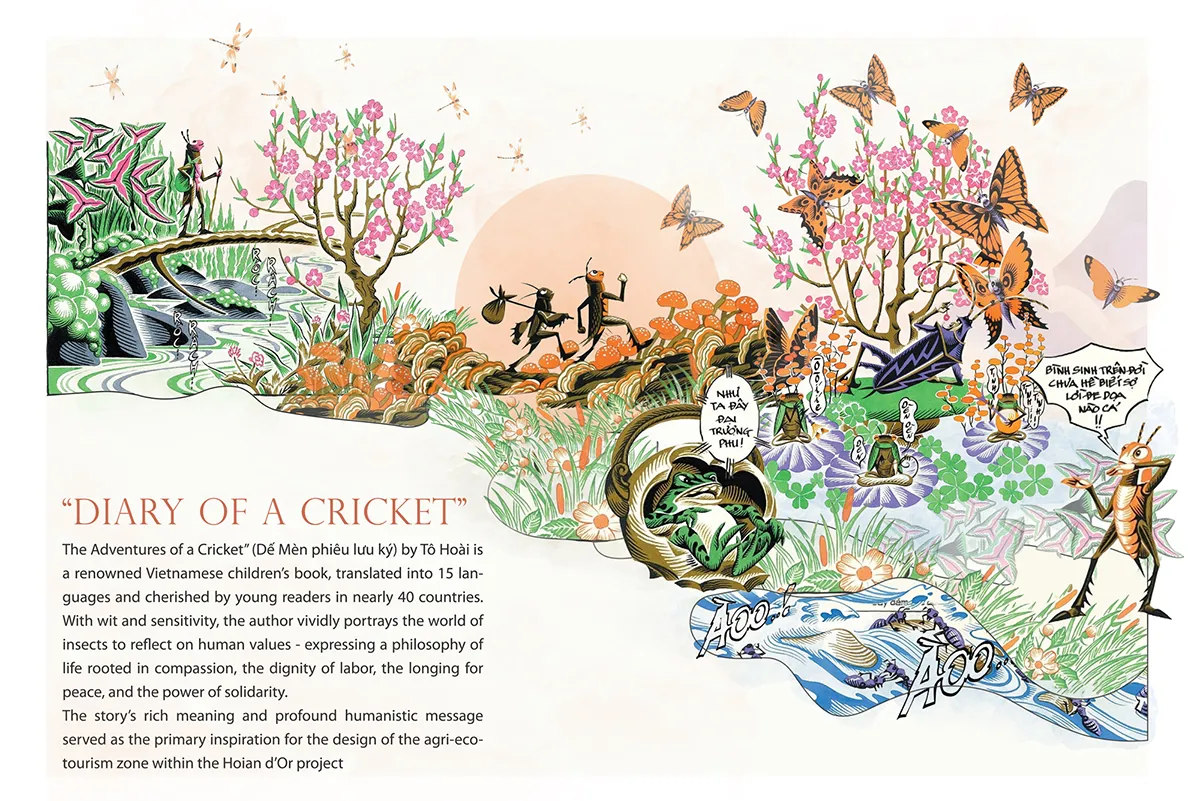
More than a destination, the zone is designed as a living landscape—a place to dwell, explore, and foster community. Here, climate-resilient organic agriculture forms the foundation for a new model of tourism and cultural engagement, blending ecology with the spirit of local heritage.
Building on that inspiration, we designed a series of themed spaces that embody the spirit of exploration, a passion for labour, and a strong sense of community — the core values conveyed in the adventures of a cricket.
Signature symbols of Hoi An, such as lanterns, conical hats, Thanh Ha pottery, and nipa palm forests, are thoughtfully integrated throughout the site, celebrating regional heritage and establishing a distinctive identity for the project.
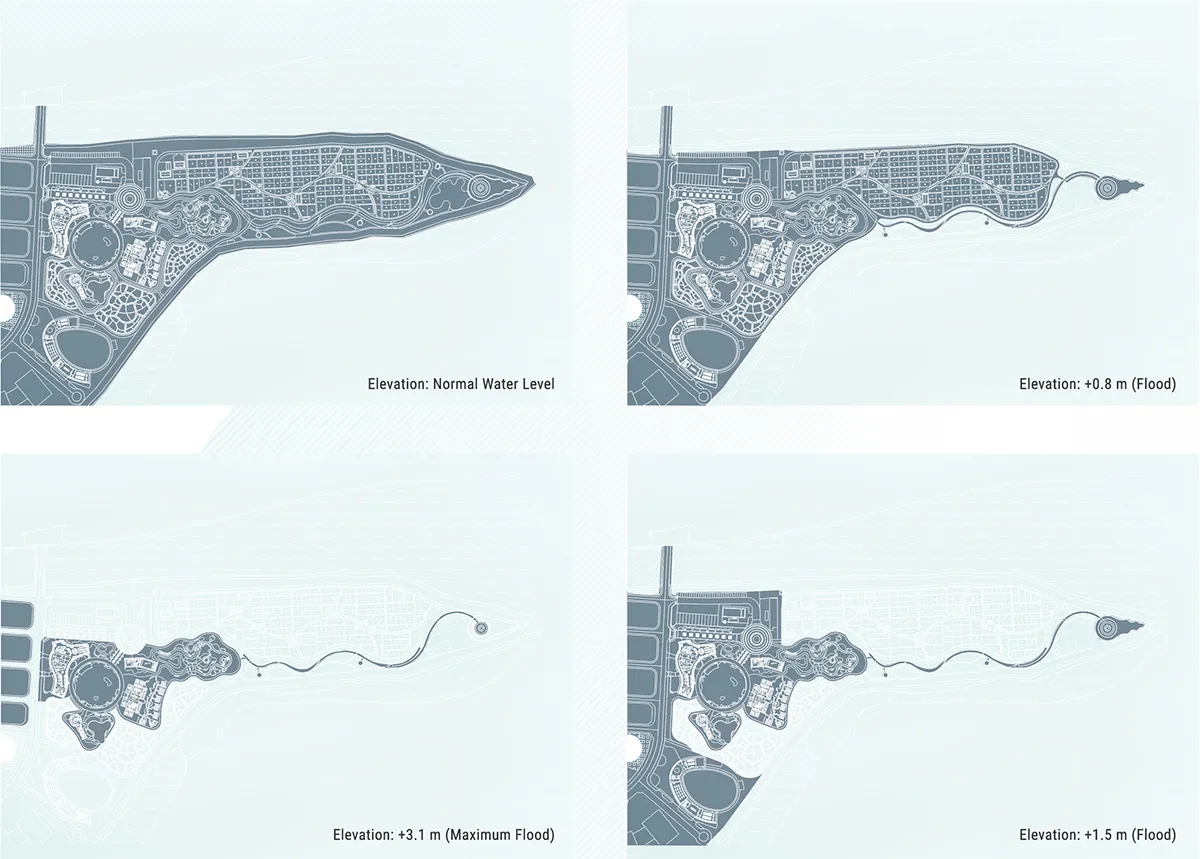
Located within the Thu Bon River basin — a climate-sensitive area regularly impacted by 2–3 tropical storms or depressions each rainy season, often resulting in severe flooding — the site also faces sedimentation and saltwater intrusion during the dry season due to sea level rise. To address these environmental challenges, we propose three sustainable design strategies:
Strategy 1: Create a protective buffer of nipa palms to prevent soil erosion and provide roofing materials. Integrate clusters of bamboo as a renewable source for building and farming tools. Reuse recycled materials from neighbouring construction zones to reduce waste and environmental footprint.
Strategy 2: Divide the site into three elevation-based sectors — above flood level, below flood level, and a reconstruction-ready sector — each designed with appropriate ecological functions and the capacity for rapid post-flood recovery.
Strategy 3: Organise seasonal festivals and workshops celebrating traditional corn cultivation, bamboo and nipa crafts, as well as immersive experiences during the flood season and recovery phase — all crafted to highlight the cultural resilience of the land and attract responsible ecotourism.
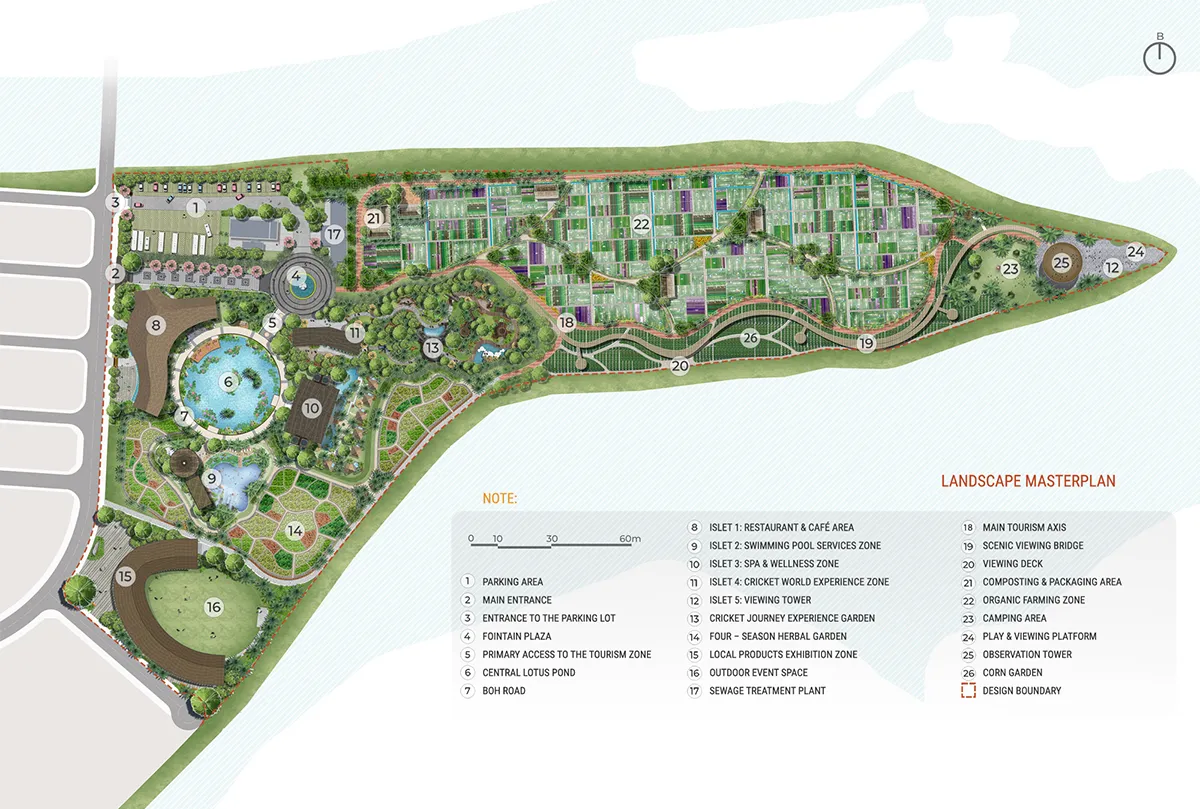
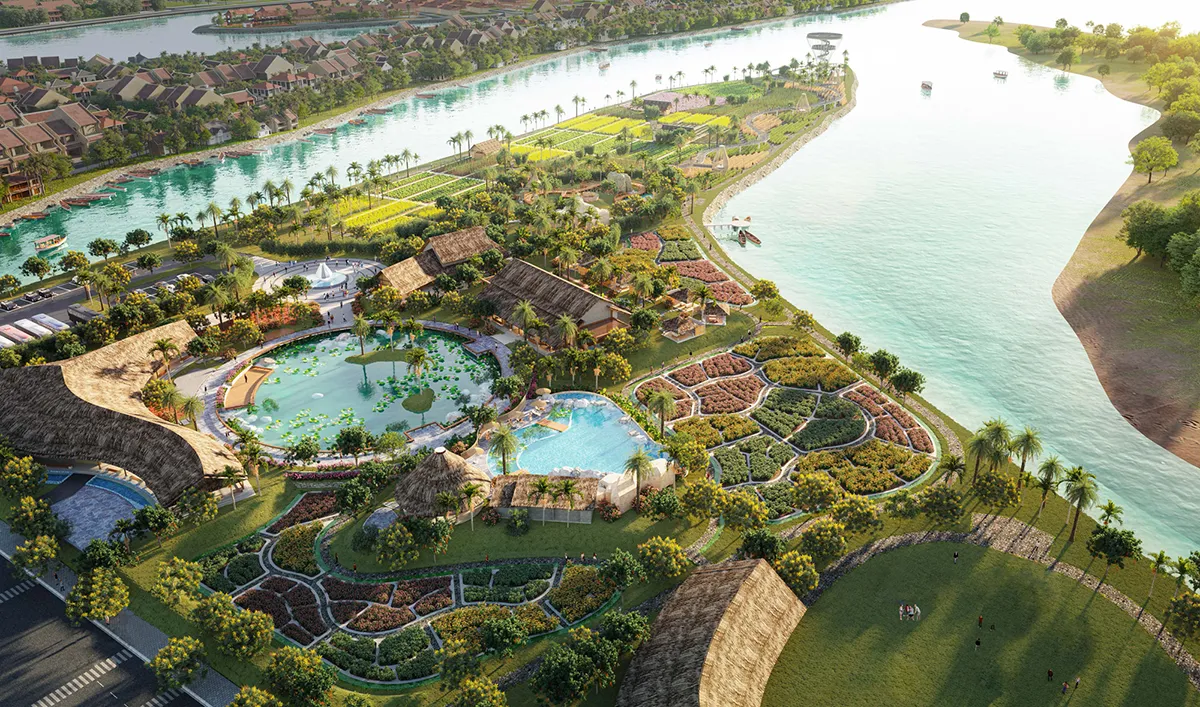
The service sector is strategically located along the project’s main access road, ensuring the convenience for guest arrival and efficient operation of commercial and hospitality functions. This area is organised into a cluster of interconnected service islets offering a complete range of services: a reception area, a restaurant, a garden café, a wellness spa, and a natural swimming pool. These islets are linked by an internal circulation path that encircles a central lotus pond—a traditional symbol of a Vietnamese village well, forming a cohesive service core that enriches the overall experience.
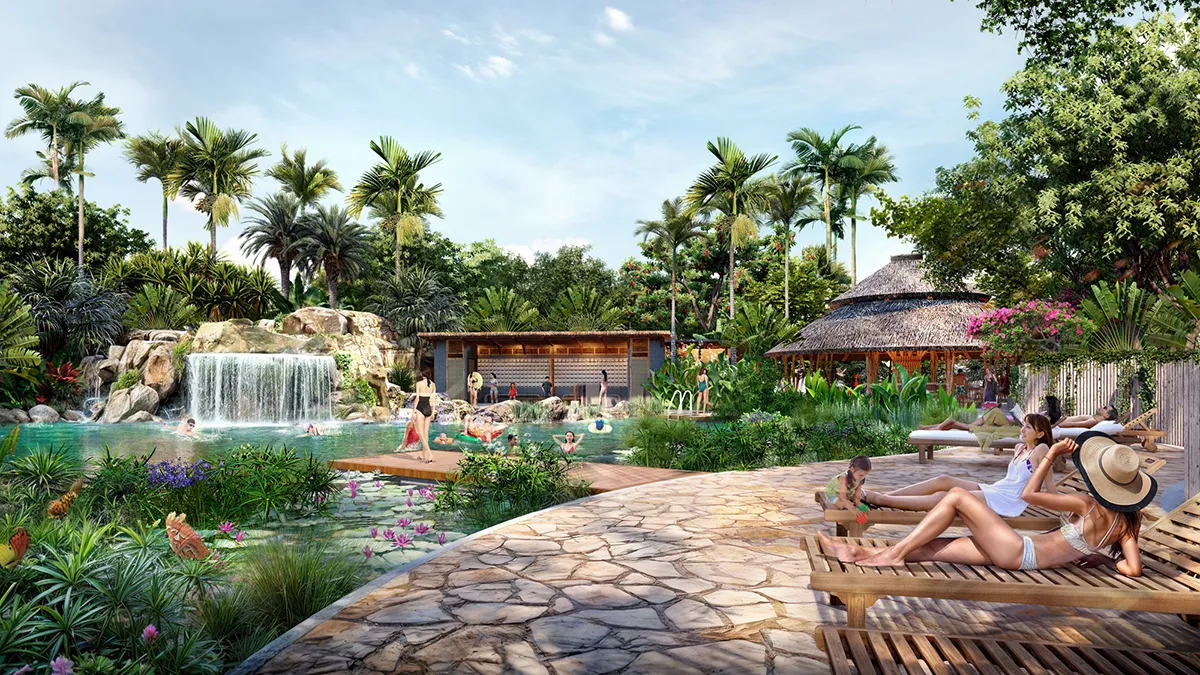
The experience sector is situated near the service zone for easy access, yet thoughtfully set back from the central circulation axis to preserve a sense of tranquillity and retreat. At its heart lies “Cricket Island” – a focal destination where tourists can join the adventure through artistic garden spaces, bamboo workshops, nipa palm craft workshops, and organic farming experiences – all designed to celebrate local cultural narratives while evoking the wonder of childhood memories.
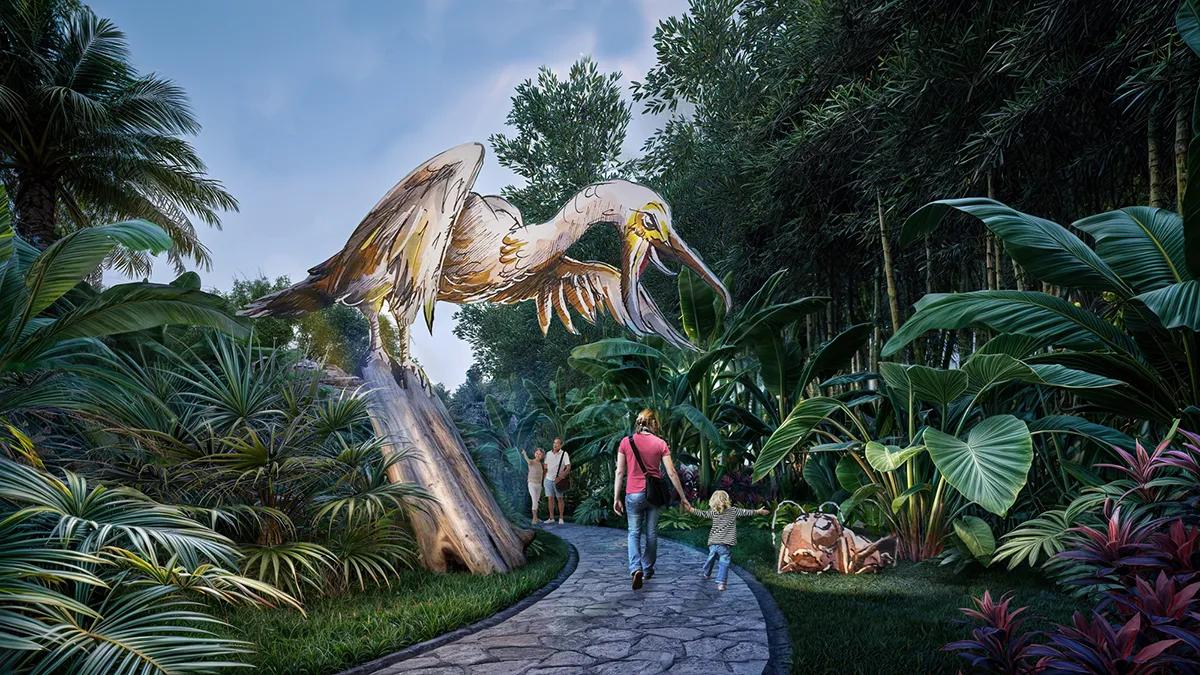
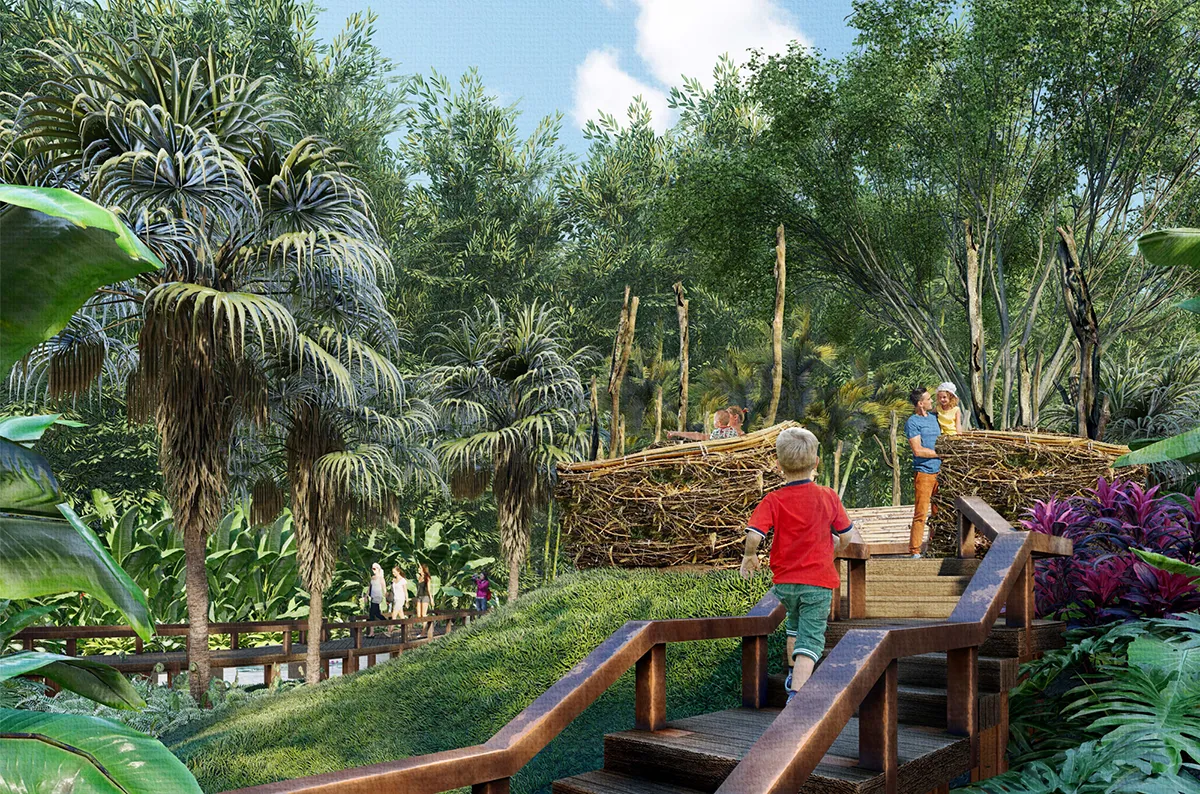
Occupying the most significant portion of the site, the agricultural sector is situated along the river, providing an ideal setting for developing organic farming that is integrated with tourism. The landscape is thoughtfully organised into specialised functions: an organic vegetable garden, a medicinal herb garden and a corn farm. These areas not only support active cultivation but also offer visitors opportunities to engage in traditional agricultural practices, enriching their experience through meaningful, hands-on interaction with the land.
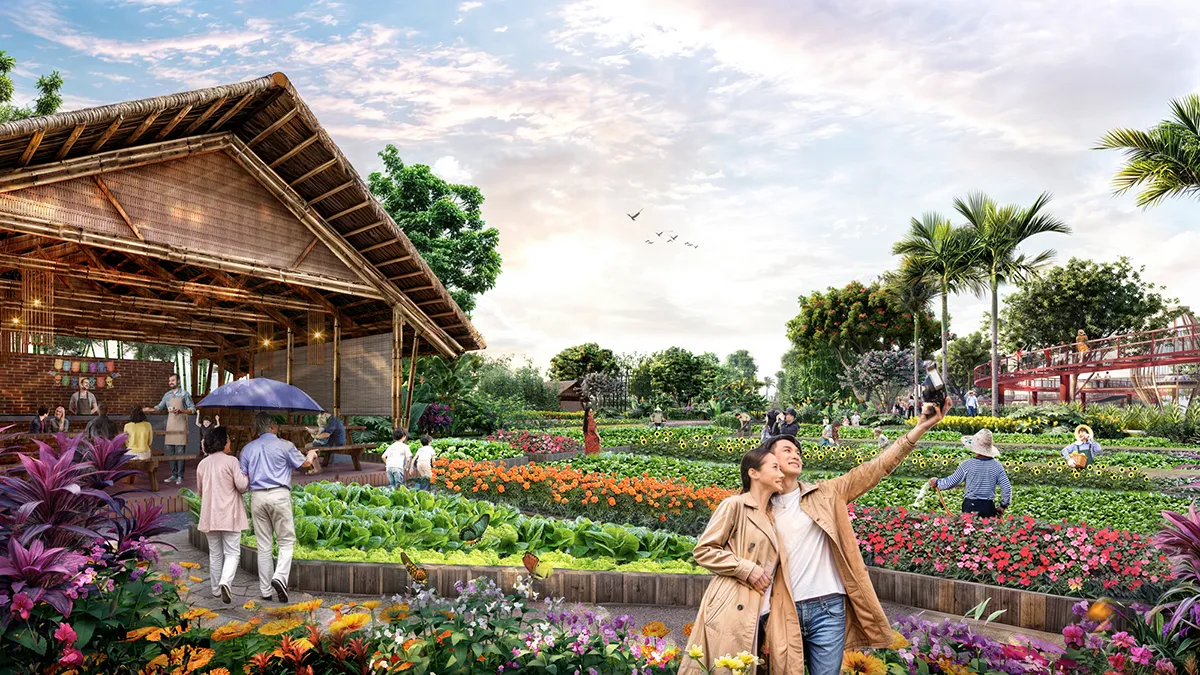
The observation deck is situated in a secluded area with panoramic views, making it an ideal location for group activities, camping, and outdoor events. It is directly connected to the main circulation route and features an elevated viewing bridge — a striking architectural focal point and visual landmark of the entire project.
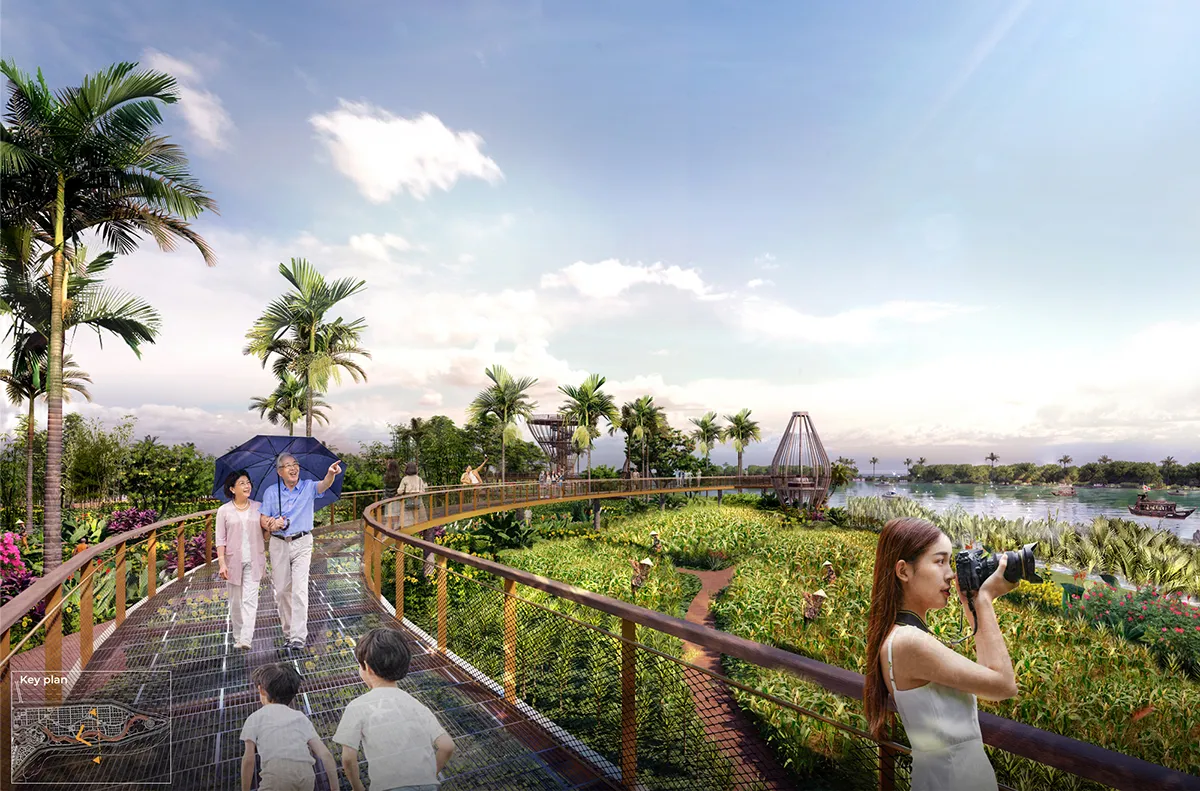
As a harmonious blend of eco-agricultural practices, local traditional values, and sustainable landscape architecture, the project pioneers a new model of integrated agri-ecotourism — a concept still emerging in Vietnam.
Hoian d’Or Ecological Agriculture Zone
Location: Hoi An City, Quang Nam Province, Vietnam
Design Consultant: Eden Landscape
Client: Con Bap Ecotourism Co., Ltd.