
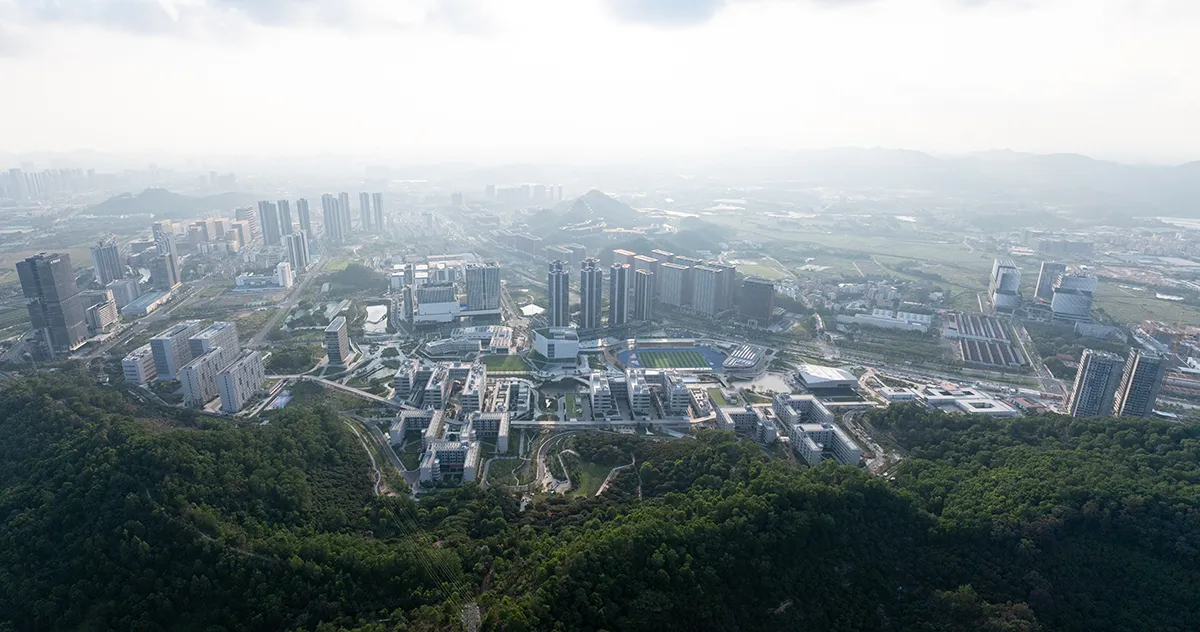
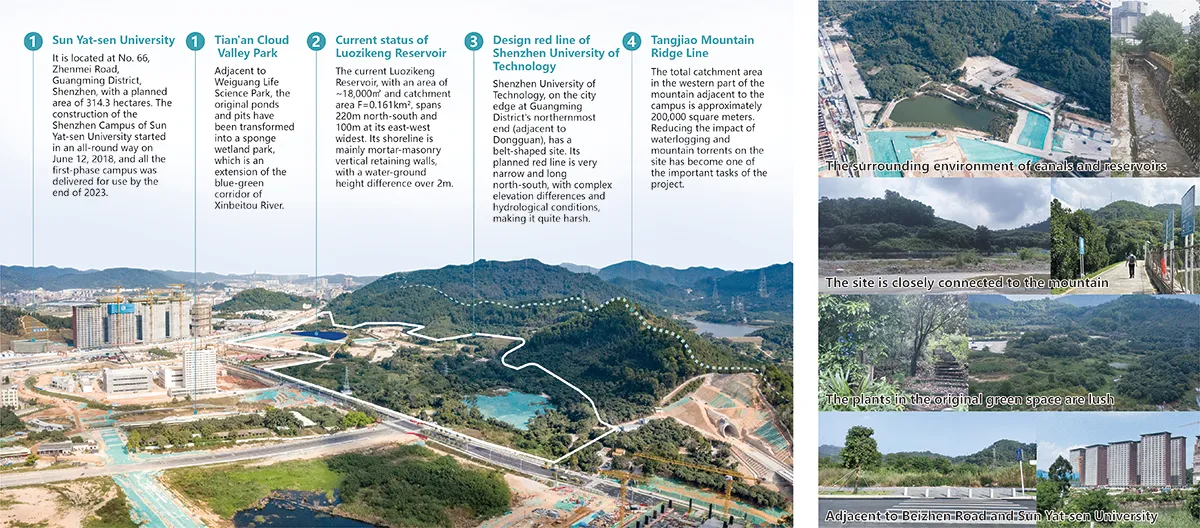
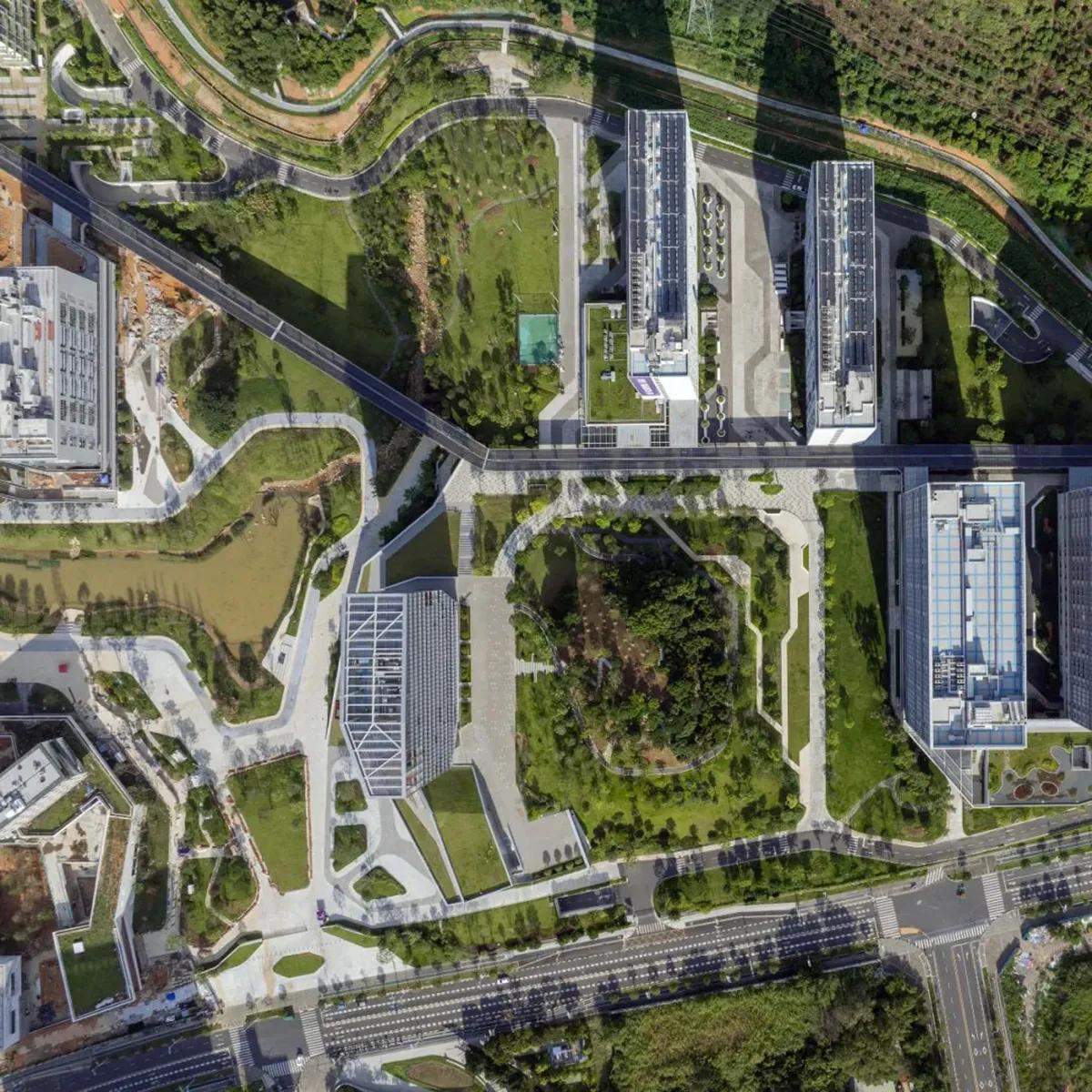
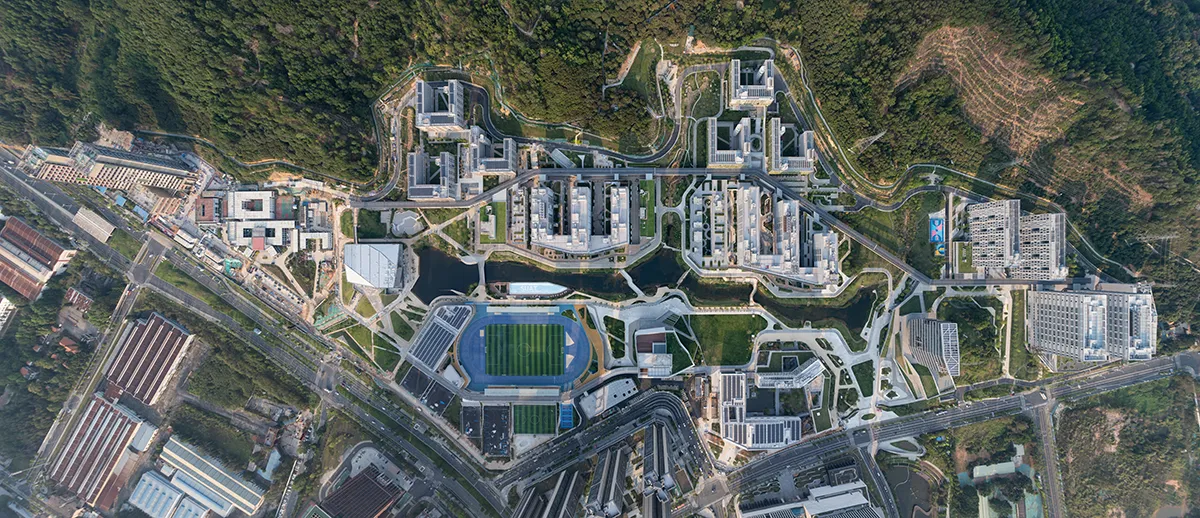
The campus of Shenzhen University of Advanced Technology (SUAT) occupies a distinctive 56-hectare site straddling ecologically sensitive foothills and the Guangming Science City. The area contained remnants of a former dairy factory, primary vegetation coverage and an existing reservoir ca. 18,000 sqm, which was constructed in 1966 to manage mountain flooding and agricultural irrigation, before its designation as the site for SUAT University—a research-oriented institution.
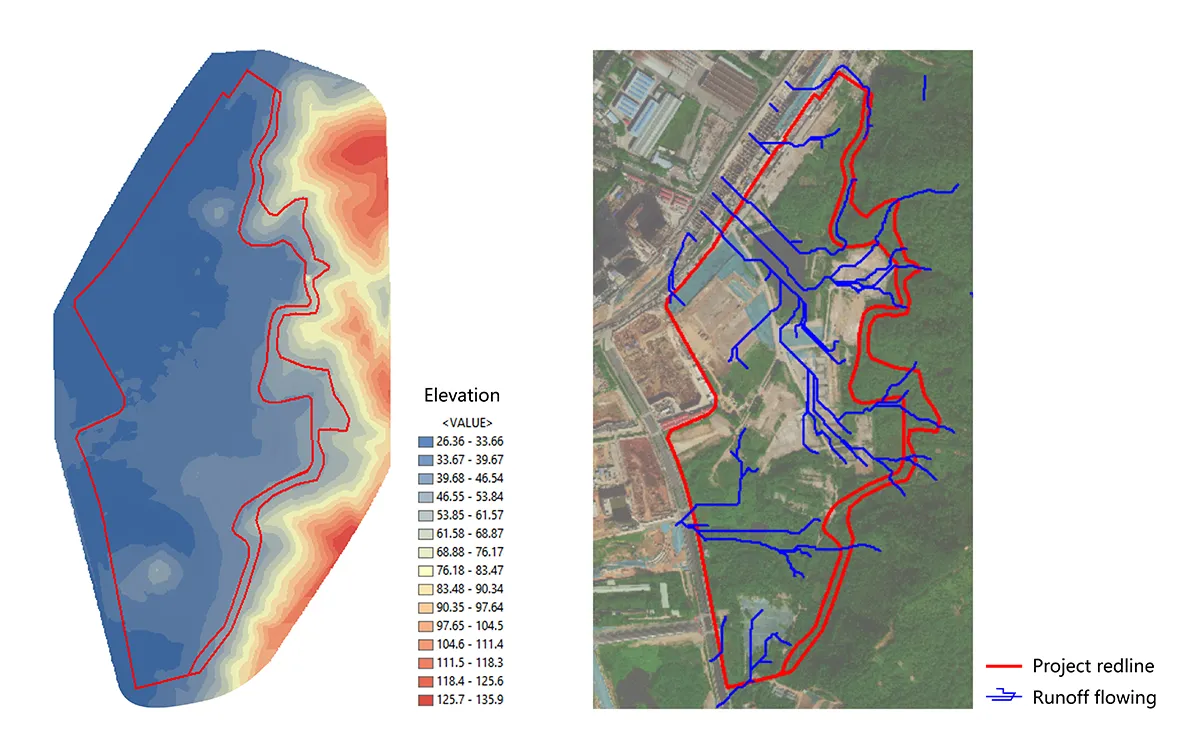
The new plan framework respects the original mountainous terrain, outlining three blue-green corridors aligned with topographic flow paths,and dividing the campus into six compact, functionally hybrid clusters.
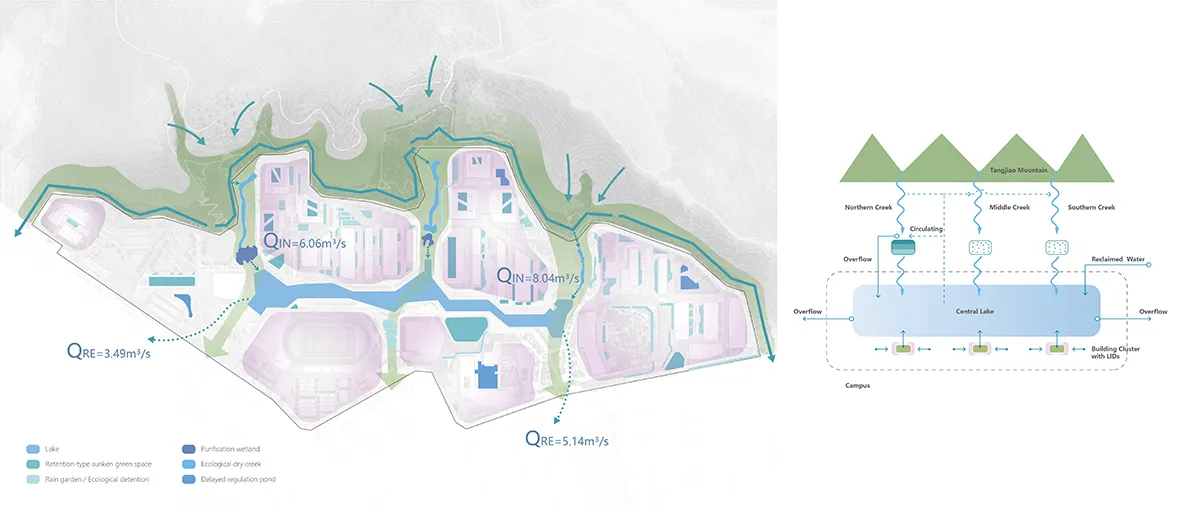
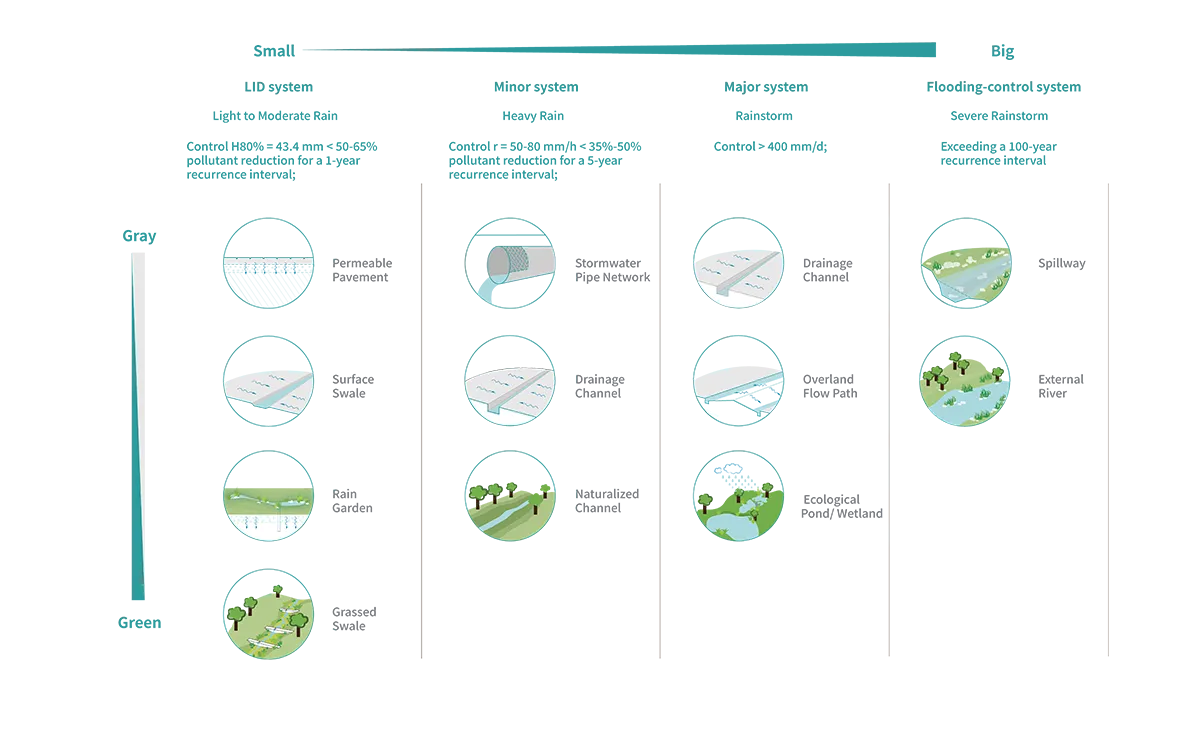
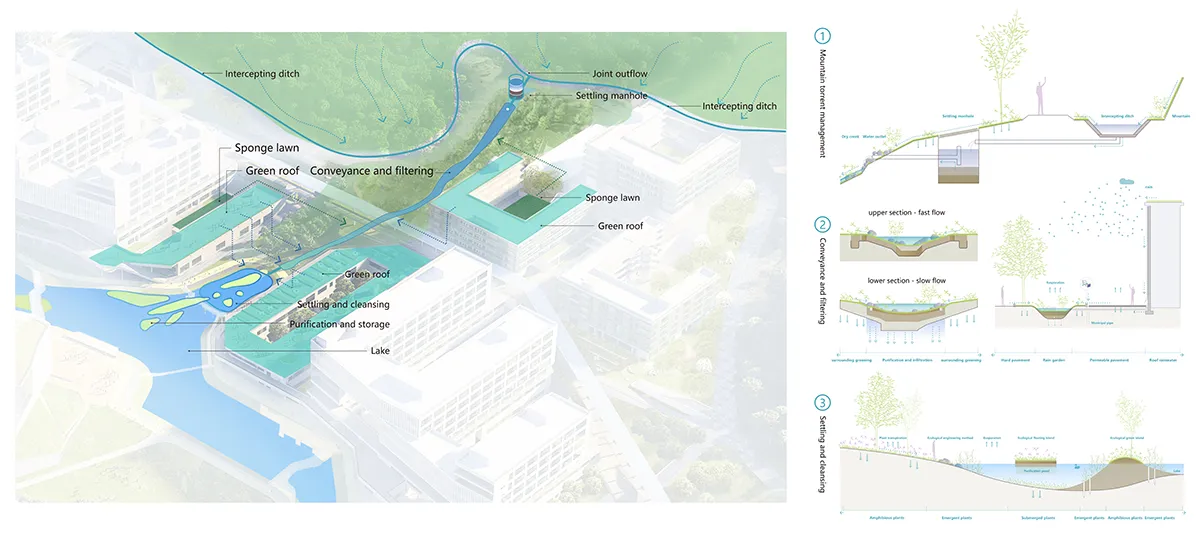
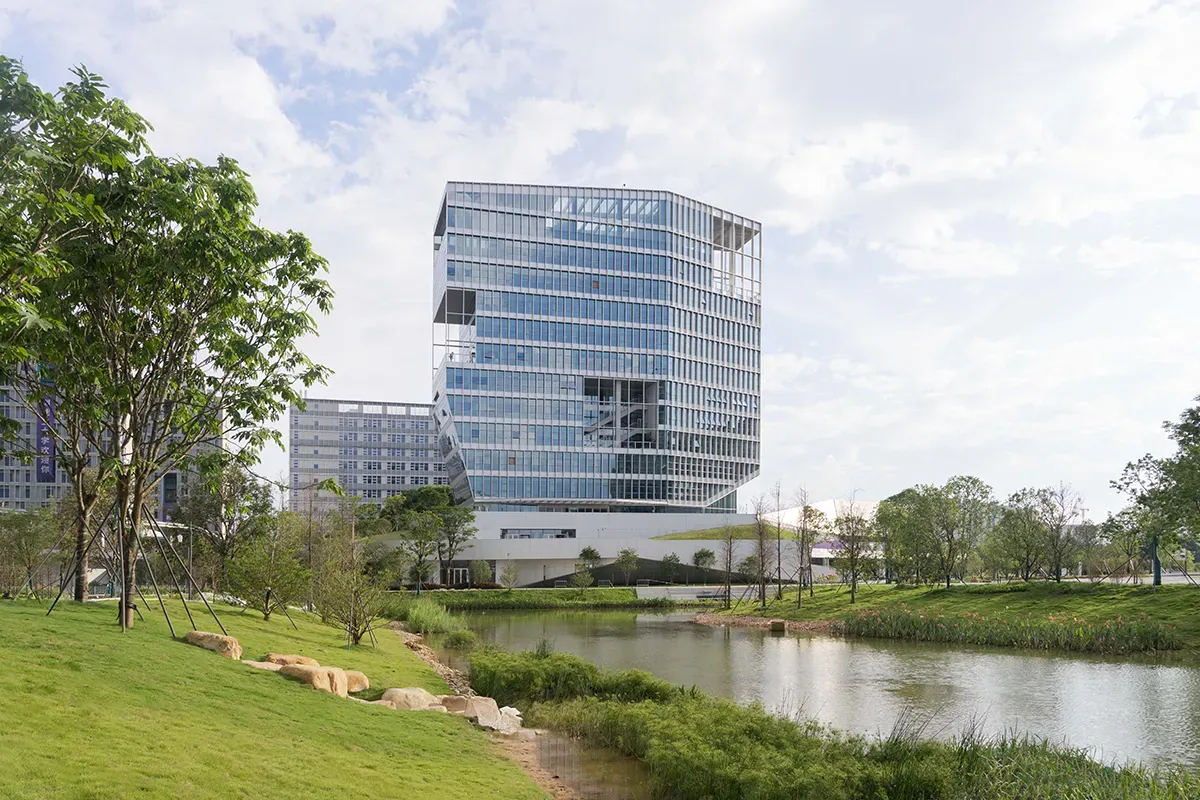
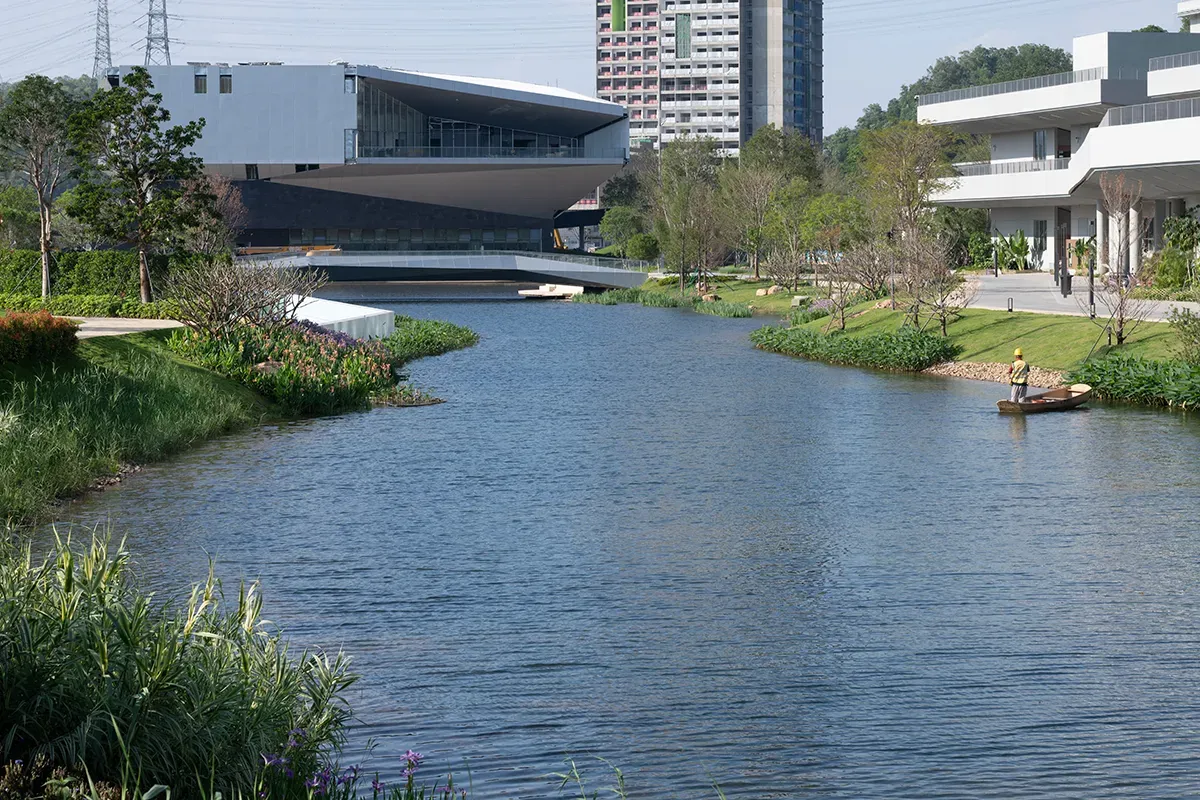
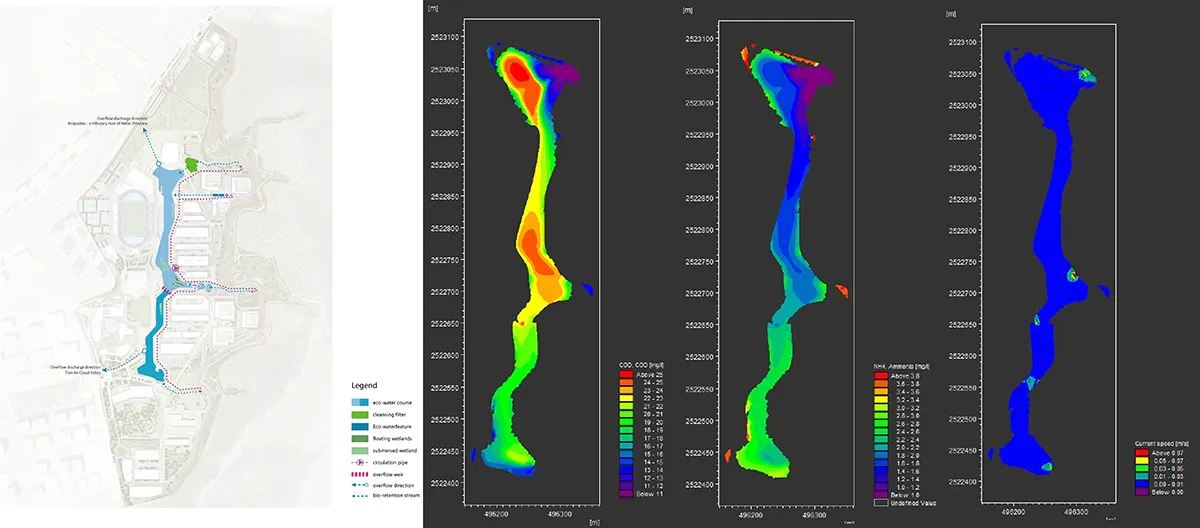
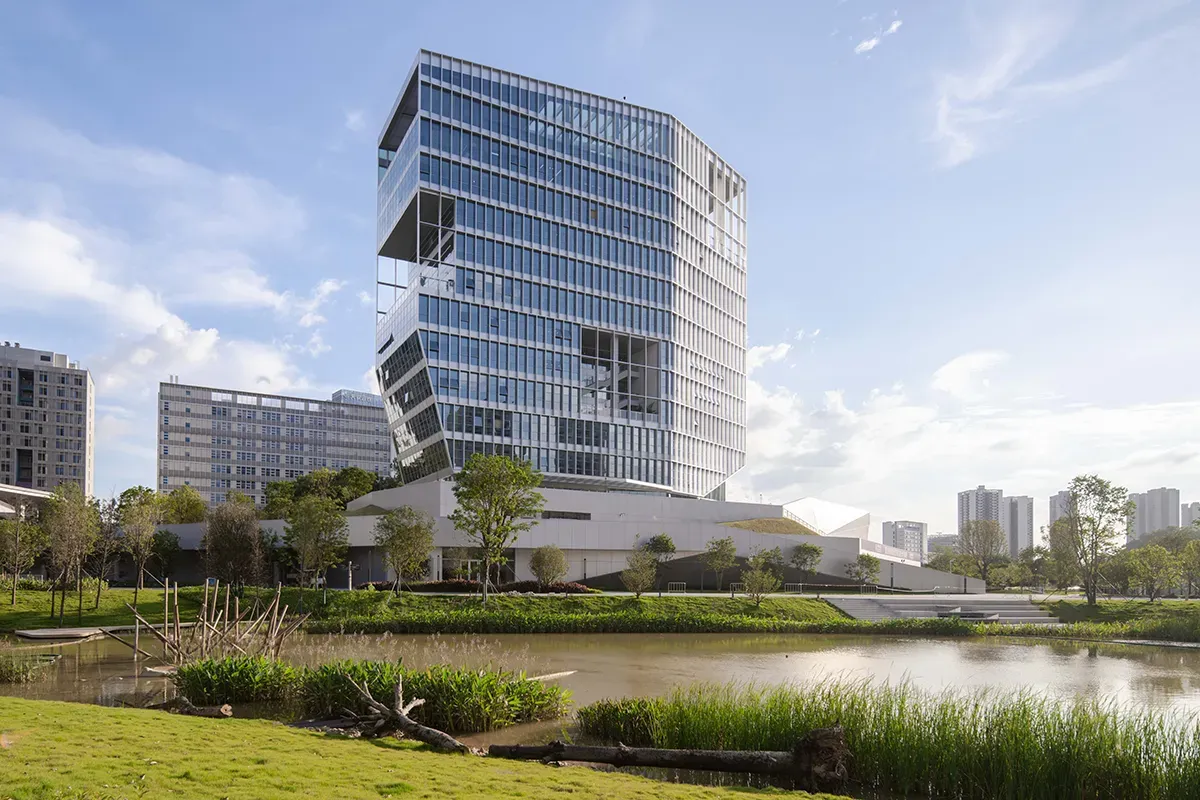
The reservoir has been transformed from a singular hydraulic function into a multifunctional blue core that works with decentralised “sponge” infrastructures across the site, effectively reducing impacts from extreme weather events and mountain flood surges (IMAGE4-1). They retain, infiltrate, purify and utilise stormwater, nourishing the greenery. Each year, more than 90% of the water needed by the lake and surrounding irrigation can be sourced from harvesting, with an average of over 72,000 m³ utilised. Meanwhile, the flood protection capacity in this area has been increased from a 20-year frequency to above a 100-year frequency. Beyond risk management, this framework creates a diverse habitat network and fosters a biophilic experience, integrating ecological connectivity within the academic environment.
Three water-carrying creeks in ecological corridors seamlessly connect the mountain forest with the central lake. The resiliently variable area and water levels reveal this place as a distinctive and innovative water space. Water edges feature interweaving bio-engineered shorelines and floodable platforms . The central lake has a complete ecological circulation system ensuring excellent water quality.
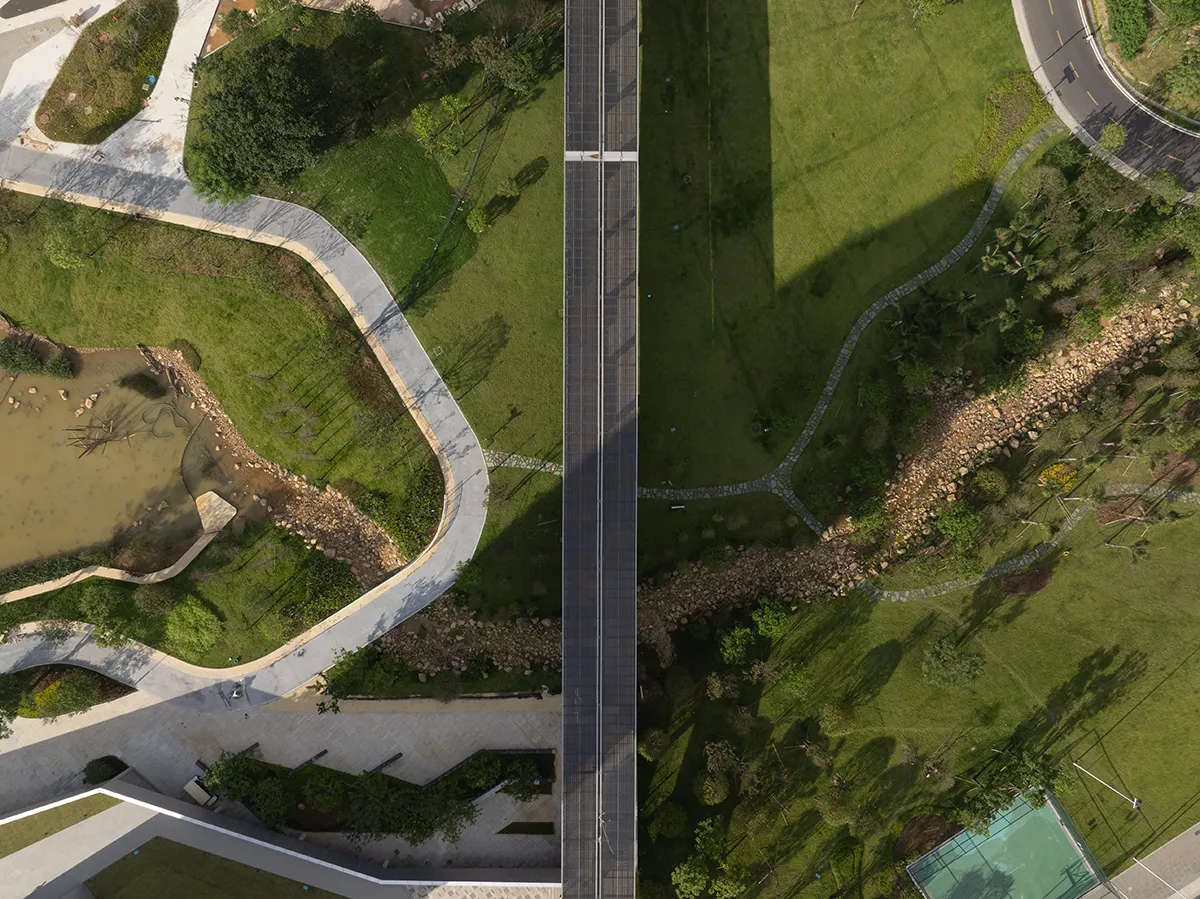
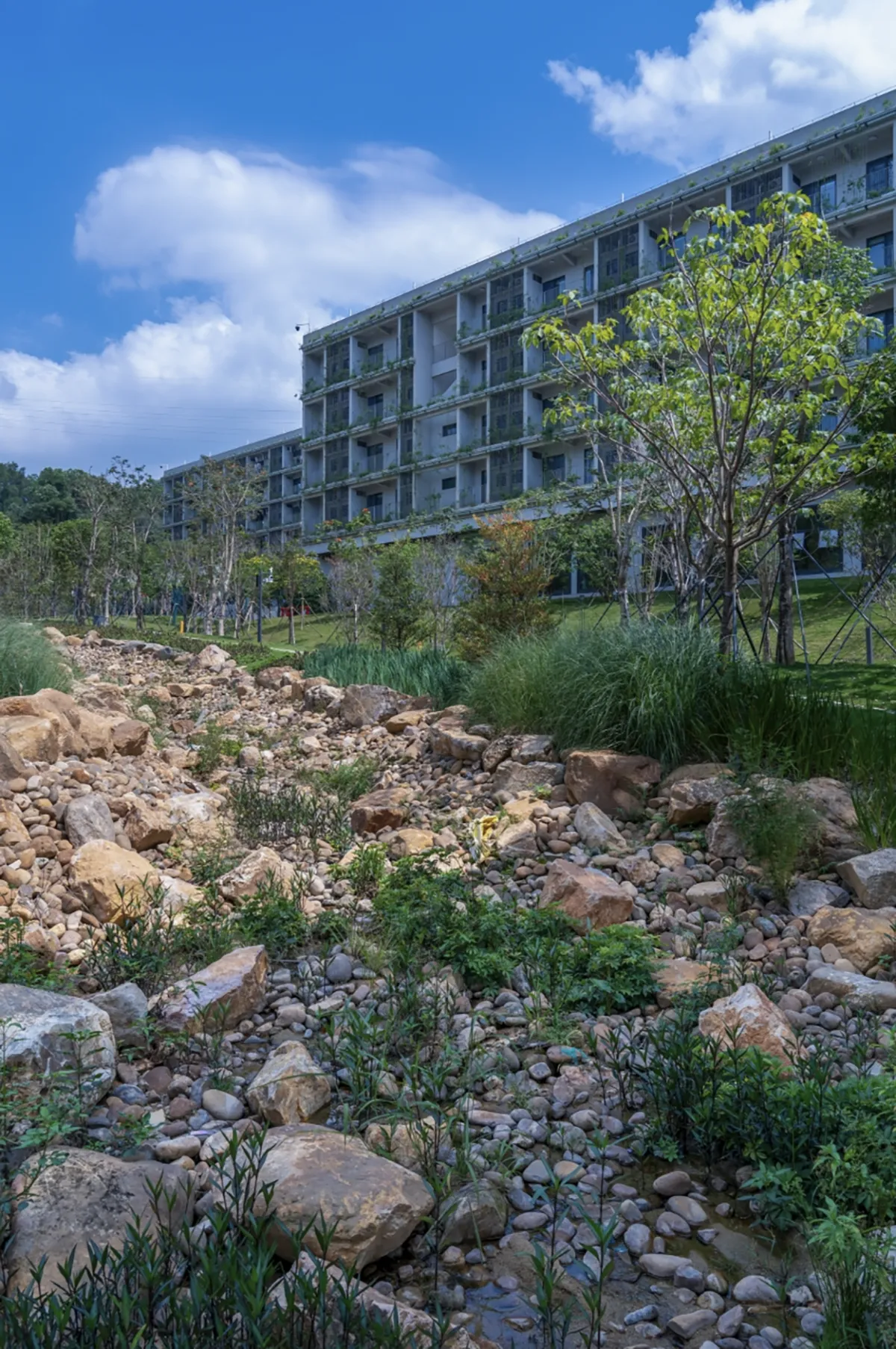
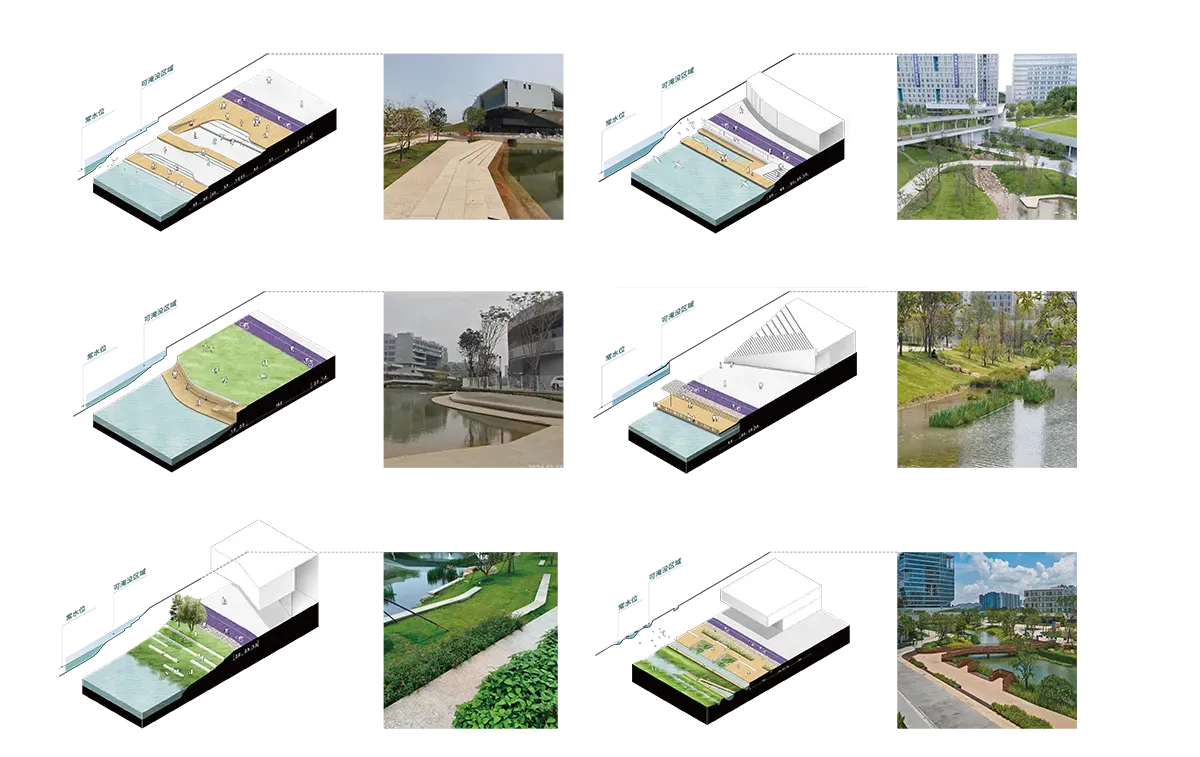
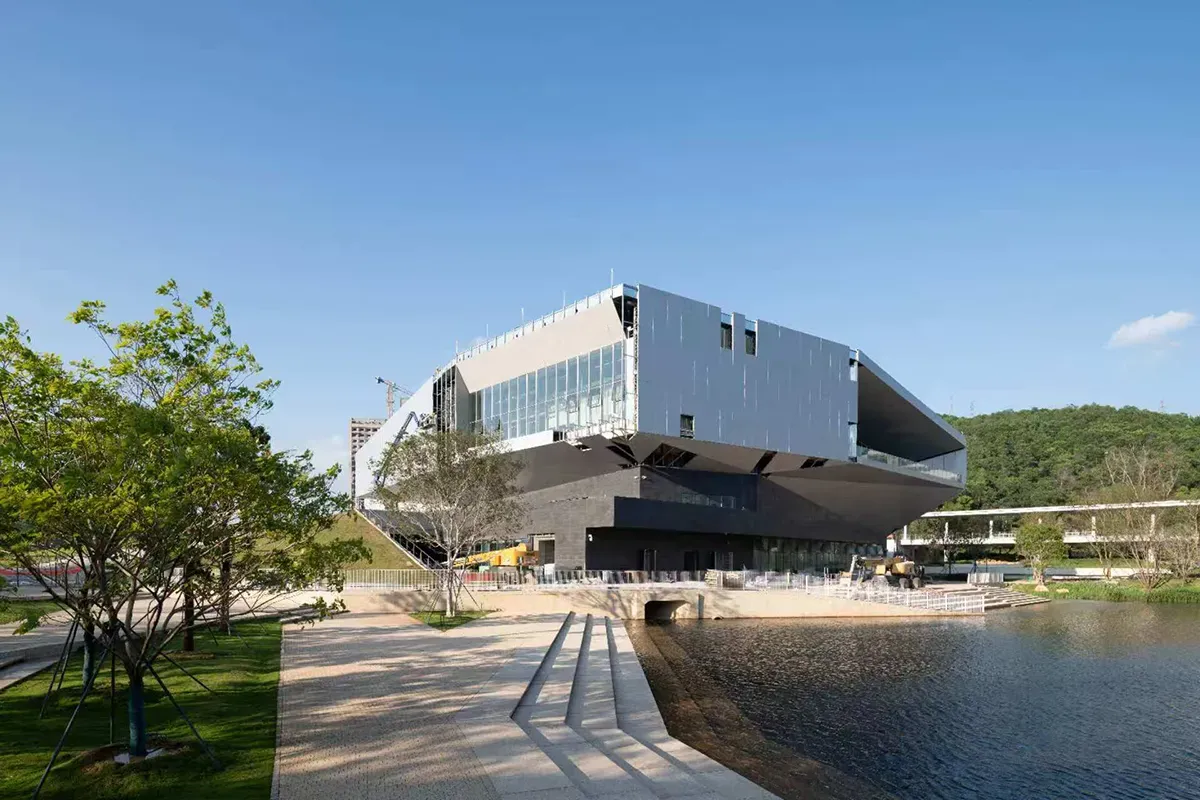
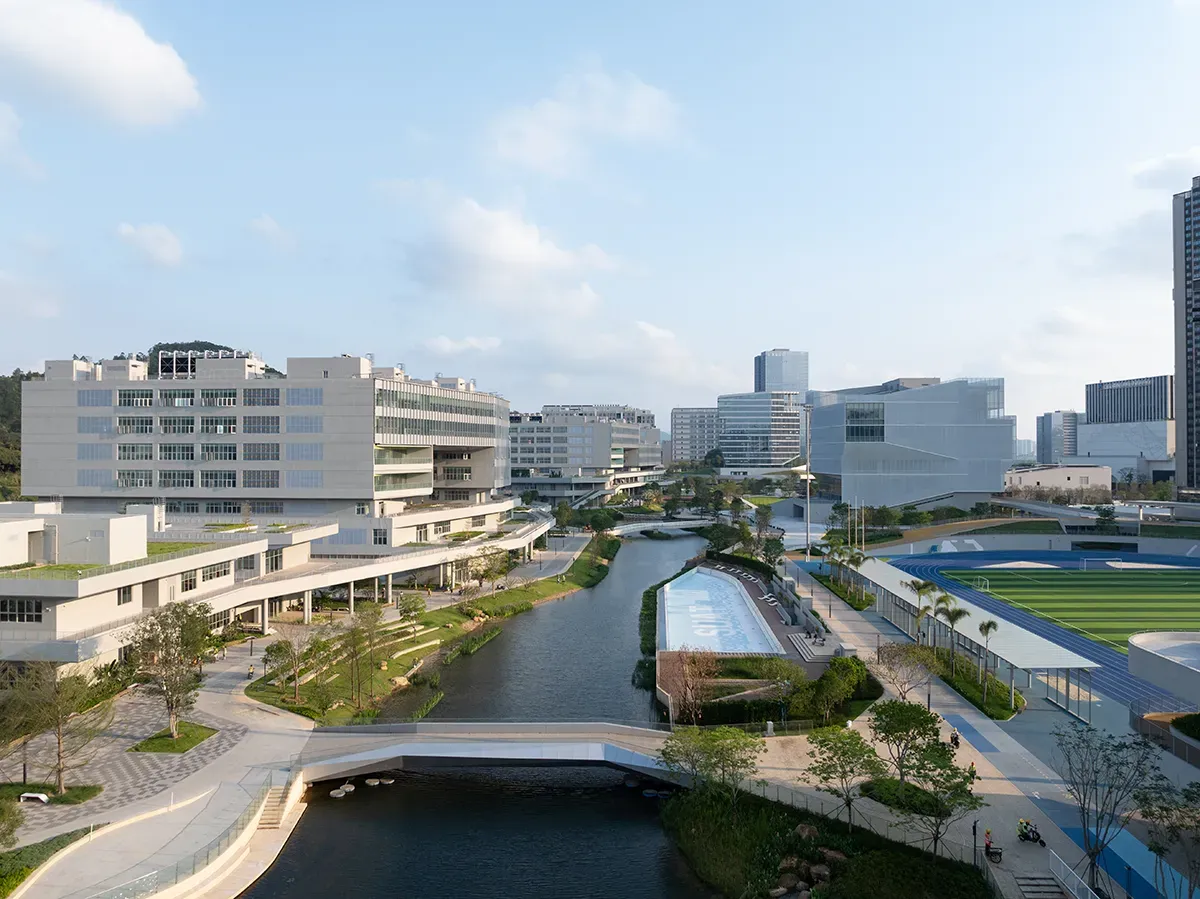
Along the lake extends an approximately 2-kilometre waterfront greenway, which integrates into building clusters and courtyards.
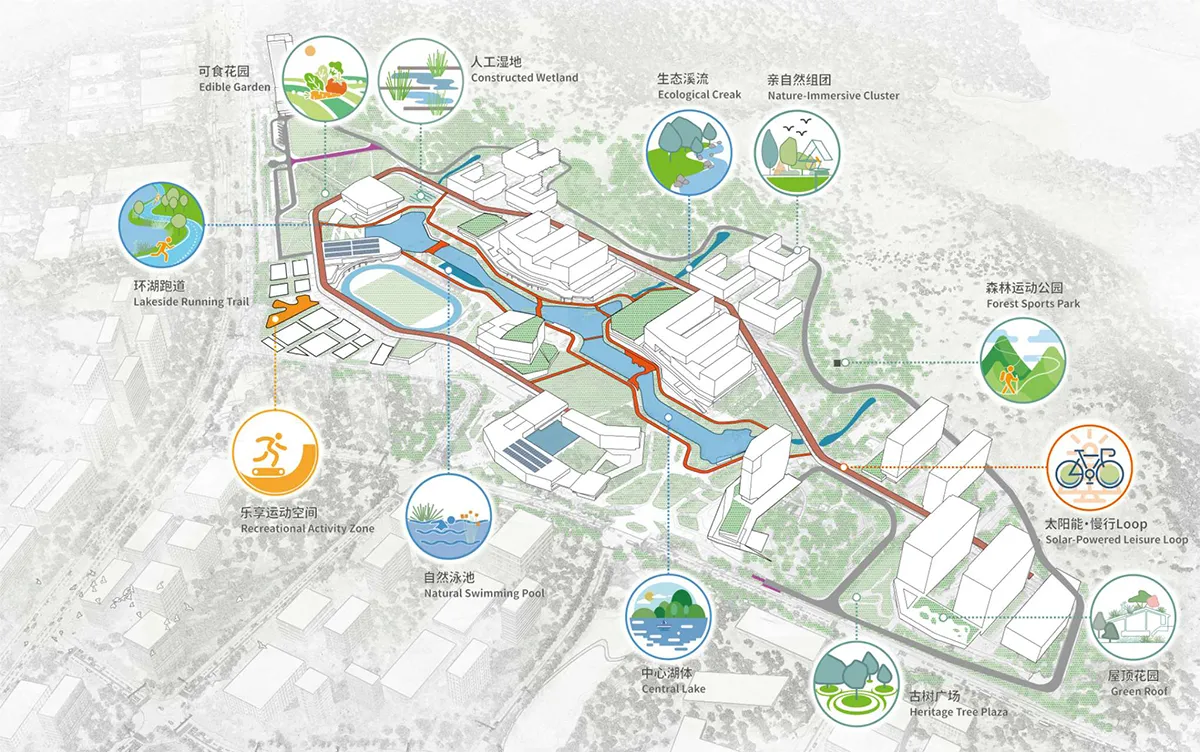
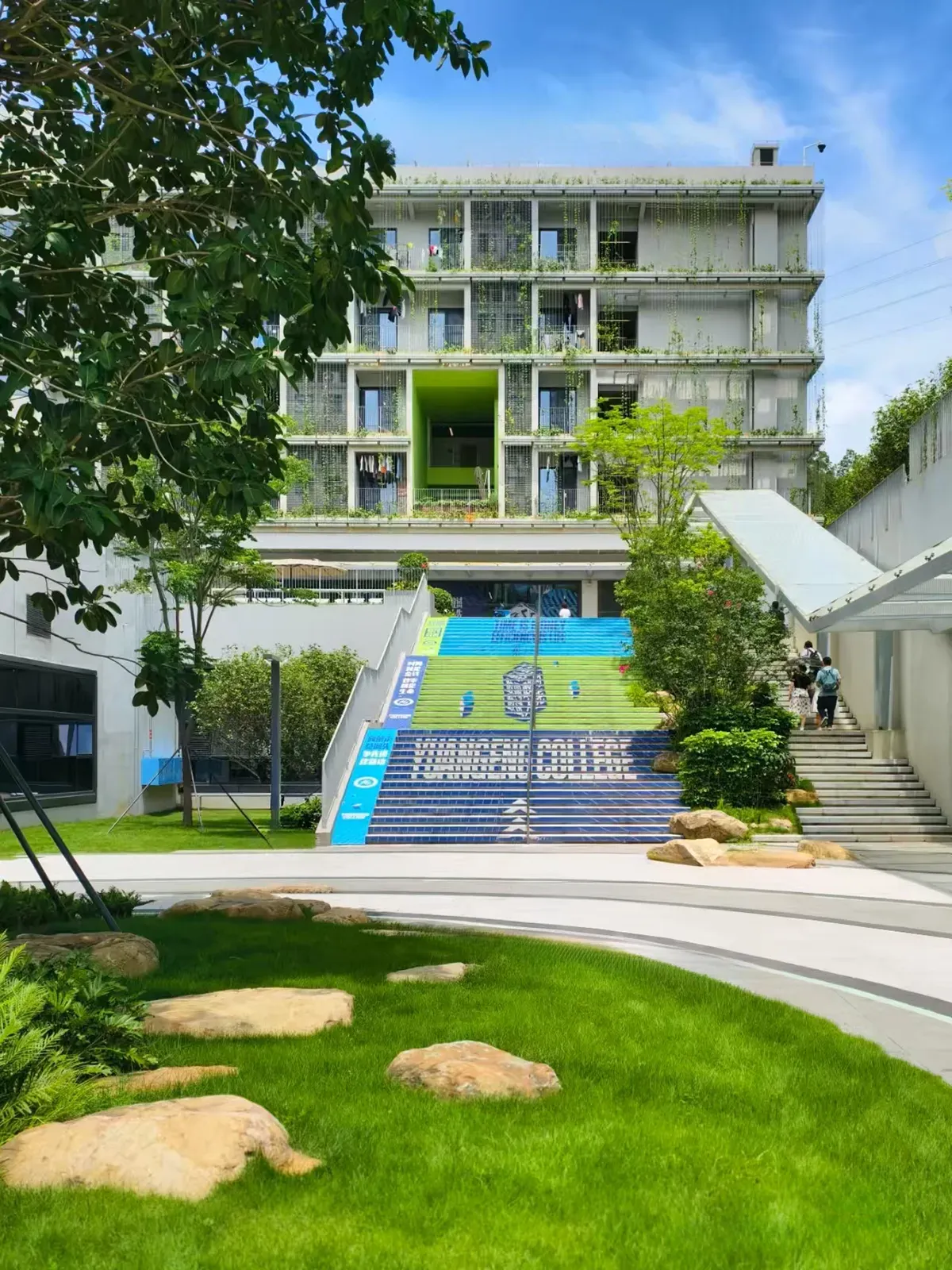
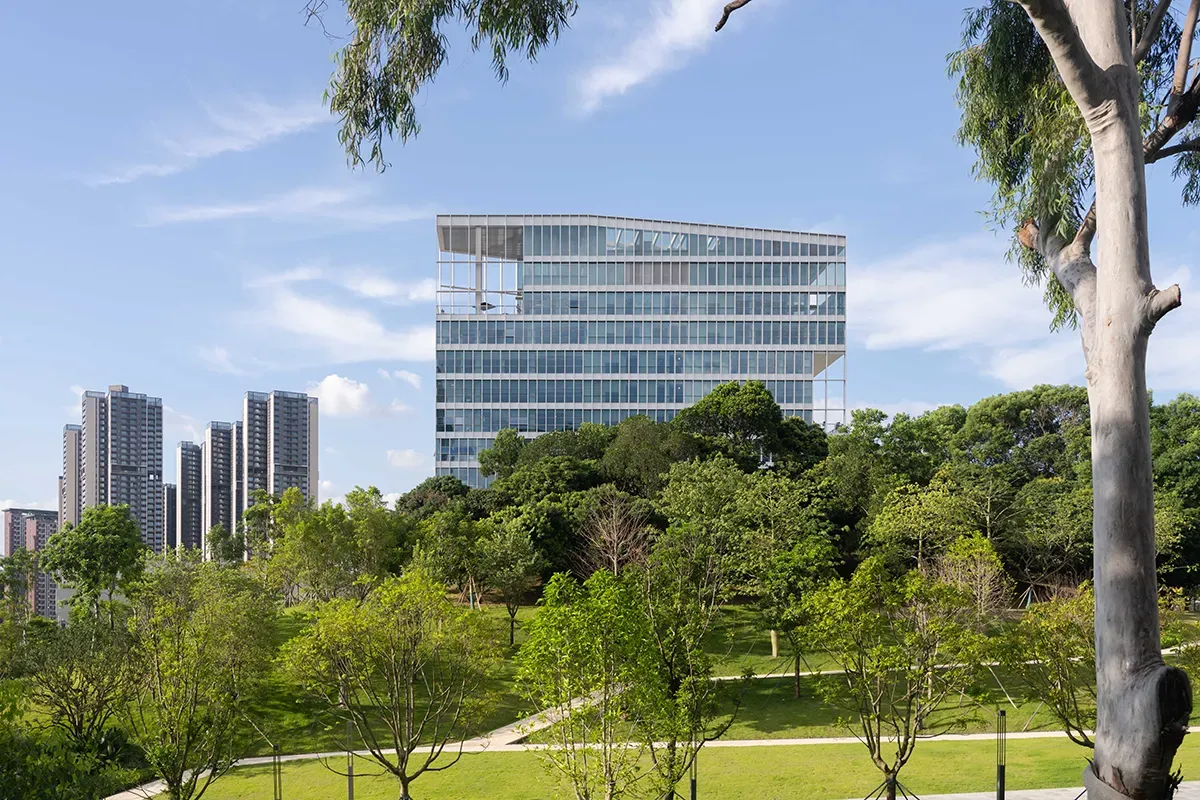
Through LOOP above the first floors and green roofs/vegetated facades, the outdoor areas attached to buildings are interconnected with the landscape, creating an impressively roaming route.
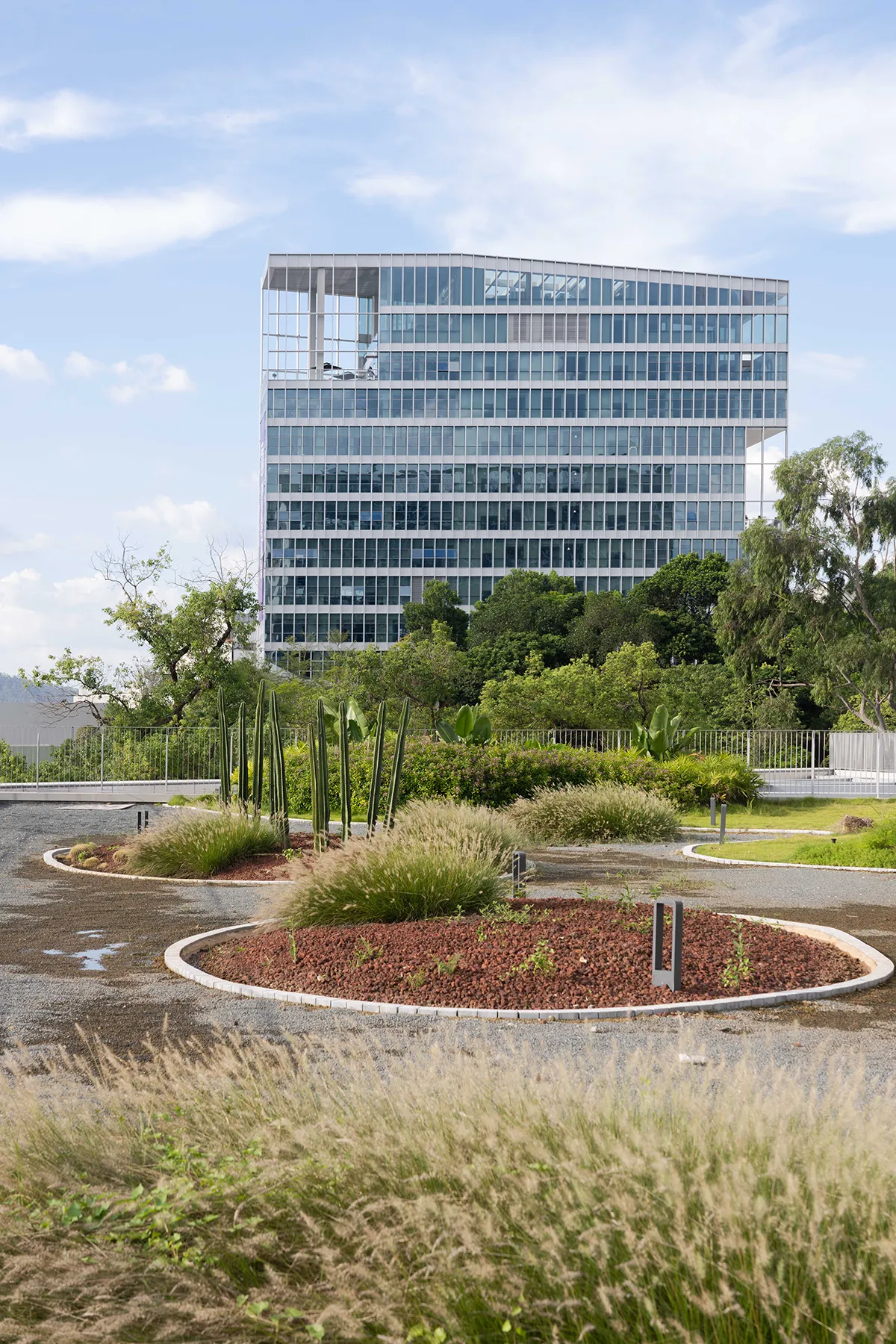
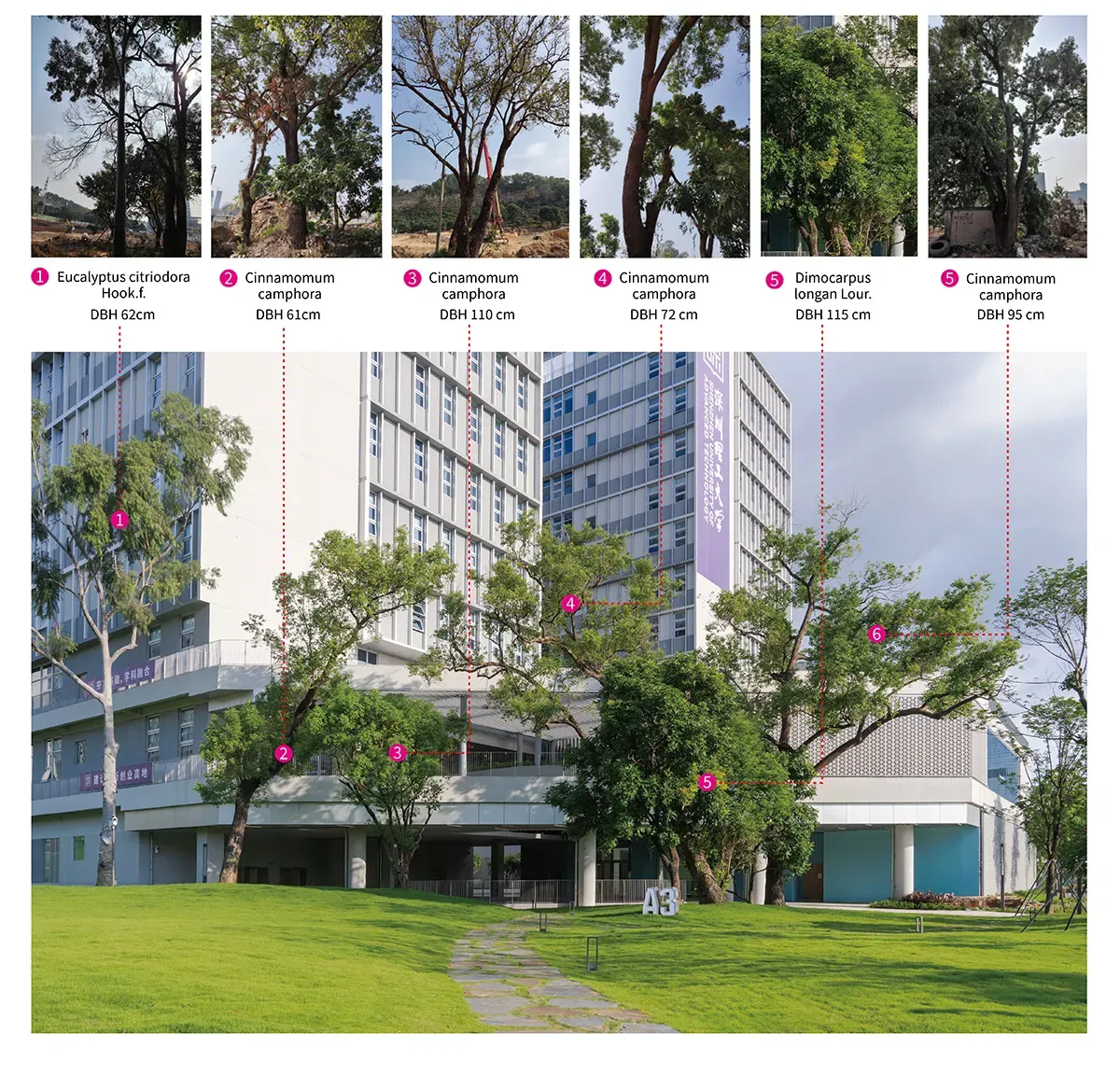
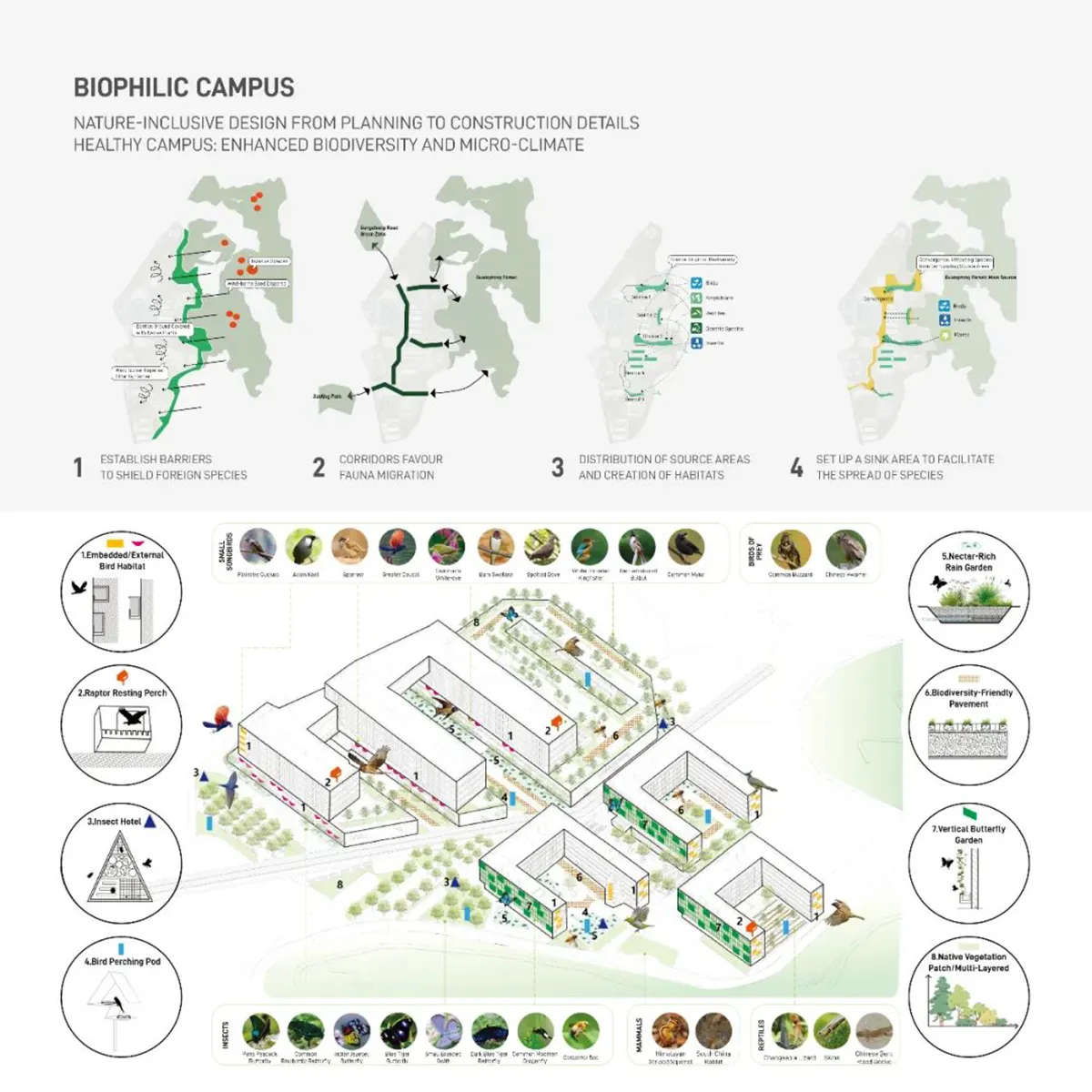
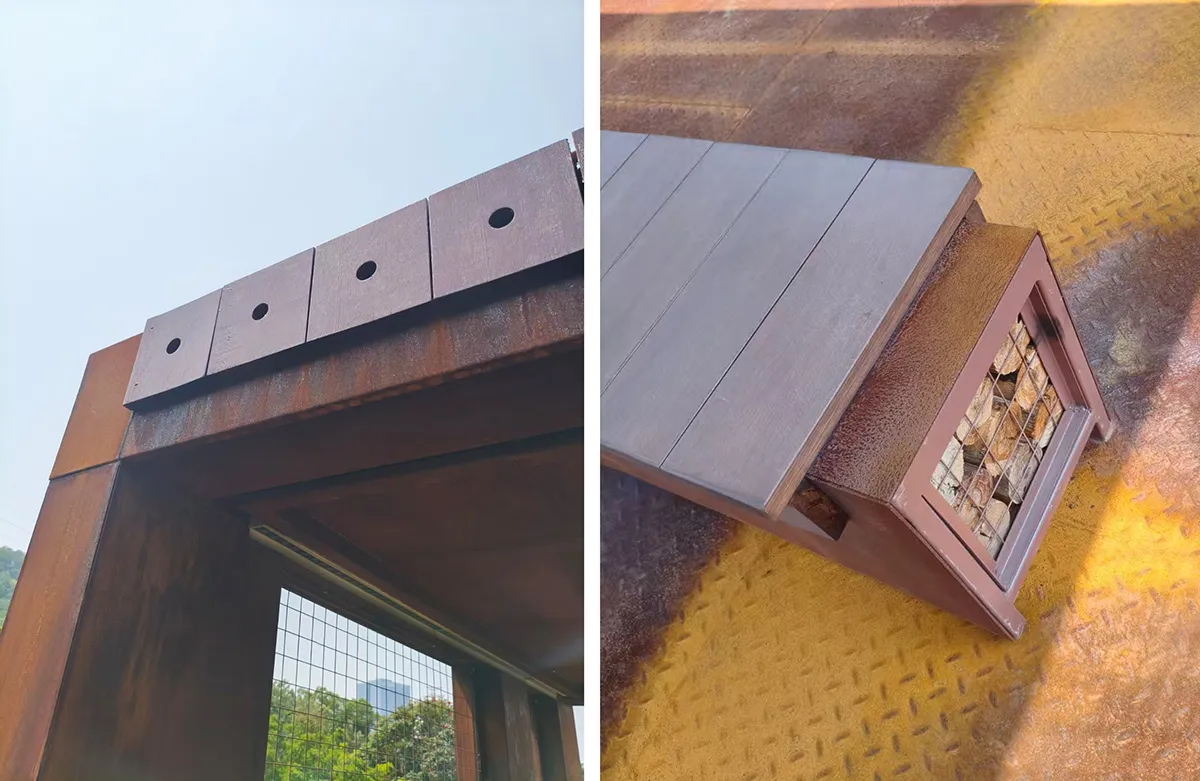
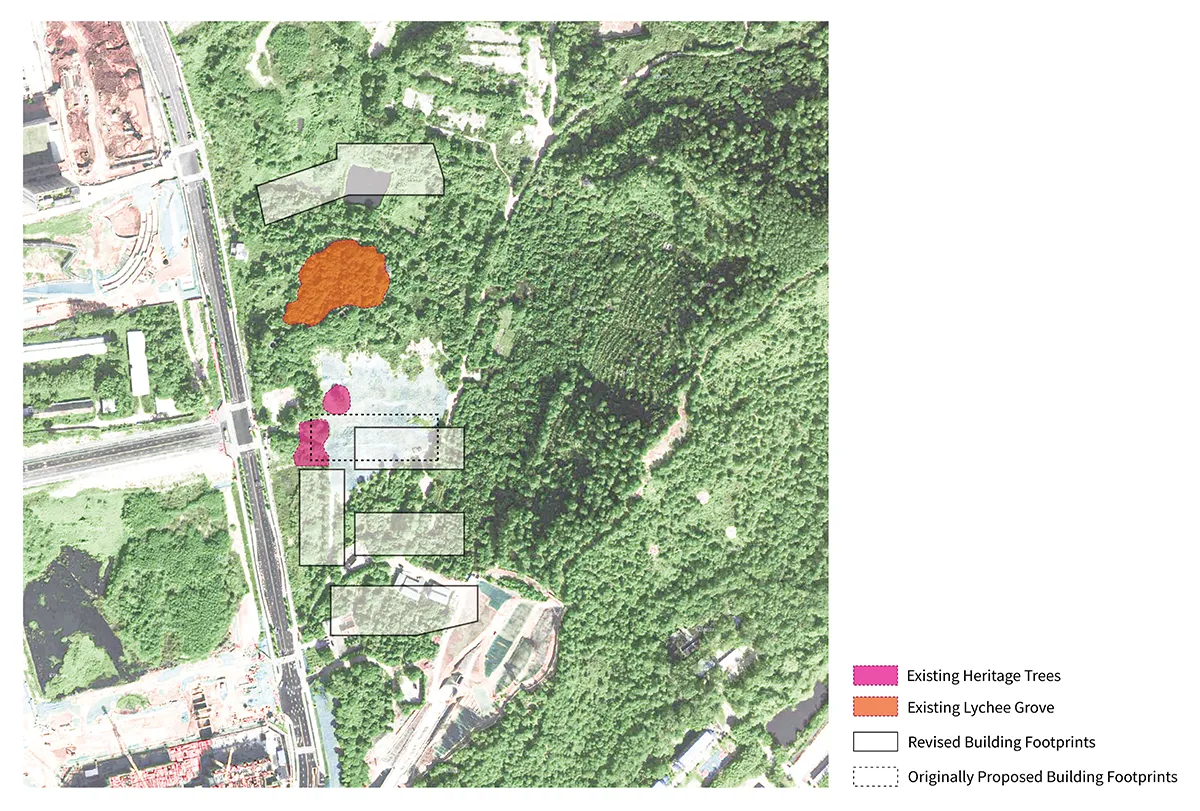
Deadwood by the lake, bird islands, and stone beaches create diverse habitats for amphibians and fish, transforming even in crowded human areas into places where plants and animals freely settle. We see the campus as a symbiotic interface between designed ecology and primary nature. By adopting a “nature-inclusive” approach, based on the possible orientation, height, and spatial needs of animals, the built environment offers shelter for birds, bats, and insects. Key native tree communities are deliberately preserved during the masterplan phase to showcase a low-impact urban development process.
A Resilient Landscape for SUAT (Shenzhen University of Advanced Technology) Green Campus
Location: Shenzhen, Guangdong Province, China
Landscape Architect: WADI Studio
Architecture and Masterplan: reMIX Studio & CABR
Construction Documents: China Northeast Architectural Design & Research Institute Co., Ltd.
Shenzhen Construction Work Bureau
Concept Images: WADI Studio
Photography Credits: ©KANGYU; DONG; WADI Studio; RUGUOGE;