
Hotel Indigo Wuxi Qingming Bridge is located in Liangxi District, Wuxi, within a ten-minute walk of the historic Qingming Bridge. Set inside the Qingming Bridge Grand Canal Scenic Area, the hotel enjoys direct access to Nanchang Street and is surrounded by rich cultural and leisure destinations, offering a distinctive sense of place at the heart of the city.
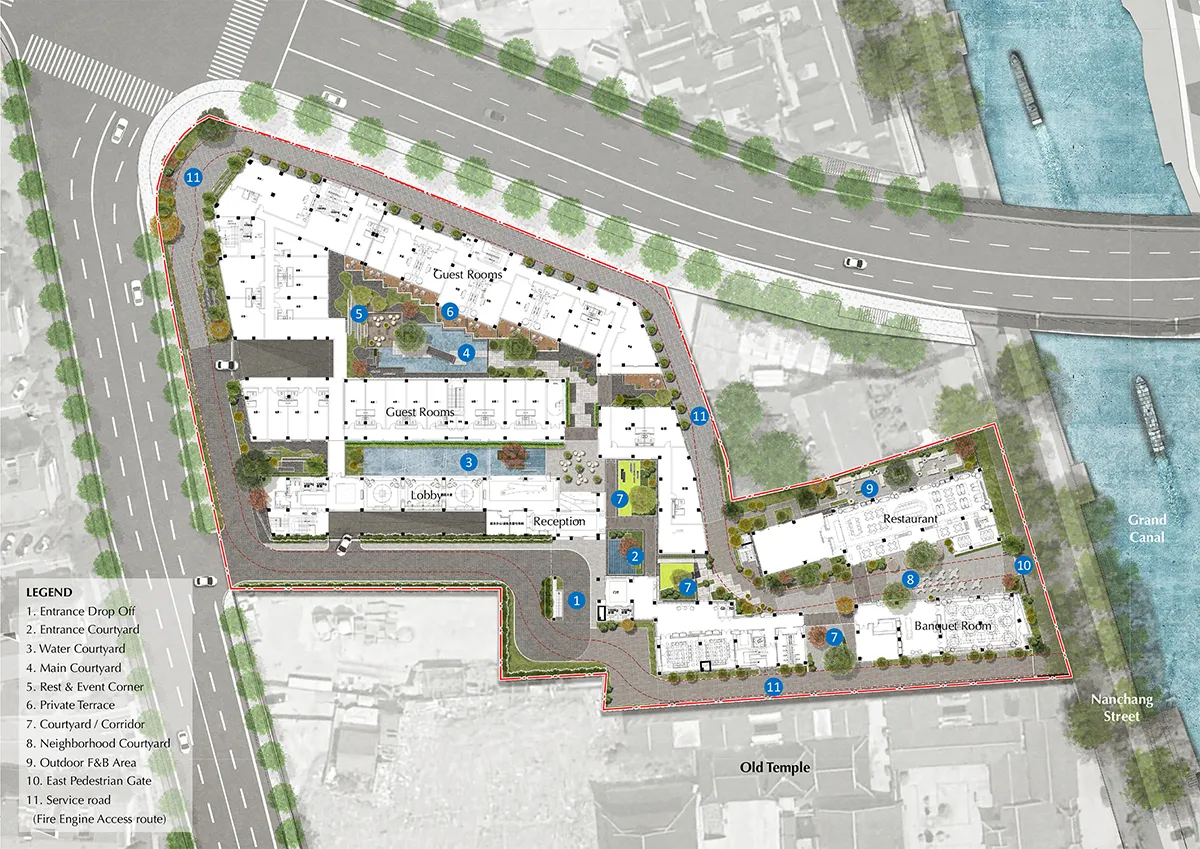
The hotel adopts a low-rise, multi-building layout, with structures linked by indoor and outdoor corridors. This configuration ensures smooth circulation while shaping a series of courtyards with varied scales and character, where the landscape unfolds gradually as guests move through the site.
Wuxi is recognised as one of the birthplaces of Jiangnan civilisation and Wu culture. Renowned gardens such as Jichang Garden and Liyuan, along with the city’s dense water network and long canal history, have shaped a unique urban identity deeply intertwined with water. Inspired by this context, the landscape reinterprets water as both a physical element and a cultural narrative, guiding guests through spaces reminiscent of the city’s canal-side alleys.
Arrival & Drop-off Experience
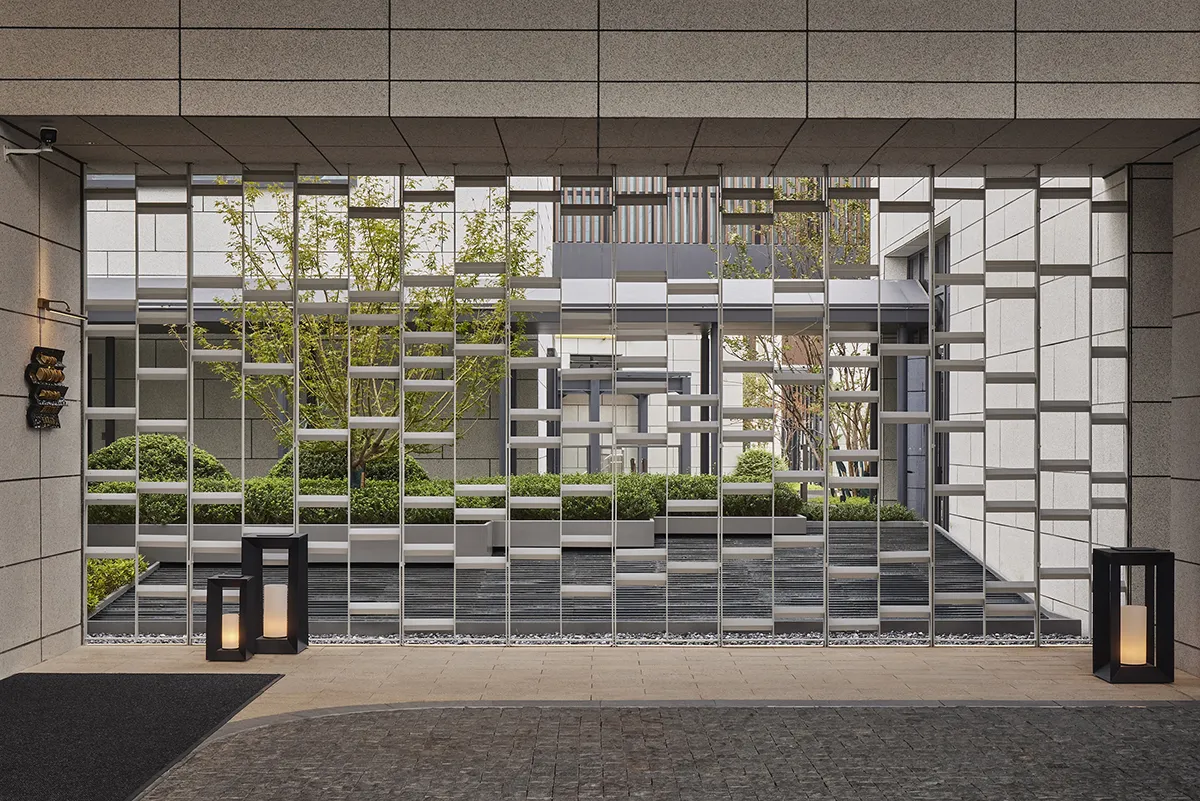
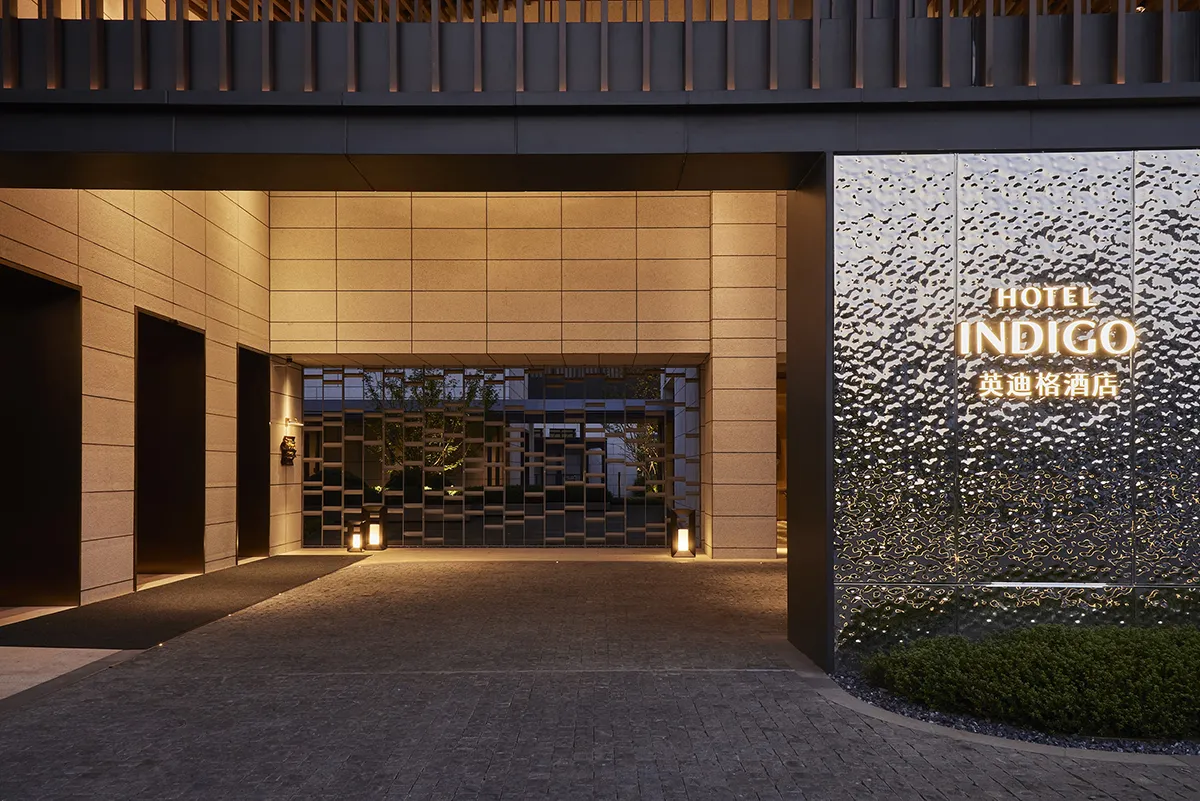
Guests turn from the main road into the hotel driveway and proceed slowly toward the drop-off area. Along the approach, the buildings’ sloping roofs are set in dialogue with a perforated screen wall at the end of the vista. A subtle glimpse of greenery beyond the screen hints at the Jiangnan garden ideal of “courtyards within courtyards,” creating a sense of depth and quiet anticipation.
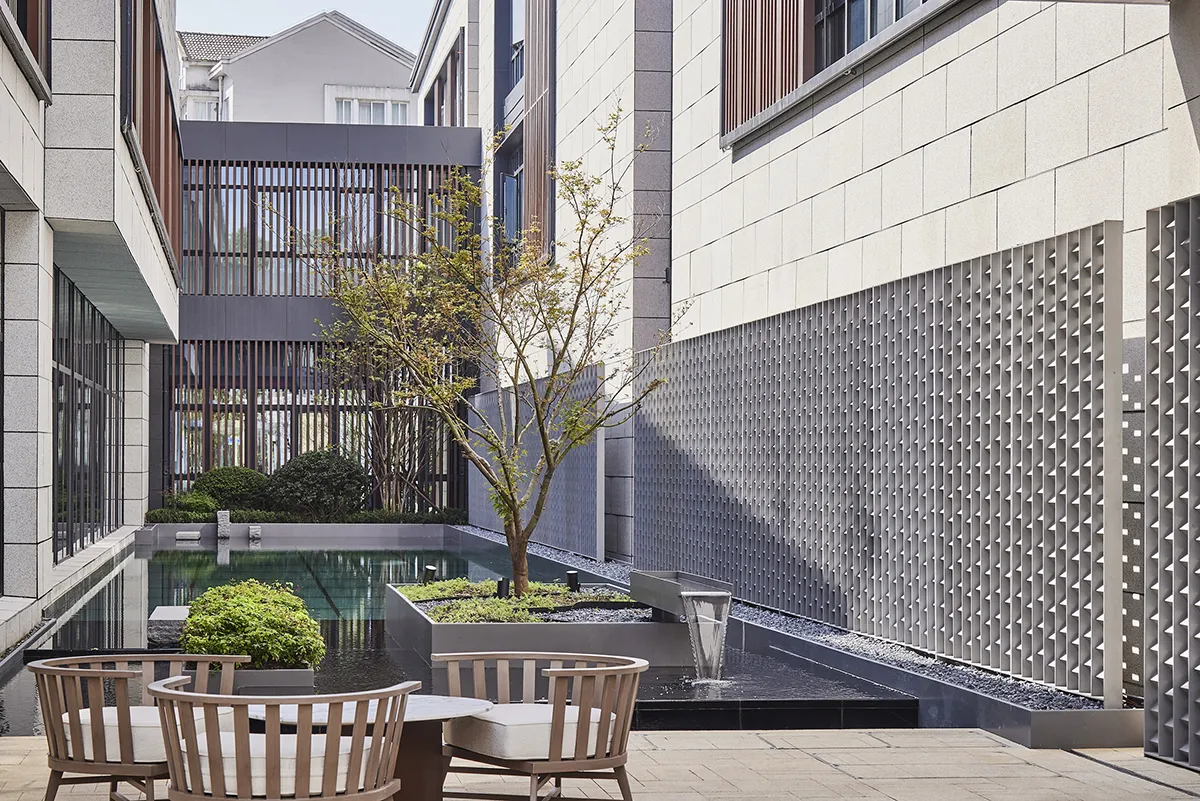
Beyond the screen, a calm water feature introduces the landscape theme. Covered corridor and seasonal maple trees appear, drawing guests forward through a series of unfolding scenes toward the hotel lobby.
Water Courtyard
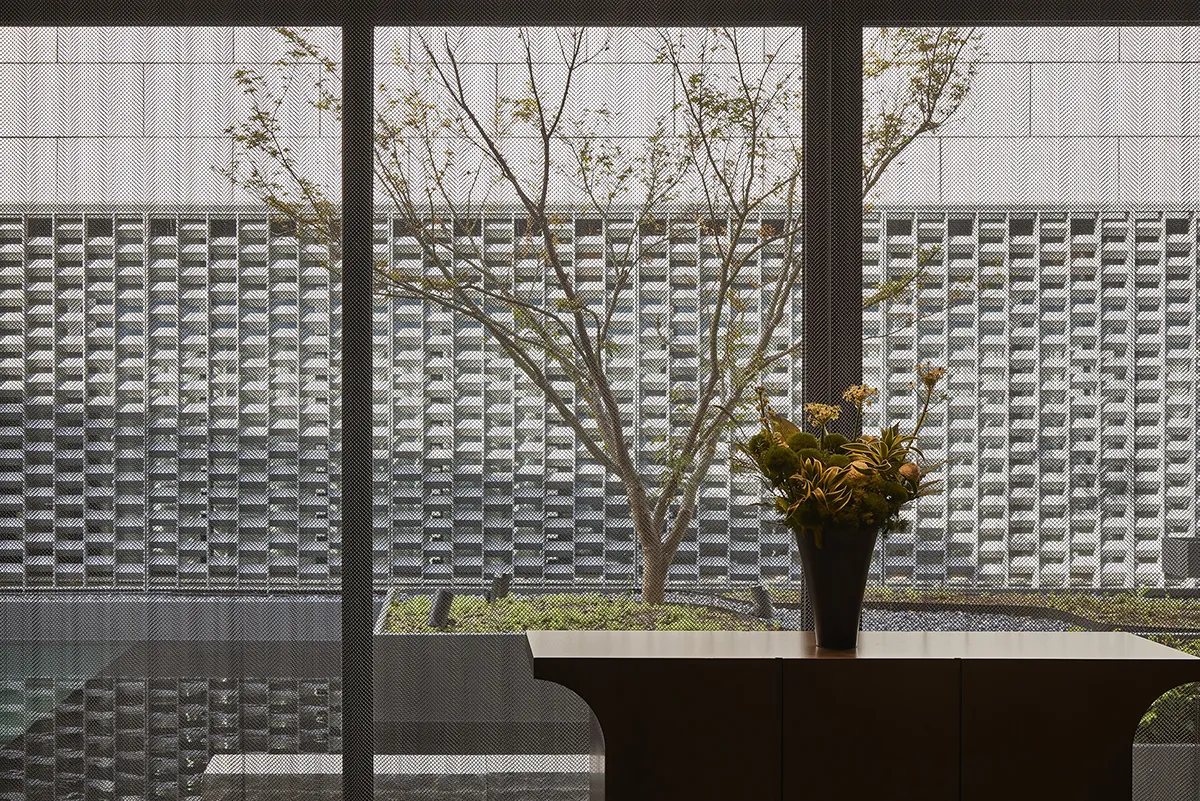
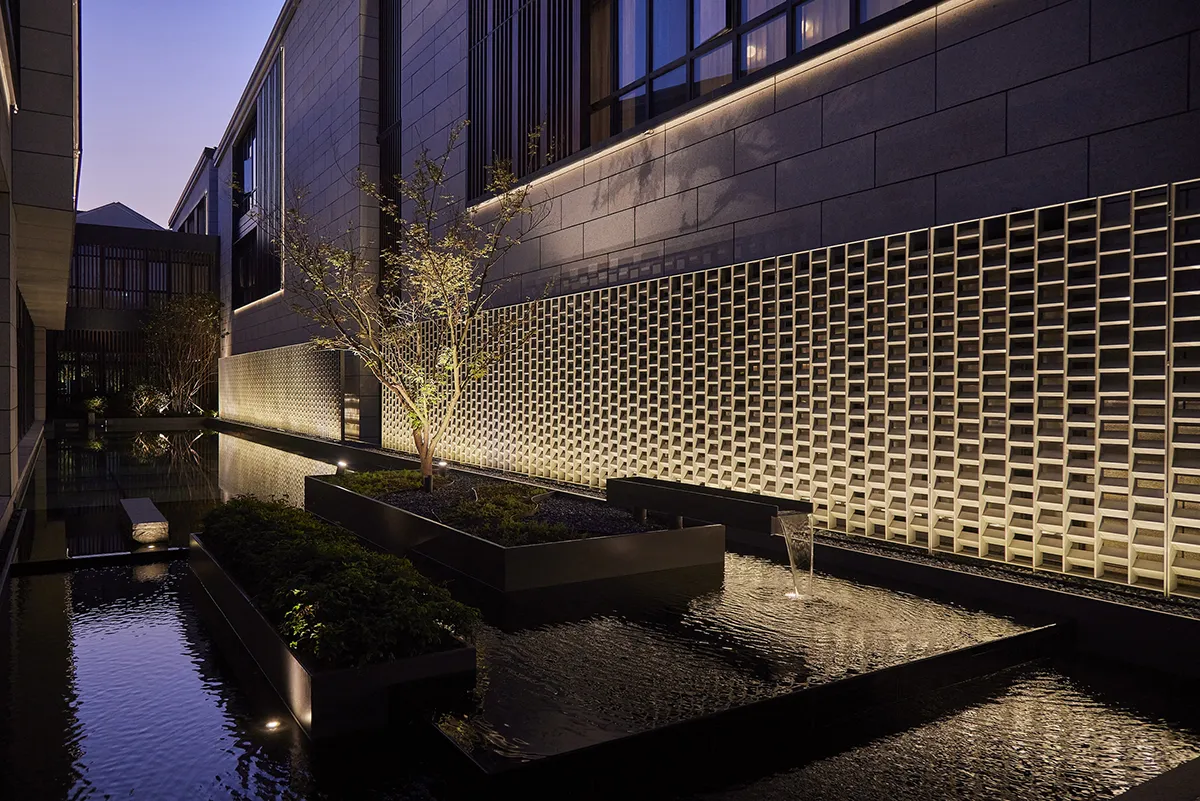
Inside the lobby, a feature landscape wall behind the reception desk immediately captures attention. In front of it, a still reflecting pool and a sculptural focal tree establish a tranquil first impression. The wall’s design echoes the arrival screen, reimagining the flowing rhythm of Wuxi’s Grand Canal through contemporary materials and form. Natural daylight animates the surface, while subtle night lighting creates rippling reflections.
Beneath the centre of the reflecting pool is the glass ceiling of the hotel’s swimming pool. Light and water reflections pass through the glass, visually linking the lobby, outdoor courtyard, and underground pool. This continuous “water vein” concept connects different spaces and levels, reinforcing the idea of water as a unifying element throughout the hotel.
Main Courtyard
Accessible from the guestroom corridors, the main courtyard is the hotel’s largest and most significant garden. Selected lower-floor guest rooms feature private terraces that open directly onto the courtyard, creating a seamless connection between indoor and outdoor spaces.
Two mature Chinese tallow trees anchor the setting, their canopies shaping the space above a broad expanse of still water. Contemporary stepping stones cross the pool, while a bridge inspired by Qingming Bridge and waterside seating invite guests to stroll, pause, and immerse themselves in the calm atmosphere of canal-side living.
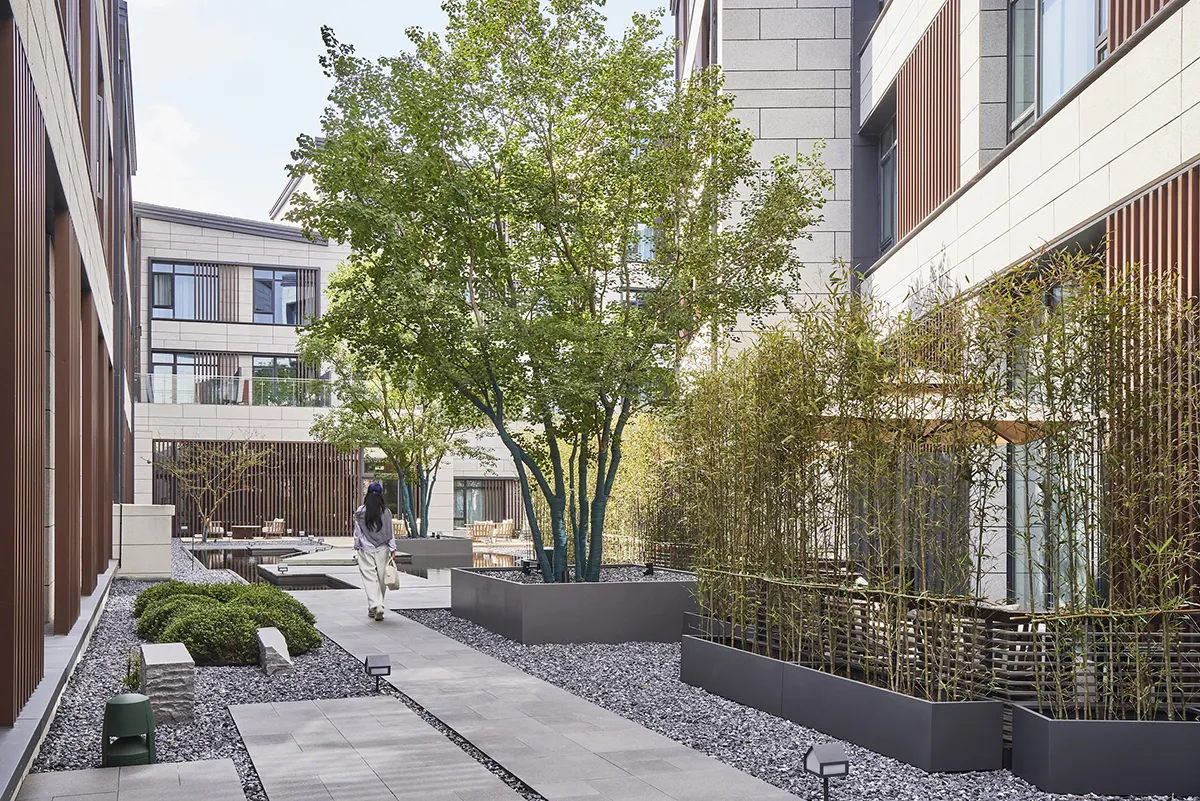
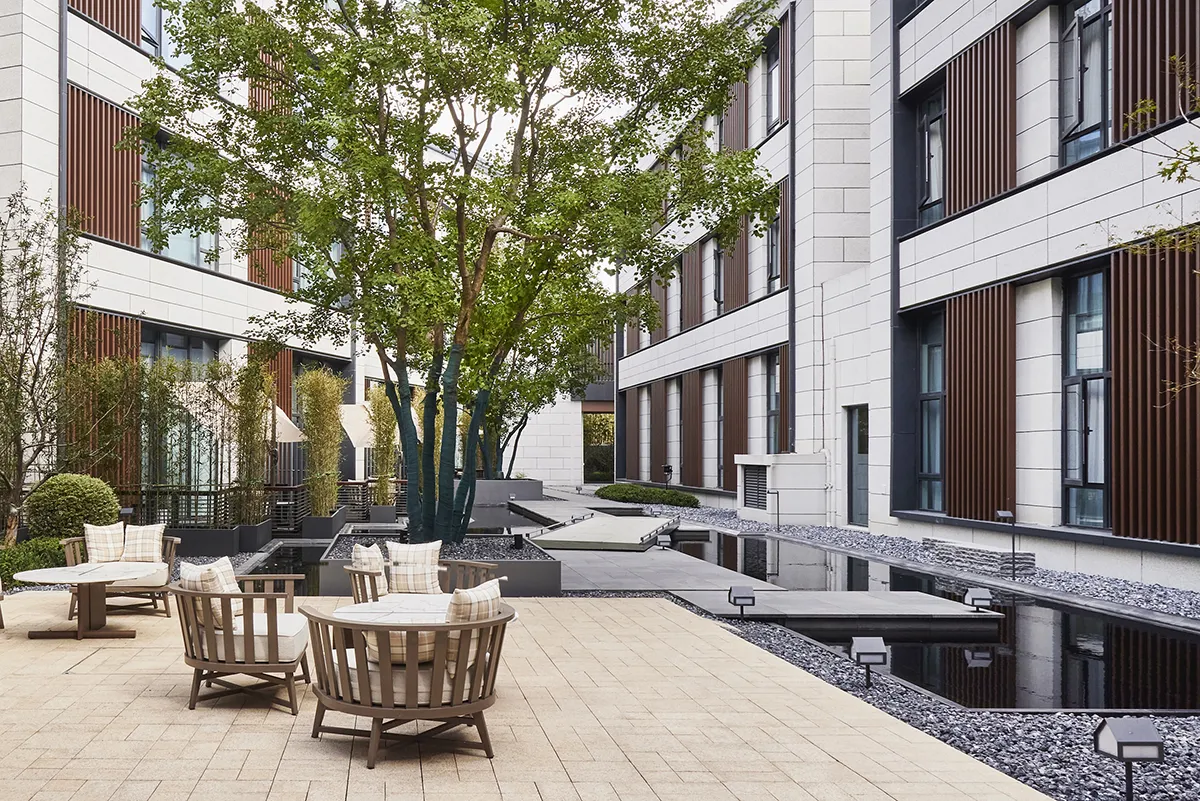
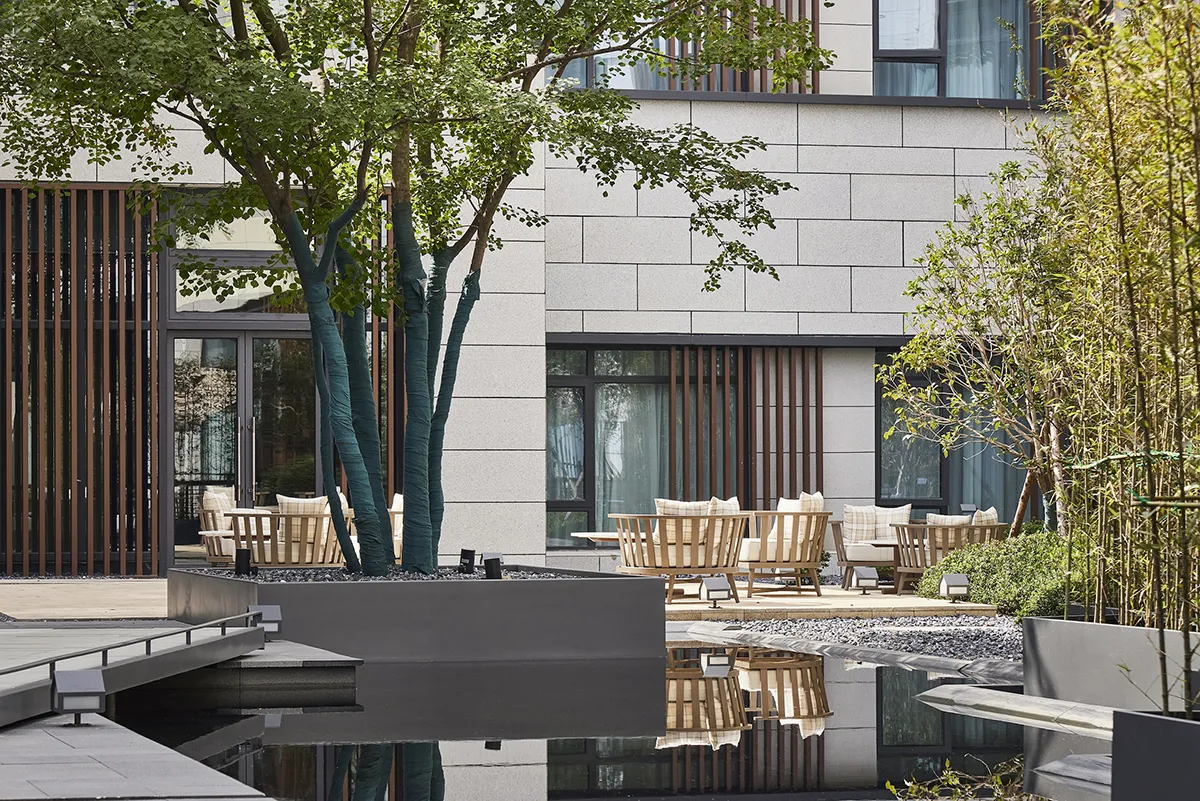
In addition to daily relaxation, the courtyard is designed to accommodate seasonal installations and special events, balancing poetic ambience with functional flexibility.
Corridor Courtyard Sequence
Moving from the main courtyard toward the eastern public areas, guests pass through three smaller outdoor courtyards connected by corridors. Though similar in scale, each courtyard offers a distinct spatial experience.
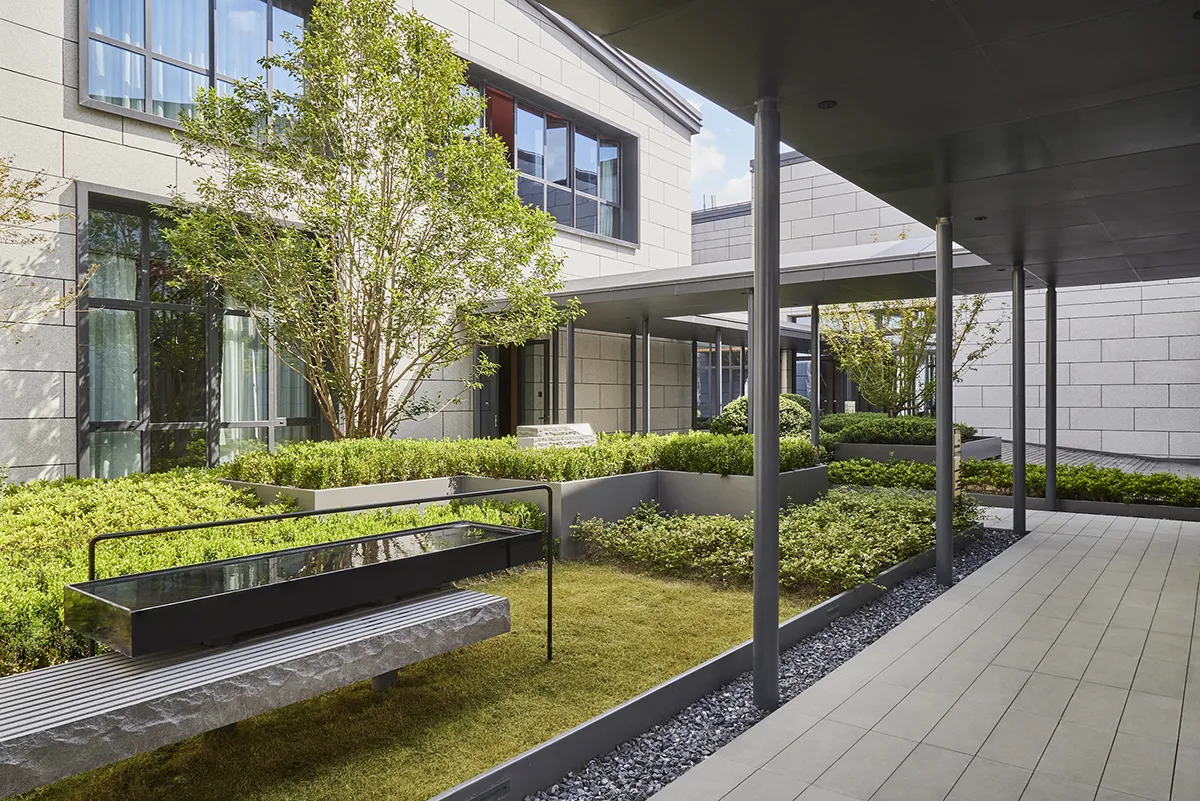
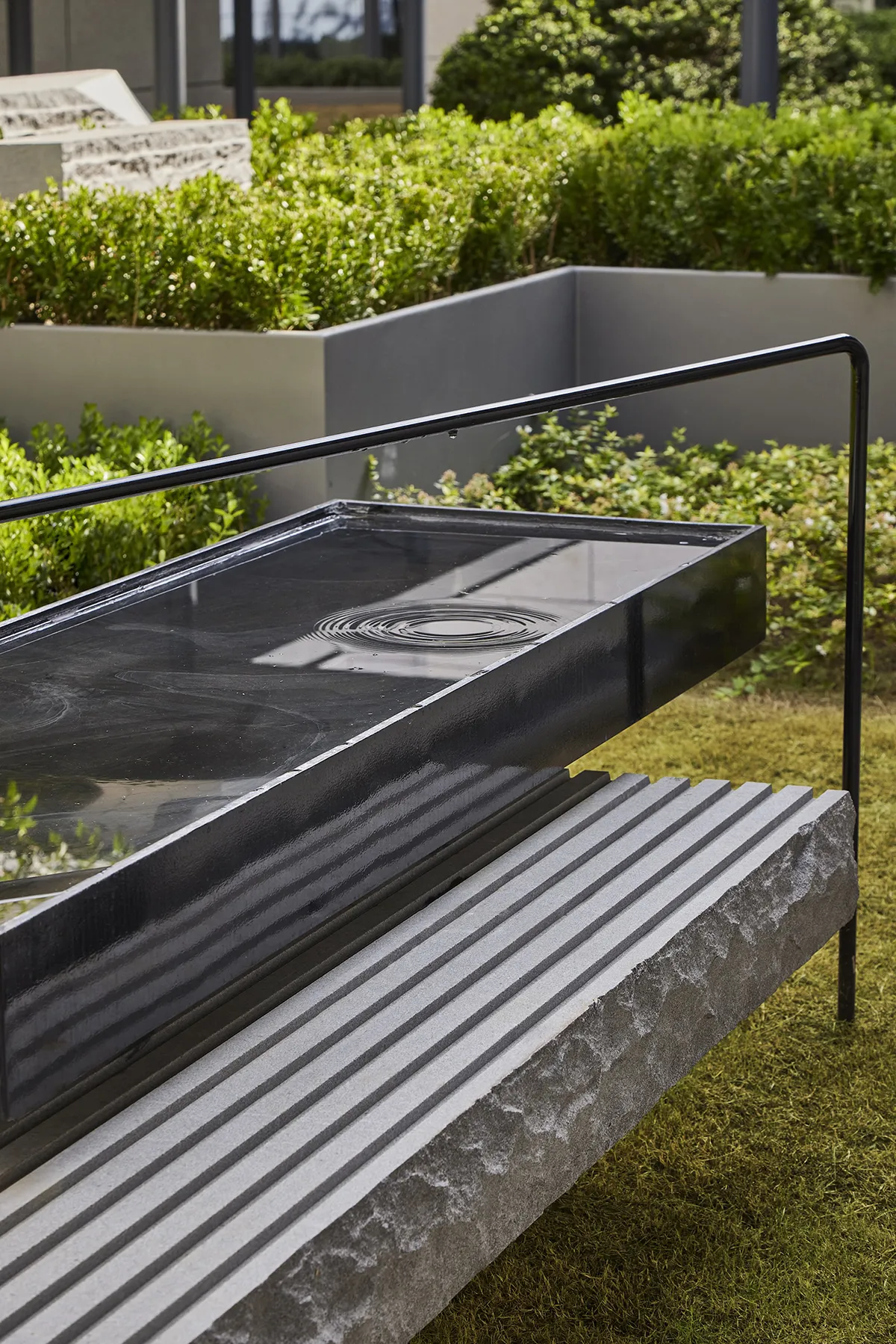
Minimal water features, dripping elements, and natural stone accents enrich the walking rhythm, allowing guests to experience the traditional garden principle of “changing scenes with every step.”
Neighborhood Courtyard
On the eastern edge of the site, adjacent to Nanchang Street, the café, restaurant, and banquet hall are open to both hotel guests and the public. Landscaped outdoor dining areas and garden spaces support these functions, encouraging social interaction and leisurely gatherings.
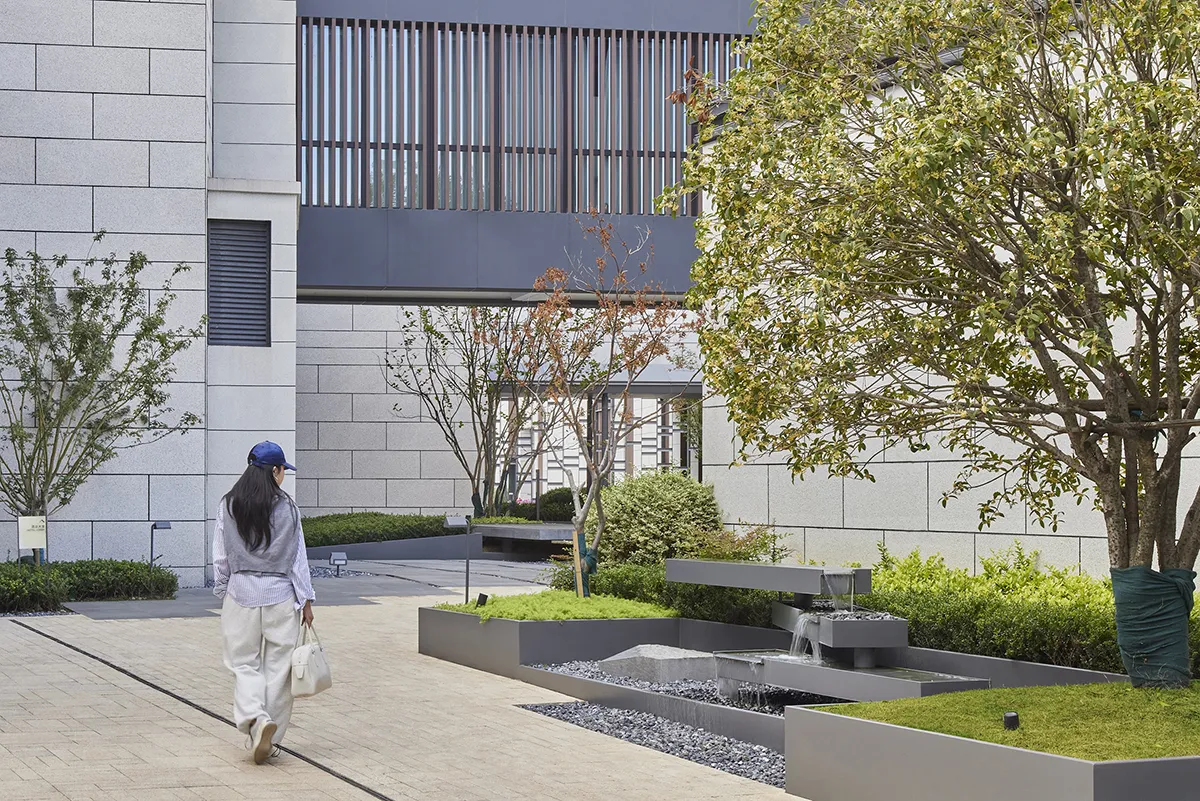
Where fire access routes require open paving, water features and structural trees are strategically placed along the edges to soften the space and add visual depth. Movable planters and outdoor furniture transform the area into a relaxed setting for casual meetings and quiet afternoons.
Conclusion
In Wuxi, water has long shaped daily life—linking neighborhoods by bridges, defining the city through canals, and fostering a relaxed riverside lifestyle. This enduring spirit flows through the hotel’s landscape, where distinct courtyards come together as a connected whole.
Through this sequence of water and gardens, guests are invited to experience Wuxi at an unhurried pace, creating their own memories between water and courtyard, past and present.
Hotel Indigo Wuxi Qingming Bridge
Location: Wuxi, China
Landscape architect: TOA Landscape Architecture
Design team: Okawa Yoshinari, Zhang Li, Guo Ying, Li Yuanwei
Photo credit: TOA Landscape Architecture