
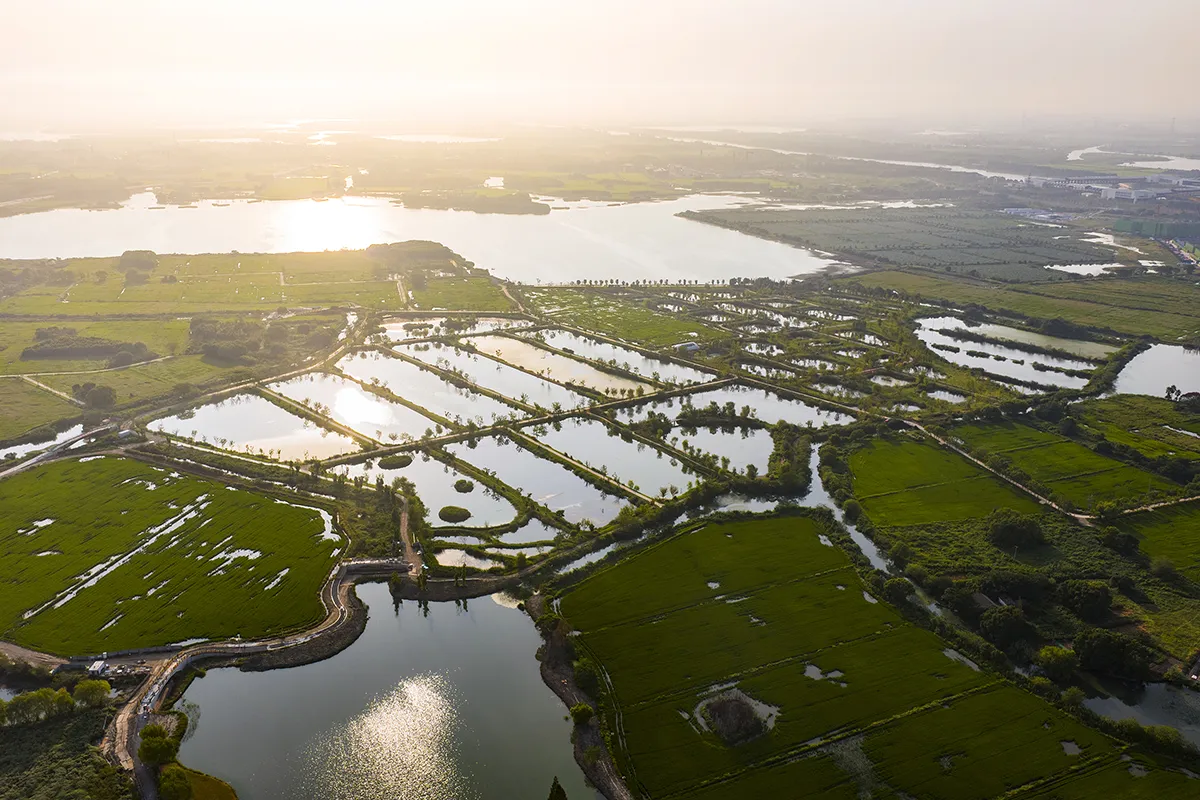
Located in the Yangtze River Delta Eco-Green Integrated Development Demonstration Zone, this project sits in one of China’s most ecologically sensitive and economically dynamic regions. The site is a large rural landscape of cropland, fishponds, canals, and villages, integrating ecological restoration, agriculture, water management, recreation, and environmental education into a living system.
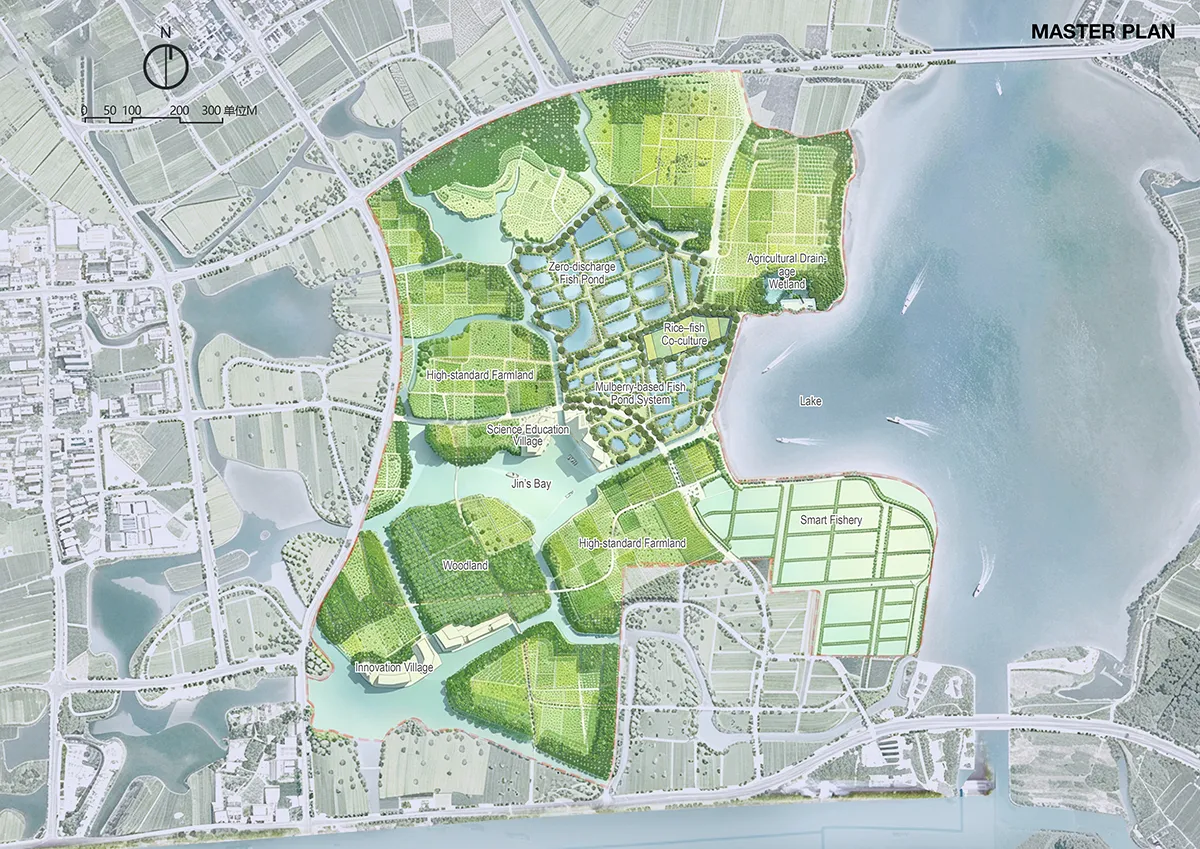
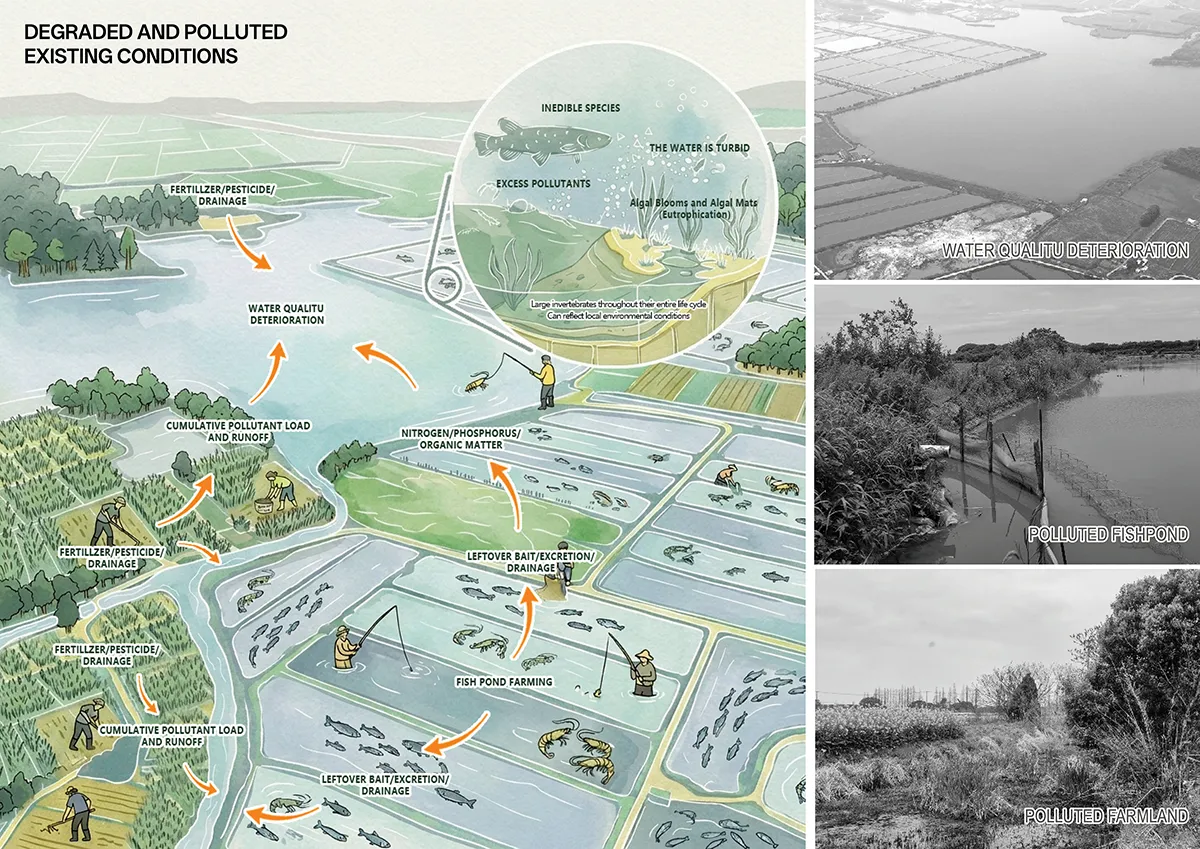
Shaped by the Jiangnan water-town landscape and the traditional mulberry–dyke–fishpond system, the site once embodied a balanced agro-ecological model. However, rapid urbanization, modern farming, and fragmented water systems have caused declining water quality, biodiversity loss, weakened flood resilience, and disrupted ecological cycles. Pollution, nutrient runoff, and sedimentation have further reduced ecological capacity, while climate change intensifies flooding and the need for sustainability.
The Yangtze Delta Living Loop reinterprets traditional ecological knowledge through contemporary design as resilient infrastructure, reclaiming degraded land to create a scalable prototype for zero-waste agricultural systems.
The project is structured around three interrelated systems:
Ecological Infrastructure
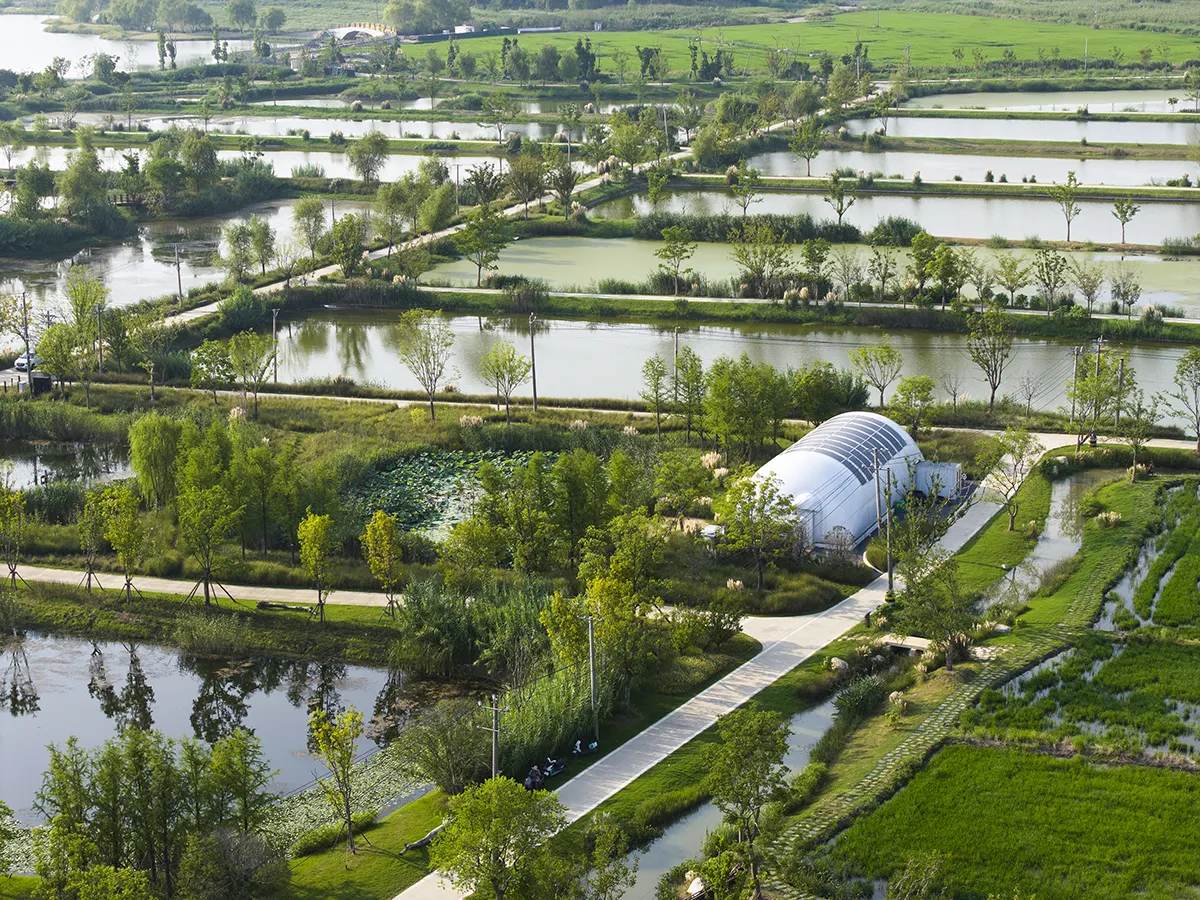
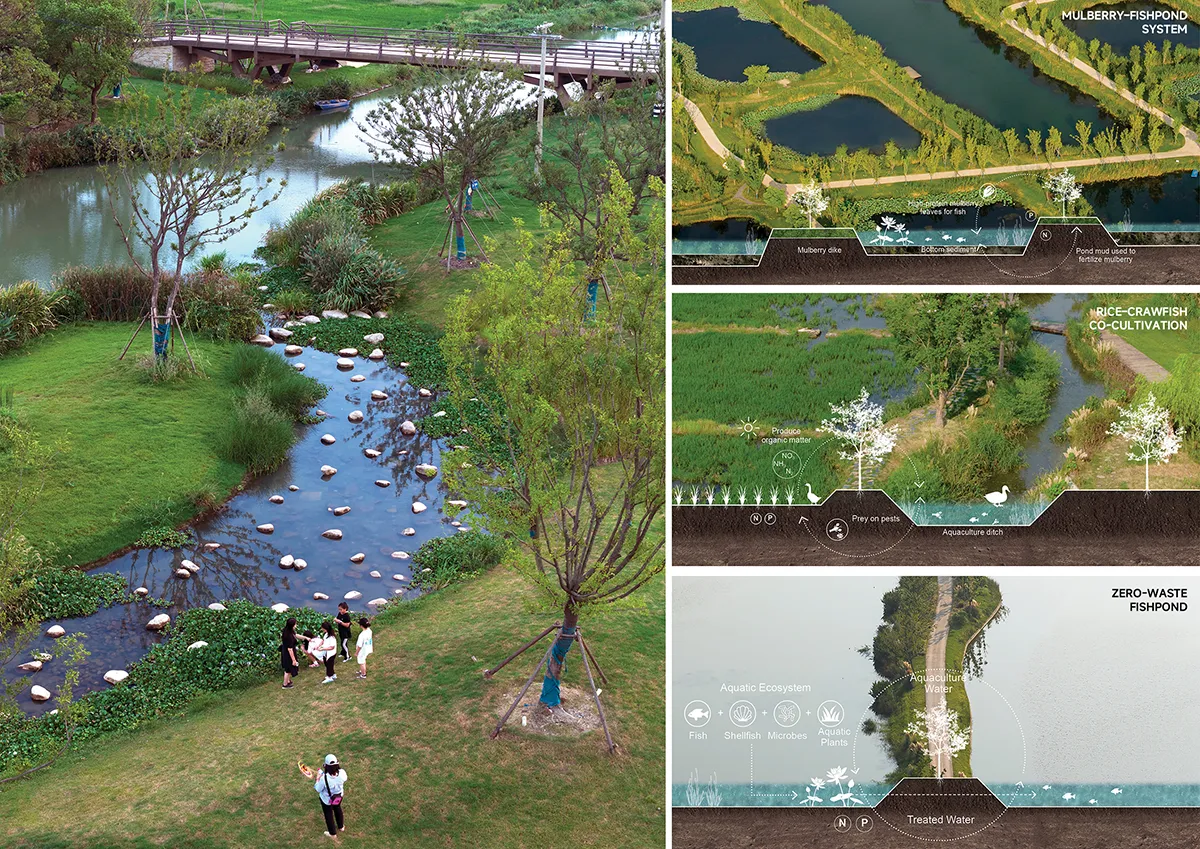
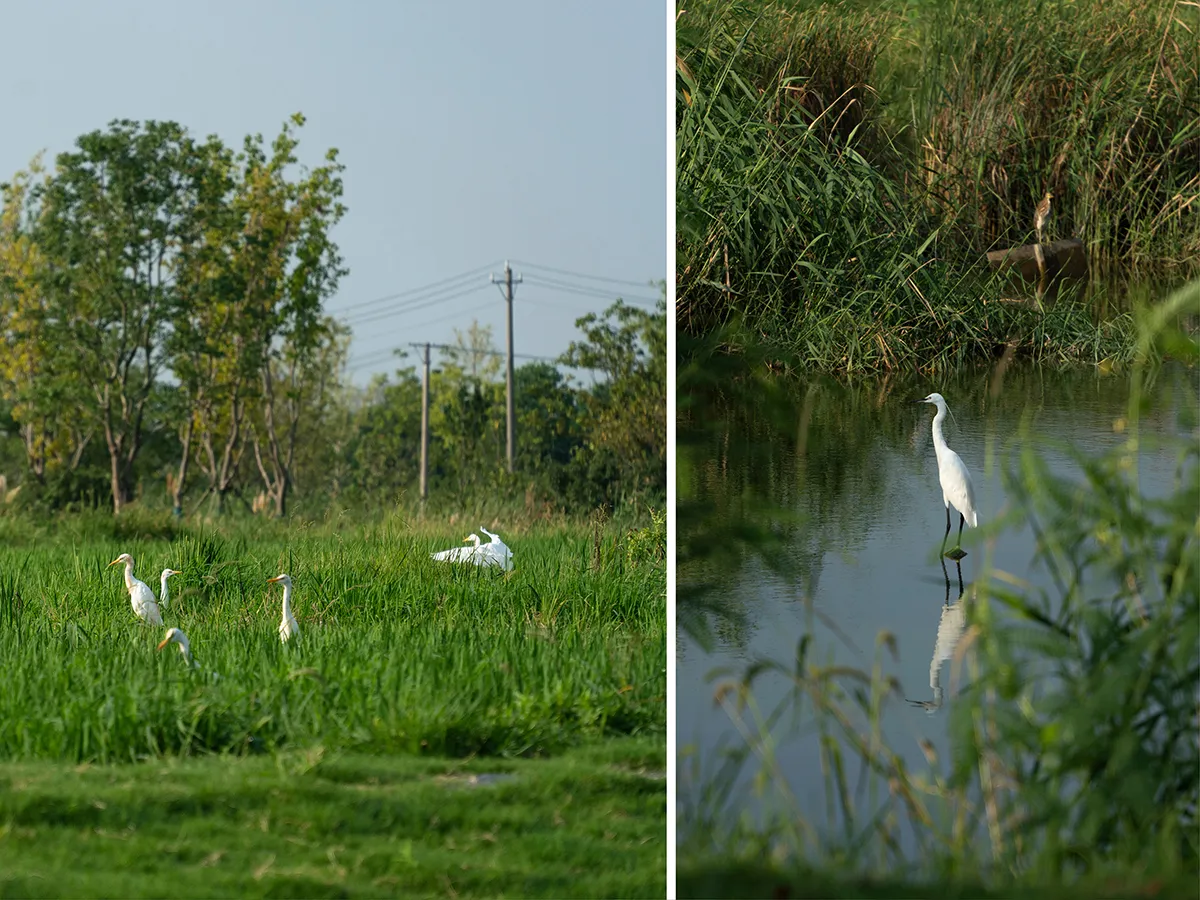
A zero-waste system cycles water, nutrients, and biomass. Canals and aquaculture ponds are reorganized into a connected network to improve water retention, reuse, and flood resilience. The system intercepts, treats, and reuses agricultural runoff. Constructed wetlands function as filters, flood buffers, and habitats. Native planting stabilizes soil, improves water quality, and enhances biodiversity. Decentralized, nature-based management supports adaptive responses to flooding, drought, and seasonal change.
Productive Landscape
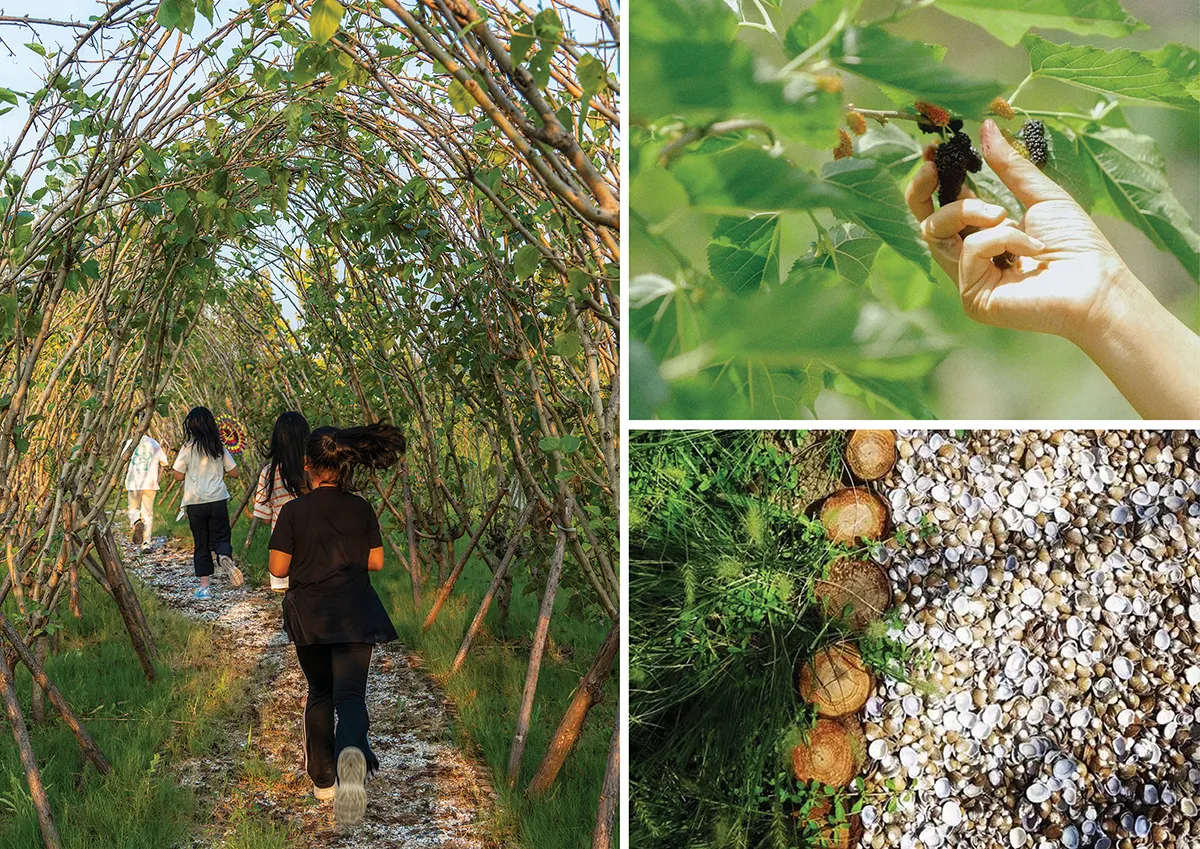
Closed-loop systems connect farming and aquaculture to reduce waste and emissions while increasing productivity. The mulberry–fishpond system uses Morus alba, whose biomass supports feed and nutrient cycling between crops and fish. Rice–Crawfish Co-Cultivation combines crawfish farming with rice paddies to reduce chemical use, improve soil, and boost productivity while maintaining water quality and habitat value.
Public Interface
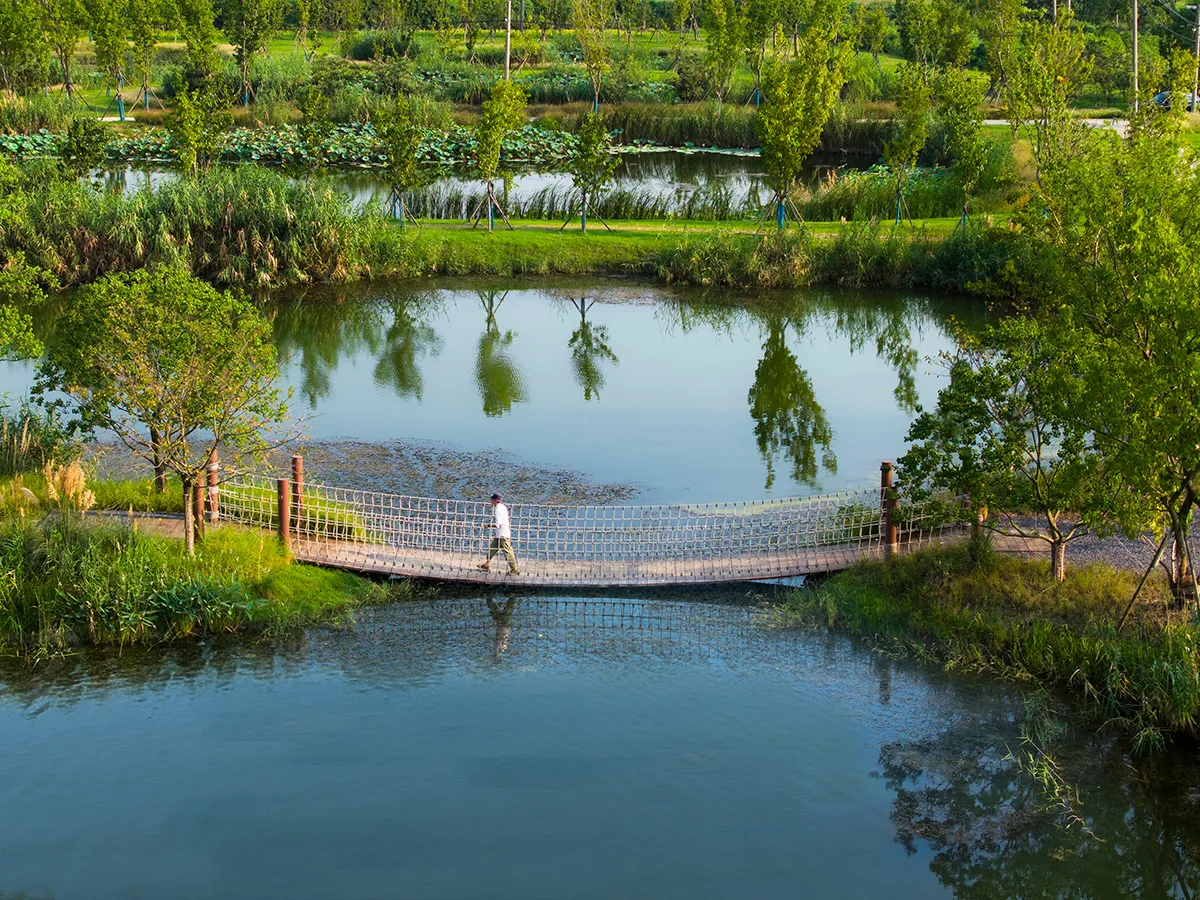
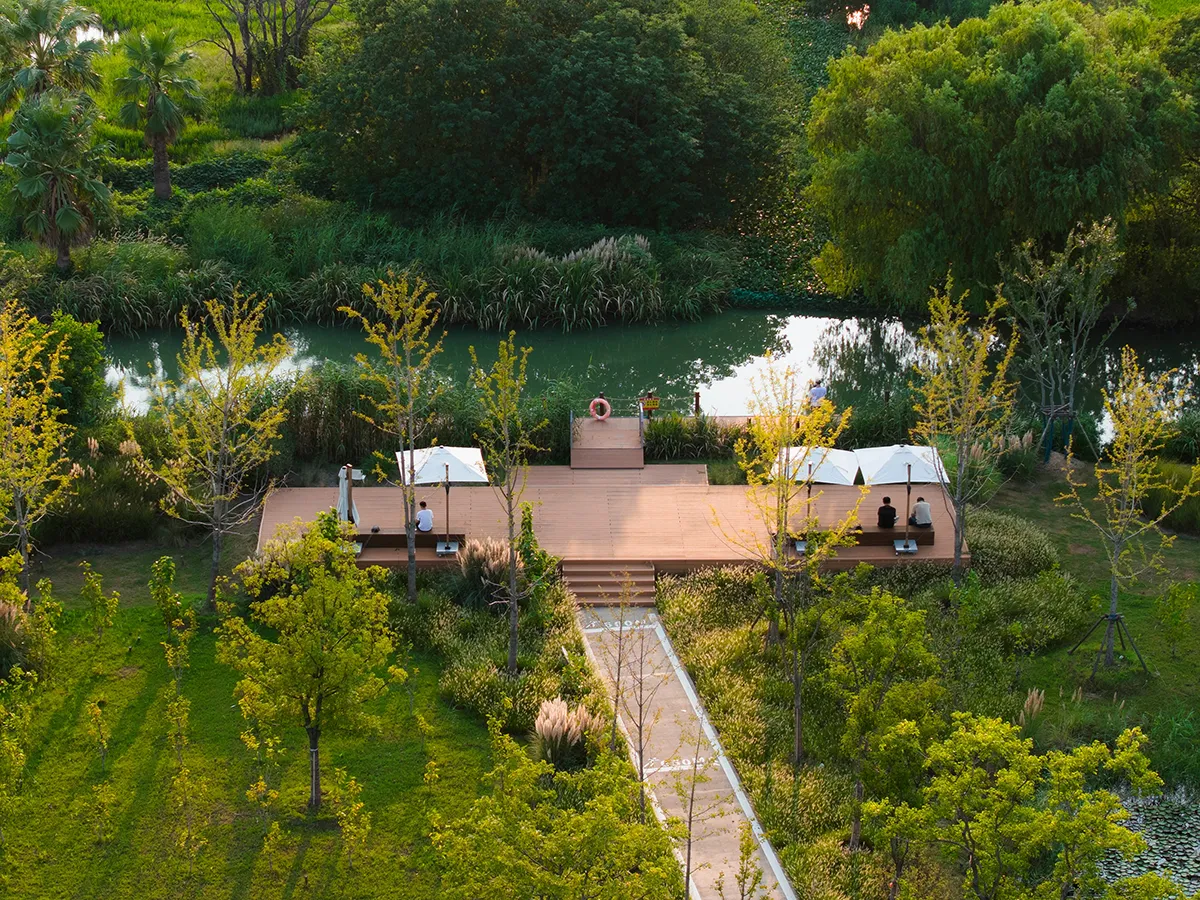
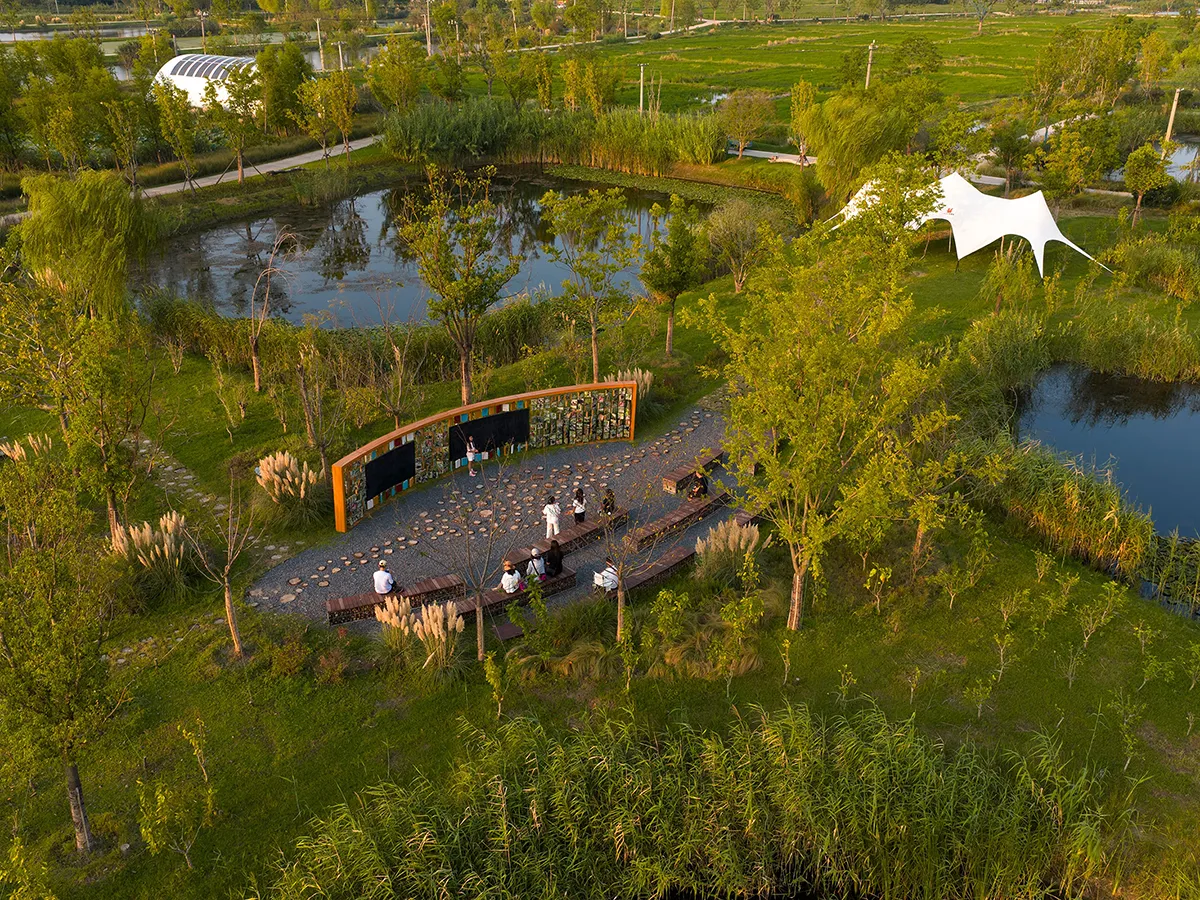
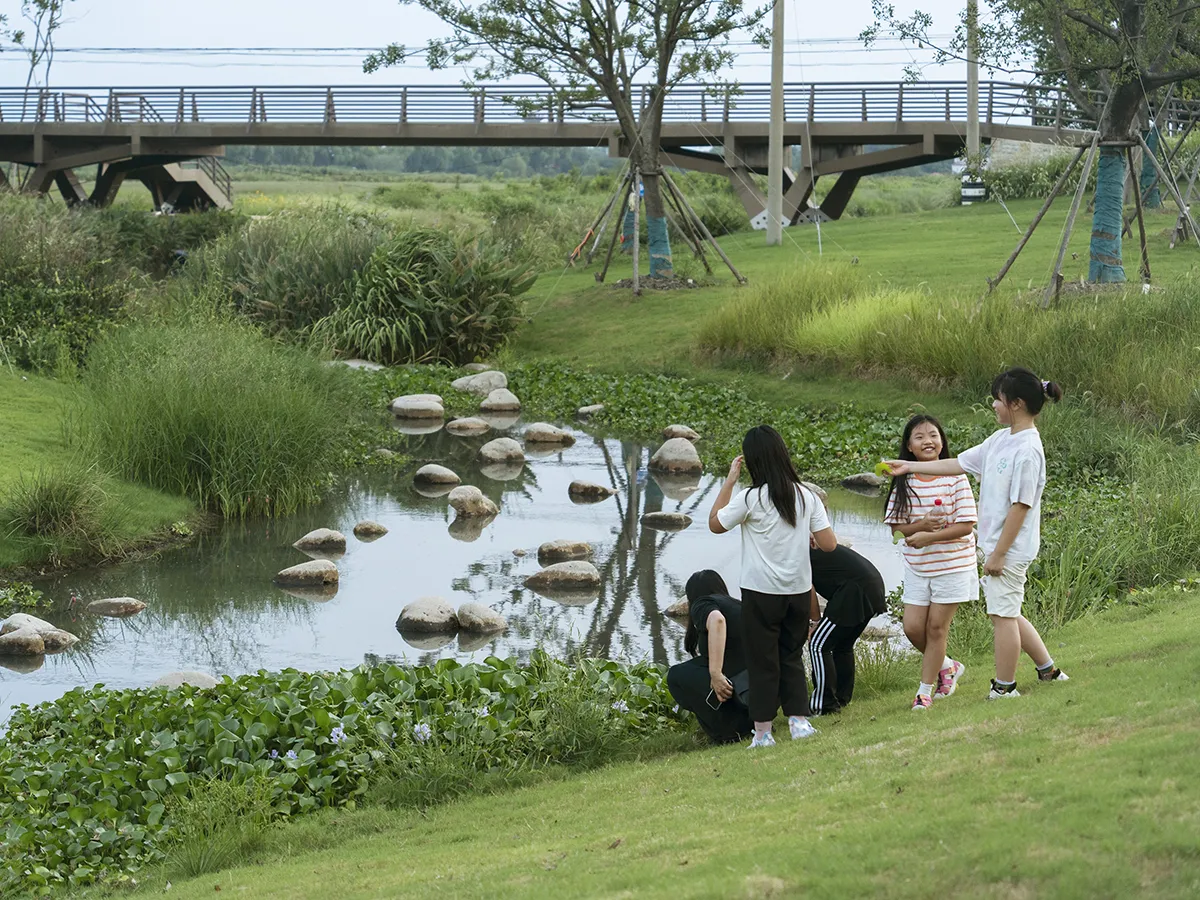
Walking and cycling paths, waterfront platforms, and observation areas make ecological and productive landscapes accessible. Interpretive landscapes and outdoor classrooms create a living laboratory for ecological education. Jiangnan-inspired spatial patterns and water–land relationships reinforce cultural heritage. Recreational spaces—fishing decks, camping areas, and gathering pavilions—integrate with wetlands and fields, forming a “water-town living room” for community use.
Outcomes and Impact
Environmental Performance
The project regenerates water–land systems through agro-ecological design, circular resource use, and climate adaptation. Native planting and nature-based systems reduce maintenance and enhance long-term resilience.
Food Production Impact
Diversified production—including loquat, mulberry, peach, pomegranate, rice, and aquaculture species such as Chinese perch, Chinese paddlefish, largemouth bass, topmouth culter, and crawfish—creates multiple revenue streams.
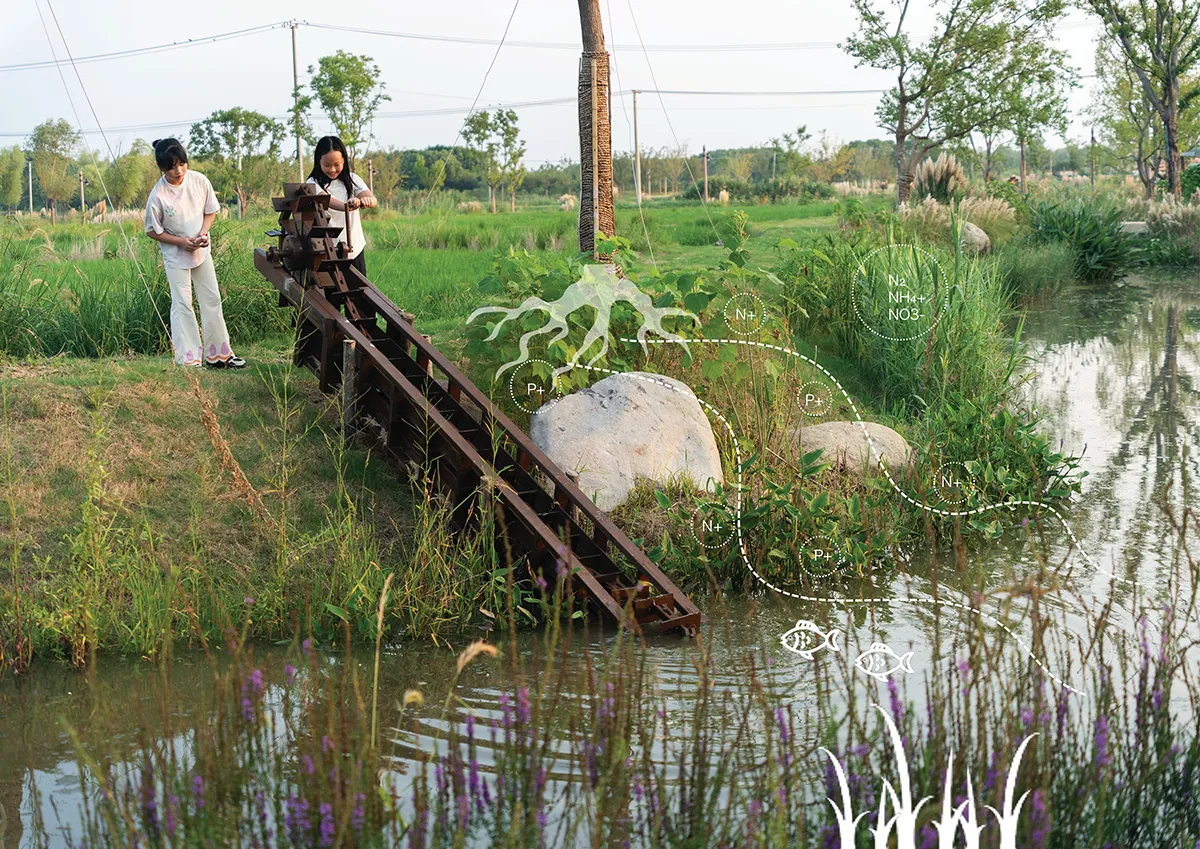
Integrated mulberry–fishpond and rice–crawfish systems increase productivity, lower costs, and support sustainable rural livelihoods by enabling continuous food production.
Cultural and Social Benefits
Traditional Jiangnan landscape forms are reinterpreted through contemporary design, reinforcing cultural continuity. Public spaces and educational platforms strengthen community engagement and environmental awareness, making ecological processes visible.
Adaptive Systems
Collaboration among designers, ecologists, agricultural experts, governments, and communities ensures feasibility and long-term adaptability. As a pilot, the project offers a scalable model for water-sensitive regions, showing how integrated ecological infrastructure, productive landscapes, and public engagement support environmental, economic, and cultural sustainability.
Yangtze Delta Living Loop
Location: Suzhou City, Jiangsu Province, China
Designers:
Arcplus Shanghai Xiandai Architectural Decoration & Landscape Design Research Institute Co., Ltd.
Shanghai Jingyu Landscape Construction Development Co., Ltd
Tus-Design Group Co., Ltd.
Design Leads: Yang Lingchen, Yang Qing, Mao Yongqing
Design Team: Sun Yanyan, Liu Dongbo, Jiang Chunyao, Zhang Yuzu, Zhu Shuangwu, Liu Li, Gao Li, Li Binghua, Gu Hao, Chen Min, Wang Yuchen, Ding Fang, Bao Lin, He Changlong, Kong Lianmei, Shao Kai, Qi Youwei, Wang Jiawei, Gu Yachun, Shi Hang.
Client: New Development Construction Co., Ltd. of the Yangtze River Delta Integration Demonstration Zone
Text Credit: Arcplus Shanghai Xiandai Architectural Decoration & Landscape Design Research Institute Co., Ltd.;
Image Credits: Arcplus Shanghai Xiandai Architectural Decoration & Landscape Design Research Institute Co., Ltd.; ZHANG Kun;
Be the first to comment