
Winner of the Outstanding Award in the 2026 WLA Awards – Concept Public Space
Waterside Park is a new 89-acre regional park on the site of a former water company reservoir lands. The project, at the epicenter of Pennsylvania’s fracking industry, attempts to elevate consideration of ecological assets and civic infrastructure in the public imagination of one of the most conservative counties in the state. In doing so, it establishes a new civic center for gathering, nature-based recreation, and community life for North Franklin Township.
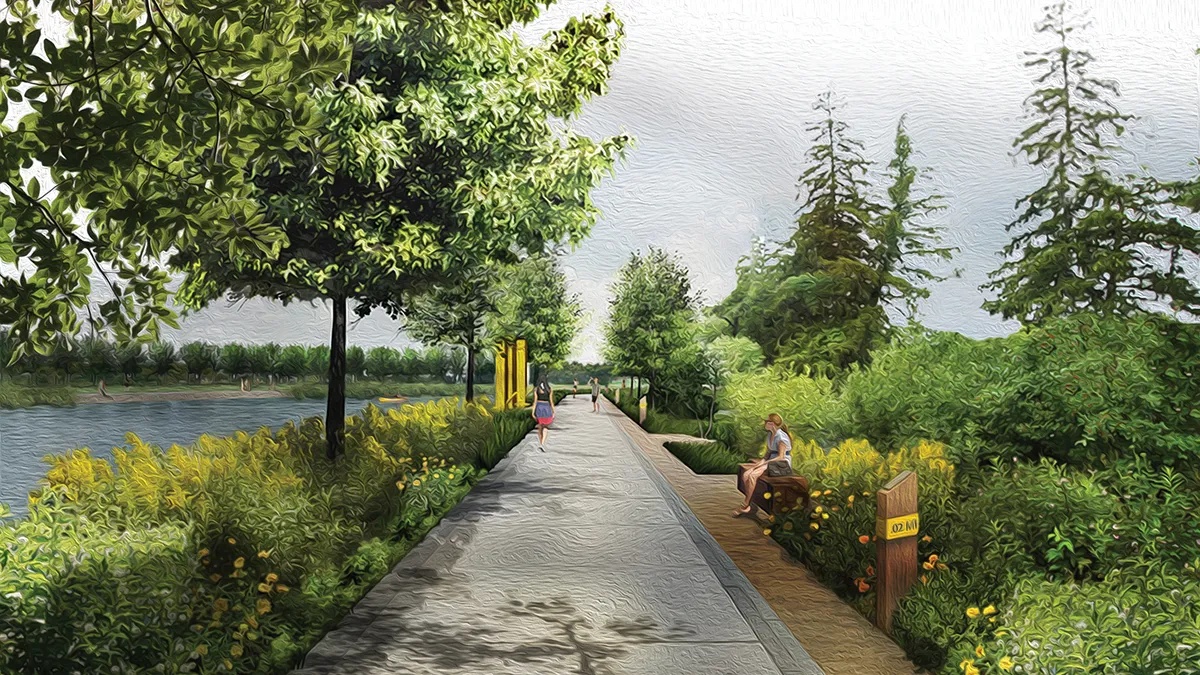
The project is anchored by the restoration of the Chartiers Creek corridor, one of Pennsylvania’s most polluted waterways. Streambank stabilization, floodplain expansion, and new surface water storage strategies work together to improve water quality, reduce downstream flooding, and restore ecological function. These systems are made legible through trails, overlooks, and educational elements that allow visitors to engage directly with the landscape.
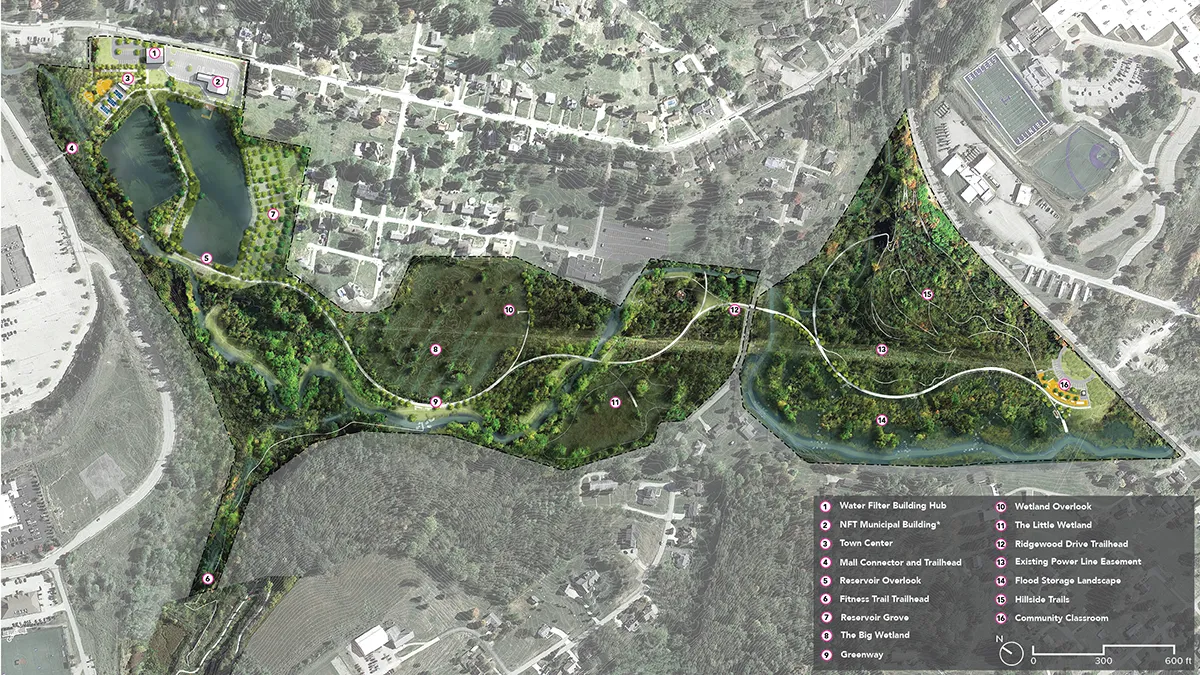
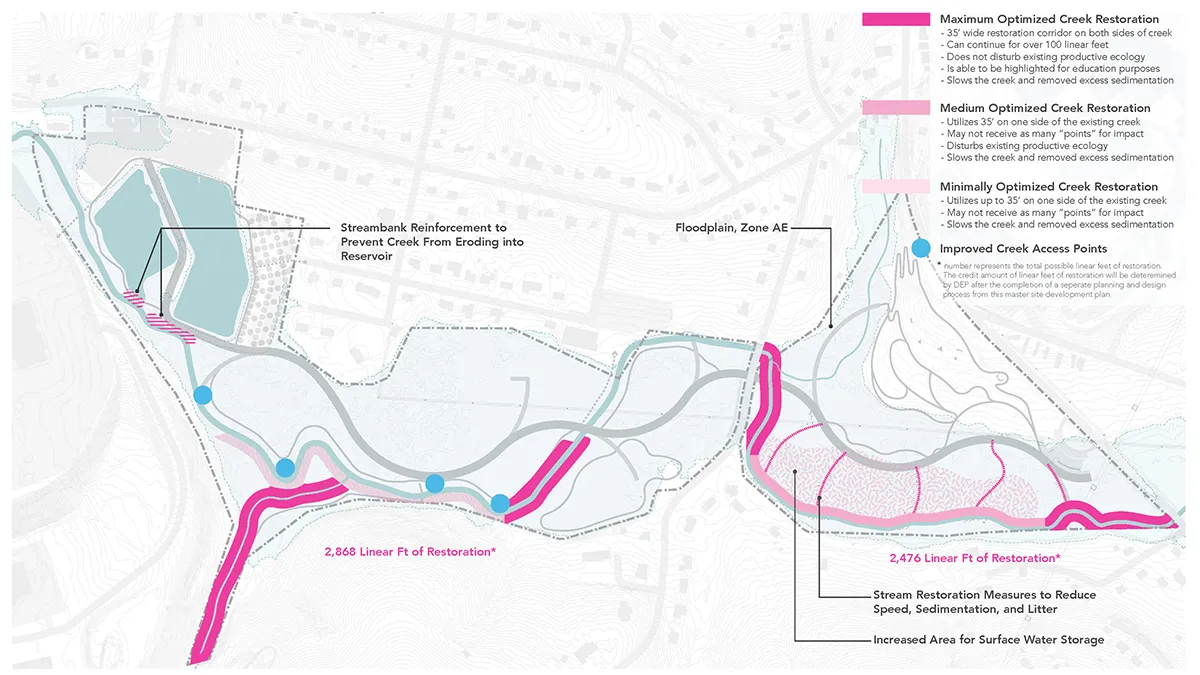
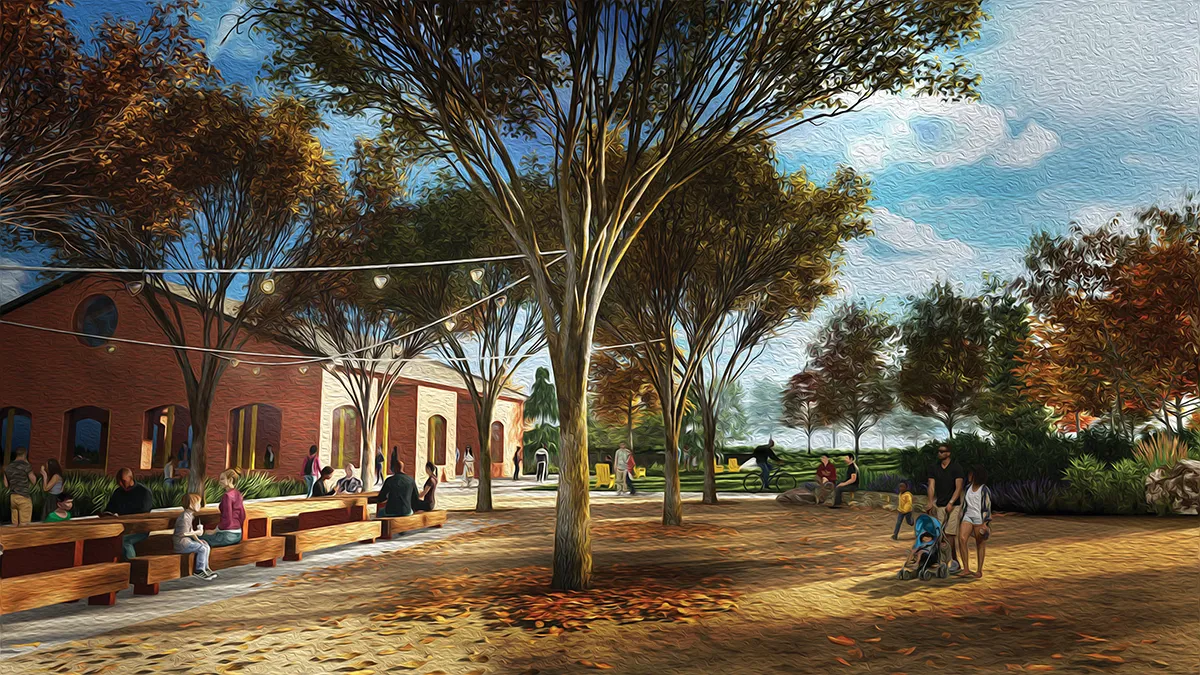
The park is structured around two primary anchors connected by a one-mile greenway. The North Anchor, centered around the historic reservoirs, water filter building, and municipal facilities, serves as the civic heart of the township. This area integrates gathering spaces, recreation amenities, and waterfront access, creating a flexible hub for both everyday use and community events. The reservoirs themselves are reimagined as key public assets, supporting passive recreation such as walking, seating, and water-based activities while reinforcing the site’s identity.
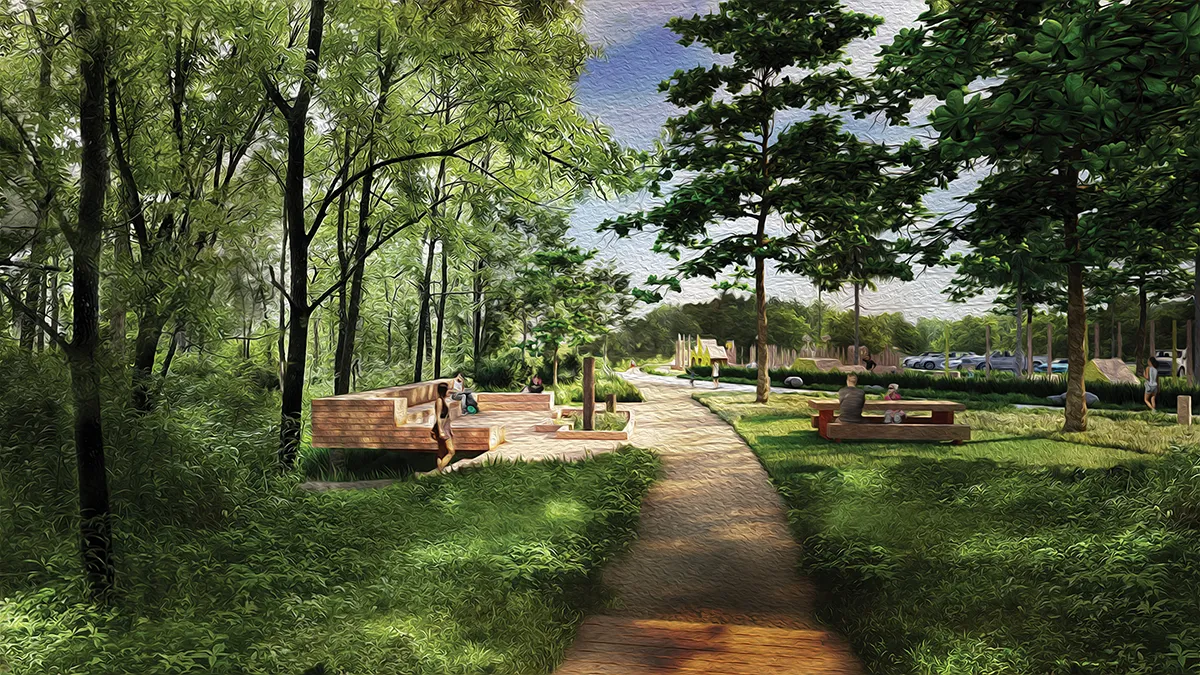
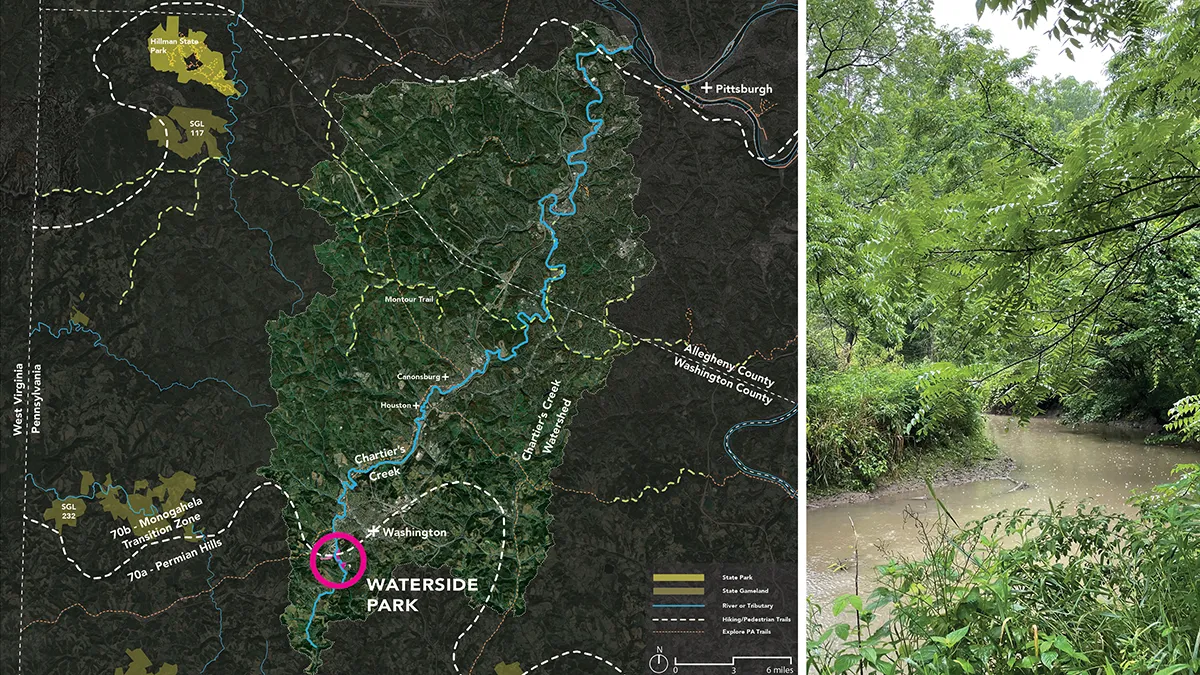
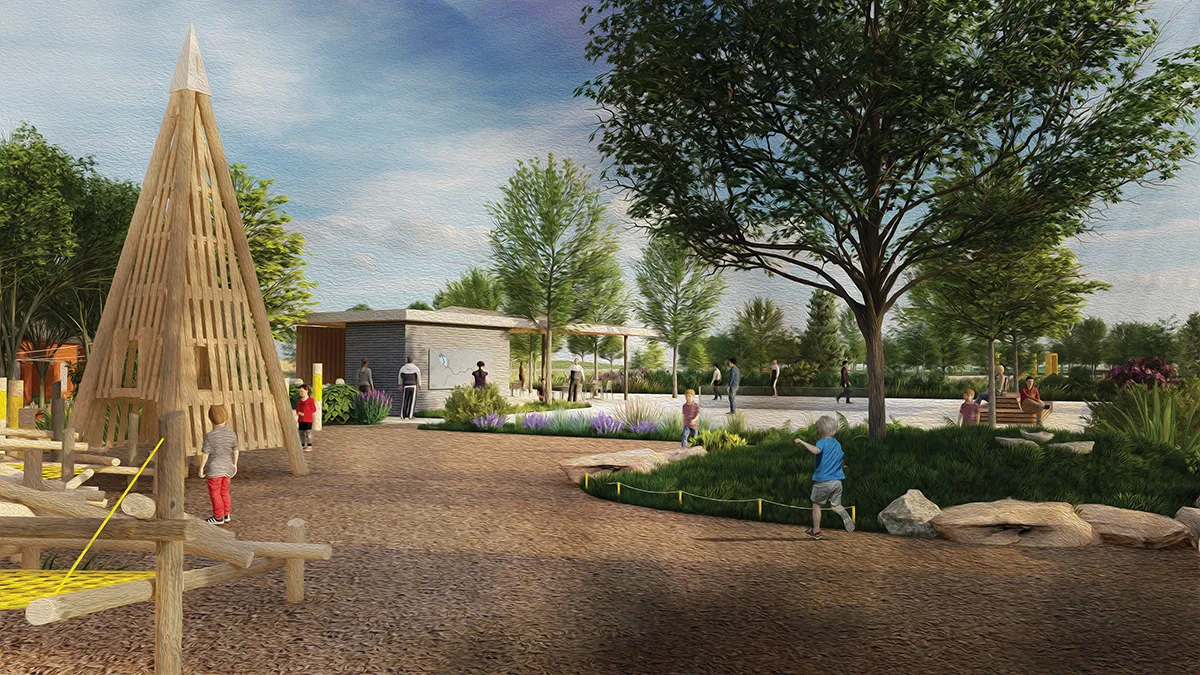
At the southern end, the South Anchor operates as a “Community Classroom,” combining outdoor learning environments, adventure play, and gathering spaces within a restored woodland and creek setting. Here, ecological processes become central to the visitor experience. Features such as sedimentation ridges—strategic topographic interventions that allow floodwaters to spread across the landscape—demonstrate how design can mitigate flooding while supporting education and exploration.
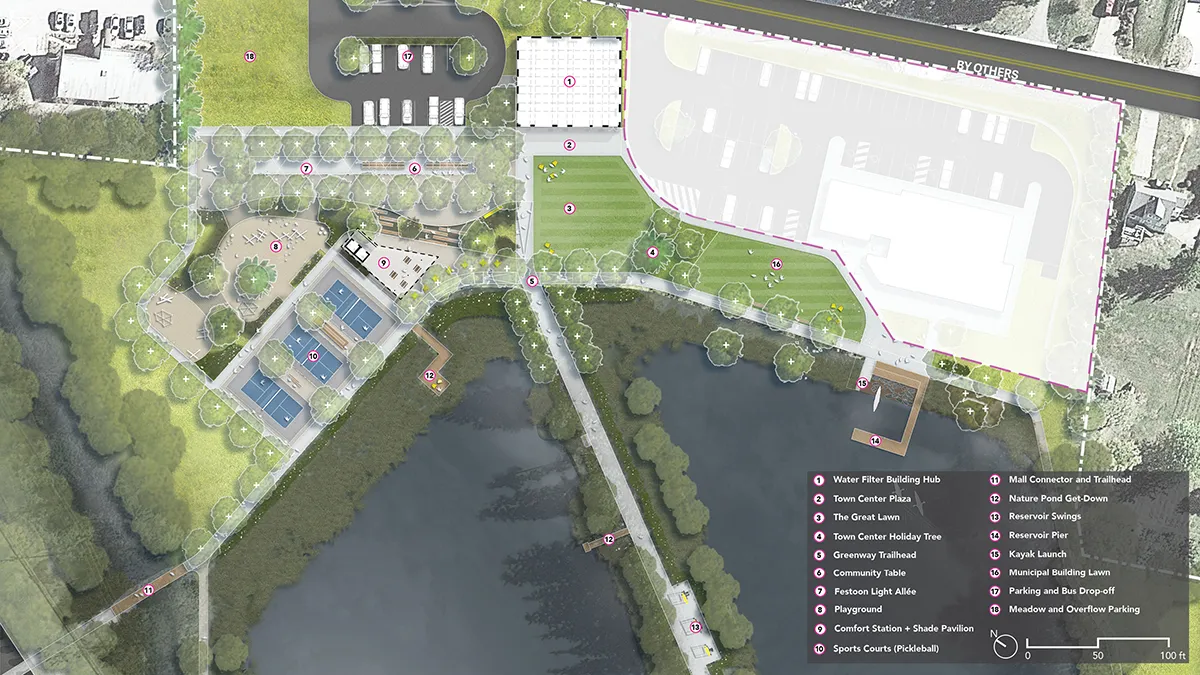
Connecting these anchors is a fully accessible greenway that acts as the primary organizational spine of the park. Designed to adapt to varying site conditions, the greenway weaves through wetlands, forests, and open meadows, offering a range of experiences while linking neighborhoods, schools, and adjacent development. Secondary trail systems branch from this spine, creating loops and circuits that support both active recreation and quiet immersion in nature.
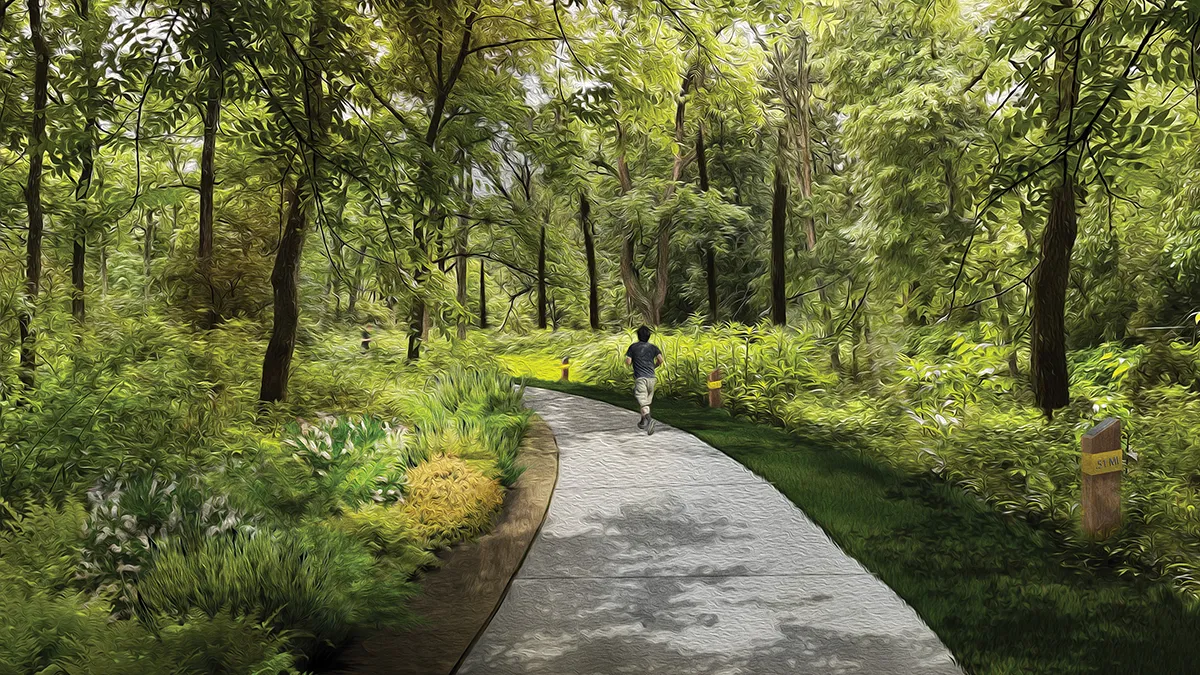
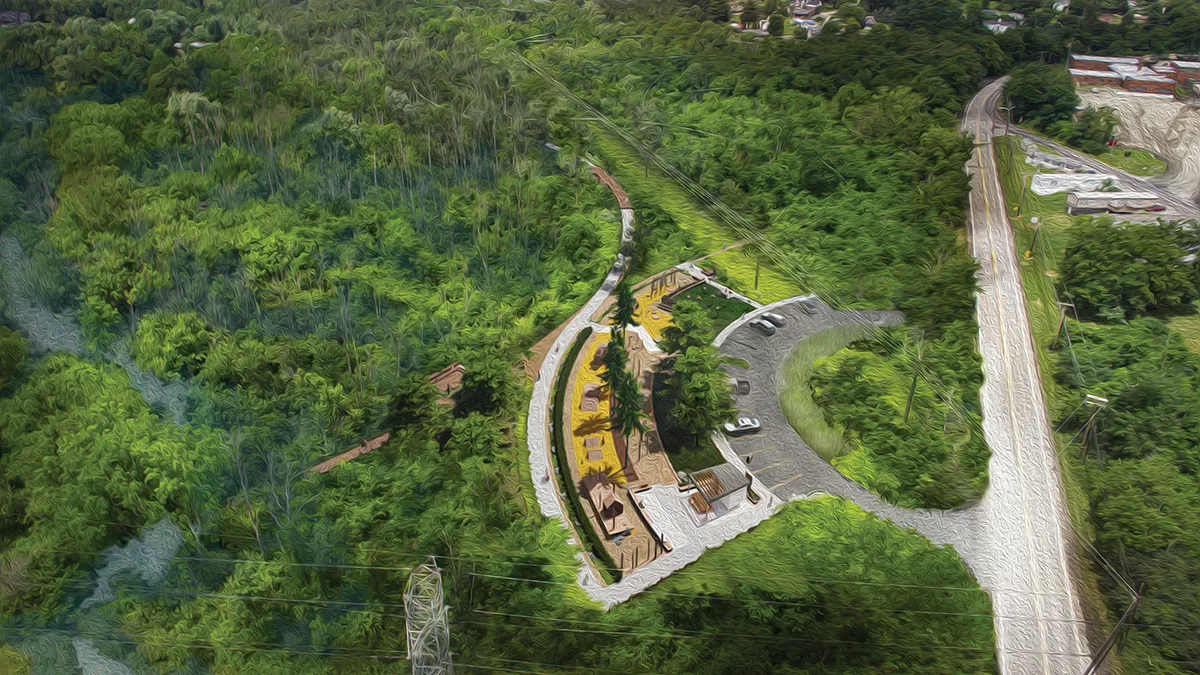
The project carefully balances preservation and transformation. Large portions of the site are conserved to protect existing ecological systems, while previously disturbed areas are enhanced into higher-functioning landscapes and as civic and recreational spaces. This approach ensures long-term environmental performance while creating a park that is both accessible and programmatically diverse.
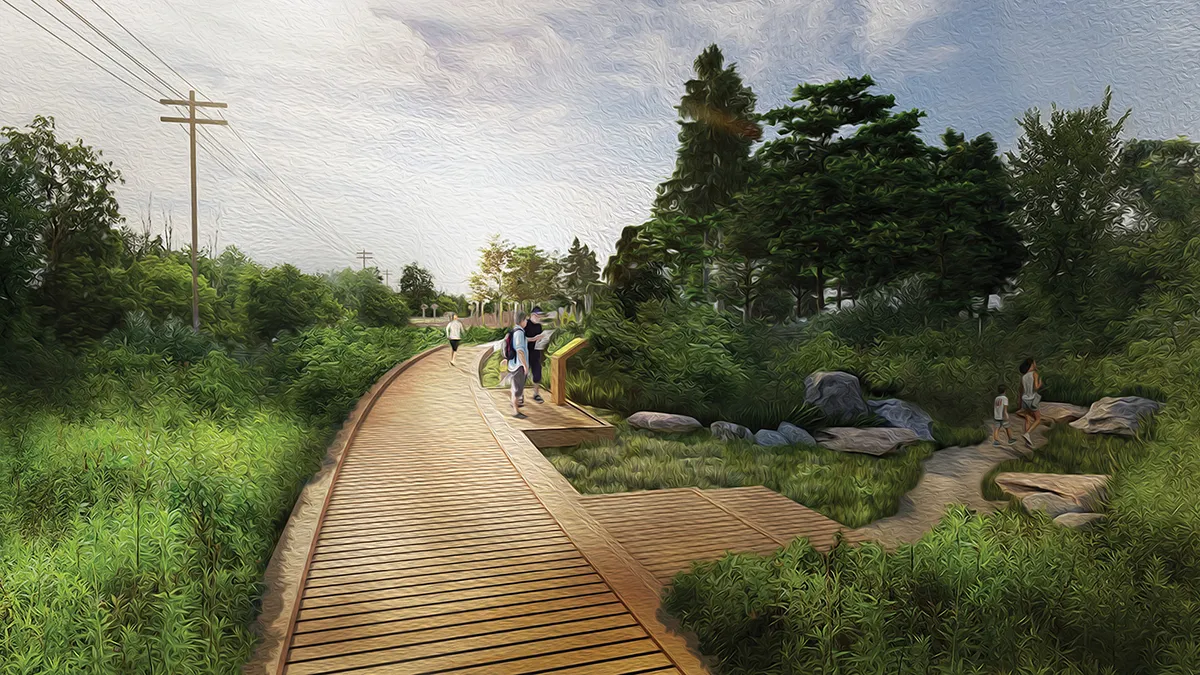
Waterside Park demonstrates how strategic investment in ecological infrastructure can also serve as a catalyst for community identity and growth. By aligning restoration with recreation and education, the project establishes a new model for regional parks—one that supports environmental resilience while creating meaningful public space for a broad and evolving community.
Technical Information
Site Area: 89 acres
Water Quality Improvements: Chartiers Creek restoration, streambank stabilization, floodplain expansion, and new surface water storage
Ecological Restoration Areas: Riparian forest, floodplain wetlands, restored woodlands, native meadows, and reservoir landscapes
Sustainability: Native habitat restoration, resilient planting, flood mitigation, and long-term ecological management, adaptive re-use of historic building
Waterside Park
Location: Washington, Pennsylvania, USA
Landscape Architect: PORT
Clients: North Franklin Township Board of Supervisors + Pennsylvania Department of Conservation and Natural Resources
Ecological Consultant: HRG, Inc.
Images: PORT
Be the first to comment