
Article by dwg.
Can a landscape be both ecologically restorative and deliberately disturbed?
Landscape architects spend a great deal of time thinking about how to protect, restore, and strengthen ecological systems. We consider soil health, stormwater, biodiversity, habitat, and the long-term resilience of the places we design. At the same time, we want people to actually use those places. We want children climbing over logs, families exploring natural environments, people gathering in parks, and visitors discovering something unexpected around the next corner.
These ambitions don’t always fit neatly together.
Play, by its nature, is unpredictable. It involves movement, experimentation, repetition, and sometimes a fair amount of disruption. Ecological restoration, meanwhile, often depends on allowing natural systems the space and time to establish themselves.
So what happens when we ask a landscape to do both?
It’s a question that has become increasingly relevant in our work at dwg., particularly as we design urban environments where ecological performance and public engagement are expected to coexist.
Making Room for Play at Rainey Street Trailhead
At Rainey Street Trailhead in Austin, the opportunity to create a public landscape along Lady Bird Lake came with an equally important responsibility to restore and celebrate the site’s native ecology.
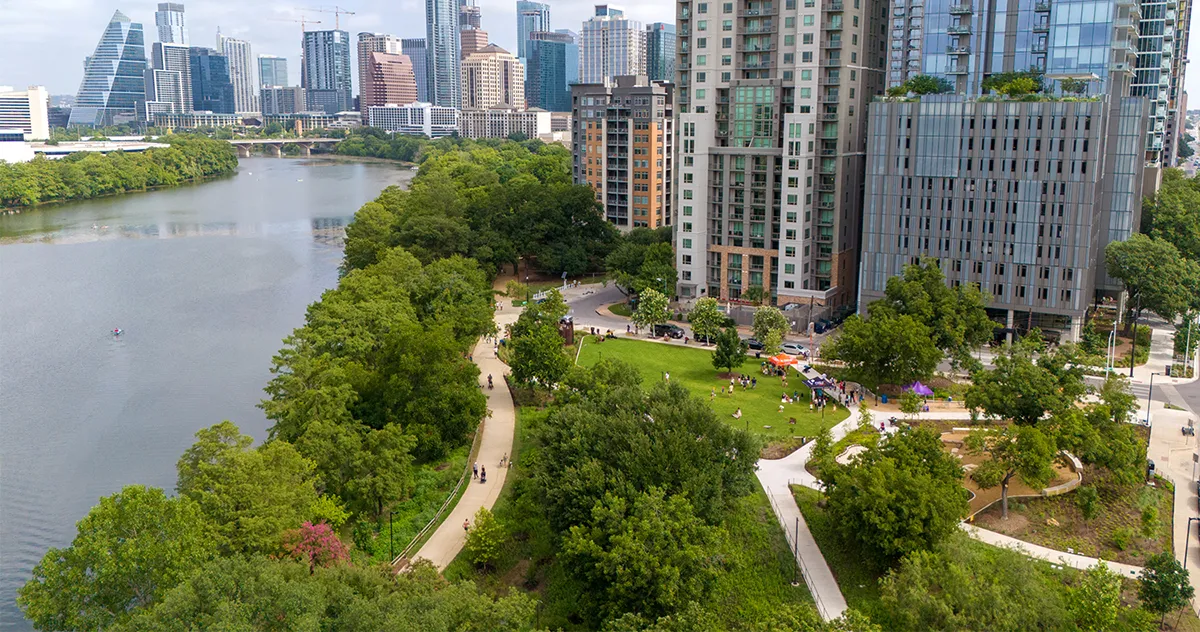
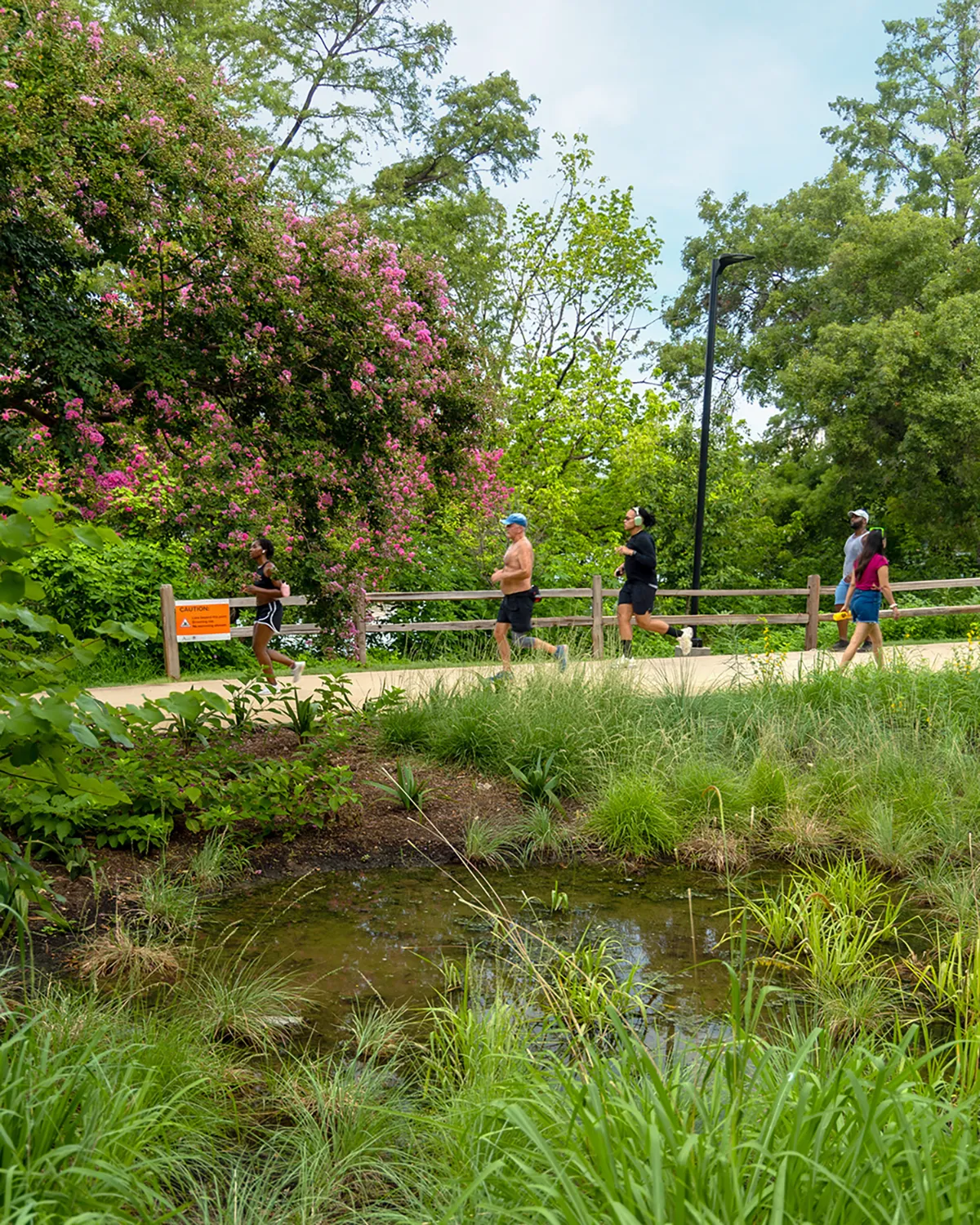
Working with The Trail Conservancy and the local community, the design introduces visitors to a sequence of Central Texas plant communities, moving from upland savanna through riparian woodland to wetland habitat at the water’s edge.
Within that setting, the park incorporates the first nature play area along the Butler Hike and Bike Trail system.
Rather than separating play from the surrounding landscape, the design brings the two together. Reclaimed natural materials, including logs and sticks, provide opportunities for loose-parts play. Planting beds encourage sensory exploration while introducing children to pollinator species and native vegetation.
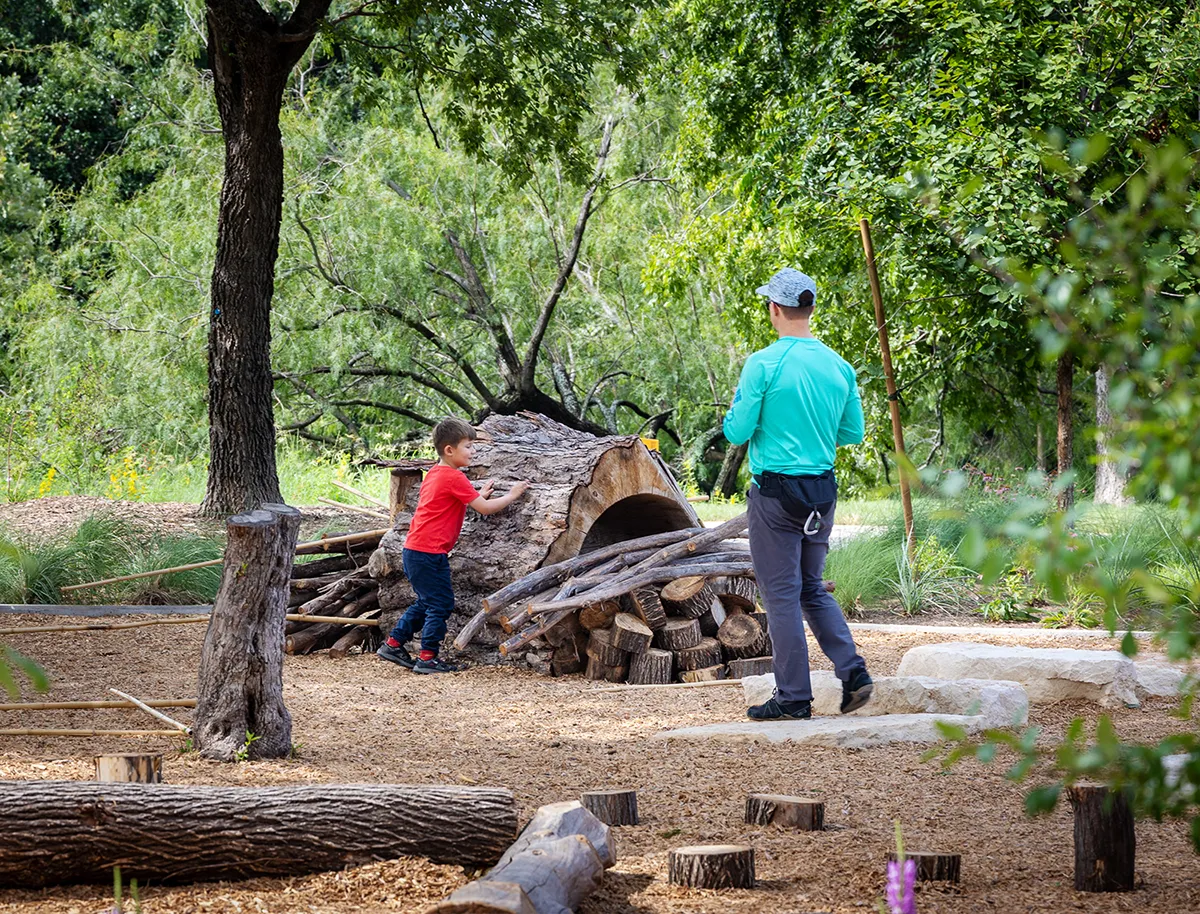
It’s a different proposition from a conventional playground, where equipment establishes much of the experience in advance. Here, the landscape itself offers the invitation.
That openness also introduces uncertainty. Children will find uses for natural materials that weren’t necessarily anticipated. Their exploration may challenge the boundaries between designated play areas and the landscapes around them.
Perhaps that’s part of the value. Children are not simply observing nature from a distance. They’re developing a relationship with it through direct experience.
Restoration as an Experience at Springdale Green
At Springdale Green, the relationship between people and ecology takes a different form.
The 30-acre former post-industrial site in East Austin has been transformed into an environmentally conscious workplace campus, reestablishing native meadows, woodlands, and an urban creek tributary.
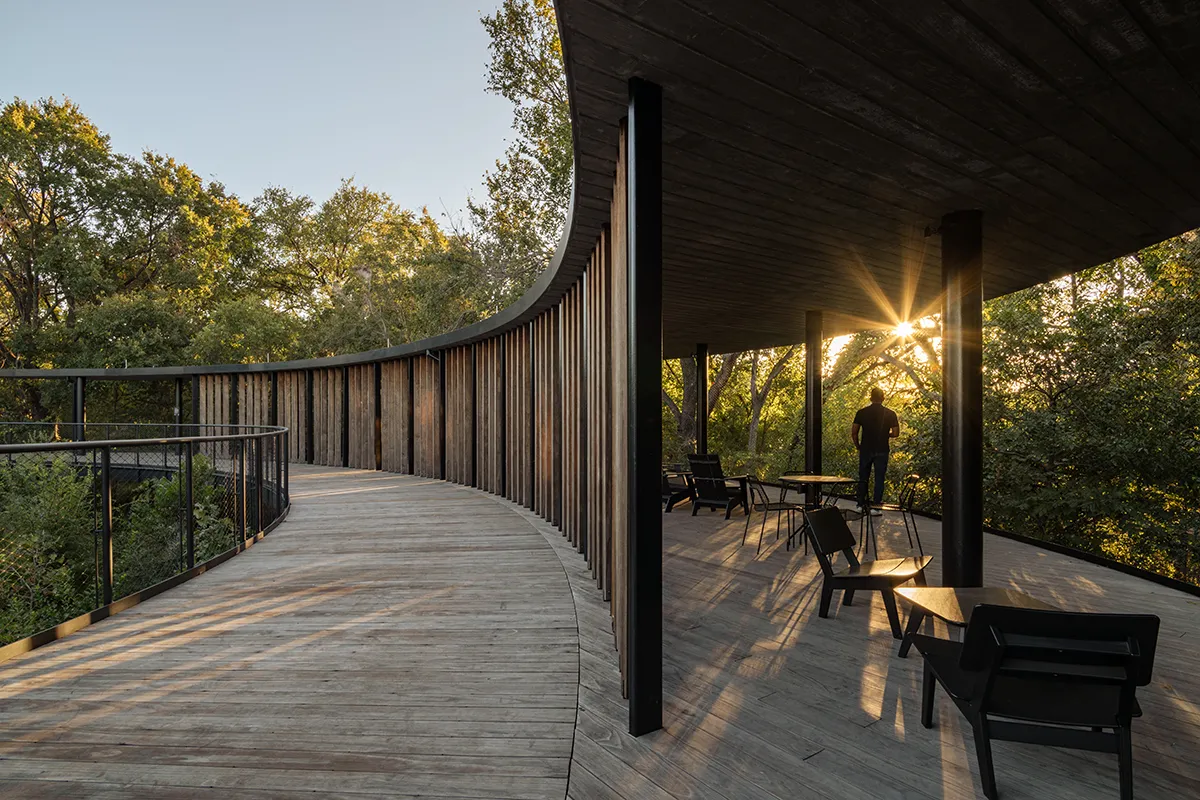
An elevated boardwalk forms a continuous, meandering loop through the site’s various ecological zones, allowing tenants and visitors to experience the restored landscape.
The boardwalk makes that ecological transformation part of everyday life. People can move through the meadows and woodland habitat, observe seasonal changes, and experience an environment that might otherwise have remained inaccessible.
The site’s environmental ambitions extend beyond its planting. Rainwater and air-conditioning condensate are reclaimed and stored in an underground cistern, while rain gardens and a bioretention basin manage stormwater and help reduce flooding in the surrounding neighborhood.
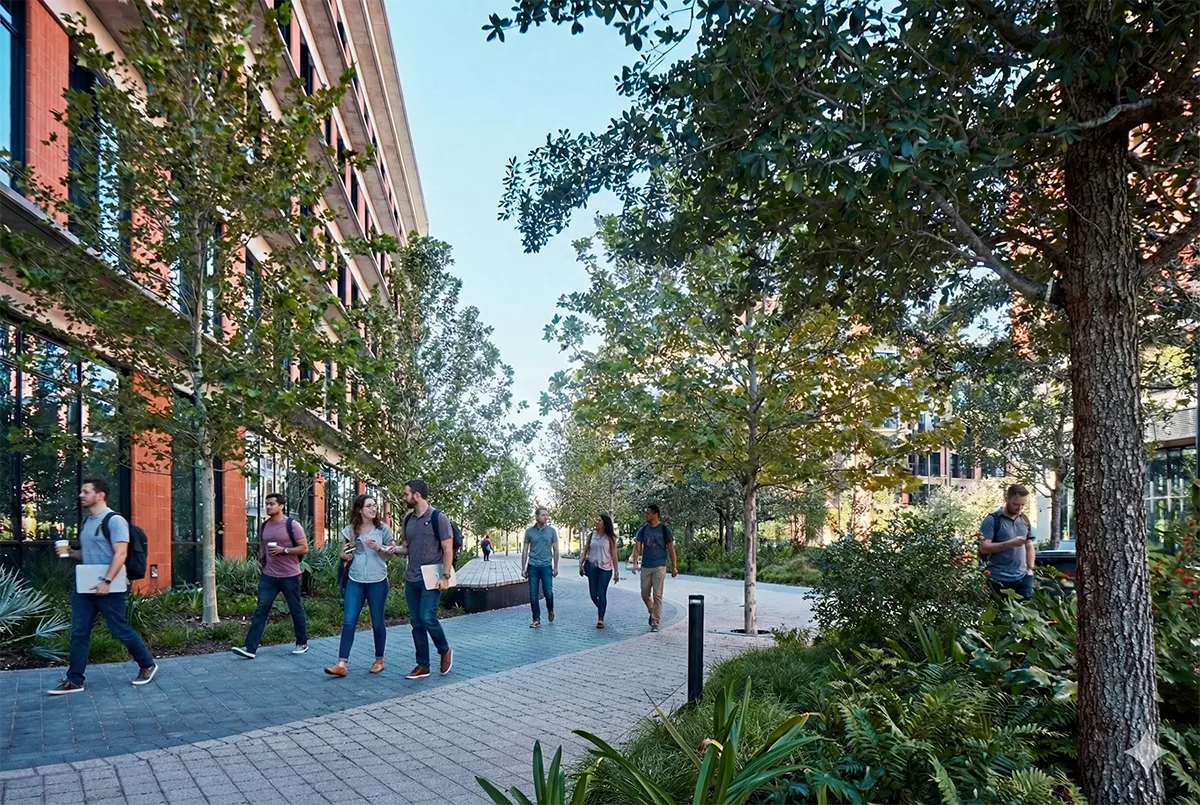
Springdale Green isn’t a play landscape in the traditional sense. Yet there is something inherently exploratory and playful about the experience. The winding boardwalk and changing vegetation invite people to engage with the site rather than simply pass through it.
In this case, interaction is more deliberately guided. The boardwalk allows people into the restored landscape while directing their movement through its ecological zones.
It’s another way of navigating the tension between access and protection.
A More Informal Landscape at The Backyard at Bell Boulevard
The Backyard at Bell Boulevard in Cedar Park offers another perspective on what happens when a landscape is designed to accommodate activity rather than prescribe it.
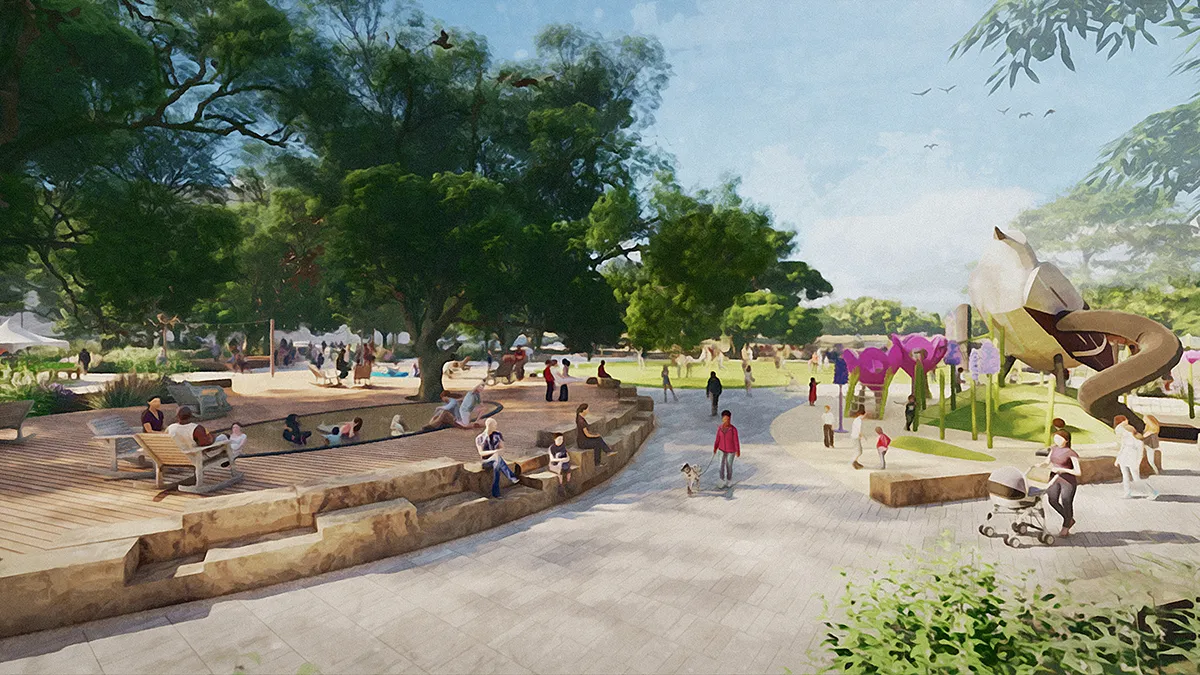
Located at the heart of the pedestrian-oriented Bell District, the park connects residential, commercial, and civic spaces with a larger network of green space, including trails along the rehabilitated Cluck Creek.
Its role is intentionally flexible. Markets, performances, outdoor movies, informal gatherings, and everyday recreation can all occupy the landscape.
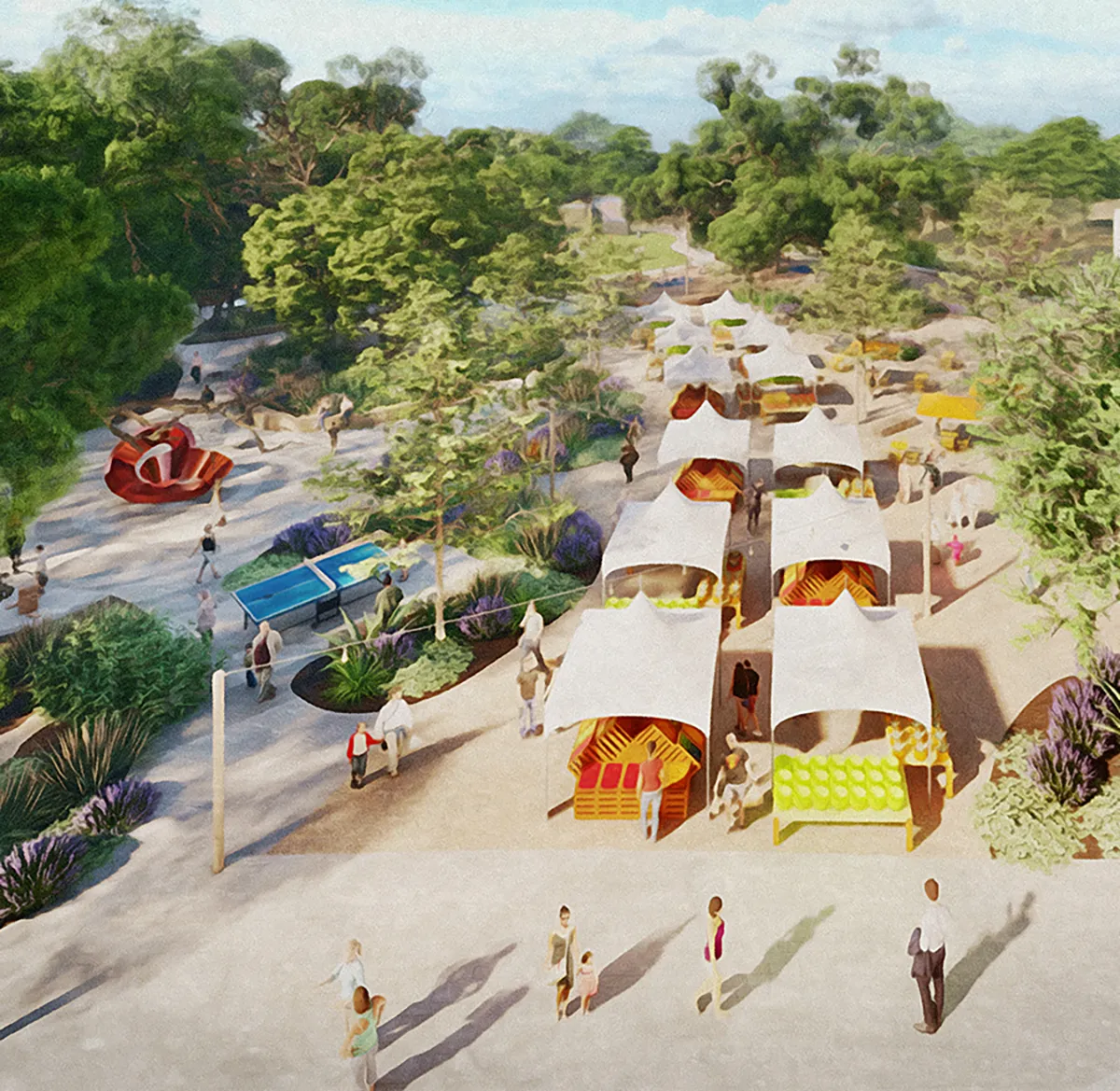
There is room to lounge, explore, play, and move between active public spaces and natural areas that were previously inaccessible.
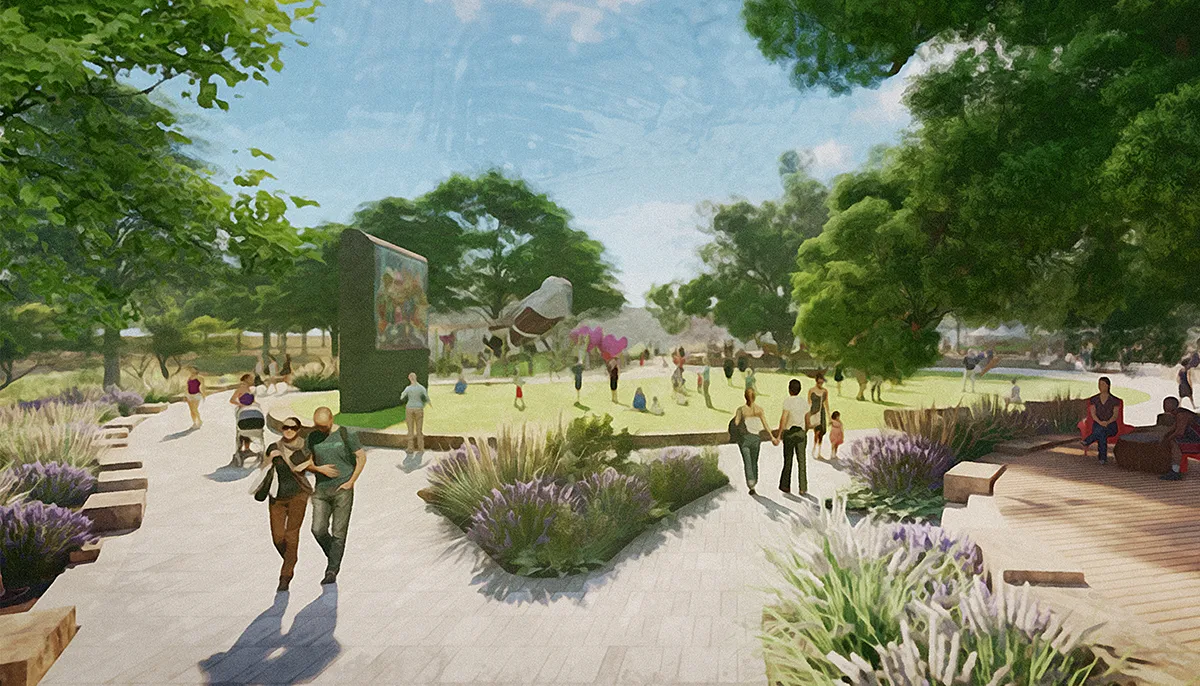
That flexibility is important. Not every form of play needs a designated piece of equipment, and not every meaningful interaction with a landscape needs to be programmed.
Sometimes play is simply the freedom to use a space in ways that feel natural, spontaneous, or unexpected.
The challenge is to accommodate that freedom while maintaining the ecological and functional qualities that make the landscape valuable in the first place.
Finding a Balance That Can Change
These projects approach the relationship between play and ecology differently, but they share a common challenge.
At Rainey Street Trailhead, direct engagement with natural materials is central to the play experience. At Springdale Green, an elevated boardwalk guides movement through a restored landscape. At The Backyard, flexible public space encourages a broader interpretation of recreation and informal play.
None offers a universal formula.
Perhaps the more useful question isn’t how to eliminate the tension between ecological restoration and human activity, but how to design landscapes capable of accommodating it.
Some areas will need protection. Others can support regular use and change. The boundaries between those conditions may shift over time as vegetation matures, habitats establish themselves, and people develop their own relationships with a place.
For landscape architects, that means thinking beyond the landscape as a finished composition. A successful public space must be able to evolve, respond, and occasionally surprise us.
Can a landscape be both ecologically restorative and deliberately disturbed?
Maybe the answer depends less on finding a perfect balance than on recognizing that both impulses are part of what makes a landscape alive.
Article by dwg.
Images: Courtesy of dwg. (unless otherwise captioned)
Be the first to comment