
Winner of the 2026 WLA Awards – Award of Excellence in the Student Awards – Graduate category
Background + Context
Cle(an/p)sydra combines “cleanse” and “clepsydra,” the ancient water clock that measures time through the gradual flow of water. The project reimagines water as civic ritual and ecological infrastructure, recalibrating relationships between bodies, public life, and the infrastructure in Berlin.
The project operates between two contrasting urban atmospheres. Kottbusser Tor (Kotti) is one of Berlin’s most intense nightlife and transportation hubs, where drinking, smoking, gathering, and dancing spill into public space late into the night. Admiralbrücke, by contrast, functions as a slower canal-edge landscape centered around open-air social life. Between two nodes, the residential fabric remains fragmented and disconnected.
Historically, Kotti shifted from the edge during the Berlin Wall era to a central urban condition today. This transformation produced a dense territory of infrastructural overlap, social pressure, and neglected public space. Cle(an/p)sydra repositions this corridor as a new civic center structured through water.
Concept
The project establishes a continuous civic water system linking Kotti, the residential community, and Admiralbrücke. Municipal supply, roof runoff, greywater reuse, detention ponds, bioswales, phytoremediation landscapes, and canal-edge pools form a sequence of cleansing, cultivation, and ecological renewal.
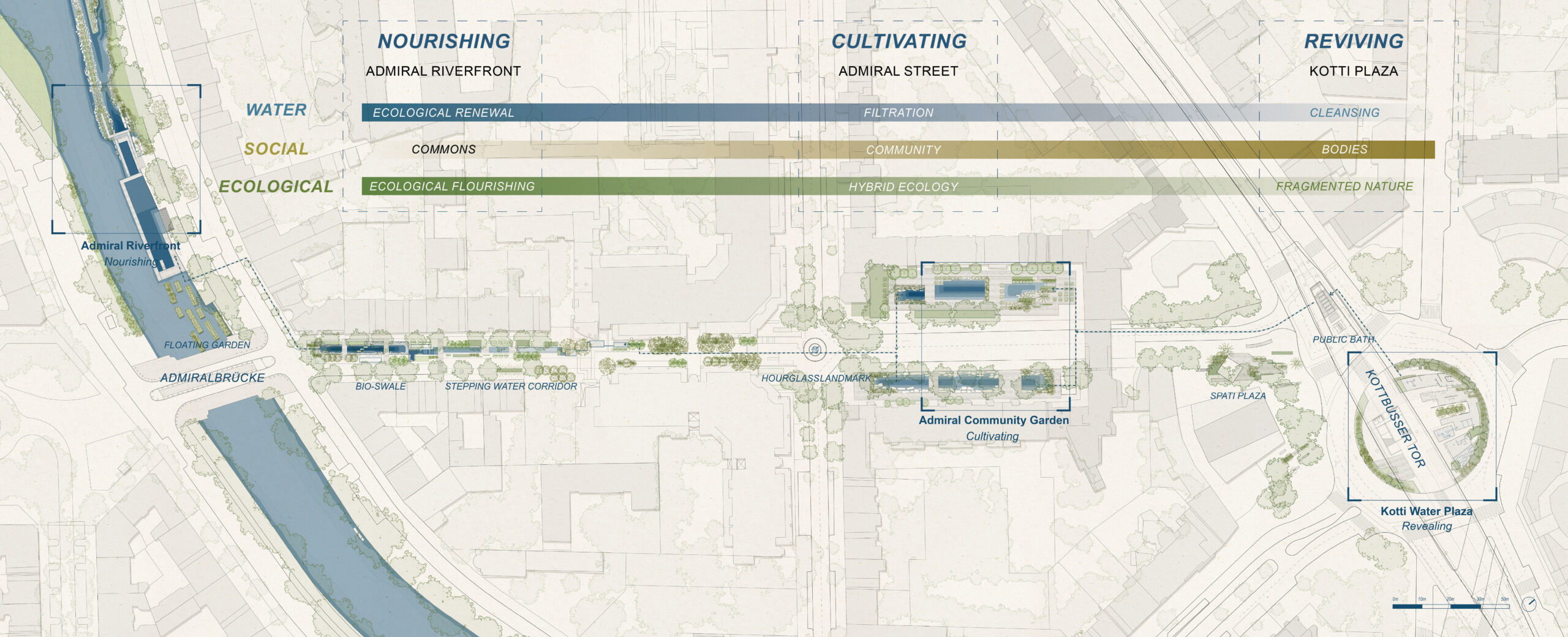
The project is organized through three operations: Reviving, Cultivating, and Nourishing. Together, these nodes create a civic water clock that recalibrates urban life across daily, monthly, and seasonal cycles.
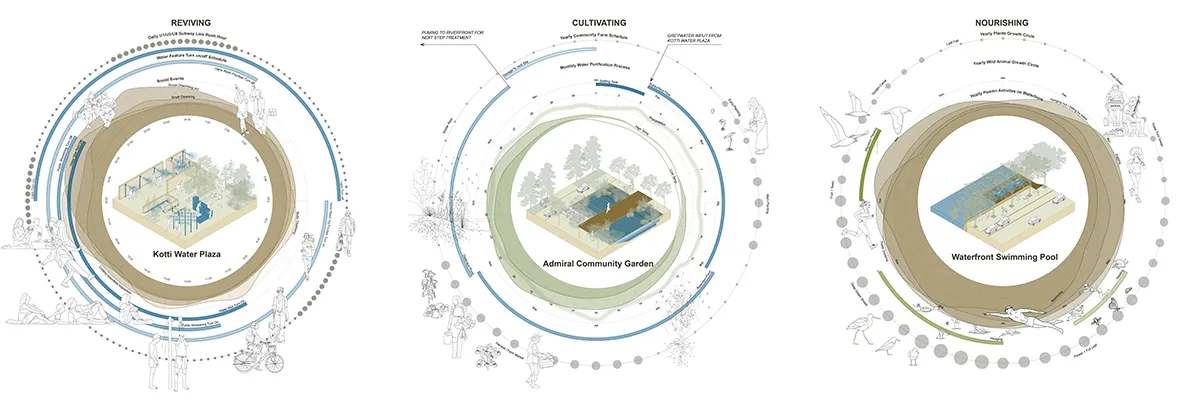
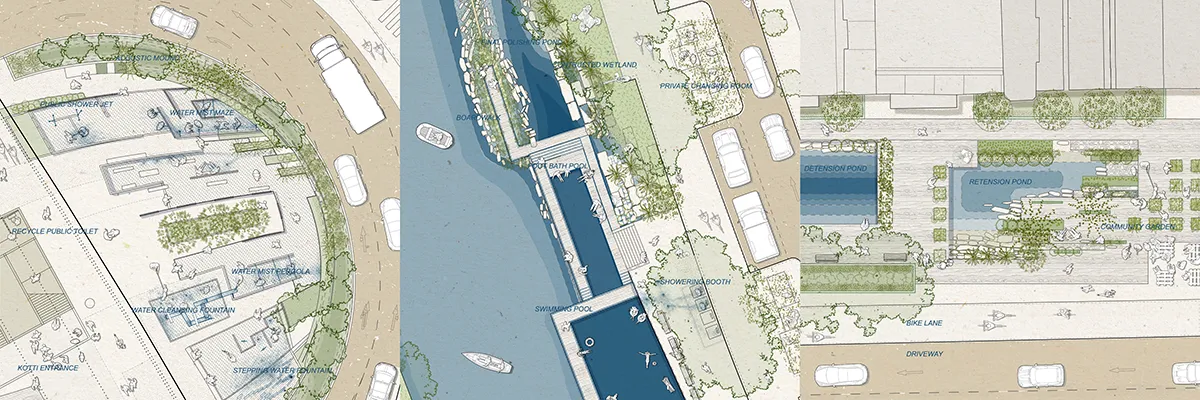
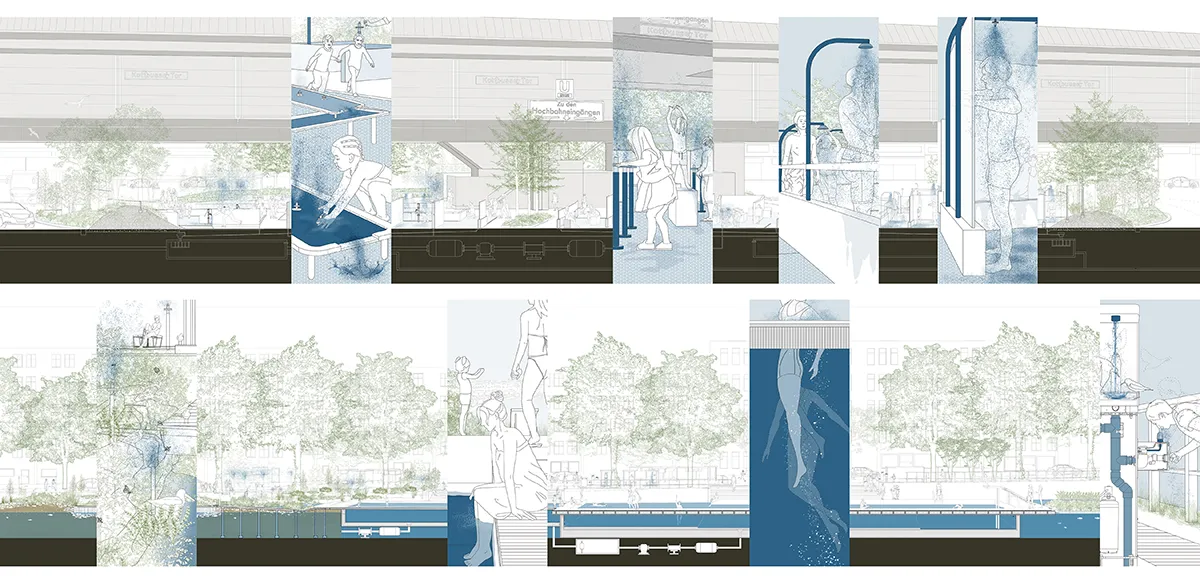
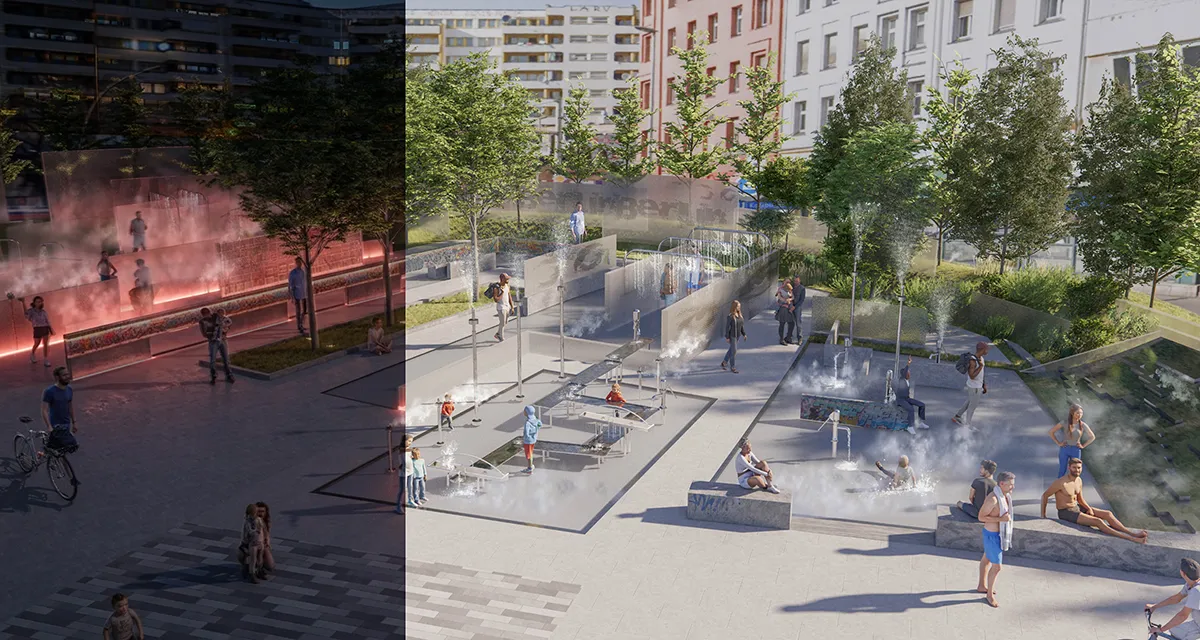
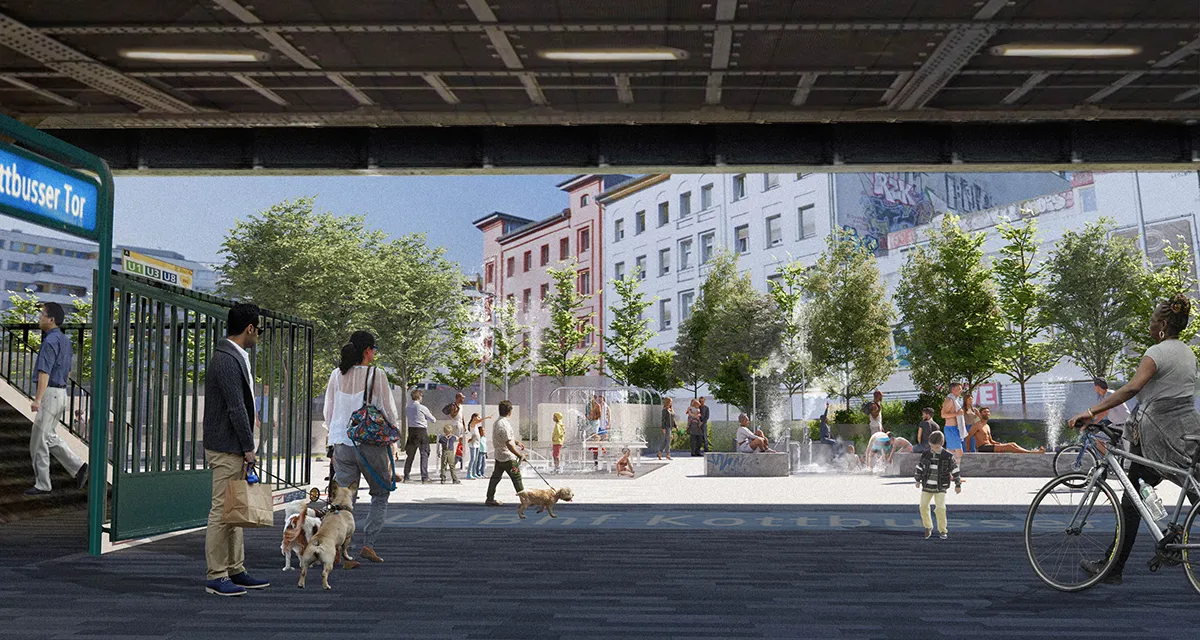
Reviving — Kotti Water Plaza
At Kotti, space beneath the elevated U-Bahn becomes a water maze of mist, fountains, pools, and baths. Cleansing becomes a collective ritual for cooling and re-entering public life after nightlife. The daily water clock measures transit, nightlife, and cooling cycles. Infrastructure becomes an atmospheric public space.
Cultivating — Community Water Garden
Between the two nodes, roof runoff and filtered greywater move through detention ponds, productive gardens, and phytoremediation landscapes. Fragmented open space becomes a shared civic landscape. The monthly water clock measures cycles of treatment, planting, and care.
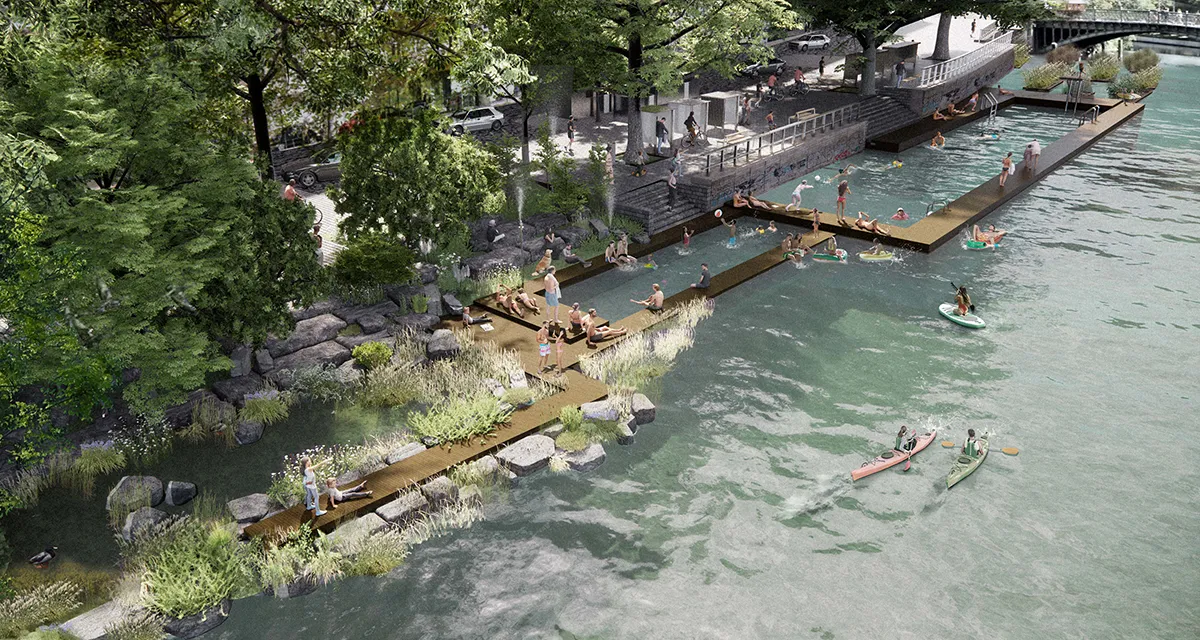
Nourishing — Admiral Canal Edge
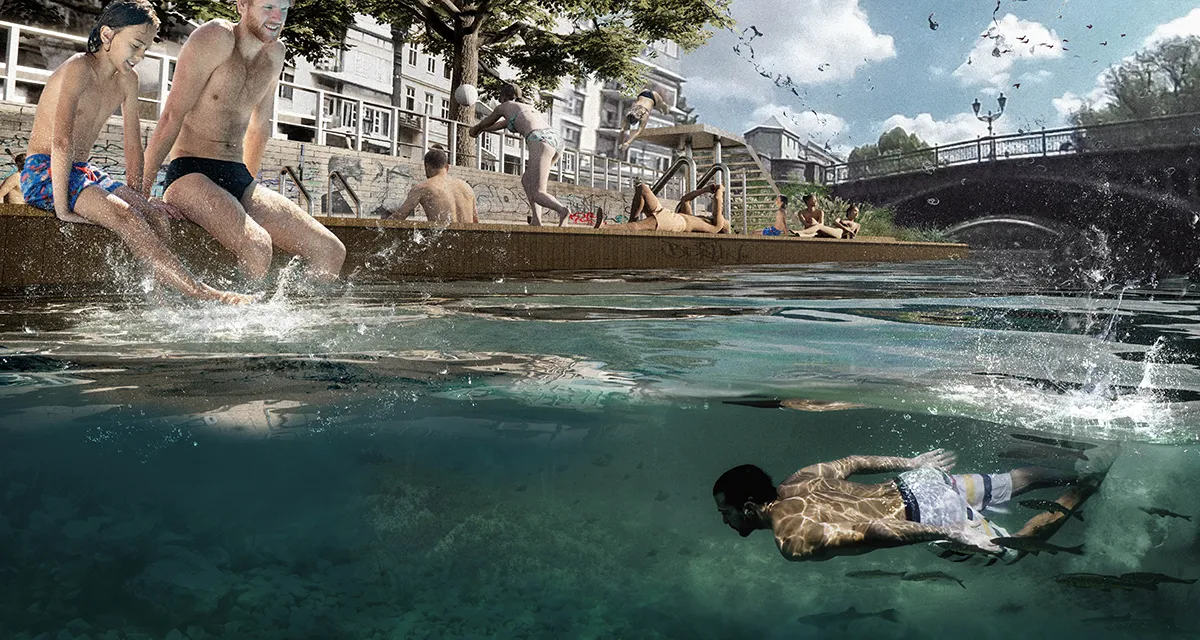
At Admiralbrücke, filtered water enters canal-edge pools, foot baths, and ecological ponds integrated into the softened canal edge. Swimming, cooling, and ecological restoration overlap within a shared public landscape. The yearly water clock measures seasonal fluctuation and ecological succession before water returns to the Landwehrkanal.
Cle(an/p)sydra establishes a new civic water clock — transforming disorder into rhythm, waste into care, and fragmented nightlife into a continuous landscape of public intimacy and ecological renewal.
Cle(an/p)sydra: Civic Water Cycles
Mu He and Zhiming (Zenith) Zhang – Harvard Graduate School of Design
Supervisors: Chris Reed & Laila Seewang – Harvard Graduate School of Design, Stoss